
Translated material
Noble nests and communal houses
Seventh scene
Noble nests and communal houses
An investigation into how Vladimir Putin’s entourage created two closed villages for their own in Moscow parks
November 14, 2025
Characters:
Families of Vladimir Yevtushenkov, Nikolai Patrushev, Suleiman Kerimov and other summer residents
Always and everywhere, the nobility preferred to settle separately, fenced off from the common people, surrounding themselves with their own kind and only occasionally allowing servants, artists, businessmen and adventurers as neighbors. In Soviet and then democratic Russia it was exactly the same: the Narkomfin House, the House on Naberezhnaya, Kutuzovsky-26, the house of Boris Yeltsin and his entourage in Krylatskoye, a brick high-rise building in the Swedish deadlock, 3, where, with the coming to power of Vladimir Putin, all his entourage received apartments. There are many such places in Russia, because the morals of the provincial elite differ from Moscow only in regional flavor.
Sochi is an all-Russian resort, where nobles from all over the country live compactly, from the president to escort girls serving officials. In this seaside town, next to the circus, there is an interesting house, the short life of which tells about the morals of Putin’s elite much more fun than jokes. The residential complex is called “Volna-Fregat”. The site where the houses were built was a tasty morsel for any developer - only 150 meters from the sea; it was previously impossible to build housing at such a distance in Sochi.
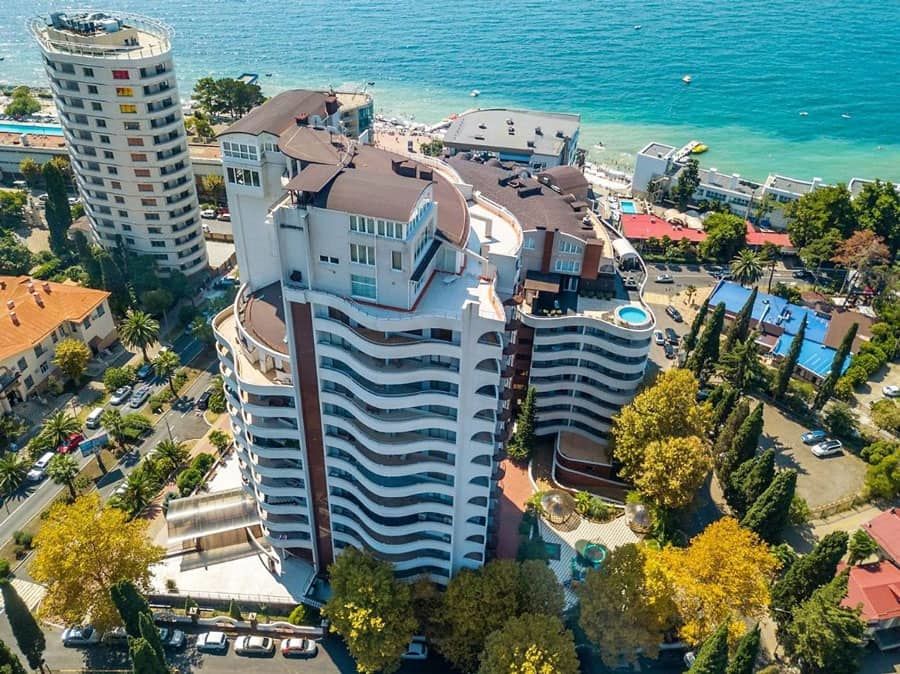
According to stories, the head of the Sochi circus, Mstislav Zapashny, sought this land - he wanted to set up a dolphinarium there - but the uncle of the famous trainers was beaten on the street with rebar. This was discussed in the Express Gazeta publication “Pugacheva decided to settle in Sochi?” dated October 29, 2004. Another version of the reason for the beating is that Zapashny allegedly planned to live in a cottage nearby, but he did not like the quality of the finishing and had an argument with the developer ×
. The bandits were not found; apparently, the circus performer wisely walked away from the dispute.
The mayor of the city approved the construction, despite the ban on the construction of such buildings in the coastal sanitary zone. This precedent was followed by other construction projects at the sea's edge. The mayor's office was probably motivated not only by money, but also by the status of the developer. The house was built in 2004 by Mikhail Khubutia, an arms baron who, at the beginning of Putin’s rule, went into big politics. He was the Minister of Trade of the Moscow Region, then worked in the federal Ministry of Economic Development. Later, in addition to the arms business, he became involved in real estate. Now he is a middle-aged, corpulent businessman with personal troubles: in the spring of 2025, Khubutia attacked his young mistress, the mother of his illegitimate daughter, with an ax. There was quite a scandal; now the businessman lives under house arrest in his capital possessions.
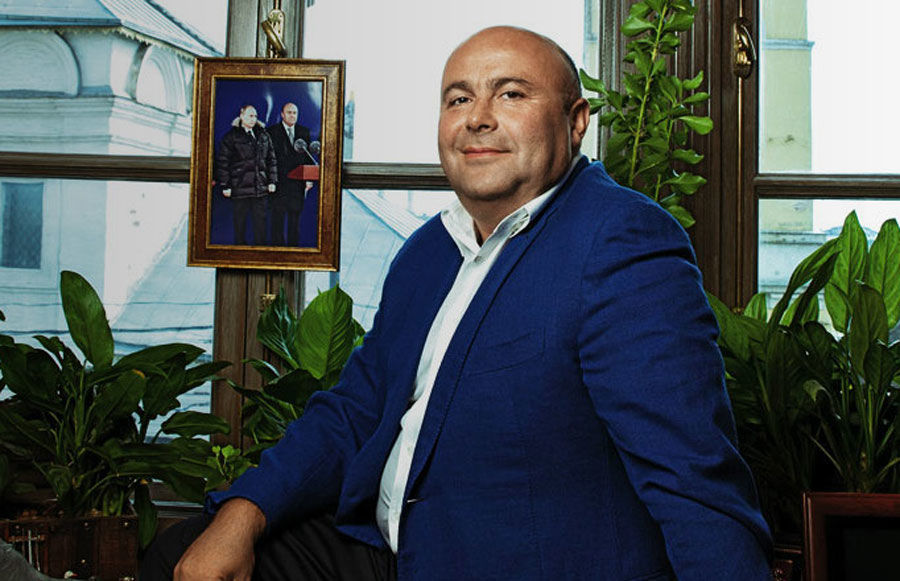
Khubutia not only built the house, but also became a member of the HOA “On Deputatskaya”. A list of co-founders of the partnership for previous years is available in the commercial registers. The current list has not been published in the public domain since 2021 ×
. An appropriate contingent was formed around him. The resident of the house is Liana Syrtsova Jr. This is the daughter and heiress of one of the mafia clans in Sochi. Her father, Viktor Syrtsov, nicknamed Nerussky, once ran the main attraction on the Sochi embankment - the city’s first water park. Syrtsov was considered one of those watching over Sochi from thieves, but he himself, his wife, son-in-law and most of his partners had long since disappeared in gang wars. Liana Jr. remained (her mother had the same name), the heiress of the family.
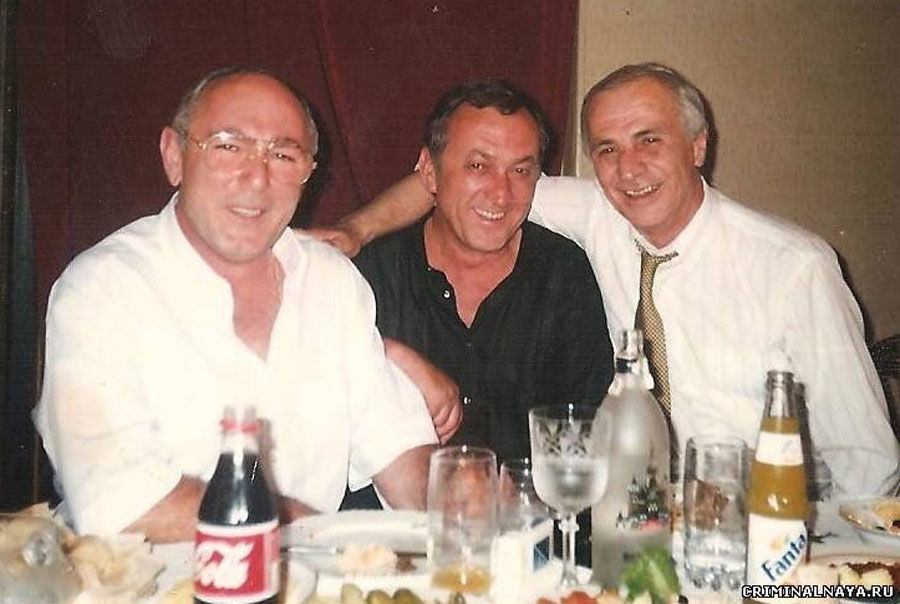
The daughters of the Sochi boss were kept company in the HOA by women leaders of the largest Russian gangs. Galina Telesh is the ex-wife of Solntsevsky leader Semyon Mogilevich. Zhanna Malevskaya is the widow of Izmailovsky leader Anton Malevsky. In addition to the bandits, there were also relatives of high-ranking civil servants in the house - from the wife of United Russia senator ~~Vyacheslav Timchenko~~ to the daughter of the former minister and auditor of the Accounts Chamber, Mikhail Men. The fact that the living space was registered in the names of women is most likely just a ruse - so that the names of famous people do not appear in public documents. The artists Lev Leshchenko and Vladimir Vinokur had apartments right there, “On Deputatskaya”. Employees of state and state-affiliated companies, politicians, singers and football players, their wives and children - everyone was united by an elite residential complex in Sochi.

In Moscow everything is the same, adjusted for a larger scale. Everyone knows about Rublyovka , a suburban highway west of the capital, where many influential and wealthy Russians live. But much closer to the center of Moscow there are two other residential enclaves, invisible to ordinary citizens, but even more elitist than Rublyovka, they seem specially created to tell the story of Putin’s nepotism. We are talking about Serebryany Bor, about eleven kilometers from the Kremlin, and Sparrow Hills, from where the entire center of the capital is visible at a glance.
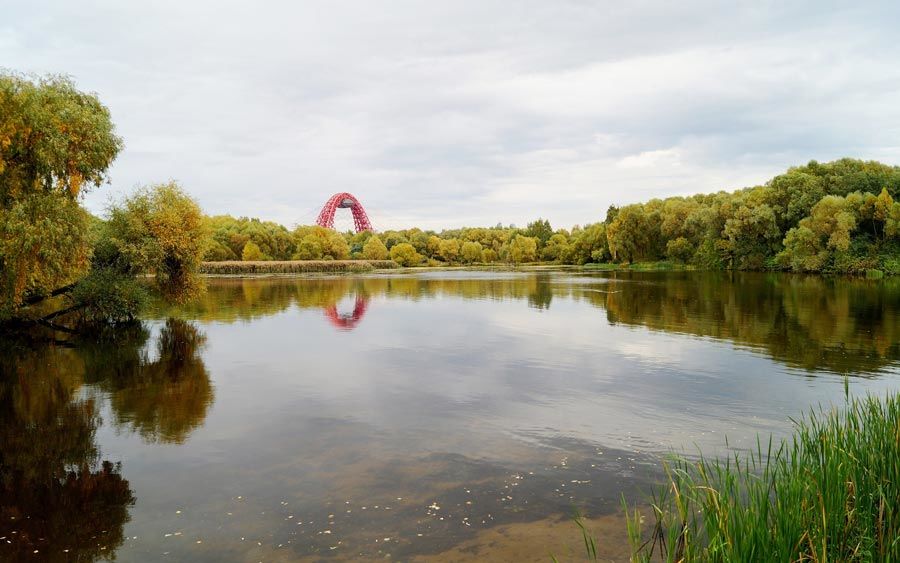
No one really knows why the forest along the Moscow River in the west of the city is called Serebryany, but this word can also be understood as a synonym for the wealth of the local inhabitants. Both under the Tsar and under Soviet rule, this was a place for privileged summer residents. In the first case, the land was leased to high-status residents by the Appanage Department (that is, the crown itself), and under the Soviets, by an organization called “Mosdachtrest” (that is, again, the highest state authority represented by the capital’s city executive committee). The Soviet authorities lived in Serebryany Bor, here the executioners and their victims built wall to wall dachas: the silver fighter Marshal Mikhail Tukhachevsky, who drowned the peasant riots in blood, perished in repressions, and Lavrentiy Beria, the head of the NKVD, who led the massacres, settled in Serebryany Bor. He will also be executed later, and one of the alleys in the forest will be popularly called “Execution”. Thanks to the NKVD, the forest became what we see on the map - a canal was built by prisoners in the 30s, straightening the course of the Moscow River and making this area an island.
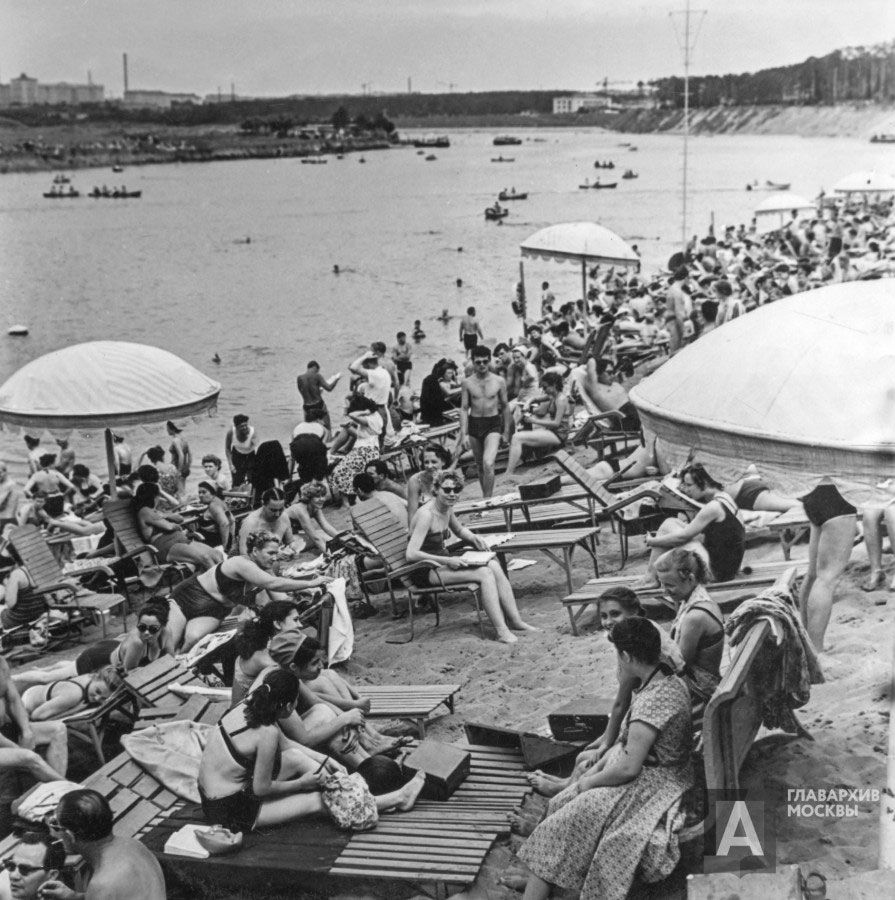
From that time to the present day, the only way to get to Serebryany Bor by land is through the Khoroshevsky reinforced concrete bridge, on which there is a permanent police post. This post quickly makes it clear what role you play in the life of the state. If you are a simple driver, then you simply will not be allowed into Serebryany Bor. Vacationers on foot immediately after the bridge turn left - there, hundreds of meters away, unorganized beaches and picnic areas begin. In summer, this place looks like a station square, noisy and crowded, a lot of garbage and drunk people. The elite have car passes; immediately after the bridge, expensive cars are taken to the right; there, on several clearings, there are houses of privileged members of society, and guards are posted near some of them.
In the late 80s, two young men appeared in the Moscow City Executive Committee - the highest governing body of the capital under the USSR: Yuri Luzhkov and Vladimir Yevtushenkov. Chemists by training, both worked in plastics factories, which probably brought them together.
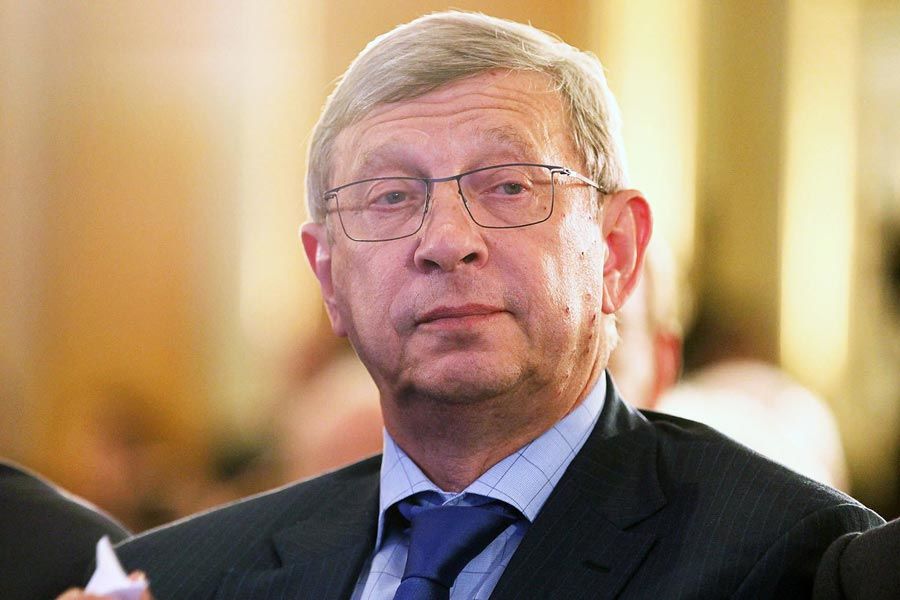
Very soon Luzhkov will become the head of the Moscow City Executive Committee, and later the mayor of the city. Yevtushenkov will be his subordinate, the head of the department of science and technology. These two were so close that journalists in the 90s confidently wrote about their relationship - they say they are married to sisters. This is not true.
In 1993, Yevtushenkov left the mayor's office, founding the Sistema company on the basis of Moscow state enterprises, which would succeed in a variety of areas - from logging to cellular communications. "System" will bring Yevtushenkov billions - he still does not leave the top hundred of the list of the richest Russians. But he also had a separate passion - Serebryany Bor.
Stalin's Mosdachtrest went to Yevtushenkov in the best traditions of privatization of the nineties. In 1993, Sistema received the first part of the shares. Their quantity and value are unknown; the media then wrote that Yevtushenkov got the shares as a result of some kind of investment competition. 5 years later, when the first Mosdachtrest reports were published, it became clear that the Moscow mayor’s office and Sistema with its associated persons ×
already have equal shares in this business - 40% each; who owned the remaining 20% was not indicated in the reporting ×
. In fact, Yevtushenkov controlled Mosdachtrest even then, since the mayor’s office, headed by an old friend of the businessman, was a kind of “sleeping shareholder.” The mayor’s office “slept through” the subsequent dilution of its share: in 2012, Sistema bought the last 20% of Mosdachtrest shares from Moscow.
For the time being, Mosdachtrest was a kind of housing office: it managed the dacha fund of the Moscow City Hall, housing people according to a quota set by the authorities “for special merits.” Everything changed in 2001, when preferential privatization of land was allowed in Russia, which allowed owners of buildings on leased plots to buy them from the state for 20% of the cadastral value, which is already significantly lower than the market value ×
. So Yevtushenkov was able to privatize state dachas in one of the most expensive places in Russia at a bargain price. By the way, this loophole was taken advantage of not only by Mosdachtrest, but also by individual nouveau riche and organizations that rented dachas in Serebryany Bor directly from the state (this is how, for example, the co-owners and top managers of Lukoil, headed by Vagit Alekperov, settled here).
For two decades, the new elite, represented by Yevtushenkov, fought mercilessly with the old one - the summer residents who settled in Serebryany Bor in Soviet times on an indefinite and almost free lease. Among those with whom Yevtushenkov fought were, for example, actors of the Moscow Art Theater and the Mayakovsky Theater, people's artists Vladimir Zeldin and Vera Vasilyeva and others. They paid the state a symbolic fee under Soviet contracts of “indefinite use” and thought that it would be forever. Mosdachtrest smoked out such summer residents, often regardless of their merits and ethics as such: they turned off people’s water and electricity, fenced off their plots, and so on. “Artists and scientists must understand that these are different times. Otherwise, some have become infected with star fever and believe that they should get everything for nothing,” said Mosdachtrest deputy director Mikhail Larin in 2003, hinting that the Soviet elite was no longer in honor.
And who is in honor? If you study the list of current residents of Serebryany Bor (the Project provides a detailed map of estates), it turns out that mainly four types of summer residents live here among the pines.
Who is honored in Serebryany Bor
Civil servants Marat Khusnullin, Patrushev family, Suleiman Kerimov
28
Businessmen Vagit Alekperov, Grigory Berezkin, Alexey Repik
25
Schemers and fixers Valery Bitaev, Yuri Volikov
Public figures Alexander Ovechkin, Oleg Gazmanov, Alexander Lyubimov
*The category of civil servants includes state and municipal employees, employees of law enforcement agencies and state-owned companies, State Duma deputies and members of the Federation Council
The largest group is Putin-era civil servants 
— here we included civil officials, security officials, as well as people not directly employed in the public sector, but thoroughly connected with the authorities. For example, we are talking about the Patriarch of the Russian Orthodox Church ~~Kirill~~ ×
. The second are large businessmen who succeed, among other things, on their connections with the state. Still others are famous personalities from the sphere of culture and sports, again having merits for the Kremlin. Finally, the fourth are all sorts of dubious individuals, “fixers” and their relatives, whose exact type of activity is sometimes very difficult to understand, although it brings them considerable wealth.
For the full list of residents of Serebryany Bor as of 2023, see the map:
Yevtushenkov’s most protracted battle for land happened with the family of the famous Soviet pilot, “Stalin’s falcon” Valery Chkalov. In 1938, shortly after the tragic death of the pilot, the authorities allocated a dacha in Serebryany Bor to the hero’s widow and children for indefinite use. Numerous descendants of Chkalov lived in this house for decades - they no longer had great connections and money in the new Russia, the house gradually fell into disrepair, but the land under it was worth more and more every day.
In order to evict the Chkalovs, Mosdachtrest fictitiously sold their land to a certain Bon-Investments company. The new owners announced that commercial cottages would be built on the territory of the dacha: they surrounded the Chkalovs’ dacha with a construction fence, posted security and cut off communications. The grandchildren and great-grandchildren of the legendary pilot sued Bon-Investments for three years, but the Supreme Court eventually decided to evict the famous family.
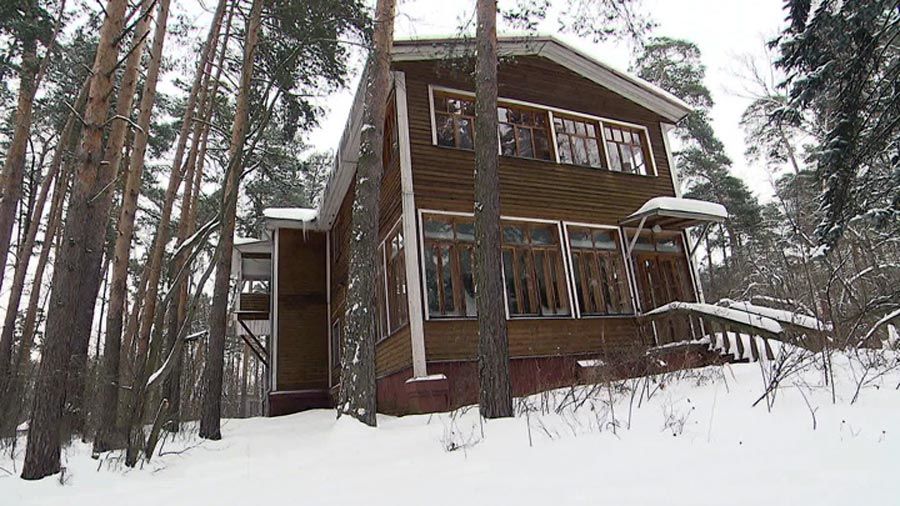
The history of the war between Yevtushenkov and Chkalov is indicative to understand how the “System” fought with the old summer residents in Serebryany Bor, using its connections, financial and family.
Firstly, the Bon-Investments company, which started the eviction of the Chkalovs, turned out to be secretly affiliated with the owner of Mosdachtrest himself. As Proekt established, the beneficiary of Bon-Investments, Tamerlan Osmayev, is an employee of a company that is associated with the Yevtushenkov family.
Secondly , Yevtushenkov had his own man in court, which probably predetermined the outcome of the case not in favor of the Chkalovs. The fact is that in the same Bor there is a dacha of a certain Yuri Volikov. This inconspicuous character is the figurehead of the current Deputy Minister of Justice ~~Oleg Sviridenko~~ . Now Sviridenko is in charge of including people and organizations in the list of foreign agents, and previously was the chairman of the Moscow Arbitration Court and deputy chairman of the Supreme Court for economic disputes.
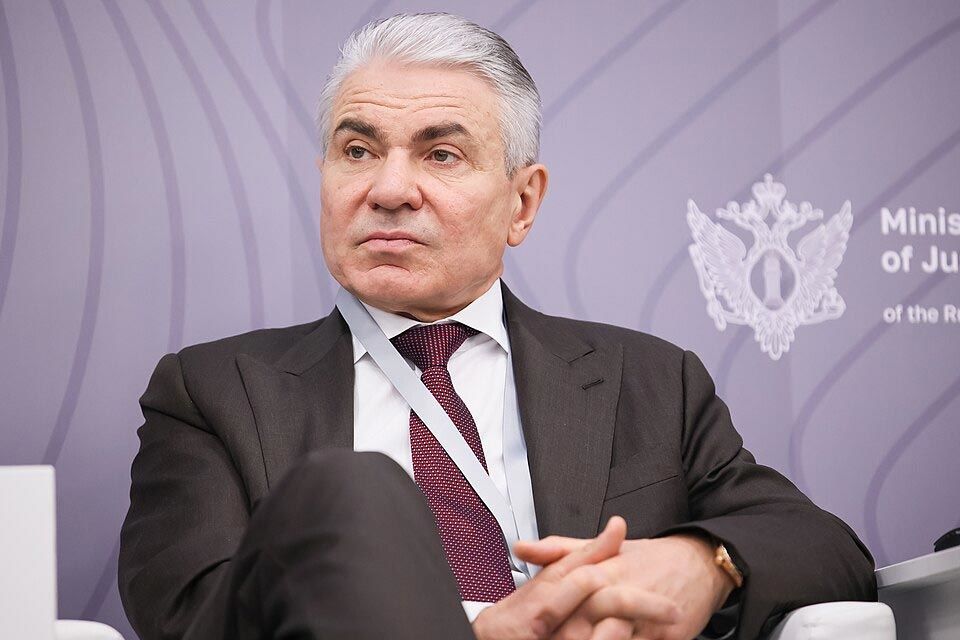
Volikov (Sviridenko) has been renting his dacha from Mosdachtrest since 1998, but pays ridiculously little for it - about 388 thousand rubles a year, as follows from the financial statements of Mosdachtrest ×
. For that kind of money in Moscow you can only rent a small studio on the outskirts.
Also on the lands of Mosdachtrest, Oleg Sviridenko’s nominee opened the only hotels in Serebryany Bor, Royal Zenit-1 and Royal Zenit-2, and Sviridenko’s wife Elena was employed by Mosdachtrest as a legal adviser, was on its board of directors and even owned shares - 0.01% ×
.
Thirdly , Yevtushenkov has such high-ranking relatives in uniform that a conflict with Chkalov’s family is trivial for him. As the “Project” established, Yevtushenkov became related to one of the leaders of the FSB, General Alexander Tikhonov, a close associate of the country’s long-time chief security officer ~~Nikolai Patrushev~~ .
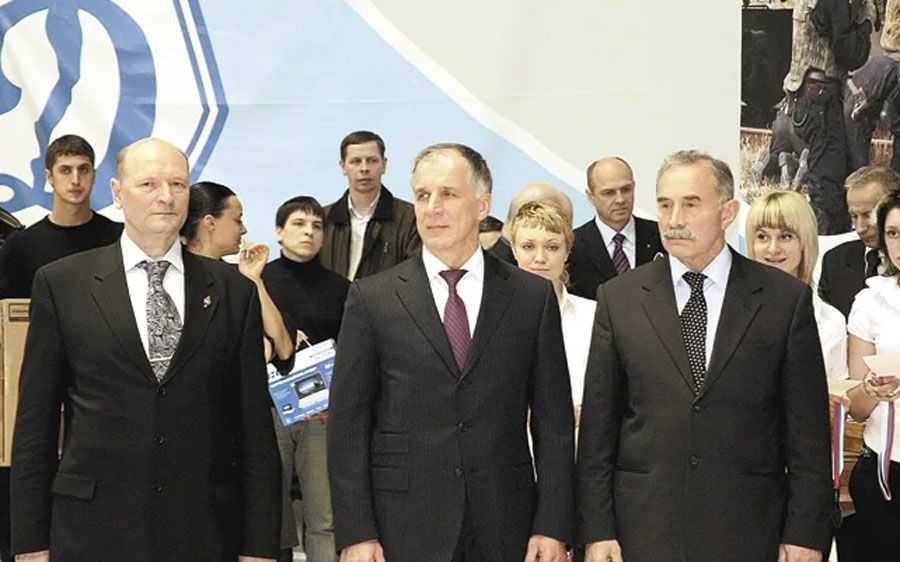
For 24 years, from 1998 to 2022, ×
Tikhonov permanently led the Special Purpose Center, which is engaged in the fight against terrorism and the release of hostages. In fact, Tikhonov commanded the Alpha and Vympel combat groups until 2022. It was Tikhonov who led the storming of the school in Beslan and the Theater Center on Dubrovka, which resulted in a large number of victims. Yevtushenkov's son Felix married Tikhonov's daughter Vera. The young people also got a house in Serebryany Bor - a kind of family settlement of the Yevtushenkovs and Tikhonovs was formed there. The old security officer received his house on the island back in the 90s from the state, and then privatized it. The house of Vera and Felix is about 400 meters away, and further away there are huge properties registered in the family of Vladimir Yevtushenkov.
Fourthly , Yevtushenkov directly benefited Patrushev, who for many years was the head of the FSB and the intelligence officer closest to the president. Mosdachtrest ceded the land in Bor to 70-year-old ~~Elena Patrusheva~~ , she is the wife of Nikolai Patrushev, with an annual salary of less than 500 thousand rubles. A huge house was erected on her site - one and a half thousand square meters - which the authorities immediately classified
. Rosreestr hid information about him, leaving a gray spot on the cadastral map ×
. But that’s not all: a little further away, Mosdachtrest rented out one of the houses to ~~Tatyana Razumilova~~ , the wife of ~~Andrei Patrushev~~ (the youngest son of Nikolai Patrushev)
. Probably, the lease, officially registered in the name of Tatiana’s brother Alexander Razumilov, ceased in 2024 ×
.
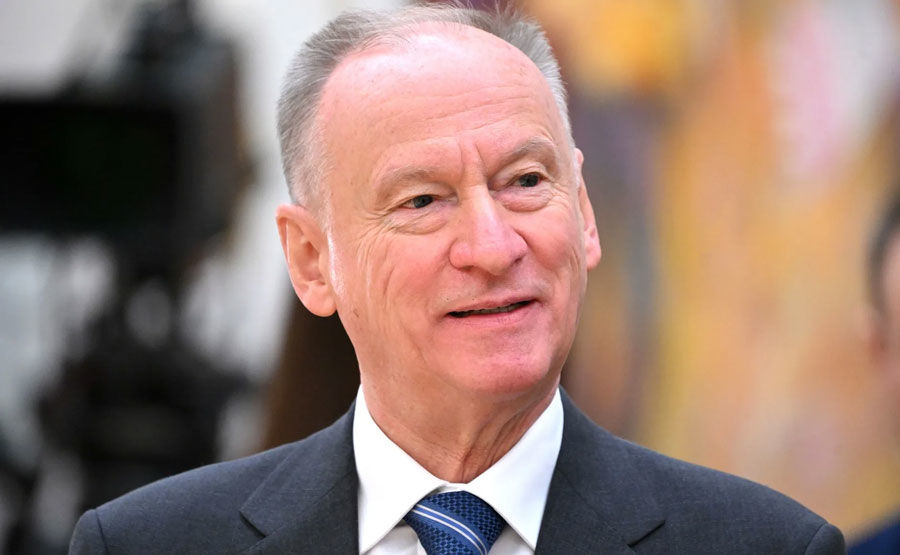
But Yevtushenkov’s most important gift to the Patrushev family is located about a kilometer from the house of the mother of the KGB family. There, a huge mansion - about 2600 sq.m. - was built by ~~Dmitry Patrushev~~ , Deputy Prime Minister of the government. This is also a gift to a woman; the house was registered in the name of another secret wife in our history. This is Patrushev Jr.’s companion ~~Marina Artemyeva~~ . Patrushev and Artemyeva received the land again from Yevtushenkov, and on such terms that this deal should become the basis for a criminal case of bribery.
To build a huge house, Artemyeva needed three cadastral plots - two purchased directly from Mosdachtrest, another from financier Aharon Papoyan, partner and investment director of the Aton group ×
, whose father bought this plot earlier. “Project” has at its disposal three purchase and sale agreements for plots, from which it follows that the sellers gave the land to the Patrushevs for virtually nothing. The first plot - 11.5 acres and a house of 330 square meters - went to Artemyeva for 117 million rubles, the second - 18 acres and a house of 94 square meters - for 105 million rubles. The market value of these houses at the time of purchase was more than 2 billion rubles. The deal with Papoyan was no less profitable: for 12 acres and a 300-meter house, Artemyeva and Patrushev paid 128 million, with the market value of this lot being about 840 million rubles.
Yevtushenkov settled Dmitry Patrushev’s family in Serebryany Bor in 2015, when a criminal investigation was underway against him on charges of laundering funds when purchasing Bashneft shares. The case began in the second half of 2014 - the businessman was placed under house arrest, the fate of his business seemed to hang in the balance. The fact was that the state-owned Rosneft, headed by Igor Sechin, the unofficial curator of Russian energy, had its eye on Bashneft.
As a result, Bashneft went to the state, but Yevtushenkov was released, and the criminal case was dropped in 2016 ×
. And the young Patrushevs happily settled in Serebryany Bor.
Vladimir Yevtushenkov, apparently, really loves Serebryany Bor. So much so that he managed to settle two of his families (out of four) here at once.
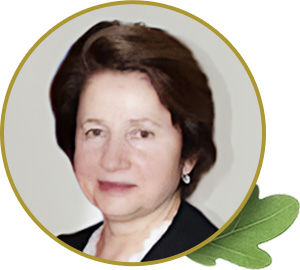
Felix Yevtushenkov is the son of an oligarch, born in marriage to Natalya Yevtushenkova. All public biographies of Yevtushenkov Sr. say that the couple is still together, and therefore Natalya must live somewhere right there, in the clearings of Serebryany Bor (after all, about 200 dacha buildings are associated with Yevtushenkov there).
But the truth is different - two hundred meters from Felix, literally in the next clearing, Yevtushenkov Sr. settled his other family. There, a huge mansion is registered to Elena Brusilova, who has been working in the Sistema structures for a quarter of a century and, apparently, started an affair with her boss. She was the president of Medsi, Russia's largest private network of medical clinics, part of Sistema. Yevtushenkov has never officially acknowledged his relationship with Brusilova, although he regularly appears with her at social events, goes to resorts, they have a 21-year-old daughter and a 17-year-old son.

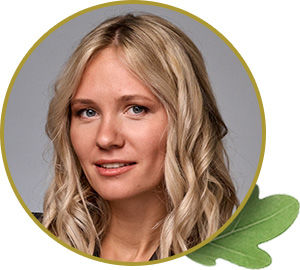
Yevtushenkov did not settle two more of his women and children in Serebryany Bor, but provided for them anyway. In 2015, 22-year-old Ozon employee Iloanga Ershova gave birth to 66-year-old Vladimir Yevtushenkov’s son. Four years later, they also had a daughter. By that time, Iloanga had been appointed director of development at Ozon, of which Sistema was a shareholder. At the beginning of 2020, Iloanga received a house in the heart of Rublevka - in the village of Zhukovka. In 2024, Ershova received a new gift - Yevtushenkov gave her a TV channel about fashion, Fashion TV.
— 51% of this business is registered to Iloangi’s stepmother Natalia Ershova ×
(in another episode of our special project, we talked about how the fashion business is a common gift from Russian corrupt officials to their mistresses).
Another secret family of Yevtushenkov was settled next to the Ershovs on Rublevka - in Razdory, a 450-meter house went to 61-year-old actress Tatyana Yakovenko. Her romance with the oligarch developed in the 90s and early 2000s - their joint son was born in 1992, and their daughter in 2003. Yakovenko also started a business related to television. The production film company "Kinomir" produces inexpensive films and TV series at the request of state television channels.
However, Serebryany Bor is not even the most “criminal” place to live in Russia. “The Project” for the first time tells the story of an inconspicuous corner in the very center of the capital, life in which gives local residents much greater status than real estate on Rublevka, Serebryany Bor, on the Sochi or Crimean rivieras. We are talking about Sparrow Hills, the center of Russian nepotism and corruption.
Many Muscovites and guests of the city do not even know that on Kosygina Street, just eight hundred meters from the most famous observation deck in the capital, people constantly live, and even top officials and major businessmen. State dachas were built in the 50s near the place where Kosygina Street meets Mosfilmovskaya - 10 houses stand in the depths of the block at the back of the Mosfilm pavilions, fence to fence with the Kremlin hospital on Michurinsky Prospekt. One dacha - probably the largest - is located on the other side of Kosygina Street, right on the slope of the Sparrow Hills overlooking the Moscow River and Luzhniki. An ordinary person cannot even drive up to these objects - there is a “no access” sign at the exit from the street.
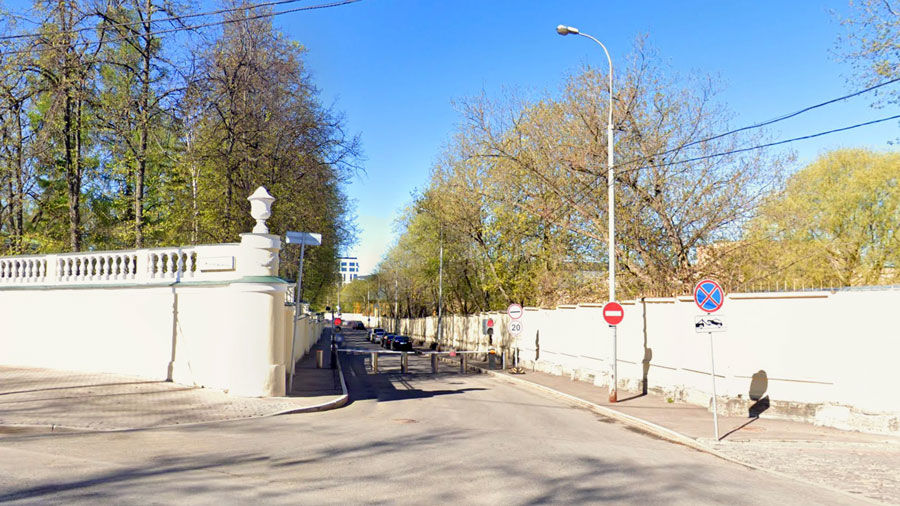
The ban is not accidental: once upon a time members of the CPSU Central Committee lived here, Nikita Khrushchev had his personal residence, and especially important guests of the USSR like Fidel Castro lived here during their visits. Since Soviet times, almost all local facilities belong to the state - they are managed by one of the divisions of the FSO, the Directorate for the Operation of Property of State Security Bodies ×
.
But the houses hardly stand idle for a day - the FSO management rents them out at government rates, in addition to receiving informal bribes from wealthy tenants. The decision on who to move into these dachas is made personally by the president of the country, two of the Project’s interlocutors know - a former top-level official and one of the ex-tenants of the local dacha ×
, and the head of the Kremlin administration selects the tenants.
Thanks to the indiscretion of Moscow designers who posted photographs of the protected object in the public domain, one can see: the dachas on Kosygin look outdated, like a sanatorium for the Soviet nomenklatura.
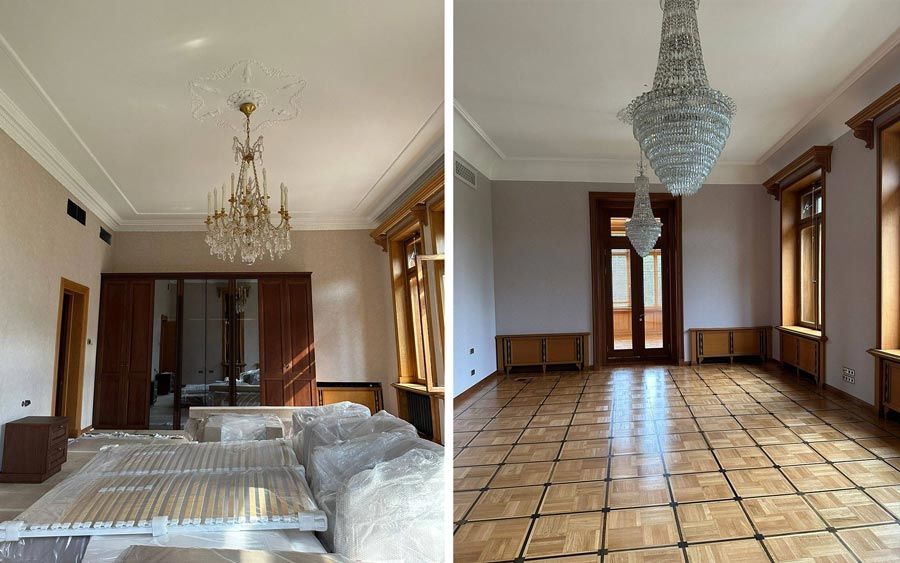
People settle here “for the sake of show-off” and proximity to power, and not for comfort,” explains a former official who has visited Kosygin more than once.
The former dacha of Khrushchev, the only one on the inside of Kosygina Street, was given for long-term lease to companies associated with Gennady Timchenko at the beginning of Putin’s rule.
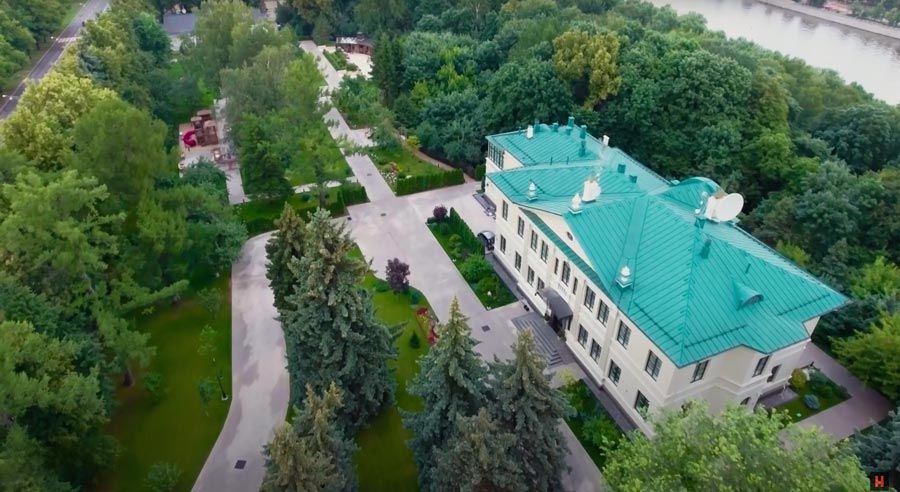
The dachas on the outer side of Kosygin, on the contrary, regularly change tenants and by their alternation one can study the history of Russian nepotism. In the center of the village there is house number 57 - for many years it has been assigned to Roman Abramovich, the only member of the so-called “family” of Boris Yeltsin, who retained the status of an oligarch close to the Kremlin even under Putin. Neighbors say that at least before the great Ukrainian war, Abramovich lived here infrequently - when he came to Moscow from his foreign possessions.
The house No. 2 closest to Michurinsky Avenue is assigned to the former President of Kazakhstan Nursultan Nazarbayev (he also visited here only on visits). These residents are one of the “old” ones. The rest of the houses are the patrimony of the head of the AP ~~Anton Vaino~~ and his friend, the oligarch ~~Suleiman Kerimov~~ (read the history of their financial closeness, as well as other episodes of Kerimov’s biography in another episode of our special project).
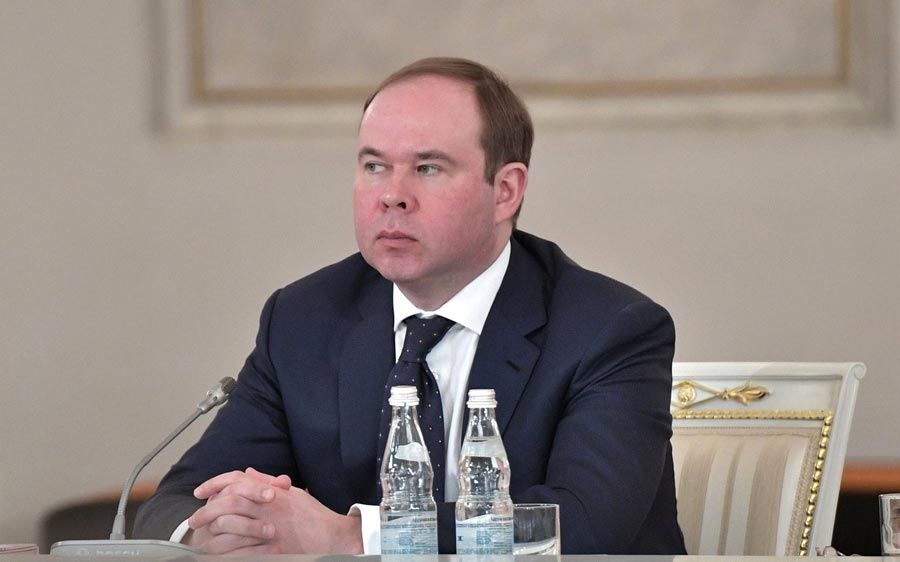
Kerimov has become a kind of commandant for this village - using his friendship with Vaino, he can evict and resettle other summer residents. Even Vaino’s own house, No. 67, is the former dacha of Senator Magomed Magomedov, who was expelled from here and eventually imprisoned with the participation of his fellow countryman Kerimov.
Kerimov himself occupied dacha No. 55. It really helped him out in 2024, when the head of Chechnya ~~Ramzan Kadyrov~~ declared blood feud on the senator. The fact is that the objects on Kosygina are under the protection of the FSO, in addition to the residents’ own bodyguards. Once in this village a small “Caucasian war” already happened. About ten years ago, a showdown between Kerimov and Kadyrov’s people took place at the dacha of Chechen businessman Ruslan Baysarov (he rents house No. 69). Then the Chechens tried to demand from Kerimov their unofficial share for the shares of the Uralkali company, but it did not work out for them. By the way, Dmitry Mazepin, the current owner of Uralkali
, who transferred control of the company to his managers due to sanctions ×
, who inherited the company from Kerimov, also received a dacha here - No. 59.
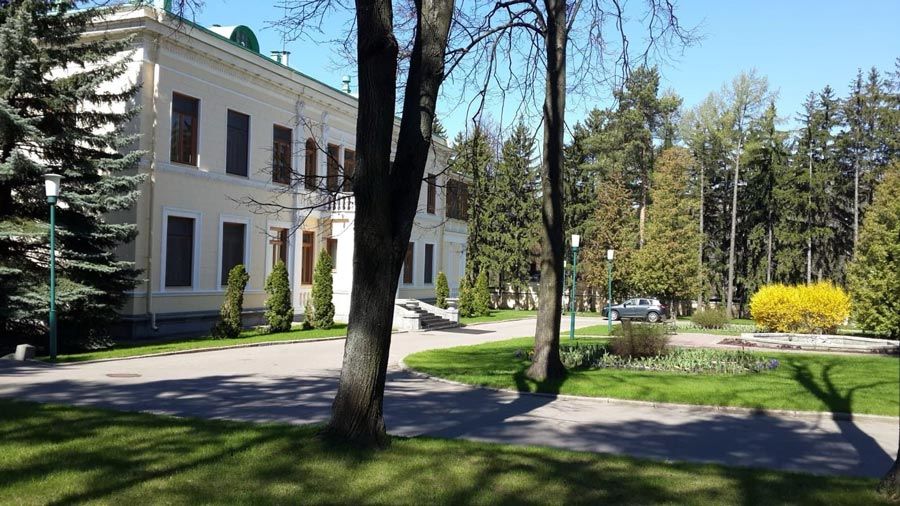
It was previously taken away from State Duma deputy Magomed Gadzhiev, who got involved in a conflict with Kerimov (read about this in another episode of our special project).
At some point, Kerimov got himself another dacha on Vorobyovy Gory: in house No. 61, the former deputy head of the State Fisheries Committee, Vladimir Burkov, who was connected with the senator, lived for some time.
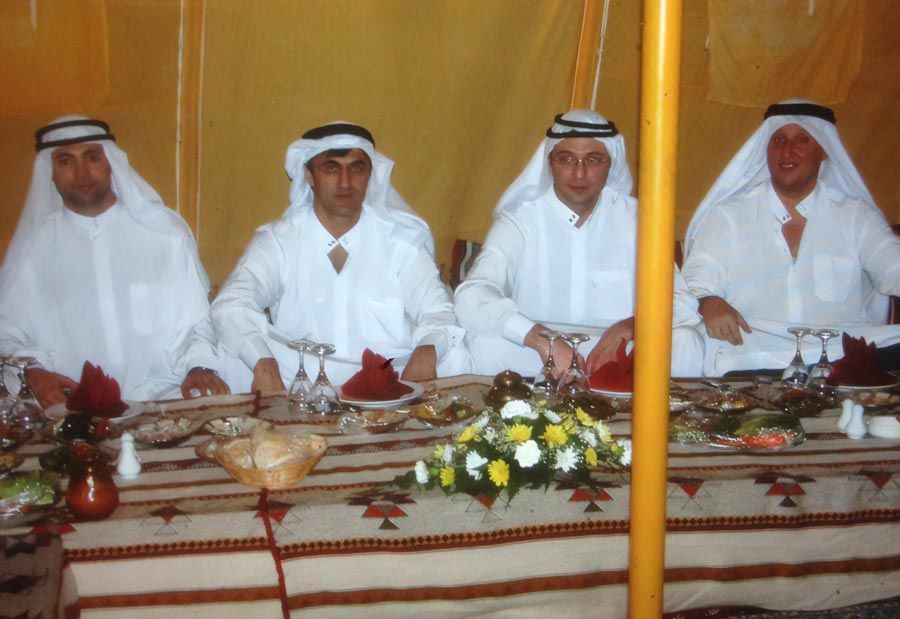
But Kerimov evicted him, and one of his wives, ~~Marina Petrenko~~ , moved into this dacha. However, over time, it also had to “densify”: shortly before the start of the second war in Ukraine, the top military leadership of the country, the then Minister of Defense ~~Sergei Shoigu~~ and the head of the General Staff ~~Valery Gerasimov~~ settled in Vorobyovy Gory (probably so that the generals would be closer to work, preparing an attack on the neighboring country). Shoigu received house No. 63, and dacha No. 61, where Petrenko lived, was given to Gerasimov. Shoigu refused to move to Vorobyovy Gory without his colleague, so even Kerimov had to come to terms.
However, the name of the most curious resident of this cooperative is unlikely to say anything to ordinary people. House No. 71 is occupied by “fixer” Vadim Zolotarev, who, like a gatekeeper, settled at the very entrance to the mini-village. Zolotarev worked for years with one or another dubious businessman: he was a partner and assistant of ex-senator and current State Duma deputy ~~Sergei Lisovsky~~ , the king of Russian show business from the 90s, then worked in the alcohol industry, was associated with the Rotenberg brothers, and was also involved in the diamond trade and, probably, something else. But that’s not why he settled on Kosygin Street, but because through Zolotarev, influential people can move into this holiday village.
Zolotarev negotiated with the leadership of the FSO through Lieutenant General Vladimir Makarov
, says the source of the “Project” ×
. Makarov worked in the FSO Economic Support Service, but in recent years he left the service and became an adviser to the Galaktika corporation.
largest developer of IT systems ×
, which is affiliated with Putin’s friend ~~Yuri Kovalchuk~~ .
How much do local residents pay for their dachas? The rent consists of monthly official payments to the FSO and regular additional fees (including in cash to the same General Makarov). On average, a dacha costs 3.1 million rubles per month, as follows from the payment document, which the Project reviewed ×
. It is difficult to assess the adequacy of this price - there are simply no analogues of such housing as on Vorobyovy Gory in Russia.
The “Project” studied the latest available declarations of residents of an elite dacha cooperative - neither Senator Kerimov, nor Deputy Gadzhiev (until he was evicted), nor the head of the AP Vaino indicated in their use those houses in which they actually lived. This is a gross violation of anti-corruption laws. One of many others we found while working on the special project “Fathers and Grandfathers.”