
Translated material
Warm heart and clean hands
Sixth scene
Warm heart and clean hands
Portrait of the Patrushev family, Chekist pochvenniks, secretly obsessed with wealth
November 14, 2025
Characters:
Nikolai, Dmitry, Andrey, Victor, Alexey, Vladimir Patrushevs and their numerous household members
On the night of October 8-9, 2007, a page article “We must not allow warriors to turn into dealers” signed by the director of the Drug Control Service Viktor Cherkesov appeared on the website of the Kommersant newspaper (and in the morning in the paper version). The day before, on Sunday, October 7, President ~~Putin~~ celebrated a milestone - he turned 55 years old. The article in Kommersant was addressed to the birthday boy, but was not particularly festive.
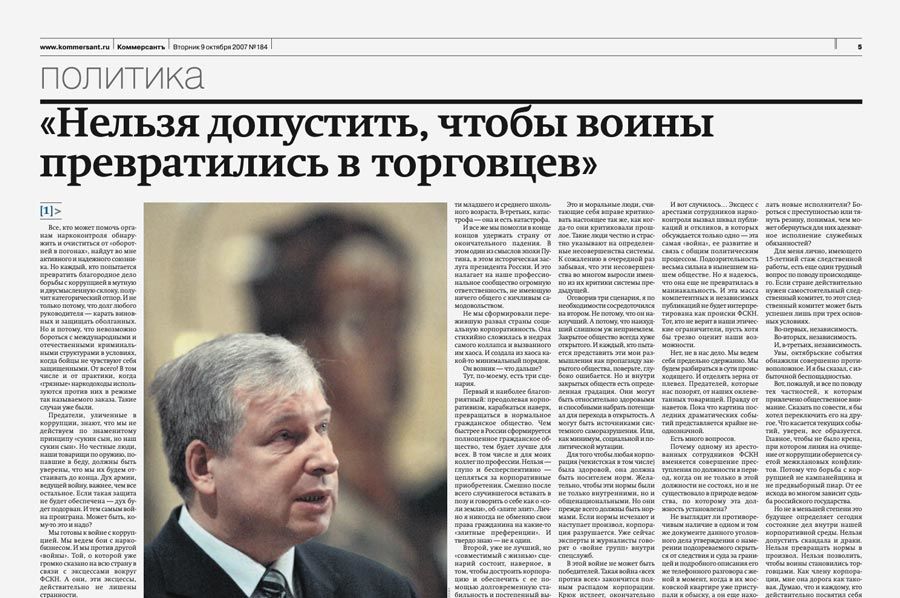
Cherkesov complained to Putin about their common long-time friend - ~~Nikolai Patrushev~~ , at that moment the director of the FSB, the security officer closest to the president. The relationship in this trio has always been difficult. Under the Soviets, Cherkesov was a big man in state security - he served as an investigator in the Fifth Headquarters of the KGB, investigated the cases of dissidents, and in his spare time he once wrote a journalistic article under a pseudonym. In the early 90s, Cherkesov became the head of the special service unit for St. Petersburg - this is a very high post. In 1998, as soon as Putin was appointed director of the FSB, he appointed Cherkesov as his first deputy - this was a sign of high trust. The Project’s interlocutor, who knew Cherkesov, recalled that Putin probably felt sympathy for his colleague - they both served in the “five” at the beginning of their careers, and besides, the anonymous writer, as many people who met him say, was not self-interested (investigators really did not find secret wealth on Cherkesov).
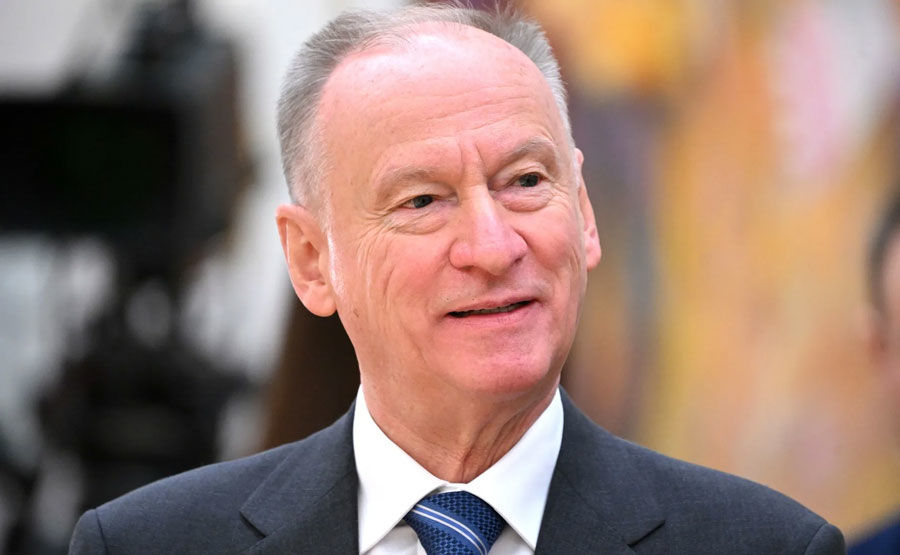
Patrushev is a different story: in the 80s, he served in the Leningrad KGB as an adjutant to General Oleg Kalugin: he probably looked after the disgraced intelligence officer on orders from the command, suggests an acquaintance of Kalugin ×
. By the collapse of the Soviet Union, Patrushev was engaged in the investigation of economic crimes in the St. Petersburg “office”. His colleagues then nicknamed him “the iron ass” because of his willingness to sit at his workplace all day and night. This skill brought success to Patrushev - one day his boss, Sergei Stepashin, noticed him sitting too long at work; Amazed by the officer’s perseverance, he will then take Patrushev to Moscow. However, young Patrushev had one more merit. As head of the economic department, he was supposed to investigate the first criminal case against the future president. It was Patrushev who received the “dossier of Marina Salye,” a Leningrad City Council deputy who led a parliamentary investigation into fraud in the city’s “Resources in exchange for food” program. Vice-Mayor Putin oversaw this program: raw materials were exported from St. Petersburg and the region to the West, and food was to be imported back. Many companies that received licenses to export metals, oil and other things were created by Putin’s acquaintances. They succeeded in exporting, but were not always successful in importing. Salye collected many documents that could well bury Putin’s career. But they didn't bury him. Having studied the papers, Patrushev found “no self-interest, much less corruption” in them, Stepashin recalled in his memoirs and was confirmed by Patrushev’s former colleague ×
.
However, even for such a service, Patrushev did not become Putin’s most trusted security officer. When in 1999 Putin was choosing a new director for the “office” to replace himself, he offered this post to Cherkesov. But he refused with the wording: he is not yet ready for such a high position. Putin doesn’t like refusals: the place went to Patrushev, and so he became the country’s main security officer. During the first years of Putin's power, Patrushev and Cherkesov fought administrative battles, figuring out which of them had “cleaner hands” and a “warmer heart” (this definition of a true security officer is attributed to the founder of the Soviet special services, Felix Dzerzhinsky). In 2007, the confrontation escalated: Patrushev’s people arrested Cherkesov’s deputy, who was bugging “office” officers involved in corruption. And Cherkesov decided to write a new article. In Kommersant, he appealed to Putin as the bearer of the true values of state security: there is a “war within the Chekist community,” the leaders of the FSB have turned from “warriors” into “traders,” this will lead the country to collapse, so the only thing that could hold it back, as it once did, is some kind of “Chekist hook.” But it turned out that Putin did not like Cherkesov’s pathetic slander. He dissolved the anti-drug agency, and since then Cherkesov himself has been hanging around in unimportant positions and suffering greatly.
Cherkesov died in 2022. The quarrel with Patrushev and, as a result, with Putin undermined not only the career of the unsuccessful publicist, but also his health. And Patrushev, who then gained the upper hand, became the head of a real family company of “merchants”. Our story is about this family.

Nikolai Patrushev’s first major post was the leadership of the Ministry of Security of the Republic of Karelia (1992−1994) - this was a transitional time when the KGB, abolished after the communist putsch, changing names, turned into the FSB. In Karelia, Patrushev acquired acquaintances, probably started an affair with a local woman, but most importantly, he began to trade in his patronage. The then Karelian businessman Lauri Rautio recalled that the management of the Karelian “office” did business with the “Tambov” authorities from St. Petersburg, helping them to import goods through the customs post in Vyartsilya without any problems. For his help, Patrushev received as a reward from the Tambov team a used Toyota Corolla car imported from Finland - they were imported to Russia by one of Rautio’s companies.
Let no one be embarrassed by the fact that the future chief security officer and leader of a wealthy bureaucratic clan had a used small car. In the 90s, when Patrushev was making a career in the FSB, the employees of this special service, like the country as a whole, were not very well off. Allowances were withheld, causing qualified officers to leave for the private sphere. Those remaining in the authorities failed one high-profile operation after another - from the storming of Budyonnovsk captured by terrorists to the absurd murder of the commander of the Alpha group shown live in Moscow by their own subordinates - all this was the result, among other things, of the “office”’s chronic underfunding. Putin and Patrushev, having come to power in the country and in the FSB, rushed to solve this problem in the ways they knew how - they forced businessmen to privately chip in money for the prosperity of the authorities. This was discussed at the very first meeting of the president with the richest businessmen in July 2000: Putin ordered the oligarchs to create a “fund for supporting the special services,” which immediately raised “several tens of millions of dollars,” Forbes magazine wrote, citing participants in the meeting ×
. Subsequently, there will be several such funds; a particularly important role in them will be played by the personal billionaires of the Patrushev family, Igor Kesaev and Sergey Katsiev (more on them later).
In the 90s, a circle of his closest confidants and colleagues in the “office” formed around Patrushev - many of them moved with him to Moscow from Karelia. They were all corrupt too.
Patrushev's big "family"

Vladimir Pronichev
He commanded the border troops in Karelia during Patrushev’s work in the republic. In 1994, he became Patrushev's successor as director of the republican intelligence services. Later - first deputy director of the FSB, oversaw the most important areas - the fight against terrorism and the protection of the constitutional order. In 2003–2013, he commanded the border troops of the FSB. He left the service amid criminal cases of corruption against the leadership of the agency for the development of the state border. Also the founder of a clan of civil servants (two daughters head large state museums). *
Valentin Chuikin
Patrushev also took his Karelian driver and colleague to Moscow, where he rose to the rank of deputy director-manager of FSB affairs. While still serving in Karelia, he was noticed for corruption. Chuikin died in a plane crash in the summer of 2004 - he loved to sit at the controls of the rare Li-2 aircraft. *
Rashid Nurgaliev
He grew up in the Karelian village of Nadvoitsy, where since Stalin’s times there were camps for prisoners who built the White Sea-Baltic Canal (Nurgaliev’s father served as a security officer in one of the colonies). He went through all the steps of the career ladder in the Karelian KGB department. Since 1992, he served in Petrozavodsk under the leadership of Patrushev. In 1995, following his boss, he left for Moscow, where he worked in the Kremlin, and then was deputy director of the FSB. In 2003 he became Minister of Internal Affairs; The Ministry of Internal Affairs under Putin is a structure subordinate to senior comrades from the “office”. Almost the first thing after his appointment as head of the Ministry of Internal Affairs, Nurgaliev addressed his subordinates with an open letter, where he promised to overcome corruption in the police in one month. This, of course, did not happen. *
Vladimir Anisimov
Patrushev's adjutant from Karelia. The boss took Anisimov to Moscow, where he rose to the post of deputy director of the FSB. He is known for his commercial ties with big business: since 2007 he has been working in the structures of billionaire Igor Kesaev. *
Yuri Zaostrovtsev
Hereditary KGB officer, in 1992 he worked under the command of Patrushev in Karelia. Then he worked in the Kremlin, and from 1998 to 2004 he served in the central office of the FSB, including as deputy director in charge of the fight against economic crimes. He was suspected of corruption more than once; in particular, he was involved in a criminal case involving the smuggling of furniture through the Three Whales shopping center. *
Boris Gryzlov
Patrushev's classmate at school No. 211 in Leningrad, later a friend of the Patrushev family. In 1993, together with Elena Patrusheva, the wife of Nikolai Patrushev, he founded the Borg company in St. Petersburg, which exported scrap metal. His political career began in 1999 with Putin’s rise to power - Gryzlov became the leader of the pro-presidential faction in the State Duma. In 2001-2003 - Minister of Internal Affairs of Russia, in 2003-2011 - Speaker of the State Duma. Participated in the scandalous “Clean Water” program - the production of dubious filters for water purification at state expense. *
Alexander Bortnikov
He worked in the Leningrad KGB together with Patrushev and Putin since the 70s. Since 2004 - Deputy Director of the FSB. Since 2008 - Director of the FSB. He privatized the territory of the former departmental KGB kindergarten on Rublyovka and a few months later sold the land to Igor Kesaev for $2.5 million, which can be regarded as a camouflaged bribe ( Novaya Gazeta found out earlier). *
Victor Ivanov
A friend of Gryzlov and his family from the time when both studied at the Leningrad Electrotechnical Institute of Communications. In the general circle I also met Patrushev. In the 70s and 80s he served in the KGB and maintained an acquaintance with Patrushev’s future driver, Valentin Chuikin. In the 90s he worked in the mayor's office of St. Petersburg and in the central office of the FSB. In 2000, at Putin’s suggestion, he became deputy head of the presidential administration, where he oversaw personnel issues for four years. As former KGB officer Yuri Shvets argued in the London court in the case of the murder of Alexander Litvinenko, Ivanov patronized the Tambov organized crime group. *
Victor Yurakov
Leningrad friend of the Patrushev family. In 2003, he became the rector of one of the two largest defense universities in the country - St. Petersburg Voenmekh. In 1993, he was under investigation for extorting bribes from businessmen for the provision of positions, apartments, city premises for offices, cafes and restaurants. In 2004, already as acting the rector, a case was initiated under the article “negligence”, and again because of the allocated real estate, now the university. *
Sergey Smirnov
Another classmate of Patrushev and Gryzlov. He worked in the Leningrad KGB, then the FSB. Since 1998 - at work in the central office of the FSB, from 2000 to 2020 - deputy director of the FSB, in charge of the most important areas: military counterintelligence and the fight against economic offenses. He was involved in many corruption scandals and was associated with the cash market. *
Yuri Ignashchenkov
A probable relative of Nikolai Patrushev through his wife Elena (nee Ignashchenkova). Together with Patrushev, he attended higher KGB courses in Minsk and since 1975 worked in the Leningrad KGB together with Vladimir Putin. In 1996, he moved to the position of head of the security service of the St. Petersburg Sheraton Nevsky Palace hotel, but in November 1999 he returned to the FSB, going to work as a representative of the intelligence service in the United States. In 2000, he returned to Russia and worked for four years in the presidential administration and in the presidential administration, dealing with citizenship issues. In March 2004, Ignashchenkov headed the FSB department for St. Petersburg and the Leningrad region, replacing Alexander Bortnikov in this position. Since 2007, he worked as the head of the control service of the central office of the FSB. In recent years, he has accompanied Nikolai Patrushev at public events as part of his retinue.
‹
›
Patrushev would call all these people “neo-nobles” in 2000. Patrushev used the term “neo-nobles” to describe FSB officers in an article for Komsomolskaya Pravda in 2000 ×
. At first it seemed that the director of the “office” was simply using a rhetorical device in order to show that the prestige of the security service had finally been revived after the decline of the 90s. Later, however, it turned out that Patrushev was not exaggerating at all. In 2007, he, his sons and his wife received the title of hereditary nobles from “the head of the Russian Imperial House, Grand Duchess Maria Vladimirovna Romanova” (she herself uses this spelling of her title). This Spanish subject is one of the indirect heirs of Nicholas II; after perestroika, she launched a vigorous activity in Russia: she supports Putin and satisfies the craving of security officers and corrupt officials for court ranks.
Family has always meant a lot to the nobleman Patrushev. During the Soviet years, his parents (father a sailor, mother an employee) received from the state 20 cubic meters of logs and a plot of land in the Priozersky district of the Leningrad region, where the whole family built a wooden house. “Seven rooms for seven families, it’s a bit cramped, but there’s enough space for everyone,” said ~~Viktor Patrushev~~ , the elder brother of the country’s chief security officer, in a 2007 interview. It turns out that married couples Nikolai and Victor with their spouses, their parents, as well as the families of Victor’s sons - ~~Alexey~~ and ~~Vladimir~~ and the families of Nikolai’s sons - ~~Andrey~~ and ~~Dmitry~~ received a room. In that interview, the brother of the state’s chief security officer openly pressed for pity: he lives in a modest three-ruble ruble in St. Petersburg, where “the only valuable thing is a family icon donated by his younger brother.” And this apartment was given to the Patrushevs not through connections and patronage, but for the money Victor honestly earned from “unloading wagons.”
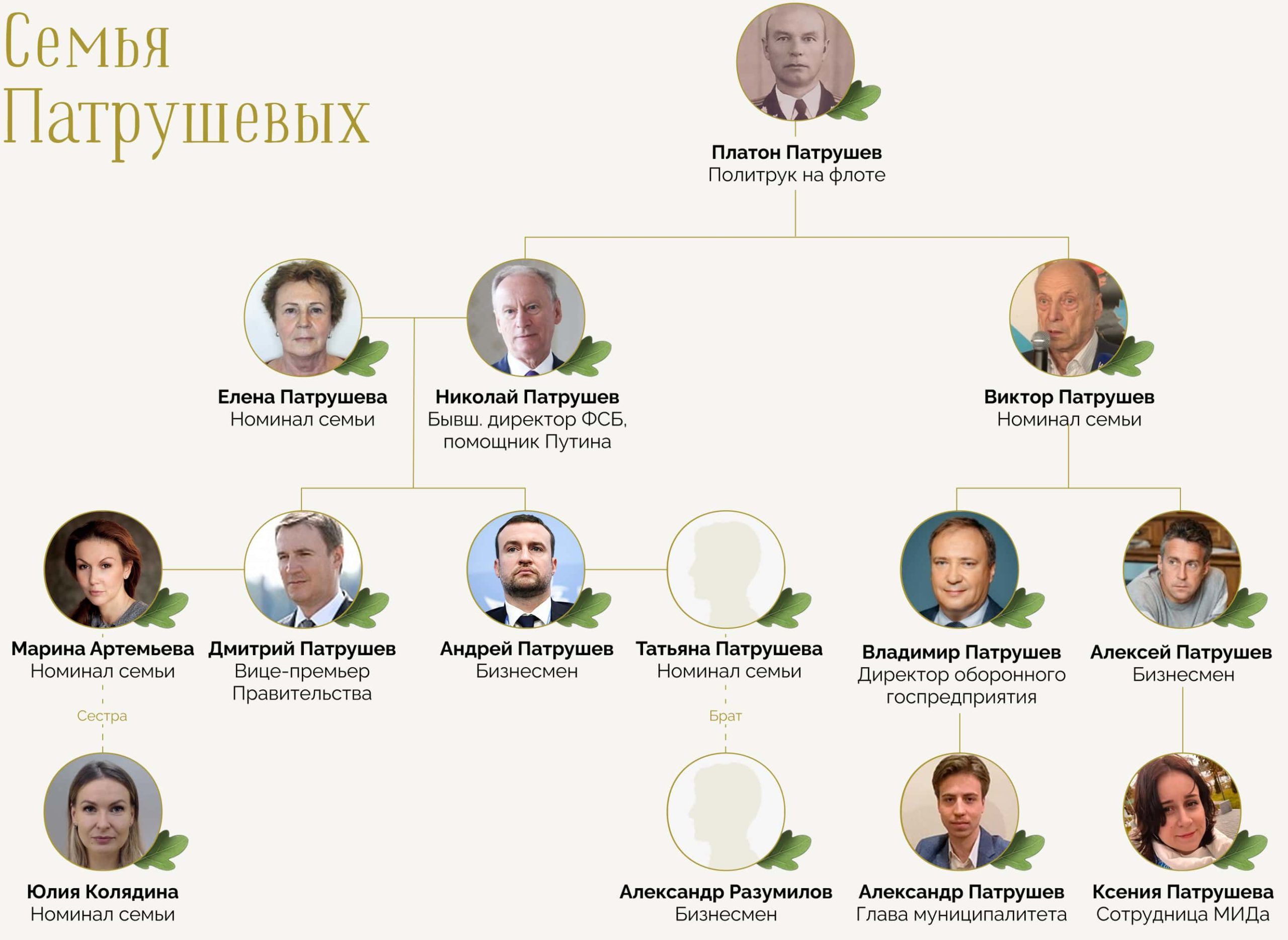
In general, Viktor Patrushev, although he was not a security officer, did not particularly shine in public. Why did he give the first and only interview in his life? The fact is that not long before that, the Patrushev family was embarrassed. Journalists found out that the Patrushevs arranged a tourist trip to the South Pole at state expense. They first flew to Chile on an FSB official plane, and from there, again on a government helicopter, flew to the Russian base in Antarctica. Among the passengers on these flights were as many as three Patrushevs (the head of the FSB Nikolai, his son Andrei, at that moment a graduate of the FSB Academy and an employee of Rosneft, and brother Viktor), as well as the bosom friend of the FSB director, also a security officer ~~Vladimir Pronichev~~ , at that moment the head of the border service. The authorities could not explain what this company was doing in Antarctica, where there are no border posts, and what’s more, on New Year’s holidays, and Victor had to take the rap for everyone: his interview was published in the servile newspaper Izvestia and was intended to show that the Patrushev family was alien to material wealth.
But what really? In reality, the Patrushevs made money for years on informal rent - they provided various companies (often dubious) with “amulet” services. Russian businessmen, as a rule, use this term to designate a famous person whose presence in the company should protect the business from government claims and raids by bandits.
Victor Patrushev, like his younger brother, graduated from the Leningrad Shipbuilding Institute and worked in a design bureau, from which, when the Union collapsed, he left to work as a car mechanic, Victor himself stated in the same interview ×
. The mechanic's career took off at lightning speed as soon as his brother headed the FSB in 1999 - Victor was hired as deputy director for the North-West at the Megafon cellular company. Megafon was then connected with Putin’s entourage - its secret shareholder was probably Leonid Reiman, a Leningrad telephone operator, whom Putin appointed Minister of Communications before even becoming president: from August 1999 - head of the State Committee for Communications, from November - Minister ×
. This was the beginning of the great but non-public career of Viktor Patrushev. Next, he joined the boards of the Dynamo sports society (supervised by the FSB) and the Dynamo-Leningrad Region volleyball club (volleyball is the favorite sport of his security officer brother). He was also appointed a member of the board of directors of the Sochi sanatorium named after Frunze - security officers rest there, although the facility belongs to the tobacco oligarchs Kesaev and Katsiev. In 2012, Victor became president of the St. Petersburg company Nord, which belongs to gangsters from the same Tambov group with whom his brother Nikolai collaborated. Over 80% of Nord's capital was controlled by the family of Sergei Shevchenko. Shevchenko is an accomplice of the Tambov gang leader Vladimir Kumarin. In 2001, Shevchenko was tried for extortion, and in 2004 he was killed in Cyprus. Another Tambov man, Mikhail Glushchenko, was convicted for this ×
. This legal entity was registered with large assets that were formally in no way connected with the interests of the security officers: the Metropol hotel and restaurant (not only did Leonid Brezhnev and Ronald Reagan dine there, but also hosted the most important gatherings of St. Petersburg thieves), the Grand Palace boutique gallery, the Ladoga furniture factory and the Lenteplopribor enterprise.
~~Alexey~~ - the youngest son of Viktor Patrushev - continued his father’s work. For several years, he was listed as an adviser to the head and main owner of the Moscow Master Bank, Boris Bulochnik (later Alexey also became deputy chairman of the bank’s board). This bank, which owned the largest fleet of cash-in-transit vehicles, was well known as a major player in the cash-out market. Despite its notoriety, the bank was not touched until 2013 - maybe because of Patrushev, maybe thanks to the second “amulet” in the leadership - it was ~~Igor Putin~~ , the president’s cousin. When the bank’s license was finally revoked, its owner was already living abroad, and the authorities had no questions for Patrushev and Putin. The same Alexey “protected” various logging companies in his uncle’s “spiritual homeland”, in Karelia 
— served on the boards of directors of Management Company Segezha Group and Lakhdenpokhsky LPH, had shares in the companies Rauta-les, Stroylesprodukt and LesStroyProekt ×
.
The second son of Viktor Patrushev ~~Vladimir~~ is destined for a government career - he works as a big boss in the structures of Rostec. His son ~~Alexander~~ at the age of 19 got a job at Rosselkhozbank, which was then headed by his uncle Dmitry, the son of Nikolai Patrushev. He later left the bank, not because of any obvious conflict of interest, but to become a politician. At the age of 22, Alexander became a deputy, and four years later the head of the village of Sosnovo, this is where the neo-noble Patrushevs built a family nest from logs provided by the state.
The sons of Nikolai Patrushev immediately chose the sovereign's service. The youngest son Andrei, having served in the FSB, began working at Rosneft in 2006 and immediately became an adviser to ~~Igor Sechin~~ . In 2011, he went to work for Zarubezhneft, and two years later to Gazprom. Since 2019, Andrey, like his relatives, has retrained as an “amulet”: he received 10% of the Arkhangelsk Sea Commercial Port, shares in the companies “Marine Arctic Geological Exploration Expedition” and “Transtelesoft”
key owner - Transmashholding of Andrey Bokarev and Iskander Makhmudov ×
, which earns money from contracts from Russian Railways.
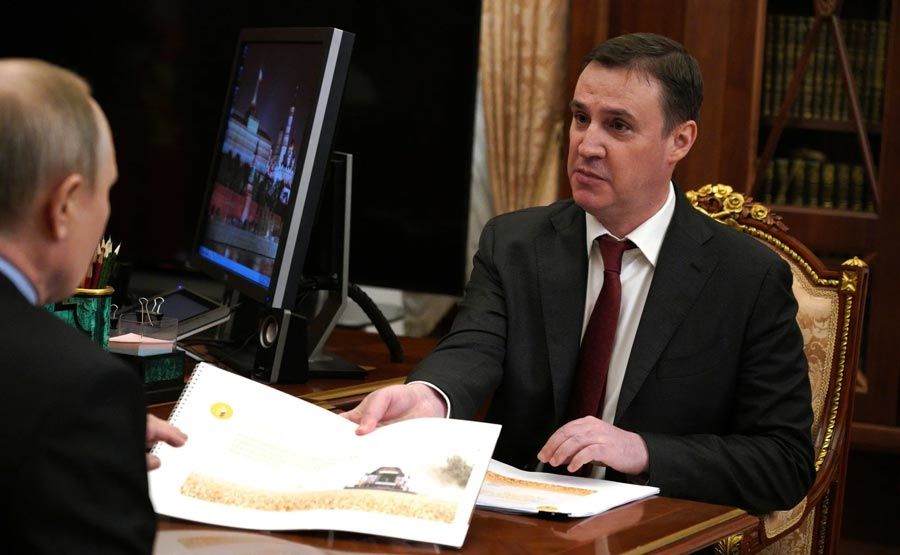
Nikolai’s eldest son Dmitry is now the main star of the civil service in this eminent family. He made a career in state banks, heading Rosselkhozbank in 2010, and later joining the cabinet of ministers. For several years now, journalists and experts have been calling this Patrushev one of Putin’s likely successors as president - this assumption is based, among other things, on the fact that Dmitry’s government career is only moving upward, now he is the deputy prime minister of the government. State media sing odes to Dmitry: he is a simple and caring business executive who constantly thinks about Russia.
However, in the large Patrushev family there is one inconspicuous person who seems to have been created specifically to destroy the myth of faithful, unmercenary servants. This is Dmitry’s unofficial wife ~~Marina Artemyeva~~ - she did not take her husband’s surname and was not legally married to him - probably so that any property could be registered on her, from houses and apartments to billion-dollar companies.
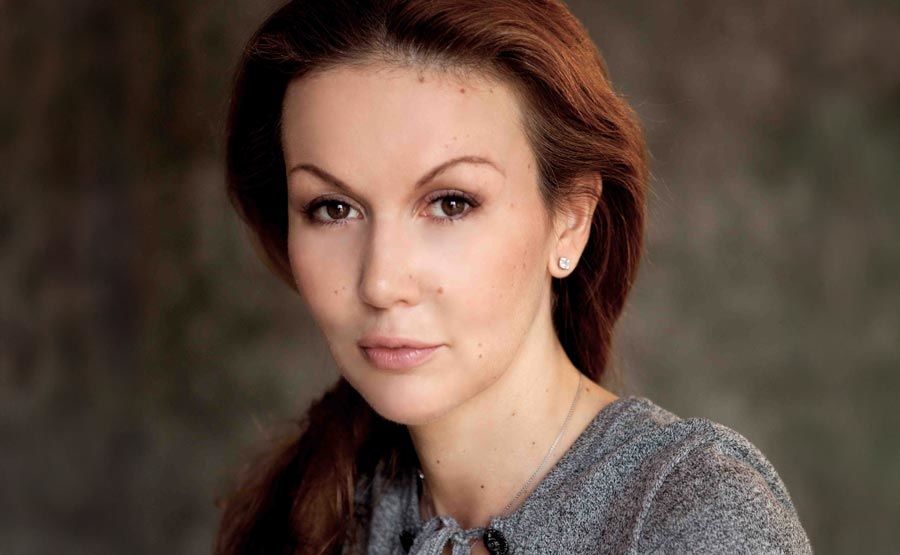
In general, Dmitry more than 20 years ago married the young lead singer of the folk group “Ivan Kupala” Elizaveta Garshina, who managed to give birth to his daughter Sofia. In 2009, married Dmitry was at a party with friends, where he met 35-year-old Marina at that moment
this version of dating was once described by “ Interlocutor ” ×
.
Before meeting and the subsequent romance, Marina was not successful. She was born into a single-parent family in Elektrostal, near Moscow, where she lived throughout her childhood and youth with her mother and half-sister Yulia Kolyadina. All three women plus a Rottweiler huddled in 33 square meters of a one-room apartment in a Khrushchev building.
Since the late 90s, Marina tried her hand at Moscow - in minor positions in small companies. Gradually, the family moved to the capital - they settled in a “panelka”, first in Strogino, and later in Varshavka. The sisters - pretty girls - were very interested in the fashion and entertainment industry, tried their hand at photography, design, and organizing events. Kolyadina was the first to appear on the World Fashion Channel (WFC) in 2007 - she was hired there as a correspondent without a salary. Soon she brought her sister with her - an ordinary producer. At that time, WFC could be watched on a variety of cable networks - beautiful girls on the catwalks were shown on wall screens almost everywhere - in sports clubs, stores, restaurants.
But the meeting with Patrushev Jr. changed everything in Marina’s life. Firstly, she almost immediately became pregnant - their first child, a boy named Plato, in honor of his great-grandfather, would be born about a year after the meeting. Then there will be four more children - Egor in 2014, Ignatius in 2019, twins Maria and Antonina in 2020.
Secondly, the young mother received a valuable gift - the Patrushev family presented her with a fashion TV channel, where she had just gotten a job as an ordinary producer. In 2009, oligarch Igor Kesaev became the actual owner of WFC, according to the Project’s interlocutor, who is familiar with the history of WFC, Kesaev began investing in the channel in 2009, and de jure will enter the capital in 2011 ×
- he is the “wallet” of the Patrushev family, from which their various material needs are financed. The then manager of WFC recalls a revealing detail: Kesaev, a prominent man in the prime of his life, was interested in the company of young models, so he also had a personal interest in the deal. However, in the press the buyer presented the matter as if he had bought the TV channel for his wife, Stella Kesaeva, who, they say, decided to try her hand at the fashion industry. It was a bluff: after some time, Kesaev would divorce Stella and get together with the young Ukrainian model Olga Klimenko, who hosted a program on her man’s TV channel with the ambiguous title “Yes, Chief!”
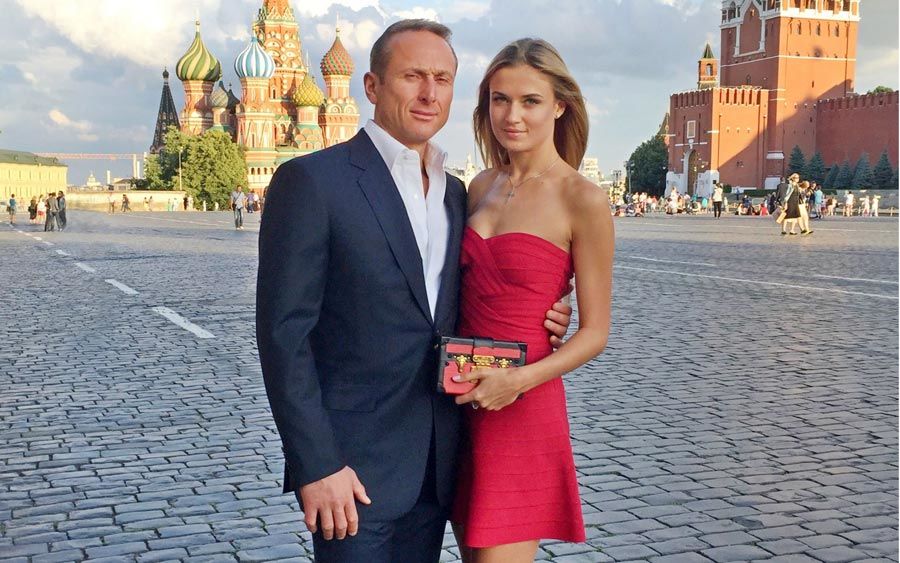
In 2011, Kesaev appointed Artemyeva first as general producer, and at the end of the same year as general director of the TV channel. On November 21, 2014, a day after Artemyeva gave birth to Patrushev’s second son, ownership of the television company was transferred to her, literally as a gift for the birth (80% belonged to Artemyeva until February 2018 ×
.
As a result, Artemyeva did not succeed in any fashion business. “She wanted to hang out at all the parties. However, this world (fashion and show business) did not accept her,” says one of the key people at the channel at that time. Television broadcasting, which initially covered Europe and Asia, was curtailed. Now WFC is essentially a Russian fashion website.
However, failure in the fashion business did not affect the rapid career of entrepreneur Artemyeva. Over the next years, the young woman, tirelessly giving birth to children, became the owner of a dozen companies. Probably, in all cases, she was a nominal businesswoman - either, again, a “talisman”, or simply a recipient of money in the form of salaries, dividends and shares from transactions with assets.
How did it happen that the woman who gave birth to Dmitry Patrushev five children never became his legal wife? The point is probably that if Marina had been included in her husband’s official declaration, the Patrushevs would have become the wealthiest family among Russian officials. “The Project” found all the numerous properties registered in Artemyeva’s name to come to an amazing discovery: yesterday’s inhabitant of the “Khrushchev” owns real estate worth about 6.5 billion rubles
. We valued its residential real estate at 6 billion rubles, commercial real estate in Moscow City, Lotos Business Center and Vodny Business Center at half a billion ×
. Taking ownership of expensive property is the lot of all women in the Patrushev family. For ~~Elena~~ , the wife of the former director of the FSB, a retired doctor, real estate worth 4 billion rubles was registered 
- it was included in the declaration ×
. The same is with ~~Tatyana~~ , the second daughter-in-law of Nikolai Patrushev, a medical manager by profession
— in recent years she worked as development director at the network of Mother and Child clinics, and until 2021 at Rosgosstrakh ×
. According to documents, she owns several medical companies, including the specialized magazine Vademecum, but this business can hardly explain the fact that her real estate is worth almost 3 billion rubles. Of course, Tatyana’s possessions were never included in the Patrushevs’ anti-corruption declarations. If you add up the cost of all the Patrushevs’ real estate properties that we have identified, you get an astronomical amount - about 14 billion rubles. This looks like a record among Russian security forces.
The most expensive houses and apartments of the Patrushev family:
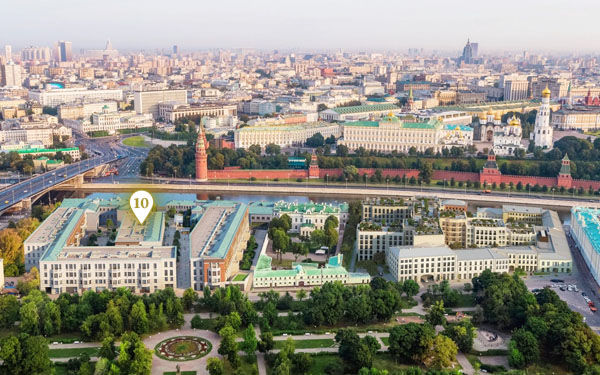 Moscow Sofiyskaya embankment 10, residential complex "Golden".
Two apartments in a residential area directly opposite the Kremlin with VIP service. Owner: Marina Artemeva
750 million ₽ * 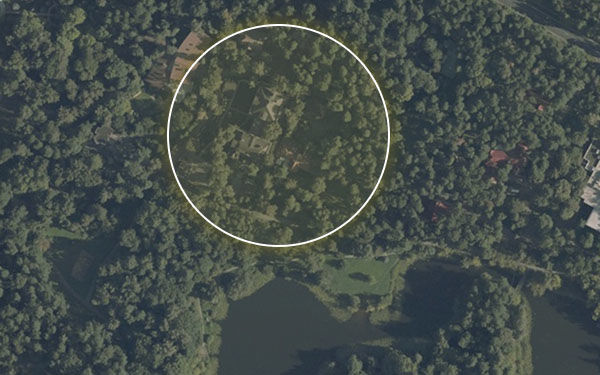 Moscow Tamanskaya st. 79
More than 40 acres in Serebryany Bor with several mansions on it. Owner: Marina Artemeva
2.8 billion ₽ * 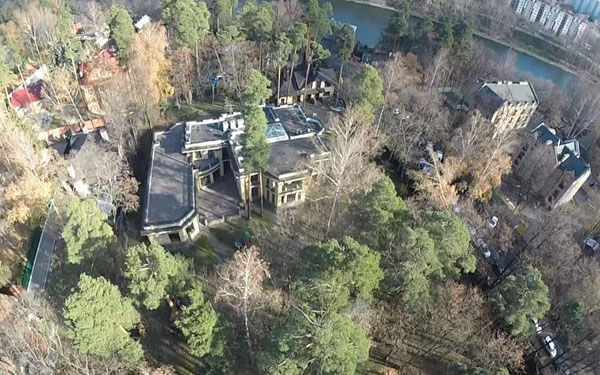 Moscow 1st line of Khoroshevsky Serebryany Bor, 23с1
A couple more plots in Serebryany Bor are registered to Patrushev’s wife Elena - they were found by Alexei Navalny back in 2014. Owner: Elena Patrusheva
3.9 billion ₽ * 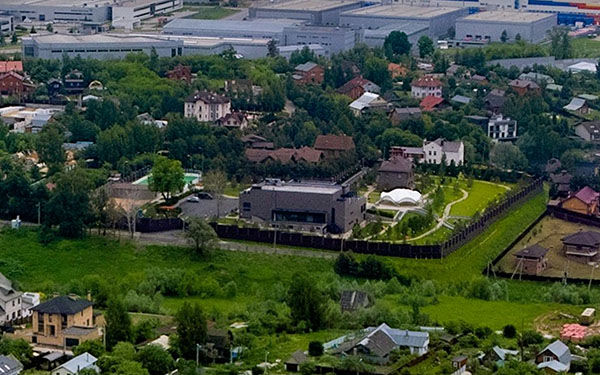 Istra village Lobanovo
About 70 acres in a village that is no stranger to Russian cinema - the show “Dom-2” was once filmed here. In the same village, Nikolai Patrushev’s wife, Elena, owns plots. Owners: Marina Artemyeva, Elena Patrusheva
≈ 2 billion ₽ * 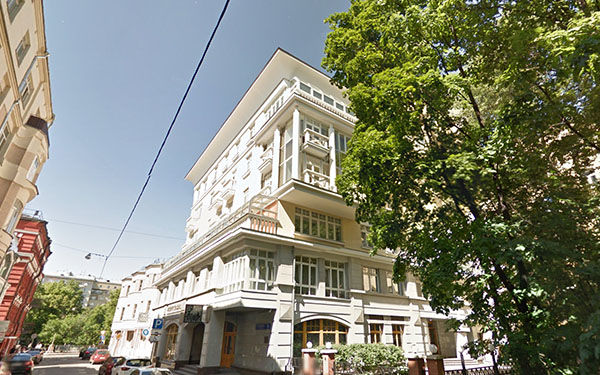 Moscow Maly Kozikhinsky Lane 3
A two-hundred-meter penthouse on Patriarch's Ponds in the Master and Margarita residential complex. Below is the office of Rosselkhozbank. Owner: Marina Artemyeva.
≈ 2 billion ₽ * 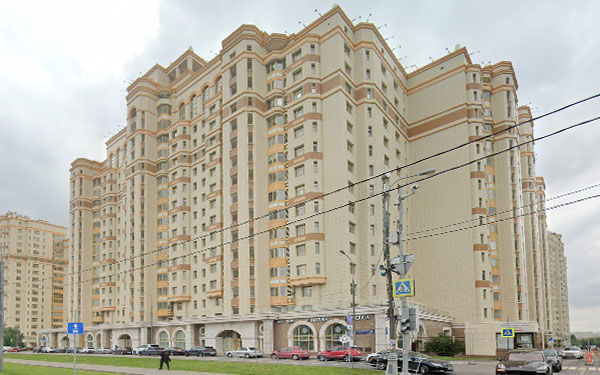 Moscow Lomonosovsky pr-kt 25 building 5
The apartment is next to the Faculty of Public Administration of Moscow State University, where the grandson of Nikolai Patrushev’s brother Gleb Patrushev entered graduate school. Owner: Gleb Patrushev.
100 million ₽ * 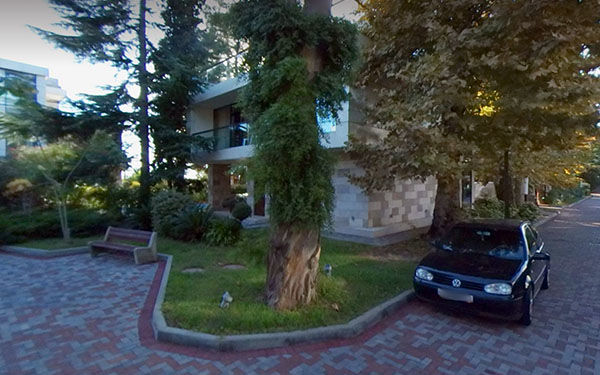 Sochi st. Tsimlyanskaya 2 building 8
A villa in the Sirius cottage village, which was previously found by Alexey Navalny. Patrushev’s son Andrei settled here next to other officials. Owner: Andrey Patrushev
500 million ₽ * 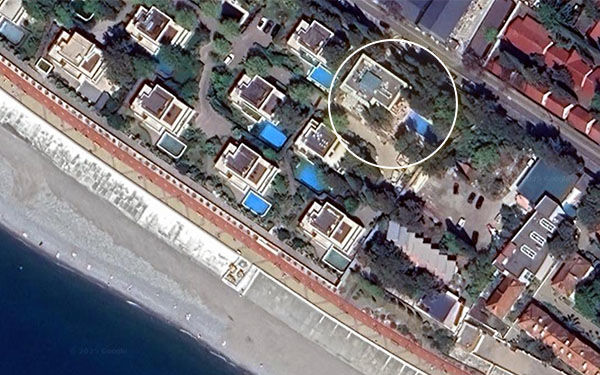 Sochi st. Tsimlyanskaya 2, building 1
In fact, Patrushev’s second son also owns another villa in Sirius. Owner: Dmitry Patrushev
500 million ₽ * 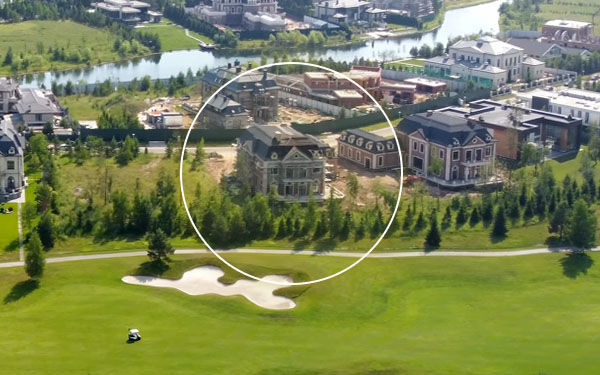 Moscow region Zakharovo village, Zhivopisnaya st. 10
Andrei Patrushev’s wife Tatyana owns two houses on Novorizhskoye Highway in the actively developing village of Zakharovo. Owner: Tatyana Patrusheva.
2 billion ₽ * 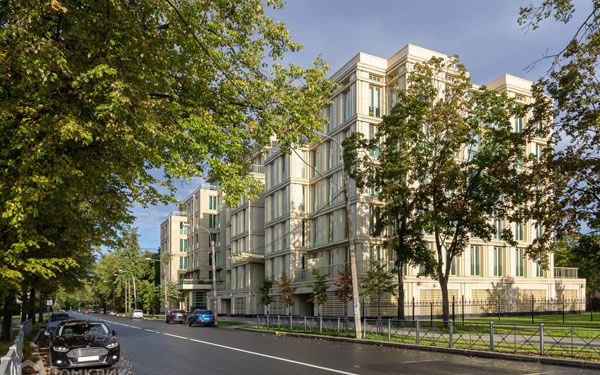 St. Petersburg Krestovsky pr-kt 10
Three apartments in the elite club house “Krestovsky 10” are also registered in the name of Andrei Patrushev’s wife. Owner: Tatyana Patrusheva
700 million ₽
‹
›
To purchase apartments from the Kremlin - clearly the most valuable in the Patrushev family collection - Marina Artemyeva was even given a mortgage loan for about one and a half million dollars. It is not surprising that, despite a direct conflict of interest, she received this money in 2021 from the state-owned Rosselkhozbank, the head of the supervisory board of which at that moment was her secret husband. It is also not surprising that the bank offered a completely non-market interest rate for this borrower personally - it issued 700 thousand euros at 2% per annum. After the 2014 crisis, Russian banks curtailed the issuance of mortgages in foreign currency to almost zero, so a loan in euros is unusual in itself. At the same time, the rate on ruble mortgage loans in mid-2021 was about 9% ×
, and then gave another 50 million rubles in the form of a consumer loan at 3% per annum on such loans, the rate for ordinary borrowers in 2021 was about 15% ×
.
Russians, as a rule, take out consumer loans like the one given to Artemyeva in rubles to pay for basic necessities—household appliances, emergency medical surgery, and sometimes even just food. The Patrushev family, of course, has a different situation. They are sold monthly for considerable sums in the most fashionable store in Russia - Moscow's TSUM. Marina Artemyeva orders cosmetics and clothes there about once every two to three weeks, leaving an average of about 370 thousand at a time.
In total, since 2015, Marina Artemyeva has spent at least 65 million rubles in TSUM.
Even Elena, the seventy-year-old wife of nobleman Nikolai Patrushev, is a regular buyer of fashion brands. She leaves about half a million rubles a year at TSUM. Read the rating of the most wasteful women of the Russian elite according to the TSUM customer base in another episode of our special project, as well as a detailed story about the most interesting women's careers at the top.
In May 2024, Putin fired Nikolai Patrushev from his last position of any importance—he was demoted from Secretary of the Security Council to Assistant to the President with a specialization in shipbuilding. There was a kind of irony in this with a family overtone: Patrushev had once graduated from a naval school, but he hardly worked in his profession - he went straight from the institute classroom to the KGB. But his father ~~Platon Ignatievich~~ is a naval officer who during the war served as a commissar on ships of the Baltic and Northern fleets, accompanying convoys with foreign aid. In the Arkhangelsk village of Podomo, where the Patrushev family came from, Nikolai erected a church dedicated to Plato of Studium, the personal saint of his father-commissar (another paradox in the life of the KGB nobles).
Leaving his post in the Security Council, Patrushev could not part with his large office on Old Square. His replacement ~~Sergei Shoigu~~ - a member of another eminent family in the Russian elite - had to
at least temporarily ×
huddle in his old office, which - despite the highly secret status of the Security Council - is not even located in the Kremlin. The obsession with real estate runs in the family for the Patrushevs.