
Translated material
UAVs attacked the Sheskharis oil transshipment complex
Two people were injured in a drone attack in Saratov
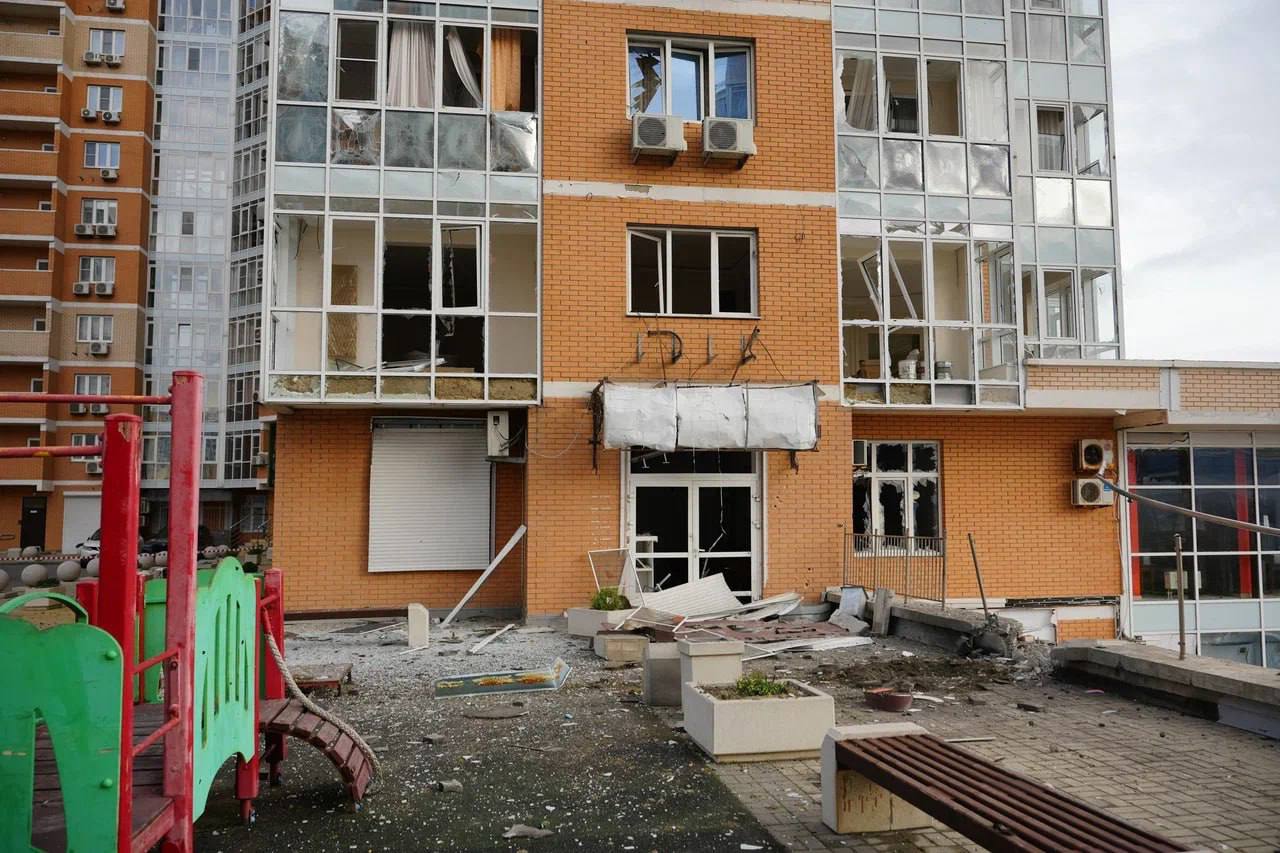
Oil exports from the port of Novorossiysk were suspended after an attack by Ukrainian UAVs on the Transneft complex on the night of November 14. Crude oil supplies to the port have also been suspended, Reuters reports.
The target of the drone attack was the Tatneft oil complex - Sheskharis
One of the main targets of the UAV was the Sheskharis oil transshipment complex, a key facility in the energy infrastructure of the Russian state company Transneft. The enterprise is one of the largest export hubs in Russia and a transit point for Kazakh oil.
Reuters notes that Transneft temporarily suspended oil pumping to the port, which led to an increase in world oil prices by about 2%.
At the same time, the Ministry of Energy of Kazakhstan claims that after the night attack on the port of Novorossiysk, the country continues to ship oil through Sheskharis as usual.
According to the authorities, the fire at the oil complex was extinguished, but damage was recorded to the tanks, the Chernomortransneft berth, the NUTEP container terminal and a civilian ship. Three crew members were injured.
Fragments of drones also fell in residential areas. Windows in four apartment buildings and two private buildings were damaged, one person was injured. The authorities of Novorossiysk introduced a state of emergency and deployed two temporary accommodation centers. To eliminate the consequences, 172 rescuers and more than 50 pieces of equipment were involved.
In order not to miss new texts from “Layout”, subscribe to our telegram channel
A military unit with S-400 air defense systems could also come under attack in Novorossiysk
The ASTRA Telegram channel believes that a military unit in Novorossiysk could have been damaged during the strike. S-400 air defense systems are located on its territory.
As the publication writes, we are talking about the territory where the 1537th anti-aircraft missile Red Banner Kuban Cossack Regiment of the 51st Air Defense Division is based. According to satellite images and open information, several launchers of the S-300/S-400 air defense system, as well as the Pantsir-S1 air defense system, are located there. There is no official confirmation of these reports. The Ministry of Defense and local authorities did not report the fall of drones or debris on the territory of the military unit.
After the attack on the port of Novorossiysk, prices for wheat futures jumped on the Chicago Stock Exchange
After the attack on the port of Novorossiysk on the Chicago Mercantile Exchange, wheat futures prices rose to their highest in 4 months, since July 3, Bloomberg reports.
The contract for delivery in December increased by 4.1% to $5.43 per bushel (about $200 per ton, one bushel of wheat equals 27.2 kg). Then growth slowed down.
Wheat prices jumped after traders assessed the impact of the attack on the port of Novorossiysk, a key hub for grain and oil exports.
UAV attack on Saratov: two people were injured, restrictions were introduced at the airport
The Saratov region was also subject to a nighttime drone attack. According to Governor Roman Busargin, as a result of the strike, two people received moderate injuries and were hospitalized. Cars and one apartment building were damaged. Windows in several apartments were broken, and destruction of balconies was recorded.
In addition, civilian infrastructure facilities were damaged - the authorities have not yet disclosed exact data. Amid the threat of an attack, a “drone danger” was declared in the region at 03:00 Moscow time.
Gagarin Airport introduced restrictions on the reception and departure of flights at 02:03 Moscow time and remained closed for about four hours.
The previous time drones attacked Saratov was on November 11. Reuters sources reported that after the strike on the city, the Saratov oil refinery stopped processing oil. According to the agency's interlocutors, the plant is completely shut down - approximately until the end of the month.
Russian refineries could delay oil refining almost at last year's level despite UAV attacks
According to several Reuters sources, Russian refineries reduced oil refining in January-October 2025 by only 3% - to 220 million tons - compared to the same period in 2024. This happened despite numerous drone attacks and associated emergency shutdowns.
From August to October, the downtime of primary capacity turned out to be higher than planned - about 6.5 million tons per month, but actual processing decreased by only 6% compared to July. A similar decrease was noted compared to last year.
At the beginning of 2025, the Ryazan Oil Refinery, the Astrakhan Gas Processing Plant, the Volgograd, Saratov, Tuapse and Ufa Oil Refineries were attacked. After a break since the spring, raids resumed in August, affecting 17 refineries (including 11 large ones) and increasing gasoline shortages. Russia has temporarily banned fuel exports.
The plants compensated for the losses by increasing the load on other installations and quickly restoring damaged capacities. Reuters sources note that many refineries still have spare capacity for primary refining and gasoline production.
Previously, “Verstka” reported that by November 2025, the Ukrainian Armed Forces had attacked oil refineries and oil depots in Russia and the occupied territories at least 250 times since the beginning of the war. 2025 has already become a record year for the number and range of strikes.
Photo: Consequences of a UAV attack on Novorossiysk, November 14, 2025. Official telegram channel of Andrey Kravchenko
Support “Vestka” - it’s important and safe →