
Translated material
Scientist Yann LeCun leaves Meta to lead a revolution in AI. He believes that large language models are a dead end
Zuckerberg and the company's investors don't think so.
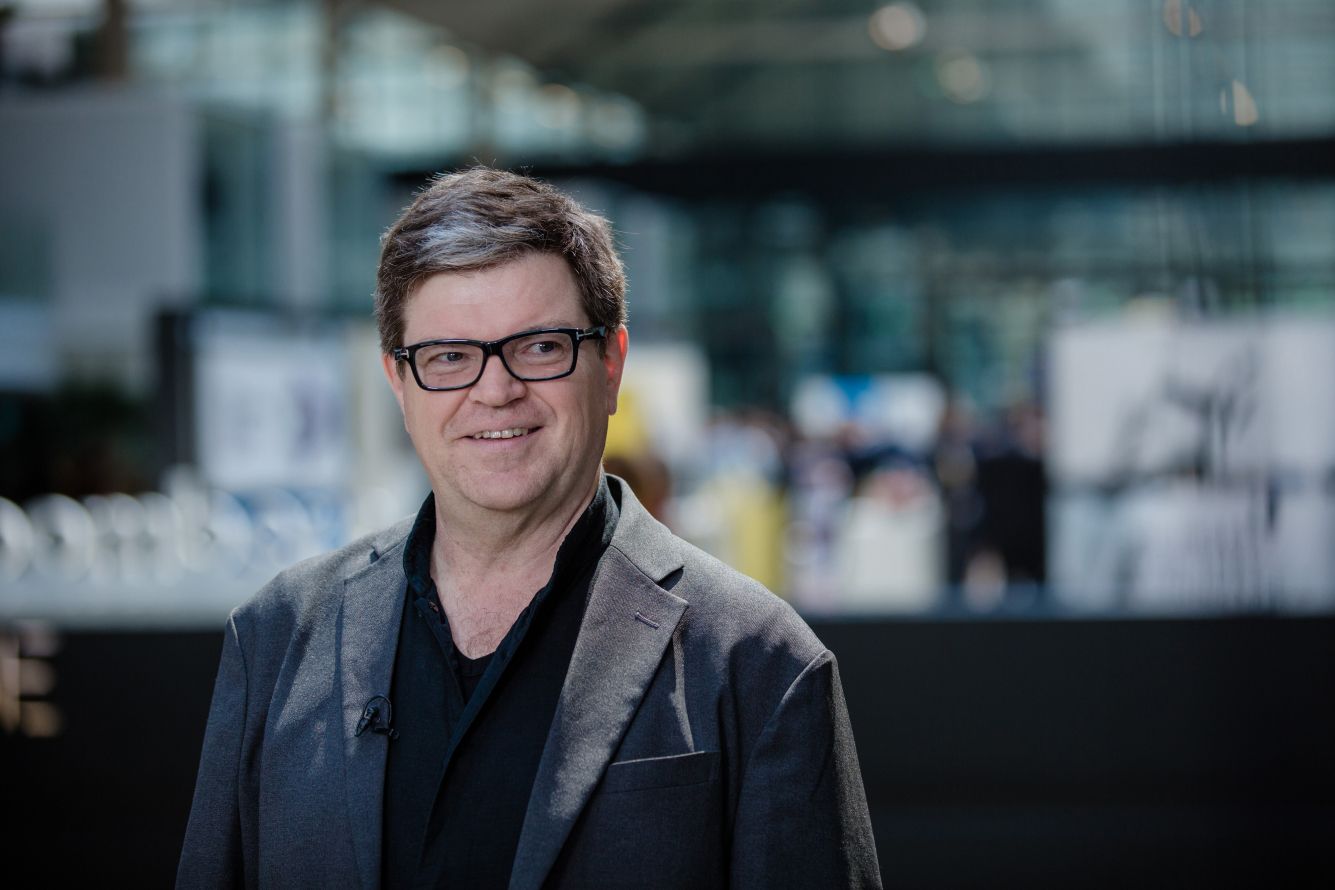
One of the leading artificial intelligence researchers, Meta Vice President Yann LeCun announced that he will leave the company at the end of 2025 after 12 years of work. According to the scientist, he is launching a new startup whose goal is to revolutionize the field of AI. LeCun wants to create a system that can understand the physical world and reason fully. "Medusa" tells why the scientist left Meta and how he became disillusioned with the capabilities of large language models.
Yann LeCun is a French and American scientist specializing in the fields of machine learning, computer vision and robotics. He is one of those who formed and popularized the field of deep learning . For this achievement, LeCun, along with two other colleagues, Yoshua Bengio and Geoffrey Hinton, received the prestigious Turing Award in 2018.
Yann LeCun spent a significant part of his career - more than 14 years - at the American telecommunications company AT&T. From 1988 to 1996, the scientist worked at Bell Laboratories , after which he moved to the new research and development department of AT&T Labs, where he remained until the beginning of 2002. There he, among other things, developed the DjVu image compression technology.
In 2003, LeCun became a professor of computer science at New York University - and continues to work there to this day. At the end of 2013, the scientist headed the Facebook Artificial Intelligence Research Laboratory ( FAIR ). And in 2018, he received the post of vice president of the company (first Facebook, and after rebranding - Meta) and the position of chief researcher dealing with AI issues.
On November 11, 2025, sources in the Financial Times reported that Yann LeCun plans to leave Mark Zuckerberg's company to start his own. A week and a half later, the scientist confirmed this information, noting that he would remain at Meta until the end of this year. He also wrote:
I'm creating a startup to continue the research program in advanced machine intelligence that I have been leading over the past several years with colleagues from FAIR, New York University, and other organizations. The startup's goal is to create the next big revolution in AI: to create systems that understand the physical world, have durable memory, and can reason and plan complex sequences of actions.
Lekun did not disclose details, adding only that his new developments should find wide application in many sectors of the economy. At the same time, he emphasized that Meta will be a partner in his new, as yet unnamed startup. Whether she will become one of the company’s investors is not specified.
Meta is trying to become a leader in generative AI. But so far the huge investments in this area have not been justified.
Yann LeCun is leaving Meta amid a major restructuring of the company's AI division that Mark Zuckerberg began in mid-2025. The scientist himself speaks extremely correctly about his current employer and does not give reasons for leaving. But FT journalists suggest that the head of Meta simply lost interest in the long-term fundamental research that LeCun's team was engaged in.
On June 30, Mark Zuckerberg announced the creation of a new group called Meta Superintelligence Labs, led by former Scale AI CEO Alexander Wang. A month later, he also announced that Shengjia Zhao, who had previously worked at OpenAI, would receive the position of chief researcher in the new structure.
Some technology publications have noticed that Meta now has two people occupying the same position. Lekun had to explain that Zhao's appointment would not affect his work in any way, since the basic research unit would continue to operate independently.
However, Zuckerberg has made it clear that he wants to focus on faster adoption of AI models and products. In his opinion, Meta is far behind its competitors (for example, Google or OpenAI), although the company has all the capabilities to lead in this area. In addition, Zuckerberg is under pressure from investors who demand confirmation that their multibillion-dollar investments will be worth it.
However, Meta has not been able to improve the situation over the past five months. Quite the contrary - at the end of October, the company's shares collapsed by 12%, due to which it lost about $240 billion in market capitalization. The reason is that Zuckerberg announced the need to increase spending on AI, which could exceed 100 billion next year.
Shortly before this, Meta's AI divisions underwent massive layoffs. About 600 people lost their jobs - according to The New York Times estimates , this is about a fifth of all employees. True, the publication notes, the cuts did not affect those whom Meta had been actively hiring at Superintelligence Labs over the past few months.
Yann LeCun believes in the benefits of modern generative AI. But he considers it a dead end on the path to creating truly “smart” systems
One of Meta Superintelligence Labs' stated goals is to create artificial general intelligence ( AGI ) that can outperform humans. The company is confident that it will be able to achieve this without radically changing the approach to development and training, only through additional resources and investments. Yann LeCun, in turn, is convinced that large language models, on which modern generative AI largely relies, are a dead end on the path to creating truly “smart” systems.
A scientist once compared advanced AI models to cats, and not in favor of the former. At its current stage of development, generative artificial intelligence has neither stable memory, nor the ability to reason and plan, nor ideas about the physical world, LeCun explained . That is why a cat with such qualities looks smarter compared to them.
Yann LeCun is very consistent in his statements. “We won’t create human-level AI by simply scaling up large language models,” the scientist argued in a May 2025 Big Technology podcast. “To create the next revolution, we need to take a step back and understand what is missing from current approaches, ” Business Insider quotes him as saying recently.
However, he does not consider large language models to be completely useless. On the contrary, LeCun is convinced that they are worth investing in and that many people will use them. However, now too much emphasis has been placed on them, and there are simply no resources left for research into other systems. “If you are a graduate student in AI, you should never work on large language models,” The Wall Street Journal quotes the scientist as saying.
Openly criticizing the strategy chosen by the tech giants (and especially LeCun's immediate employer) meant inevitable conflict with other Meta employees. Recently, the scientist has encountered great difficulties in finding resources for his new projects, Bloomberg writes , citing sources.
The problem was that his work at the company was focused on long-term research. Many of them will not change the lives of users in the coming years or even decades, the publication notes. Meta right now is in dire need of consumer products that will show (primarily investors) the capabilities of AI from the best side.
In his new company, Yann LeCun wants to study the so-called models of the world. That is, systems trained primarily on visual data and “understanding” the structure of the environment, the physical parameters of the world and cause-and-effect relationships. That is, everything that large language models lack.
LeCun is not the only reputable scientist interested in studying patterns of the world. For example, researcher Fei-Fei Li , often called the "godmother of AI," raised $230 million last year for her new startup World Labs. This company is also working on systems that can understand and interact with the three-dimensional world.
Her startup recently unveiled its first product, a 3D scene generator called Marble. This model can create small 3D worlds based on a text query or an image. Unlike other similar developments (for example, Genie from Google DeepMind ), Marble provides “permanence” of scenes: they have stable geometry and lighting, do not change or lose elements, and can be explored repeatedly.
Marble can be used for a variety of creative purposes. For example, to create prototypes for video games or 3D scenes in films. But for the development company, this is only the first step towards creating a “truly spatially intelligent model of the world.”
"Jellyfish"