
Translated material
“God, I’m 65 and Boris is still my teacher.”
A great interview with Joanna Stingray about how she introduced the Leningrad rock of the 1980s to Western audiences. And also about HD, censorship and selectivity of memory
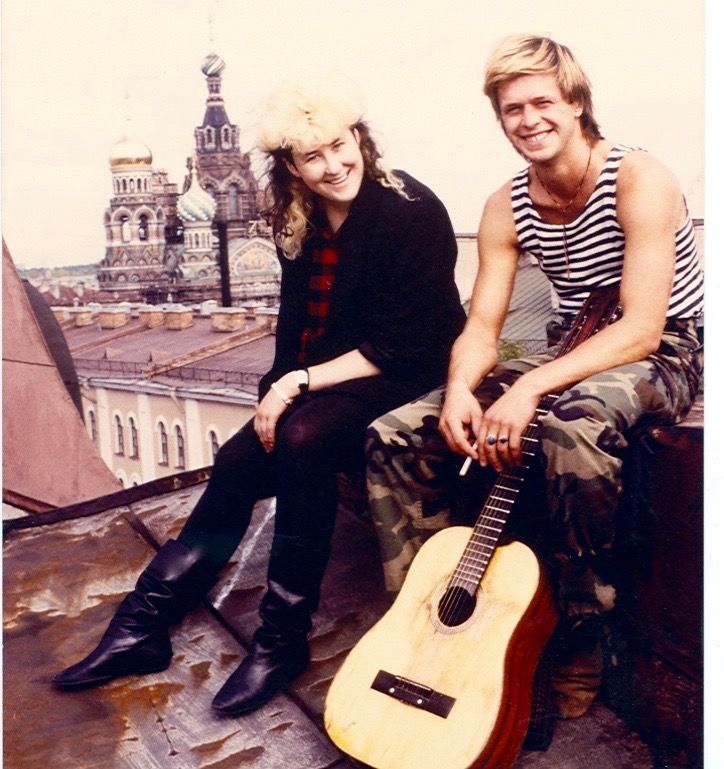
In the 1980s, aspiring American singer Joanna Stingray came to the USSR and was surprised to discover the free world of underground Russian rock. She made friends with Boris Grebenshchikov and Viktor Tsoi, obtained scarce musical instruments and studio equipment for them, and recorded their lives on video and photos. Stingray secretly smuggled the recordings of Aquarium, Kino, Alice and Strange Games out of the country, after which she released them in the West as a double album, Red Wave. It is believed that because of this she turned into an “enemy of the Soviet state”: she was not allowed into the USSR for several months. Stingray continues to publish books and films about that time - and even seems to have become even more active in recent years than before. At the request of the Bereg cooperative of independent journalists, journalist Alexander Filimonov spoke with Joanna Stingray . Meduza is publishing this interview in its entirety.
— In recent years, several books have been published in Russia with your memories of your trips to the USSR in the 1980s and your acquaintance with Soviet rock. How did they appear?
— I left Russia in 1996. She returned to Los Angeles, gave birth to a daughter and became a stay-at-home mother—and broke away from Russia for many years (although she visited briefly in 2004). I think in 2017, I thought: “I wonder if any of my Russian friends are on Facebook?” And I found Boris [Grebenshchikov] and then Alec Kahn . Boris was performing in Los Angeles at that time. So we were in touch again, as if there had never been a long pause.
I was left with boxes of thousands of photographs and dozens of hours of video footage, but I had never thought about what to do with these archives. In 2018, I decided to create a website , scan all my photographs and post them as a gift to Russians to show how much Russia means to me. I knew the site would attract attention, but I was shocked by how many people were excited about it. They saw all their idols of the 1980s in their everyday lives: on the beach, in the kitchen, at concerts, at rehearsals. Russians were very nostalgic for that time. And I realized that my archives can make people happy.
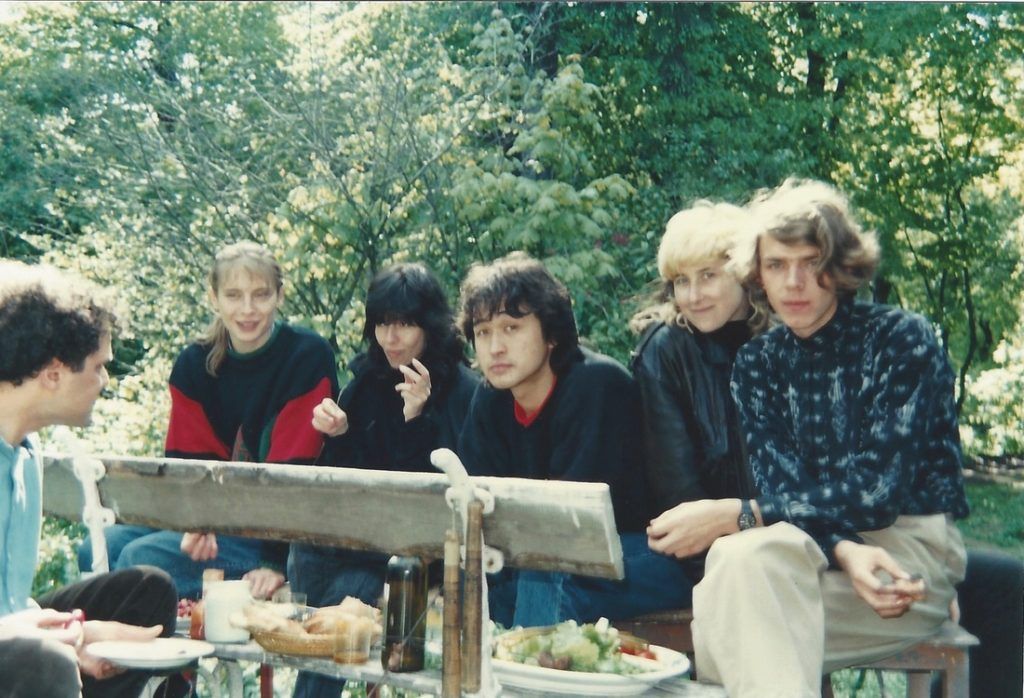
Most people imagine Viktor Tsoi as a strong, cold and withdrawn person - simply an unattainable figure. Therefore, it was important for me to tell and show what he really was: a great joker, kind, cheerful, warm and sociable. You know, in the 1980s, Victor went to parties, but did not stay there for long - and preferred to spend time with a very small group of friends: it was me, Yuri Kasparyan, Gustav Guryanov , Victor's wife Maryana and, of course, their son Sasha. And in this narrow circle, Tsoi was very open.
I also decided to publish photo albums. It's one thing when photos are posted on a website. And in books you can tell stories about what happens in the photo. In my memoirs, I narrate the story in chronological order, retelling my interviews with musicians made in 1984–1986. I’m talking about what Kinchev said, what Tsoi said, what Africa said, what Mamonov said. And in the photo albums you can read the full transcripts of these interviews.
— Documentaries about Viktor Tsoi, the leader of the “Zoo” Mike Naumenko and the main Beatlemaniac of the USSR Kolya Vasin were recently released on your YouTube channel . They were directed by Andrey Airapetov. How did you meet him?
— When my good friend Sasha Lipnitsky died, I was completely killed. At the same time, Andrei Airapetov, whom I did not know before, unexpectedly contacted me. He wrote: “I worked with Sasha Lipnitsky, we discussed a documentary about you. Sasha is gone now, but I would still like to do it.” I answered him something, but didn’t take it seriously and forgot. But he contacted me every three or four weeks - he was so persistent and enthusiastic that in the end I agreed (even though I didn’t understand why they should make a film about me and not my musician friends).
I gave him my entire video archive. And he made an amazing three-part documentary about me, where he absolutely accurately tells the story of my life in Russia - it’s incredible. Now the project is on pause [filmed but not published], because we are trying to attract an American company to cooperate, but in America everything is slow and difficult.
Then we decided to make a few more films - and we started with a picture about Mike, as his 70th birthday was approaching.
When I came to Russia in 2018–2020 about the release of my books, I was often asked why Mike and “Zoo” were not on the music collection “Red Wave” . I chose Alice instead - and I still think it was the right decision. For Western audiences who did not yet know Russian rock, Kinchev had some kind of magical appeal. And “Zoo” was closer to The Rolling Stones or something like that [that the American public had already heard]. But I recognize his legacy: Mike, like Boris, is one of the founding fathers of Russian rock and roll. So I was really excited to make a movie about Mike—and for Mike.
Then Andrei wanted to make a film about Victor and Kino, I agreed. Then Kolya Vasin’s 80th birthday approached. I remembered that we had a wonderful interview that we recorded with him in the 1980s. Back then, in the USSR, my sister and I shot about 50 hours of video footage - we didn’t know why we were doing it. We just loved all these people and filmed everything.
We will release another film about “Alice”, one about “Strange Games” and one about Kuryokhin.
- This is really important, because Mike, Vasin, and Kuryokhin, compared to BG and Tsoi, are now, unfortunately, rather forgotten. Their stories are not as thoroughly told or explored.
— Yes, I have excellent material for a documentary about Kuryokhin: an archival interview with Sergei, recordings of many Pop Mechanics concerts. We will definitely release it. And then we will try to make a documentary about the creation of “Red Wave” - in June 2026 it will be 40 years since the release of this album. Some of it will be my archival materials, and some will be animation.
And I also know that [Kino guitarist and current band leader] Yuri Kasparyan and his wife are making a documentary about Gustav. I also gave them my archives. Gustav is no more, his legacy in Kino seems to be on the backburner, although he was very important to the group. For example, he was interested in fashion, which influenced the entire style of the group - the way the Kino members looked and dressed.
— On the question of the legacy of “Red Wave”. In the 1980s, during the Cold War era, you decided to build cultural bridges between the two empires. Of course, perestroika was already underway then, but your personal contribution to this matter was also noticeable. Do you think culture can unite people now?
— It’s hard to say, the current world is very strange.
Americans' understanding of Russians in the 1980s was very limited: we only knew what politicians told us and what they showed us on the news. The USSR was called the “evil empire.” We saw footage of Russians who looked like some generation of the 1950s - I think the Americans even laughed at them. And then I met all these Leningrad rockers. Returning to the USA after a trip to the USSR in 1984, I told everyone: “God, the USSR has the coolest rockers!” Everyone laughed and replied that there was no rock in the USSR.
Then in 1985 there was the famous Live Aid concert, where the Soviet group Autograph took part - it was a big event. And everyone laughed again, like, we said, they are too backward and old-fashioned. Therefore, it was important for me to release “Red Wave”, to show these [real Soviet] fashionistas who, even without money or access to Western clothes, make cool clothes for themselves. Show how they move, what and how they sing.
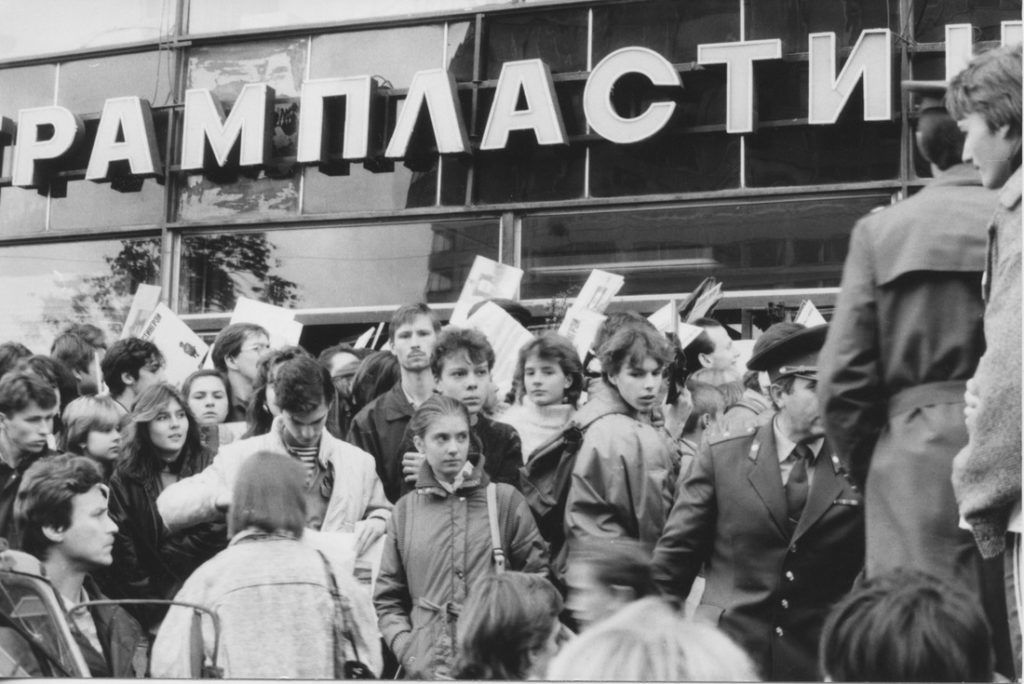
I sent one copy of the album to Gorbachev and Reagan. And, presumably, someone from the VAAP gave Gorbachev an album with the inscription “Four underground groups from the USSR.” Gorbachev looked at the cover and said something like: “Why are these groups released in the West, but not here?” And this one question from Gorbachev immediately removed all barriers in Russia. The next day, all bands were suddenly allowed to perform on television and radio, release records and tour. So “Red Wave” helped Soviet rockers not only in the West, but also in the USSR.
— I thought that the story about Gorbachev was more of a myth. But you say it's true?
“This first appeared, presumably, in [critic] Alexander Kushnir’s book about Kuryokhin, “The Crazy Mechanics of Russian Rock.” An acquaintance of his worked at VAAP - he knew a colleague who showed the album to Gorbachev. And then Alexander Kahn’s wife, historian Anna Kahn, found confirmation of this when she wrote her doctoral dissertation at one of the British universities.
I also have confirmation. When I published my memoirs in the United States in 2020, I received approval from Gorbachev’s office to include his quote in English in the book: “If these groups are published in the West, then why aren’t they published here?” So this is a quote that they [Gorbachev's representatives] essentially approved.
— After “Red Wave,” Soviet rockers released several interesting foreign projects. For example, BG first went to the UK and the USA, where he recorded the albums “Radio Silence” and “Radio London”. They failed in the charts, BG made a scandalous appearance on David Letterman's show, and that was the end of his English-language career. How do you evaluate these records years later?
— Boris is the only one among Soviet rockers who could become a world star. We spent a lot of time together, writing songs. He also wrote in English, he is an amazing poet, he has one hundred percent talent. One day I will definitely release a recording, preserved on cassette, where he sings in English and plays an acoustic guitar.
I thought "Radio Silence" was really good. I really liked the title song, it touched me to the core. But the problem was the [stylistic] direction they took with Dave Stewart , the record's producer. Perhaps if David Bowie or Graham Nash from Crosby, Stills and Nash had been brought in as producer, the album's style would have been more suitable. Then Boris was already over 30, he became more mature, more lyrical.
When I watched David Letterman's show, of course, my first thought was, "Oh my God, Boris, you shouldn't have said that." But he didn't play any games. You know, in America we often see celebrities pretending to be perfect. Russians don’t pretend - they are who they are, they are confident in themselves and say what they think. Therefore, Boris did not think about the answer - he is what he is, and no one can change him. And if that means American careers will be ruined, don't care.
— You mentioned your recordings from BG. Your joint album entitled “Stay Together” was just recently released on streaming. Why?
— Before my trip to the USSR in the 1980s, I had one album released in the States, then problems arose with the manager and we broke up. When I returned to the USA, I recorded our songs with Boris in good quality in a studio there - we liked it, but there was no special plan.
A couple of times, in 1985-1986, I transferred some songs to American record companies, almost signed a contract, but the plans did not materialize - and soon I was completely immersed in Russian life. In 1989, I moved to Moscow and my career in the USSR was already developing to its fullest. At that time, I practically never visited the States.
We never thought about releasing this album in the USSR: [underground] rock musicians could not yet officially release their music. Everything was recorded underground and distributed on the black market.
- You collaborated a lot with Kino - your great friends, guitarist Yuri Kasparyan was your husband - and you also wrote English lyrics for some of their songs. Did you have any big plans for Kino back then? Record an album with them in the USA, go on a foreign tour?
— After “Red Wave” I decided to release “Blood Type” in the USA. She brought a four-track tape recorder to the USSR - and Kino recorded this album on it; I released it [in 1989 on Gold Castle Records]. We probably would have done something else together, but I was torn away from that whole life, from my friends who were my family [by being banned from entering the USSR].
Read more about the entry ban
In her memoirs, Stingray said that because of her constant trips to the USSR and her friendship with Soviet rockers, she was closely watched by both the KGB and the FBI - both intelligence agencies suspected her of being a spy.
After the release of the album “Red Wave” in the West, Stingray took up several projects with VAAP and Goskontsert, including organizing a David Bowie concert in the USSR and supplying Yamaha equipment as a gift to the Leningrad rock club. Also in the spring of 1987, Joanna Stingray and Yuri Kasparyan planned to get married in Leningrad. On the eve of the wedding, the Soviet Foreign Ministry refused Joanna an entry visa without explanation.
In the summer of 1987, she managed to get a short-term visa and come by ferry from Helsinki for a seven-hour excursion to Leningrad and see Yuri and other musician friends. To do this, she officially changed her real surname Fields to the nickname Stingray, which she received at the Leningrad rock club.
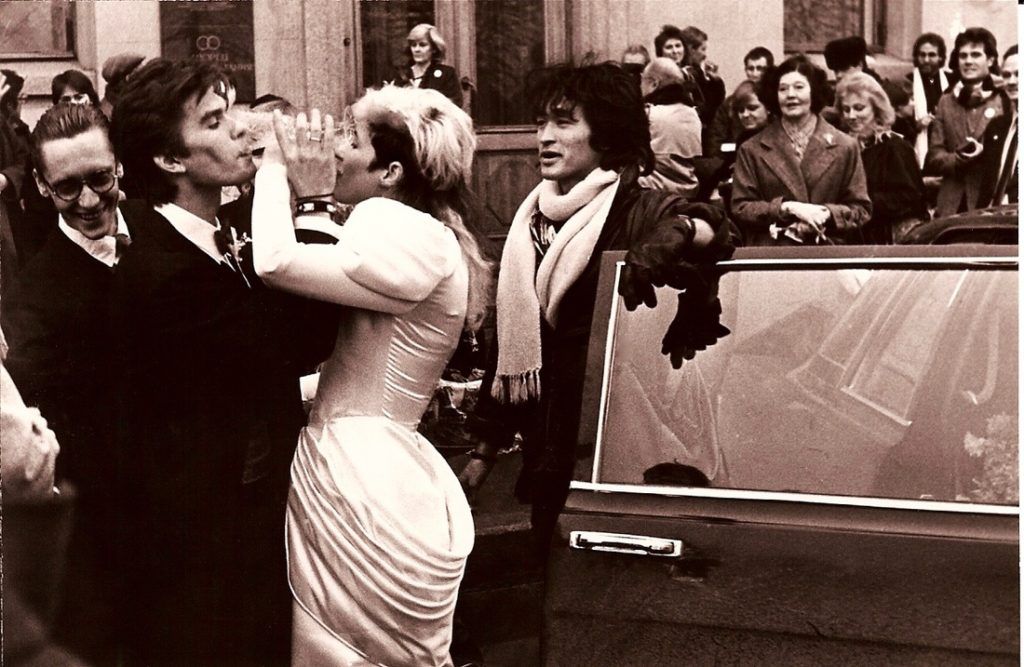
Joanna was accompanied on the trip by her mother and an NBC film crew. A few months later, the Soviet authorities again allowed her entry into the USSR. The wedding with Yuri Kasparian took place in Leningrad in November 1987.
While I was an enemy of the Soviet state, I listened to my friends' songs every day to feel connected to them. And when I listened to them, my own lyrics popped up in my head - most of the songs in English that I composed to the music of “Alice”, “Strange Games” and “Cinema”, I wrote at that time.
That's how Russia is: you think everything is fine, but suddenly you become an enemy. I was very angry with Soviet officials, as well as American politicians, who, it seemed to me, were not helping me. And then the words of the song “Petty Men” came to my mind - about all these people in power who do not help, but simply crush small people. I wrote and recorded this song very quickly.
It's funny that when I finally returned to the USSR at the end of 1987, I still didn't know how significant the original "Change" had become. It was one of the most popular songs in the USSR. That's why I didn't release my version. It was released only recently - on one of the latest albums from the Maschina Records label.
— What do you think about the current reincarnation of Kino? How do you evaluate the idea of re-recording old songs in new arrangements with Tsoi’s original vocals?
- I like this reincarnation. Victor’s music, energy, personality are very important for Russians, and for people all over the world - I constantly see how they listen to “Kino”. Every time any of their songs starts playing, a wave of warmth covers you, it becomes a part of you.
I was at one of the first concerts of the new “Kino”, it seems, in January 2022 in Moscow. It was incredible. I was especially struck by the video sequence specially created for each song under the direction of Sasha Tsoi. It touched me so much. If Victor had filmed something similar, it would have turned out the same way. I think I embarrassed Sasha a little backstage when I came in with tears in my eyes and said, “Sasha, you are so incredible.” I didn’t even know what a talented artist he was. He understands and feels his father so well.
I really like re-recorded albums. In the 1980s, Kino and Aquarium didn’t complain about anything, they didn’t care about big games; but everyone had one problem - there was no access to quality instruments and equipment for recording. Therefore, I think Victor would be glad to hear these songs in such excellent quality.
When we met Yuri Kasparyan again in 2018 in his apartment in St. Petersburg, he showed me an excerpt from his project “Symphonic Cinema” and I almost burst into tears. You know, Yuri is a very calm person who simply goes through life and rarely takes the initiative. But when I saw Symphonic Cinema, I thought: “God, Victor would say that you are a genius.” He would definitely tell Yuri: “It’s high time. You have finally realized your talent.”
I think both “Symphonic Cinema” and the reincarnation of the group are simply amazing. There is something about Victor, his energy, his music, his lyrics that makes people feel better. Today people have become less happy, as if they are missing something - and I think that "Kino" fills this need. This music helps people feel better about life and the world. Therefore, the more “Kino” there are - albums, concerts, documentaries, books - the better.
— So the new shows can be considered real Kino concerts? How similar in energy are they to the concerts of the 1980s?
- Absolutely. Same energy. You can feel Victor in them. I'm glad they didn't make a hologram of him, just his voice. Sometimes I hear him in my head - Victor talking to me. His spirit is still here.
And, as I already said, this reincarnation of “Kino” seemed to force Yuri to become a frontman. He became a really cool guitar player. At concerts he is almost the main star, and he deserves it, he looks great. Previously, he always hid behind the guitar and was completely immersed in himself, but these new concerts seemed to bring Yuri into the light. And he also sings along. I was even surprised: “Why didn’t you ever sing along with Victor in the 1980s?” And he replied: “Well, you know, because Gustav sang along.”
— I like the latest Kino album “Indra’s Lightning,” because it focuses on Tsoi’s not-so-famous songs . But another recent release by the group seems a little strange to me: last year Kino completely re-recorded the album “This Is Not Love.” In my opinion, the imperfection of the original recording - there are only two guitars and a drum machine - is precisely what makes this album so unique.
— I agree 100%. The original versions are the most iconic. The limited conditions made them so raw, pure and powerful.
But here's what I remember. In July 1987, I secretly snuck a seven-hour ferry to Leningrad. We were sitting in Boris's kitchen, and the Kino musicians were there (there are wonderful shots from there). And at some point I played my version of “Changes” on Victor’s Walkman. He listened and nodded his head to the beat, as if to say, “Wow, my song sounds really good on good equipment.” Even then he was thinking about it [about the quality of the recording]. But I don’t think that the new versions somehow spoil or cancel the old ones. Old versions stand the test of time. They always will be.
— Do you continue to communicate with Boris? You said you haven't spoken for 20 years.
— Well, because there was no Internet and iPhones back then. When I left for the USA in 1996, the only people who called me once a year from Russia were either Sasha Lipnitsky or Seva Gakkel .
Russians live in the moment, they live one day at a time. And I really liked it, I tried to be the same when I lived in the USSR. So it was only natural that when I left and there was no easy way to contact the Russians, they just continued to live their lives, and I continued to live mine.
But when we met Boris again, I felt as if not even a day had passed. We communicated on WhatsApp, sometimes discussing events in the world. Sometimes I thought: “God, I’m 65, and Boris is still my teacher.” He is an amazing person. He says philosophical things that still affect me to this day. I am so lucky to be close to his light - he is an enlightened man. I would say that of all my Russian friends, the three who really influenced me the most as a person are Boris, Victor and Kuryokhin. They are part of me.
— Now the Russian authorities have declared BG a “foreign agent.”
- This breaks my heart. He is one of the founding fathers of Russian rock, a real icon, he is very dear to Russians. Accusations that he is a “foreign agent” are unconvincing. Someone just wanted to do it. I think Boris and all my Russian friends are peaceful people. Everyone has families, everyone has children. They [Russian authorities] are trying to erase Boris from memory, but I don't think that's possible. For me, he is a symbol of Russia. I believe that at some point he will return as a hero. Perhaps this will happen when he is no longer here [on Earth].
One day I asked him where the world was heading. He replied: “Joe, there have always been wars and conflicts around the world, it’s just that the current one is closer to us.” He always takes a broader view. And he always believes in peace and goodness. Another time I wrote to him: “I hope everything gets better.” He replied: “We cannot hope. Each person must show how he wants peace. Do something."
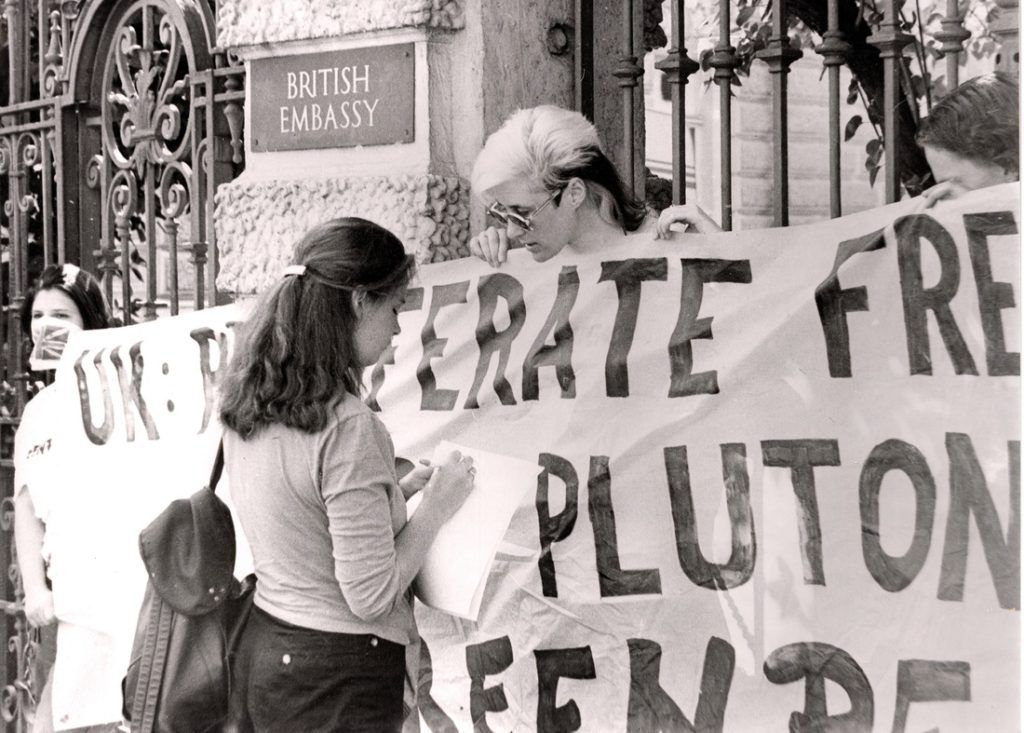
And I realized that my documentaries and albums are what I can do for the world. Just like 40 years ago, there is censorship. And I do the same thing I did 40 years ago. I show the world Russian musicians and say: “Look, they are just like us!” All I can do is try to build bridges again.
— Have you had any problems with distributing your books in Russia - in particular, the 2023 book about BG “I Start from the Sky”?
“I was sure that a book about Boris would never be published on his 70th birthday. I was so proud of this work, because it revealed something personal between me and Boris. Usually no one sees this.
The book has a section with our correspondence on WhatsApp: his photographs (he always takes a selfie for me or sends me some kind of London), his philosophical or Buddhist statements. He agreed to the publication of these materials. A few days before going to press, the AST publishing house sent me a letter: “Since Boris has been declared a “foreign agent,” we need to place a block at the end. Do you mind? I asked Boris, he answered: “Of course.” And I agreed too. So we didn't care. It was much more important to release the book. I was very glad that it was finally published. I think there were some difficulties with distributing the book in bookstores - they didn’t want unnecessary problems, just like 40 years ago under communism.
The real problem arose when we were filming a documentary about Mike Naumenko [which was released in May 2025]. There were a couple of shots of Boris, and in another place the voiceover told how Boris helped Mike with his first album.
Channel One wanted to show this film - and I’m very glad that they did it. But I had to decide to cut out these moments with Boris from the film. For me, as for anyone who lived through communism, it was a matter of compromise. You decide what is more important for you - to stand 100% and refuse to broadcast, or to make concessions somewhere. It was important for me to preserve Naumenko’s legacy. There's an interview in the film that I did with Mike in 1986, and we didn't cut anything from it. Removing the two mentions of Boris didn't change the point, so I decided to do it. It was more important to me to support Mike's legacy.
But then, when we were filming an hour-long documentary about Victor, I felt that I could not re-edit it [for Channel One]. It contains an interview from 1988, which Victor gives in English, and several other interviews where Victor himself talks about how Boris helped him with the production of his first album. I couldn’t cut anything here - and in the end I decided to just post this film on YouTube.
We are not paid for these films. We release them because it's important to my friends. This is a gift for everyone who loves Kino, who loves Boris.
In the book “My Last Chapter,” which was just published in Russia [AST Publishing House], four people are mentioned with the label “foreign agent.” These are Boris Grebenshchikov, Andrei Makarevich, Artemy Troitsky and director Roman Kachanov. But you know what? It's OK. The main thing is to publish the story so that readers can enjoy it.
Joanna Stingray is one of the heroines of Mikhail Zygar’s new book “The Dark Side of the Earth. The story of how the Soviet people defeated the Soviet Union." The book details how Stingray first came to the USSR with a tour group, met Boris Grebenshchikov and Viktor Tsoi, and became part of the community of Leningrad rockers. You can buy Mikhail Zygar’s book “The Dark Side of the Earth” here .
— In his youth, Tsoi sang about the “nuclear-free zone.” Now his “Cuckoo” and “Blood Type” are performed at patriotic Z-rallies. Does his legacy deserve it?
“I knew Victor very well. There is one interview, I think from 1985, where I ask him at the end: “What do you want from the future?” And he immediately answered: “Firstly, so that there is no war.” Victor was a very peace-loving person. He treated people, animals, and nature with respect. I wanted happiness and peace for everyone.
Some of his songs took on a life of their own. Not all of them are political. I asked Victor if, for example, the song “Changes” was political. And he would say, “No, my songs are about a psychological cage that everyone has inside, and I just want people to break out of it and do something.” He didn’t tell them what to do—he simply understood that everyone had their own conflict within. With the help of “Changes”, people in Belarus, for example, tried to break out of their cage - I think Victor would not object to this. Victor sang: “There is war between earth and heaven.” He understood that war is part of human existence. Just like Boris said, there is always war and there will always be war. This is the dark part of human nature.
But when Victor’s songs are sung at patriotic rallies in Russia, it doesn’t make me happy. I don't think he would like it. When I see them do this, it just makes me feel really bad. But then I just focus on what I can do myself.
It's not my place to judge anyone. People always ask me what I think about my friends who are still in Russia, whether they support what is happening or not. And I always answer that if I have learned anything in my 65 years, it is to never judge anyone. We don't know what situation they're in, we don't know why they do what they do. I lived in the USSR for two years under communism - it was very difficult to survive there, I often had to choose. My friends are like family to me. I may not completely agree with their words or actions, but I will never stop loving any of them.
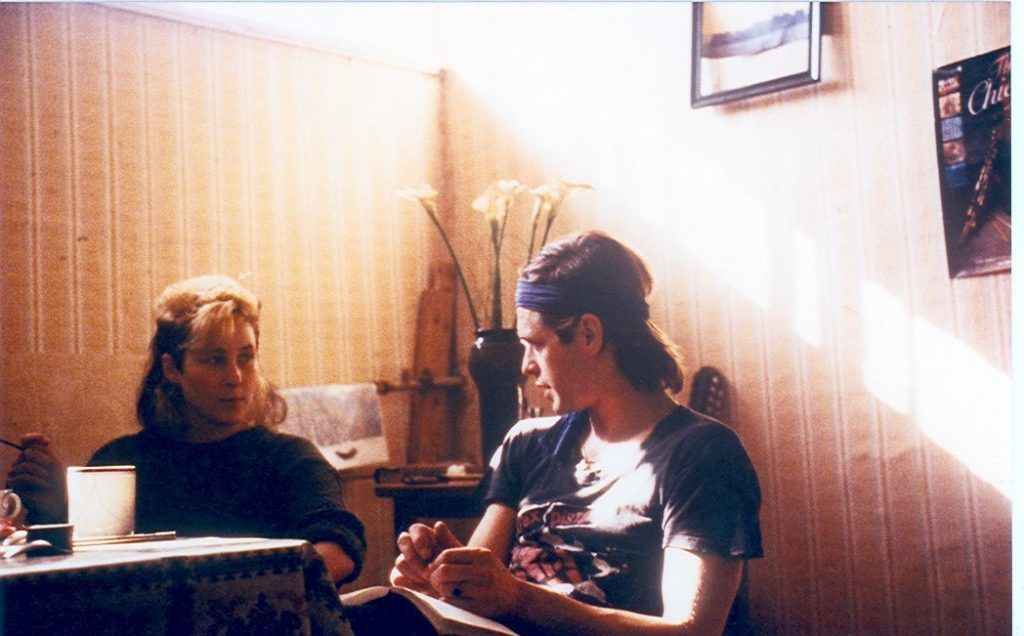
— You may have heard about the journalist Alexander Morsin, who has a telegram channel “Between The Rolling Stones and Dostoevsky” . He has been studying Soviet music of the 1980s for a long time - and, in particular, is almost maniacally looking for inaccuracies in your interviews and memoirs. I suspect he will also carefully analyze this interview. In general, he believes that it was not the “Red Wave” album that forced Gorbachev and the USSR authorities to officially release recordings of underground rock groups on “Melodiya” - there are contrary recollections of other eyewitnesses. Do you admit that our memory becomes more selective over the years?
— When “Red Wave” came out, I didn’t even understand that I had done something other than opening the eyes of Americans to Russian rock. For 30 years or more, I haven’t thought about having a greater influence. Only when a book about Kuryokhin came out, where it was written about Gorbachev, did I think: “Are you kidding? Did I really do this? And the fact that Gorbachev allowed the quote to be used in my book in English confirms this.
I don't really care what others say. There will definitely be people who will say the opposite about you.
To answer your question - can we embellish events in our memories - yes, this really happens. But you have to remember that I have thousands of photos and over 50 hours of video footage. Most of the stories I write about in my books, I saw with my own eyes. I'm not making this up.
Of course, some critic might say that someone has exaggerated the story about the birth of American rock in the 1960s, as well as Leningrad rock in the 1980s. But again, there is video, there are concert recordings, there are interviews from those times. I think there are magical times when the stars align and something incredible happens that lasts forever. When I left Russia, I never thought that this would be interesting to anyone else. It wasn't until decades later that people started saying how amazing my story was, how they wanted to hear it, how they wanted me to write a book. Obviously, people understand that the 1980s were a magical time for Leningrad rock. I can only say that I am very sorry that this journalist did not have the same experience.
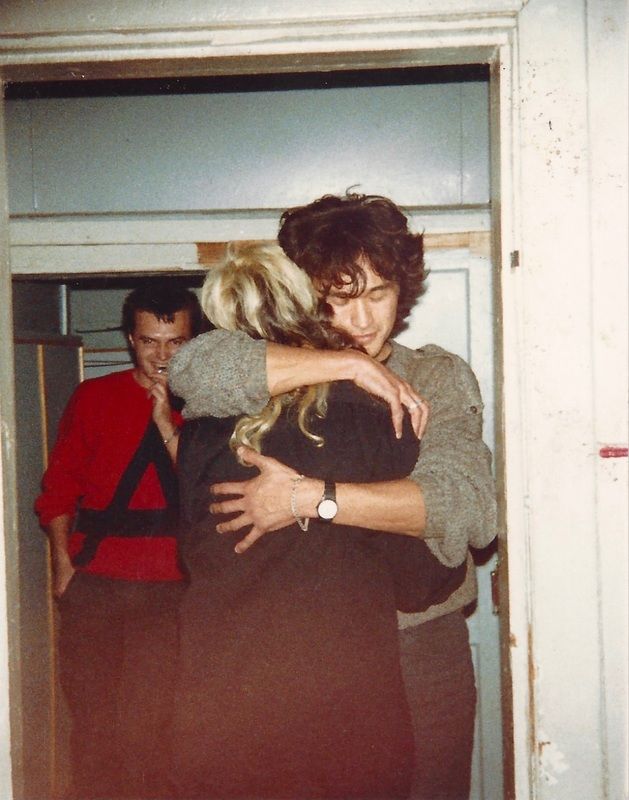
— Another example about the difference in memories. BG strongly criticized the film “Summer” by Kirill Serebrennikov, which tells about Mike and Tsoi. Even at the script stage, he said that everything written in it was untrue, composed by Moscow hipsters. And when the film came out, he couldn’t watch it and left the theater after half an hour. But many of the dialogues in this film are based on the memoirs of Mike's wife Natalia. I read them, they were simply copied into the film - not a single word was changed.
- Boris had the right to be upset, and I will explain to you why. When directors write scripts, they embellish reality a little - they invent or change something, this is normal. But it’s not normal when the very story of what happened changes. The biggest problem with the film "Summer" is that the viewer thinks that Mike Naumenko found Viktor Tsoi, became his mentor and brought him to the rock club. In fact it was Boris. So this scenario distorted Boris's legacy.
The second problem that I personally had with “Summer” is the image of Victor. Victor has a very special energy. He moved with some ease, as if he was floating half an inch from the ground. Baryshnikov was like that, Bruce Lee was like that, Victor was like that. And Victor also has a very narrow face, and when he sang and turned around, a clear jawline was visible. The actor who played Victor [Korean actor Teo Yoo] didn't have his essence in my opinion. He's too down to earth. He didn't have all this.
But overall this is a very entertaining film. The scene on the bus where the Russian passengers sing Iggy Pop's "Passenger" is one of my favorite movies. I think Summer is very similar and just as good as Cameron Crowe's Almost Famous.
— I say this with regret, but, in my opinion, time has shown that Soviet rock turned out to be ideologically rubbish. I mean, everyone pretended to be revolutionaries and peace fighters - and now they have turned into boring, faceless conservatives and retrogrades. They tried to appear cosmopolitan, but they became nationalists, looking for enemies among their closest neighbors. In this sense, the war drew the last line. There are only a few left on the bright side. Did Russian rock really influence history? Or did you simply adapt to changing realities?
— Russian rock has completely influenced history. In the 1980s, during our interviews, I constantly asked Boris about politics. He answered: “I don’t think about politics. When you write a political song, it becomes fashionable, and after a week no one cares anymore. I write about life, about people who free their souls and find themselves.” Most rockers in Leningrad were openly apolitical. They lived under communism and found a parallel universe for themselves where they could thrive and create. This was a big revelation for me.
I am often asked what is the most important thing I learned about Russia. This is an understanding of the meaning of freedom. I thought the USA was one of the freest countries in the world. But during the two years of living in the USSR, my understanding changed greatly. Much more important is the freedom of spirit that my friends had. They were freer in relation to themselves, their bodies, their attitude towards life.
It completely changed my understanding of what it means to be human. In America, I may have been free under the laws, but I was not free as a person. In Los Angeles, you were fed TV shows about beautiful people with beautiful model bodies. And if you weren't like them, you felt like you weren't good enough. It was different in Leningrad.
What these people did and who they were cannot be minimized. They weren't trying to overthrow communism. They chose a different path. They were trying to show people that you can do much more with your life - figure out what makes you happy. Just because your country's laws give you a lot of freedoms doesn't mean they guarantee happiness. What makes us happy is our surroundings: green trees, animals, communication with close friends and families, not our governments, political views and laws.
Alexander Filimonov for “Berega”