
Translated material
“You can’t live only in the past, you need to move forward.” Bashkir emigrant, rapper Altynai Valitov spoke about life in the USA
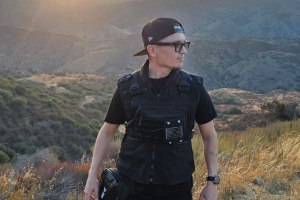
Bashkir rapper Altynay Valitov moved to the United States a year and a half ago, fearing persecution due to mass protests in Baymak. In an interview with the Window project, he talked about how his life has changed in the last year, what he hopes for, what he thinks about what is happening in Russia and Bashkortostan, and how he feels about the invasion of Ukraine.
Altynai Valitov was born on April 11, 1992 in the village of Bainazarovo in the Burzyansky district of Bashkortostan.
In 2013, he was casted for the “Big Dances” project on the Russia-1 TV channel, where he reached the semi-finals.
He graduated from a vocational technical school in Starosubkhangulovo (the regional center of the Burzyansky district), receiving the profession of a joiner and carpenter. He studied at the Bashkir Republican College of Culture and Arts in Sterlitamak in the department of pop art.
He worked as an acrobat in dance and circus groups in Turkey and Egypt, as well as in the team of the Honored Artist of Bashkortostan and Tatarstan Guzel Urazova .
He participated in the defense of the Kushtau Shikhan in 2020, and spoke in support of the convicted Bashkir activist Fail Alsynov .
After the protests in Baymak in January 2024, he left Russia due to the threat of criminal prosecution. After the artist emigrated , his songs were removed from the performance of the Bashkir State Academic Drama Theater named after Mazhit Gafuri .
Now Valitov lives with his family in the USA.
"I finally got my work permit"
— You and your family have been living in the USA for more than a year and a half. How has your life changed over the past year?
— The most significant change is that I finally received a work permit. This happened a month ago.
- How long did you have to wait for him?
“The whole family submitted an application for this in May of this year. We waited for three months. First, approval came to my wife Alsou and daughter Amina, but it still didn’t come to me. Then I received a notification from USCIS that I needed to submit my fingerprints. I retook it and sent it. But when I was returning home from this procedure, while driving my car, I got into a small accident. Nothing serious - no one was hurt; The police were just passing by, they came out, made sure of this and said that the insurance company would look into it further. The police didn’t even draw up a report; they didn’t file a report.
And a month later I receive a letter from USCIS that they will be forced to deny me a [work] permit due to the fact that I allegedly had an arrest due to this accident - and they are waiting for an explanation from me about this. I had to go with a lawyer to the police station, take from there the relevant documents that I had no arrest, that I didn’t even get into the police database - and send all this to USCIS. This is how they harassed me about this matter for almost six months, but in the end they gave me permission to work.
- A whole adventure...
- Yes. My wife and daughter had long ago received this permission, and I sometimes made fun of them: they say, if they have permission, but I don’t, then they should feed me.
— Has your wife got a job?
- No. My earnings in crypto were quite enough to provide my family with an acceptable standard of living. There is a car taken out on credit, there is a corresponding credit history. Of course, earnings are not yet enough for a home mortgage - especially since without legal work they will not give a mortgage. But I still earn enough to rent a normal apartment - albeit not in the center of Los Angeles, but on the outskirts, but in a decent area. We have enough space, it’s quite comfortable there.
— Now that you have received a work permit, what are your plans? Will you participate in castings - for films, for music?
— Yes, now I have already started filling out applications for such castings and expanding my portfolio. But this is not yet professional filming - for this you need good English, and we are just learning it. In everyday life, I can communicate in English, but for cinema this is not enough. For now, we can start with the extras.
— Do you have any big ideas or plans?
- How to say... Every day before going to bed I think about something, dream. Like all, I think, emigrants, I have two directions of such thoughts. One of them is that you want to go home, you feel nostalgic for home. Another thing is that here you are looking for opportunities, something to cling to. You can’t live only in the past, you need to move forward. And every night I fall asleep with these thoughts, thinking about how to realize myself here in America.
For now I’m thinking about going to the local Open Microphones, where I can show myself to the American public. I’ve already traveled like this twice, speaking to small audiences.
—Have you composed new songs lately?
- Not yet. I have translated a couple of my old songs into English, but have not released them yet. In general, of course, I also have goals and dreams that need to be realized. But first of all, I need to feed my family, and this takes a lot of time.
“There are a lot of emigrants here - and the queues in the courts for asylum can last for decades”
— How are things going with your application for political asylum in the United States? How long will you have to wait for him?
— We have already had a preliminary master hearing, only our lawyer participated in it. Our main hearing is scheduled for 2028.
- How long will we have to wait?
- Well, it won't be long yet. People who are waiting for their application to be considered, like us, while at large, are assigned to 2030. But here in the USA, this is a normal phenomenon - there are many emigrants, and the queues in the courts can last for decades.
— You have a large Tatar and Bashkir community in California. Are you involved in his life? Do you have any kind of mutual assistance?
- There is a community, but here everyone basically has their own life - emigrants get out as best they can. There is mutual assistance, we try to support each other.
By the way, I am concerned about the fate of Zagir Mukhamedyarov , who is still sitting in an immigration prison in Louisiana. We periodically call him on the phone and communicate. But we don’t know how to get him out of there. What is troubling is that I have heard that several people with similar cases were recently deported from the US to third countries.
— As I understand it, you are not in danger of such a fate?
- No, we crossed the border legally, passed all the interviews “on fear” and so on, received, as I already said, a work permit. You can live, work, study in peace and wait to receive political asylum.
“My wife told me: “My home is where you are.” I just melted from these words.”
— How did your family adapt to life in exile?
- Well, my daughter is still small: when we arrived here, she was only 8-10 months old, she didn’t even walk, but crawled on all fours. Now she is already running, but, of course, she probably doesn’t understand where we are, why we live here.
- And your wife?
“For the first time after arriving here, I was very depressed. I wanted to go home, I actually cried at night, so to speak. And the wife felt fine, it was not clear that she had any kind of depression. I asked her: “Don’t you want to go home?” And she so wisely told me: “My home is where you are.” These words simply melted me. And they motivated me even more to build a new life here.
But, of course, she also wants to go home. She misses her mother, sometimes she tells me that it would be great to at least have the opportunity to go to Bashkortostan and see her family.
- It turns out that she supports you morally more than you support her?
- Yes, she is bigger. I am more of a sentimental person, I worry a lot. But I try to make them comfortable, and they try to ensure that I can provide such comfort for them.
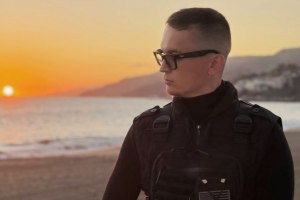
— Do you often communicate with family and friends in Bashkortostan?
— We communicate with our relatives often. My wife communicates more often, for example, with her mother and my family. Because of my work, I get this, unfortunately, less often.
— What do you usually talk about? What news do relatives tell?
— They talk about current life, about family news, events. We don't touch politics. Everyone is generally afraid to talk about politics.
Relatives say that they would like to have the opportunity to come here and see us, but so far there is no such opportunity. We hope that soon there will be such an opportunity.
“The growth of Russian nationalism in the homeland is alarming”
— Do you continue to follow the “Baymak case”?
- Yes, but not as often as before. Before that, I helped those in pre-trial detention centers and supported them financially. I would say I supported many. Although, when we arrived here, we had nothing - no work, no housing. Everything in crypto fell apart for me then, my previous team was afraid to continue working with me. Nevertheless, I supported the Baymak people as much as I could.
But now I've moved away from that a little. The reason is that when the Bashkortostan state propaganda “drowned” me, they said that I supposedly called everyone to go to a rally, but I ran away, they claimed that I was not helping anyone, and that I myself lived in a “house with a swimming pool,” none of those whom I helped stood up for me. Nobody wrote that I supported the Baymak prisoners; even their relatives who run their Telegram channels. On the one hand, I understand them, but on the other hand, there was such a residue, and I pulled away a little.
— By the way, about the Bashkortostan propagandists: they write that you supposedly had a brilliant opportunity to develop in your native republic, to gather thousands of spectators, but instead you speak to small groups of emigrants. How do you feel about this?
- No way. I have already abstracted myself from this as much as possible and do not pay attention to what they write.
— The independent media that are now writing about Bashkortostan mainly have three main topics: war, repression and corruption cases against officials. What catches your eye when you read news from the republic?
— Of course, I see news about a large number of people killed in the war from Bashkortostan, I read reports about new repressions. As for the imprisonment of officials, there is a story with [singer, director of the Bashkortostan State Concert Hall in Ufa] Vildan Yarullin , which I learned not long ago.
I was told that when he was arrested , he ended up in the same cell with the Baymak people, including those who had previously defended Kushtau. Still, they remember how he spoke at Kushtau in defense of the developments of BSK (Bashkir Soda Company - “Window”), sang from KamAZ: “Eh, Khabirov, well done!”, after which he fell in the eyes of the people. And now, ironically, he found himself in a cell with Shihan defenders. They, of course, did not attack him, but joked: “Who is the good guy now?”
- Previously we they asked about your attitude towards Russia’s war against Ukraine, and whether it affected your work. Last fall you said that you would not like to answer this question. Will you answer this question now?
“Even now I don’t want to answer this question.” But, if you ask, I will say: of course, I did not support this war. I didn’t speak out openly, I didn’t talk about it. But I will say that when they wanted to send me to perform in Donbass, I refused, because it contradicts my principles.
If we talk about politics in general, then there is hope that everything will work out in the end, since this regime will not last forever. The fact that the people support the current government only seems so in appearance. It’s just that those who disagree with the authorities cannot speak openly, they are afraid. But in fact, because of one spark - not even a political one - the situation can flare up and everything can turn upside down.
— What else worries you about what’s happening in your homeland?
— The growth of Russian nationalism is alarming. I talked about this, including in my speech , after which I had to leave. Now Russian nationalist movements are very active in the republic - in particular, the “Russian Community”. And it seems to me that if this regime ever collapses, it will be partly because of this Russian nationalism, whose current ideology is destroying our country from the inside. Including in Bashkortostan, this could lead to conflicts breaking out.
— A year ago, in an interview, you defined your mission this way: you wanted to “tell the Americans, the whole world about the Bashkir people, about their culture, history, about their suffering and aspirations.” Do you have any ideas on how to even begin this mission?
— You must first become someone, achieve fame, say, as an artist or actor. But this won’t work out right away - I literally started my life here from scratch. But I motivate myself by the fact that although I am already 33 years old, there are a lot of actors and musicians who were over 40 and 50 years old, but they still came to their fame. So I don't lose this hope. This is my gut. Since childhood, I saw myself in this, I strived for this. Of course, I didn’t think that fate would take me so far from my homeland. But if you have creative aspirations, a creative streak, it won’t go away.