
Translated material
Just add water! How Siberian rivers turned the history of the USSR
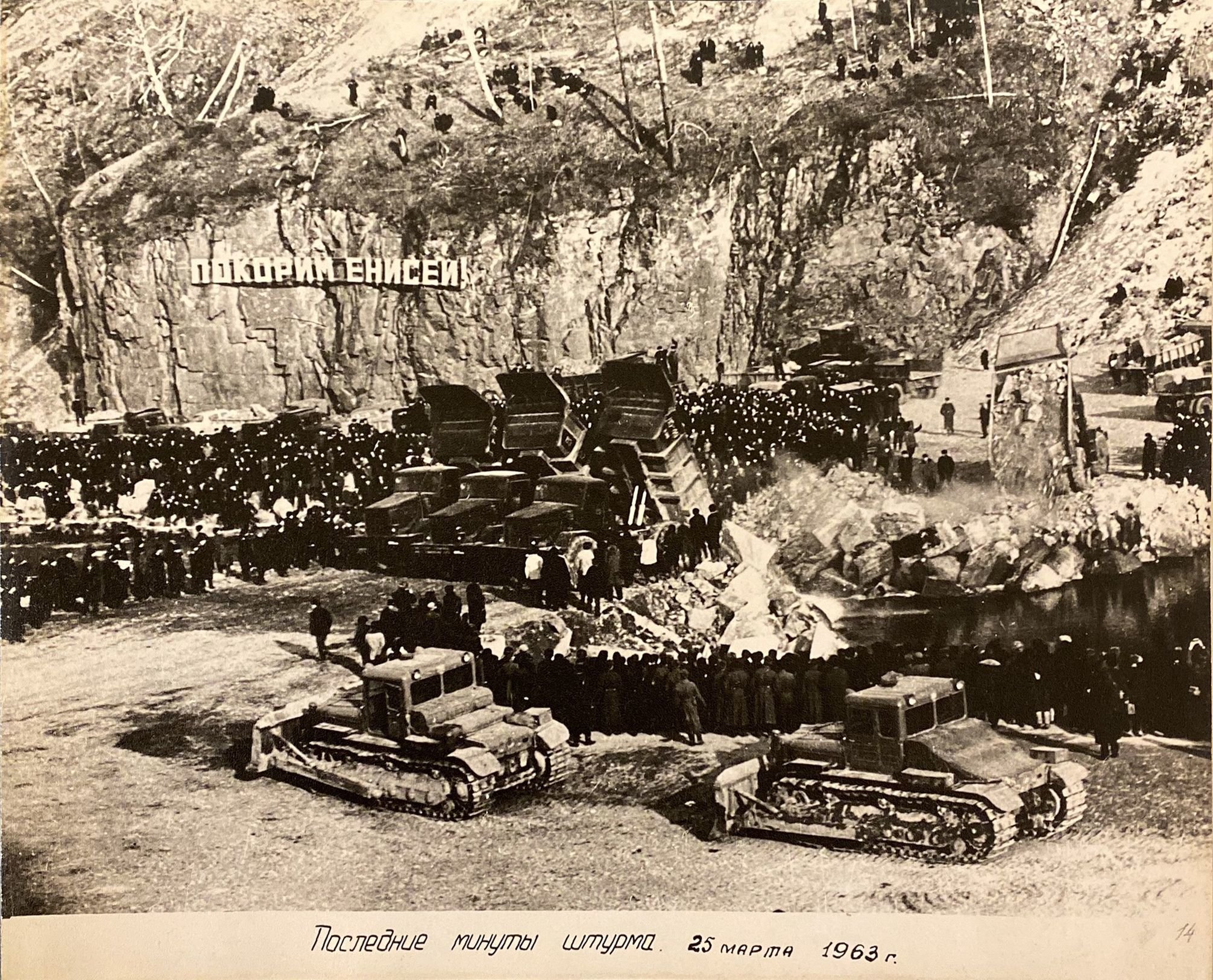
Text: Sergey Tashevsky
The Department of Earth Sciences of the Russian Academy of Sciences (ODS RAS) will work on the scientific component of the project to transfer the river flow of the Siberian Ob River to Uzbekistan, said scientific director of the Institute of Water Problems of the Russian Academy of Sciences Viktor Danilov-Danilyan . This decision was made at the October meeting of the scientific council of the ONZ RAS “Terrestrial Water Resources”.
The meeting participants recognized the most promising projects as the redistribution of part of the flow of the Ob River to the Aral region (the dried up Aral Sea on the border of Uzbekistan and Kazakhstan - RBC) and the Pechora and Northern Dvina rivers to the Volga River basin and further to the Azov region. We are talking about creating a closed pipeline system from polymer pipes. Siberia. Realities remind us of how in the USSR in the 70s they tried to implement a similar idea*.
On March 5, 1976, the XXV Congress of the CPSU opened in Moscow, at which it was decided to transfer part of the flow of Siberian rivers to Kazakhstan and Central Asia. The project, known as the “turn of the Siberian rivers,” if implemented, could cause a huge environmental disaster. The cessation of work on transferring water from Siberia in 1986 is considered the first “big victory” of public opinion at the beginning of perestroika. However, the idea of diverting rivers still has supporters who argue that the benefits of this plan far outweigh the risks and threats to the environment. Stories of successful redistribution of national water resources in China and Africa are cited as “positive examples”.
We cannot expect favors from nature
And it all started quite innocently, with a thin notebook filled with the neat student handwriting of a seventh-grader from Kyiv, Yakov Demchenko. The young man loved geography and dreamed of great transformations of nature long before the Bolsheviks came to power. In the middle of the 19th century, he drew attention to a glaring fact that had eluded the attention of scientists: Siberian rivers flow to the north, where there is already a lot of water, but they should flow to the south, where water is worth its weight in gold! Demchenko did not forget the plan, drawn up with his own hands back in his high school years, to transfer part of the waters of the Ob and Irtysh to the Aral Sea basin all his life, and he had a bright one: he became a famous journalist and right-wing public figure, collaborating with the “protective” press of those times, like the magazine “Kievlyanin”. In 1871, Demchenko published at his own expense a brochure “On the flooding of the Aral-Caspian Lowland to improve the climate of adjacent countries,” and in 1900 he republished it again, counting on the attention of the government and the tsar, but all in vain. A few reviewers rated Demchenko's plan as "crazy." As for the authorities, they had other concerns. In 1912, Yakov Demchenko passed away (very timely for a convinced monarchist), and with him the project for the transfer of northern waters also died. He rested - but not completely. The seeds (in the form of two reprints of the brochure) were sown, and they were to germinate not in the conditions of a dying monarchy, but in a completely different country, where every citizen knew from childhood that “we cannot expect favors from nature.” The author of this aphorism is considered to be Ivan Michurin, although the source of the quote is the introductory article by Stalinist academician Trofim Lysenko to the collection of Michurin’s works. But even if Michurin said something similar, in any case his words related to gardening, and not to those grandiose experiments on nature that the Soviet government was keen on.
One way or another, after a long break, Demchenko’s gymnasium project was cautiously remembered in 1948: Academician Obruchev wrote to Stalin about the possibility of “feeding” arid Central Asia with Siberian water. Stalin did not answer. The times of the White Sea Canal are a distant memory for him. There were other stakes at stake: the Cold War, nuclear weapons testing, and the “American threat.” It all started because of America.
“Dedicated to the burned and flooded Motherland”
At a low start
After World War II, the USSR and the USA competed for the role of the leading superpower, which required not only long ballistic missiles, but also amazing peaceful megaprojects like “apple trees will bloom on Mars.” The Americans were preparing to send their astronauts to the Moon and generally squandered money, allowing themselves downright provocative “construction projects of the century.” One of them was noisily discussed in the mid-60s in the American press: the project involved collecting river runoff from North America and redistributing it to arid areas and Mexico. At the first stage, it was planned to transfer 135.6 billion cubic meters per year; later the volume could be increased. If approved, the project would have taken 30 years to complete, with initial costs estimated at $100 billion—almost four times more than the Moon Race.
Of course, it was impossible to calmly look at such defiant behavior; it was urgent to “catch up and overtake America.” In the USSR, they blew the dust off the monarchist Demchenko’s project so that the country’s leading scientific institutes began to sneeze from it, developing a new “project of the century.” True, already in 1968 it became known that the Americans would limit themselves to a small part of their original plan, which was now called the “Central Arizona Canal.” But that was also cool, whatever one may say – 5 billion dollars in those days! Of course, they built in the USA more slowly than in the USSR - not in the Stakhanov style and without hysterical socialist competition. Slowly, but forever. Therefore, construction, which lasted for 18 long years, was completed only in the 1990s, when the main rival had already withdrawn from the race. But the Colorado River eventually extended 330 miles, and its water now flows through the Southern Desert, helping keep a bunch of local farmers growing cotton, vegetables and citrus fruits afloat...
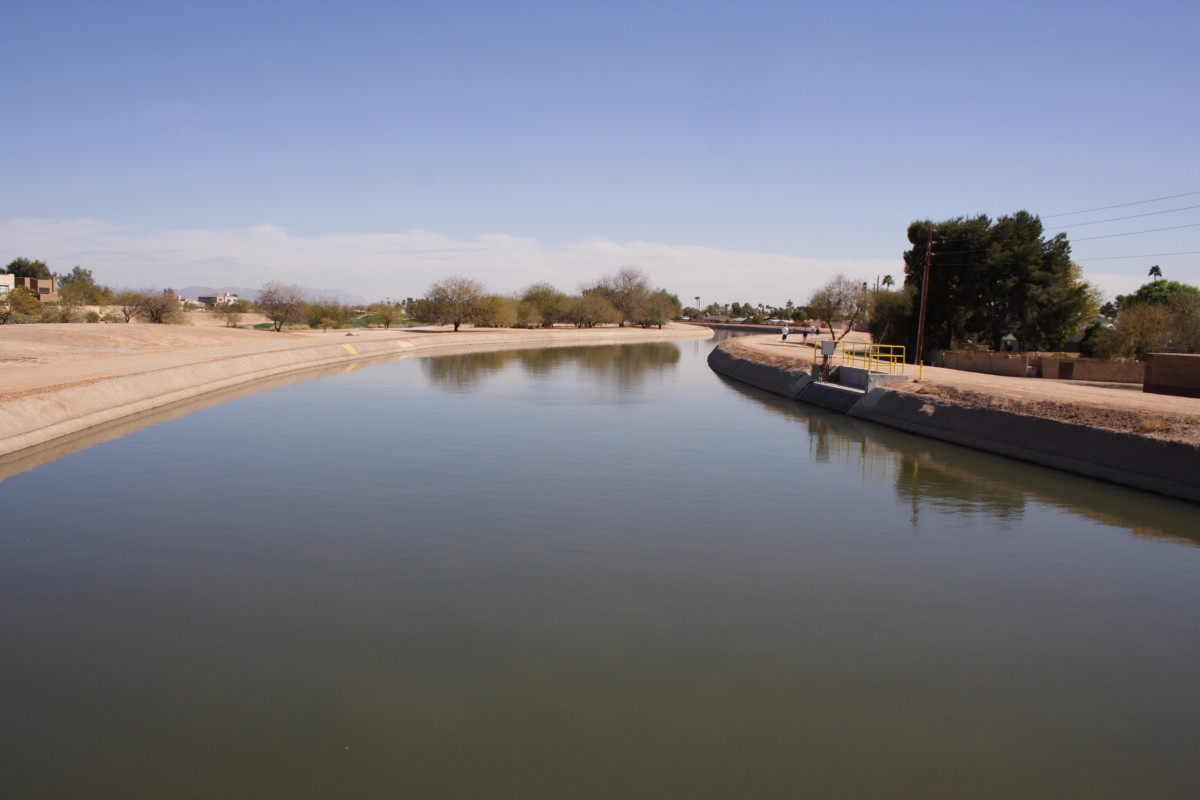
One of the ardent supporters of the “new turn” was the chairman of the Academy of Sciences of the Kazakh SSR, Shafik Chokin. The academician convincingly argued to the party leadership in Almaty and Moscow that if the northern rivers are not turned south, something terrible could happen in the near future - the Aral Sea will dry up completely, and then the steppe winds will raise salty dust from the former seabed - thousands of tons of dust that will kill vegetation hundreds of kilometers around, and the territory of Kazakhstan may become completely uninhabitable... A strong argument (on the verge of blackmail) worked - in In 1971, Kazakhstan received an almost 500-kilometer canal that transferred Irtysh water to the Karaganda region. The canal, however, was not very wide, about 20 meters in diameter, and did not provide much water (it turned out to be less than two cubic kilometers per year), but this was more than enough to meet the needs of the coal industry of Kazakhstan. In addition, the canal was built in just six years, and supporters of the river diversion hoped that this was only the first link of a grandiose irrigation system in Central Asia. That's it, we've started! And they have already overtaken the Americans...
And there is a reason...
In 1968, the plenum of the CPSU Central Committee (and Leonid Ilyich Brezhnev personally) instructed the State Planning Committee, the USSR Academy of Sciences and other organizations to develop a complete plan for redistributing the flow of the Irtysh, Ob and Tobol rivers. What was meant was that we needed to quietly take away some of the water from them and turn south. Literally a little bit, only 25 cubic kilometers per year. Well, maybe 50 (and this is almost a quarter of the total stock). Perhaps using atomic bombs to build canals and reservoirs to make things go faster. But quietly.
These were the plans of the party, which, as we know, automatically became the plans of the people.
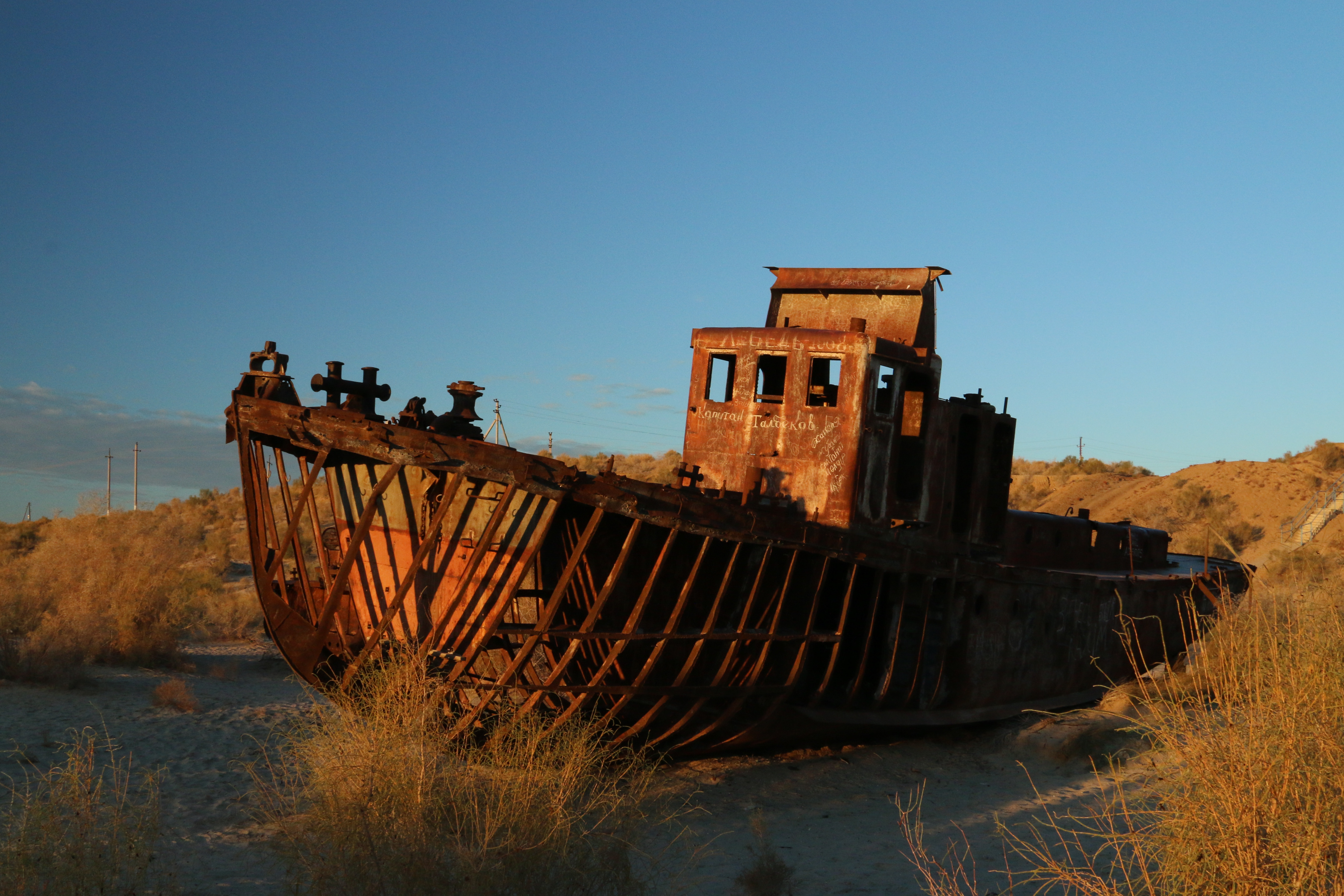
It was no longer possible not to notice this. The level of the Caspian Sea has dropped so much that ships in many ports have buried their bottoms in the coastal sand. Scientists who studied this phenomenon unanimously attributed it to human economic activity, and sent letters to the Central Committee, begging them to speed up the turn of the northern rivers...
However, soon after the fateful decision of the 25th Congress of the CPSU to turn around, in 1977, the Caspian suddenly changed its mind about shallowing, and in subsequent years its level itself began to recover quite quickly. Modern research shows that this is a natural process to which people have no direct connection. Because the Caspian is a “pulsating” sea, which was not yet known in the 1970s. But then it seemed that there was no other way out and the megaproject had to be put into action. The work has begun.
The “project of the century” involved 48 design institutes and 112 research institutes, 32 union ministries (and 9 republican ones), 32 academic institutes... Over eight years, 50 volumes of textual materials, calculations and applied scientific research, 10 albums of maps and drawings were produced. Probably, pieces of paper from holes punched in punch cards during computer calculations for the project could be enough (if they were recycled) for the complete works of Jules Verne. By the way, the famous French writer has a novel “Upside Down,” which describes a similar grandiose undertaking on a planetary level - the heroes of the book tried to change the tilt of the Earth’s rotation axis with a shot from a mega-gun. In the novel, everything ended in complete disarray. In Soviet reality, too.
Can we bang?
By 1976, the technical documentation for turning the Siberian rivers was ready. There were four options to choose from: two northern and two southern routes for the future canal. The “southern options” involved digging one main canal with a length of 2,500 kilometers - from the confluence of the Ob and Irtysh to the Amu Darya and Syr Darya. The authors of the “Northern Project” recommended digging a shorter canal from the Ob in the Khanty-Mansiysk region to the mouth of the Irtysh, and then up the Tobol. Then the water had to be pumped through the Turgai trough , connecting the West Siberian Lowland with the Northern Aral Sea region, and driven through a wide canal into the same Amu Darya and Syr Darya.
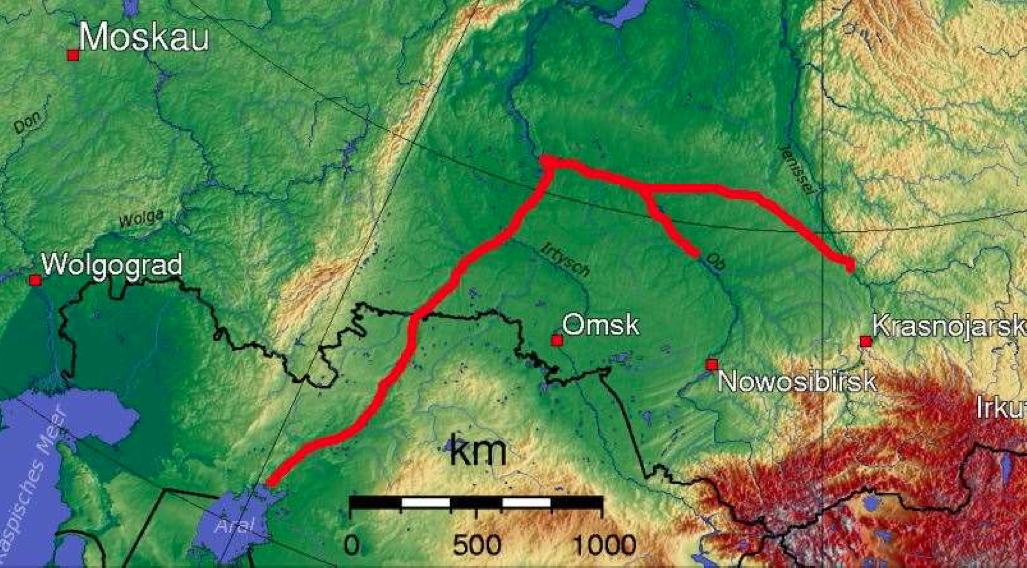
The most difficult thing was to cross the watershed, since more than six million cubic meters of soil had to be removed. To speed up the work, it was planned to use nuclear explosions. The so-called “peaceful nuclear explosions”, abbreviated as PNEs.
They are peaceful, but the military still had to detonate nuclear charges. And the generals close to the nuclear button were simply impatient to arrange a nuclear attack.
Because what are atomic bombs for if you don't want to explode them?
After the Soviet Union signed an international treaty banning above-ground, underground and underwater nuclear tests in 1963, our military literally languished with nothing to do. And then suddenly an excellent excuse appears to “bang” a hundred more kilotons for the benefit of the national economy!
In 1971, in the Perm region - also as part of a program to save the drying up Caspian Sea, but at the expense of the waters of the Pechora River - experiments began, during which three underground charges designed for excavation were detonated (in total, more than 250 of them were supposed to be used there). The pit they created (there is now a lake with the cute name Yadernoe) turned out to be fatally radioactive. And besides, it’s not too deep. However, radioactivity was supposed to drop in a couple of years, and the efficiency of the explosions was planned to be increased, but bad luck - clouds with radioactive particles were blown by the wind to Europe, where Geiger counters began to tactfully tap. The scandal was barely hushed up, and the Taiga project was hastily cancelled.
“A palace in the desert is unreal.” How Electrograd was built in Siberia
But still, the “northern” version of water transfer looked cheaper and more interesting, because the length of the canal was many hundreds of kilometers shorter! It was this option that was approved as the main one at the XXV Congress of the CPSU in 1976. A new “construction of the century” was brewing. Soyuzgiprovokhoz was appointed general designer, and the State Planning Committee formed a State Expert Commission, which was supposed to approve and count everything. And she counted.
The price of the issue was 16 billion dollars. This was for the state budget, as they say, “back to back.” But meticulous accountants from the State Planning Committee did not calm down, they recalculated the money again and again, and it soon became clear that the expenses were underestimated by about half. And this, given the political situation and problems in the economy, was no longer possible.
The State Planning Committee was ordered to recalculate again, taking into account the most economical options - what if it turns out to be less? But for some reason it still didn’t work out less; on the contrary, each time it only became more and more.
It was already 1985, three general secretaries had changed in the Central Committee, the Caspian Sea had almost returned to its shores, and the State Planning Committee continued to count and plan. Something had to be done about this. And it’s even clear that. Stop. But to stop a project approved at the CPSU Congress by admitting that the country does not have enough money... It was somehow indecent.
And here glasnost and perestroika happened very opportunely.
Fight outside and inside
There were plenty of opponents to the diversion of the northern rivers in the Soviet Union. First of all, the Siberians themselves were against it. The taiga has already been ravaged for decades, the forests have been devastated, and now they are still going to dig, bury, blow up, pump out water from rivers... This will not end well. Many representatives of the domestic intelligentsia and, first of all, writers who rallied around the Literary Gazette and several “thick” metropolitan magazines, whose voice became very significant with the beginning of perestroika, completely agreed with this. Valentin Rasputin, Sergei Zalygin, Daniil Granin, Vladimir Chivilikhin and others. Patriotic writers, the flower of Soviet literature (many books were even included in the high school curriculum). The majority later became famous for their struggle against liberal values and Russophobia, so it seems even funny that for the first time they were ideologically united by opposition to a project that was once born in the head of a “right-wing” journalist, a supporter of the monarchy. But now, at the end of the 20th century, the idea that a great construction project could destroy not only virgin nature with all its primeval beauty, but also the centuries-old way of life of people living along the rivers caused deep rejection. And, one after another, angry articles began to appear in the press, and by 1986, the turn of the Siberian rivers became almost the main “duty” topic of many literary publications. The congress of the Writers' Union held in Moscow that same year was jokingly called the “congress of land reclamation workers”: almost every second writer who spoke from the rostrum of the congress devoted his speech to criticizing the “turn of the rivers.” The editor-in-chief of Novy Mir, Sergei Zalygin, published articles in each issue of his magazine recalling what troubles the previous “water extravaganzas” of the Soviet government, such as the construction of the Ob, Boguchansk and Bratsk hydroelectric power stations, turned out to be for the Siberian land and its inhabitants. At that time, the words of the writer Vasily Belov were often repeated: “Siberian rivers are like human blood vessels - blood cannot flow backwards.”
At the same time, a group of scientists (geologists, biologists, soil scientists and mathematicians) led by academician Alexander Yashin also opposed the development of the project. They predicted a serious rise in groundwater along the entire length of the canal, the death of fish in river basins, unpredictable changes in the permafrost zone, an increase in the salinity of the waters of the Arctic Ocean, climate change and, finally, the formation of a huge number of swamps and salt marshes along the canal in Kazakhstan and Central Asia. It was also pointed out that the level of the Caspian Sea was rising, which no longer needed to be “recharged” by northern rivers. Negative expert opinions were prepared on the project from five departments of the USSR Academy of Sciences, dozens of open letters were sent to the Presidium of the USSR Academy of Sciences and the Council of Ministers, and, finally, direct appeals were made to Gorbachev on the pages of magazines and newspapers.
It is difficult to imagine that in the mid-1980s such a large-scale public campaign could have successfully continued for many months without the knowledge (and tacit approval) of the authorities. In the spring of 1986, Gorbachev agreed to meet with Yashin and listened carefully to his arguments. And already on August 14, 1986, at a special meeting of the Politburo of the CPSU Central Committee, it was decided to stop work. The decision was as follows: “The Central Committee of the CPSU and the Council of Ministers of the USSR, based on the need to study the environmental and economic aspects of the problems of transferring part of the flow of northern and Siberian rivers, which is also advocated by wide circles of the public... recognized it as inappropriate to further carry out design studies related to the transfer of the flow of Siberian rivers to Central Asia and Kazakhstan.”
To this day, many believe that this was the first victory of civil society in the Soviet Union. They say that the government was forced to listen to the opinions of its citizens. Outwardly, everything really looked like this, but, they say, the real struggle was going on “under the carpet,” at the level of the State Planning Committee and officials. For many years, republican ministries and contractors lobbied for the project, inflating the cost of work, and economists and apparatchiks of the Central Committee sought to close it. One of the powerful opponents of the “turn” was Alexey Kosygin, and largely thanks to his position, the start of the project was postponed several times in the 70s. One way or another, now the Central Committee breathed a sigh of relief: they had found a plausible excuse to abandon the prohibitively expensive undertaking. And the justification is good, in the spirit of communist rhetoric: meeting the wishes of the working people...
However, this victory incredibly inspired the intelligentsia: for the first time, the regime gave in and pulled back under public pressure! After this, the dam of censorship is broken by a stream of increasingly sharp magazine and newspaper publications, criticizing the mistakes of the party apparatus, questioning the most sacred thing - the monopoly of the CPSU on undivided power. It was the Siberian rivers that became a turning point in relations between government and society. The process, as Gorbachev said, “went on,” and five years later the country, which was pondering the great irrigation project, sank into oblivion. But the rivers remain.