Date
Author
Николай Першин, Илья Волжский
Source

Preserved copy
Translated material
"Kids" in the service of the Armed Forces of Ukraine
In response to drone attacks on the Russian shadow fleet, Putin threatened to “cut off Ukraine from the sea.” Is this real and what does international law say?
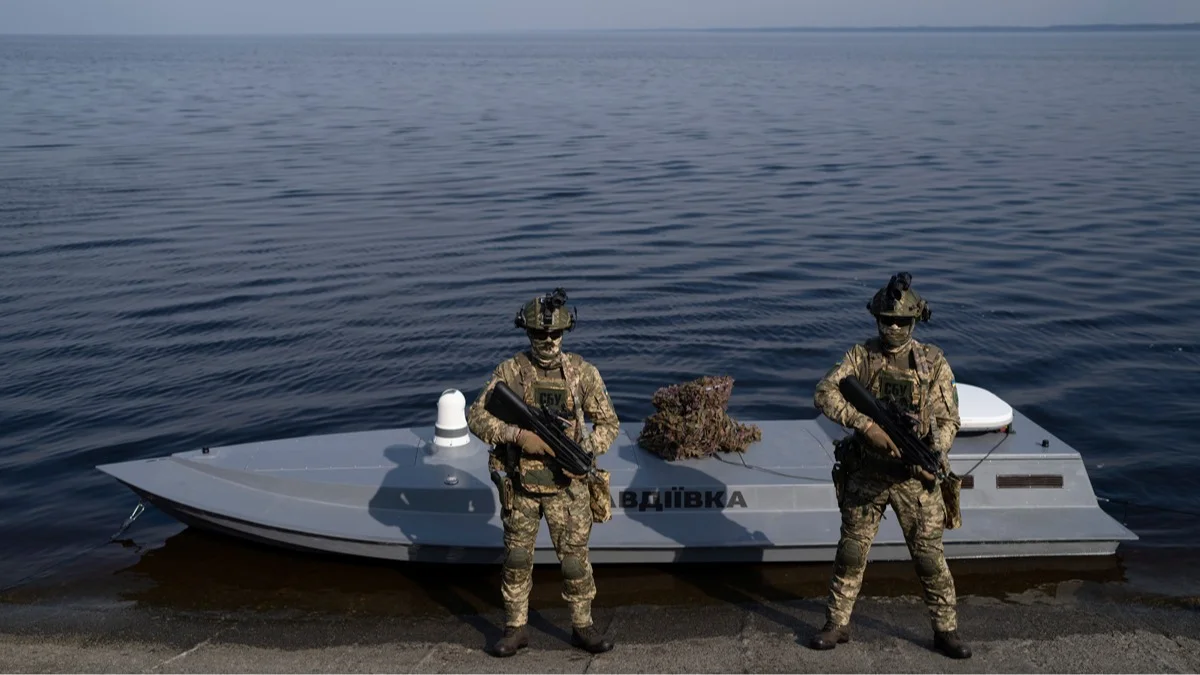
Ukrainian military personnel stand in front of the Sea Baby "Avdeevka" maritime drone during a presentation by the Security Service of Ukraine, Kiev region, Ukraine, March 5, 2024. Photo: Evgeniy Maloletka / AP Photo / Scanpix / LETA
The situation in the Black Sea has worsened amid a series of attacks on tankers from the Russian shadow fleet. According to informed Ukrainian media sources, the “culprits” are modernized Sea Baby sea drones. Similar attacks have occurred before, but in the northern part of the water area, and now the targets were ships located near the coast of Turkey. Commenting on what happened, Vladimir Putin threatened to “cut off Ukraine from the sea” and take “retaliatory measures against the ships of those countries that help Ukraine carry out pirate operations.” What are Moscow’s real capabilities and why are Kyiv confident that international law does not prohibit such attacks on tankers, in the material of Novaya Gazeta Europe.
What happened?
“What the Ukrainian armed forces are doing now is piracy,” Vladimir Putin confidently said on December 2, speaking to reporters. The conversation was about attacks on three tankers that had occurred over the past few days.
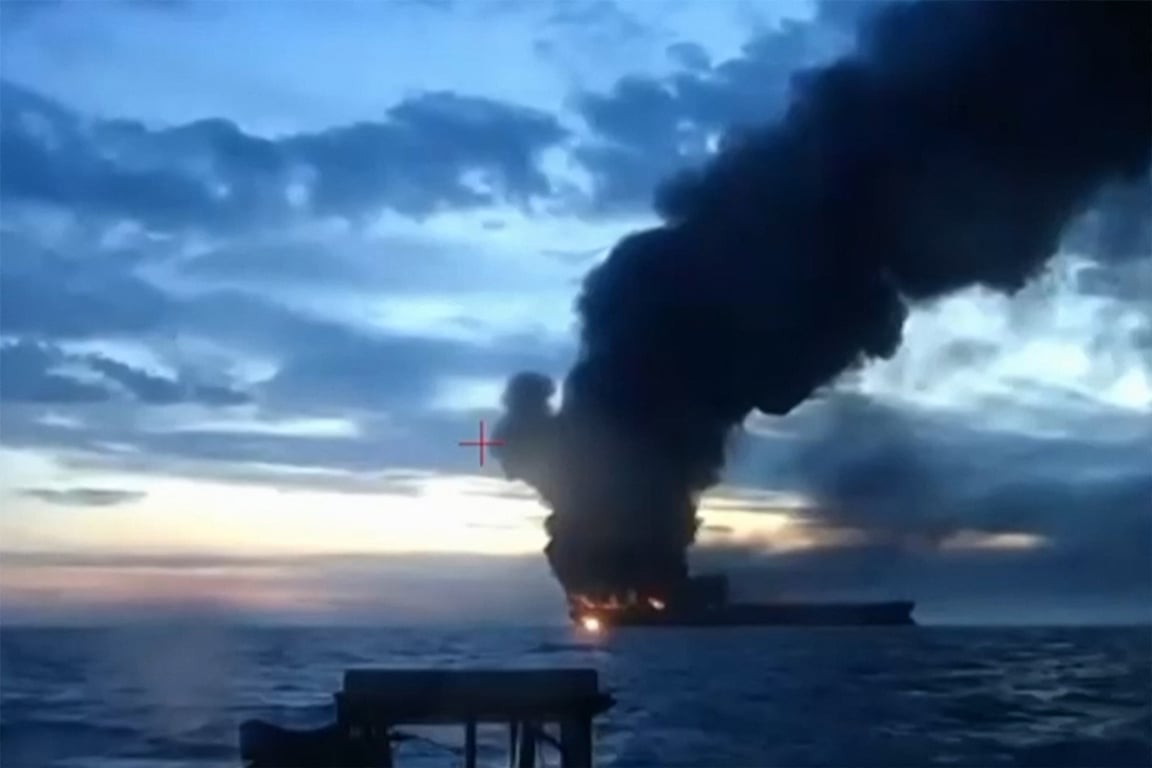
First, on November 28, the tankers Kairos and Virat were damaged near the Bosphorus Strait. They previously flew the Gambian flag, but, as The Insider noted , they were recently removed from the country's shipping registry for certificate fraud. Thus, they go to sea illegally. Western sanctions have been imposed on Kairos and Virat for their involvement in the shadow fleet of the Russian Federation, which is used to transport Russian oil in excess of the established “ceiling”.
At the time of the attack, Kairos was 28 nautical miles off the coast of Turkey and was heading without cargo to Novorossiysk. Bloomberg reported that before this, the tanker delivered a shipment of Russian oil to the Indian port of Paradip. After a fire was discovered in the engine room area, 25 crew members were evacuated.
Around the same time, the Virat tanker, also heading to Russia, was attacked 35 nautical miles off the Turkish coast. There were 20 crew members on board, but they were not evacuated. On the morning of November 29, Virat came under another attack.
Sources from a number of Ukrainian media reported that they were talking about successful attacks by Sea Baby sea drones (Kiev did not officially confirm its involvement). As the Security Service of Ukraine (SBU) noted at the end of October, by that time these drones had already been used to successfully attack 11 Russian ships, including frigates and missile carriers. This, as they say in the SBU, forced the Russian Navy to transfer its main base from Sevastopol to Novorossiysk.
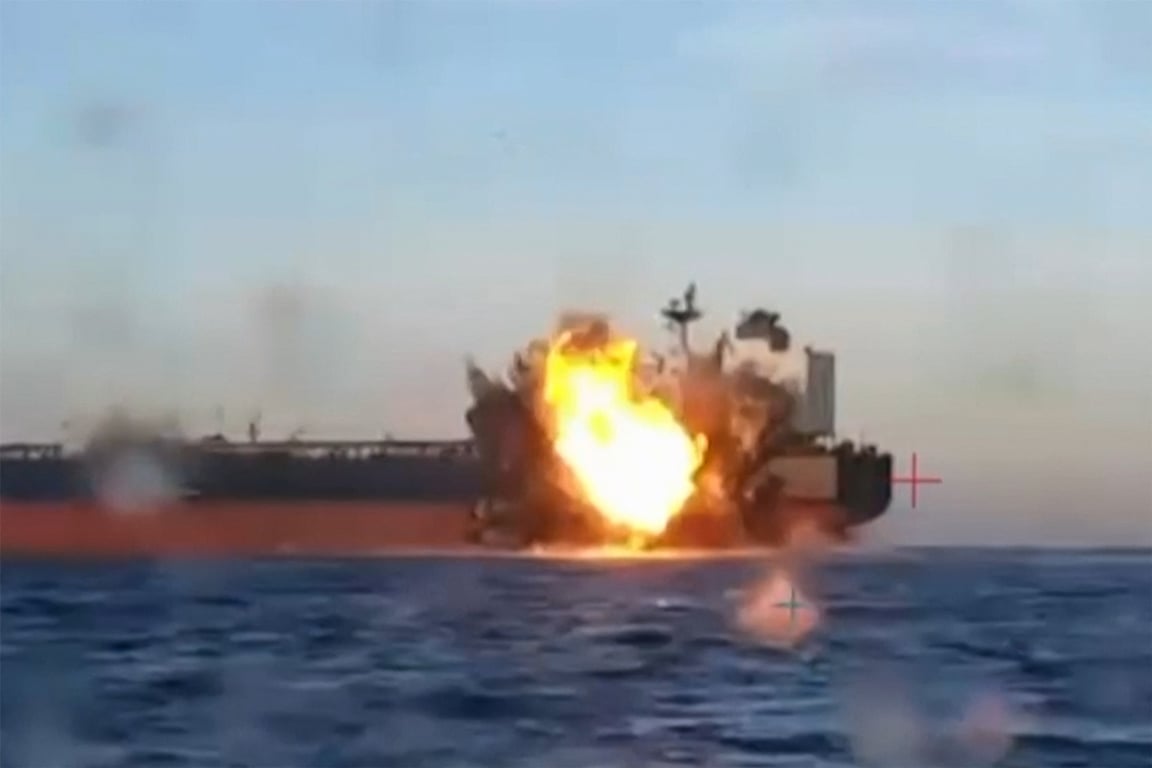
At the same time, at the end of October, an improved version of Sea Baby was presented: now the drone can operate anywhere in the Black Sea (the radius was increased from 1 thousand to 1.5 thousand km), carry heavier weapons (up to 2 tons of payload) and use artificial intelligence for more accurate targeting. It was these advanced drones, according to Ukrainian media sources, that were used at the end of November. And on December 2, another attack became known.
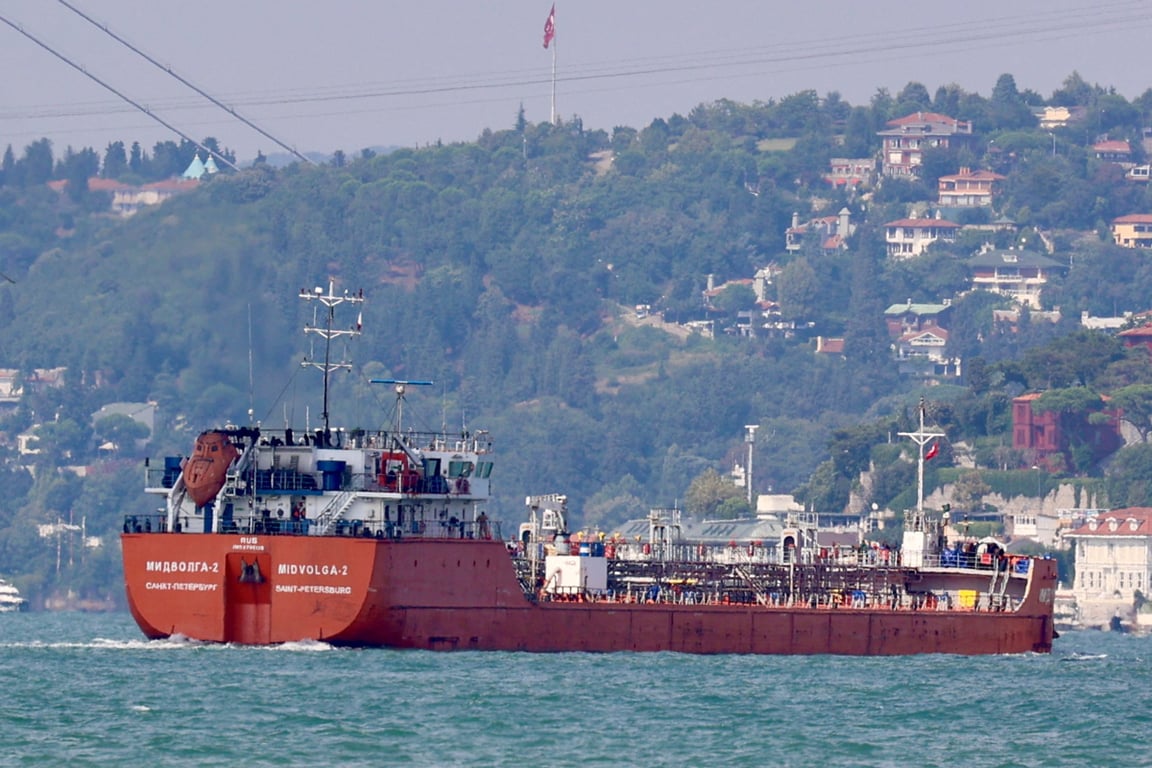
The Turkish Maritime Authority said the tanker MIDVOLGA-2, loaded with vegetable oil, was attacked 80 nautical miles off the Turkish coast.
According to Marine Traffic, the tanker flies under the Russian flag. The Turkish side reported that the destination was Georgia, although the Georgian Maritime Transport Agency called this information untrue. One way or another, the ship received damage (albeit probably minor) and reached the Turkish port of Sinop under its own power.
Why won't Russia be able to cut off Ukraine from the Black Sea?
“The strikes on commercial vessels within our exclusive economic zone indicate an alarming escalation of the situation,” Turkish President Recep Tayyip Erdogan commented on the first two cases on December 1. “We cannot in any way justify these attacks, which threaten the safety of navigation, life and the environment.” At the same time, the head of state added that Ankara is closely monitoring the negotiations to resolve the Ukrainian crisis and is ready to contribute to these processes.
Meanwhile, in Putin’s subsequent statement there was no sense of any focus on a settlement. “What kind of response can we have? - he asked himself, talking to reporters. And he himself answered: “Firstly, we will expand the range of our attacks on port facilities and on ships, on ships that enter Ukrainian ports.” Secondly, if this continues, we will consider the possibility (I am not saying that we will do this, but we will consider the possibility) of retaliatory measures against the courts of those countries that help Ukraine carry out these pirate operations. The most radical way is to cut off Ukraine from the sea, then it will be impossible for it to engage in piracy in general, in principle. I hope that the Ukrainian military leadership, political leadership, as well as those who stand behind them, will think about whether this practice is worth continuing,” Putin added.
Military experts interviewed by New Europe are absolutely sure that the Russian armed forces are now physically unable to cut off Ukraine from the sea in the literal sense. “To do this, it is necessary to completely capture the Kherson, as well as the Nikolaev and Odessa regions. At the current rate of advancement of the Russian army, this will take years, if not decades,” said military researcher Kirill Mikhailov.
Maxim Starchak, a researcher at the Center for International and Defense Policy at Queens University (Canada), noted that “Russia as a whole can create a blockade of Ukraine by closing the Kerch Strait on one side and stationing ships near Odessa on the other.” “However, there are many possibilities for counteraction,” the expert added. — Russia cannot significantly strengthen itself in the Black Sea without Turkey’s consent, and the Black Sea Fleet is weakened. Russian ships can be attacked by drones, long-range missiles or coastal artillery. And the sea area near Odessa may be mined.”
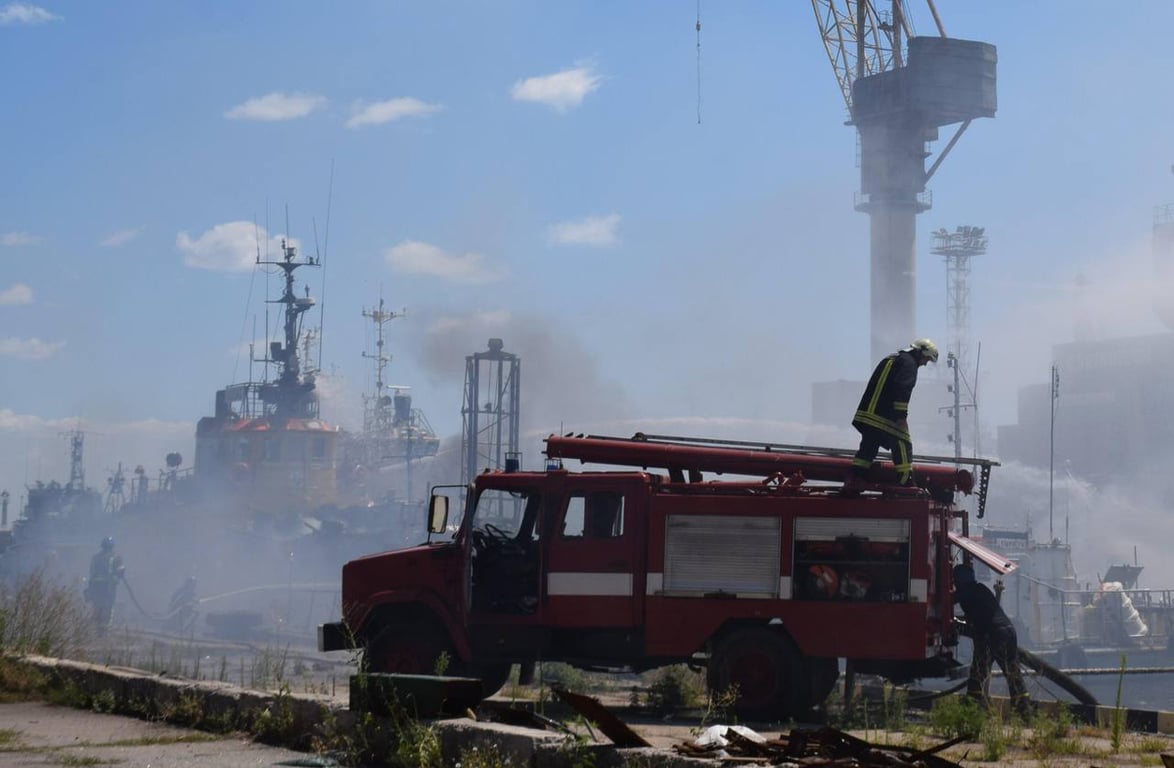
The ships of the Black Sea Fleet, military-political observer of the Information Resistance group Alexander Kovalenko is sure, “will not dare to go out to the open sea from their bases, realizing the danger of Ukrainian drone attacks on them.” At the same time, he added, “Russia has a whole range of means with which it can attack ships going to Ukraine - these are sea drones, aerial drones, and various missiles.” Russian aviation can also play a role.
Military expert David Gendelman agrees: “A naval blockade does not have to be established by conventional means - patrolling the water area by ships of the Black Sea Fleet, checking ships, and so on.” According to him, the Russian armed forces can arrange it in the same way as the Ukrainians, who do not have a Black Sea fleet at all: with sea and air drones and missiles.
Kirill Mikhailov also believes that “strikes with coastal and air-based anti-ship missiles are quite possible.”
Can Putin arrange the blockade differently?
Thus, technically, a blockade in one form or another is possible. However, this would be a risky move. “In this case, we will be talking about a significant escalation, and it is unknown whether the Russian leadership has the political will for this,” Kirill Mikhailov noted.
And in this regard, David Gendelman recalled the situation with the Yemeni Houthis, who blocked the Bab el-Mandeb Strait with attacks on ships and sharply reduced traffic through the Suez Canal. “The very beginning of attacks on ships could force many shipowners to stop voyages on this route, even if they themselves have not yet arrived,” he drew parallels with the situation that theoretically - after Putin’s statement - could arise in the Black Sea.
Small consequences of the escalation in the Black Sea became visible on Monday:
as Reuters reported , war risk insurance rates for ships heading to Ukrainian ports increased to 0.5% of the value of the vessel (a week earlier it was 0.4%).
For routes to Russian ports, rates increased to 0.65-0.8% versus 0.6% previously.
Meanwhile, Maxim Starchak drew attention to the fact that Putin did not dare to attack Ukraine’s allies for almost four years, and “why he would decide now is unclear.” With such a belligerent statement, according to the expert, Putin “shows how important tankers are for him.” Perhaps, the interlocutor of New Europe suggests, “this issue will be for Putin a pretext for statements about the impossibility of reaching an agreement with Ukraine.”
It is significant that Putin’s words came literally a couple of hours before his meeting with a high-ranking American delegation, which brought a draft peace plan to the Kremlin. Following the meeting, the Russian side announced that “no compromises have been found yet.”
What else do we know about attacks on tankers?
Ukraine has previously attacked Russian tankers in the Black Sea - the events of recent days are unique only in that they occurred not in the northern part of the water area, in Russian territorial waters or near them, but in the south - not far from the coast of Turkey.
Russia has also attacked civilian ships more than once. In this case, we were talking about missile attacks, and often the targets were ports, and not ships as such. For example, in 2022, Yasa Jupiter , Namura Queen , Millennial Spirit , Lord Nelson , Helt , Banglar Samriddhi came under missile attacks. All of them flew the flags of countries neutral to the conflict. By the way, after the attack on the Turkish bulk carrier Yasa Jupiter, Recep Tayyip Erdogan condemned Russia’s actions in Ukraine, calling the Russian invasion “unacceptable.”
Similar things happened later. For example, in September 2024, a Russian missile hit a cargo ship carrying Ukrainian wheat to Egypt. At the time of the attack, the ship was passing through Romania's exclusive economic zone.
In October of the same year, there were three more attacks: on the Paresa ship loaded with corn (flying the flag of St. Kitts and Nevis), on the grain carrier Optima (Palau) that arrived at the port of Odessa, and on the container ship Shui Spirit (Panama) located in the port of Chernomorsk.
In the case of Optima, a Ukrainian port worker was killed and five foreign citizens were injured; in the case of Shui Spirit, eight people were killed and another nine were injured.
Incidents also occurred in the spring of 2025. On March 1, a Russian ballistic missile damaged the container ship MSC LEVANTE F (Panama) and the bulk carrier SUPER SARKAS, which transported more than 21 thousand tons of corn and soybeans for export, in the port of Odessa. “This is already the 29th civilian ship that was damaged as a result of Russian attacks,” Deputy Prime Minister of Ukraine Alexey Kuleba emphasized then. And the count didn't stop there.
In addition, Russia was accused of what Putin accused Ukraine of on Tuesday: piracy. This is exactly how experts described the events of August 13, 2023. On that day, the large patrol boat Vasily Bykov of the Russian Black Sea Fleet opened warning fire at the merchant ship Sukru Okan (flying the flag of Palau), which was in close proximity to the territorial waters of Turkey and Bulgaria. The shooting began after the ship failed to respond to requests to stop for inspection for prohibited cargo. A Ka-29 helicopter with a group of Russian marines took off. After radio communications, the cargo ship slowed down and a group of searchers landed on its deck. No weapons were found.
“The boarding of the Sukru Okan in international waters was piracy in its purest form, a flagrant violation of the UN Charter, the UN Convention on the Law of the Sea and other norms of international law. This happened because Moscow continues to act as if the entire Black Sea is a Russian lake, while the international community does not convey the opposite to it,” noted Yoruk Işık, head of the consulting company Bosphorus Observer, which analyzes maritime activity in the Turkish straits.
How were merchant ships attacked before?
Merchant ships have been vulnerable to attack throughout the history of shipping, especially in times of war. “If it is true that merchant shipping can be critical to a nation's ability to wage war, it is equally true that an opposing power will seek to impede those supply efforts,” explained the simple logic of American rear admiral, military theorist and professor Horace B. Robertson Jr..
Indicative, for example, are the attacks of German submarines on merchant ships in the First World War. Initially, the tactics were as follows: the submarine surfaced, after which the crew inspected the stopped ship and allowed civilians to leave it, moving to a safe place. But then the tactics changed - due to the fact that Britain used decoy ships (outwardly they looked like merchant ships, but were equipped with powerful weapons; they were supposed to provoke the submarines to surface and then attack them). As a result, in February 1915, Germany declared the waters around Britain a war zone and began sinking civilian ships without warning. This caused indignation among neutral countries. After the deaths of American citizens on the Lusitania and Arabic, Germany temporarily abandoned the tactic, but then returned to it in February 1917. Between February and April 1917 alone, German submarines sank more than 500 merchant ships.
During World War II, merchant ships were also regularly attacked. Examples can be found at the end of the 20th century: during the Iran-Iraq war of 1980–88, 340 merchant ships were damaged, 11 were sunk, and about 30 million tons of cargo were damaged.
A striking example from the 21st century is the Yemeni Houthis, who have attacked merchant ships in the Red Sea since October 2023. In March 2024, they even sank the British freighter Rubymar, sailing under the flag of Belize.
How does the right to attack work?
The UN Secretariat commented on the development of the situation in the Black Sea with its traditional streamlined phrase that “attacks on civilians and civilian infrastructure, including energy facilities, are prohibited by international law.”
This is true. Even after the First World War, states set their sights on codifying the rights of merchant ships, resulting in the London Naval Treaty of 1936. By 1939, all the warring countries of the First World War, with the exception of Romania, had acceded to the document, which, in particular, noted:
“A warship, whether a surface vessel or a submarine, cannot sink or render unseaworthy a merchant vessel without first stowing the passengers, crew and ship's papers in a safe place. For these purposes, the boats of a ship are not considered to be a place of safety unless the safety of passengers and crew is ensured under prevailing sea and weather conditions by the proximity of land or the presence of another ship capable of taking them on board.”
In current conditions, Additional Protocol I to the Geneva Conventions (1977) is more important. Article 48 there states that parties are obliged to distinguish between civilian objects and military targets and to direct their attacks exclusively against the latter. Article 49(3) specifies that the Protocol also applies to war at sea if it involves civilians.
More specifics are provided by the “San Remo Manual on International Law Applicable to Armed Conflicts at Sea,” adopted in 1994. In particular, it states that merchant ships flying the flags of neutral states can be attacked if:
- are reasonably suspected of transporting contraband or breaking a blockade and refuse to stop;
- participate in enemy hostilities;
- act as auxiliary vessels of the enemy armed forces;
- conduct reconnaissance;
- are in a military convoy;
- make other effective contributions to the war effort, for example by transporting military equipment.
In Kyiv they make it clear that at least the last point applies to ships attacked in the Black Sea. For example, a Ukrainian captain of the 3rd rank in the reserves, who previously served in military intelligence, explained on condition of anonymity to the Krym.Realii portal: since proceeds from the sale of Russian oil abroad fill the budget of the aggressor country, which now consists of more than 30% of military expenses, tankers carrying oil are legitimate military targets.
Meanwhile, Alexander Kovalenko drew attention to the “significant difference between merchant ships calling at the ports of Ukraine and the Russian shadow fleet”: “Tankers included in the Russian shadow fleet are actually outside the law and smuggle petroleum products. Even if a Russian tanker flies under the flag of a third country, but is included in the list of sanctions and violates the law, it is considered a legitimate target for the Ukrainian Armed Forces.” Thus, the New-Europe interlocutor continued, “attacks on these tankers by Ukrainian means of destruction - sea or air - although they raise diplomatic issues for some countries, are not violations of international law.” Alexander Kovalenko noted that Türkiye “expressed concern about what is happening near its territorial waters, but nothing more.”