
Translated material
Not Bibi. And not only Bibi
The petition for clemency submitted by Israeli Prime Minister Netanyahu after 6 years of process is more of an ultimatum

Photo: AP / TASS
Israeli (and foreign) media headlines are full of reports that the country's Prime Minister Benjamin (Bibi) Netanyahu admitted guilt, repented and asked President Isaac Herzog to pardon him.
Then there are expert assessments that, they say, “you can’t hide the truth” and, “as expected, he turned out to be guilty.” Most of the comments on these publications are quite expected: those who hated Netanyahu are simultaneously rejoicing at his “defeat” and eager to see further execution in the form of a continuation of the trial, and those who consider the Israeli Prime Minister to be the personification of the fight against the hated system of leftist elites remind that this is no longer his personal matter, and that one must fight to the bitter end.
In my opinion, both sides are too emotional about this deliberate step, and this does not allow them to concentrate and evaluate what is happening from a legal and political point of view.
Let's start with the fact that according to the law, it is not possible to file a petition and receive a pardon before the court renders a verdict. This means that this is no longer quite a petition for clemency. Besides this,
in the text of the appeal there is no “admission of guilt and repentance for what was done,” which definitively refutes the interpretation of this step as a legally justified petition for clemency.
Then what exactly was presented to us in a wrapper on which “a petition for pardon” is written, and why now?
Let's briefly remember what preceded today's event. The trial, which has been going on for six years, began with all the news broadcasts opening leaks from the courtroom: the prosecution and prosecution witnesses, of whom 613 were announced. Loud quotes, accusations of corruption, deception, loss of trust, etc.
Then, when the interrogation of prosecution witnesses began, and even more so the interrogation of defense witnesses, the entire information background seemed to fall silent and switch to other topics. Many have the impression that either the trial is over and Netanyahu has already been found guilty, or the court has gone on a long vacation. In fact, the trial continued, and immediately after the end of the indictment, the court told the prosecutor’s office: there is no corruption in the case, the prosecution could not prove it! Here it is necessary to remember that former Prosecutor General and government legal adviser Avichai Mandelblit, announcing the initiation of a criminal case against Netanyahu, said that if not for suspicions of corruption, he would not have initiated this case. But the flywheel had already been spun.
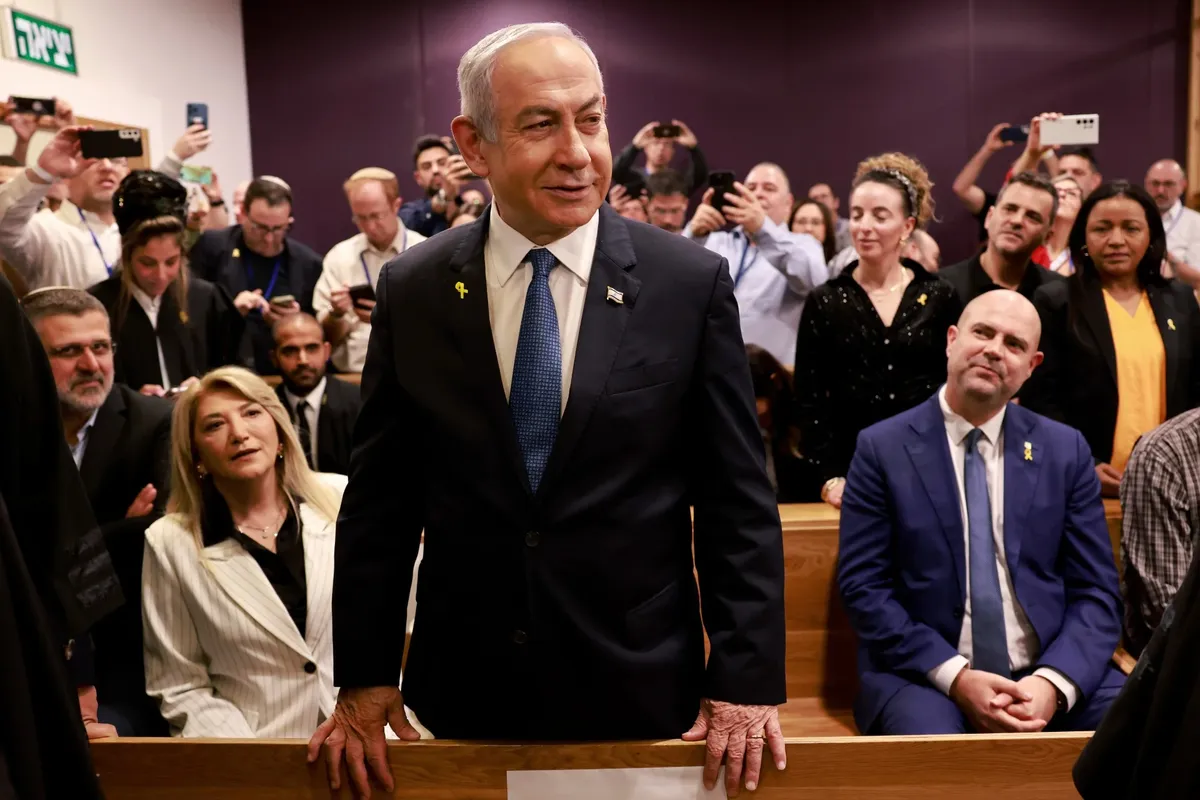
So, the defense began questioning prosecution witnesses: every day more and more details of violations during the investigation committed by the prosecutor’s office and the police emerged. There is no need to list all the details and specific witnesses, but it turned out that the methods of interrogation included violence - both physical and psychological, deception, unauthorized methods of surveillance and interrogation, as well as a widespread "disease" among interrogators and investigators - pathological forgetfulness regarding what happened during interrogations, who gave what orders to whom, most of which was illegal. But all this passed over the common man and news consumer, who was left with the taste of the prime minister’s initial loud accusations of corruption.
Unexpectedly, the police chief admitted that all the cases were not filed with the goal of bringing them to trial. The hope was that after the accusations were brought, Netanyahu himself would resign.
This explains why the prosecution was not ready for the trial, for the full interrogation of prosecution witnesses, for the fact that all illegal and unauthorized methods would come to light and the trial would turn into an accusation against the law enforcement system itself.
Throughout 2025 (against the backdrop of the war in Gaza, then the signing of the deal and the return of the hostages, the war with Iran, the Houthis, international obstruction), the prosecution has been interrogating Netanyahu. Here are the approximate wording of the prosecutors' questions to the accused: how does he choose his photographs, which will then be published, does he consult with his wife or choose himself, what does he think about when choosing a photograph? During the wake of the father of the Prime Minister's wife: so and so, who came to express condolences... perhaps they came for a different purpose and they had a different interest in coming to the wake?
In this situation (the absence of corruption, according to the court, the avalanche of accusations against the law enforcement system, the absence of a real case and, as a result, meaningful questions to the accused), the prosecution took a very correct tactical move from its point of view:
if it is impossible to win this process, it can be delayed for several years and at the same time its intensity can be increased in order to prevent Netanyahu from fully performing his duties.
Thus, under the pretext that Judge Friedman-Feldman was due to retire in two years, the prosecution requested four days of hearings per week instead of two (sometimes 4-6 hours each) “to keep the process on time.” Having accepted the prosecution's arguments, the court effectively removed the prime minister from his duties.
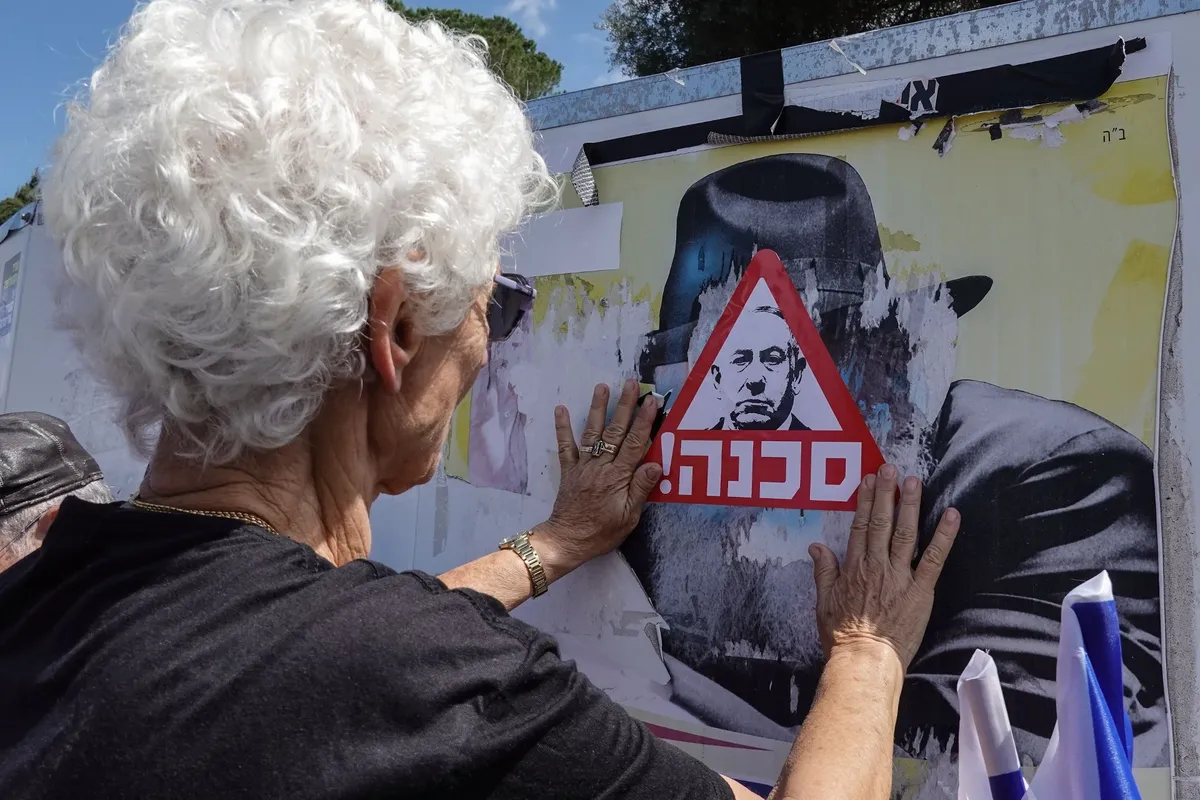
This was the last straw, and after that a “petition for clemency” was filed, which, in essence, is an ultimatum to terminate the trial. Let's try to understand why now.
- If the process is delayed, then in addition to the physical blocking (excluding approximately 50% of the official’s working time), Netanyahu, as the accused, remains bound by a signed obligation “not to violate conflicts of interest” and not to interfere in any topic relating to the judiciary, the Prosecutor General’s Office, the police, or investigative bodies.
In fact, this is a blocking of the prime minister’s powers in relation to the judiciary, which, in turn, itself prolongs the effect of these restrictions (delaying the trial) and can do this indefinitely.
- After the Supreme Court set a precedent in September 2023 by rejecting (6 to 5) a Knesset amendment to the basic law regarding the “impossibility of the Prime Minister to perform his official duties” (the amendment emphasized that the text of the law itself states that Netanyahu cannot perform his duties only for medical reasons), and recognizing this amendment as a “personal law,” the Supreme Court sided with the Attorney General/Legal Counsel government of Gali Baarav-Miara, who insisted that from the text of the law it can be understood that the head of government can be removed for other reasons - namely, for violating a conflict of interest, and that in such cases she herself (the prosecutor general) has the right to deprive him of the opportunity to serve as prime minister. But this applies only to this cadence. The effect of this amendment has been postponed and will take effect immediately after the next elections, which means that the Prosecutor General will no longer have the authority to declare the head of government incompetent and remove him from his position. And Netanyahu need not fear that he is on a short leash with the Prosecutor General and his fate is in the hands of voters.
Netanyahu wants to start his election campaign without any shackles or restrictions. This will not only allow him to run successfully, but will also remove restrictions on creating a coalition with him for those who have not made the slogan “not Bibi” their ideology.
The Trump factor: Trump’s support on this issue is important to Netanyahu, and at the moment he has this support, which he is seeking to use. Trump's pressure and tools can be effective not only against the Israeli president, but also against the bureaucracy. Perhaps Netanyahu fears that the situation could change for the worse closer to the congressional elections and a possible Democratic revenge.
Heavy financial burden and costs of prosecution, especially after the High Court (quite expectedly) ruled that Netanyahu cannot accept donations to cover legal fees (unlike the confessed military prosecutor general, who hired the most expensive lawyer in Israel at taxpayer expense).
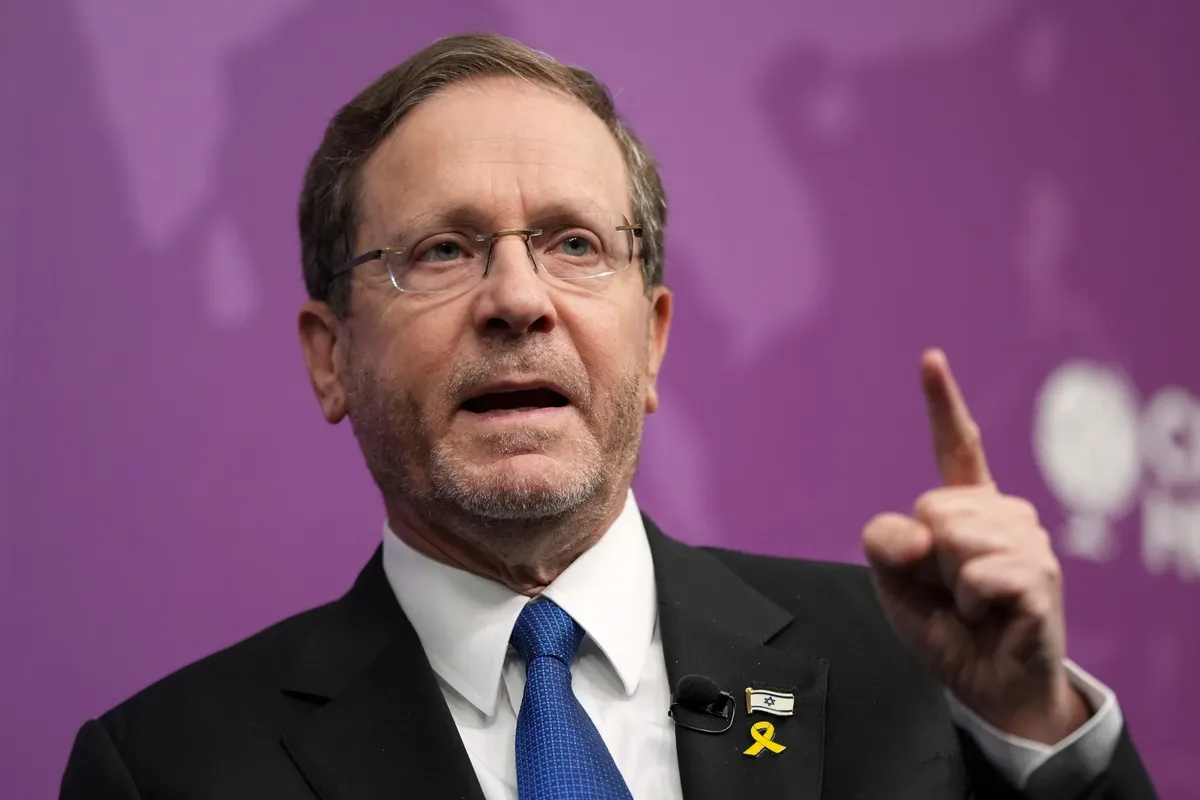
We will continue to hear the voices of those who offer a pardon in exchange for Bibi's exclusion from political life, and those who will demand that Netanyahu stand to the end and withdraw this request. This will continue as long as one of the most uncharismatic and indecisive presidents of Israel makes a decision. President Herzog understands that he will be remembered in Israeli history only for this decision and nothing else. Pressure, curses, requests, threats are already pouring in on him. On the one hand, the demonstrators, the protest movement, Kaplan, the “hostage headquarters”, having temporarily left Tel Aviv, moved to Jerusalem, because there, in the house of the President of Israel, the issue for which they have been demonstrating since 2022 is being resolved. On the other hand, right-wing and ultra-right parties and movements are not yet very active, but in the upcoming heated discussion process, they will most likely end up there.
Is a compromise possible, and what kind?
According to Haim Ramon, the most obvious option is that “Bibi receives a full pardon and leaves political life.” It is humanly possible to understand a person fighting against the mills and at some point retreating to the system. Perhaps Netanyahu has already made this decision for himself, but then he also understands that in this way, in the eyes of the majority, he admits his guilt and ends his political career.
Another option: Bibi will not accept the proposed compromise - a pardon in exchange for leaving politics. Apparently, this will be a signal that he is ready to escalate the conflict (until now he has restrained himself and made compromises) with the judiciary, to refuse to implement the (illegal) decisions of the Prosecutor General’s Office and the High Court. And this means confrontation, disengagement, clashes. What they talk about all the time and what the leaders of the protest movement actually call for.
The simplest, but most unlikely scenario: a pardon, termination of the trial - and Bibi goes to the polls (and most likely wins).
It seems to me that there will be long (hidden) negotiations and the development of a compromise solution, but I believe that, unfortunately, there is no such compromise that the Duke could offer and that Netanyahu would agree to.
Ariel Bass, Tel Aviv