
Translated material
You shouldn't write an obituary about living souls
The best years. Notes of the former dean Shaninka, who still exists

Photo: Shaninka group (MVSHSEN) - VKontakte
18+. THIS MATERIAL (INFORMATION) WAS PRODUCED, DISTRIBUTED AND (OR) SENT BY FOREIGN AGENT ZHARKOV VASILY PAVLOVICH OR CONCERNES THE ACTIVITIES OF FOREIGN AGENT ZHARKOV VASILY PAVLOVICH.
Shaninka was buried 15 years ago and continues to be buried now. But as long as there is at least one living soul left there, I will not write an obituary for her.
— Why did you agree to come to work here? Everything here died a long time ago! — we stood on the porch of the second building of the Academy of National Economy, where the Moscow Higher School of Social and Economic Sciences (MSHSEN) and its first unique library, then created by Theodor Shanin, were located. My interlocutor was a former teacher at the Faculty of Political Science, which I had been invited to restore three months earlier. It was the very beginning of summer 2010. As a result of that conversation, I managed to convince my colleague to return, but later our paths completely diverged. Now it is known about this teacher that he works at MGIMO and in his public speeches he actively fights against the “independence” of Ukraine.
“There is no impossible, only difficult”
They started burying Shaninka long before she became Shaninka. Theodore did not like it when the Moscow School was named after him, and he came to terms with this popular brand that existed among students and graduates only in the last years of his life.
For the first 15 years, the School lived on grants from the Soros** and MacArthur** Foundations (recognized as undesirable organizations in Russia), which were sufficient at the start in the 1990s. However, in the next decade, as some still remember, the dollar fell quite significantly in price against the ruble. In 2000, a monthly Soros scholarship of $300 allowed a British master's student to live quite comfortably in Moscow without thinking about part-time work. Ten years later, the equivalent of 9,000 rubles was barely enough to rent a corner of the room.
Many of the then faculty leaders were unable and unwilling to attract paying students; as a result, not all educational programs even recruited scholarship students. The professors who stood at the origins of the Moscow School went to work abroad or moved to the then rapidly growing Higher School of Economics; they increasingly spoke about Shaninka in the past tense.
However, within the Moscow School there always remained a small but highly motivated number of people for whom it in itself was of great value and benefit.
Judge for yourself: the Russian non-state university, inconspicuously hidden in one of the buildings of the government Academy of National Economy (ANH), and later the presidential RANEPA on the outskirts of Moscow, worked for decades in Russian in full compliance with the rules of British higher education and annually issued diplomas from the University of Manchester to tens and hundreds of students from all over the country. Not only professors and students, but also the administrative staff of the School office were united by a common cause and common values, where freedom was combined with strict adherence to the rules of academic life.
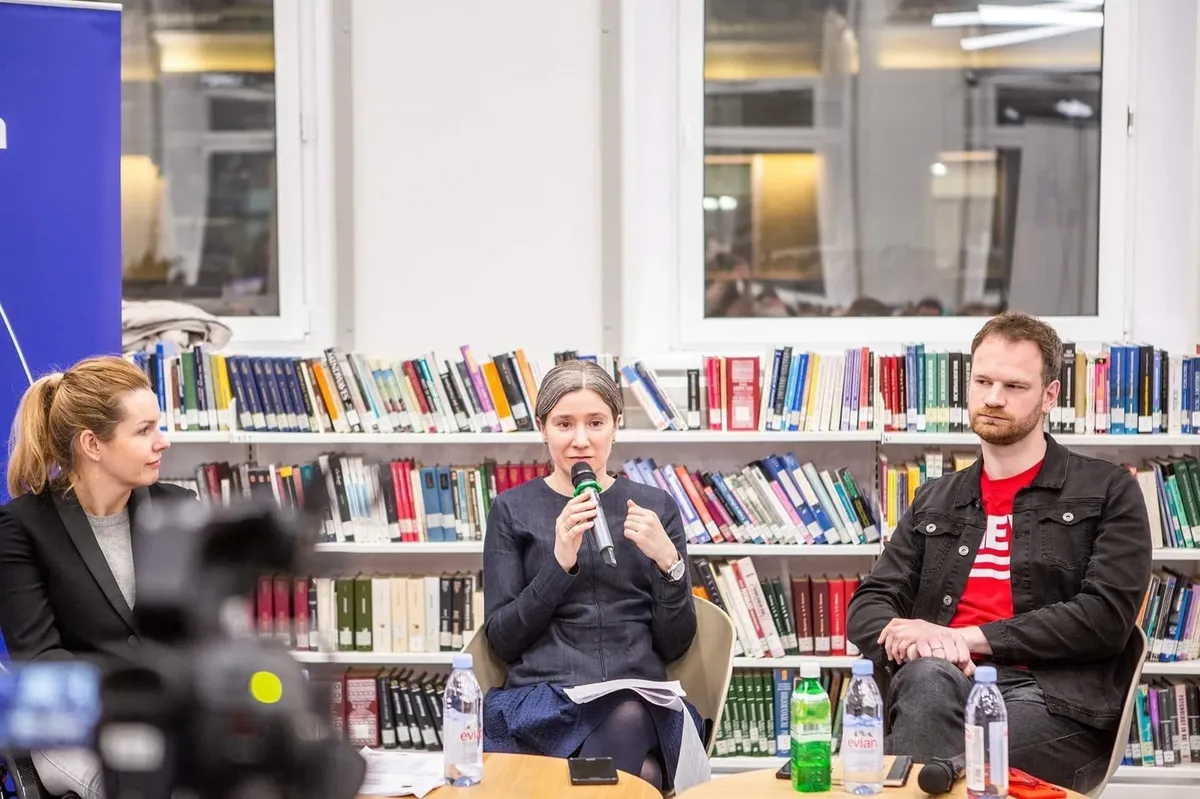
Loyalty to values and norms
What can compare with the experience of multilateral and multi-stage assessment of students' written work? This process was carried out year after year according to clear and transparent criteria, and involved not only teachers from all departments, but also program and academic managers, advisers from Manchester and external examiners from other UK universities. All participants in this process understood that they were doing something very real, which could not be falsified or manipulated. Therefore, everyone - from the professorial department and the library to the accounting and personnel departments - was glad to feel involved in this common and genuine cause.
In the educational process of the Moscow School there has never been a place for lies, corruption and nepotism, which are so characteristic of post-Soviet higher education not only in Russia. This was understood and appreciated by almost all the permanent employees of the university, who, due to its very modest size, knew each other very well by sight.
Some were prepared to go to great lengths in their relations with the social environment in which the School existed, but no one could imagine deviating even one iota from the rules and procedures of academic life.
When in the 1910s Manchester, not without the influence of the influx of students from China and other places to Great Britain, proposed to soften the rules of punishment for plagiarism, the deans and the rector of Shaninka unanimously refused. In the Moscow office everything remained as before - automatic deduction in case of repeated theft.
The tenth years were the moment when the Moscow School found a second wind. Several leaders of new branches of knowledge for Russia operated within it. These undoubtedly include the faculties of management in the field of education and management of sociocultural projects. Their deans Anatoly Kasprzhak and Sergey Zuev took turns becoming rectors of the School at a difficult moment for it. And in the “Zuev decade” - from 2011 to 2021 - Shaninka not only did not die, but actually became that same Shaninka - the legendary educational institution of the “New Russia”, which only then did everyone learn about.
Shanin people as a calling
By the time Zuev was elected rector, a generation of graduates had already formed at the Moscow School who valued the very authenticity of the educational process within its walls and hoped to build their scientific schools on this strong foundation. The names of sociologists Viktor Vakhshtain (recognized as a “foreign agent” in the Russian Federation), Dmitry Rogozin and Grigory Yudin (recognized as a “foreign agent” in Russia) are known to many today, but the Moscow School is far from only them. Olga Lukinova, Alina Dremailova and Veronika Khomyakova - it’s a shame that no one outside a small circle knows the names of these women! Graduates of the Faculty of Cultural Management formed the PR department of the School, other graduates came to work in the library and educational department, and together they managed to create a powerful and very modern team of like-minded people.
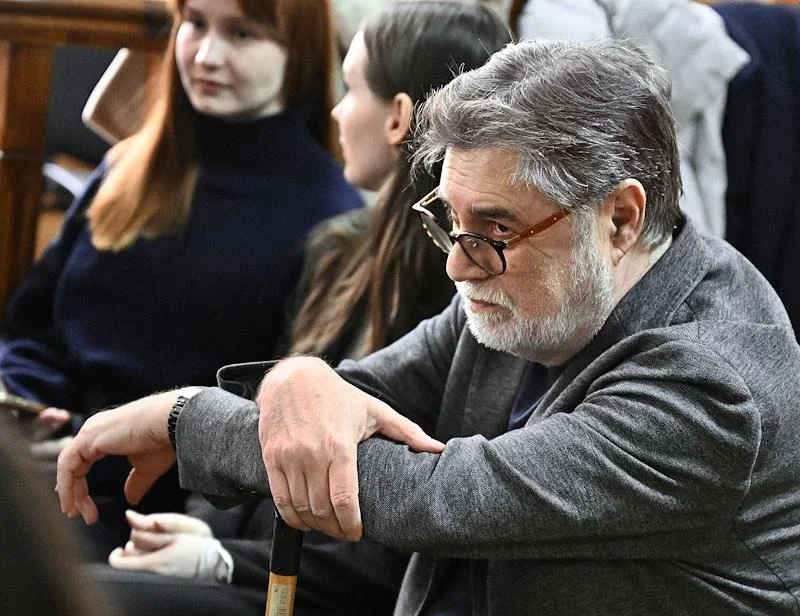
An important part of this team were predominantly female employees of the administrative and management apparatus and accounting department. The school has always been a compact organization with no social barriers. Everyone prepared the annual graduation ceremony together, and then celebrated the New Year together in the same way.
The overwhelming majority of Shaninka employees, regardless of status and role in it, felt involved in the common cause and remained devoted to it.
Thus, a graduate of the Financial Academy, Irina Ronzhina, having gone through a career from an accounting employee to the first vice-rector, became one of the key figures in the team of the “Zuev decade”. It was she who fought decisively for the School at the most critical moments and almost got into fights at meetings with those who were thinking of closing it. It was she who worked 24/7 so that the School would have financial stability, its own luxurious premises in the center of Moscow, and would not have any unnecessary problems with the authorities.
Finally, one cannot fail to mention Shaninka’s external friends, who were sometimes in the most unexpected places. With full responsibility, I can write today that open sympathizers of the Moscow School absolutely were and still are among the ministers and vice-premiers of the Russian government. I don’t know if they now remember their work with Theodore in the 1990s and what they think in this context about their actions in the present, but in their time these people did quite a lot for the School. History will not forget this to them. Our financial difficulties ended in the mid-1990s, when VTB Bank became one of Shaninka’s sponsors. However, another organization from Russian business was the first to come to the rescue. When in 2012 George Soros suddenly stopped funding the Moscow School, without hiding his desire to close it, the Mikhail Prokhorov Foundation immediately compensated the money for student scholarships. From that moment on, Shaninka was financed exclusively by Russian sponsors and, to a large extent, by money from students, the number of which was growing rapidly.
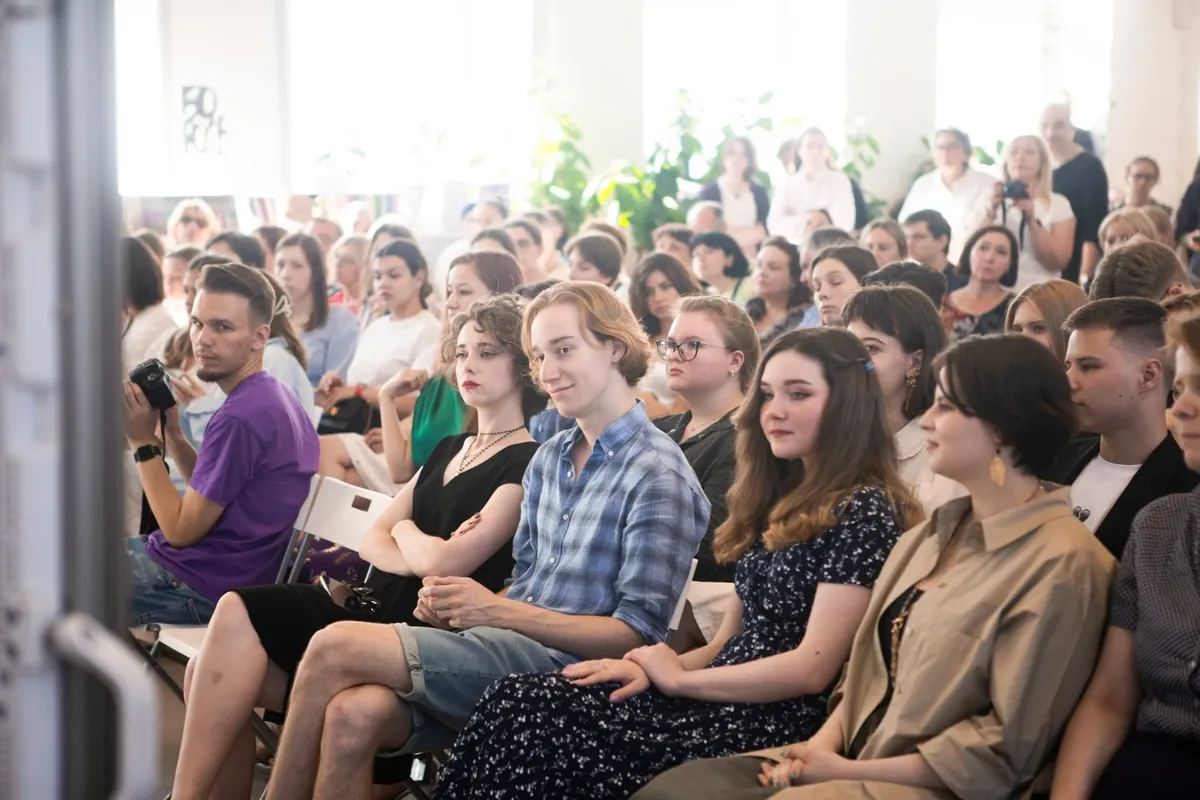
Golden decade
Yes, at the turn of the 2000s and 1900s, the School lived every year as if it were the last, no one thought further. However, by the early twenties the situation had changed literally beyond recognition.
No, the internal structure and rules remained unshakable. But Shaninka has grown quantitatively and qualitatively many times over. Since 2012, new master's programs in political science and history began to open, since 2014, more and more new undergraduate areas have been validated by the Universities of Manchester and Coventry, and at the end of 2018, the School moved from the Yugo-Zapadnaya metro station to Gazetny Lane.
I will give only two figures known to me: if in 2011 one subsequently closed program of “political sociology” had difficulty recruiting ten scholarship students, then a decade later more than 60 paid students were enrolled in three programs of the Faculty of Political Science.
The faculty, finally recreated in 2017, achieved self-sufficiency five years later, but was closed for political reasons.
The first lightning of the impending storm was the revocation of accreditation from the School in the summer of 2018. This meant that for some time we lost the opportunity to issue Russian state diplomas, and students lost their deferment from the army.
Since Shanin’s main value in terms of formal documents was a diploma from the University of Manchester, and most programs had a partnership with RANEPA, this in no way undermined the confidence of applicants in the School. On the contrary, many young people saw the unfair decision of Rosobrnadzor as a sign of quality and en masse went to study at Shaninka at the end of the tenth.
Of course, the School did not exist in a vacuum; its leadership was forced to play by the rules of the system and, for the sake of development and growth, follow the schemes accepted in the Russian state. These schemes in relations with Leviathan never lead to good things, especially on the eve of upheavals.
On the edge of the abyss
They started talking about the imminent closure of the School again at the end of 2021. Then people from Gleb Pavlovsky’s entourage wrote to me with reference to “sources in the AP” that Shaninka “should be closed until the end of December.” Rector Sergei Zuev and executive director Kristina Kryuchkova have been under arrest for two months. Professor Boris Kagarlitsky (recognized as a “foreign agent” in the Russian Federation) was detained for the first time during a lesson with master’s students, but was soon released. The country, without noticing it, was slowly slipping into a state that can no longer be called by its proper name in Russia.
But inside the School that cold and dark Moscow winter there was some incredible optimism.
The loss of the head did not kill the body; the acting rector received the support of the deans and the academic council. We rallied, not noticing the edge of the abyss. Paradoxically, the republican spirit of the School reached its apogee precisely then.
Theodor had died two years earlier in the midst of another and successful battle for accreditation, Zuev was in prison - now we had to cope on our own. And it worked!
20 days before the February nightmare, a big scandal occurred at the School. On the next anniversary of Theodore’s death, on February 4, 2022, an employee of the dean’s office, who came into contact with the police, called a law student to the building on Gazetny, where she was detained for participating in a protest of the NBP (recognized as an extremist organization in the Russian Federation and banned).
The dean of the Faculty of Law, soon to be the main Shanin Z-patriot, and I jointly demanded the immediate dismissal of the employee. “The police have no place within the walls of the university,” we argued our position. As a result, the student received compensation from the School, and the employee resigned after some time. I learned about this when I was already abroad. I remained on the staff of the School for more than a year and a half, until the denunciation of the failed historian from Yekaterinburg achieved its goal.
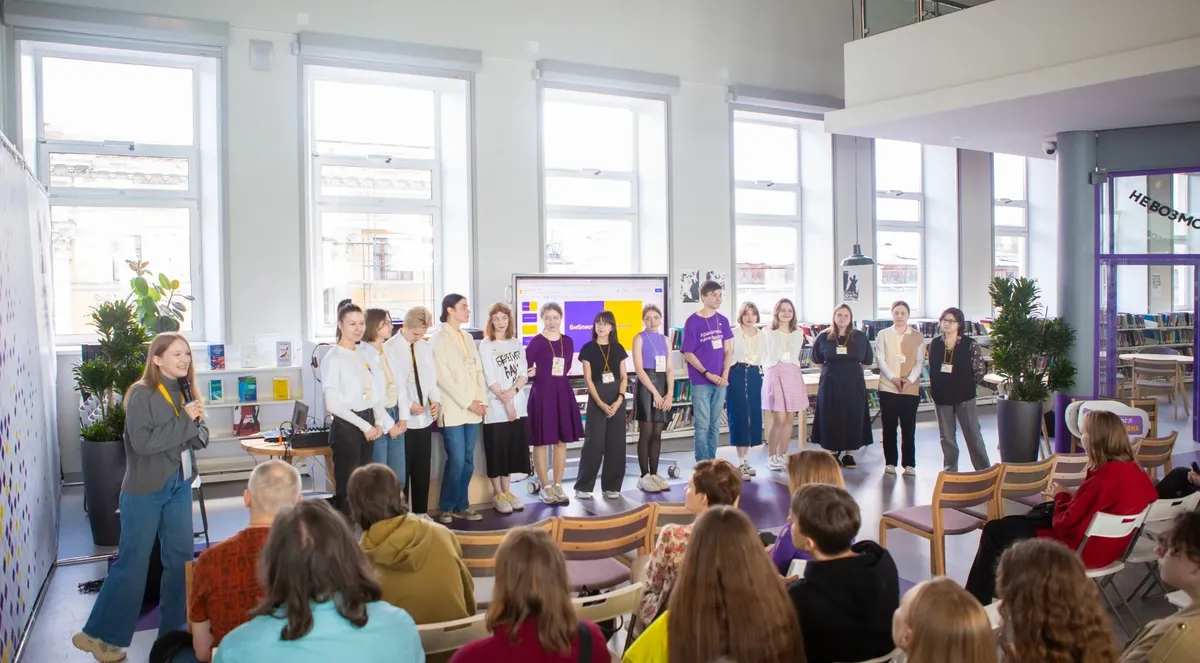
Life goes on
And then February 24 came... The pandemic era has taught us to work through online platforms. I remember well how in the first two weeks I communicated with students who suddenly found themselves in Yerevan, Tbilisi and even New York. I myself was not going anywhere until on March 15, a request came from the investigative authorities for ten employees of the School, including Konstantin Gaase, Georgy Derlugyan and Ekaterina Shulman (recognized in the Russian Federation as a “foreign agent”, included in the register of extremists and terrorists). Contrary to the rules of the alphabet, my last name opened the list. Later, Kommersant published an article about this , in which I asked not to mention my humble person.
There was little time to think and get ready: first I flew to Israel, and after solving problems with documents, I ended up in Vilnius.
In the summer, the Faculty of Political Sciences, which I headed, was “temporarily,” as they said then, disbanded. The Kremlin questioned the “classification of political science as a science,” and we decided to stay out of harm’s way into the shadows.
“The main thing is to fly below the radar,” I said at one of the online meetings with colleagues in the fall of 2022. At that time, many teachers and staff left the School, but most of them continued to work remotely for some time. The traditional Shanin graduation ceremonies took place in December 2022 and 2023. It is impossible to explain to those who do not know what this is, but for the sake of this important concept, the School continued to live from year to year. No one was embarrassed by the fact that some of the deans, including me, connected online. Since Covid times, this has not been surprising.
Alumni and colleagues sent me photos of my performance on the big screen in Moscow, we still felt together. When I wrote to my friends remaining in Russia that I felt like a traitor who had abandoned my students, they reasonably replied: “Well, you weren’t safe here.” When Boris Kagarlitsky, a professor at our department, was arrested in the summer of 2023, it became clear that the matter was really taking a serious turn. After another six months, I was forced to leave the School so as not to let my colleagues down.
Without fear and hope
About a year and a half after the accident, I discovered three basic models for describing the situation in the Moscow School, and these models still exist.
The first of them is represented mostly by external observers, who usually once again report the imminent end. Imagine how a person must feel who hears about this for the 15th time in the last few years, while the School continues to exist?
The other narrative sounds even harsher, and is usually voiced by recently retired employees. “Shaninka is no more, Shaninka has already died,” it’s interesting that in 2025 a person can write to me about this, to whom two years earlier I myself wrote in Moscow about my categorical disagreement with such an interpretation.
Finally, a voice from Gazetny is heard weaker and weaker: “We are still alive.” Recently, Nadezhda Pantyulina conducted her signature tour of the “Islands of Theodore Shanin” in the library, and the presentation of the next collection “The Paths of Russia” took place. One of the former deans writes about preparing the next big conference on education and adds the famous Mark Twain: “Rumors of my death are greatly exaggerated.”
I don’t know and I’m not ready to predict whether Shaninka will live until 2047. I'm not too confident in myself either. But I know for sure that even a terminally ill person, even a hanged man sentenced to death, does not go to the morgue while he is alive.
Yes, those wonderful employees of the PR department, the director of the library, and most of the deans and professors of our call left the School a long time ago. Yes, some programs, including systemically important ones such as sociology, have now been deprived of accreditation, and new enrollment in bachelor’s and master’s programs was prohibited back in the summer. Yes, the partnership with Manchester and Coventry has been lost and I don't know what the current 30-year-old academic norms, rules and procedures are.
However, while her - our - students and teachers remain in Shaninka, while our Second Library is working, while in the evenings the light is on on the top floor in the house on Gazetny, where classes are held, I will not allow myself to write that Shaninka is no more. No, she's still there!
And even those who buried her for themselves did so not out of great happiness, but out of terrible despair. For those who are no longer inside, this is the most difficult loss of their lives. The Moscow Higher School of Social and Economic Sciences, aka Shaninka, was, and for those lucky ones who are still inside, remains the best experience of their lives. This is the best thing that happened to me. This is the best thing in the lives of many of those still there. It won't get better, there is no place for hope here. Everyone who was and is a Shaninist will understand me.