
Translated material
The patient needs care
The life and fate of Murad Jacob Kevorkian, a doctor from the United States who almost single-handedly advocated for the right of a person’s voluntary death

Murad Jacob Kevorkian. Photo: Wikipedia
Doctor Death. This is how the press dubbed pathologist Murad Jacob Kevorkian, a native of Pontiac, Michigan. The world started talking about him after his open speech in defense of euthanasia. Films were made about him, books were written, and thousands of articles were published in the world press. Probably everyone knows about Kevorkian. Even the great Kurt Vonnegut made his mark by dedicating an essay to the doctor entitled “God Bless You, Dr. Kevorkian.” We have a rare opportunity to share with the readers of Novaya Gazeta some details from the life of Jack Kevorkian, about which until now the general public knew nothing. Or almost nothing.
All his life, Dr. Jack Kevorkian fought for the right of a terminally ill person to voluntarily die if a terrible incurable disease brings him only suffering. No person is born to experience pain, but everyone is born with the inalienable right to decide for themselves whether they want to live with this unimaginable pain or end it. This is how Kevorkian considered his entire life, all the years of persecution, persecution in the press, long years in prison and, in the end, the realization that he had won. I think he truly realized that he had not lived his life in vain, shortly before his death - when the social drama directed by Barry Levinson “You Don't Know Jack” was nominated for a Golden Globe Award. This happened in 2011.
Kevorkian sat at a table next to leading man Al Pacino and smiled faintly. It was noticeable that Jack was pleased with the picture; he especially highly appreciated the work of Pacino, who skillfully played the famous Armenian. The film did not receive the main award then, but the actor received the Golden Globe for Best Actor. The smile did not leave Jack's face while the film's creators spoke from the stage, words of gratitude addressed to him, Jack, and wishes for health. He, however, was not accustomed to praise and praise. He was embarrassed. Then he abruptly got up from the table and left - he still didn’t like something. For two days nothing was heard from him - he did not answer calls and did not contact anyone.
Then he called Anna Terean: “I was walking. And I thought... I'll come tomorrow..."
When asked what to cook for him, he said without hesitation: “Tolma!”
They became close with producer and director, Yerevan native Anna Terean, when Jack was in prison. It was with her that he communicated throughout his eight years of imprisonment and even agreed to record their telephone conversations, which often lasted for hours.
It was this conversation that formed the basis of Anna Terean’s documentary “Dr. K. The Right to Exit.” This was the first Jack Kevorkian film. By the way, during the entire period of his imprisonment, journalists were not allowed to see him. Bringing sound recording devices and cameras into prison was strictly prohibited. Once, even the famous and very popular TV presenter, journalist and writer Barbara Walters was denied a meeting with the imprisoned doctor.
Anna prepared tolma. But Jack didn't come. He left her a note and flew to Germany to see his sister. From there he was going to Yerevan, where he wanted to work at the Matenadaran (Institute of Ancient Manuscripts) with medieval manuscripts on medicine. A house had already been rented for him near Matenadaran, and a translator from Grabar (ancient Armenian) had been found. But Jack fell ill - pneumonia. Plus, he was reminded of his old hepatitis C, which he picked up during the Korean War, where he served as a paramedic. There he (few people know about this) conducted experiments with blood transfusions. On myself.
He died at 83. There was no question whether he himself would like to die voluntarily. He simply died like an ordinary person, like thousands of other people who lived for themselves, grew old and one day ended their life’s journey. No pain. Because in his case, the suffering was experienced during his lifetime.
***
One day, someone came up with the idea: everyone wants a quick and painless death, but not everyone deserves it. Doctor Death didn't think so. Kevorkian was confident that no person should suffer from pain and hopelessness. He has the right to decide for himself whether the time has come to give up suffering and see a doctor who will help him quickly and painlessly leave this world.
“Everyone will die,” Jack said. I don't think there is anyone who would argue with this. But why, then, are people who are in a coma, completely immobilized, or experiencing terrible pain, not free to decide for themselves whether they want to live like that? “If you don’t have freedom and self-determination, you have nothing. This is what this country (USA) is built on. And the highest self-determination is when you decide for yourself how and when you die if you suffer,” Jack wrote. He could not understand how euthanasia could be legalized in some countries, but considered murder in others.
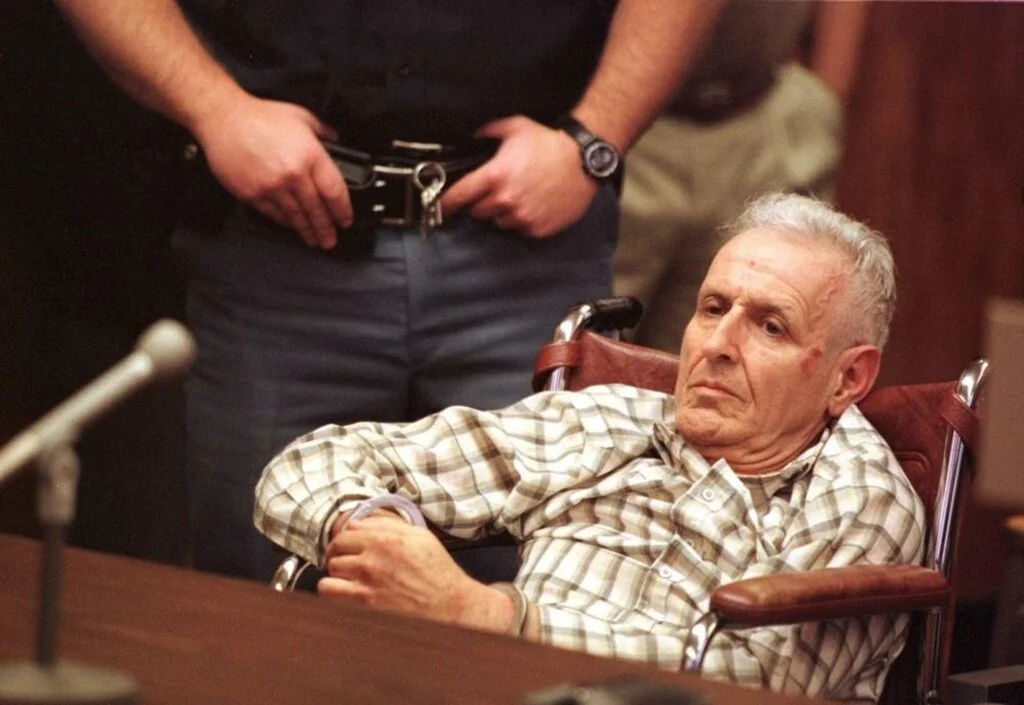
A quiet but firm voice sounds from old microfilms recorded in the 90s and preserved in the Anna Terean archive: “In a normal society, you can do everything that does not harm someone else, and if a person wants to die, he does not bother anyone.”
In “normal society” they did not want to take this argument into account. They didn't want to for a long time. We resisted this as best we could. Kevorkian's ideas were strongly condemned and rejected by both the medical community and the US authorities. He was even deprived of his license - from the early 90s, Jack could no longer practice medicine. People did not want to accept that if there was a law in place, a person knew that he had a choice. “For example, in the state of Oregon, where the law on euthanasia was in force, 300 people took advantage of this in 10 years. Why is freedom of choice... - by the way, Jack calls this a natural right - violated when it comes to managing one’s own life and death?
The prosecutors' answer is simple and laconic: precisely because it is a matter of life and death. A dilemma, of course. But “when your conscience says that a law is immoral, do not follow it...”
And the disputes, by the way, are not over yet. And today this topic causes a lot of discussions, spears are broken, and the road that one American pathologist paved has already been passed by Belgium, the Netherlands, Luxembourg, Canada, Spain, Colombia, Switzerland.
In these countries, euthanasia is legalized by law, and, for example, in Switzerland, assisted suicide is allowed, with the patient taking the lethal drug on his own. Various forms of legal euthanasia or assisted dying exist in some US states.
Among them are Oregon, Washington, California, Colorado, Vermont, New Mexico, Maine. Analysts have little doubt that this list will continue to grow. There is an understanding of the need to adopt appropriate legislative acts, since people really need this. People are sick, weak, infirm, people who can no longer be saved, people experiencing terrible pain. By the way, these days the issue of euthanasia is being considered in the parliaments of a number of countries.
“I wouldn’t help anyone with cancer or mental health problems die,” Jack says. — Cancer has a chance to be cured, but an unbalanced person is not able to make serious decisions. Depression, for example, even the most severe, cannot be a reason to die.”
Jack Kevorkian was tried seven times for “murder” (I put it in quotes because this is a qualification from a criminal case). And every time the lawyers proved his innocence - Jack didn’t even come to court hearings. The last time he was sentenced to 15 years in prison because he refused lawyers. “I knew I wouldn’t win the case,” he shares, “but that doesn’t mean you shouldn’t fight for your idea. Someone has to start! And it’s better to have a law than not to have it... At the same time, euthanasia is a medical service, it should be controlled by professionals.”
***
It was in March 1999 that Jack Kevorkian was charged with “direct murder in the second degree” after he euthanized 52-year-old Tom Yuk. As irrefutable evidence, the prosecution presented a video recording of the act of euthanasia itself, which, meanwhile, was in the public domain at the behest of Jack himself. The sensational video was shown by many federal television channels and was seen by millions of Americans. At that time, no one knew that Jack himself handed over the videotape to the television crew, thereby challenging the system: either the issue of legalizing euthanasia is resolved for all states, or he goes to prison. Then Jack saw no other way out.
In the absence of lawyers, the court did not even listen to witnesses - relatives, family members of the deceased, who, by the way, fully supported the disgraced doctor. And they were in the courtroom.
To complete the picture, it should probably be noted that poor Tom Yuk had Lou Gehrig's disease (better known as Charcot's disease). It is “amyotrophic lateral sclerosis, a progressive neurodegenerative disease characterized by the complete destruction and death of peripheral and central motor neurons.” Doctors say that first clinical paralysis develops, then muscle atrophy occurs. The patient had no chance of a quiet, peaceful death.
So, if Jack had not refused a lawyer at the eighth trial, he would have remained free. But the man went for it consciously - the process was followed all over the world. The positions, of course, are diametrically opposed. As a result, the judge, also outraged by the fact that Kevorkian underwent surgery while deprived of his medical license, was adamant: “Did you want the law to stop you? So: he stopped you.”
And on the street, in front of the courthouse, picketers with banners crowded. They demanded that the doctor be punished to the fullest extent of the law.
Many believed that Kevorkian would die in prison, but he was released two and a half years earlier - for exemplary behavior. He spent more than eight years in prison - from 1999 to 2007.
“The worst thing about a maximum security prison is when your neighbors snore,” Jack says. The smile, of course, is not visible, but it is readable. “The cell is small, and there are two more with me, they’re in prison for murder.”
That is, they took someone’s life by force. They don't consider me a murderer. They say, if it’s from someone’s goodwill, what kind of murder is it!”
According to him, the neighbors do not offend, they even treat him with some caution - they respect him. The man sits quietly, just reading books or writing something in a notebook. By the way, Jack wrote several books on medical topics in prison, and also collected his thoughts and aphorisms into a volume. Among them:
“My goal in helping the patient was not to cause death. My goal is to end suffering. It should be decriminalized."
“Dying is not a crime. Everyone will die."
“Do you really think that helping a person die is worse than making him suffer?”
"I don't lie to myself like most people do."
He has never been married. Little is known about his relationships with women. But one day he spoke about a woman in love with him as follows: “She is rich and thinks she can control me.” He did not even allow the system to control himself.
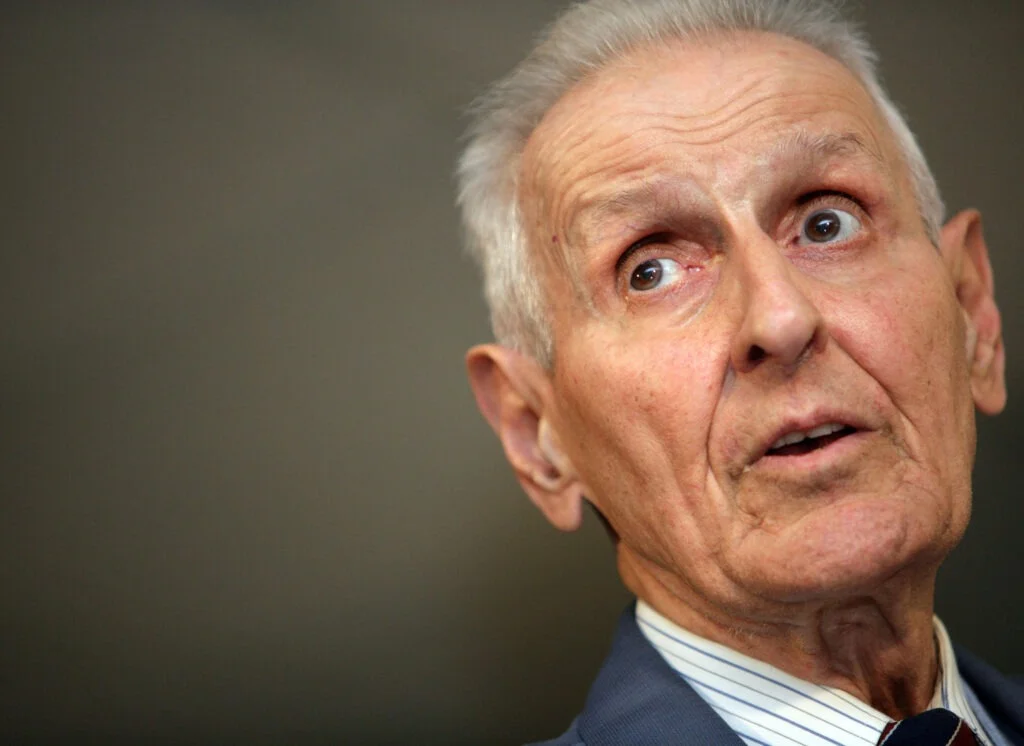
***
Apparently, these phone conversations were an outlet for Jack. Sometimes he made the calls himself at the subscriber's expense. For example, on one of the tapes he reads excerpts from “Obituaries” by William Saroyan (this collection of stories was published, it seems, in 1979).
“Look what I found from Saroyan (William)!” And he starts reading. The translation, I would like to warn you, is free, made from scratch, as they say.
“...this game is called “Life and Death.” A person finds himself in it by birth and leaves it by suddenly dying. Even if death comes late, it is still sudden. And even when someone tries to do something to circumvent death for a short time, it is sudden. People who practice this are also participants in this game. These are practicing doctors. They take absurd steps in a short period of time and then successfully defend themselves even in the courts in order to remain part of this game, proving that the body is still alive, even if the person is already in a coma. They keep the body alive, even if it is pointless. The man can only hope that these sons of bitches won't do their job so well that he'll stay longer. This is murder from the medical profession. A person suffers and dies from the medical profession..."
Let’s digress for a moment: “Saroyan is the greatest humanist not just of his time, but of our time.” By the way, Jack shared the philosophy of the venerable writer. He insisted that doctors often deliberately prolong a patient’s suffering in order to make money: “For 15 days of keeping a sick person alive, health care spends millions…”
The right to choose - formulated, yes, by a fanatic. But every choice is work. And not everyone copes. Whether Jack Kevorkian succeeded is up to you to decide. In other words, make another choice.
***
In conclusion, a little adjective: Note: “Lunch in the refrigerator, water in the tap, children at school, health in the body, flowers in the field, love everywhere, money in the wallet, happiness in life. I'll be late. Death". Let it be very late. Don't let anything hurt you.
Ashot Gazazyan, Los Angeles - Yerevan