
Translated material
The habit of submissiveness
Summary of November book censorship and self-censorship

Photo: social networks
November was marked by censorship: it began with the sad story of the book fair at GES-2 and ended with a noisy withdrawal from the sales of Stephen King’s cult novel “It.”
Both of them, in essence, represent subordination not even to the state machine, which is really capable of sweeping away in its path everyone who falls under the steamroller, but to the demands of informers.
The fair at GES-2 was conceived as a major literary event, the organizers prepared a wonderful program, but a day before, a number of “patriotic” telegram channels erupted with indignant cries. After this, the organizers canceled some of the performances (perhaps the best) and did not allow a number of publishing houses (perhaps the best) to participate.
Parallel to the Moscow fair, the festival of mysticism and fantasy “Necrocomicon” was supposed to take place in St. Petersburg. A book component was also planned there: an exhibition of books by science fiction writers. But the Forty Forties movement decided that celebrating Halloween was “Satanism”**, and demanded that the Necrocomiccon be prevented from being held.
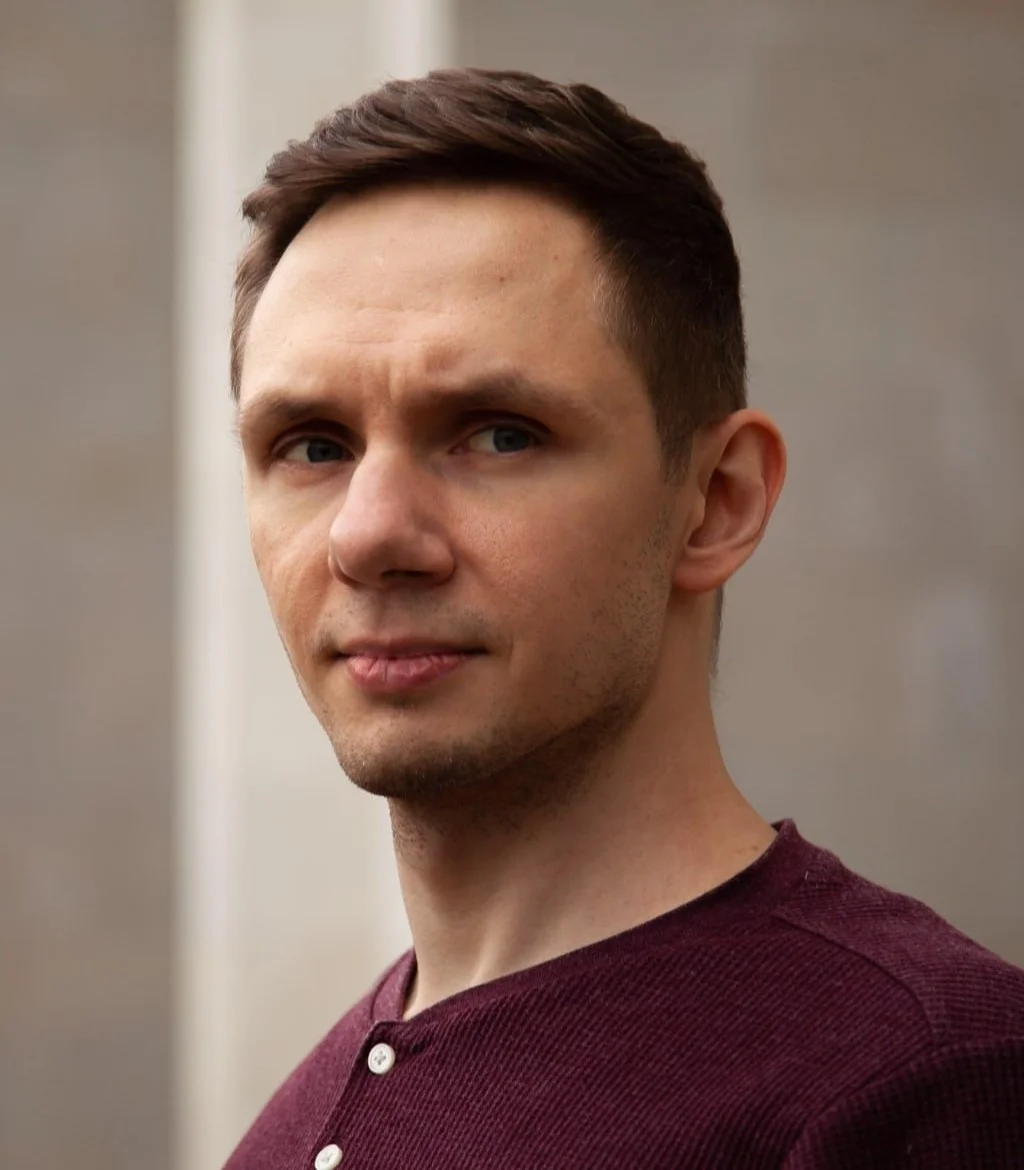
The St. Petersburg event turned out even worse than the Moscow one: its organizer and producer Alexei Samsonov was detained. Since he is a citizen of Kazakhstan, he now faces deportation. The festival itself, initially agreed upon, was able to operate for only a few hours, after which the permission was revoked, the police showed up, and the event was hastily cancelled.
November, which began with such a powerful censorship and repression, promised many surprises - and, unfortunately, it did not disappoint. In November, the courts banned the distribution of a number of books, seeing in them information of an extremist nature. Among them is a collection of articles by Boris Vishnevsky* “Chronicles of the Revived Arkanar” for 2008–2015. Among other things, it turned out in court that the prosecutor’s review of Vishnevsky’s book was launched after a letter from “patriots” from the “Call of the People” movement. The process was also made absurd by the arguments of the examination, which considered, in particular, that the comparison of Russia and the Arkanar kingdom “creates a negative image of state power,” and the book even contains a kind of “curse” that the author allegedly seeks to invoke on the Russian Orthodox Church. But no absurdity prevented the court, in the best traditions of the Arkanar kingdom, where bookworms were persecuted, from recognizing the book as “extremist.” And Vishnevsky will face a new trial in early December under the protocol on cooperation with an “undesirable organization.”
In addition, the St. Petersburg City Court recognized the manifesto of the German writer Friedrich Georg Jünger (younger brother of the German writer and thinker Ernst Jung) “March of Nationalism” as extremist material. The manifesto was written in 1926 and was published in Russian in 2022 by Russian Revolver. In 2024, the book was seized at customs at Pulkovo airport from a 17-year-old resident of St. Petersburg.
And that's not all. The Ministry of Justice included in the list of extremist materials the electronic version of Hannah Daisy’s book “When the Stones Cry” in English and Russian. Its lyrical hero talks about his childhood in Ingushetia in the 1930s. The examination found in this text signs of inciting hatred towards the Ossetians and the Armed Forces of the USSR, as well as towards the Russian authorities.
In Moscow, a court banned the distribution in Russia of the book “Fascists Have Little Paint” by Freedom Letters. This is a work by an anonymous author, which contains stories of people who went out on single pickets, painted graffiti, or otherwise expressed their pacifist position. They found “information of an extremist nature” in it.
The state has been fighting Freedom Letters books since the founding of the publishing house, but destroying books by the thousands seems to have never come to that point. The founder of Freedom Letters, Georgy Urushadze*, reported on his social networks that in Russia “the destruction of part of the Russian editions (more than three thousand books) of “Springfield” by Sergei Davydov and “Mouse” by Ivan Filippov* has been confirmed. Both of these books have long been bestsellers; both of them have long been demanded by the Russian authorities to be removed in vain. The publishing house did not want to comply, they decided on their own.
True, the head of RKS Sergei Stepashin in an October interview with OTR claimed that no one destroys unwanted books in Russia. “They were just sold. They were bought and sold. There won’t be any more of them on the shelves yet,” he said.
In this interview, Stepashin spoke in some detail about the censorship process. “Any other country in the world would have done exactly what we did. But! We did not restore Glavlit and other organizations. They didn’t entrust this to the Ministry of Digital Development,” noted the head of RKS. “Few people know that in fact our president had a note addressed to him, and he instructed the Russian Book Union, a public organization, to deal with this.”
In general, an amazing thing is happening with censorship: previously it was considered a forced matter. Those forced to censor either did not report it or were extremely reluctant to do so. Now participants in the process have begun to write about censorship almost with pride. “It’s a tough task. And we created an expert council, which included famous writers, journalists, and critics. And we approach this topic very delicately today,” says Stepashin.

A separate topic is the involvement of AI in censorship. Otherwise, as Novikov explains, “it is impossible to isolate potentially dangerous things from the volume of already published literature.” This is said rather with bitterness, but, on the other hand, we are progressing!
It is AI that will apparently be brought in to deal with Stephen King’s novel “It.” In November, the book was removed from sale. “There was an appeal - and the Russian Book Union conducted a preliminary examination. What were the complaints? Inconsistency with current legislation,” Tatyana Gorskaya, general director of AST, told TASS. Now AST is trying to figure out what kind of label should be put on the novel, and even admit that they will ask the copyright holder to edit the text.
However, Chairman of the Federation Council Valentina Matvienko dotted the i’s, explaining in an interview with KP that there are actually few repressive laws in the Russian Federation and they are aimed at protecting citizens, and not against them. “And these laws that you are referring to are not directed against citizens. They are aimed at protecting them. And law-abiding citizens are not afraid of them,” Matvienko said.
In terms of the intensity of “protection of citizens,” the regions are not lagging behind, where the practice of tightening penalties in appeals is noticeably growing. For example, the Kostroma Regional Court changed the sentence of the owner of the KnizhOchki store in Soligalich, Yan Kulikov, replacing his suspended sentence under the article on military “fakes” with five years in a general regime colony.
Folklorist from Khanty-Mansiysk Valery Ledkov, convicted in the case of donations to FBK***, was sent to a punishment cell immediately after the transfer to Perm.
The 60-year-old man was sentenced to five days, his lawyer Pavel Rusnakov told OVD-Info*. In September, Ledkov’s fine in the case of donations to FBK was commuted to three years in prison.
Against this background, all sorts of fines that the courts issue in batches already seem almost unnoticeable. The Savyolovsky District Court of Moscow fined writer Alla Bossart*, who lives in Israel, 30 thousand rubles for violating “foreign agency” legislation. The Izmailovo court of the capital fined the writer and playwright Artur Solomonov* 30 thousand rubles for failing to report himself as a “foreign agent”.
Summing up the results of November, we can state that denunciations, supported by the reaction of law enforcement agencies and censorship authorities, by the end of this year had become a real, albeit ugly, force in our country. No one wants to test by their own example whether the security forces will come after a denunciation or not. Therefore, denunciation is now a significant factor in the cultural life of Russia. Those who want to continue working legally must take this into account and respond accordingly.
This is how the habit of submission is formed. How to resist denunciations in a country where repression has become an everyday reality? After all, you want not only to survive, but also to do something useful.
And for this you have to sacrifice something - even a cult novel.