
Translated material
Here children hanged themselves from hunger
The two main dictatorships of the 20th century divided Europe. One of them deported entire nations, and called the seizure of countries “annexation.” It was the USSR
Millions of citizens of the Soviet Union were subjected to forced deportations. Representatives of national minorities, and sometimes almost entire republics, were declared a “threat” and exiled to sparsely populated corners of the USSR on far-fetched charges. Information about these repressions was carefully hidden, and the victims had to wait decades for rehabilitation. The perpetrators were not punished, although in the end even the Soviet authorities recognized the crimes and genocide. The shameful pages of the history of the USSR do not fit into ideological constructs about the greatness of Russia, which is why the Russian authorities are still trying in every possible way to downplay, and sometimes even completely deny, the facts of deportations. “Cold” is launching a special project “Exodus” - stories about the deported peoples of the USSR.
The scale of forced deportation of the peoples of the USSR
Demographer and historian Pavel Polyan estimates that between 1919 and the 1950s, forced migration affected about six million people in the USSR, a figure comparable to the population of modern St. Petersburg or Serbia.
The key goal of Soviet mass deportations was to remove from certain territories peoples who, for one reason or another, “interfered” with the authorities. At the same time, almost anyone could fall under repression: from a representative of the military elite of national states to ordinary peasants and workers, in whom the Soviet authorities saw “dangerous social elements” or “anti-Soviet bandits.”
Dozens of peoples suffered from deportations: Chechens, Ingush, Crimean Tatars, Koreans, Karachais, Kalmyks, Balkars, Ingrian Finns, Turks, Greeks, Bulgarians, Ukrainians, Moldovans, Armenians, Germans, Poles, Lithuanians, Latvians, Estonians and others. Hundreds of thousands of them died during deportation to remote parts of the USSR: Siberia and areas of Kazakhstan, Kyrgyzstan and Uzbekistan.
***
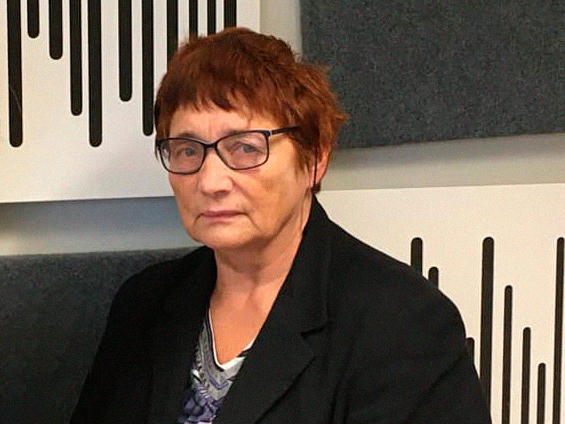
Birute Panumienė knows almost everything about the deportations and repressions of the USSR against Lithuania - she has been working in the Memorial Department of the Lithuanian Genocide and Resistance Research Center for almost the entire time of its existence. Panumene personally digitized the memories and testimonies of those deported to different regions of the USSR, was among those who in the 2000s made a database of exiles from 130 thousand names in a closet filled with boxes of documents, memories, letters and photographs - did everything necessary to record the consequences of the Soviet occupation.
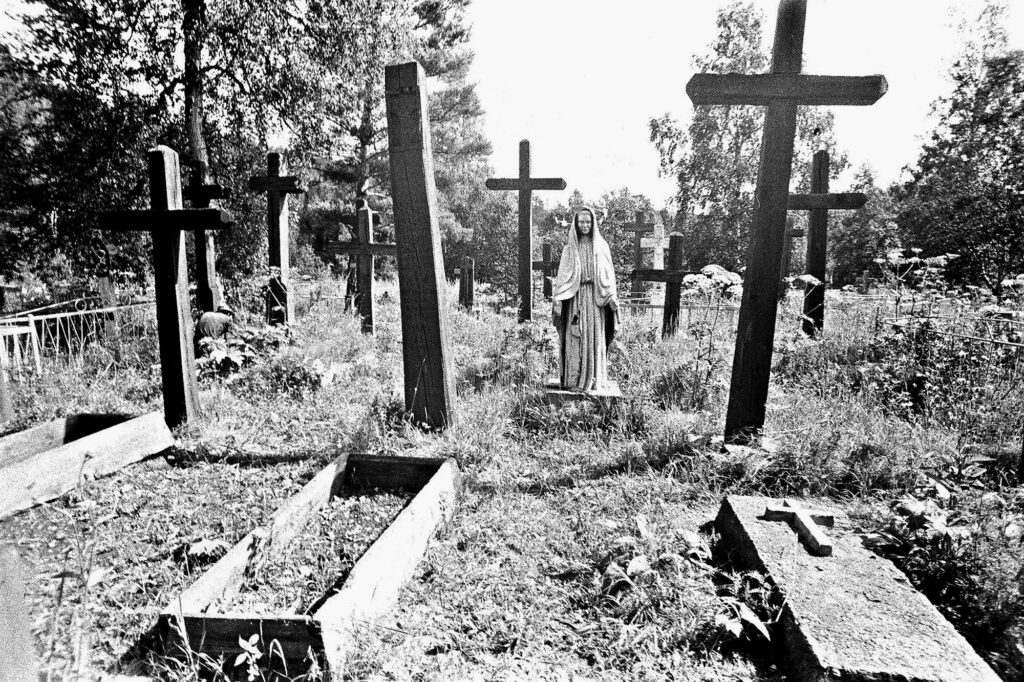
Birutė Panumienė is also the author of the book “The Siberian Madonna,” which tells the story of the sculptor and political prisoner Jonas Maldutis. While in exile, in 1955 he created a wooden sculpture of the Blessed Virgin Mary, which was installed in the cemetery of the village of Korbik in the Krasnoyarsk Territory. Exiled Lithuanians were buried here.
The artist carved a two-meter statue at the request of believers - exiled Catholics who found themselves in Siberia without their parish. And the prototype was the images of Madonna on small postcards that the exiles took with them from home or received in rare letters.
Maldutis understood that without faith in a foreign land people have a hard time: they need a symbol, hope, a place where fellow countrymen can come and pray, ask for help and support - after all, they were deprived of their homeland, family, church and freedom. The “Siberian Madonna” became such a symbol for exiled Lithuanians, and over time, for local residents in Siberia. According to Panumene, some of them even believed in its healing properties.
After the collapse of the USSR, survivors of exile wanted to return the sculpture to Lithuania, but at that time it had already become valuable to local residents, turning into a common symbol of faith and a historical landmark. Until 2010, the wooden sculpture stood in the cemetery - it survived the harsh Krasnoyarsk winters, rains and winds. But the climate affected its condition: the sculpture’s hands were almost completely destroyed, and cracks appeared on its back. One of the main monuments of the deportations was in danger of disappearing.
There are fewer and fewer Lithuanians left who can and want to talk about the events of those years. According to Panumene, who all this time personally communicated with the exiles, listened and recorded their stories, took photographs for digitization, it is unbearably difficult for some to speak. Hearing that exiles and their relatives are reluctant to communicate with journalists, she is not surprised:
“We [the Resistance Center] recorded about 200 people on video. And those who could tell a lot, and those who had tears. Everyone is very different. And those who were exiled, and those who were in prison. But do you know how many of them are left today... Only a few. There were those who said: "You aroused these memories in me, I walked these paths, talked to these people who were there with me, my blood pressure rose. Don't ask anymore." But there were also those who felt better.”
Some of these people remained deprived of their homeland, family, church, freedom of action and expression for the rest of their lives.
Annexation of Lithuania
For Lithuania, being in the USSR is a period of occupation , the main national tragedy of modern history, the consequences of which the country is still reflecting on. Russia's position on this issue has undergone a significant transformation: in the 1990s it was close to the position of Lithuania - and the USSR authorities were recognized as, if not occupation, then at least annexation , repression and deportation.
Under Putin, Russian authorities increasingly gave ambiguous interpretations of the events of those years, trying to justify the brutality of the Soviet authorities. This transformation is best seen in the speeches of Vladimir Putin. In the 2000s, when Lithuania insistently demanded recognition of the fact of Soviet occupation, he admitted that the Soviet Union and Nazi Germany divided spheres of influence in Poland, Estonia, Latvia and Lithuania without taking into account the interests of these peoples.
“In essence, the Baltic countries were like a “bargaining card” in big world politics. And this, of course, is the tragedy of these peoples - this needs to be said directly,” Putin said on May 9, 2005, giving an interview to German television channels.
However, already in 2020, he insisted that there was no alternative to the agreement between Nazi Germany and the USSR, which led to the partition of Poland and the forced annexation of the Baltic countries to the USSR.
“In the autumn of 1939, the Soviet Union, pursuing its military-strategic and defensive goals, began the process of annexing Latvia, Lithuania and Estonia. Their accession to the USSR was carried out on a contractual basis, with the consent of the elected authorities. This corresponded to the norms of international and state law of that time <…>. The Baltic republics within the USSR retained their authorities, language and had representation in the highest government structures of the Soviet Union,” wrote Vladimir Putin for the American magazine The National Interest in 2020.
Of those who made decisions on deportations, no one suffered punishment. Vladimir Putin does not say in this article about deportations and repressions against the local population, nor does he specify that back in 1939 the Soviet Union sent troops into Lithuania, and in June 1940 it presented an ultimatum to change the government to communist. As a result, this led to the annexation of Lithuania, the destruction of national institutions of power and their replacement with those controlled by Soviet communists, who ultimately approved the “entry of the republics into the USSR.”
The term “occupation” in relation to Lithuania is no longer used in Russia. And Lithuania's period as part of the USSR is usually covered as part of the history of the Soviet era: "the annexation of the Baltic states into the Soviet Union in 1940" with an emphasis on salvation from the Nazi invaders and the subsequent existence of the Lithuanian SSR.
On January 13, 1983, the European Parliament adopted a resolution “On the situation in Estonia, Latvia and Lithuania,” effectively recognizing the period during which the Baltic countries were part of the USSR as occupation. Soon, perestroika began in the USSR, and the Soviet authorities first recognized the fact of repression and illegal deportations, and later, in 1991, in the agreement between Russia and Lithuania, the events of 1940 were directly called annexation.
Russia, as the successor country of the USSR, has never made an official apology for the forced deportations of Lithuanians. But the occupiers, according to Putin and contemporary Russian sources, are exclusively German soldiers, and the actions of the Soviet authorities, who forcibly subjugated all of Eastern Europe and for about 50 years determined the political course in almost 30 countries, are not occupation, but cohabitation in one large country.
Brief chronology of the capture of Lithuania by Nazi Germany and the USSR: August 23, 1939
Molotov-Ribbentrop Pact, or Non-Aggression Treaty between Germany and the Soviet Union. Included a secret protocol that divided spheres of influence between countries - Lithuania was assigned to the sphere of influence of the Third Reich.
September 28, 1939
The USSR and Germany signed a border agreement and a secret protocol to it, according to which Lithuania passed into the sphere of influence of the USSR in exchange for Polish lands east of the Vistula.
October 10, 1939
In Moscow, a Mutual Assistance Treaty was signed between Lithuania and the Soviet Union. According to the document, the city of Vilno (now Vilnius) and the Vilna region, which belonged to Poland in 1920–1939, were transferred to the Republic of Lithuania. At the same time, Lithuania was obliged to create Soviet military bases on its territory and station 20 thousand Red Army troops. Although Article VII explicitly promised that the agreement would not affect the sovereignty of Lithuania, in fact the agreement became the first stage of occupation.
June 15, 1940
The Red Army entered Lithuania after the Soviet authorities declared a violation of the 1939 Treaty. The day before, June 14, the USSR presented Lithuania with an ultimatum demanding that the government be dissolved and an unlimited contingent of Soviet troops allowed into the country. The next day, Latvia and Estonia received similar ultimatums. After the ultimatum in Lithuania, President Antanas Smetona resigned , a new pro-Soviet government was formed and elections to the Sejm (parliament) were held.
August 3, 1940
At the VII session of the Supreme Soviet of the USSR, a law was adopted on the admission into the USSR of the first of the Baltic republics - the Lithuanian SSR. This was a response to the request of the new composition of the Lithuanian Seimas, which at the first meeting on July 21 declared the country a Soviet socialist republic.
June 24, 1941
German troops occupied Vilnius. Two days earlier, independence supporters staged an armed uprising against Soviet rule and announced the creation of a Provisional Government of Lithuania. For about a month, the Lithuanian provisional government retained formal power, but by the end of July Lithuania was included in the Reichskommissariat Ostland as a general district.
July 13, 1944
Vilnius was completely liberated from German troops as a result of the Vilnius operation of the troops of the Third Belorussian Front. On January 28, 1945, the capture of Klaipeda completed the liberation of the territory of Lithuania: the Lithuanian SSR, with its capital in Vilnius, returned to the USSR.
From 1941 until 1953
After Germany refused to recognize the country's restored independence, Lithuanian military units announced self-dissolution. Some of them joined the partisan Lithuanian Freedom Army, which began fighting Soviet troops in 1944. The partisan army (by analogy with the national liberation formations of other Baltic countries, its participants are often called “forest brothers”), according to various estimates, numbered up to 30 thousand people. The active resistance of the units that united in 1949 to form the Union of Fighters for the Liberation of Lithuania continued until 1953. According to various estimates, about 20 thousand partisans died during the armed resistance.
In 1947–1948
Collectivization, dispossession of property of dissenters, mass arrests of politicians, repression of the intelligentsia, nationalization, banning of parties, cultural organizations and closure of media outlets, large-scale forced deportations. Ideological control, erasure of identity. Teaching in educational institutions switched to Russian, Komsomol movements were formed, censorship was introduced, and the propaganda of Marxism-Leninism was introduced.
From the 1950s until the collapse of the USSR
Sovietization, forced integration of the republic into the Soviet system, political, economic and cultural merger. Lithuanians maintained their language and culture, but the country experienced suppression of national identity. Repressions and deportations continue, not as widespread as before. They are mainly directed against the intelligentsia, politicians and cultural figures.
Historian Elena Zubkova in the book “The Baltics and the Kremlin. 1940–1953” notes that the insurgency was provoked precisely by the harsh Sovietization policy of Lithuania (as well as Latvia and Estonia). The author calls the phenomenon of “forest brotherhood” a form of denial of Soviet reality and even a way of survival in the current conditions. And the Kremlin, according to her, precisely because of such powerful resistance then resorted to “the usual preventive resource - mass deportations of “socially alien elements”.”
Wave after wave
There are few declassified documents on the forced expulsion of the peoples of the USSR, so researchers are forced to rely on incomplete data and testimonies of victims. Before and during World War II, the People's Commissariat for Internal Affairs of the USSR (NKVD) relied on several documents when deciding on the deportation of certain peoples. One of them is the order of the head of the NKVD Lavrentiy Beria dated 1939 No. 001223 “On the introduction of a unified system for the operational recording of anti-Soviet elements identified by intelligence intelligence.” The document was supposed to help identify “anti-Soviet elements,” including former members of national “anti-Soviet parties, organizations and groups.”
12 thousand children were deported by the Soviet authorities during Operation Spring. The second document concerned exclusively the Baltic countries: on May 16, 1941, the NKVD and NKGB of the USSR prepared a draft resolution “On measures to cleanse the Lithuanian SSR from anti-Soviet, criminal and socially dangerous elements.” All those falling under this definition were allowed to be arrested with confiscation of property and sent to camps for a term of five years or more. Some of them, namely “active members of counter-revolutionary, anti-Soviet organizations,” were forbidden to return home even after serving their sentences, which is why they remained in exile even after gaining formal freedom.
Another document from those times is a letter from the NKVD of the USSR to the People's Commissariat of Health of the USSR dated June 11, 1941 with a request for the allocation of medical personnel to service the trains along their route. This document contains a reference to a certain “government decision”, according to which “in the near future, trains will begin to be sent from the Lithuanian, Latvian, Estonian and Moldavian Union Socialist Republics” with 85 thousand special settlers.
“Despite Memorial’s requests to the Government Archive of the Russian Federation and the Archive of the President of the Russian Federation, not a single top-level directive document <...> was found. Apparently, the discovery of the “missing” solutions will lie in the future. Interest in them is also due to the fact that the expulsion operation immediately preceded <...> the beginning of the war between Germany and the USSR, and the question of a possible connection between these events,” wrote the head of the Polish program of the International Society “Memorial” Alexander Guryanov.
The first wave of mass deportations from Lithuania began in June 1941. By this point, the Soviet authorities had been compiling lists of so-called “anti-Soviet elements” for a year, which included former civil servants, officers, teachers and other representatives of the intelligentsia, as well as peasants.
An excerpt from the book “Lithuanians by the Laptev Sea” by Dalia Grinkeviciute, who survived two Soviet exiles and was able to return to Lithuania:
“On the night of June 14, security officers hit the door of our house. My father Juozas Grenkevicius, the head of the foreign exchange department of the Lithuanian Bank, and since 1940 a mathematics teacher at the gymnasium, was arrested.
Exactly a year before, when the Red Army crossed the state border of Lithuania, my father refused to leave Lithuania, saying that he had served Lithuania, his people, all his life, did not feel any guilt and was not afraid of any trial, in the worst case, he would even die in Lithuania. But this was not destined to come true. He died tortured in the camps of the Northern Urals on October 10, 1943. And he lies in a foreign land, in an unknown grave, along with other martyrs. In his last letter on birch bark, he wrote that he was dying of hunger: “I am dying of hunger...”.
The father did not imagine that his murder would not require a trial, that his family would also be destined for terrible hardships and death. I'm proud of my father. He faithfully and incorruptibly guarded the interests of independent Lithuania, tried to ensure that the funds so necessary for the young state did not float abroad, so that hospitals, schools, and roads were built with them. I am proud of his integrity and honesty, which even his political enemies should have officially recognized 25 years after his death.”
Who is Dalia Grinkeviciute: In June 1941, Dalia Grinkeviciute was deported to Siberia. She was 14 years old. Her mother and brother went there with her, and her father was exiled to the Urals, where he died.
She recorded her exile in numerous entries, some of which were first published only in 1979 in the dissident magazine “Memory” in Paris. The memoirs “Lithuanians at the Laptev Sea” , written in the 1970s and 1980s, were published only in 1988 - the book is one of the main evidence of Soviet repressions in Lithuania. Grinkeviciute hid the original text of her memoirs, written down on scraps of paper in 1949–1950, in a jar buried in the garden. It was possible to find these texts only in 1991 after Dali’s death.
In 1949 (at that time she was 21 years old), Dalia managed to escape from the settlement with her mother and return to Lithuania. She brought her sick mother to Kaunas, but a year later she died. Dalia had to bury her secretly in the basement of the house, since at that time they were hiding from the Soviet authorities.
On the same day, Dalia was arrested and, accused of escaping from exile, was sentenced to three years in a camp, followed by a new exile to Yakutsk. All this time she refused to cooperate with the authorities. Only after the death of Stalin, Dalia, like many Lithuanians, first received the right to leave the place of exile and begin studying in Omsk to become a doctor, and later even return to Lithuania in 1956.
Thanks to the book “Lithuanians at the Laptev Sea,” many learned for the first time that such deportations took place, and some Lithuanians understood for the first time what happened to their relatives and neighbors.
“June 1941. On the 15th the deportations began, and on the 22nd the war began. During this week, nine thousand [Lithuanians] were expelled; these were primarily teachers, those who had an education, those who supported the Lithuanian people, and some officers. Leaders of village councils, people were grabbed right from the streets,” says the chief historian of the memory department at the Memorial Department of the Center for Research on Genocide and Resistance of Lithuania, Birute Panumena.
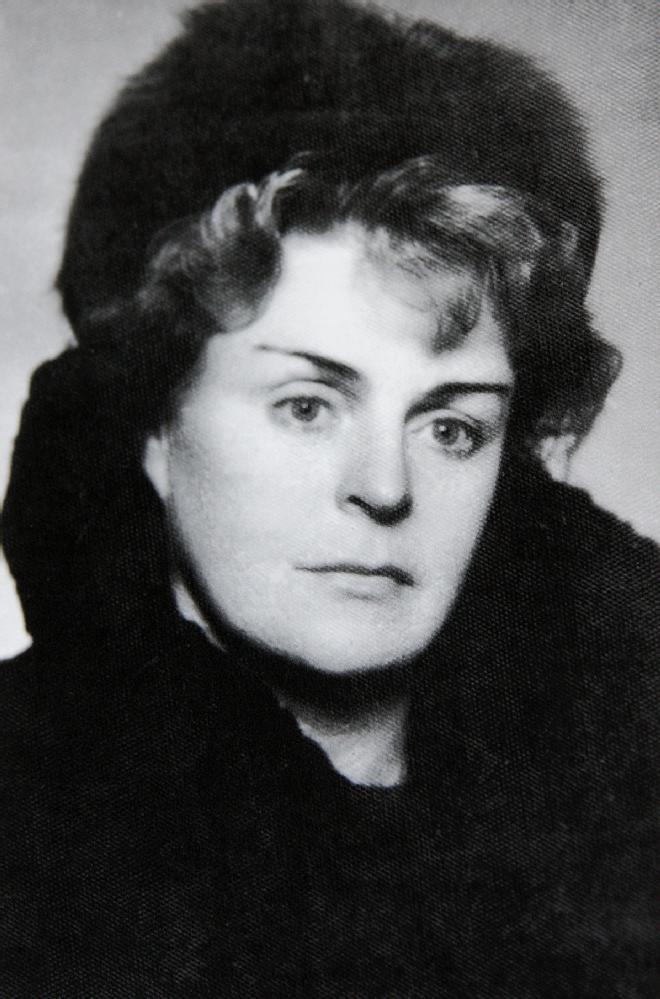
According to the Center, from June 14 to June 19, 1941, a total of 17 thousand people were forcibly sent into exile and camps in remote areas of the USSR: in addition to Lithuanians, these were also Poles, Jews and Germans, and others. Almost all the men were separated from their families. Basically, special settlers were exiled to the Komi Autonomous Soviet Socialist Republic and Siberia: Novosibirsk and Tomsk regions, Altai and Krasnoyarsk Territory. Transportation conditions were so harsh that 82 people died en route.
When the Red Army reoccupied the territory of Lithuania in the second half of 1944 and the Soviet administration returned with it, the search for “enemies” was resumed. To the already familiar “saboteurs” and “counter-revolutionaries” there was a noticeable increase in “traitors who collaborated with the Germans.”
From "Spring" to "Autumn"
The return of Soviet power provoked a new round of Lithuanian resistance. Against this background, in 1944, local residents began to be imprisoned more often than expelled. Special courts under the MGB or military tribunals sentenced defendants to terms ranging from five to 25 years in prison for “counter-revolutionary crimes.” However, these measures did not help: local residents still supported the resistance, hid the partisans from the Soviet authorities, helped them with food and supplies, and stored weapons.
33,736 people were deported by the Soviet authorities during Operation Surf. Then the Soviet authorities changed tactics and decided to carry out mass deportation: Operation Spring, which affected not only the partisans themselves, but also their families. Authorities continued to target so-called “anti-Soviet elements,” especially those who helped the partisans, but repression was often indiscriminate, leaving women, children and the elderly to suffer in a new wave of deportations. Sometimes people were deported to Siberia and Kazakhstan, even if their partisan relative was already dead.
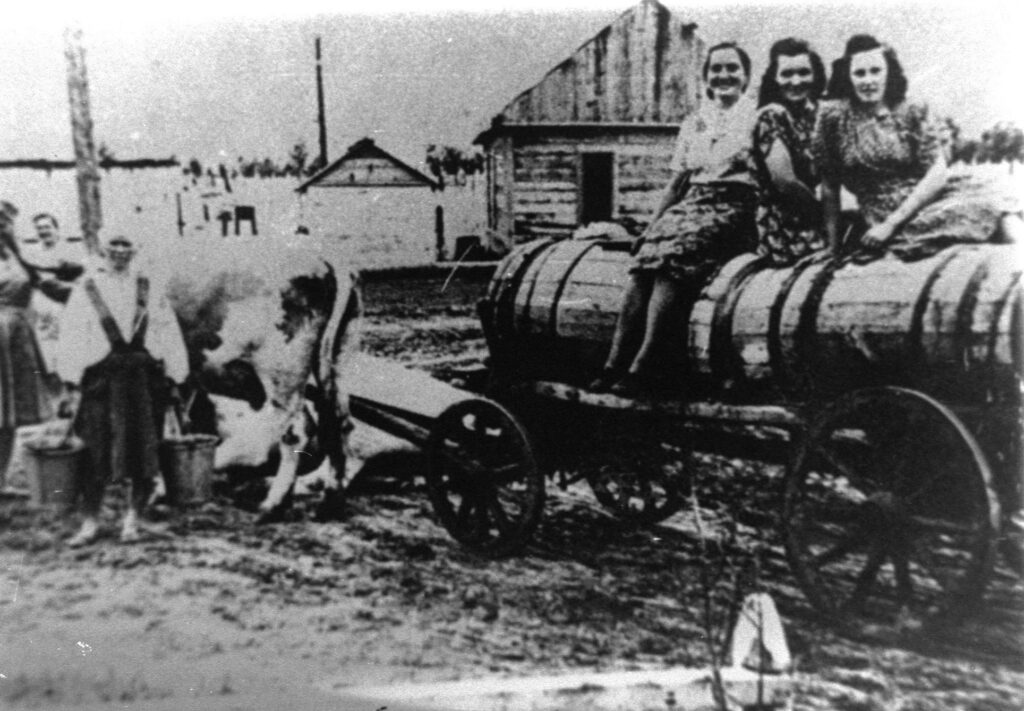
The deportation was carried out on May 22–24, 1948 on the basis of the resolution of the Council of Ministers of the USSR “On the eviction from the territory of the Lithuanian SSR to a special settlement of 12 thousand families of bandits and nationalists who are in an illegal situation, killed in armed clashes and convicted, as well as accomplices of kulak bandits with their families.” To organize this deportation, more than 30 thousand people were mobilized : representatives of security forces, as well as Lithuanian vigilantes (fighters) loyal to the Soviet authorities. In total, during Operation Spring, approximately 40 thousand people were deported from Lithuania, including 12 thousand children.
Who are “stribai” and “fighters”? Fighters, or stribai (a derogatory form, from the distorted “exterminator”) were called members of extermination battalions - volunteer detachments created in Lithuania in 1944, collaborating with the Soviet authorities. Also, people who denounced their neighbors could be called stribays, expecting that this would help them to save themselves. Some collaborated in hopes of getting promoted.
In 1944–1954, there were more than 20 thousand stribays, often men who wanted to avoid conscription into the USSR army joined their ranks. In 1945, the battalions were renamed “people's defenders”.
Panumene claims that the Lithuanians remembered for a long time those who collaborated with the Soviet authorities, and could take revenge on them in the future. As an example, she cites her own uncle, who died under mysterious circumstances: “he was hit by a train when no one saw anything.” “Maybe they pushed me,” she says. At the same time, Father Panumene received 1.5 years of exile “for political activities.”
However, these measures were not enough, and a year later the USSR authorities carried out a new operation - “Surf”. It took place in three Baltic republics at once: Lithuania, Latvia and Estonia, and its main task - in addition to suppressing the partisan movement - was to fight opponents of complete collectivization.
“If in 1948 they took those who supported the partisan movement, then in 1949 they took those who did not want to join collective farms. In those years, almost everyone in Lithuania had their own farm, their own horses, houses, and suddenly it all had to be abandoned and given away. The agitators convinced that everything would be fine, that everything would be common. And who would like to give away their horse, raised with their own hands? Those who didn’t want to be included in the lists and exiled,” says Birutė Panumena.
According to the head of the department of research and publications on occupation regimes at the Center for Genocide and Resistance Research in Lithuania, Arturas Gritskevičius, this time 13,785 security and police officers and soldiers (four rifle divisions), 7,166 “people’s defenders,” as well as 9,500 activists were involved in the deportations. In total - more than 30 thousand people.
All these people helped find Lithuanians (in this wave of deportations they already constituted the overwhelming majority - almost 90%), delivered them from home to the place of deportation, and put them on trains. A typical group consisted of one officer (MGB or police), two soldiers, two stribays and three activists. The group arrested families from the lists and took them to the station, where people were put into freight cars and sent to Siberia, forcing them to abandon their homes and property.
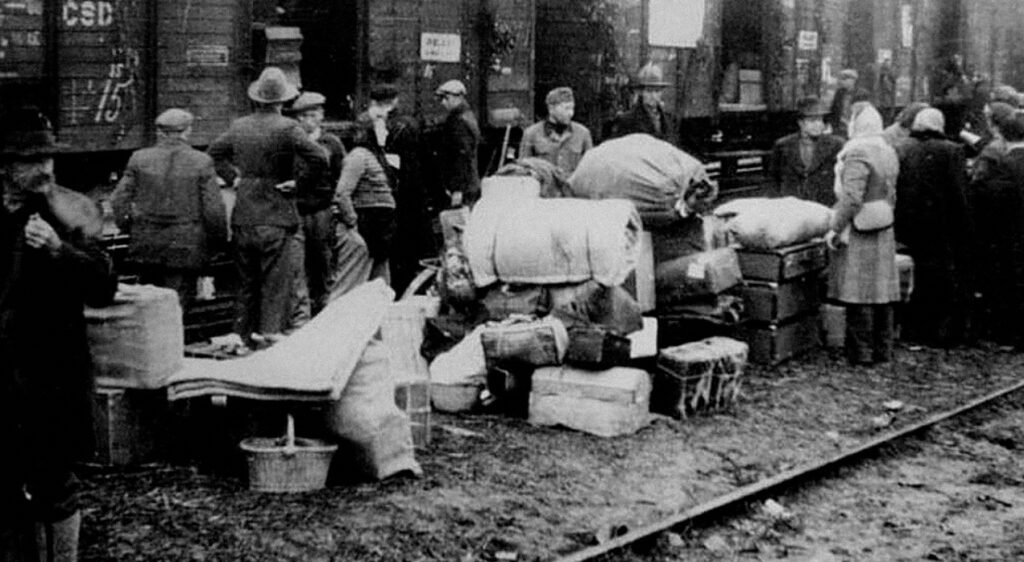
At the same time, Panumene notes that there were also Russian soldiers who sympathized with the Lithuanians. When they came, they often gave advice that people should take clothes with them and definitely food, because it was unknown how long they would be away from home.
According to Panumene, one of the exiles told how a Russian officer told him: “Take a Lithuanian book, you will really miss the Lithuanian language.” But usually the military simply said that they needed to get ready in an hour, and some were given a matter of minutes to get ready.
Taught by the experience of previous deportations, thousands of Lithuanians hid in the forests, with relatives and friends - wherever they could. As a result, almost 14 thousand people who were subject to deportation were able to avoid this fate, which infuriated the local pro-Soviet authorities: they were afraid of a harsh reaction from Moscow, despite the fact that the plan was still exceeded.
“By March 31, 1949, 8,817 families, that is, 29,180 people, were loaded into wagons. Thus, the plan was exceeded: initially it was planned to arrest 25,500 people,” notes Gritskevičius.
But the successes of the “enemies of the people”, who managed to avoid deportation, led to the authorities organizing the second stage of “Priboy”, which was held on April 10–20. Deputy Minister of Internal Affairs of the USSR Vasily Ryasnoy argued that this category of citizens is “especially dangerous.” Authorities carried out additional raids, especially in Siauliai, picking up an additional 2,927 people who were also deported.
According to the Lithuanian Center for Genocide and Resistance Research, approximately 10 thousand families, or 33,736 people, were deported from Lithuania as a result of Operation Surf. In addition, according to Gritskevičius, 5,278 people were imprisoned under articles of banditry or treason, but in fact for armed or unarmed resistance to the occupiers.
Another 1,715 people were killed, tortured or shot, mostly by partisans and their supporters. Gritskevičius estimates the total number of those repressed in those years to be almost 47 thousand people.
The last mass deportation of Lithuanians, Operation Autumn, took place in 1951 and affected about 16 thousand more people.
Deadly Transit
Lithuanians were transported to their place of exile in freight cars, sometimes equipped with wooden bunks and a hole in the middle instead of a toilet. The carriages were cramped, stuffy, there was not enough water, and there was no medical assistance. Once a day, during train stops, deportees were centrally taken outside to the toilet. At this time, everyone tried not to look at each other and just “do their own thing.”
Excerpt from the book “Lithuanians by the Laptev Sea” by Dalia Grinkeviciute:
“They took us to the North for about three months. First, in crowded carriages, where it was impossible not only to sit down, but also to move. Then on barges along the Angara River, then by truck through wild forests from the Angara to the Lena. And again on barges, this time along the Lena directly to the North. Ust-Kut, Kirensk, Olekminsk, Yakutsk, Kyusyur, Stolby. And further and further to the North. Already 800 km north of the Arctic Circle.”
Panumene claims that according to official orders, the people on the train were supposed to be fed, but the food that was intended for the exiles was stolen by the guards, so the exiles received only a small part of the food - some kind of empty stew. Those who took food with them on the road were luckier, but there were few of them - many generally thought that they were being taken to be shot and did not take anything with them. Because of the fear of the unknown, according to Panumene, even those who were not believers prayed in the carriages.
“We go together, we die together, that’s what they thought,” says Panumene.
She says that government officials took money and jewelry from Lithuanians, allowing them to keep only books, including those in their native language. In order not to give away the latter, people often sewed money and jewelry into clothes and hid them that way.
At the time the Red Army entered Lithuania, adult Lithuanians had national passports, which were considered invalid in the USSR after 1940, but were still recognized in many countries abroad, so the Lithuanians, Panumienė argues, hid them. Many exiles ended up with two passports: Lithuanian and Soviet. However, upon arrival at the places of deportation, all documents were confiscated from them and certificates were issued. “People were born, married and died with a certificate,” says Panumene, noting that for many this document was the only one for a long time.
A distinctive feature of the 1941 deportation was the deliberate separation of families: they were distributed into different carriages and places of detention, prohibiting reunification. The historian and her colleagues note that the most cruel thing in these stories is the attitude towards children. According to her, they were given very little water, they experienced thirst more acutely than hunger.
“The attitude was: they will live or they won’t live, [it doesn’t matter]. They simply got rid of the bodies along the way: it was impossible to transport corpses. One woman's child died. She hid the fact that he died on the way, took him there and buried him in exile,” says Panumene.
Since 1947, according to her, families were almost never separated - the authorities tried to deliver Lithuanians able to work and simply settle them in remote places. However, there were also opposite examples. Panumene tells the story of Vladas Plikūnas's family, which was exiled in 1948 because he had previously been exiled himself.
His wife and minor children were sent to the village of Khabaydak in the Krasnoyarsk Territory - almost five thousand kilometers from Lithuania. The mother had health problems, and a year later she died during deportation, and the eldest among the children, 12-year-old Alpune , found herself alone with her younger brothers and sister.
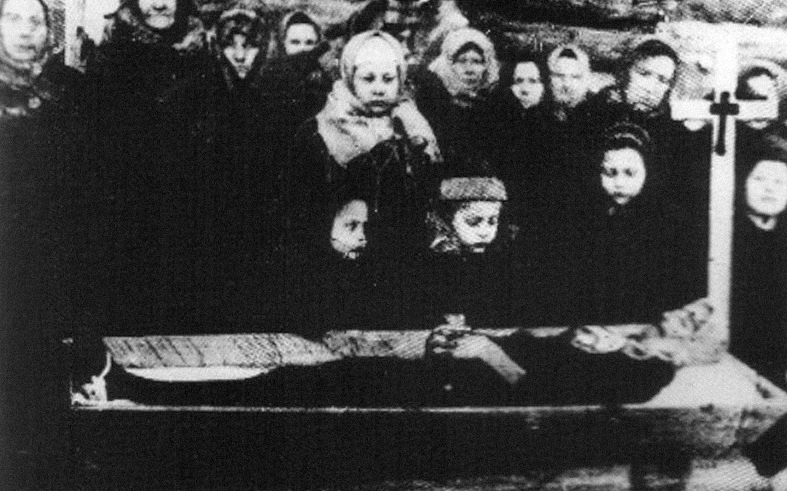
The girl fed and raised them herself. The children ate bread, lard, and collected wild garlic . They were saved by a cow, which they shared “share with their neighbors”: the children received a little butter and milk for a long time. This is how they survived, left to their own devices - no one reported them to Lithuania, no one tried to find relatives, and no one sent them to an orphanage. The children managed to return to Lithuania only in 1952 - they were found and taken by relatives.
Ice wilderness
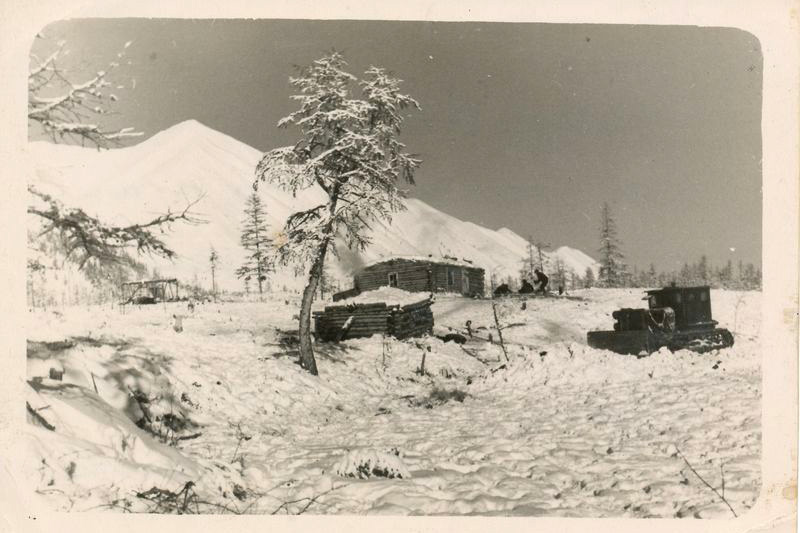
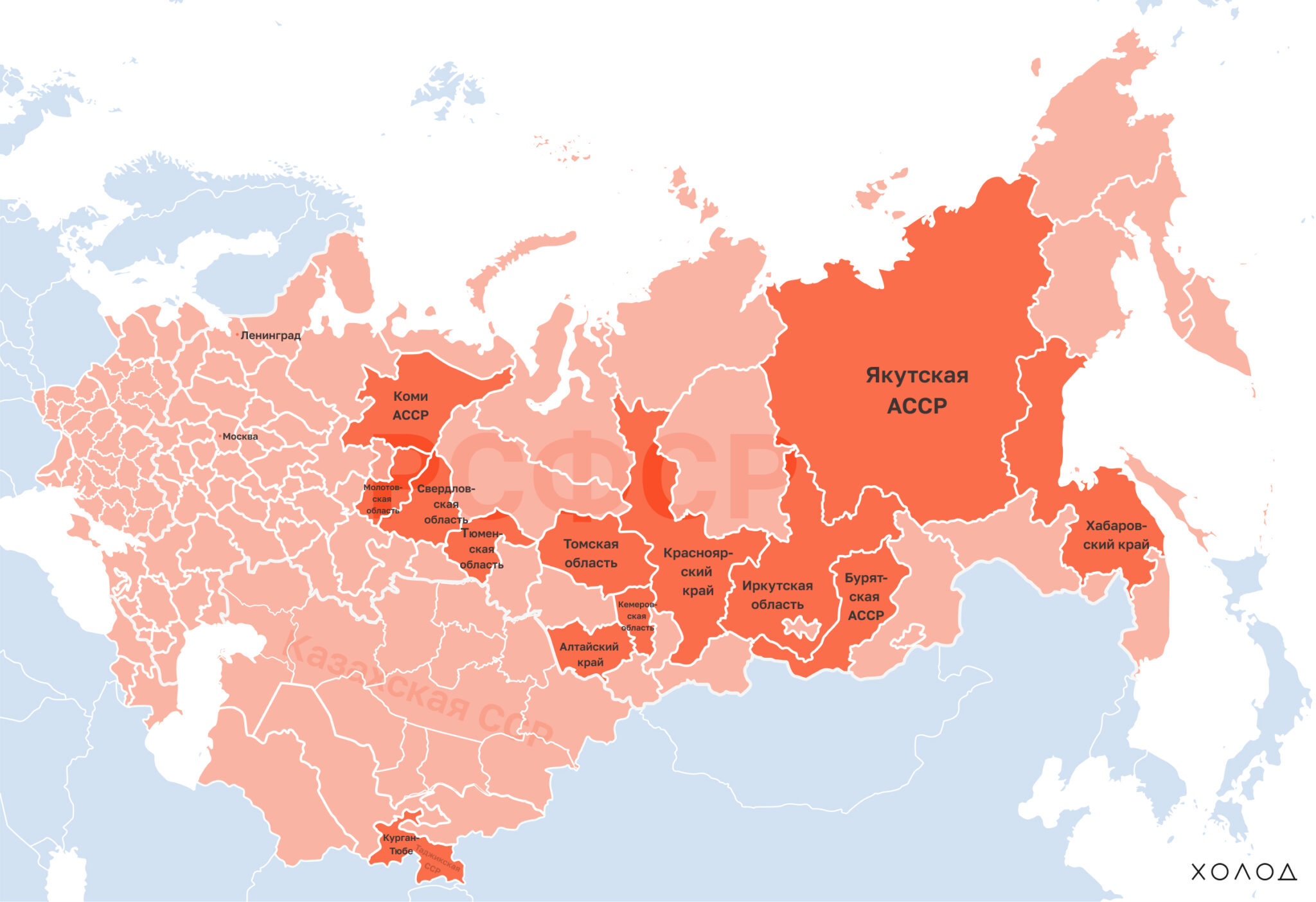
Most Lithuanians were sent to special settlements or camps in Siberia: in the Krasnoyarsk Territory, Irkutsk Region, Buryat-Mongolian Autonomous Soviet Socialist Republic (now Buryatia), Tomsk Region. Many deportees died en route or shortly after arrival due to harsh conditions, hunger and disease. The most difficult conditions were in the Arctic Circle. Here, as Dalia Grinkeviciute recalled, in extreme conditions, the exiles built their own housing, and obtained food by fishing in the Laptev Sea. In winter, temperatures in the region could reach -50 degrees, and in such conditions people had to huddle in barracks designed for several families.
The location and activities of the exiles were strictly controlled, explains Birute Panumene. Upon arrival, each was assigned an occupation depending on the needs of the region: logging, gold or coal mining in mines, road construction, work on collective farms, fishing.
From the diaries of Dalia Grinkevichute:
“One day, when we were dragging a sleigh with logs, we were called to the office. Freed from the straps, we entered. We were told that we would receive a salary for half a month. Each received a three-ruble note <…>. And then Chief Travkin began his sermon: “... we need to make our contribution to the defense of the country, we need donations for weapons...” A list was made in advance and the amount indicated against each name was three rubles. All that remains is to sign.
Before us stood a well-fed, well-groomed gentleman: in an elegant American diagonal tunic, light fur boots, rested, clean-shaven, smelling of cologne, rosy-cheeked. He spoke easily and fluently, as if about trifles, as if he did not see in front of him the barely alive people with yellow waxen faces, sunken eyes, in rags and lice, barely standing on their feet, holding in their hands these unfortunate three rubles, so hard earned. He said as if he didn’t understand that without them we wouldn’t even buy a ration of bread. We signed and each returned our three rubles.”
The most difficult situation, explains Panumene, was for women with children who were left without a husband. Hard work and raising children fell on their shoulders at the same time. Children of exiles were often unable to attend school due to the language barrier and discrimination, but the Lithuanians tried to teach them their native language, history and preserve their national identity. Despite the difficulties, the exiles organized secret Lithuanian events and holidays, sang Christian hymns and created choirs.
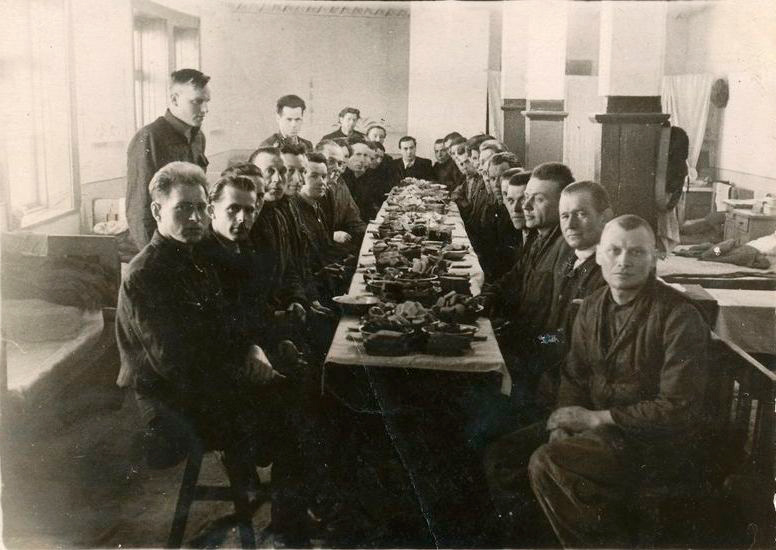
The exiles were paid for their work, but from the very first “salary” they counted money for their arrival: for the imposed “ticket” in the freight car. Those who ended up on collective farms received the least, so there was almost no money, especially in the first month. In order to somehow survive, the exiles stole food, and also collected the remaining grains from the fields and cooked stew.
From the diaries of Dalia Grinkevichute:
“Albertas Janonienė’s mother, dying of hunger, begged her son to give her at least a crumb of bread, and Albertas and Platinskas went into the bakery at night. Everything would have ended well if they had taken some bread and returned to the barracks. Maybe the mother would not have died of hunger. But, sensing the smell of bread, the guys could not stand it and attacked him. While eating the bread, they lost consciousness from weakness. They were found there in the morning.”
It was often impossible to grind the grains using improvised means, so whole grains could end up in the stew. According to Panumene, this was a problem because guards would check the toilets and could be accused of stealing grain. Therefore, even going to the toilet was accompanied by informal regulations - people buried their excrement to hide the grains remaining in them.
With medical care, says Panumene, everything was also bad: there was no one and nothing to treat. All the exiles could do was melt the ice, lay them to bed and give water to those who were ill. The barracks did not hold heat well, they had to be constantly heated, but there was almost no firewood, and for collecting old boards in the area they could be given a prison term : the authorities equated this with stealing firewood.
From the diaries of Dalia Grinkevichute:
“When parents died, the children were taken to a separate barracks for orphans. The conditions were the same, the child mortality rate was even higher. Hungry children peeled the ice off the windows with their hands and sucked it.
The children died one after another. The carriers of the dead often found bags with skeletal children's corpses in the snow at the doors of the children's barracks. It is unknown how many of them were in the bag; they were thrown into a common pile without untying them. Two Finnish boys, 12 and 13 years old, hanged themselves in that barracks for orphans.”
“One day two people came to our barracks: a man and a woman. Everyone had a bundle in their hands. It was dark and they asked if there were children in the barracks. There were children. When their eyes adjusted to the darkness, they saw one of them: ten-year-old Jonukas Barniškis from Marijampolė, dead from hunger and scurvy, was lying on the floor. They said that their only son died in Leningrad. Today is the anniversary of his death. In memory of him, the unfortunate parents collected their rations of bread in three days and brought them to the starving Lithuanian children.”
Despite the terrible conditions, the settlers found an outlet in cultural life. Panumene says that local authorities encouraged creativity, amateur performances and sports, which had no ideology. Lithuanians were allowed to create different teams and, for example, play against Latvians. Even then, the Lithuanian team, according to Panumene, was called “Zalgiris” (the Lithuanian sports society to which the most titled Lithuanian basketball club, “Zalgiris” from Kaunas, belonged).
IDPs and prisoners tried to fight the regime, although they had few tools to put pressure on the authorities. The most popular and effective were the strikes, a wave of which swept after Stalin’s death, in the period from 1953 to 1955. Unrest in the Gulag had occurred before, but the uprisings in the Vorkuta and Norilsk camps in the summer of 1953 were distinguished by their organization, scale and specificity of demands. Among the most active organizers of the strikes were Lithuanians.
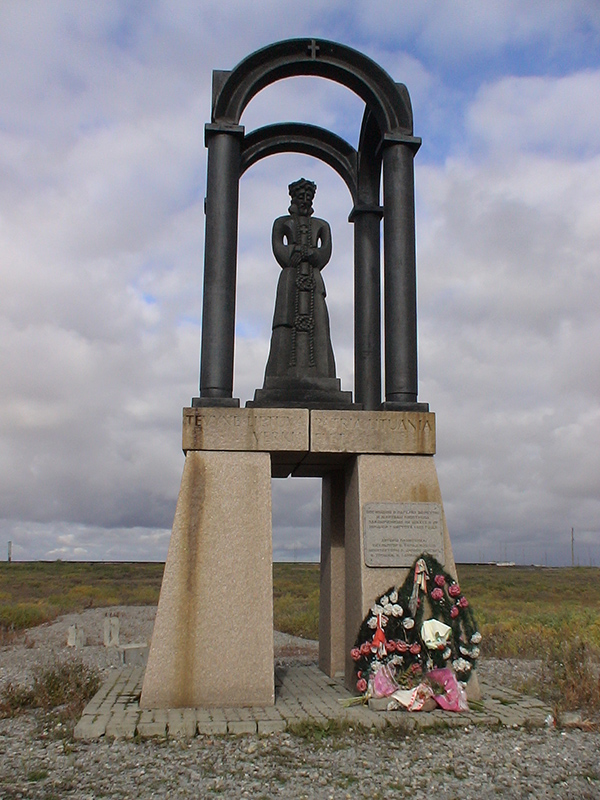
Memorial cemetery at the Yur-Shor mine (former mine No. 29)
Russia, Komi, Vorkuta. Photo: mapofmemory.org
Despite the fact that the wave of protests was harshly suppressed, and the cases of political prisoners were never reviewed, the authorities nevertheless made concessions: the numbering of prisoners was canceled (now they were addressed by name), the bars and locks were removed from the windows and doors of the barracks, and the working day was shortened. The strike in the Vorkuta camp, where a quarter of the prisoners were former residents of the Baltic countries, became a catalyst for de-Stalinization in the Gulag system.
At the same time, as Panumene says, in some settlements deported Lithuanians could feel even freer than those who remained in Lithuania. They could freely speak their native language and demonstrate their national symbols, for example, the yellow-green-red flag, which was officially prohibited on the territory of the LSSR, could hang in settlements.
"We don't fight the dead"
Exiles began returning to their homeland after the death of Joseph Stalin in 1953 and the subsequent report of Nikita Khrushchev exposing Stalinism at the 20th Congress of the CPSU Central Committee in 1956. However, explains Panumene, the process was burdened with severe restrictions. The special settlers had no right to return to their homes; moreover, this housing, as a rule, was already occupied. It was forbidden to settle in large cities, and getting a job in your specialty was almost impossible.
Access to higher education was also limited: for some due to the consequences of deportation (poor education in a non-native Russian language), for others it was a direct ban. Finally, according to Panumene, the KGB monitored all returning exiles, as they were considered “unreliable elements.”
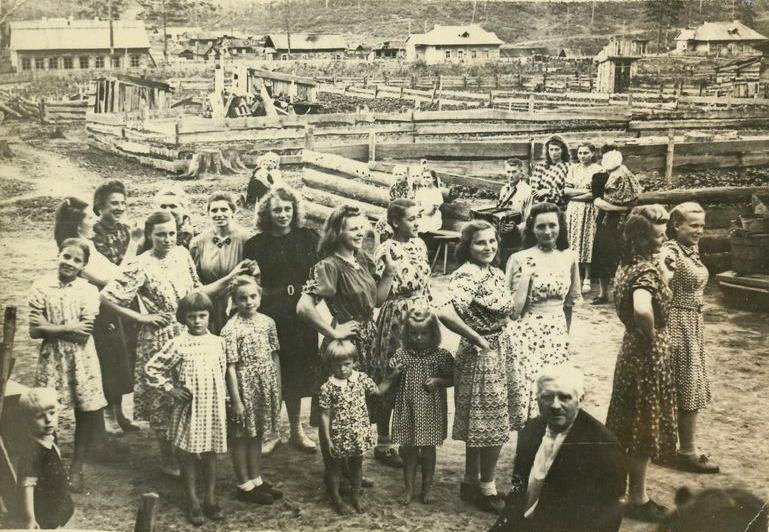
Only on April 26, 1991, the RSFSR Law No. 1107-I “On the Rehabilitation of Repressed Peoples” was adopted , which recognized deportations as a “policy of slander and genocide.”
“The policy of arbitrariness and lawlessness practiced at the state level in relation to these peoples was illegal and insulted the dignity of not only the repressed, but also all other peoples of the country. Its tragic consequences still affect the state of interethnic relations and create dangerous hotbeds of interethnic conflicts,” the law stated.
At the same time, in 1991, Lithuania, which declared independence, entered into an agreement with the RSFSR: Boris Yeltsin, who signed it, essentially recognized the annexation of Lithuania in 1940.
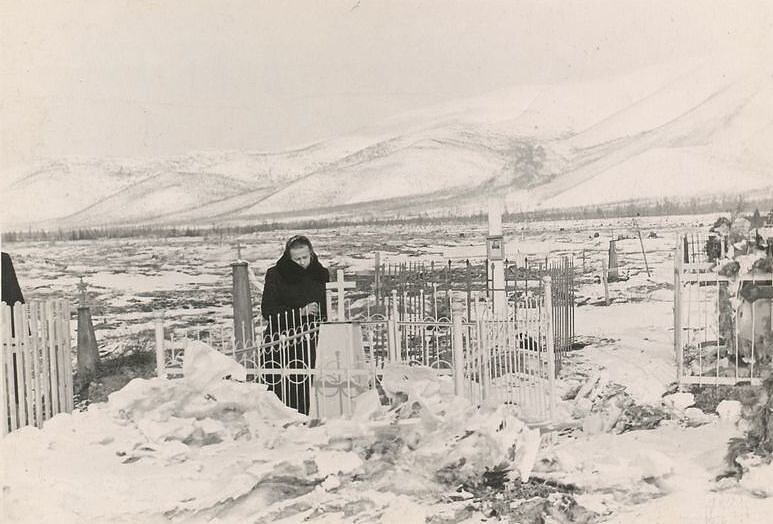
Of those who made decisions on deportations, no one was punished. Birute Panumene claims that even if they wanted to punish them, now almost none of those who gave the orders are alive. She says: “We don’t fight the dead.”
At the same time, several trials took place in Lithuania, during which ordinary participants in the deportations were convicted. Thus, in 2012, the Kaunas District Court found Russian citizen, 86-year-old KGB veteran Mikhail Tabakaev, living in Vilnius, guilty of deporting civilians: he was sentenced to two years of house arrest. In 2016, former MGB investigator Alexander Kardanovsky was sentenced to six years for deportation, but due to his age (99 years old) he was released from responsibility.
more than 131 thousand Lithuanians were subjected to forced deportation. Russia, as the successor country of the USSR, never made an official apology for the forced deportation of Lithuanians.
In 1992, the Lithuanian authorities launched a program of state support for the return of political prisoners and exiles, as well as members of their families. They were entitled to financial assistance during resettlement and integration, with language learning, as well as with the purchase of real estate. The Lithuanian authorities spent more than 32 million euros to help them with housing.
It was more difficult for those who wanted to return the remains of their relatives to their historical homeland: they themselves had to travel to Russian cemeteries near former settlements (for example, like in Corbique). Panumene says that the Lithuanians literally took out the bones, some dug up the graves on their own and, based on some signs, decorations, hidden photos or notes in bottles, found their own. Hundreds of planes brought remains from the Krasnoyarsk Territory; a mass was held for the dead in the Cathedral of St. Stanislaus, and their remains were distributed among Vilnius cemeteries.
According to the Lithuanian Center for the Study of Genocide and Resistance, in the period from 1941 to 1952, 131.6 thousand people were forcibly deported from Lithuania, of which approximately 20-25 thousand died on the road, in prisons and in special settlements. Slightly more than half of those deported (64 thousand) were eventually able to return to their homeland. Another 60–80 thousand people left Lithuania in 1944, not wanting to again find themselves under Soviet occupation.
Russian historians estimate the total number of deportees from Lithuania in 1940–1953 at approximately 120 thousand people. This number also includes representatives of other nations evicted from Lithuania: Poles, Germans, Russians.
Every year in Lithuania, June 14 is celebrated as the “Day of Sorrow and Hope”: it is on this day that the country remembers the victims of deportations and repressions. Today the republic considers these events as an act of genocide and a crime against humanity.
***
Over time, the very village of Korbik, where people were deported, died out; already in the 1990s, almost no one lived there, and almost no one cared about the “Siberian Madonna”, except for the Lithuanians, who were looking for monuments to the deportations. During one of these expeditions, Algirdas Markunas and Antanas Sadeckas noticed the sculpture and tried to take it home. Later, the Vilnius Association of Political Prisoners and Deportees, led by Rimvydas Racenas, a Lithuanian exiled to the Komi Autonomous Soviet Socialist Republic in 1941 at the age of seven along with his mother and brother, joined the idea.
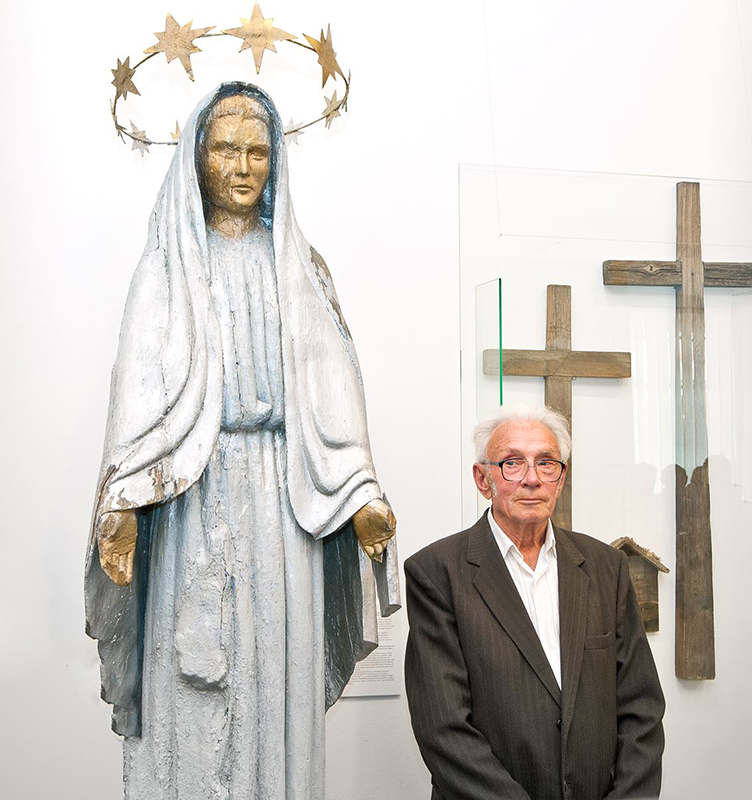
Photo: Sibiro.Madona / Facebook
“I saw that the sculpture was barely holding together and was doomed to disappear. The idea arose that this was a very rare case, perhaps unique, the only one in the whole world. In any case, in the world of exiles this is for sure. It was necessary to save,” said Racenas.
The idea of replacing the sculpture seemed to Racenas the most realistic. Having visited Corbic, he agreed with the local residents that a sculptor would create a copy in Lithuania, since the old pine sculpture had completely dilapidated and was in danger of disappearing. Local residents agreed to the terms of Racenas, who organized a crowdfunding program, raised money and received Lithuanian oak from the authorities, from which a copy of the original was created.
Madonna was taken to Corbic by diplomatic bus, then by plane and SUV. The new statue was installed in the cemetery - local residents, according to Panumene, were pleased - and the original went to Lithuania. It took four years to restore the statue, but they deliberately left wounds on her hands and body so that they would remind of the crimes of the Soviet authorities.
In 2011, the author of the original sculpture, Jonas Maldutis, who returned from exile in the 1960s, met again with his creation. Now the “Siberian Madonna” can be seen in the Chapel of Exiles of the Vilnius Cathedral, the main temple of Lithuania.
Illustrations: Lidiya Zimogorova
Author: Lika Platchenko