
Translated material
Raids on deserters took place in Transbaikalia. Their loved ones were beaten and tortured
A former military man was involved in the attacks. Then he was shot. Murder suspect says he 'saved many lives'
At the beginning of November, raids on “Sochi residents” took place in several villages of the Trans-Baikal Territory. This is the name given to participants in the war who left their unit without permission (SOCH). Trying to find them, masked men beat and tortured their relatives with electric shocks. According to one of the victims, among the masked people was Konstantin Ektov. In mid-November he was shot dead. The suspect in this murder, Vladimir Popov, recorded a video in which he confessed. He stated that he paid Ektov not to send him to Ukraine and not to touch his loved ones, but during the next raid Ektov broke his mother’s leg. “Every man must protect his family. That’s why I did this to him,” Popov said. The publication “People of Baikal” told the story of Konstantin Ektov: how he ended up in a search group for military personnel who had gone AWOL, how he was killed, and how local residents reacted to his death. Meduza publishes this material in full.
Attention, there is obscenity in the text.
“They won’t roll cotton wool here, they’ll just put it on a pitchfork.”
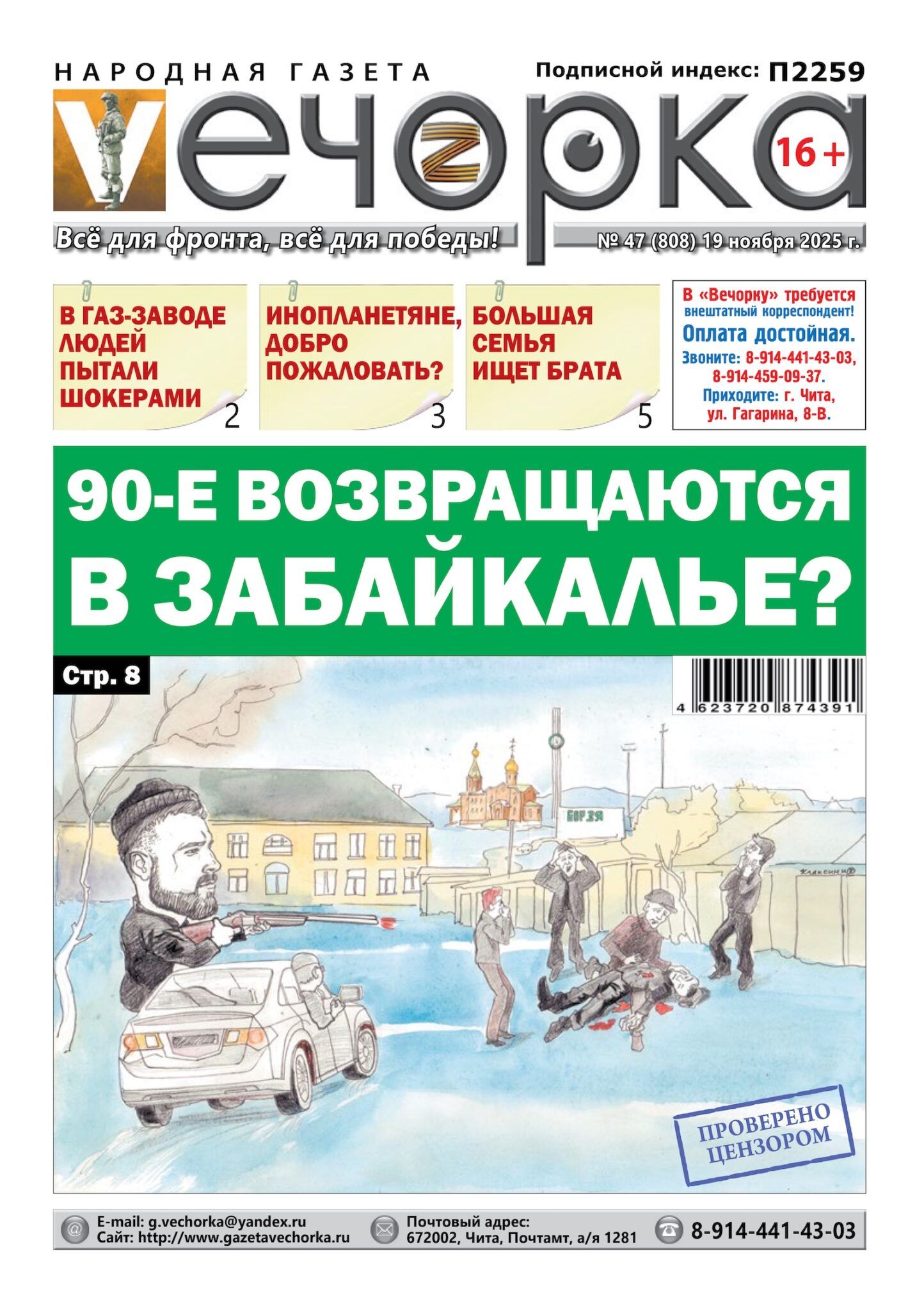
“There he is, fucking lying there. Here it is, right away. Fucked up,” says a female voice in a seven-second video that went viral in Borzin chats on November 11. A woman films the street from behind a curtain - white snow, blue sky. Near the shabby garages is someone’s body. This is Konstantin Ektov. Two weeks later, the Chita newspaper “Vechorka” published an issue with a picture on the cover - the same snow, sky, body, but on the left is a killer - a bearded man with a gun in his hands.
The orientation stated: at about 12 noon, Ektov left his house on Promyshlennaya Street and was shot at in the yard by a man (who was with another person) from a smooth-bore weapon, most likely a sawn-off shotgun. The attackers then fled in a Toyota Esquire, which belonged to the deceased.
In the comments, Transbaikal residents called Ektov a “rear rat” and wrote that he “humiliated our brothers,” and therefore “that’s where he belongs.” “They won’t roll cotton wool here, they’ll just put it on a pitchfork,” one user emphasized.
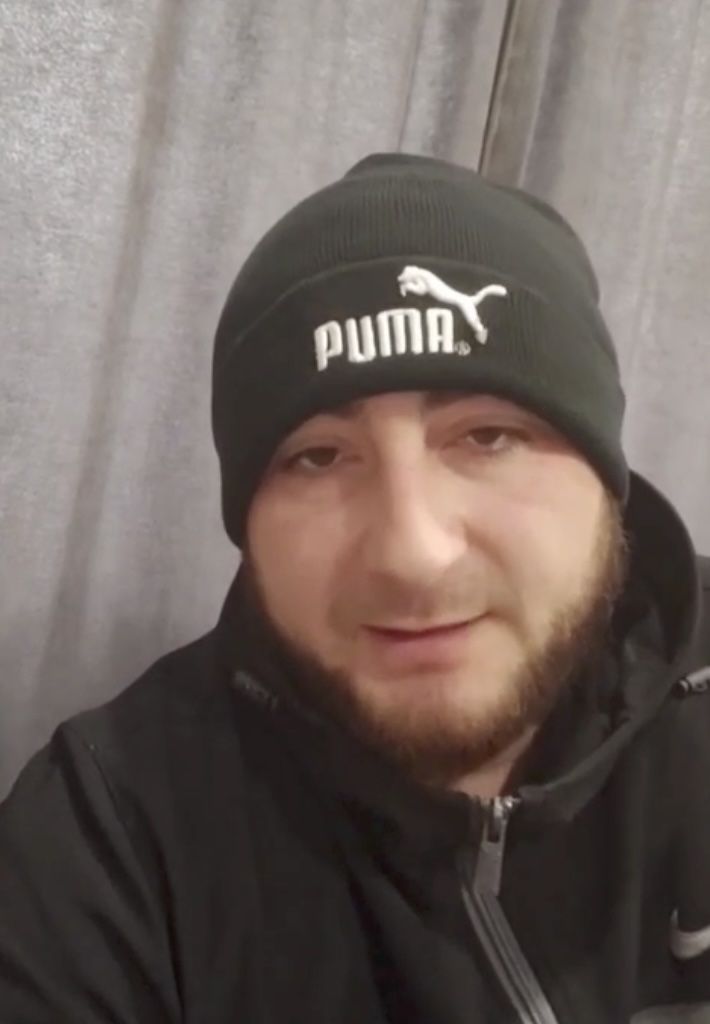
Security forces detained the suspect three days later, on November 14. But he didn’t really hide. A few hours before his arrest, the man sent several videos to the editorial office of the Chita.ru publication; these videos also began to be distributed in regional public pages. Their author said that his name is Vladimir Popov, he is a military man, born in 1994, and it was he who killed Ektov. The appearance of the man in the videos coincides with the appearance of the man in the orientations.
The author of the video said that he paid Ektov money so that he would not send him to Ukraine and not touch his family. But then Konstantin came to his house during a raid and broke the leg of his closest relative - and that changed everything:
“When I found out that they were committing chaos at the Gazimur Plant, beating relatives [of escaped soldiers] with a stun gun, I told him, don’t do this, don’t do this to my family, be kind. He promised that nothing would happen. And in Okontsovo he flew into my house, just picked up my 80-year-old grandmother and hit her. He just takes her and hits her with the door. What was left for me? Every man must protect his family. That’s why I did this to him.”
The author of the appeal wrote to Chite.ru that he does not regret the murder of Ektov and believes that he “saved many lives and families with his act.”
“They beat them like dogs”
At the beginning of November, in the Gazimuro-Zavodsky district of Transbaikalia, raids took place on “Sochi residents” - participants in the war who left their unit without permission (SOCH). Search teams visited the villages of Trubachevo, Novoshirokinskoye, and Ushmun. Several families subsequently filed statements with the police.
“I was rocking my great-grandson in a rocking chair, he is three months old, and my granddaughter Masha was peeling potatoes. They opened the door wide, flew in and let’s move everything,” 68-year-old Lyubov Muratova, a resident of Trubachevo, tells LB. — They didn’t introduce themselves. They were looking for Petya.”
24-year-old Pyotr Muratov is Lyubov’s grandson. Muratova raised him alone; Peter's parents abused alcohol. Peter signed a contract (“we drank with friends and signed, of the three he was the only one left alive,” explains the grandmother), was captured by the Ukrainians, and stayed there for nine months. He was traded in May of this year. Muratov underwent rehabilitation at the Trans-Baikal resort “Darasun”, then returned home. Both Peter and his relatives were sure that he would no longer be taken to war.
On November 2, unknown men arrived in Trubachevo in three foreign cars. Peter was not with his grandmother then. As eyewitnesses describe, the visitors wore camouflage uniforms, some were wearing masks. They wandered around the village, and then drove up to the house where Muratov’s second cousin, 24-year-old Pavel Vtorushin, was. They handcuffed Pavel, put him in one of the cars and drove away. His mother Olga says that none of those who arrived showed documents or introduced themselves.
Vtorushina tells LB that she “first went on foot to get these cars so that they could give me my son.” Then she got on a motorcycle - Olga’s other son arrived on it. “The first car stopped, they said: we don’t have him. I went to the second one, the first one signaled, they let’s run away from us, Pasha only managed to shout “Mom, I’m here!”
Pavel was released an hour later; he told his mother that they tortured him with a stun gun in the car: they wanted to find out where Pyotr Muratov was. During the torture, Peter himself called Pavel. This is how the search group found out Muratov’s whereabouts. Peter was found, beaten, handcuffed, pushed into the trunk of a car and taken away from the village. His brothers saw this and told their grandmother about it. Lyubov Muratova with a sigh tells LB that the search groups are “being vicious” with the military and “beating them like dogs.”
Now Muratov is already at the front. On November 19, Peter published a photo from there on social networks. He did not answer LB's questions.
“Not a sweet lie, but a merciless truth”
Lyubov Muratova tells LB that she hasn’t heard anything about the murder in Borza. She did not contact the police and did not complain about the harsh detention of her grandson. But Pavel Vtorushin wrote a statement to the Ministry of Internal Affairs and removed the beatings - marks from handcuffs and swollen finger joints were recorded on his body. A few days after this, Nikolai Belomestnov, Deputy Minister of the Trans-Baikal Territory for Social and Demographic Policy, came to his mother Olga Vtorushina, as her fellow villagers told us.
— Why did they send Belomestnov?
“The case turned out to be resonant, and the governor of the [Trans-Baikal Territory Alexander Osipov] sent it,” reflects one of LB’s interlocutors.
Nikolai Belomestnov is a participant in the “special operation”; he was promoted to deputy minister precisely because he fought. At the ministry, Belomestnov works with military personnel and their families. He has already said that the most important thing for him is “to reach out to every Northern Military District veteran who has returned home, find out what problems he has, and offer solutions.”
Belomestnov apparently “reached out” to Vtorushina: after their meeting, Olga stopped responding to LB’s messages. We called Nikolai to find out why he came to the village and what the authorities’ reaction was to what was happening. Belomestnov refused to answer our questions and suggested sending a request to the ministry’s press service. The press service requested a license for our publication, but “People of Baikal” is not registered as a media outlet in Russia.
Only one Transbaikal publication wrote about torture in the Gazimuro-Zavodsky district - the newspaper “Vechorka”. But a day later she deleted the post about it on her social networks. The editors of “Vechorka” support the “special operation”, although they often criticize the authorities for their poor attitude towards the military. The publication explains that Russia’s victory in the war will be brought closer “not by sweet lies, but by the merciless truth.”
A week later, the newspaper, in a special appeal, explained the reason for the disappearance of the posts: “Representatives of law enforcement agencies urgently asked journalists to remove the information, allegedly it plays into the hands of the enemy.” The appeal emphasized that when the publication’s editor-in-chief Vladimir Cantemir learned about the deleted article, “the offending journalists were subject to disciplinary action.” The note itself was published in the paper version of “Vechorka” dated November 19 under the heading “They beat and tortured with electric shock” (available to LB).
The editorial office did not answer the question from People of Baikal about who exactly put pressure on the journalists.
“We were thrown out of the car like sacks”
In addition to Trubachev, on November 2, search teams visited the village of Novoshirokinskoye - there are 50 km between the villages. They were looking for “Sochi resident” Alexey Oshchepkov (the data has been changed, his relatives ask not to indicate, because they are “very scared”).
Alexey signed the contract at the beginning of 2024, during his military service. He was sent to fight, and at the end of the year he was seriously wounded in the head. Then they tried to return Oshchepkov to the front without passing a medical commission. Alexey fled to his native village. Oshchepkov’s parents tell LB that they knew when a search group was coming to Novoshirokinskoye, and they hid their son, most often in the winter hut at the dacha.
On the morning of November 2, Alexei’s father, 47-year-old Vladimir, was returning from his dacha when two cars drove up to him. Five people in civilian clothes came out. “They shoved some crusts in my face, I couldn’t make out anything,” he tells LB. “They said: we need to talk.” I say: let's talk here on the street. Well, they forcibly threw me into a minibus. Kolya, Alexei’s friend, was sitting there, he was bruised.”
They hit Vladimir several times, “pushed his muzzle into the front seat” and handcuffed him behind his back: “One took out a suitcase, from there he attached clothespins to my fingers and let’s torture me with electricity - where is Alexey, where is Alexey. I told them that I don’t know, I just came from my shift.” LB's interlocutor says that he lost consciousness several times, he was dragged out into the street, there he came to his senses, they dragged him into a car, where they continued to torture him. They did the same with Alexei’s friend Nikolai.
“Then we went outside the village, they said: that’s it, we’ll reset you now,” recalls Vladimir.
At that moment, Alexey called Vladimir, he wanted to understand where his father was. Vladimir tried to hint to his son that they were looking for him. But Alexey himself let it slip that he was at the dacha. “Well, we turned around and flew, they knew exactly where to go,” recalls Vladimir. “While we were driving there, I got punched in the face a couple more times.”
At the dacha, the visitors released Vladimir and Nikolai. “We were thrown out of the car like sacks. Then they shot in the air to make us run away,” says Oshchepkov Sr. His son tried to escape, but he was quickly detained, beaten and taken away.
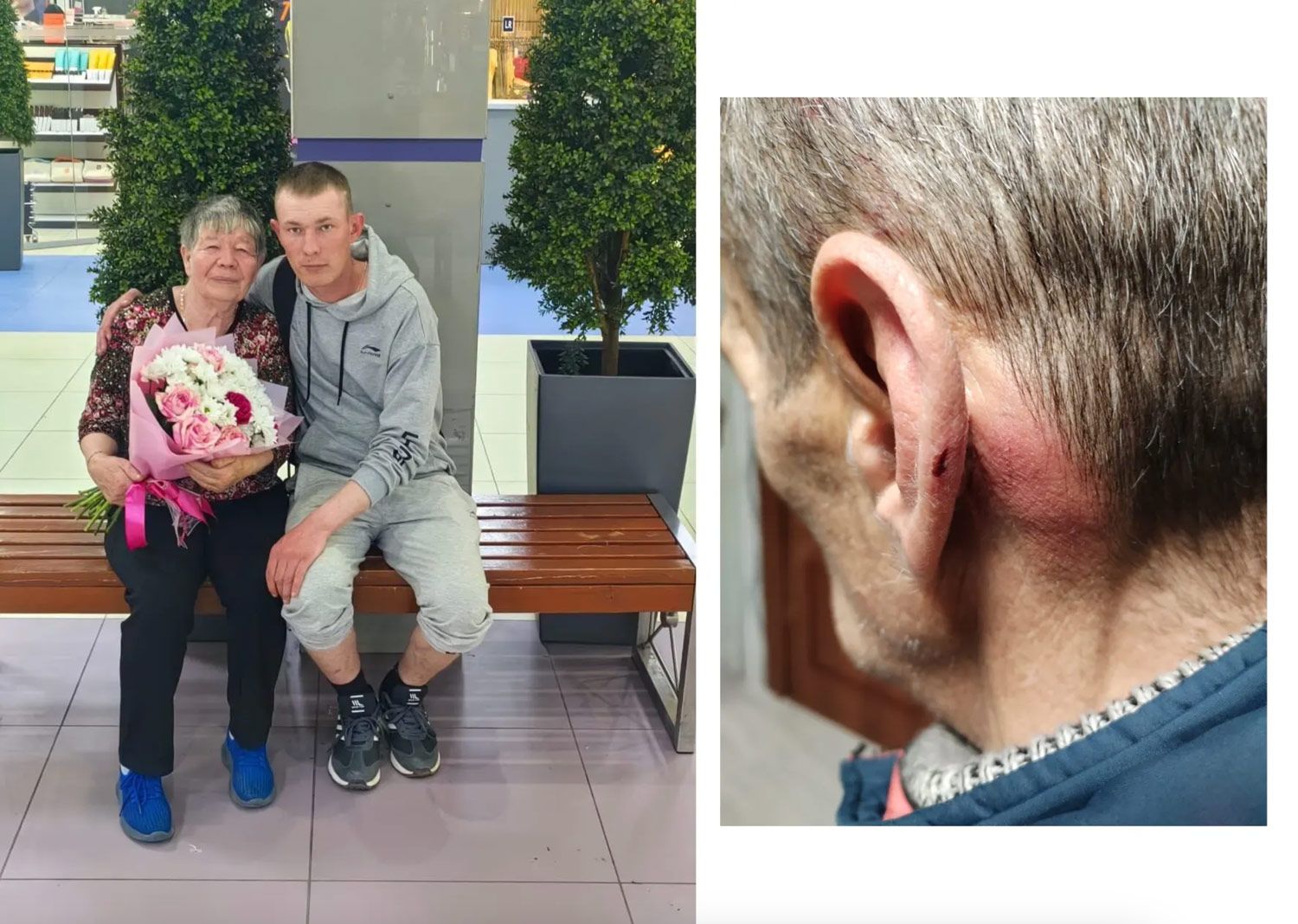
Alexei’s parents immediately went to the police to file a statement. Vladimir took off the beating - there was a hematoma behind his left ear. “This is lawlessness against civilians. They don’t treat the military like that either - even a slap in the face is already a beating,” his wife Irina is outraged. She says that she filed complaints with the Prosecutor General's Office, the military prosecutor's office, the military investigative department, as well as the Investigative Committee of the Russian Federation.
Alexey himself is now under investigation in Chita and awaiting trial. His parents hired a lawyer. Irina does not want her son to be sent to war again. “It’s hard for me as a mother. “I’m talking to you, I’m even hot,” she tells the LB journalist.
Alexey’s friend, Nikolai, confirmed to People of Baikal that he was tortured and beaten with a stun gun in the car. In addition, LB’s interlocutor identified one of the visitors as Konstantin Ektov—the same man who was killed in Borza a week and a half later, on November 11. “I saw his photo and immediately recognized him - by his face, eyes and haircut,” says LB Nikolai. “He participated in the torture, just like everyone else.”
Nikolai calls Ektov’s killer “handsome.”
“The deserters didn’t understand otherwise”
In reports of the murder of Konstantin Ektov, he is often referred to as a military policeman. But, as several of Ektov’s acquaintances told People of Baikal, he served in the operational search group at military unit 06705. The unit is located in the city of Borzya. In 2024, several dozen servicemen from there died after an attack by the Ukrainian Armed Forces on a training ground near Volnovakha.
Essentially, “searchers” are contract soldiers who are looking for other contract soldiers. They go on raids in civilian clothes. Military police can join the "group". First, the detectives contact local police officers, who often know where the Sochi residents are hiding.
How does the work of military police differ from the work of an operational search group?
If a criminal case has been opened against an escaped military man, the search for him is carried out by the military police and its territorial body, the military commandant’s office. The contract worker faces real imprisonment. If a soldier is on the list of those who left his unit without permission, other contract soldiers most often look for him (as part of the so-called “search groups”) and return him to the front. This is often accompanied by abuse of power, say lawyers for the project for conscious refusal of military service “Call to Conscience”.
Konstantin told his friends more than once that he “picked out Sochi residents from the back streets, from distant villages.” In personal conversations, he did not hide the fact that he used force against the hiding soldiers. His friend, Magadan resident Konstantin Milochkin, explains Ektov’s position this way: “the deserters did not understand otherwise.”
“They fought constantly,” Milochkin recounts his conversations with Ektov. - Someone flies out of the house with a stick - and to the search group. And where to go, I had to answer, of course. I couldn’t keep myself within limits.”
Ektov told Milochkin that the “Sochi residents” could have come out with a live grenade or with a loaded weapon : “Someone fired a gun into the air - you won’t take me away, like . Kostyan quickly got used to threats; this was the nature of the work. Many were drunk, in a deranged state, and drank for weeks.” Milochkin does not believe that Ektov beat his relatives and used stun guns.
Another acquaintance of Ektov (anonymously) suggests that he could have broken the leg of the woman, whose son later shot Konstantin, “through negligence”:
“I heard that the mother of this soldier threw herself at Kostya several times. Well, what are you going to do with your mother? He pushed it away once, twice. Then they started putting handcuffs on her son, the mother climbed again, Kostya turned around, accidentally waved his hand, and he was a healthy guy. And she flew away. And when she fell, she broke her leg. The military man was then taken away, and Kostya was shot by the younger brother of this “Sochi resident”; they were both on the run.”
Ektov, according to his friends, called his job in the Borzinsky unit “a dog’s job” and dreamed of quitting. He didn’t like that the military unit did not allocate either cars or gasoline for raids. He had to drive personal cars (Ektov had three of them; ill-wishers believe that he bought foreign cars with bribes from “Sochi residents”). Konstantin complained to his friends that they tried to send him back to the front several times, especially when new authorities arrived in Borzya.
“They told him: why the hell are you here? Here we are catching these contract soldiers, and it turns out that you yourself are the same,” Milochkin quotes Ektov’s stories. “And Kostyan: well, I’m serving, I didn’t run away anywhere, I fought anyway.”
“Created the impression of a noble officer”
Ektov volunteered for SVO in 2023. Before that, he worked as a plumber in Magadan. “He tells me: I signed the contract. I told him: you had too much to drink there, or what? Maybe he bet someone something? - recalls Konstantin Milochkin. - Kostyan: no, no, no.”
Ektov fought in an assault company and was a machine gunner. But after a few months he was “written off.” Konstantin explained to his friends that the meniscus of his knees began to deteriorate due to constant carrying of a heavy machine gun. Ektov could hardly walk. But his contract was indefinite, so Konstantin was sent first to the hospital, and then to the Trans-Baikal Territory, he was assigned to military unit 06705 in the city of Borzya.
“Kostya told me that he had shrapnel in his legs,” recalls conductor from Kirov Evgenia Bagaeva. Bagaeva traveled with Ektov in the same military train in 2023. He got off in Chita, she went further to Ussuriysk. Evgenia says that she “let’s say, got to know Konstantin closely.”
“He told me that he hadn’t talked to women for a long time. I said, I just want to be with you. At least sit with you, lie with you, hug a woman’s body,” Bagaeva recalls. - Well, he wasn’t arrogant, although he was persistent. Gave me chocolates. You might think I sold myself for a chocolate bar. No, it wasn't even close to that. There was just a liking.
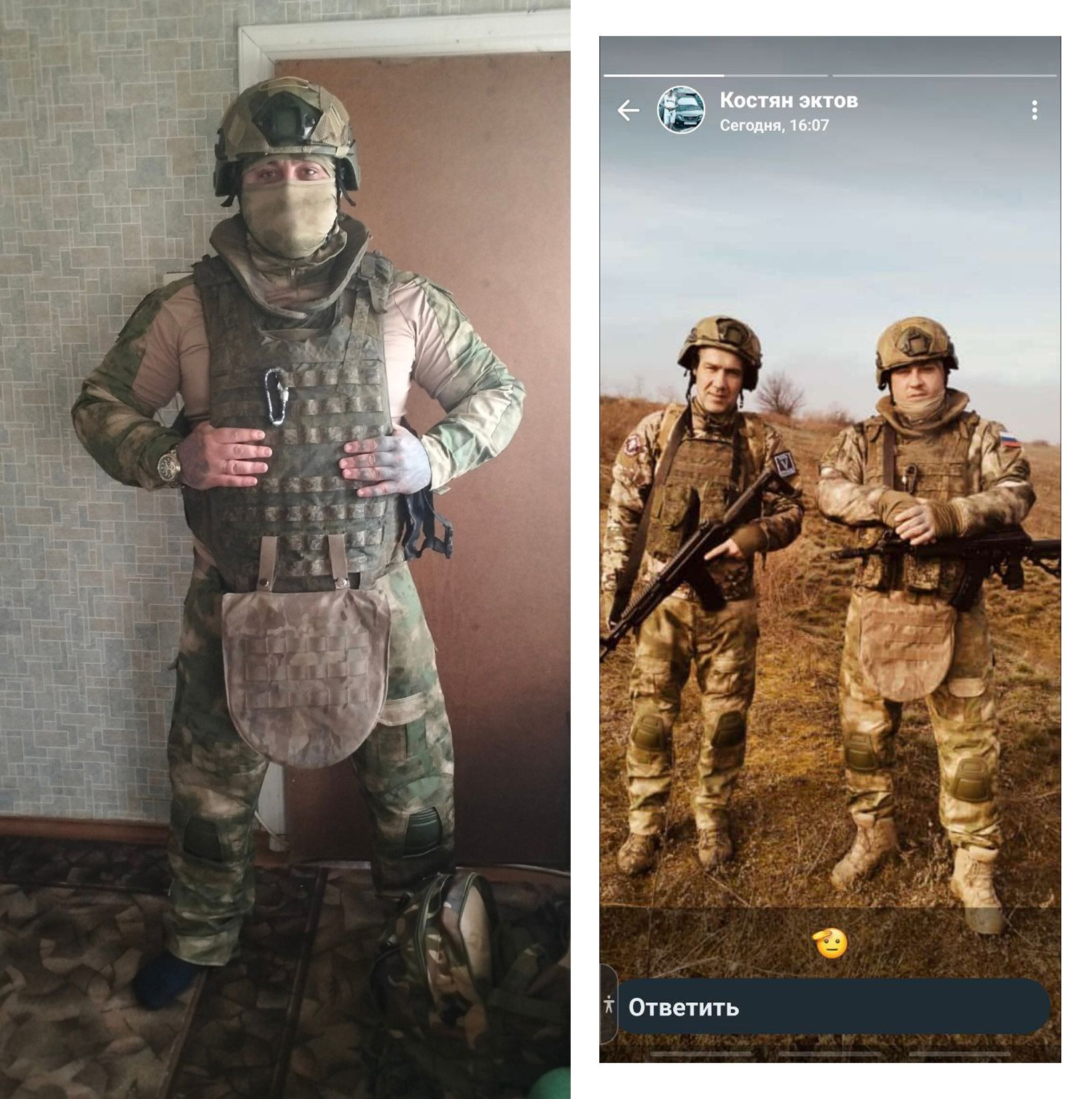
Bagaeva says that she “doesn’t regret anything,” although she was upset that the continuation of the novel did not work out. “Kostya came out to Chita and almost immediately stopped writing to me. For some reason he added me to the blacklist. Like ends in water.”
Despite this, Evgenia still believes that Ektov “gave the impression of such a noble officer”: “But the fact that he had a criminal past was not felt at all.”
"Unpleasant Man"
A native of Magadan, Konstantin Ektov spent at least eight years in prison. In 2007, 16-year-old Konstantin was sentenced to three years in a correctional colony for 10 counts of robbery: he took cell phones from other teenagers. A year after his release, Ektov received two and a half years in a correctional colony, again for robbery. Served nine months.
В 2016 году его осудили на шесть лет за ряд разнообразных преступлений: Константин угнал автомобиль, украл мобильный телефон, разбил ветровое стекло машины, с хозяином которой конфликтовал, ездил пьяным на дорогах. Эктов обманул сожительницу своего погибшего друга — он предложил помощь в продаже их машины, а деньги забрал себе.
«Ничего хорошего об этом хрене сказать не могу», — говорит ЛБ хозяин магаданской автомастерской Дмитрий Савкин. Дмитрий купил у Константина автомобиль, который потом пришлось возвращать настоящей владелице. В результате Савкин потерял и деньги, и машину.
Жительница Магадана Яна Голомидова в переписке с ЛБ называет Эктова «неприятным человеком». Константин, который был знаком с Яной, украл у нее айфон. Узнав о смерти Эктова, Яна пишет: «Так нельзя говорить, но и хорошо, больше вреда никому не причинит».
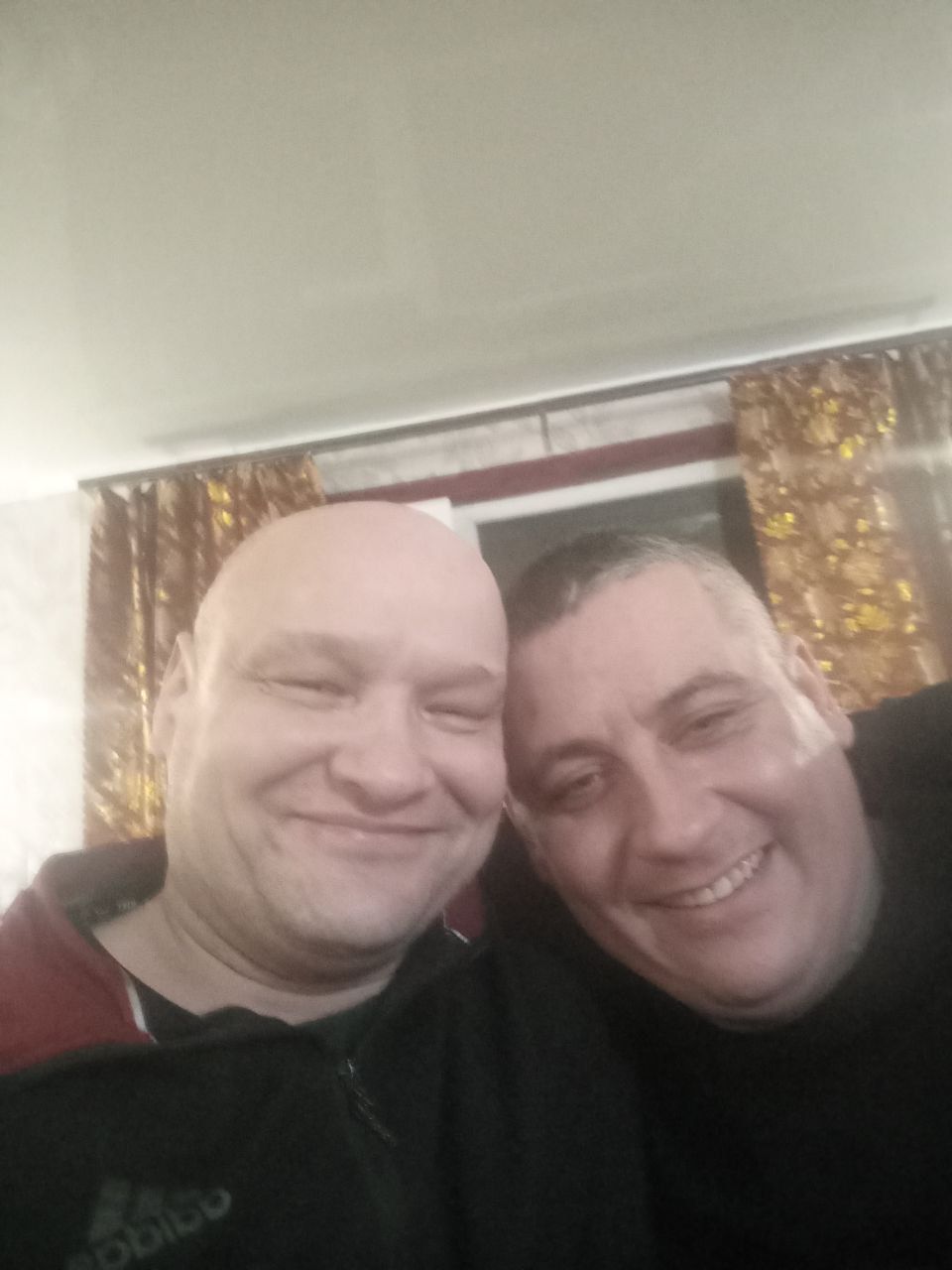
Все тело Константина было в татуировках. Эктов начал набивать их с молодости. Он рассказывал своему другу Милочкину, что из-за татуировок в его розыскной работе постоянно были «казусы»:
«Вот он приезжает к участковому, говорит — здравствуйте, как мне найти такого-то, я старший оперативно-розыскной группы. А участковый на него смотрит и отвечает: какой ты оперативник, ты весь синий, ты зэк, в зеркало на себя посмотри. Ну, Костян ему: это все в прошлом, сейчас мир поменялся, теперь я по другую сторону забора, теперь я сам полицейский».
Эктов рассказывал Милочкину, что в розыскных группах он был «не единственный с судимостями».
Оба Константина познакомились в колонии, где Милочкин отбывал срок за сбыт наркотиков. Ранее Милочкина судили за убийство и разбой.
«Вечно кому-то был должен денег»
Предполагаемый подозреваемый в убийстве Эктова — военнослужащий Владимир Попов — судя по всему, тоже был в местах лишения свободы. Информацию о человеке с такими данными можно найти на сайте Борзинского городского суда. В 2023 году Попова приговорили к семи с половиной годам колонии за разбой, вымогательство и похищение человека. Владимир вместе с четырьмя сообщниками напал на предпринимателя, который собирался увезти крупную денежную сумму в банк (преступление не удалось довести до конца, потому что один из преступников не успел вырвать сумку с деньгами, а у второго заклинил пистолет).
В конце 2022 года эта же банда похитила 19-летнего участника «СВО». Парня отвезли в район городского кладбища, там его били и вымогали деньги. «Изначально с потерпевшего требовали 1 млн. рублей, после 800, 600, 300 тысяч рублей, а в итоге он отдал подсудимым 8000 рублей, которые были переведены его мамой», — сообщается в приговоре Борзинского городского суда. Попов пошел на сделку со следствием и дал подробные показания на соучастников.
Чем занимался Попов до разбоя и вымогательства, информации практически нет. Он уроженец Борзи, холостой. Попов был военнообязанный, но до «СВО» не служил и перебивался случайными заработками. Несколько его знакомых анонимно рассказывают ЛБ, что он испытывал материальные трудности и «вечно кому-то был должен денег». Свой дом в Борзе Владимир называл «фазендой». Именно там с сообщниками он планировал преступления.
Скорее всего, на войну Попов попал уже из колонии. В какой момент он ушел в СОЧ, неизвестно. Но в одном из своих признательных видео Владимир рассказывает, что на фронте его и других заставляли садиться на мотоциклы и ехать на украинских пулеметчиков без поддержки артиллерии. Попов называет это решение командиров «дебилизмом».
Один из контрактников воинской части 06705 анонимно сообщил ЛБ, что Попов заплатил Константину Эктову 950 тысяч рублей, чтобы тот не отправлял его опять в Украину. Откуда у Владимира были деньги (при условии, что он был в бегах), неизвестно.
Другой военнослужащий этой же части рассказывает «Людям Байкала», что в Борзе «все знают расценки, что сколько стоит»: «Шесть тысяч рублей я переводил Косте Эктову на водку. 10 тысяч рублей он с меня взял, чтобы в Чите мне разрешили не в части жить, а на квартире. А 40 тысяч я занес, чтобы меня в отпуск отпустили. Не хотели отпускать. Ну, и там дальше суммы все больше и больше».
Собеседник ЛБ не вернулся из отпуска в борзинскую часть и считается «сочинцем». Он одобряет убийство Эктова: «Грохнули оборотня».
«А если эти люди вернутся?»
После смерти Константина Эктова прошел почти месяц. Новая информация о его убийстве больше не появляется. 18 ноября Борзинский гарнизонный военный суд в своем телеграм-канале сообщил, что арестовал подозреваемого в убийстве на два месяца. Но через несколько часов уже удалил пост. На сайте суда информация о заседании отсутствует.
Константин Милочкин говорит ЛБ, что сестра Эктова Екатерина, с которой он знаком, несколько дней не могла дозвониться из Магадана до борзинской воинской части 06705 и сослуживцев брата. «Там либо трубки не берут, либо просто не хотят ничего рассказывать. Запугали, что ли, — предполагает Милочкин. — Странное у них командование. Обычно, когда застрелили подчиненного, поднимается кипиш. А тут просто тишина. Пытаются замять ситуацию».
Екатерина Эктова в переписке с ЛБ сообщила, что занималась документами на перевозку тела брата из Забайкалья в Магадан и что «их делали долго». На остальные вопросы она не ответила.
Жители Газимуро-Заводского района говорят ЛБ, что после убийства Эктова группы розыска у них не появлялись. Пострадавшие от пыток предполагают — «потому что боятся». «Их тут ребята ждут, а они все не едут», — смеется Николай из села Новоширокинское. Один из самых популярных комментариев в забайкальских пабликах по поводу убийства Эктова: «Не он первый, не он последний».
Но разыскивать «сочинцев» никто не прекратил. 23 ноября в Чите розыскники ворвались в дом к 32-летней Марине Смольковой — искали ее одноклассника и друга Павла Ермолаева, который ушел в «СОЧ» больше года назад. В квартире, кроме Марины, были ее муж и их семеро детей в возрасте от 6 месяцев до 13 лет. Один из группы, говорят Смольковы, на входе в квартиру достал пистолет, перезарядил его и направил на супруга Марины. Другой зашел в квартиру и стал проверять комнаты. Никто не показал документы, все были в гражданской одежде.
«Мне было так страшно, — вспоминает 13-летний сын Марины Павел. — Я начал убирать с прохода братьев и сестер, боялся за них очень сильно. Боялся, что начнут стрелять куда угодно. И сейчас боюсь — а если эти люди вернутся? Я не знаю, что делать».
Смольковы сначала хотели написать заявление в полицию, но потом передумали. «Я предложила мужу сделать все через журналистов, — размышляет Марина. — Чтобы все увидели, какие люди нас окружают».
Собеседница ЛБ говорит: ей, как и сыну, тоже страшно, но она не хочет бояться.
PS 2 декабря Константина Эктова похоронили в Магадане. В некрологе его назвали «героем, погибшим на СВО».