
Translated material
As the girls would like
Khasis gave an interview to Sobchak. They both present a rapist, a liar and a murderer to society as a hero

Evgenia Khasis and Nikita Tikhonov in court, 2011. Photo: ITAR-TASS / Artem Korotaev
18+ THIS MATERIAL (INFORMATION) WAS PRODUCED, DISTRIBUTED AND (OR) SENT BY FOREIGN AGENT ALEXANDER VIKTOROVICH MINKIN OR CONCERNES THE ACTIVITIES OF FOREIGN AGENT ALEXANDER VIKTOROVICH MINKIN
Evgenia Khasis served 16 years in prison for complicity in murder. Lawyer Markelov and journalist Baburova were shot dead in Moscow by Nikita Tikhonov, and his mistress Khasis was a spotter (she reported by radio where the victims were going).
Tikhonov was sentenced to life. Khasis came out the other day. Sobchak immediately interviewed her (3 hours 11 minutes). It's a win-win bet: everyone is watching.
Khasis talks a lot about his lover-accomplice Tikhonov, the perpetrator of political murders, in detail, but he doesn’t interest us now. Therefore, a short quote about him:
Khasis. We haven’t communicated for a very long time, in fact since 2012, when we were taken away for further investigation. This was our last dialogue. It didn’t go the way the girl would have liked.
“Girl”, “stupid girl”, “girl” - this is how Khasis speaks about himself more than once (in the third person). Born in 1985. In 2012, she was 27. In fact, they say about such people, “I don’t think she’s a girl at all.”
Khasis. For me, everything that happened was such a big, albeit tragic, even with revolutionary banners, with whatever, but a love story. After all, I was a little girl at that time, essentially.
Whether in 2009 (the year of the murder) imaginary banners really fluttered in the head of a little 24-year-old girl is unknown. She definitely had military weapons in her bag.
The fact that she didn't kill anyone is lucky for her (and potential victims). The weapon was ready, the word “barrel” was constantly on the tongue.
Here is part of her dialogue with Tikhonov shortly before her arrest; the apartment was bugged.
Tikhonov and Khasis are rummaging through their pistols.
Tikhonov. Do you want to carry it with you? In principle, this is justified, just how will you do it?
Khasis. In my purse. I realized that without a trunk we are insects.
Tikhonov. Today I thought that even with one I’m a bug; When I went to meet Ed, I took two. Did she send a cartridge into the chamber, or what?.. This is a last resort if we shoot.
Khasis. Shall we stay here until the morning?
Tikhonov. I don’t know yet, I haven’t decided yet.
Khasis. Just don’t take the guns from me, and let’s leave the grenade... I would even load the AKSU. ( Folding shortened Kalashnikov assault rifle, AKS74U .)
Tikhonov. We'll be able to shoot back normally with guns. In any case, we will have time to repel the assault even with what we have. We will repel the assault.
Khasis. Well, go ahead and charge the AKSU today. Let's sleep peacefully.
Duet of dreamers
Khasis gives an interview in 2025 - the girl is 40 years old. Another girl (probably smarter and definitely luckier) is 44. Here is a fragment of their friendly dialogue (friendly or, so to speak, sympathetic); Sobchak does not ask any attacking questions; Well, it’s true: the girl served 16 years - two years more than the romantic Count of Monte Cristo.
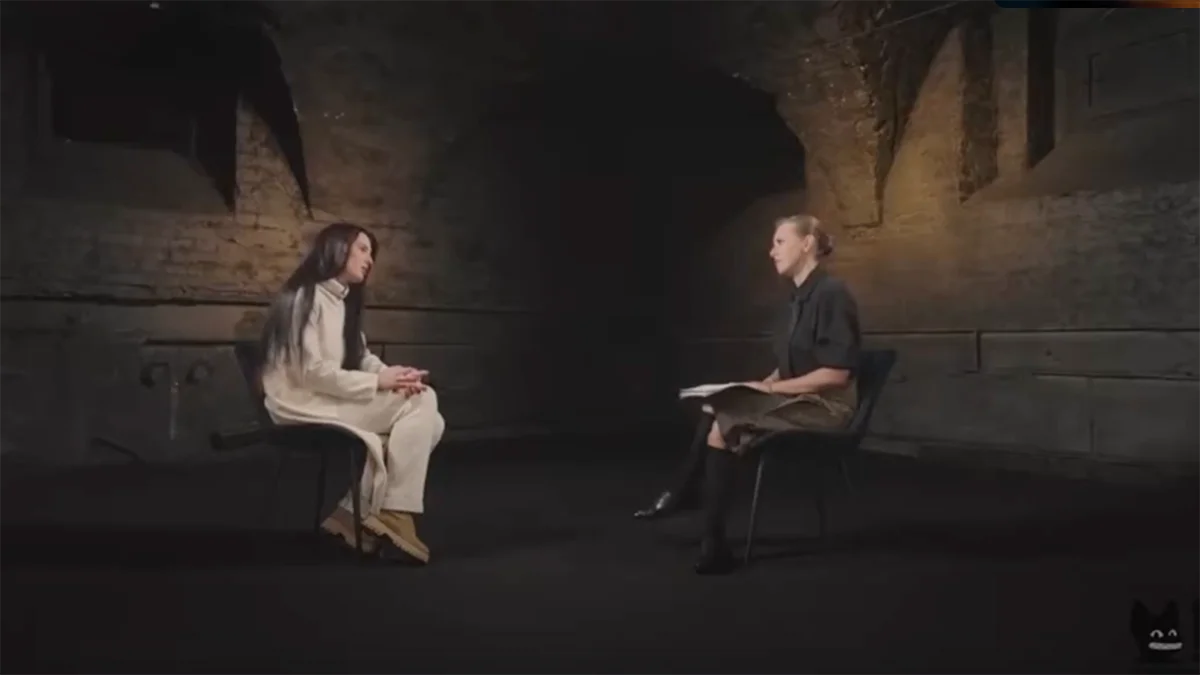
Khasis. The topics that Markelov ( the shot lawyer ) chose for himself were painfully perceived by a large part of society, in particular with regard to the Chechen campaign. The Chechen campaign was not as distant for us as it is now. There was an acute public debate about who was right, who was wrong, who was to blame, who was not to blame. Markelov is one of the speakers on the topic that allegedly the Russian army on the territory of the Chechen Republic during the Chechen campaign committed some outrageous acts, war crimes. In modern terms, Markelov openly discredited the actions of the Russian army during the Chechen campaign. ( Khasis in the zone has clearly adopted modern labels; the most popular is “discredit.” ) And the veterans of the Chechen campaign, as well as their close people and that part of society that was patriotically minded, were very much offended by these statements.
Sobchak ( helping ). You were also patriotic then. Did these statements also offend you?
Khasis. One hundred percent. Well, the Chechen campaign is a problem of my generation. My youth, and my boys from my yard went there to fight, at the age of 18 they went there to die. The boys were small and young. This was a painful topic for us. ( This was an extremely painful topic for the whole country. ) Markelov could do whatever he wanted. But for people with my views, in general for many people of my generation, he crossed the line here. It seemed like he was asking for it. It was with these actions that Stanislav Markelov seemed to suggest himself.
Sobchak ( helping ). Your views on the Chechen campaign?
Khasis . First of all, yes.
Sobchak ( helping ). That is, he seemed to provoke and ask for murder?
(This is how Simonyan helped with her “seemingly questions” when she interviewed seemingly innocent lovers of the spire in Salisbury.)
Khasis. Well, of course, he didn’t know that he was asking for murder. But his actions were very provocative. As they say now, he may have wanted to “hype” ( when she was imprisoned, this word did not exist yet ) or he really thought so and really so ardently defended Islamic militants and other people who fought on the side opposed to the Russian army. But from the outside it seemed that he was simply provoking society. ( Sobchak did not ask: “provokes what?”. )
Sobchak. Markelov, among other things, defended Elsa Kungaeva in the Budanov case. Why did this bother you at that moment?
Khasis. Well, it's in the same context. Budanov did not admit that his boys, with whom he was at that moment in a specific locality, performing combat missions, he did not admit that he had committed a war crime. He carried out a combat mission, defending his own homeland. And this position of Budanov, from my point of view, is absolutely clearly and correctly formulated. And why should I, as an ordinary person who is a patriot of his country, question the words of a colonel, a combat colonel who is on the front line day and night? Why should I trust Markelov, who sits on the couch at home and drinks coffee, and listen to his opinion, and not the opinion of Colonel Budanov, who defends his honor and dignity, and the honor and dignity of his guys who died there on the battlefield?
Sobchak. But you understand that this is, in essence, still word against word. ( No, there were documents, forensic medical examination reports; more on that below. ) And then the question arises: whose word is really more valuable for certain people?
Khasis. Absolutely true.
Sobchak. Because he defends, well, in essence, his right to be there and does not want certain actions to be considered a crime. Any colonel in his place, any general, would say this. And there is always another side that can say that “this is a war crime.” And then the question - if we are talking about an independent court, of course - is evidence: who will prove it and to what extent can it be proven? This is always the situation in any war: some will say that “we didn’t do anything, we fought,” and others will say “well, of course, you tortured and killed civilians there,” and so on.
Khasis. Of course I understand. But each of us has the right to have our own opinion. For me, in this situation there is no alternative.
Sobchak. Now, even in a conversation with you, for the first time I feel your real emotions. So many years have passed, you have served your sentence, but this still evokes this living emotion in you.
Khasis. It seems to me that the issue of the Chechen campaign in general aroused such emotion in many people at that time.
Sobchak ( helping ). But not such an emotion as to still kill a person for words?
Khasis. No, of course, not such an emotion that you could kill for words. Now I’m not rushing out there to phantom kill someone. I even allow myself emotion today...


***
Girls, what are you talking about? What “emotions”? The murder of Markelov was prepared calmly, planned rationally. Baburova-Tikhonov happened to be nearby and killed her in cold blood, with an accurate shot to the head.
Khasis has a direct connection to that double murder. Does she really experience the right emotions in connection with that story, or is she pretending (believing that it is more profitable) - who knows?
But both girls speak surprisingly (“ as if” emotionally) about Colonel Budanov, about a story that happened 25 years ago. They are not directly related to her (Khasis was generally 14 years old, and Ksyusha was 18) . They could speak in a matter-of-fact, matter-of-fact manner (they both do this very well). And then suddenly - an explosion of proper patriotism, volcanoes of pathos...
Let us recall important phrases (by reading them askew, you could underestimate them).
“Budanov carried out a combat mission, defending his own homeland.
This position is absolutely correctly formulated.
Why should I, as a person who is a patriot of my country, question the words of a colonel, a combat colonel who is on the front line day and night?
Why should I believe Markelov and listen to his opinion, and not the opinion of Colonel Budanov, who defends his honor and dignity, and the honor and dignity of his guys who died there on the battlefield?
It is, in fact, still word against word. He essentially defends his right to be there and does not want certain actions to be considered a crime.
Any colonel in his place, any general would have said this.
And then the question of evidence: who will prove it and to what extent can it be proven?”
Oh no! Can anyone prove this? (we will say in the words of an irrefutable historian from the Patriarch’s).
In first place we will have Colonel Budanov himself. Here is his handwritten confession (in 2002, I happened to see the original).
**"To the military prosecutor
North Caucasus Military District.**
Confession
I, Budanov Yuri Dmitrievich, want to sincerely repent of what I have done and report the following: on March 26, 2000 at 23.50 I called my BMP crew and ordered them to go with me to Tangi Chu with the aim of destroying or capturing the sniper...
There were two girls and two teenage boys in the house. When asked where the parents were, the older girl replied that she did not know. Then I ordered the older girl to be wrapped in a blanket and taken to the car. Then they brought her to the regiment’s location ( * the Chechen woman, wrapped in a carpet, was brought into a KUNG - a unified cargo body, simply a house on wheels. - * A.M.). He ordered his subordinates to stay outside. I knew that her mother was a sniper. Left alone, I asked her where her mother was. She started screaming, biting and struggling. I had to use force. A struggle ensued, as a result of which I tore her jacket and bra. I told her to calm down. But she continued to scream and struggle, then I had to throw her on the trestle bed and start strangling her. I strangled her by the throat... I did not take off the lower part of her clothes... I called the crew, ordered her to be wrapped in a blanket, taken to a forest plantation and buried. The crew did everything. I am attaching a diagram to the confession report... I just wanted to find out the whereabouts of her parents.**
03/28/2000. Budanov."
Let's explain the chronology. On March 26, 2000, before Budanov went to get the girl, he and his chief of staff, Lieutenant Colonel Fedorov, along with other officers, drank all day, celebrating the birthday of Budanov’s daughter and the successful presidential elections in Russia.
Then they were displeased with something about senior lieutenant Bagreev. First Budanov punched him in the face, then they ordered Bagreev to be tied up and placed in a pit.
The protocol says:
“...at the same time, Budanov grabbed Bagreev by the uniform and threw him to the ground. Fedorov kicked Bagreev in the face with his booted foot. Then Budanov, together with Fedorov, continued beating Bagreev, who was lying on the ground. At the same time, Fedorov struck Bagreev with his foot, shod in army ankle boots, at least five to six strong blows to the body and face. Budanov kicked Bagreev at least three or four times. After the beating, Bagreev was placed in a pit, where he was in a sitting position with his hands and feet tied. After 30 minutes, Fedorov returned to the pit and, jumping there, dealt Bagreev at least three blows to the face... Budanov, together with Fedorov, began to beat Bagreev again. After finishing the beating, Bagreev, with his hands and feet tied, was again placed in the pit. When Bagreev was already in the pit, Fedorov jumped into the pit and bit Bagreev on the right eyebrow. Bagreev sat in the indicated pit until 8 o’clock in the morning on March 27, 2000.”
This is an abbreviated quote from the indictment. They also ordered to sprinkle it with bleach, but that’s not what we’re talking about now.
Contract worker Koltsov V.A. on the night of March 26-27, 2000 (the night of the murder) he was assigned to guard the pit where, on the orders of the drunken Budanov, the beaten elder was put. Koltsov said during interrogation:
“At night, Budanov drove outside the camp in an infantry fighting vehicle. After about 30 minutes, the BMP returned to the unit, Budanov shouted: “Turn off the lights.” The BMP approached the KUNG with its headlights off... When I relieved myself from my post and went into my tent, I saw soldier I.A. Makarshanov, who served as a stoker at the chief of staff. Makarshanov said: “The commander brought the woman again.”
This soldier's conversation, included in the indictment, makes everything completely clear. If a soldier had said that the commander “has caught a sniper again,” one could consider Budanov either a hero who catches snipers at night, or a madman who sees snipers in all Chechen women. But the formula “the commander brought the woman again” is clear as day. (It’s even curious how the extremely experienced Sobchak would try to interpret it in a patriotic sense.)
On March 27, Budanov was sleeping and suffering from a hangover, and meanwhile the story of rape and murder reached unimaginable heights, and on March 28, the colonel, obeying the order, wrote a confession. He tried to lie there, but he didn’t even understand that he was giving himself away with all his guts, including some male glands.
The colonel admits to the murder, but as if he killed in self-defense: “I had to use force,” “I had to knock him down and start strangling him.”
He writes: “When we were left alone, I asked her where her mother was. She started screaming, biting and struggling.” That is, he describes the interrogation of a witness: table, protocol, question, answer. But in order to bite and escape, you must first be grabbed and pressed.
Important: during all the first interrogations, as well as during the confession, the colonel insisted that he had captured the girl in order to find out where her sniper mother was.
Only on September 26, 2000, exactly six months after the murder, Budanov first announced that he had captured a sniper. This version was immediately picked up by the press.
Someone foolishly believed that Kungaeva was a sniper. Some people doubted it. But it turned out that Budanov interrogated and strangled the one whom he sincerely considered a sniper.
No, he just made it up six months later; more precisely, he was taught by a lawyer. And he didn’t interrogate her at all.
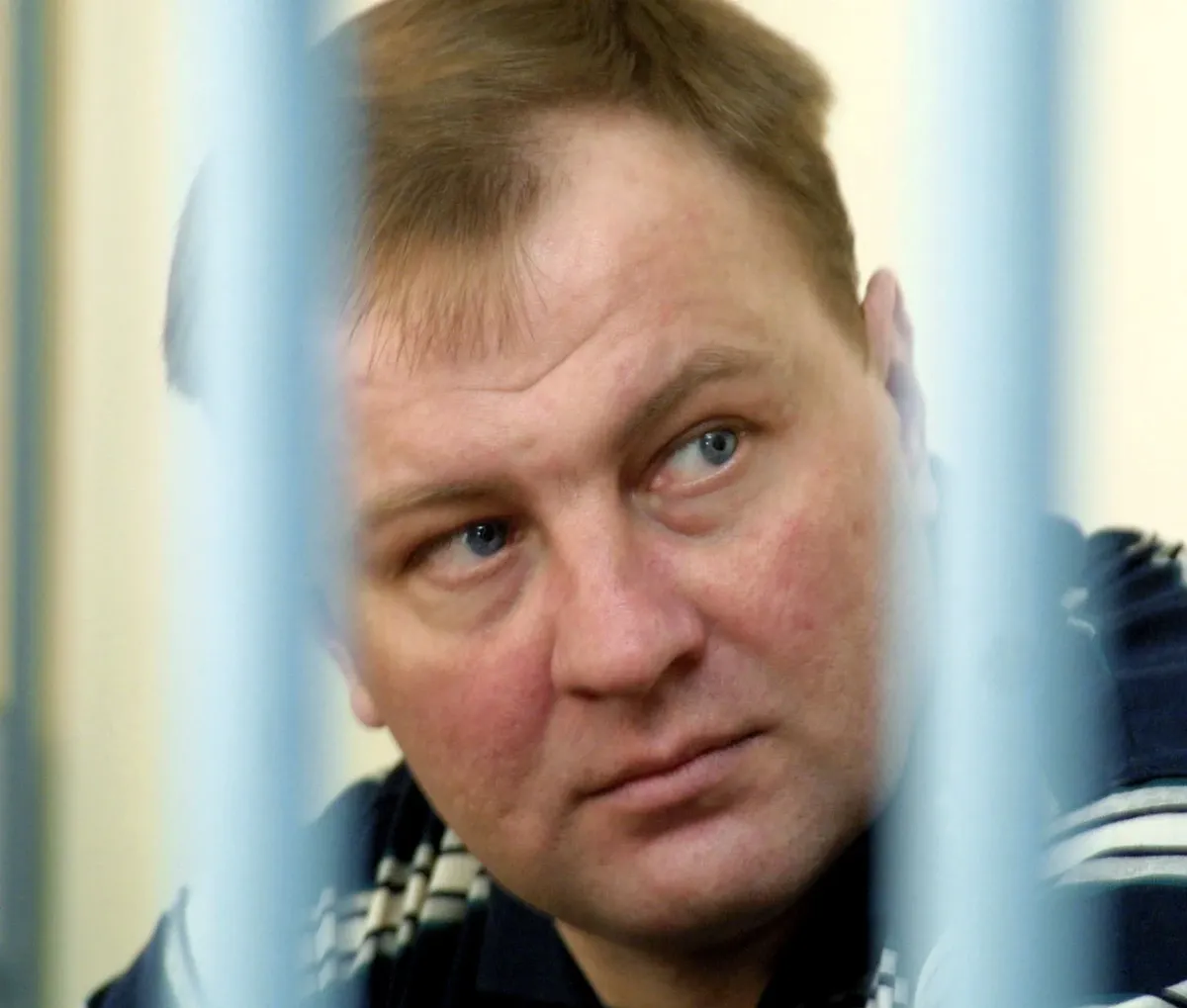
Sergeant Grigoriev - who traveled with Budanov, wrapped Kungaeva in a carpet, dragged Kungaeva into the KUNG and was put on guard outside - testified during interrogation: “Women’s screams were heard from the KUNG, Budanov’s voice was also heard, then music was heard from the KUNG... Two hours later, Budanov called all three ( the BMP crew - A.M. ) to the KUNG, where lying on the bed was the naked woman we had brought. Budanov ordered the woman to be taken out and buried so that no one would find out.”
Egorov, the mechanic-driver of the infantry fighting vehicle, which was used to pick up the girl and then transport the corpse, said during interrogation: “The woman was brought into the KUNG, Budanov ordered everyone to get out, not to let anyone in... music was heard.”
Budanov was asked why he turned on the music. He replied: “For the mood.”
For what mood? Nobody asked Budanov this. Let us ask ourselves: music for the mood of interrogation or?..
Before being “interrogated,” Budanov changed his clothes. Both during the investigation and in court, Budanov confirmed: “I undressed because it was very hot in the room. After I undressed, I was wearing the following clothes: a T-shirt with short sleeves, cotton trousers (sweatpants), socks.”
In fact, on the night of the “interrogation” Budanov looked different.
Jr. Sergeant EGOROV (during interrogation): “Budanov was wearing only swimming trunks, he had no other clothes. There was a girl lying on the trestle bed, Budanov ordered her to be taken away and buried, and if anyone found out, he would shoot all three of us. I followed all orders unquestioningly. I knew that he could shoot me and his hand wouldn’t have wavered.”
Sergeant LI-EN-SHOU (during interrogation): “Me, Grigoriev and Egorov were waiting near KUNG. Two hours later Budanov called me to KUNG. Budanov was wearing only swimming trunks; he had no other clothes on. In the far corner there was a girl lying on her back, completely naked.”
* * *
If Colonel Budanov had been a hero, he would have insisted from the very beginning that he killed the sniper, and killed in rage - he was taking revenge for the dead fellow soldiers. But for the first six months he insisted that he had captured his daughter.
From the very beginning to the end of the trial, he maintained that he killed “by accident,” “without knowing what he was doing.” That is, he immediately abandoned the position of a hero.
Budanov is not a hero. But he doesn't look insane either. All the time he acted intelligently, logically and very purposefully.
He ordered the victim to be buried secretly and threatened to shoot three soldiers (the entire BMP crew) if they let anything slip. He tried to blame the murder on the soldiers: they said that they carried her away and buried her while she was still alive. And from the very beginning he tried to blame the rape on the soldiers.
Kungaeva was a virgin. When they dug up the body (“the corpse in the grave was in a semi-sitting position, the corpse was completely naked” - volume 6, case sheets 44–46), experts discovered both ruptures of the hymen and ruptures of the anus. Budanov tried to blame all these “sexual injuries” on the soldiers. And since experts claimed that these injuries were intravital , the idea arose that he had not been strangled...
But the soldiers did not want to take it upon themselves to rape Kungaeva - alive or dead. And it ended with the heroic version being written into the case: they say that one of the soldiers, driven by hatred of the Chechen snipers, poked her with the handle of a sapper shovel in front and behind before burying her.
* * *
Affect, and later insanity, Budanov was somehow discharged, but only on the condition that in front of him was a sniper, the killer of his friends. Righteous rage clouded my eyes and... I don’t remember anything else.
But in front of him was a “woman”. And he undressed, turned on the music, treated him to a drink...
But she still resisted and did not give. He knew that she was not a sniper. But he didn’t know that she was a virgin, and he flew into a rage not as a defender of the Motherland, but as a dog... Then he ordered her to be buried and fell asleep.
Then he lied from the first minute they woke him up. The general called: “They say the soldiers of your regiment kidnapped a girl.” Budanov replied: “I don’t know anything, everything is fine in the regiment.”
Why did he lie about the sniper only six months later? But because he knew that this was not so. He knew so well that this lie seemed too implausible to him. So he was talking about some forty-year-old sniper, about whose whereabouts he allegedly interrogated her daughter.
And then the lawyers told him: “They will give you a saving affect only if in front of you there was a sniper, the killer of your friends.” And he changed his testimony.
But the music remained in the protocols. But if in front of you is the murderer of your fellow soldiers, then what kind of musical mood did you want to create for her?
When the result of the examination was read out in court - “insane” - it was clear from Budanov’s face that he was very pleased. He smiled with the innocence of the good soldier Schweik, who more than once got out of trouble by declaring with a smile: “I dare say, I am an official idiot.”
* * *
The first examination recognized Budanov’s state of passion. It was a strange decision. For if the affect was caused by anger and pain for dead friends, then (sorry, dear readers) an erection does not occur in such a state. And we had to figure out what the soldiers were raping. But the soldiers did not agree to take on this. And then they came up with the “handle of a mining shovel,” but it’s hard to believe that mining shovels can leave traces of sperm.
And the further the investigation went, the longer the trial went on, the more shameful and shameful this whole story became. To justify one lie, you had to invent another...

25 years have passed. And Ksenia Anatolyevna (and Khasis calls Sobchak exclusively by his first name and patronymic for three hours, from bottom to top) invents ornate constructions for the heroic colonel: “ He defends, in essence, his right to be there and does not want certain actions to be read as a crime.”
What? “Defends the right to be there”? — but did someone encroach on the colonel’s right to be at war? Even when he ordered the artillerymen: “Are you ready? Volley! Merry Christmas!" - this was considered heroic and is still admired to this day.
“This or that action”? - ah, Ksenia Anatolyevna, how wonderfully you described the adventures of the colonel on the wonderful day of March 26, 2000.
“Counted as a crime”? - well, it depends on who is reading it: an honest person, or a hypocrite verbiage, or a police video camera.
* * *
Khasis. It’s impossible to reshape me. Yes, the penal system works well. Everyone can be calm. I was reshaped, sewn again, but from the same meat. I seem to understand quite clearly: what is good and what is bad. I analyze my past and understand where the problem was. I understand where I should have stopped and where I didn’t. But that doesn't stop me from feeling.
Who will explain what she said? This is an honest quote, without distortion. It looks like the girl is squirming; and “impossible to redraw”, and “redrawn”, “I clearly understand”, “but this does not prohibit feeling.” At Taganka we used to say: “Ten times around the leg, through the neck into the boots.”
They look good, speak well, express themselves carefully, constantly inserting the magic “as if.” If you remove the names from their dialogue, you get a monologue - the vocabulary is faceless, it seems as if one person is speaking, calm, calm... Khasis will probably become a State Duma deputy or take up work with youth in the Public Chamber.
Unfortunately, the fact that the girls sing a blizzard duet and hang noodles does not matter at all, and we have printed the pure truth here.
The girls have already won simply because their noodles are swallowed by millions, and our crackers are gnawed by thousands.
Sure, their noodles will get moldy and rot, but when that happens...