
Translated material
The non-banality of evil
First interview with Evgenia Khasis and Ksenia Sobchak
AUDIO VERSION
This material has an audio version on Youtube. Read by Irina Petrovskaya.
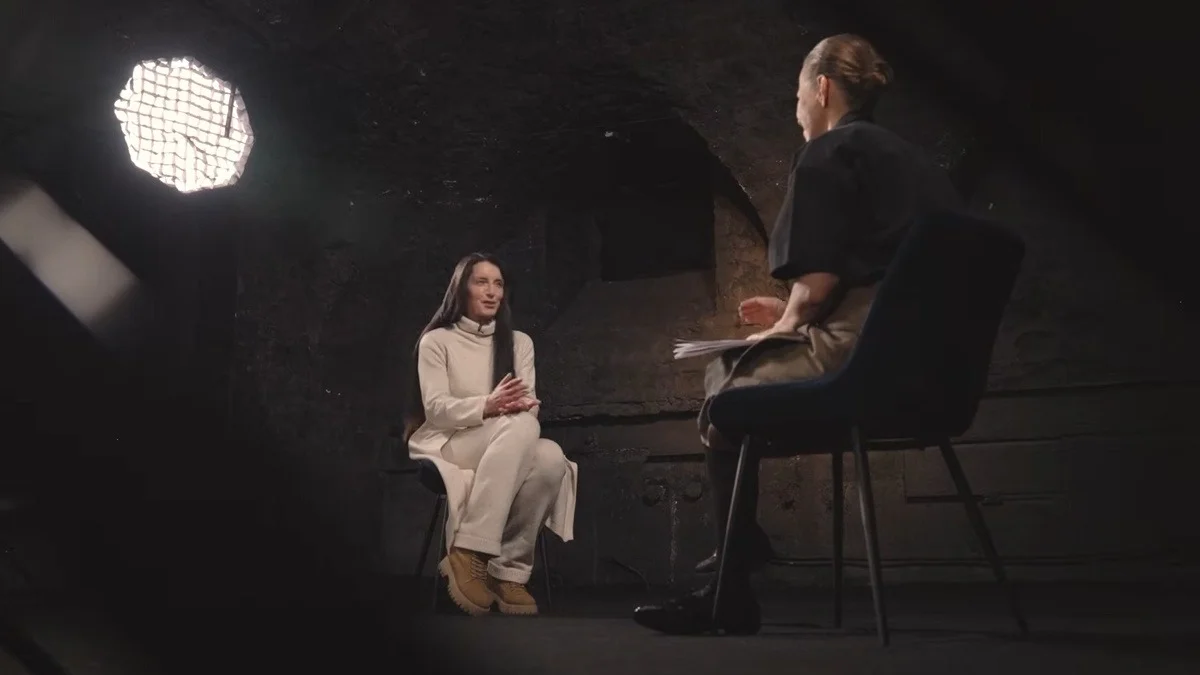
Ksenia Sobchak was again ahead of everyone and took the first interview in freedom with Evgenia Khasis, an accomplice in the murder in January 2009 of lawyer Stanislav Markelov and Novaya Gazeta journalist Anastasia Baburova. The film crew of the channel “Caution: Sobchak,” by obvious preliminary agreement, was waiting for their heroine at the gates of the Mordovian colony, immediately grabbed Evgenia by the white arms (driving away other colleagues in the workshop), put her in the car and drove towards the longed-for freedom and - four days later - Ksenia Sobchak herself. Khasis, who has completed her gigantic sentence, is literally glowing with happiness. “I understand everything,” he says, “I am a bad, but living person, and nothing human is alien to me. I’ve been waiting for this day for 16 years, and I’m sorry, but I allowed myself to be happy.”
“Exclusive”, “a great journalistic success,” as many viewers who watched Sobchak’s three-hour conversation with Khasis wrote.
However, the journalist herself is still embarrassed by something (if we can even talk about embarrassment in relation to Sobchak), and she considered it necessary to “clearly define her position from the very beginning. On this channel we have explored and will continue to explore, among other things, the psychology of evil. And I don’t think journalists shouldn’t do this...
All over the world there is a practice of talking even with terrorists and maniacs. And yes, I still consider the interview with the Skopin maniac one of my best works on this channel, because such episodes reveal the essence of the banality of evil.”
Let me remind you for those who have forgotten. Four years ago, after 17 years of imprisonment, a certain Viktor Mokhov, the so-called Skopinsky maniac, was released, who for several years kept the girls he kidnapped in his basement in inhumane conditions, mocking them, beating them and regularly raping them. Ksenia Sobchak became the first journalist who managed to get into the maniac’s house and interview him. This mossy old stump, slurping soup with a disgusting slurp and washing it down with beer, recalls, not without pleasure, his past “exploits” and is even ready to again offer a “relationship” to one of his victims, whom he supposedly truly loved. “Mokhov was ruined by his love of love,” says the investigator who once led his case. Well, that's what love is like. Not without oddities, of course, but even the last creature on earth wants warmth and love, even if under duress.
This Mokhov did not hide the fact that he was flattered by the attention of the capital’s journalists (he admitted that now he was in great demand and the film crew of one of the channels even took him to Moscow for filming, from where he returned with a whole bag of money) and even more so by the attention of a bird of such high flight as Ksenia Sobchak.
She didn’t succeed in any “exploration of the banality of evil” - she only had an obvious desire to release another exclusive, and that’s exactly what happened. Viewers like it hot.
That issue received more than 10 million views, which, according to the authors, indicates a great journalistic success.
The episode with Evgenia Khasis has far fewer views so far—under a million. But the comments are full of words of admiration: she’s beautiful, smart, what a speech, what a voice, what manners, what intelligence! And you can’t say that the woman spent 16 years in the harsh conditions of a Mordovian colony! Other women who are free at the age of 40, overwhelmed by work and everyday life, look worse than this recent prisoner. Khasis herself, by the way, more than once during the conversation pays tribute to the “criminal correctional system”, which “works well. They re-sewed me, made me anew, but from the same meat.” In general, it may well be a convincing advertisement for the FSIN - like the FSIN is not as scary as it is painted out to be.
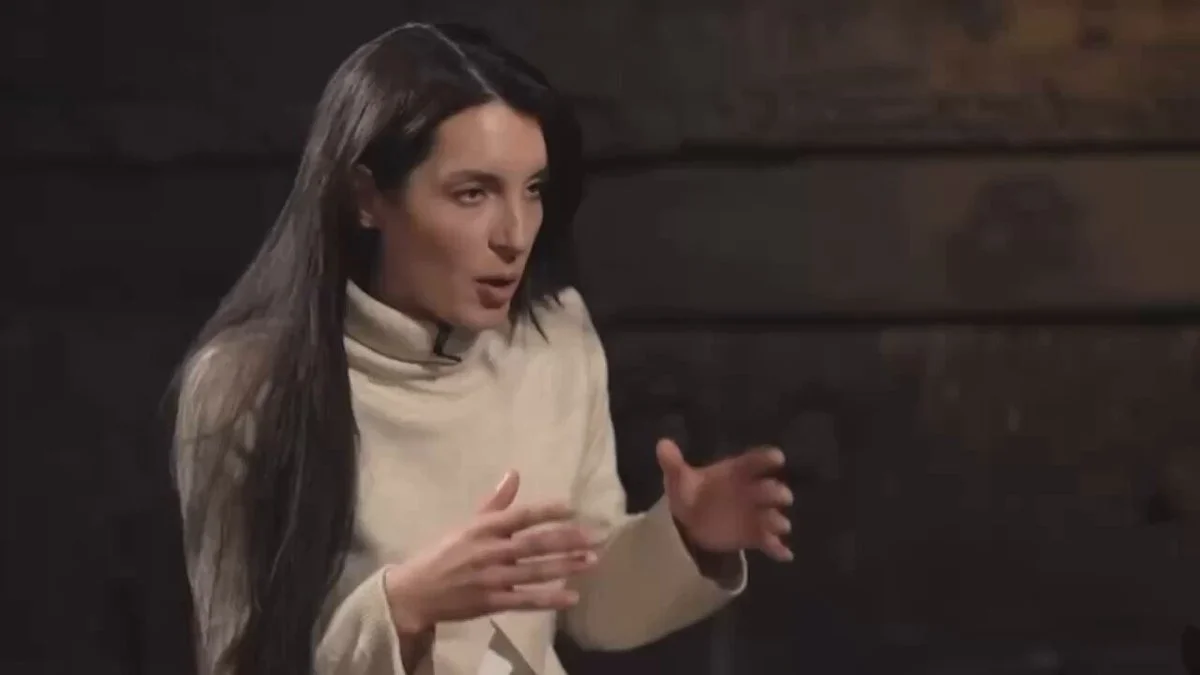
The choice of location for this interview is curious - hardly accidental. Two ladies are communicating in some dark room, reminiscent of a dungeon or a “black, black room” from children's horror stories. The interviewer herself is dressed all in black. Her heroine, on the contrary, is in all white. Looks winning. Sobchak clearly captures intonations. He understands where to lightly sprinkle ashes on his head, where to portray an unfortunate victim of great love, and where to demonstrate the unshakability of his views, which surprisingly coincide with today's trend. “My views are an extreme form of patriotism. I am where my country is, this is not discussed.” She supports the SVO - she was even ready to sign a contract, but at the last moment something didn’t work out. He stands strongly for the development of conservative values - “faith, religion, education of the younger generation in the spirit of primordially Russian culture.”
She feels sorry for the “girl” Nastya Baburova, who was killed by her “beloved” Tikhonov - she suffered for nothing. But Markelov, being “a prominent representative of the liberal movement... crossed the line... and, as it were, asked for it.”
That’s what he says: “I asked for it myself.” Why? Yes, because, “in modern language, Markelov openly discredited the actions of the Russian army during the Chechen campaign. The part of society that was patriotic was deeply offended by these statements.” And then her eyes light up with a steely gleam of enduring hatred, and she ceases to seem like a poor stumbled sheep, following the lead of her ruthless shepherds.
“You don’t feel like a criminal, do you?” - asks Sobchak. “Now I don’t feel it anymore... I clearly understand the motives for my crime. I analyzed my actions ten thousand times, I had a lot of time. This doesn't mean I don't repent. I honestly understand why I was serving my sentence.”
He states with pride: “And yet the flowering of Russian patriotism occurred.” It’s not that she hates liberals, she admits:
“You can be a liberal and at the same time be with your Motherland in difficult moments for it.” Liberals, in principle, are useful when they “defend the rights of dogs or some other national minorities.”
She also has complaints against Novaya Gazeta, which did not allow her to speak out, while she herself spoke about her and Tikhonov “not very correctly,” and sometimes even resorting to outright lies and insults, which, as she believes, are incompatible with the principles of journalistic activity. Khasis does not give any examples of this kind, but wisely lowers her tone when Sobchak calls her claims against Novaya Gazeta, which lost its journalist, monstrous: “There are no questions, I understand them purely as a human being.”
In the finale, Khasis is full of compliments to the interviewer, who asked why she decided to give the first interview to her:
“You are one of the smartest women I know in Russia. And your level of professionalism remains at the most optimal level of integrity.”
There is some deceit in both the question and the answer. As well as in the immediate plans of Evgenia Khasis, she gets a job in the sewing industry, the secrets of which she perfectly mastered during her 16 years of imprisonment. Such “passionaries” with a burning gaze and convictions carried through years and adversity are worth their weight in gold today. This is not your callous Skopinsky grandfather. So the majority of viewers who left comments under the interview with Khasis did not see any evil in her. And if you felt something unkind, it was by no means trivial
AUDIO VERSION
This material has an audio version on Youtube. Read by Irina Petrovskaya.
Petrovskaya recommends
"Evening with Genis*"
Premiere on the channel “NO.Media from Russia ”. A conversation with the writer about the phenomenon of Vladimir Sorokin, theater in exile and real America is led by historian Alexey Kuznetsov.
"Pokrovsk"
Editorial journalists are looking into why Pokrovsk, for which there have been fierce battles in recent days, has become such an important milestone. Meanwhile, in 2022, 60 thousand people lived here. By 2025, the city’s population had dropped to one thousand to one and a half thousand.
Special episode of the “Concepts” program on “Living Nail”
Sociologist Viktor Vakhshtain* and Alexey Venediktov * reflect on freedom of opinion on social networks and beyond, on the responsibility of propagandists and modern media in general, as well as on words that can cause murder using the example of Rwanda and “Radio of a Thousand Hills.”
“There was a bridge - there is no bridge.” Report from the channel “No.Media from Russia”
Novaya Gazeta correspondent Alexey Dushutin went to the village of Avdotino, Stupino district, where the suspension bridge connecting its residents with the nearest village was dismantled. Residents of Avdotino say that this bridge was the most convenient and safe, and its demolition made their lives very difficult.
"The darkest hour is before the dawn"
A big conversation between journalist Stanislav Kuchera* and Boris Grebenshchikov* - about our time, about other people's pain, about love and hate.
Actress Alisa Khazanova presented her new play “Focus” based on the novel by Maria Stepanova at the Jaffa Fest theater festival in Tel Aviv
The hosts of the Sheinkin40 channel asked Khazanova about life in London, the difficulties of the acting profession, her reaction to stress, and even (a little) about her famous father Gennady Khazanov, as well as her attitude towards his opinion of her.