
Translated material
The most famous "eshnik"
Alexey Okopny died. He was accused of beatings and involvement in murder - and was called “the executioner of the bloody regime”
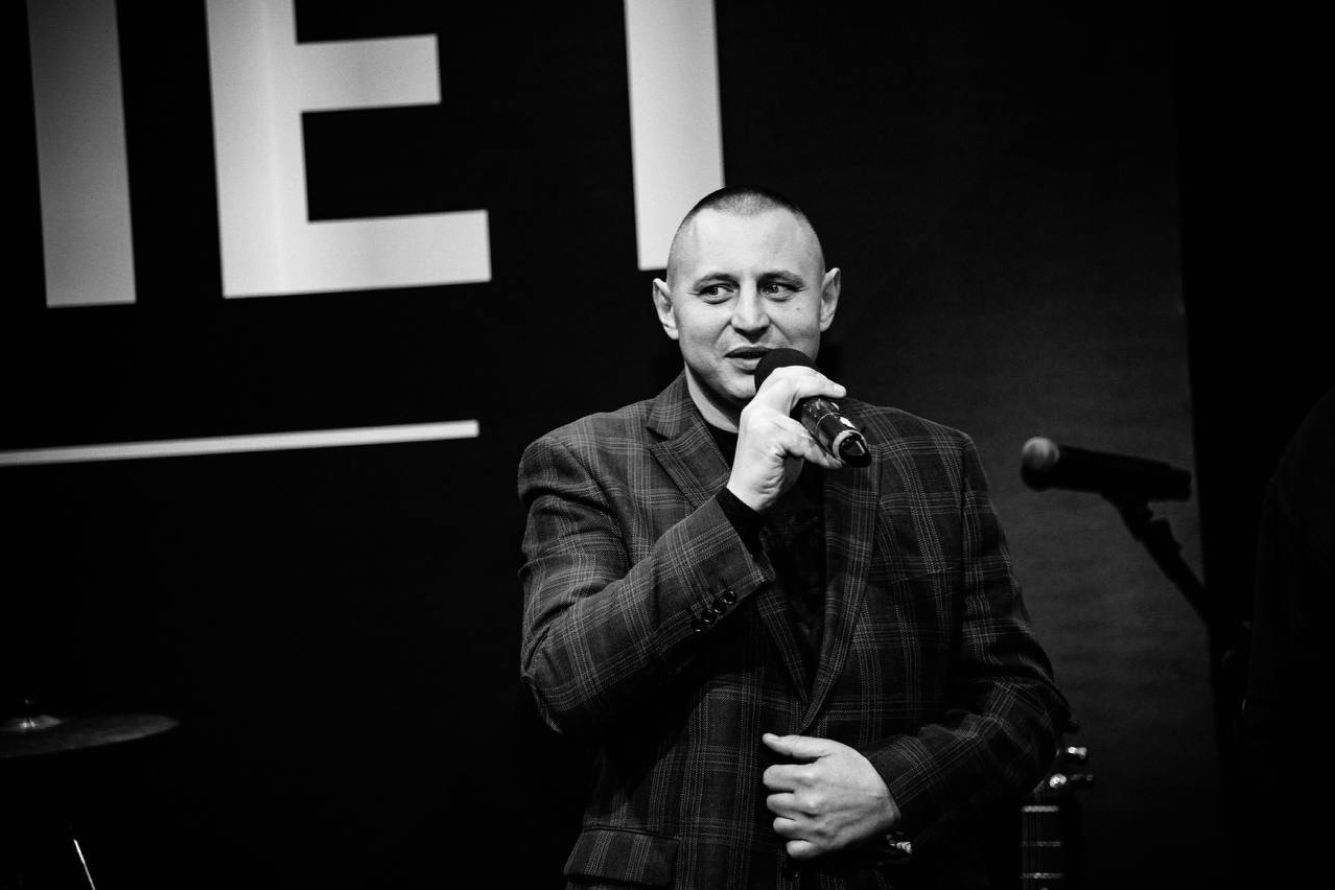
Alexey Okopny comes from Kabardino-Balkaria. He began his career in Nalchik, where he served in the Department for Combating Organized Crime (UBOP) of the Ministry of Internal Affairs under the leadership of Anatoly Kyarov. As Kommersant wrote , Kyarov was considered “one of the leading specialists in the fight against religious extremists” in the North Caucasus. At the same time, he was accused of persecuting Muslims on religious grounds. In 2004, a rally was held in Nalchik because of the kidnapping of 26-year-old Rasul Tsakoev - he was taken to the Organized Crime Control Department, and a few days later he was found in a landfill, severely beaten. Before his death, Tsakoev said that he was beaten and tortured on the instructions of Kyarov, trying to get a confession that he was an accomplice of the militants. In 2008, Colonel Kyarov was killed in Nalchik - about 70 bullets were fired at him.
By that time, Okopny had already moved to the Moscow region and became involved with activists of the National Bolshevik Party (NBP), which was banned in Russia in the summer of 2007. The National Bolsheviks accused Okopny and other employees of the Moscow region Organized Crime Control Department of pressure and threats; one of the activists, for example, was told that she would “fall under an electric train or end up in prison” if she did not stop political activities.
Okopny was also considered involved in the death of 22-year-old National Bolshevik Yuri Chervochkin. In November 2007, Chervochkin was beaten with bats in Serpukhov, two weeks later he died in the hospital without regaining consciousness. Okopny at that moment, as reported , was the head of the department for combating extremism of the Organized Crime Control Department of the Moscow Region. He denied that he had anything to do with the death of Chervotochkin, and won a trial against the activists who accused him of this.
In 2008, the Center for Combating Extremism was created on the basis of the Organized Crime Control Department; it was called Center “E”, and its employees were called “eshniki”. Okopny became , perhaps, the most famous “eschnik” in Moscow. He was regularly spotted at opposition rallies, personally detained many activists and, according to them, participated in beatings. The creator of the telegram channel “Protest MGU”, Dmitry Ivanov, said that Okopny hit him in the face with a phone and threatened him with rape after he was detained at one of the protests in 2018.
A former employee of Center “E” and the creator of the “Police Ombudsman” public page, Vladimir Vorontsov, told Meduza in 2019 that at first Okopny worked in the department for combating banned parties, but “came to light” and moved to the department for mass events, which he later headed. According to Vorontsov, after the rallies, Okopny personally went to police departments and identified the most active among the detainees, “so that they would not remain without appropriate attention from the authorities.”
“In the understanding of the opposition, he is such an executioner of a bloody regime. In personal communication I had no problems with him, but it seems to me that over time the fight with the opposition became a personal moment for him. <...> I think this is due to the fact that, on the one hand, the opposition denounces him in every possible way, and on the other, he has a very successful career, and, naturally, he is grateful to the state and leaders. <...> He feels that he is an ideological campaigner and a famous operative who, from the very bottom, made his way to the head of a department in the Central Internal Affairs Directorate,” Vorontsov reasoned.
Okopny was also called the curator of the pro-government SERB movement, whose members attacked oppositionists and civil activists. It was representatives of SERB who were suspected of attacking Alexei Navalny in the spring of 2017, as a result of which he received a severe burn to his eye.
By the end of 2023, Okopny had risen to the rank of colonel and the position of deputy head of the Moscow Center “E,” Mediazona noted . “Important Stories” found out that after moving to the management of Center “E”, Okopny began to earn more than 200 thousand rubles a month. Although travel abroad has been restricted for employees of the Ministry of Internal Affairs for more than 10 years, he regularly vacationed abroad - most often in such “friendly” countries as Vietnam, China and Cuba. Judging by the TikTok of Okopny’s minor daughter, his family was vacationing in Thailand in the summer of 2025, writes “Important Stories.”
The death of Okopny was first reported by the telegram channel “112”, close to the security forces, on December 6. According to the channel, the 44-year-old security officer had “heart problems.” A few hours later, “112” deleted its post. There were no other confirmations of Okopny's death for several days. On December 10, it became known that he was buried in Moscow. The head of the Young Guard of United Russia, Anton Demidov, spoke about this, calling Okopny a “true patriot.” “His enemies were afraid of him, but his friends truly loved him!” - Demidov added.
The “Agency” analyzed the video from the farewell to Okopny and came to the conclusion that he was buried at the Troekurovsky cemetery. At the funeral, a triple gun salvo was fired, and the orchestra played the Russian anthem. Okopny’s funeral took place on the 18th anniversary of the death of National Bolshevik Yuri Chervochkin, the Agency noted.