
Translated material
The biggest crisis in the history of Gazprom
The company will be saved at the expense of Russians and mass layoffs, and this will be led by a friend of Putin’s former secretary. Will it work?
Gazprom is the Russian company most affected by the war with Ukraine. Europe's largest gas supplier has lost half of its exports, the promised "reorientation to the east" has not worked, and all the hyped partnerships with Turkey and China are failing. The sanctions set Gazprom back a decade and allowed its competitors to profit. To survive, the company is seeking tax benefits, carrying out the largest internal reform in its history, and wants to increase gas tariffs for Russians. With a text about Gazprom, Kholod is launching a special project “National Treasure”, in which it will talk about the state of the main companies in Russia.
The war in Ukraine and Europe's subsequent gradual abandonment of Russian pipeline gas destroyed Gazprom's business model. For decades, the monopolist lived and developed based on a simple principle: pump cheap gas and sell it to Europe at high prices, and direct the profits to the internal needs and geopolitical ambitions of the Kremlin. But after Russia’s full-scale invasion of Ukraine, Gazprom stopped working as a lever of pressure on Western partners.
Before the war, Europe was the main sales market for the company: in 2020, Gazprom supplied almost half of the gas produced to the EU (more than 200 billion cubic meters out of 454.5 produced). In 2021, sales to Europe remained at approximately the same level, and production exceeded 500 billion cubic meters.
After the invasion of the war, these figures began to decline: already in 2022, production fell to 412.9 billion cubic meters, and exports to non-CIS countries (these are all European countries, minus the countries of the former USSR) fell by half and amounted to just over 100 billion cubic meters. Then Gazprom promised to reorient itself to other markets and find new buyers in Asia. Officials and top management assured that Europe could not cope without Russian gas, while China and other countries would willingly take the place of European countries.
Gazprom lost half of its market. However, in 2023, both production and exports continued to fall. Production levels dropped to 359 billion cubic meters, and Gazprom's total exports barely exceeded 100 billion. After a disastrous year, market experts agreed : the promised “reorientation” is happening too slowly, and at the moment, Asian countries are not able to absorb the volumes that Europe previously absorbed. And if previously Gazprom accounted for almost a third of the global pipeline gas export market, then in 2023 its share did not even reach 15%.
In the new conditions, China became the key importer for Gazprom: it accounted for a quarter of exports in 2023 - about 23 billion cubic meters. But this was not enough, says Natalya Milchakova, leading analyst at Freedom Finance Global. According to her estimates , despite the historical records of exports to China, it is simply impossible to compare supply volumes with European ones:
“As much as Gazprom now supplies to China, in “best times” it supplied only to Turkey alone, and Germany alone imported about 30 billion cubic meters from Gazprom.”
At the same time, experts believe that Gazprom has a chance to win back the fall, and 2023 was the bottom from which the company could push off. Finam analyst Sergei Kaufman, for example, estimated the time frame for restoring previous business volumes at seven to nine years. But this requires the fulfillment of several conditions at once: an increase in sales to China by four times relative to already record levels, an increase in supplies to Central Asia, partnerships with Iran and the launch of Baltic LNG, an ambitious Gazprom project that will allow the company to diversify exports and sell LNG ( liquefied natural gas ) .
Gazprom supplied 200 billion cubic meters of gas to the EU in 2020. This plan, however, may fail, for example, due to insufficient demand from China, the introduction of secondary sanctions, or due to the EU’s plan to abandon Russian gas. Existing sanctions are already hindering the implementation of Baltic LNG, and partnerships with Iran so far exist only within the framework of a “strategic memorandum” on working out the issue of gas supplies through Azerbaijan - that is, only on paper and without obligations.
But even with favorable developments, the prospect of a return to 2021 levels may be beyond 2030. Analysts note that in the coming years, through new partnerships, Gazprom will be able to compensate from 10–15 to 35 billion cubic meters of exports. But this cannot be compared with the volumes that the company supplied to the European market in pre-war times.
At the same time, Gazprom’s aspirations to recover from a record decline seem to be justified by a more favorable 2024, during which the company showed growth in both production (up to 420 billion cubic meters) and exports, which again exceeded 100 billion cubic meters - and the volume of supplies increased , including to Europe, which officially announces a gradual abandonment of Russian gas.
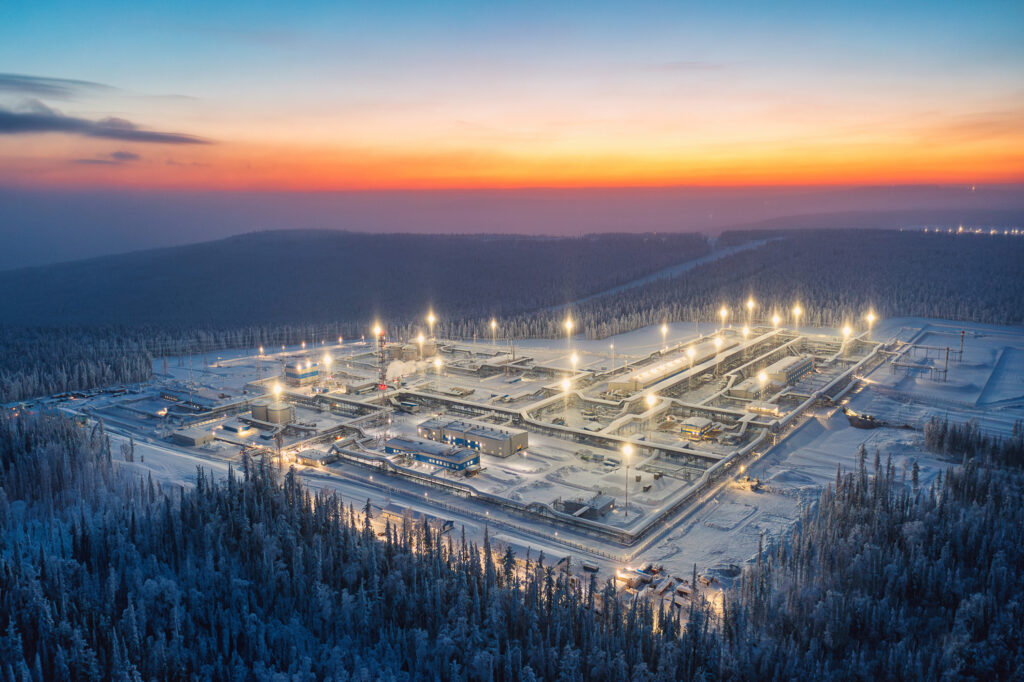
But the prospects for further growth still look very bleak, and instead of a “push from the bottom,” Gazprom can expect a further decline. The fact is that in 2023–2024, pipeline gas supplies to Europe were carried out along two routes: in transit through Ukraine and via the Turkish Stream through Turkey. Exports through these pipelines reached historical lows in 2023, but rose again in 2024, also due to growing demand from Europe, where Hungary and Slovakia continued to buy Russian gas.
The entire Gazprom is cheaper than the toy manufacturer Labubu. No further growth can be expected in 2025: Ukraine refused to renew the contract for pumping Russian gas, which means the final stop of this route. Gazprom lost approximately 15 billion cubic meters of exports - modest figures when compared with the contracted capacity of the gas pipeline (40 billion cubic meters per year), but quite significant in current realities.
Even Gazprom itself does not believe in a bright future. According to an internal report obtained by the Financial Times, it will be possible to restore export volumes to pre-war levels only by 2035 at best. According to the company’s own forecasts, exports to Europe and Turkey will amount to 34 billion cubic meters per year by 2034, that is, an increase in indicators in this direction should not be expected.
Hopes for a much-talked about new pipeline to China have not yet materialized , as an agreement on its construction has still not been reached. And the very construction of new pipelines may be questionable without the necessary technologies. Critical spare parts were bought in the West, and repairing them inside Russia is extremely difficult. And even if all these problems are solved, and China wants to buy even more gas, its cost will be lower than on the European market, and when export volumes are restored, the previous profit will not return. In addition, it will take 10 years to wait for the full launch of the Power of Siberia - 2 pipeline - only by 2035 is the gas pipeline expected to reach full capacity.
Gazprom lost even to its own
In 2025, Gazprom has only Turkish Stream left for pipeline exports to Europe. And against the backdrop of colder winters and, accordingly, increased consumption, European countries began to buy Russian gas again, but due to the lack of available offers from Gazprom on the market, they are now turning to its competitor, the Novatek company .
Fifteen years ago, Gazprom did not even consider Novatek a sufficiently promising asset: in 2011, Gazprom sold half of its stake, and designated the remaining shares as “a long-term financial investment intended for subsequent sale.”
At the time, analysts assessed this deal as positive for the monopolist and negative in the long term for Novatek; Gazprom was also advised to sell the remaining shares. It was assumed that in the conditions of fierce competition, Gazprom would have a clear advantage due to its gas transportation infrastructure: after all, transportation costs are the main cost item for Novatek.
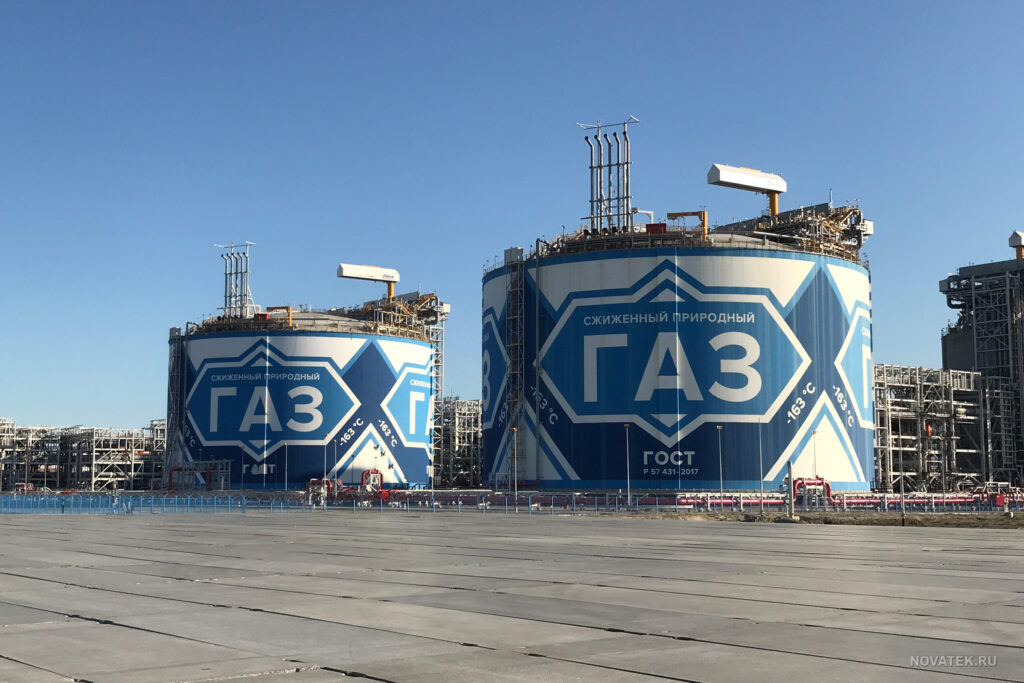
Now, when there can be no talk of any gas pipeline supplies to Europe (except for the Turkish Stream), Novatek is taking the place of Gazprom for European clients. In 2024, European imports of Russian LNG set a historical record - amounting to 21.5 billion cubic meters, while in 2021 it reached only 17.4 billion. The refusal of these supplies is a difficult topic for Europe, but a complete refusal of Russian LNG and pipeline gas was included in the 19th package of EU sanctions, although Hungary and Slovakia are still trying to challenge this decision.
Novatek has taken the place of Gazprom for Europe. However, Novatek’s benefits from sales growth are also limited. Gas prices in Europe have reached new highs over the past two years, but the company does not receive a corresponding profit from this: most of the LNG is sold under long-term contracts tied to the price of Brent oil.
Gazprom, on the other hand, could benefit from market fluctuations, since almost all of its contracts with Europeans are tied to spot prices of the TTF gas benchmark (the largest European trading platform whose prices are based on the market) . This benefit, however, remains unrealized: the increase in value does not cover the significant drop in exports. But Novatek, on the contrary, is increasing sales and selling a certain part of them at increased prices.
Additional profit (the difference between LNG sales at the current price and the average price for 2024) of Novatek, according to Alfa Investments analyst Igor Galaktionov, could amount to $1.6 billion, provided that gas prices remain high. And Gazprom’s positive prospects are associated, first of all, with the supposed “peaceful settlement” in Ukraine - without it it is difficult to talk about restoring previous export volumes.
At the same time, even in an internal report prepared for Gazprom’s top management, the monopolist’s share in Russian energy exports will continue to fall, and pipeline gas will give way to LNG, the export of which will grow from 40.8 billion cubic meters in 2020 to 98.8–125.8 billion cubic meters in 2035. LNG is likely to account for about half of all Russian gas exports, significantly increasing Novatek's influence. Gazprom's chances of switching to this market are slim: the company simply does not have its own proven technology for producing LNG in large volumes.
Turkish bike
An alternative scenario for increasing sales for Gazprom included the creation of a so-called “gas hub” in Turkey - Vladimir Putin spoke about it back in October 2022. Immediately after the Nord Stream explosion , the president said that the new project would solve the problem of exports to Europe for the Russian monopolist.
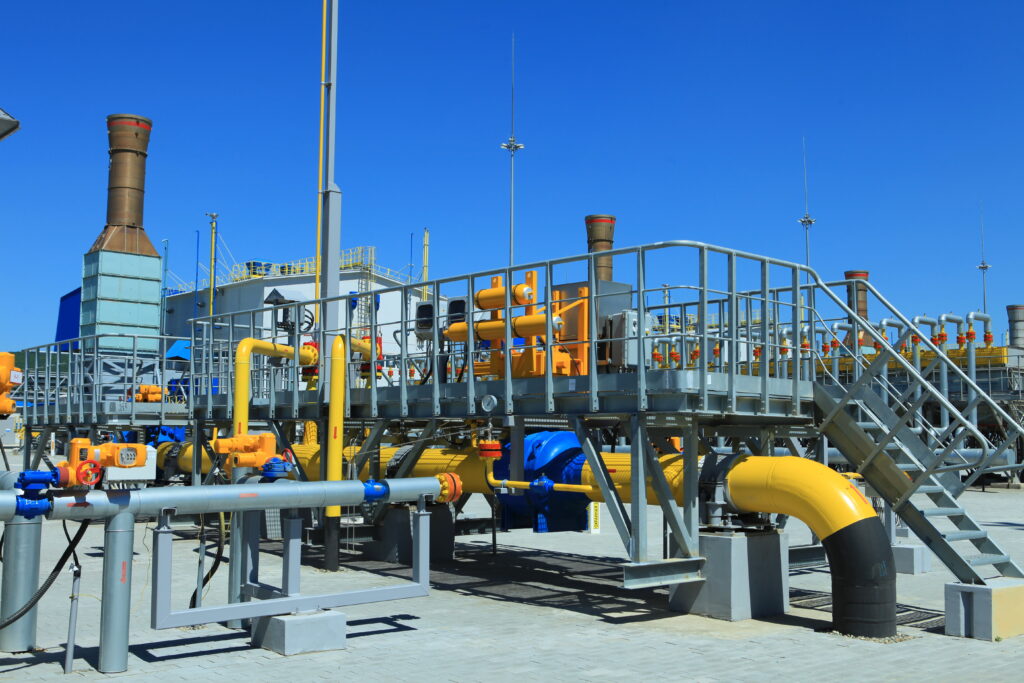
According to Putin’s idea, Turkey should receive the same amount of gas as could pass through Nord Stream - that is, about 55 billion cubic meters per year. To understand the ambitiousness of the task, the current capacity of the route to Turkey is 31.5 billion cubic meters, and the gas pipeline through which gas flows to Europe is capable of serving only 15.75 billion cubic meters. Of course, to provide additional capacity, it was planned to build expensive new pipelines, but Putin called the project “economically profitable.”
It’s just that at Gazprom itself, as Bloomberg’s sources reported, they were surprised to hear the president’s ambitious plans publicly announced. Moreover, according to sources close to the discussion, the idea of a Turkish hub was born in political circles close to the Kremlin, and not at all as part of Gazprom’s strategy. But, despite some skepticism, Gazprom began active work on the implementation of a “gas hub” in Turkey.
The “Turkish Hub” project remained in words. In addition, Türkiye itself became interested in the project. Ankara believed that the gas hub would make it possible to take the first step towards turning the country into a regional gas trading center. And the employees of the Gazprom export department found new tasks for themselves and did not remain idle after the loss of the European market.
It was publicly stated that the negotiations would take only a few months, but in practice the project never got off the ground. There were no framework agreements on its implementation, no steps towards building infrastructure. The idea of a gas hub faced two obstacles: technical and contractual.
Turkey wanted to sell the gas it imports in 14 directions independently and even wanted to form its own gas index, and Gazprom was not satisfied with its assigned role as a supplier, without further control over the sale of raw materials. In addition, pipelines from Turkey to Greece and Bulgaria would not be able to cope with additional supplies, which would hardly allow the creation of a full-fledged Turkish hub.
As a result, they simply forgot about the project. Gazprom management no longer discusses the Turkish hub either within the company or with officials. Despite Turkey's interest, the project was shelved, leaving the idea of returning the European market and the level of income it brought unrealizable.
Illusory prospects
In addition to the unrealistic “Turkish hub,” Gazprom can be brought out of the crisis by the resumption of old projects or the implementation of new ones. Despite the fact that three of the four Nord Stream pipelines were destroyed, Russian officials regularly refer to the one surviving pipeline and offer to supply gas through it.
A hypothetical restart of the route to Germany began to become rumored after Donald Trump’s victory in the US presidential election: various sources reported that Russia and the United States are discussing the resumption of Nord Stream 2, Trump’s special envoy allegedly held secret negotiations in Switzerland, and Nord Stream 1 wants to be rebuilt to transport green hydrogen - obtained by splitting water using electricity from renewable energy sources.
However, officials from Germany and the European Union look at this issue quite unequivocally: there is no talk of any restart of pipelines. Another popular topic of discussion is the resumption of the route through Ukraine, which has very real supporters. The same Hungary and Slovakia insisted that Ukraine should cancel its decision to stop transit. They are ready to sue the EU for the right to buy gas from Russia again.
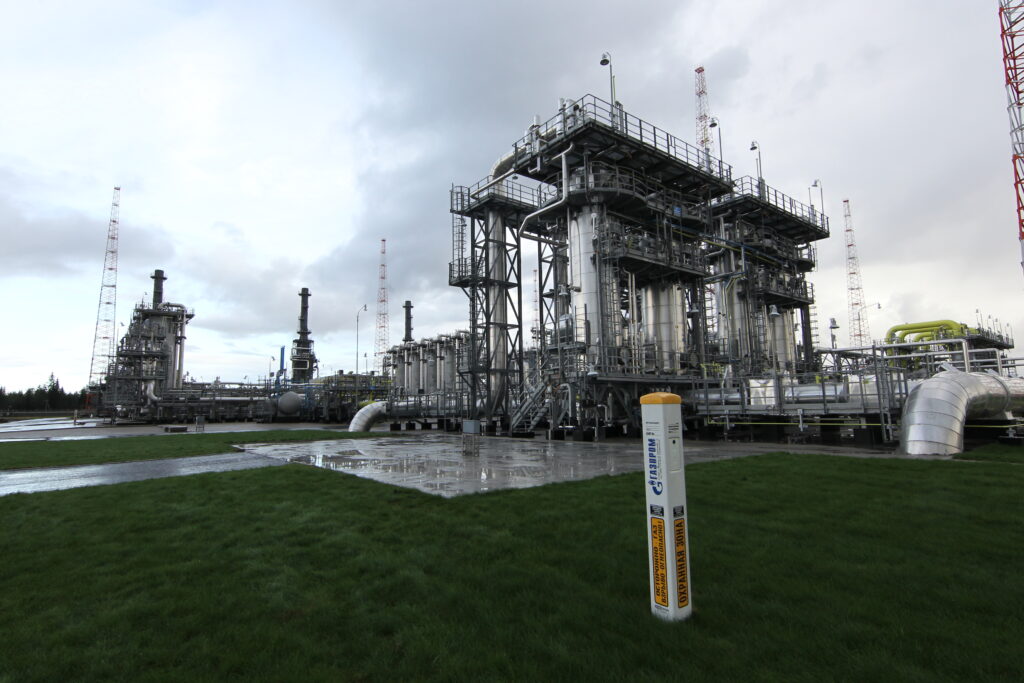
The clause on restoring supplies was included in the Russian memorandum of peace agreement and even in the November version of Trump’s peace plan (it provided for US cooperation with Ukraine to jointly restore, develop, modernize and operate Ukrainian gas infrastructure, including pipelines and storage facilities). However, Ukraine itself does not intend to resume transit and is already making attempts to replace Russian gas with other sources, for example, supplies from Azerbaijan through the Trans-Balkan corridor and LNG from the United States .
Gazprom is counting on projects that cannot be implemented in the next 10 years. Officials remember the Yamal-Europe pipeline through Poland even less often than other frozen projects. The Russian side publicly states that it is ready to resume supplies at any time, but experts agree that this route is one of the most difficult to restore due to Poland’s categorical position.
Among the new routes that should lead Gazprom out of the crisis is another pipeline to China, as well as routes to Iran and India. Most of all, the Russian authorities are talking about the “Power of Siberia - 2” - a new gas pipeline to China through Mongolia. It is planned to supply 50 billion cubic meters of gas annually, which, together with existing supply routes to China, could amount to more than 100 billion cubic meters.
The problematic nature of this project is evidenced by its age: the idea has been discussed for almost twenty years, of which for the last five the Russian side has constantly said that the project has almost been agreed upon and it will soon be possible to begin its implementation. However, Beijing did not make similar statements: for China all this time, the ambitious and resource-intensive project did not seem to exist.
Significant progress on “Power of Siberia 2” was achieved during the last SCO summit, at which China and Russia signed, according to Gazprom’s statement, a “legally binding” agreement on the construction of a second pipeline. This is the first document that gives the project a real chance of life.
Experts believe that China could be “hurried” by geopolitical tensions and growing energy needs: every year China needs 20 billion cubic meters more gas, by 2030 this figure will increase by 100 billion cubic meters compared to current consumption of 425 billion annually.
But there are also doubts about the future of Power of Siberia 2. A “legally binding” agreement can actually be a vague term, lawyers say. The document can be a full-fledged agreement with specified rights and obligations, but it can also simply be an agreement on some future agreements, the essence of which the parties will still have to discuss. In this case, the consequences for the parties if they cannot agree on something within the framework of this memorandum are unclear. The agreement may not provide for any sanctions if agreements are not reached and negotiations begin to stall.
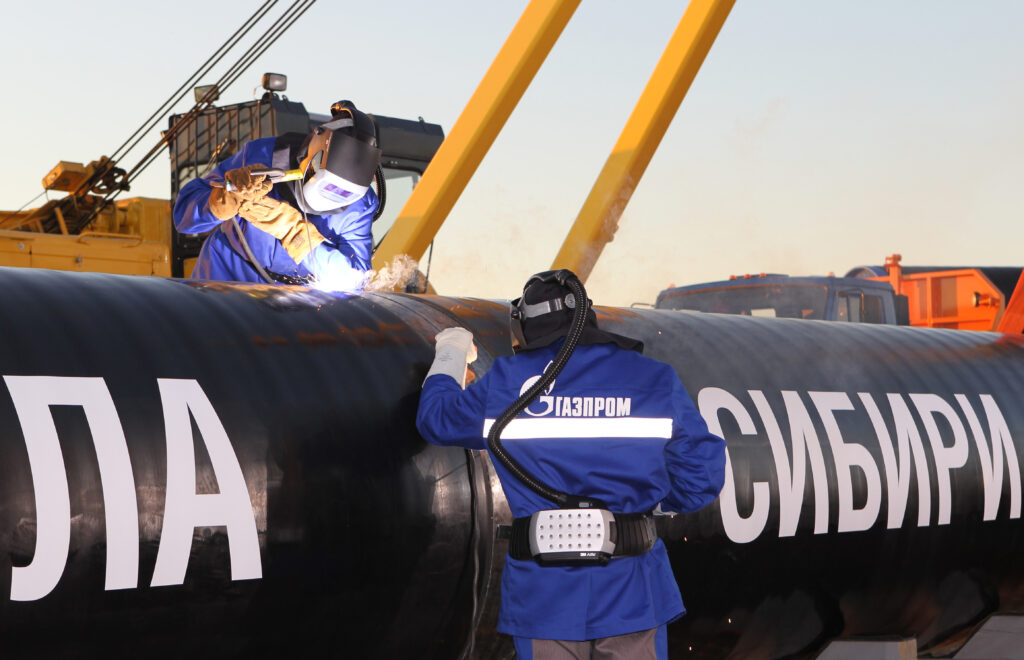
The fact that the Chinese side did not make loud statements also raises doubts. Not a word was said about any commitments to build Power of Siberia 2. Although for China this project is no less significant, because if it is implemented, Russia will become the largest gas supplier on the Chinese market (currently Turkmenistan is the leader).
However, even if China and Russia managed to agree and construction of the gas pipeline will begin in 2025 (although there is still no contract), its implementation will take a lot of time. Experts estimate the period required to build and launch the pipeline at no less than five years. For Gazprom, this means large investments in the project, which will begin operating only in 2030–2035, subject to favorable developments.
One way or another, for all its length, “The Power of Siberia - 2” remains the most realistic “salvation” for Gazprom. Other “ally countries” that the monopolist’s leadership periodically recalls are India and Iran. It is difficult to supply pipeline gas to them for a fairly obvious reason: the lack of pipelines and the high cost of their construction.
It was possible to agree with Iran on supplies of up to 1.8 billion cubic meters per year through a gas pipeline left over from the times of the USSR. It passes through Azerbaijan and previously served as a route for importing gas from Iran to the Union. Now they want to launch the pipeline in reverse mode so that Russia can sell gas to Iran, which itself is the second country in the world in terms of gas reserves.
This did not prevent Iran and Russia from concluding a memorandum on reaching a supply volume of more than 100 billion cubic meters. The appropriate infrastructure for this is not even on the agenda: the existing system of Soviet gas pipelines is designed for only 10 billion cubic meters per year, and this clearly shows how realistic the plans formed within the framework of such memorandums are. Another good example of such arrangements is India. Long before the war, Gazprom planned to build a pipeline to India and even calculated the cost, but the idea was abandoned in 2021.
" Game of Thrones " for Lakhta Center
Due to the loss of the European market and record losses, Gazprom's luxurious offices fell into disrepair. The company laid off hundreds of employees at Gazprom Export, once the company's most prosperous division. It was they who were responsible for the export of Russian gas to Europe and had high hopes for a “gas hub” in Turkey. According to Reuters, at the beginning of 2025, of the 600 employees who worked at the Gazprom Export office in the historic Palazzo Rossi in the center of St. Petersburg, only a few dozen remained.
Now workers are only busy with legal proceedings with former buyers, and only an “empty shell” remains of Gazprom Export, Reuters quotes its source. According to the agency's interlocutors, Gazprom management initially underestimated Europe's determination to abandon Russian gas. The company thought that customers would quickly return and “beg” for supplies to be resumed.
“We were wrong,” one of the executives admitted in a conversation with the media.
Gazprom, which just a few years ago built the Lakhta Center skyscraper, also decided to abandon luxury offices. Due to debts and multibillion-dollar losses, the company is going to sell its luxury real estate, including a building in the style of an Italian palazzo in the center of St. Petersburg.
The new deputy general director, Elena Ilyukhina, should revive the “national treasure”. Last year she joined the board of Gazprom - now she is the only woman in the company's top management . Ilyukhina’s appointment to such a significant position occurred a year after her yacht trip with Putin - then she, and not the head of Gazprom Alexey Miller, represented Lakhta Center to the president.
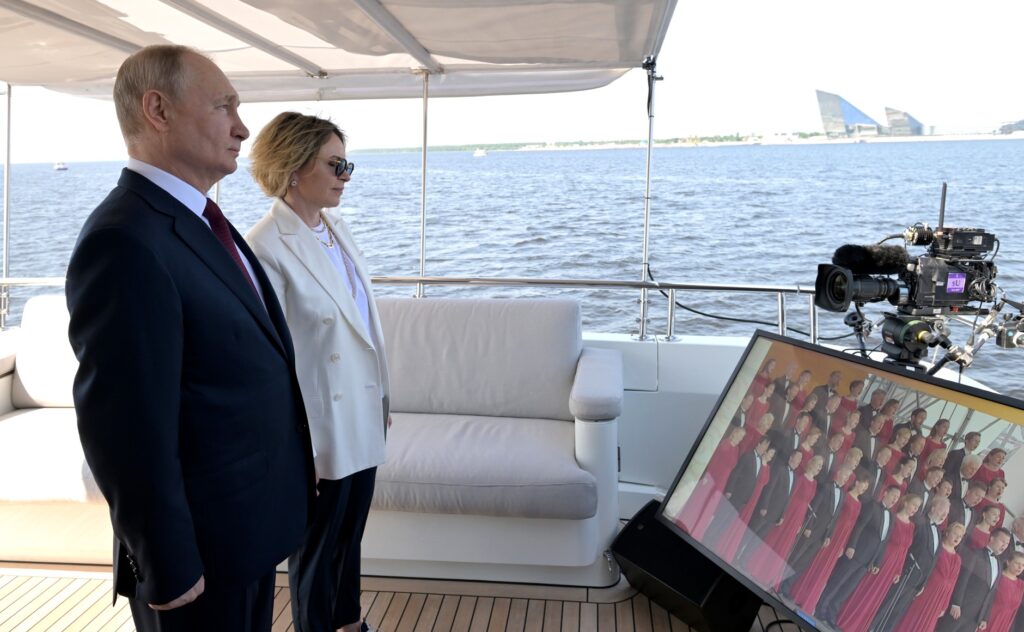
Ilyukhina herself and her team, which, by the standards of the Russian energy sector, included many women, were treated with some sexist skepticism by colleagues. One of the interlocutors of the Financial Times even stated that Ilyukhina’s office looked like “a mixture of a flower shop, a perfume shop and a plush toy store.”
Now, according to the publication’s sources, Ilyukhina has led large-scale reforms at Gazprom, which should pull the company out of the biggest crisis in its entire existence. The publication’s interlocutor compared Ilyukhina with Cersei Lannister from “Game of Thrones” and noted her energy and experience, but doubted that even such a woman could “stir up this swamp.”
Ilyukhina is treated with some sexist skepticism. Some Gazprom employees were directly affected by the change in management: Ilyukhina suggested that the head of the company, Alexei Miller, cut almost half of the main office. Approximately 1,600 Lakhta Center employees will remain unemployed—that’s 40% of the people working there. The layoffs probably won’t end there, because the company planned to close three more departments, including the one that was created in 2022 to “import substitution” of Western technologies with Russian ones, and plans to merge eight more departments. Decisions, however, are being delayed : layoffs at the main office were postponed twice during the year: first they were planned for March, then for April, and then moved to June.
Expenses will also be cut: from travel allowances and office rent to the costs of building relationships with the government. The company is going to get rid of non-core assets - for example, sell part or the entire network of methane fuel filling stations. It is not known to whom the gas stations were supposed to be sold, but in the summer news appeared about their closure or transfer to the regions.
Ilyukhina is leading not only the largest reductions in the company’s history, but also a change in the entire internal architecture of the monopolist. All disparate divisions of Gazprom, according to Ilyukhina’s vision, should unite into a “single vertically integrated company.” Gazprom Neft, the most profitable division in Gazprom's portfolio, will suffer the most from this decision.
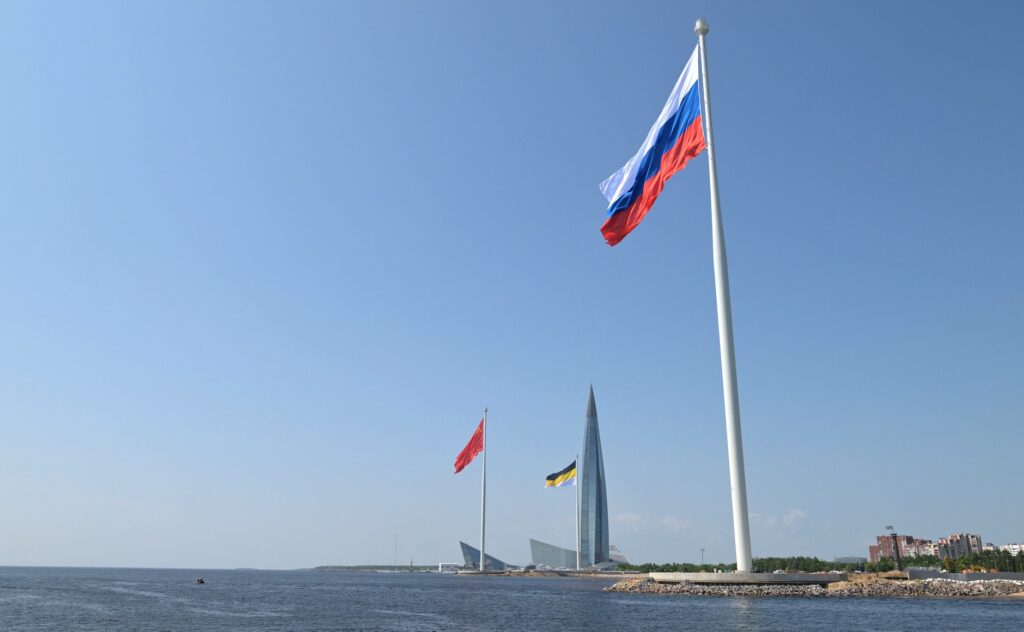
The subsidiary company is managed by Alexander Dyukov, and under him Gazprom Neft has earned the reputation of a modern market company with a Western management style, the Financial Times writes. And economist Tatyana Mitrova describes Gazprom and Gazprom Neft as two radically different companies and notes that they are “as if from different planets.”
The main loser will be Gazprom Neft. Dyukov and Miller not only adhere to completely different approaches to management, but as people they are complete opposites. Dyukov was allegedly shocked by the outbreak of a full-scale war and unhappy about the breakdown in relations with the West, and Miller became such an ardent supporter of the invasion that he required managers to wear a badge with the letter Z and sent at least three battalions to the war.
It was Ilyukhina who served as a “bridge” between the two companies; Dyukov asked her to discuss sensitive issues with Miller. At the same time, Gazprom Neft believed that she was still more loyal to Miller: for many years she had been friends with his wife, Putin’s former secretary Marina Entaltseva, and it was Miller who hired her. In the division, some perceived her primarily as “Miller's man,” who should monitor what was happening in the company.
Although before the war Gazprom was not particularly worried about the autonomy of its subsidiary, everything changed when Gazprom’s own cash flow dried up: while the monopolist reported record losses in 2023, Gazprom Neft managed to adapt to sanctions and benefit from high oil prices. As a result, it turned out that Gazprom Neft accounted for 75% of the profit before deductions ( EBITDA ) of the entire holding in 2023, and, according to forecasts, in 2026 this share will increase to 90%.
In order to solve financial difficulties, Gazprom decided to reduce the operational independence of its subsidiary and tighten control over its cash flows. Some departments within Gazprom Neft were liquidated, while others came under the full control of Gazprom. Such changes forced the departure of Dyukov’s main assistants, including Vadim Yakovlev, who was responsible for operational management while Dyukov attended board meetings and the Kremlin. Now Yakovlev has left for Novatek, which was a serious blow for Dyukov.
The steps to deprive Gazprom Neft of its independence fit into Ilyukhina’s concept. The goal of its reforms is to move from the “strong subsidiaries and weak center” model to “strong center, obedient subsidiaries.” The monopolist’s business model will also change: according to the new plan, Gazprom will offer everything from gas to electricity and financial services. And he will focus on the domestic market and, accordingly, now intends to make the main profit from it.
Russians will pay for Gazprom's greatness
Gazprom was prompted to carry out large-scale reforms and search for new markets by a record drop in income: the difficulty is not only in finding buyers for the volumes of gas that Europe bought, but also in selling these volumes at least at prices close to the European level. The discrepancy between reality and expectations has already led to Gazprom reporting a record loss of 629 billion rubles ($7 billion) for 2023.
Gazprom's capitalization has decreased by 11 times since 2007. In 2024, when prices for Urals oil increased, the situation for the company seemed to begin to improve, and it showed a profit of 1.219 trillion rubles ($13.1 billion). However, in the long term, Gazprom faces a financial hole: according to its own estimates, the company is preparing for a deficit of 15 trillion rubles by 2034. Analysts are no less pessimistic about the future of the monopolist, who expect that by 2030, revenues from Russian gas exports will fall by 55–80% compared to the level of 2022 and, according to the International Energy Agency, will amount to no more than $28 billion.
Moreover, experts note the company’s huge and not entirely transparent capital investments, which in 2024 amounted to 2.9 trillion rubles. This is much higher than that of the world's leading oil and gas companies. In essence, Gazprom invests Gazprom Neft’s money in capital-intensive gas projects, but there is still not enough money for investment, so the monopolist’s net debt is also growing. However, the reforms being discussed at Gazprom should also reduce such costs.
Financial difficulties are also affecting Gazprom shareholders, more than 50% of whose shares are owned by the state. After the Russian Federation’s invasion of Ukraine, the monopolist’s securities fell to the levels of the great crisis of 2008 (107.6 rubles per share) and have still not recovered this drop (about 128 rubles per share at the beginning of December). Moreover, just shortly before February 24, 2022, the shares exceeded the 360 ruble mark - the level at which they were last traded in August 2008.
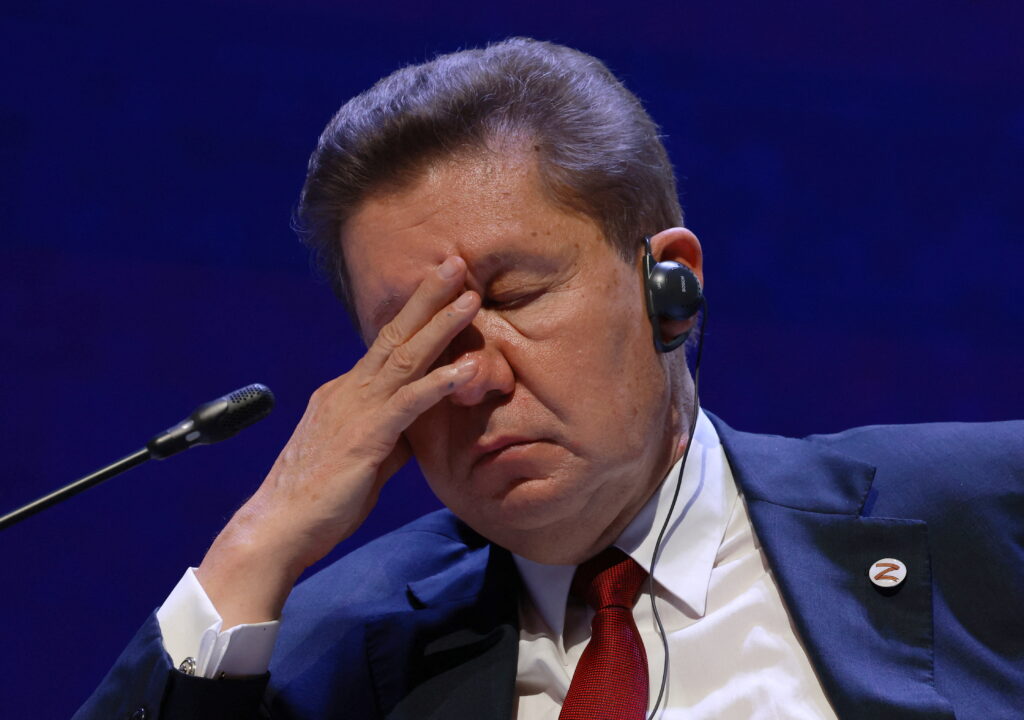
The company's market value fell to a record low: at the end of 2024, its capitalization was 3.1 trillion rubles ($30.7 billion), while at its peak, in 2007, it reached $330.9 billion. Then Miller stated that Gazprom’s market capitalization would reach a trillion dollars in 7–8 years - and at that time such an estimate did not seem unrealistic. As a result, the first company in the world valued at a trillion dollars in 2018 was Apple, which at the time of Miller’s statements was worth 2.7 times cheaper than the monopolist. Gazprom is losing even to the manufacturer of popular toys Labubu, whose capitalization exceeded $40 billion.
Shareholders have also not been paid dividends for more than three years in a row, since the first half of 2022. In 2023, this was explained by record losses, but the financial indicators of 2024 allowed the company, according to its dividend policy, to pay dividends. Gazprom's decision speaks primarily of the instability of its position: a high debt burden, unstable cash flow and uncertainty with contracts on which so much hope is placed.
The Ministry of Finance did not include dividends from Gazprom in the budget for 2025, and analysts do not expect them in 2026 either. Experts associate the increase in “investment attractiveness” and possible payments to shareholders with projects, the implementation of which is either highly questionable or is no longer discussed at all: “Power of Siberia - 2”, a gas hub in Turkey and the resumption of supplies through Ukraine and along the Nord Stream 2 branch.
Another condition that is called the possible salvation of Gazprom is an increase in supplies to the domestic market, and the new deputy chairman of the board, Elena Ilyukhina, is allegedly betting on it. It’s somewhat ironic considering that ten years ago Gazprom planned to expand export directions, and the monopolist was ready to share the not so profitable domestic market with Novatek. Experts call the company's new direction "less glamorous" but "socially significant."
The future of Gazprom now depends on rising gas prices for Russians. In order for the sale of gas to Russian consumers to begin to at least partially compensate Gazprom for monetary losses from leaving the European market, gas tariffs need to be revised. Now they are regulated by the state, and thanks to this, Russians enjoy cheap gas. Gazprom insists that this cannot continue, and consumers must start paying a more fair price, from a market point of view, indexed twice a year.
The idea of revising tariffs is not new; it has been discussed for several years, and the discussion began even before a full-scale war. But each time the government postponed the unpopular measure, realizing that the population would not accept the increase in tariffs with enthusiasm. Now the future of the “national treasure” literally depends on rising prices.
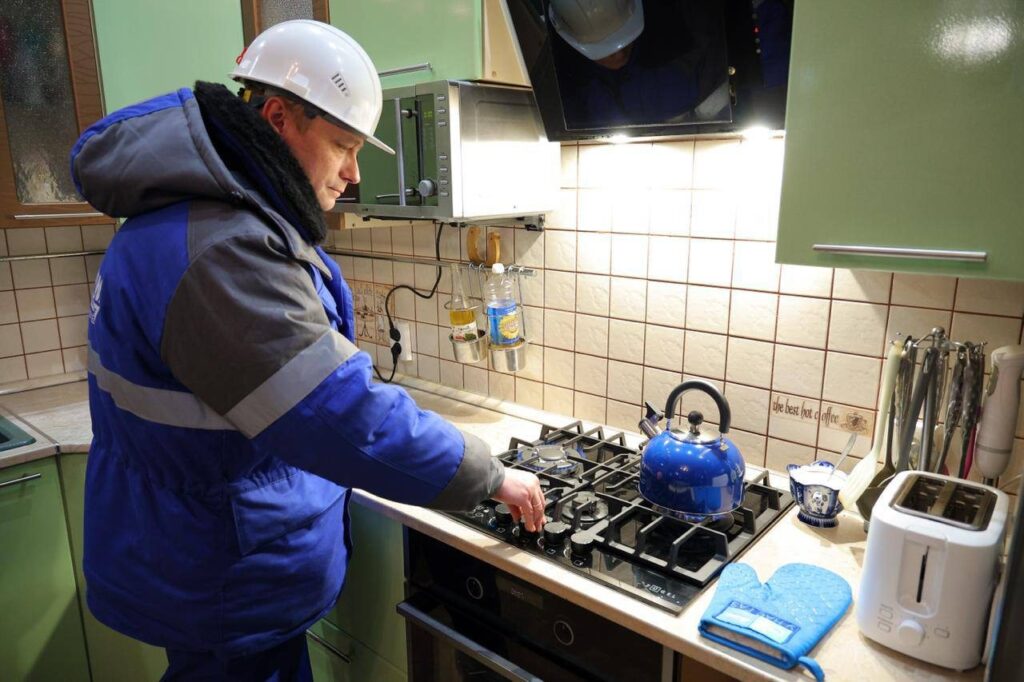
Gas prices have already increased by 10.3% for the population as part of an increase in tariffs for housing and communal services in July 2025. This is the national average; it may vary from region to region. The increase, although it turned out to be a record one, took place within the framework of standard annual indexation, and even it forced the government to reduce the degree of discontent among the population: comments on social networks were flooded with bots proving that the price increase was insignificant.
For industrial consumers, prices will rise even more: in addition to standard indexation, they will be expected to introduce a seasonal coefficient. That is, in winter they will pay 10% more. This may also affect the final cost of services: according to the Ministry of Energy, annual prices for electricity will increase by 2.8–3%, and for heat - up to 1.2%. The ministry explains the need for a seasonal coefficient simply: it is necessary to compensate for the company’s lost income from European exports.
Industrial consumers, however, call for optimizing costs and increasing the efficiency of Gazprom itself instead of raising prices. And attempts to bring domestic gas prices closer to foreign ones, along with other business costs, deprive the Russian industry of competitive advantages. Some energy-intensive enterprises may even be on the verge of profitability.
At the same time, Gazprom emphasizes that the past indexation is not enough and further price increases are necessary. In addition, the company insists on increasing tariffs for gas transportation: according to the plan, other gas companies will have to pay Gazprom two and a half times more for the use of its infrastructure than they pay now. And this could once again lead to higher prices for end consumers - that is, ordinary Russians and energy-intensive enterprises.
Gazprom will release its washing machines and refrigerators. Gazprom is also going to be saved at the expense of other major players - Rosneft and the relatively successful Novatek can pay for their competitor. Vladimir Putin, who 10 years agowas called the real owner of Gazprom, proposed reducing the tax burden on the monopolist.
In July, information about the consideration of tax benefits was confirmed by the government, but it was clarified that the final decision had not yet been made. At the same time, Gazprom has already been exempted from taxes on debt for Nord Stream 2, at the end of last year the mineral extraction tax was reduced for it, and now they have also allowed a phased tax deduction through the redistribution of part of the income of independent producers.
In addition to reducing the tax burden and increasing tariffs, Gazprom is also considering expanding its current product line. As already mentioned, the new business model assumes that the company will offer everything, and the monopolist has already begun to develop new markets. For example, the company will begin to produce refrigerators and washing machines.
As it turned out, such a business will not require capital investments - after all, you can simply take over the plant of a Western company. Gazprom will use the production facilities of BSH Household Appliances (legally 100% owned by the German Bosch), which in 2024 was transferred to the management of Gazprom Household Systems by presidential decree. Despite the absence of costs for the construction of the plant, Gazprom will still have to spend money on its reactivation and software development - costs will range from 20 to 50 million dollars.
At the same time, it would be more profitable to produce products under the old Bosch brand, which already has a certain reputation. Otherwise, analysts say, the company will simply lose competition to South Korean LG and Samsung. But some experts are not sure that this is an adequate solution, since all processes and components of production will change, and the resulting product will be completely different.

However, despite all the difficulties and troubles, Gazprom, experts believe, has a certain margin of safety that will not run out soon. Some capital-intensive projects that were part of the company’s prestige (for example, the construction of two new towers next to the Lakhta Center) can be frozen without much damage, and the reforms of the new “mistress” of the monopolist can really breathe new life into it. However, their scale may be too modest, and their implementation may be too late.
And a significant part of the company’s future fate depends on the geopolitical situation. Supplies to Iran depend on Azerbaijan, to Europe on the peace settlement in Ukraine, and even to China on rising or falling tensions in its relations with other international partners. This situation leaves the company, which was once used as leverage in foreign policy matters, dependent on factors over which it can no longer influence.
Author: Artur Shebarshov
Photo: Anton Vaganov / Reuters