
Translated material
War
One thousand three hundred and ninety-first day. Zelensky continues “difficult” negotiations with the Americans in Berlin. Ukraine may refuse to join NATO, but is not ready to withdraw troops from Donbass
Since February 24, 2022, Meduza has been broadcasting live about the Russian-Ukrainian war. We publish your letters in our daily materials because we are sure that we need to continue talking about the war. Share with us the thoughts you have about the war. What feelings are you experiencing? How does war affect you, your life, the lives of your loved ones and your attitude towards the world? The feedback form is at the end of this article. A review of the previous day can be read here .
World
In Berlin, negotiations are taking place for the second day between Ukrainian President Vladimir Zelensky and US Presidential Special Envoy Steve Witkoff and Donald Trump's son-in-law Jared Kushner. Representatives of European countries are expected to join the negotiations, including German Chancellor Friedrich Merz and British Prime Minister Keir Starmer.
Yesterday, Zelensky’s negotiations with the Americans lasted more than five hours. Following the meeting, Witkoff announced “significant progress” in discussing the peace plan.
However, as The Wall Street Journal writes , citing a source, the negotiations have been “difficult,” as the United States appears “unwilling to compromise.” As the publication writes, meetings between the United States and Ukraine “turned into a tug of war, even without Russia’s participation”: Washington insists on speedy decision-making, while Zelensky and the Europeans talk about “significant differences” that will take time to resolve.
The most difficult issue remains the territorial issue. As Politico writes , citing a French source, Ukraine rejected the US proposal to create a demilitarized “free economic zone” in Donbass, where American companies could operate. The German publication Bild also writes that the issue of the withdrawal of Ukrainian troops from the part of the Donetsk region they control is a “red line” for Kiev - Ukraine, according to the publication, fears that Russia, in turn, will refuse to withdraw its troops.
Representatives of European countries also take the position that no progress can be made on the issue of territories until Ukraine receives reliable security guarantees.
Zelensky, even before yesterday’s negotiations, said that Ukraine, as a compromise, is ready to refuse to join NATO if it receives reliable guarantees from the United States and other partners, comparable to the fifth article of the NATO charter (that is, the guarantor countries will be obliged to provide military assistance to Ukraine in the event of a new attack by Russia).
Ukraine
Almost two-thirds (63%) of Ukrainians are ready to endure war “as long as it takes,” according to a new survey by the Kiev International Institute of Sociology.
This indicator has remained virtually unchanged over the past six months - in May, 60% of respondents said they were ready to endure the war as long as necessary, and in September - 62%. In the first years of the war, this figure consistently exceeded 70%, and it was at its lowest last winter: then less than 60% of Ukrainians said they were ready to endure as long as necessary.
Another 15% of respondents in the new survey said that they were ready to endure the war for only a few more months, 21% found it difficult to answer the question (this is the highest figure since the beginning of such studies).
At the same time, a significant part of Ukrainians believe that the war will continue for a long time. Only 9% expect it to be completed by the end of this year, 14% in the first half of 2026, another 11% in the second half. A third of respondents (32%) believe that the war will continue at least until 2027; approximately the same number (33%) found it difficult to answer the question.
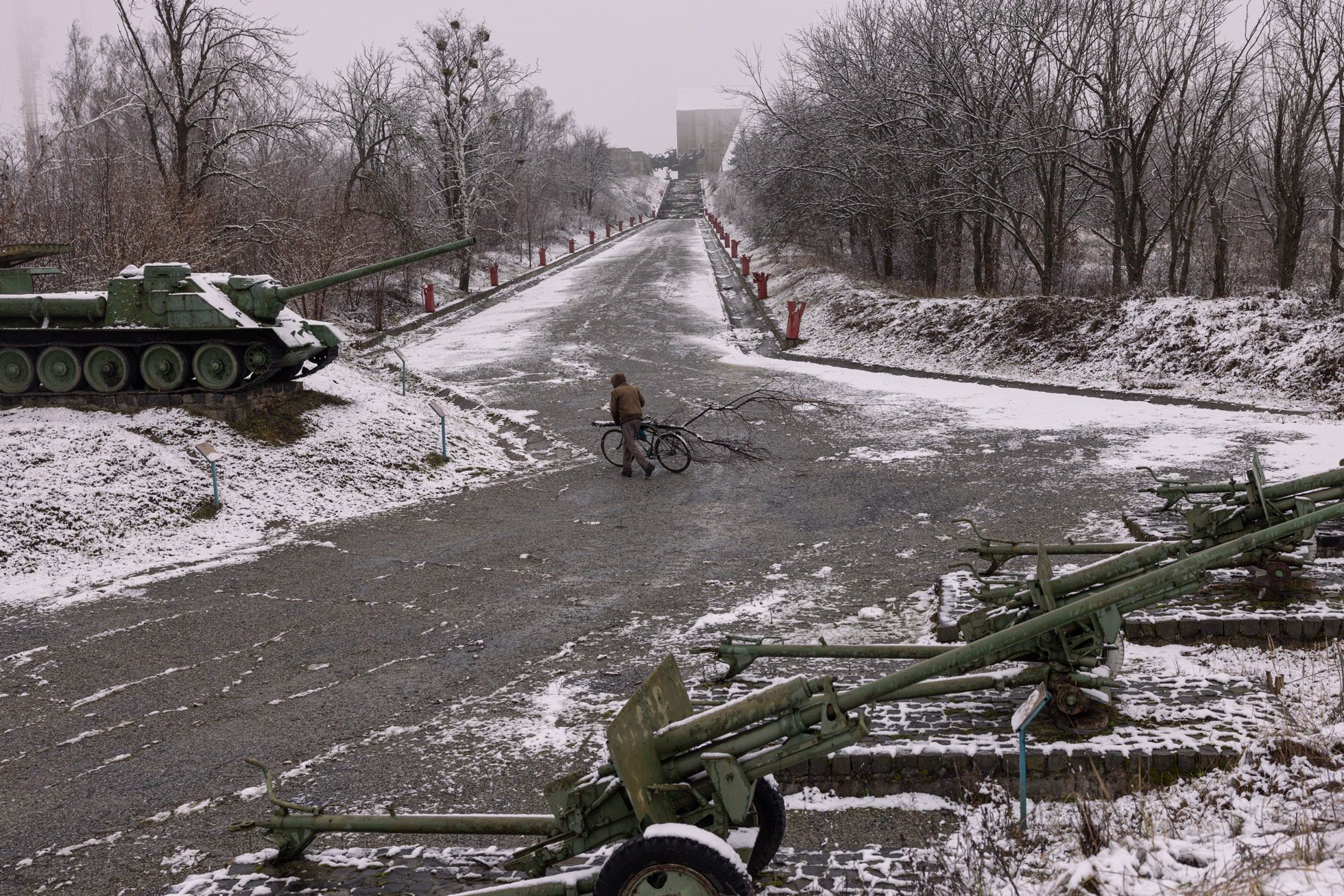
War in photographs. Raisin
Izyum is a city in the south of the Kharkov region, in which almost 50 thousand people lived before the war. It was captured by the Russian army after heavy fighting at the end of March 2022. In October of the same year, the Ukrainian military released him.
Now about half of the pre-war population remains in Izyum. The city is located approximately 25 kilometers west of the current front line and is periodically subject to shelling. The highway connecting Kharkov with Slavyansk passes through it - an important logistics route for the Ukrainian army.
War through the eyes of Meduza readers
How we choose letters
Meduza's readers live in different countries and have different attitudes towards the war. We publish your letters to see this event through your eyes. Our editors try to present all points of view, even if they do not coincide with the editorial position. However, in accordance with the Meduza code, we do not publish messages that contain “hate speech,” justify the murder of civilians, or express direct support for an aggressive war.
Vitaly (Ukraine) . Ukraine is losing a war of attrition, and either the naive or those who are financially interested in its continuation do not want to admit this. The easiest way to find out how many people are actually against the negotiations and the required concessions is to hold a referendum. But not anonymous and with the condition that anyone who is in favor of continuing the war automatically loses his reservation, deferment and any benefit from conscription and can automatically be sent to active combat units - regardless of age, gender and health status. Something suggests that the result will be very different from official opinion polls. Otherwise, somehow in the rear (even very close, like Kharkov) there are a lot of patriots (especially there are a lot of them among deputies of all levels, who during the war don’t even need to think about elections), but volunteers to go to the front have long been a few at most ( Ermak doesn’t count).
In Germany, only a medical examination was introduced - and immediatelythousands of people protested ; people didn’t even want to hear about being drafted into the army, let alone fight. Whether we like it or not, any war, regardless of whether it is fair or not, involves sacrifices. And the willingness to bear them largely determines who will win it. If the war turns into a conflict between corrupt authoritarian regimes, then talk about defending the homeland is simply hypocrisy, and the one who has more efficient corruption and stupidly more resources wins. This is just mathematics, and as you know, she is the queen of sciences and does not lie.
Share your thoughts about the war
"Jellyfish"