
Translated material
Trump, high five!
A new US foreign policy concept and the idea of creating a C5 are being discussed in Washington

Donald Trump. Photo: AP / TASS
The reason was the publication of Defense One, which claims that there is a more complete secret version of the National Security Strategy, in which the Trump administration proposes the creation of a new international group Core5 or C5 of “core (indigenous) countries” - the United States, China, Russia, Japan and India. Which will become an alternative to the G7 and G20 - respectively, the G7 and G20. The new club will unite countries, each of which has a population exceeding 100 million people. The Five will meet regularly, like the G7, for summits dedicated to specific topics. The first item on the proposed C5 agenda is security in the Middle East, says Defense One.
“The big ones hold trump cards”
Thus, Trump breaks old ties and creates new ones. The European Union and European countries in general, including the historically main “strategic ally of the United States” - Great Britain, are not invited to the new club of “major powers”.
Last summer, Trump complained that Russia was expelled from the G8 (this happened on March 18, 2014, after Crimea) and regretted that China was not invited to this group as the 9th member. It became clear that the owner of the White House completely ignores the main principle of the G7: countries must be both rich and democratically governed. As the late Senator John McCain called it: “an orchestra of democracies.” Trump has other priorities.
The full version of the National Security Strategy discusses the “failure” of American “hegemony,” a term that is not mentioned in the official version. “The desire for hegemony is the wrong aspiration, and it has proven unattainable,” the full version reads, Defense One claims.
Regarding Europe, the slogan is proclaimed: “Make Europe Great Again” (MEGA). As Vice President Vance said in a speech at the Munich Security Conference in February, Europe faces the “destruction of civilization” due to its immigration (liberal) policies and “censorship of free speech.”
The attack on Europe in the first month of the new administration turned out to be not an accident, but a new approach in foreign policy,
which was finally formulated in the new National Security Strategy. The full version, reported by Defense One, proposes to focus US relations not with the EU and NATO as international organizations, but with several states that are favored by the American president and vice president, with similar right-wing radical views.
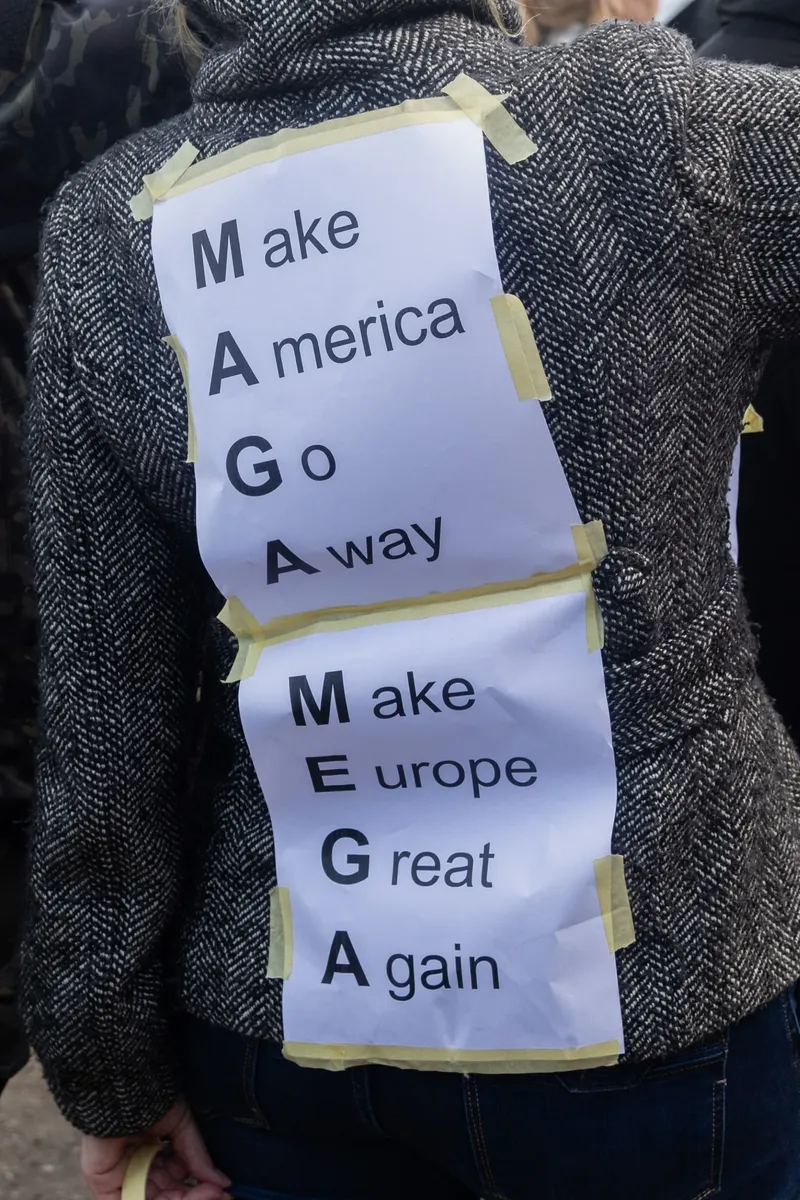
Austria, Hungary, Italy and Poland are listed as countries with which the US should "intensify its cooperation to remove them from the EU." “We must support parties, movements, and intellectual and cultural figures who strive for sovereignty and the preservation and restoration of the traditional European way of life... while remaining pro-American,” says the document, which was reviewed by Defense One.
Trump confirmed his skepticism towards the EU in a new interview with Politico: “I think they are weak. But I also think they're so committed to political correctness that I don't think they know what to do. Europe doesn't know what to do. They don’t know what to do regarding trade either.” Trump sympathizes with big countries and strong leaders. According to him (trump means trump card in Russian), such countries and leaders have “stronger cards.” “The cards are in Putin’s hands, but Zelensky doesn’t have them,” the president has repeatedly stated.
In the new national security strategy, the United States does not abandon participation in NATO, but no longer wants to play a “leading and dominant role” in the alliance. “The days of the United States maintaining the entire world order like Atlas are over,” the new national security strategy says. Europe must rely on its own strengths; in the event of a conflict with Russia, it will only receive US support, but not leadership, Gordon Sondland, a former ambassador to the EU in the first Trump administration, told the BBC. “This is consistent with how we know President Trump views the world: non-ideologically, through a liking for strong leaders and a penchant for working with big powers that maintain spheres of influence in their regions,” said Torrey Taussig, who served as director of European affairs at the National Security Council in the Biden administration.
However, after the publication of the article, the White House denied the existence of any full version of the National Security Strategy, except for the one that was published on the Internet and contains 33 pages. “There is no alternative, private or secret version,” said spokeswoman Anna Kelly. She added that “any other so-called versions are leaked from people far from the president, who, like the “reporter” who introduced her, have no idea what they are talking about.
With literally the same words, the press secretary denied the report of the London Telegraph about the removal of Army Secretary Daniel Driscoll from negotiations with Ukraine due to the dissatisfaction of the Minister of Defense (Minister of War) Pete Hegseth. “They don’t know what they’re writing about, they [the two ministers] have excellent relations,” Kelly once again refuted what the entire Washington political beau monde is talking about. Her job is to refute something that causes great controversy and leads to unclear consequences.
The Trump administration has previously considered new configurations of power. Pentagon chief Pete Hegseth called the "G2" (Big Two) meeting between Trump and Chinese President Xi Jinping in November historic, causing alarm in Congress, including among Republicans. Illinois Democratic Congressman Raja Krishnamoorthy, a member of the House Select Committee on China, wrote to Secretary Hegseth: “Your characterization of the U.S. relationship with the Chinese Communist Party as a 'Big Two' is deeply troubling and suggests a fundamental misunderstanding of the United States' primary global adversary that risks dangerously undermining the Pentagon's preparations to contain conflict in the Indo-Pacific region.”
Experts consider the C5 idea, if hypothetical, to ideally fall under the concept of Donald Trump’s “commercial policy,” when geopolitical issues are resolved in the spirit of business deals that bring specific profits not so much to the United States, but to companies and entrepreneurs associated with Trump. An example is that the search for a peace agreement on Ukraine is going on in parallel with negotiations about the future of American business in Russia and with the Russian elite.
"Pot of Gold"
“President Trump approaches and engages with diplomacy in a very pragmatic manner, putting economics at the core and making it the driving force of international relations,” are the words of retired Lt. Gen. Keith Kellogg, the special presidential envoy for Ukraine and Russia. He plans to retire in January. It is not Kellogg, but another special envoy, developer and billionaire Steven Witkoff, who is a member of the Kremlin and communicates with Putin, and with Kirill Dmitriev discusses future “carrots” for American business in Russia if an agreement is reached with Kiev.
In Miami, at the Witkoff mansion, peace talks discussed not only troop withdrawals and security guarantees, but also investments in Russian energy infrastructure, contract restoration, technology partnerships and the fate of frozen sovereign assets.
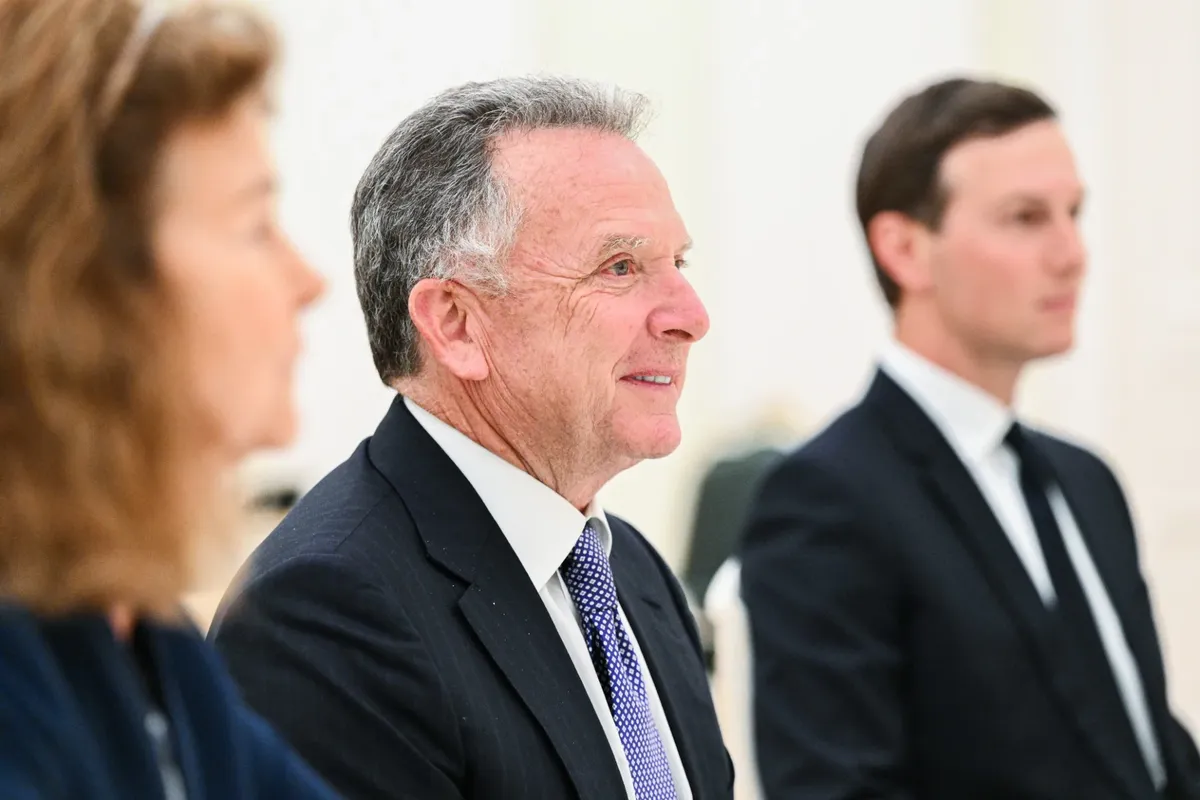
It was not diplomats who discussed it, but private individuals: Witkoff is a colleague and friend of the president, Jared Kushner is the president’s son-in-law, and Dmitriev, whom the local media, bypassing the long official title of “special representative of the president for investment and economic cooperation with foreign countries,” calls “a key agent of Putin’s economic policy.” It was not Rubio and Lavrov, but the above-mentioned gentlemen who discussed the “pot of gold” - what Moscow is ready to give and what Trump’s people are ready to take if they can advance the peace plan by “convincing” Zelensky and European leaders:
access to Russian rare earth minerals, which will reduce dependence on China;
in the energy sector: major transactions for hydrocarbon production in the Arctic and restoration of Russian energy supplies to Europe;
infrastructure rehabilitation contracts potentially valued at hundreds of billions of dollars;
The Wall Street Journal reported a plan to invest $200 billion of frozen Russian assets in projects in Ukraine - the construction of a massive data center powered by power from a Russian-controlled nuclear plant.
Preferences in access to Russian mineral resources and infrastructure are a serious temptation for Trump’s closest allies. In the president’s usual circle, there is talk about the return of the Russian Federation to global business. This is consistent with Trump’s “commercial diplomacy”, where dollars are more important than less tangible “values” - respect for democracy, protection of human rights, the rule of law and norms of the international community.
Former presidents - both Democrats and Republicans - talked about “values,” Trump has been talking about dollars since the very beginning of his second term.
The stakes go far beyond Ukraine. As the negotiations between “private parties” show, the search for a peace agreement is associated with private capital and profit-oriented bargaining - the evolution of foreign policy, the changing rules of international behavior over generations.
Trump has twice refused to begin his international trips as president with Britain, despite a historical tradition highlighting the special relationship between the two allies. “The last time I was in Saudi Arabia, they invested $450 million,” the president told reporters in March, promising to visit the country again if there are new investments in American companies. Saudi Arabia's Crown Prince Mohammed bin Salman immediately pledged to invest $600 billion in the American economy over the next four years. Trump invited the “captains” of local business with him to Riyadh - the heads of Nvidia, Palantir, Citigroup, Uber, etc.
Trump gladly accepts “royal” gifts: a Boeing 747-8 aircraft from the royal family of Qatar, which will be transferred to the “presidential library” fund at the end of his term and will remain in Trump’s use, and from the President of Korea - a copy of an ancient gold crown. The list of gifts also includes the Peace Prize - not the Nobel Prize yet, but from FIFA. The USA is one of the organizing countries of the next World Cup.
Previously, such diplomacy would have been accused of a conflict of interest, a corruption component, etc. But Trump's second term set new rules. And an alliance with China (Hegseth's "Big Two") and Russia at the expense of ties with the EU and Britain does not seem improbable, although this is a "tectonic shift" changing the political landscape that has established itself in the world since the end of the Second World War.
However, Trump supporters call this an “innovative” approach to foreign policy. And opponents of the “peace through commerce” concept recall how in 2014, Moscow’s mutually beneficial business with the West did not stop “polite people” - first in Crimea, then in Donbass.
But Trump appears to continue to believe in the “art of the deal.”