
Translated material
I feel sorry for the cat
Comparative analysis of the Dubrovsky-Troekurov case and the Dolina-Lurie case

Illustration: Petr Sarukhanov / Novaya Gazeta
The Dolina case shook up Russian public life, which was as stagnant as a swamp. Everyone saw a potential threat to their money and their home. Realtors no longer understand how to work: the number of people wishing to return property through the court after a sale, according to the Russian Guild of Realtors, has increased by 15–20% this year. Buyers no longer understand how to buy real estate. Sellers - how to sell. You can't trust anyone anywhere. They will come and take it away.
Designated disputed estate
Well, how can they take it away, the modest Russian man in the street thinks, because I am a bona fide buyer, here I have a purchase and sale agreement, here I have the documents. And I’ll say here: we didn’t read Pushkin well in the sixth grade. Everything is there.
“You’re lying, brother, what kind of documents do you need? There are decrees for that. This is the power to take away property without any right. Wait, though. This estate once belonged to us, was bought from some Spitsyn and then sold to Dubrovsky’s father. Is it possible to find fault with this? - Troekurov asks, wanting to put Dubrovsky (not Vladimir, but also Andrei Gavrilovich) in his place: let him grovel like everyone else and not be insolent.
You hear something familiar, right? It once belonged to us, it was sold later, it should be returned. “Wonderful, Your Excellency; “This sale was probably completed legally,” assessor Shabashkin doubts.
But he begins to fuss, acting on behalf of Troekurov, “scaring and bribing judges and misinterpreting all kinds of decrees.”
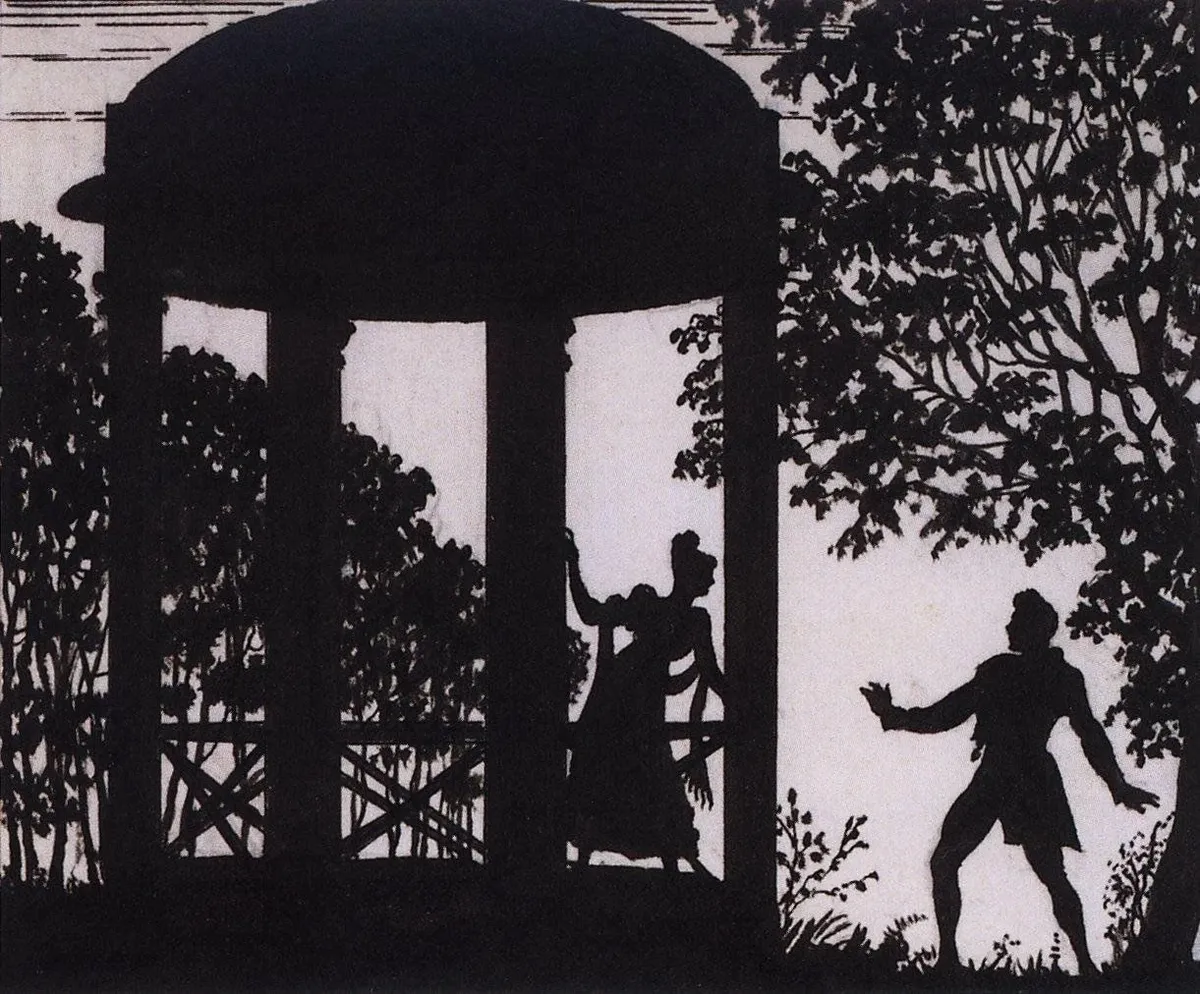
The court's decision in Pushkin's text is set out in full (I would like to say “quoted,” but this is still fiction), since the narrator is convinced that “everyone will be pleased to see one of the ways in which in Rus' we can lose the estate to which we have an indisputable right.” The children do not agree that “everyone will be pleased.” It is indeed a pity that Dubrovsky is read in the sixth grade: not a single sixth grader, of course, is able to comprehend this casuistry. And not every adult will comprehend:
“It is clear from this case that Chief General Kiril Petrov son Troekurov for the said disputed estate, now in the possession of the guard of Lieutenant Andrei Gavrilov son Dubrovsky, located in the village of Kistenevka <...> presented a genuine bill of sale for the sale of it to his late father, the provincial secretary, who was then a collegiate assessor, in 17... <...> from the nobles by the clerk Fadey Spitsyn, and that in addition to this, this buyer, Troekurov, as can be seen from the inscription on that bill of sale, was in the same year ** by the zemstvo court taken into possession of the estate, which the estate had already been refused for him, and although on the contrary, from the side of the guard, lieutenant Andrei Dubrovsky, a power of attorney was presented by that deceased buyer Troekurov to the titular adviser Sobolev to execute a deed of sale in the name of his father, Dubrovsky, but in such transactions not only to approve serf immovable estates, but even to temporarily own by decree... is prohibited, and the power of attorney itself is completely destroyed by the death of the giver. <…>
But in order for, in addition to this, a deed of sale was actually executed under this power of attorney where and when for the said disputed estate, Dubrovsky has not presented any clear evidence to the case from the beginning of the proceedings, that is, from 18... to this time. And therefore this court decides: to approve the said estate, ** souls, with land and lands, in whatever position it now finds itself, according to the bill of sale presented for it for General-Chief Troekurov; about the removal from the order of the guard of Lieutenant Dubrovsky and about the proper entry into possession for him, Mr. Troekurov, and about the refusal for him, as he inherited it, to order ** the zemstvo court.”
All this means that Troekurov dug up from somewhere an old bill of sale for Kistenevka, once acquired from the Spitsyns, and presented it to the court. Pushkin, by the way, never says whether the old bill of sale was genuine or whether it was concocted by the lively assessor Shabashkin. But Dubrovsky, whose all documents were burned in a fire, was unable to present the original bill of sale, and of all the documents he found only indirect confirmation - a power of attorney to receive the bill of sale.
The power of attorney, certified in the district court, stated that the Kistenevka estate had already been purchased, that Troekurov, the father of the current Troekurov, sold it to the father of the current Dubrovsky for 3,200 rubles. Before receiving a deed of sale written out in accordance with all the rules, Dubrovsky could own the estate as a rightful owner. But the deed itself burned, and Dubrovsky did not know where it was issued and, due to a lack of understanding of the situation, did not try to find out. All this turned out to be quite enough to take away the estate from the heir of a bona fide buyer and transfer it to the plaintiff, who had no rights to it.
Dogs running around the church
Dubrovsky’s reaction, in contrast to the text of the court decision, could be understood and remembered for a long time even in the sixth grade: “Dubrovsky was silent... Suddenly he raised his head, his eyes sparkled, he stamped his foot, pushed the secretary with such force that he fell, and, grabbing an inkwell, threw it at the assessor. Everyone was horrified. "How! do not honor the church of God! away, you boorish tribe!” Then, turning to Kiril Petrovich: “We’ve heard of it, your Excellency,” he continued, “hunters are bringing dogs into God’s church! dogs are running around the church. I’ll teach you a lesson already...”
This sudden insanity of Dubrovsky is very understandable to every average person, before whose eyes the most blatant lawlessness is being committed - so blatant that it is practically sacrilege.
No, before his very eyes, a variety of lawlessness had already been committed. But when the state nationalizes a successful enterprise because it needs it more than the rightful owner, or takes away the only housing and evicts the old mother of a former city mayor sitting in prison onto the street, the average person is unlikely to sympathize: they probably stole, they won’t jail us in vain, we don’t know the whole truth.

But when, in front of the whole country, a famous singer first sells her apartment, and then refuses to move out of it and sues the buyer so as not to give the apartment back to her and not return the money, then all the people take action... well, not just throwing inkwells and shouting “dogs are running around the church,” not just going crazy due to a severe shock to all foundations, but taking action - whoever knows what.
Those who buy real estate refuse. Whoever sells runs to get a certificate of sanity. Those who have neither real estate nor money rent out tickets to Larisa Dolina’s concerts and post memes.
To top it all off, it turns out that the Dolina court returned 30 million rubles to the real estate commission, and the buyer of the apartment, Polina Lurie, had to pay more than 100 thousand in property tax, the owner of which she is listed as the owner of according to documents, but cannot use. Moreover, the court explained to Lurie her right to independently recover money from the fraudsters convicted in the Dolina case. And this is when the entire law enforcement system of the country cannot cope with scammers. It seems that over the past couple of years, they have already called every resident of the country a hundred times a day, who is able to hold a phone in their hands, and got it in all messengers - all the nieces for whom they need to vote, sons who knocked down a man, friends who “urgently need 38 thousand on the card, I’ll return it in 15 minutes,” couriers with unordered parcels and flowers, bosses who ask if someone called you Comrade Filin with a check from the NKVD, they suggest urgently posting the code for State Services and the key to the apartment where the money is in a new work chat, because the whole team has already posted it, but you haven’t yet.
And I don’t feel sorry for anyone anymore, I’m just annoyed that they call, that they write, that they are being followed, that they give money, that others have to pay for it, because we don’t catch scammers, but you are denied access to all resources for your own good. It’s infuriating that the entire law enforcement system is busy catching imaginary extremists, and elusive scammers have scammed half the country and no one is catching them, so let Polina Lurie alone now search for everyone and extract her 112 million from them. I don’t feel sorry for anyone, and everything infuriates me.
And, in general, popular indignation erupted in the most unexpected place, so both the Supreme Court, which will hear Lurie’s complaint on December 16, and the State Duma, which for the first time in many years thought about at least something meaningful, had to react: how to protect bona fide buyers. And even Larisa Dolina herself, who still did not want to return the money, did not apologize to Lurie and even in the statement of claim accused her of professional incompetence: they say, how is it that a real estate specialist did not recognize the fraudulent transaction? In the end, the Valley, seeing an ever-increasing wave of spontaneous cancellations, offered to return the money - though not immediately, but in installments over three years and without taking into account inflation. But Lurie refused the settlement and is waiting for the Supreme Court's decision.
Why the State Duma and the Supreme Court had to react is also understandable. In the same Pushkin, in the same “Dubrovsky,” the continuation is quite clear: Andrei Dubrovsky dies, shocked by the catastrophe that befell him, Vladimir, his son, sets fire to the house so that Troekurov does not get it, and the blacksmith Arkhip carefully locks those sleeping inside the judges so that they do not jump out, and responds angrily to all demands to let them out “how could it be wrong.”
But a cat that is rushing around on the roof of a burning house is saved at the risk of its life. He feels sorry for the cat.
I must shamefacedly admit to a pedagogical failure: sixth-graders usually feel sorry for the cat, but judges, not so much.
A little trickery
Speaking seriously, then, of course, the Troekurov-Dubrovsky and Dolina-Lurie cases are not particularly similar in their legal details.
In Dubrovsky’s case, the fatal role was played by the fact that Troekurov has a bill of sale, and his ownership is confirmed by it, but Dubrovsky’s bill of sale was burned, and he cannot confirm his right. But the Unified State Register of Real Estate has not yet been invented.
Nowadays, ownership is established not by a deed of sale, but by state registration. In our time, a court, if it happened to examine Troekurov’s claim, would order an examination of the deed of sale (whether it’s fake), check the prescription of the purchase and actual ownership. In Russia, there is an institution of acquisitive prescription (Article 234 of the Civil Code of the Russian Federation): if someone owned property openly, continuously and in good faith for 15 years, their right of ownership of this property can be recognized. And Dubrovsky owned Kistenevka almost all his life - since his father died.
So a Russian court would probably have handled this case.
But he didn’t cope with the Dolina case - or he coped with it in such a way that all the people wanted to shout “dogs are running around the church.”
Of course, parallels with the Dubrovsky case suggest themselves: in both cases some old right comes to light, which the bona fide purchaser did not know about. And the defendant is unable to protect his rights: he is deprived of both the property and the money paid for it. And the court protects not the actual owner, not the bona fide purchaser, but the rich Troekurov or the famous Valley, the old right or the first owner misled by scammers. And although lawyers talk about a serious legal conflict, about gaps in the legislation that led to the conflict in the Dolina case, the popular belief that everything has been bought and that there is justice for Dubrovsky, and there is justice for Troekurov, it seems, cannot be changed.
A transaction may be declared invalid if it was made under the influence of a material misconception (this is Article 178 of the Civil Code of the Russian Federation). But usually, when a court declares a transaction invalid, both parties are obliged to return everything received as a result of it (this is required by Article 167 of the Civil Code of the Russian Federation). The Khamovnichesky court did not apply this rule in the case of Dolina (and the Moscow City Court confirmed that everything was correct). The court considered it a special circumstance that the money received for the apartment was not with the defendant: she gave it to the scammers under the influence of a mistake, and therefore she has no direct obligation to return it. But Polina Lurie was not recognized as a bona fide purchaser because she did not exercise due diligence. However, the legislation does not contain any exhaustive set of actions that the buyer must perform in order to be considered in good faith, and cannot prescribe mind reading and clairvoyance.
All in all,
if you read Pushkin and the Civil Code in turn, you’ll come up with something.
For example, to the point of understanding that it would be nice for the Supreme Court to somehow explain to the courts of first instance what to do in such sad cases, otherwise it is already written in Wikipedia that the country’s courts have 10 thousand applications from deceived old women asking to return the apartment, and three thousand families who bought such apartments or dachas are already left without apartments, and without dachas, and without money, and even with a mortgage for 30 years, and not God forbid that one of them follows the path of Dubrovsky.
And if anyone forgot or did not read, here is a brief retelling: having destroyed the estate in Kistenevka that had become the property of Troekurov by deliberate arson, Dubrovsky hid from investigation along with his peasants in Kistenevskaya Grove, where he created an illegal armed formation. And he began to restore justice in the only way available to him.
Another example of the same method of restoring justice is described by Pushkin in “The Captain's Daughter” and is characterized as “senseless and merciless.”
No, I am not inciting anyone to the Russian rebellion; I am completely convinced of its senselessness and mercilessness, should it happen.
But it won't happen. Seems,
We have already reached the point of nationwide numbness when we don’t want anything and don’t feel sorry for anyone. Neither those deceived by scammers, nor the seller, nor the buyer, nor Dubrovsky, nor the judges.
Not even Masha Troekurova, although she had nothing to do with it.
Just maybe a cat.