
Translated material
Petition protest
The number of rallies has increased sharply in Russia. What are people up against?

A rally dedicated to the anniversary of the October Revolution in Yuzhno-Sakhalinsk. Photo: Nikolay Mikhalchenko / TASS
18+. THIS MATERIAL (INFORMATION) WAS PRODUCED, DISTRIBUTED AND (OR) SENT BY FOREIGN AGENT AZAR ILYA VILYAMOVICH OR CONCERNES THE ACTIVITIES OF FOREIGN AGENT AZAR ILYA VILYAMOVICH.
In the fall of 2025, the number of protests in Russia increased sharply—and those coordinated with the authorities. Dozens and sometimes hundreds of people in different cities of the country take to the streets due to disagreement with tax reform, increasing the recycling fee on cars, bills on killing stray animals and on even more local topics.
Most of the rallies and pickets take place in Siberia and the Far East, in central Russia it is much quieter, and in Moscow and St. Petersburg the authorities still prohibit any opposition initiative under the pretext of coronavirus. However, if the first event resonates, the authorities do not allow organizers in the Far East to build on the success.
Nobody in modern Russia is ready for uncoordinated actions (with the exception of the recent women’s protest in Kursk). Journalist Ilya Azar* spoke with the organizers of several rallies to understand why people decided to take to the streets and how the authorities regulate popular discontent.
Irkutsk Taxes
December 7th. It's snowing in Irkutsk. Shivering from the cold, warmly dressed people cluster on Labor Square; posters are attached to the fence of the circus building: “Do not destroy SMEs (small and medium-sized enterprises. - I.A. ) as a class - the homeland rests on us,” “Rising taxes = the end of SMEs = rising unemployment,” “Increasing taxes = impoverishment of the people.” There are also drawings, for example, this one: a man with “Tax Reform” written on his trousers knocks the chair out from under the feet of a skinny man with a noose around his neck and a sign that reads “Small Business.”
Yes, the rally participants—there were about 150 of them—are dissatisfied with the authorities, and it seems that they are serious. But no, this is not an opposition rally. The organizers of the event told me this directly, and the name is appropriate: “For supporting the President’s course! For development! For victory! For Putin!” There is not a word about taxes and the death of SMEs.
The purpose of the event, which the organizer - the head of the Association of Entrepreneurs of the Irkutsk Region Mikhail Ozhiganov - wrote down in the application for approval, is also neat: “Drawing the attention of the President to the draft law adopted by State Duma deputies on reducing the threshold for applying the simplified tax system and PSN ( simplified and patent taxation system - I.A. ) for small businesses from 60 to 20 million.” This is part of a larger tax reform that comes into force on January 1, 2026.
The rally begins with the anthem, eight people move forward: most of them have small Russian flags in their hands, and one man holds a larger Russian flag in his hands, and even with a portrait of Vladimir Putin on it. Behind them there is a large inscription “Circus”
(which in the context of what is happening seems especially appropriate). And another - very long - Russian flag, which is held by the edges by several rally participants.
In the speeches one can sense resentment towards the beloved president. “You talked about support. Your words have reached us. We took care. But they crashed against a wall of beautiful reports. Where our agony is planned successes. Where our cry from the regions is drowned in the deathly silence of positive dynamics,” a woman in a light sheepskin coat read out an appeal to Putin, like poetry.
One of the organizers of the rally (he was so wary of giving comments to a journalist with the status of a “foreign agent” that he insisted on his anonymity) directly told me that he supported President Putin’s course and was confident: “Only the president can stop the destruction of small businesses in Russia, and only in him is the only hope for small businesses.”
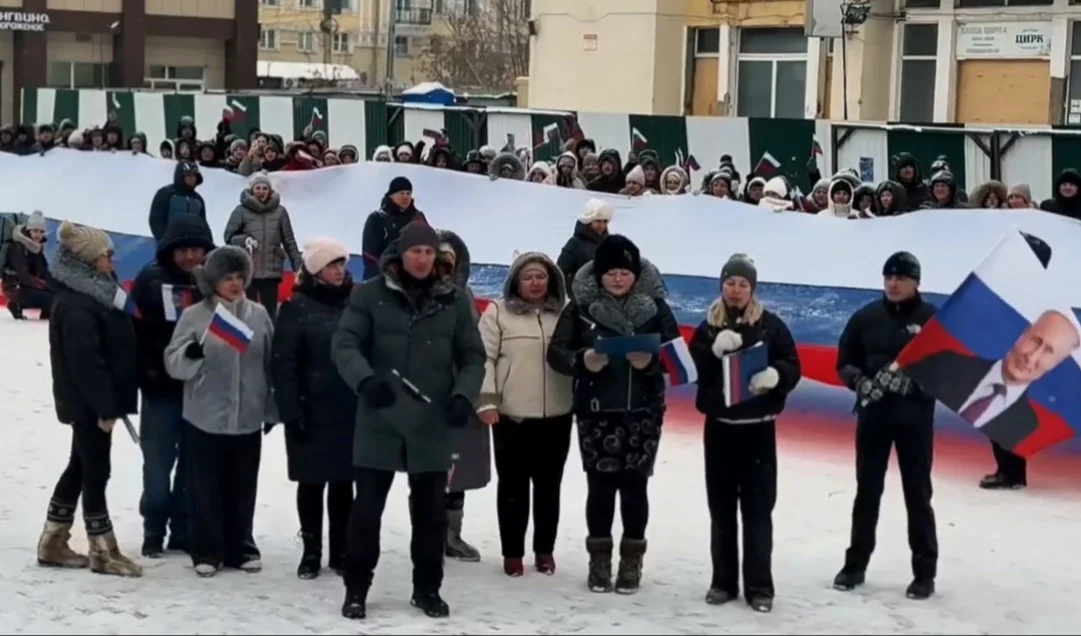
The fact that State Duma deputies were unlikely to make a decision on such a sensitive topic without the consent (or even orders) of the country’s top leaders, and most importantly, that Putin himself on November 28 already signed the law because of which the rally is taking place, does not bother the organizer.
“Siberians believe that the president, devoting all his energy and time to foreign policy, may very likely not be privy to the intricacies of this problem, since he is probably being fed information that does not correspond to the real state of affairs, because the information is presented in the media as positive changes,” he says.
According to the organizer of the rally in Irkutsk, even after signing the bill, Putin may still change his mind within 14 days and send it for revision. However, if I were the organizers of the rally, I wouldn’t hope for it too much. The day after the rally in Irkutsk, Putin said: “When my colleagues decided that when choosing all the instruments, it was still more honest, straightforward and reliable to just go for this [VAT] increase. Temporary, I hope, but an increase.” And it is unlikely that he has a different opinion about changing the threshold for applying the simplified tax system.
Together with the president, the organizers of the rally support, of course, the holding of the SVO, not considering that taxes are being increased due to the huge costs of it and problems in the economy associated with sanctions.
It is clear that the action, which is called “For Putin! For victory! agreed upon easily, but in Irkutsk the authorities generally take a rather liberal approach to the issue. On November 28, “deceived home buyers” came out to the same circus, reported the People of Baikal publication. About the same thing happened there as at the entrepreneurs' event. In any case, one of the speakers then asked the Russian President to develop a law that would protect not only those who were deceived when buying an apartment in a high-rise building, but also those who decided to invest in their own home.
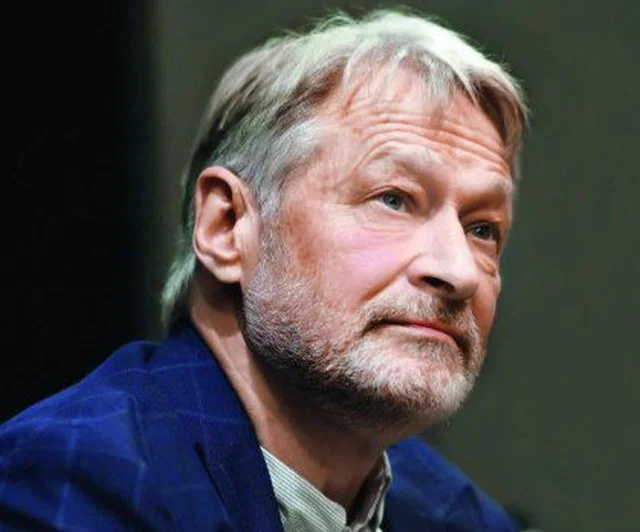
“The form of protest in Russia is a petition against the arbitrariness of local boyars,” says political scientist Dmitry Oreshkin*. — It may look funny, but this is such a Russian tradition. Everyone understands that laws and courts do not work, but only the sovereign’s decree works. Hope for this decree dominates. “We don’t really understand the sovereign’s wise thoughts, he knows better. “We solve our little problems,” they think.”
According to Oreshkin, making complaints against superiors during hostilities seems unthinkable to most Russians. “We can’t lose this ***, because we were attacked,” they think. For them, political demands are a shameful thing. “What, are you not for Russia, not for the Tsar-Father, if you make claims against the main boss? This does not fit into the mental structure of the majority of Putin’s model of society,” the political scientist argues.
Vladivostok. Utilsbor
Until tax increases came to the forefront of the news agenda, the main protest topic - in Siberia and the Far East - was a change in the system for calculating the recycling fee (tax on the purchase of a new car) due to the inclusion of engine power in addition to the age of the car and its engine size, which will inevitably lead to an increase in prices for many cars.
Back on October 11, about 500 people came to the Youth House in Vladivostok to protest about this. According to the organizer of the meeting, Deputy of the Legislative Assembly of the Primorsky Territory Alexander Sustov, there were from 400 to 800 people.
— It’s difficult to say whether it’s a lot or a little, but we can say for sure that the authorities did not expect so many people and that there have not been such large rallies in Vladivostok for a long time. Overall it was good,” Sustov told me.
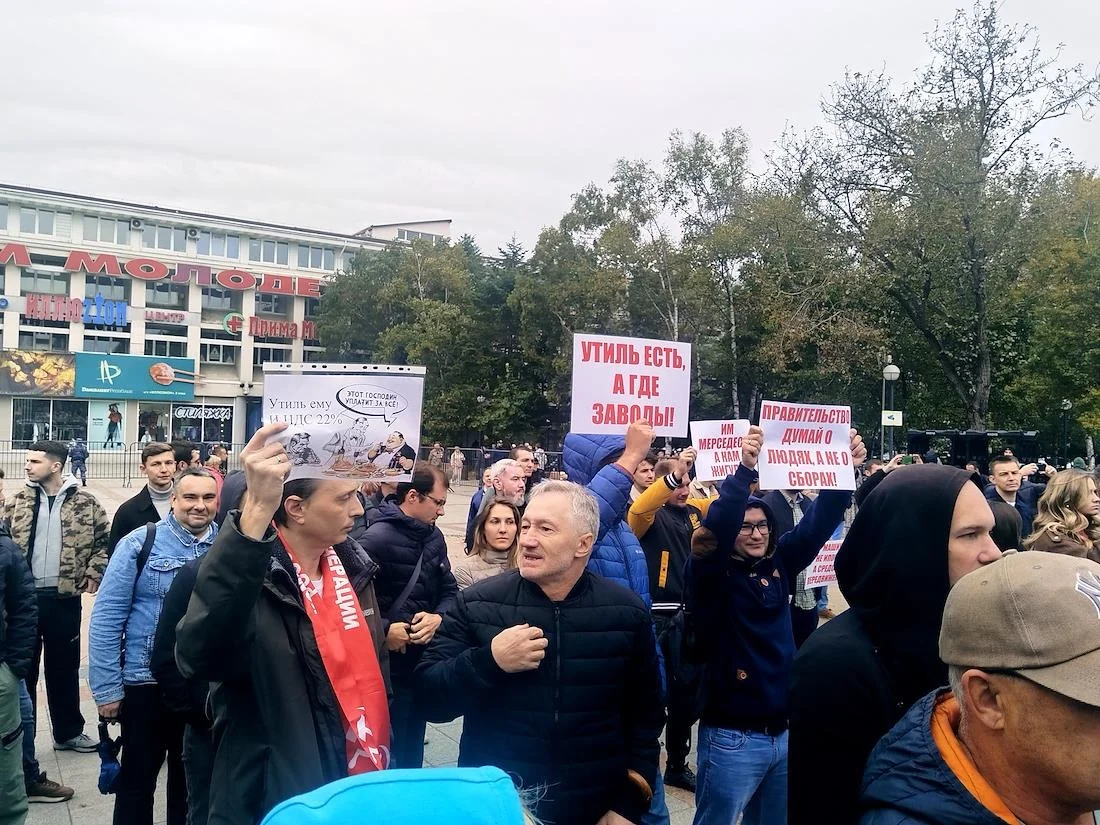
The idea of the rally was suggested to him by residents in their addresses. “As it turned out, the increase in the recycling fee worries many people, and especially those who at that time were waiting for the car to be brought to Russia,” says Sustov. “The main question for everyone is the lack of car recycling plants, because residents understand that in fact the collection is not used for recycling, but for other purposes.”
The deputy attributes the fact that the entry into force of the law was eventually postponed for a month to the rally in Vladivostok. Although it collected 680 signatures against increasing the recycling fee, on December 1 the new rules still came into force. “Of course, we demanded not to raise it at all, and if there had been more people at the rally, then perhaps the result would have been even more different,” admits Sustov.
After October 11, the deputy says, the Vladivostok administration did not agree on about 10 notifications that he and district deputy Oleg Grigoriev submitted for different dates. Thus, the rally on November 9 was banned because United Russia decided to hold a rally at the same place for the International Day of the Fight against Fascism, Racism and Anti-Semitism. Applications for November 15 and 16 were rejected due to the “To Russia with Love” concert and Father Frost’s birthday.
Having received Sustov’s requests for November 22 and 23 and realizing that the deputy would not calm down, the authorities informed him that renovation of the stage and surrounding area was beginning on the square near the Youth House. Sustov and Grigoriev tried to hold a rally in the village of Volno-Nadezhdinskoye (37 kilometers from Vladivostok), but they were refused there too: they decided to quickly hold a folk cuisine festival on that day.
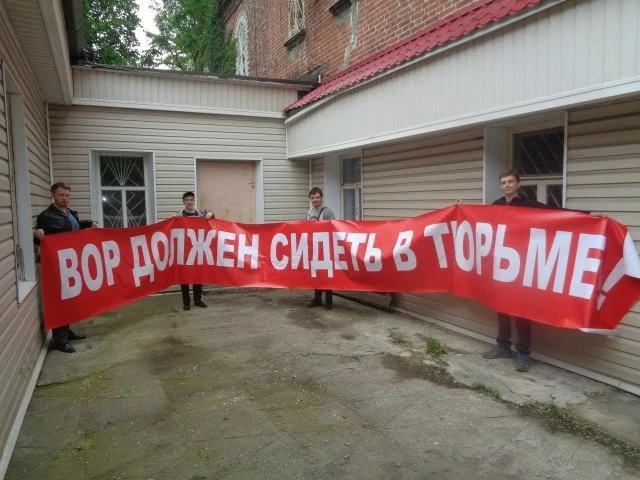
If in Vladivostok they put an end to rallies about recycling collection, then in some other cities they still managed to be held. For example, on November 16, a rally against increasing both taxes and recycling collection was held in Novosibirsk. About 50 protesters hung a banner with the inscription: “Stop plugging your budget holes with our wallets!” News about the rally, however, spread more likely due to the arrest the day before it of one of the organizers, the host of the YouTube channel “Red Turn” and activist of the Russian Communist Party (Internationalists) Sergei Krupenko. He was “taken” as he was leaving the apartment and left at the police station for two days.
Krupenko, by the way, managed to hold a pacifist rally in Novosibirsk. On November 7, 2024, an event agreed with the authorities was held in Hyde Park in the Central District in honor of the anniversary of the October Revolution. About 30 people attended it, but Krupenko, as SOTA.Vision* wrote, “was not afraid to openly express his position, and at the end of the rally he called it anti-war.”
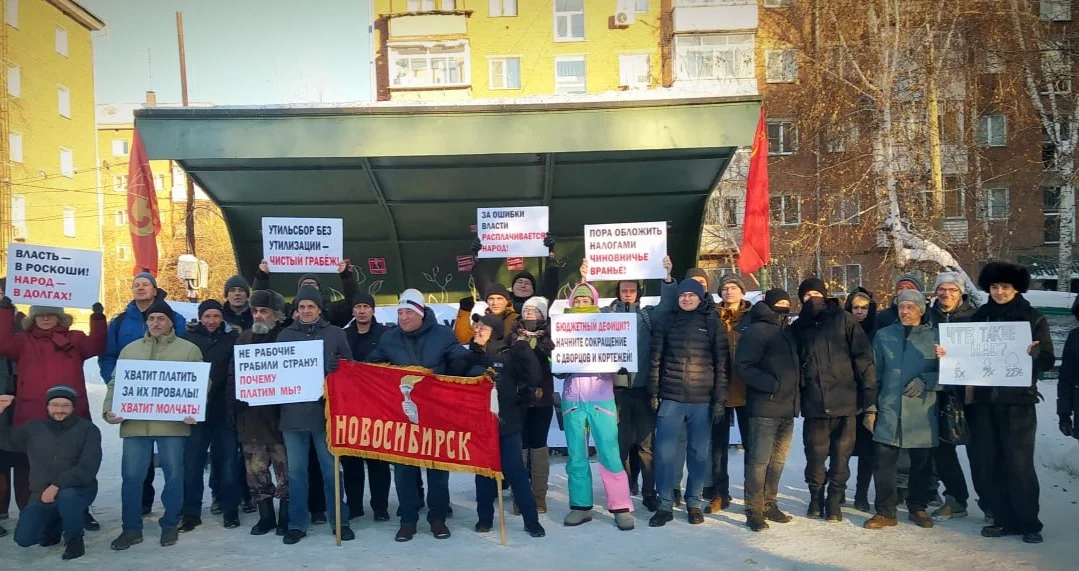
Standing in front of the poster “The Great October was! It's going to be a great October! Peace to the peoples! Power to the working people! There will be socialism!” Krupenko said: “Today this government has dragged both the country and tens of millions of people into ***, you yourself know where! Every day people die. (...)".
Although the speaker of the Legislative Assembly of Primorye, Anton Voloshin, said that “the meeting [on October 11 in Vladivostok] showed nothing - 20 people gathered there, 10 of whom were journalists,” the action caused a considerable resonance. Apart from another rally in Kamchatka, all other attempts at street activism in the Far East were blocked.
And as a result, the Kremlin even thought about whether to make the abolition of the recycling fee one of the main features of the United Russia election campaign for the State Duma in 2026.
True, they understand that for this to happen, changes in the structure of the disposal collection must actually be canceled, and if the war continues, then they will not allow this to be done for economic reasons.
“This is not so much a popular protest as a polite protest of regional elites. They have less money and powers, and they are demanding more and more from them. Regional rallies are a message from the governors: “Things are bad here. We are completely and completely in favor of the state course, for the SVO, everything, everything, everything is correct, but it would be nice to throw some money at the right state policy,” argues Dmitry Oreshkin. “Since there is no money, they release the masses onto the streets as a carrier pigeon, which brings to Moscow not an olive branch, but messages about problems.”
Novosibirsk Homeless animals
Animal rights activists have far fewer problems with coordination. On November 24, in the same Novosibirsk, a rally was held against the bill of the Novosibirsk region, which allows the killing of animals without owners. About 200 people came to Radiant Square, not paying attention to the precipitation. They chanted “We are against the killing of animals” and collected signatures.
“We were sent away from the center, supposedly another event would be held at the place where we applied. By the way, in October, at the previous rally, the same thing happened, but no “other event” was held. Except that the squirrels were holding a rally in the park. The girl sent us a video with squirrels,” says rally organizer Sergei Egorov. He is a lawyer, director of the Egorov and Partners Legal Center and a well-known animal rights activist in the region.
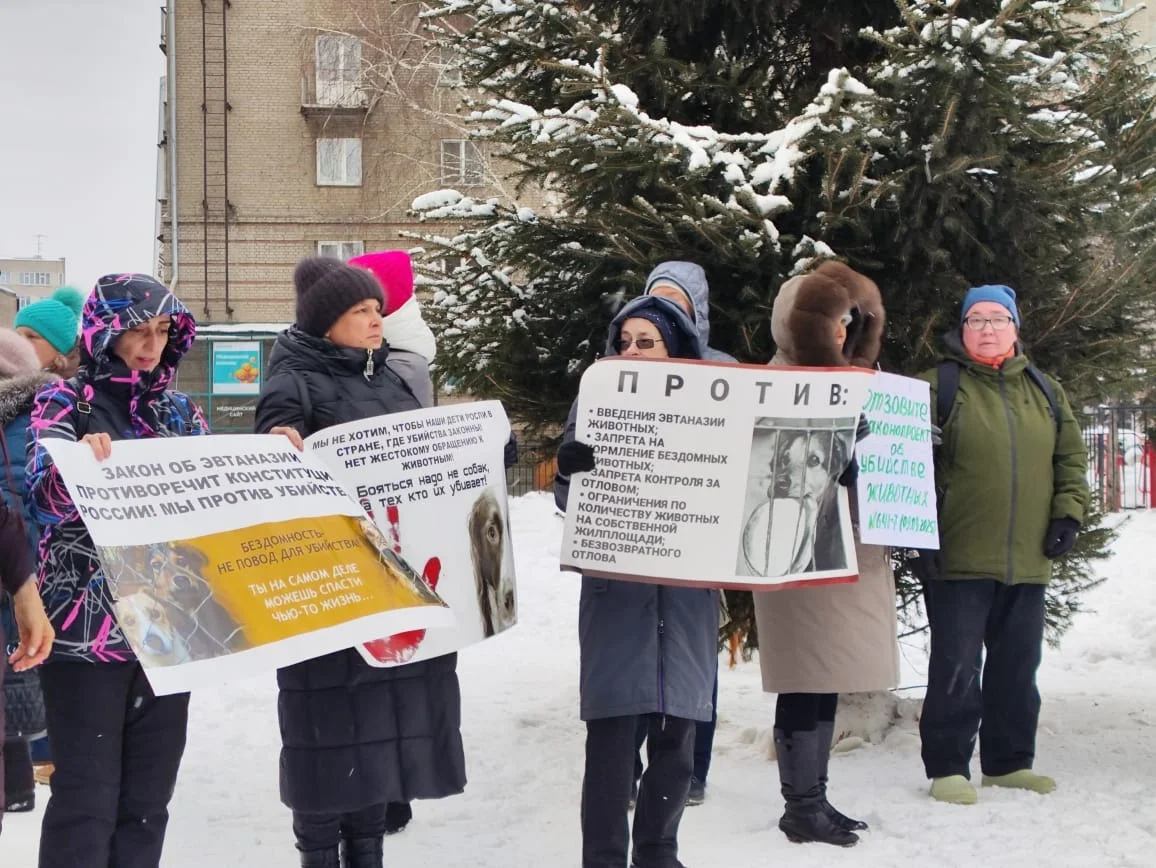
Egorov insists that “such legislation is ineffective,” and considers the fact that the authorities present it as a necessity (“after all, dogs eat children”) to be manipulation. “Of course, there are such isolated cases, but according to a study by [children’s ombudsman] Anna Kuznetsova, in 2021, among the causes of child mortality, animals are 0.1%. There was recently an accident in Novosibirsk in which two children died, and in 10 days three boys drowned on thin ice! And nothing, no hysterics, just news in the media,” Egorov is indignant.
When asked about the effectiveness of rallies in modern Russia, Egorov answers this way: “Yes, there is little point, but it is better to do it than not to do it, it is better to legally express one’s position.”
The lawyer and animal rights activist is sure that in fact this is not about the safety of children, but about stealing money from killing dogs. The bill has so far only been adopted in the first reading, and Egorov is busy writing amendments, but has no illusions. “The law will be passed, but we will fight and we won’t let people just kill dogs and steal money,” he assures me.
It is interesting that in Khabarovsk a rally on the same topic in the spring, as the project “Not Moscow Speaks”* wrote, was approved, but in Krasnoyarsk it was not (citing the coronavirus in the capital’s case).
“When the Soviet Union collapsed in the late 80s, it was scary to organize a political protest - they were still afraid of Soviet practices. Therefore, there was a crazy surge in environmental protests - they were saving the Aral Sea, Baikal and everything else. “We are not against Soviet power, but save our nature!” Even now, even if there is a political protest, they are afraid to express it,” says Oreshkin.
Permian. Policy
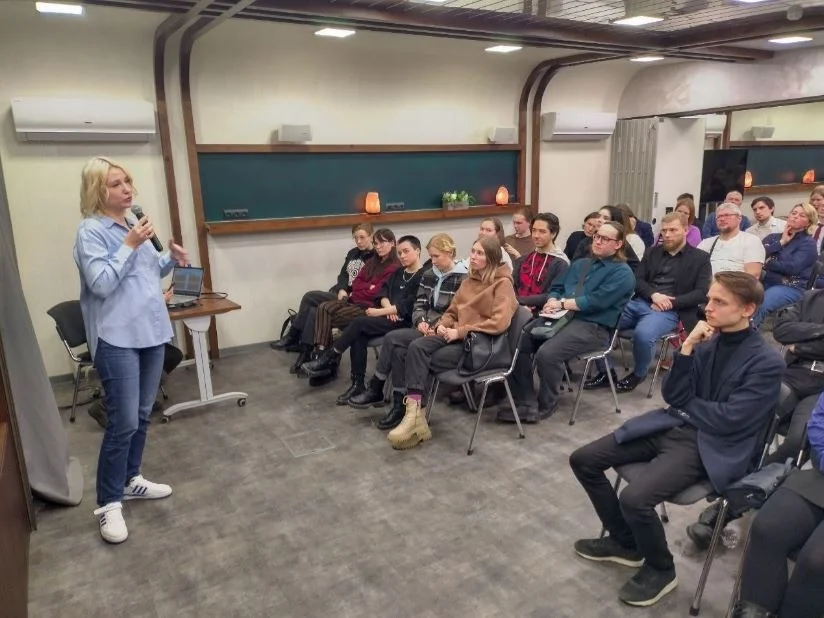
Some still risk announcing political rallies. At the beginning of 2025, Perm unexpectedly jumped ahead of other regions in this regard, where the local branch of the Dawn party of Ekaterina Duntsova* took matters into its own hands. In February, activists of an unregistered party coordinated a picket there with the authorities, which everyone later began to call “anti-war.”
True, in the application the organizers showed mastery of either Aesopian or bureaucratic language, and the theme of the picket was outlined as follows: “Public expression of opinion on the issues of achieving a peaceful situation and a favorable environment through non-violent means on the territory of the Russian Federation.”
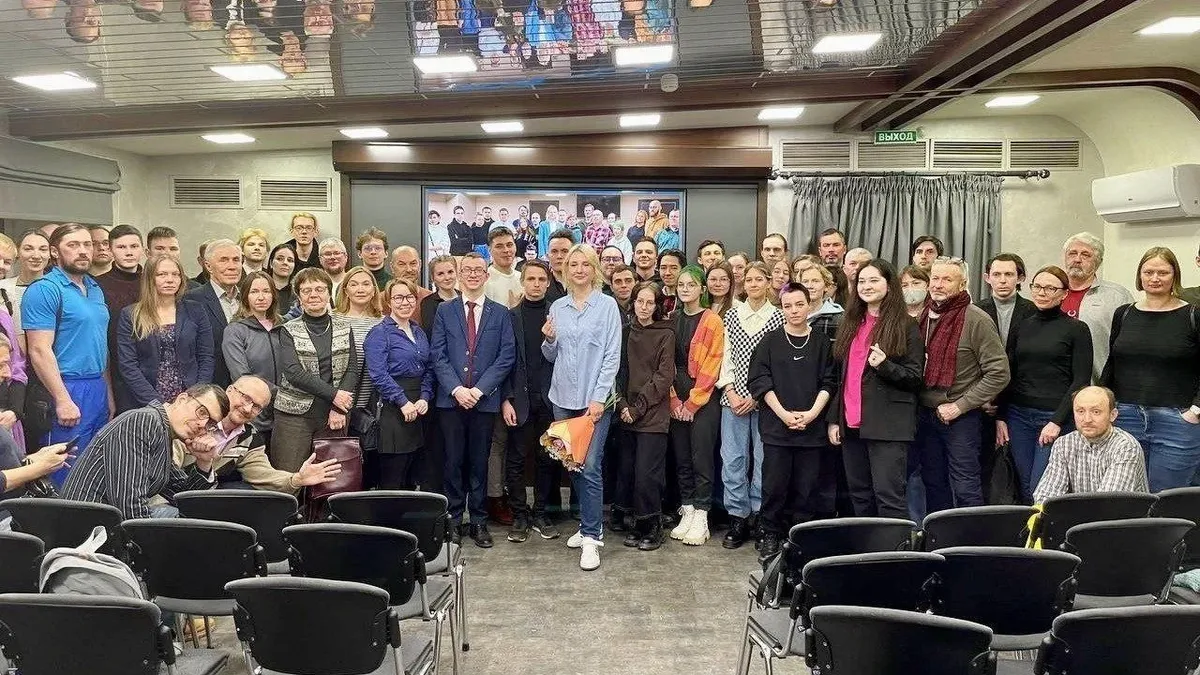
According to one of the activists of the Perm “Rassvet” - Lev, the applicant specifically tried to “spread a straw” in the wording. When asked why the rally was finally approved, another party activist , Larisa, answers somewhat naively: “Apparently, our authorities, unlike many other cities, know the law better and understand that they can refuse only if the place is already occupied or the organizer does not have the right to organize rallies. But the Covid restrictions have been lifted, so they can’t refer to them.”
However, Rassvet was still not allowed to hold a rally comfortably. “Not only did they move the place, they literally changed the time for us just a day before the start. We planned to start at 18.00, but they moved it to 21.00, and at the end of February it is very dark at that time. Moreover, when we arrived, the street lighting was also turned off. That is, they did as much harm as they could,” says Larisa.
According to her,
There were almost more police officers at the protest than there were about 20 participants.
“Not very many, of course, but these are the bravest people in Perm,” Larisa laughs.
— Were you not afraid that you would receive reports of discreditation? — I clarify.
— Naturally, we were afraid, but we carefully thought out the posters and slogans. We had several censorship filters, and out of 20 draft slogans, only six passed it.
When you see these posters, it seems that Russia is already living in Orwell’s book: “We want to live in peace and harmony with our neighbors,” “Negotiations are the best way to resolve international conflicts,” “Human beings are the main value,” “Rocket fuel is dangerous for the environment.” Although in fact, activists are simply reducing their own risks to a minimum.
In any case, that evening the police were presented with an amazing sight. 20 people stood in a circle in the darkness, lightly dispelling it with several flashlights. Showing each other posters with almost absurd text, people chanted: “We want to live in peace,” “Violence is not the norm,” and sang in chorus: “May there always be sun, may there always be sky, may there always be mom, may there always be me.”
According to Larisa, the media effect from the rally was good: “We then read comments on the video in various public pages, and people simply admired [our] courage and said “thank you.” This is probably why it was worth doing it.”
“Paradoxically, there were several people there who were just passing by and decided to join,” says Lev. — In general, it’s not like it’s completely empty.
People who share our views also need to know that they are not alone, that there is someone else trying to do something. Sometimes it even works out.”
According to the activist, “the effect was so strong and noticeable that the authorities decided not to allow this to happen again.” Lev believes that nothing else will be agreed upon with Perm Rassvet. Indeed, all subsequent attempts to coordinate rallies among party members failed.
First, in August, the rally “For Free Internet” was denied . Then, according to Lev, the authorities wanted to send them to the outskirts of Perm - to Vedeneeva Street. “In principle, you can get there, and although there are no people walking there, a lot of cars pass by and you can stand with a big banner. But on Friday, 15 minutes before the end of the working day, the approval was revoked, because we allegedly stated a different goal of the rally in our campaign,” says Lev. He is sure that the real reason for the refusal is that “the action began to gain popularity.”
In November, Rassvet did not approve a rally in support of the Stoptime group, despite the fact that the rally was again called veiledly: “For freedom of speech and creativity.” “Although we didn’t name names, it was clear to everyone who we were talking about in our propaganda materials. We assumed that we would sing songs with a guitar at the rally on November 16,” says Lev. For this rally, according to Lev, they offered “completely wild places.”
— One is a military town, where there is no direct bus from the center. There is a hole there, people walk around not completely sober, and there is nothing at all. The second is within the city, but there are slums, abandoned houses, garbage,” says the activist.
The Rassvet activists even agreed to the second option, but at the last moment they were still refused due to supposed repair work. “They brought an excavator into the middle of the forest and parked the machine with sand in the middle of the forest. But it’s completely unclear what to repair there! What could have broken there? - Leo is surprised.
Like more systematic activists, Rassvet rules out holding an uncoordinated event.
“We wouldn’t even be allowed to open our mouths, we wouldn’t even start anything.” We are not ready to deliberately lead people into detention,” says Larisa.
“We have a principled position - to act within the law. And people are not ready to engage in direct confrontation. For example, a concert in support of Stoptime was held by the completely apolitical Ekaterina Ostasheva, and she was first given mandatory labor for organizing an unauthorized event, then she was closed for another 15 days for allegedly not complying with the legal demands of the police officers,” Lev explains the risks.
Nevertheless, Dawn activists plan to continue trying to coordinate rallies. “We will analyze all this, think about how best to do it so as to ensure that we are not refused at the last moment,” says Larisa.
She (a former manager of an oil company), like Lev, an unemployed physicist, took up political activism after February 22nd. “We are generally random people, not politicians, not activists, just ordinary people. Of course, I have participated in rallies before, but only as an ordinary participant,” says Lev.
Larisa and Lev talk differently about why rallies are needed at all. Lev is more pessimistic and chooses a strange analogy: “Here is a bear in the zoo with sensory hunger, he stands still and sways back and forth. “I sometimes get the impression that we, too, carry out these senseless actions simply out of complete despair,” he says, but then he comes to his senses: “On the other hand, you look at the resonance, at the youth who come to us at Rassvet or at Ostasheva’s concert, and it seems that although we won’t change anything globally, perhaps we will retain the idea that being against is normal, that this is a natural human property. It seems to me that it should be preserved until the moment when society will have to be rebuilt again. Before starting from scratch, it is necessary that there be some grain of humanism, democracy, so that it remains and does not disappear completely.”
It must be said that in Novosibirsk , Voronezh , Petropavlovsk-Kamchatsky, rallies for Internet freedom and against the ban on calls in foreign instant messengers took place.
In Kamchatka, people held posters in their hands: “Let people talk and listen,” “Bring back calls in instant messengers!”, “Yes to freedom of speech! No to censorship and digital dictatorship!” True, not too many people took part in these actions.
Another topic of political rallies in 2025 was municipal reform. On June 21, about 4,000 people gathered for a rally against her in Gorno-Altaisk. The authorities clearly did not expect such a stir in a small region, and subsequent rallies here, as in other regions, were already refused to be coordinated, but the reform was approved .
Two capitals. Just a scream
Moscow and St. Petersburg have been quiet this fall. The last noticeable attempt to coordinate a public action in June 2025 was made by the Yabloko party, which organized a mini-campaign on a relatively safe topic - disagreement with the restoration of a bas-relief with Stalin at the Taganskaya metro station. The Yabloko members were denied the opportunity to hold a picket (with only 20 people!), citing the Moscow mayor’s decree of June 8, 2020 No. 68-UM “On the stages of lifting restrictions established in connection with the introduction of a high-alert regime.” The last stage of getting rid of the consequences of the coronavirus (permitting opposition rallies, since pro-government events take place without problems) even after 5 years in Moscow, alas, has not yet arrived.
“We will continue the campaign. Stalin has no place in Moscow!” - wrote then the chairman of the Moscow branch of Yabloko, Kirill Goncharov, but in the end the matter was limited to collecting signatures demanding the dismantling of the bas-relief (by December there were almost 100 thousand of them).
By the way, the police still managed to find the protest and punish its participants. On May 16, two framed posters appeared near the bas-relief with quotes from Putin and Medvedev condemning the cult of personality and the Great Terror. The posters were removed, and then those who brought them, activists of the “Society” movement, were detained. The Future" by Sofya Bezmenova and Timofey Rostopchin. According to the police report, the laying of posters was a “hidden form of public event in the form of picketing” that “attracted the attention of passengers.” According to the Internet portal Astra*, the court then fined each activist 20 thousand rubles for violating the procedure for holding a rally.
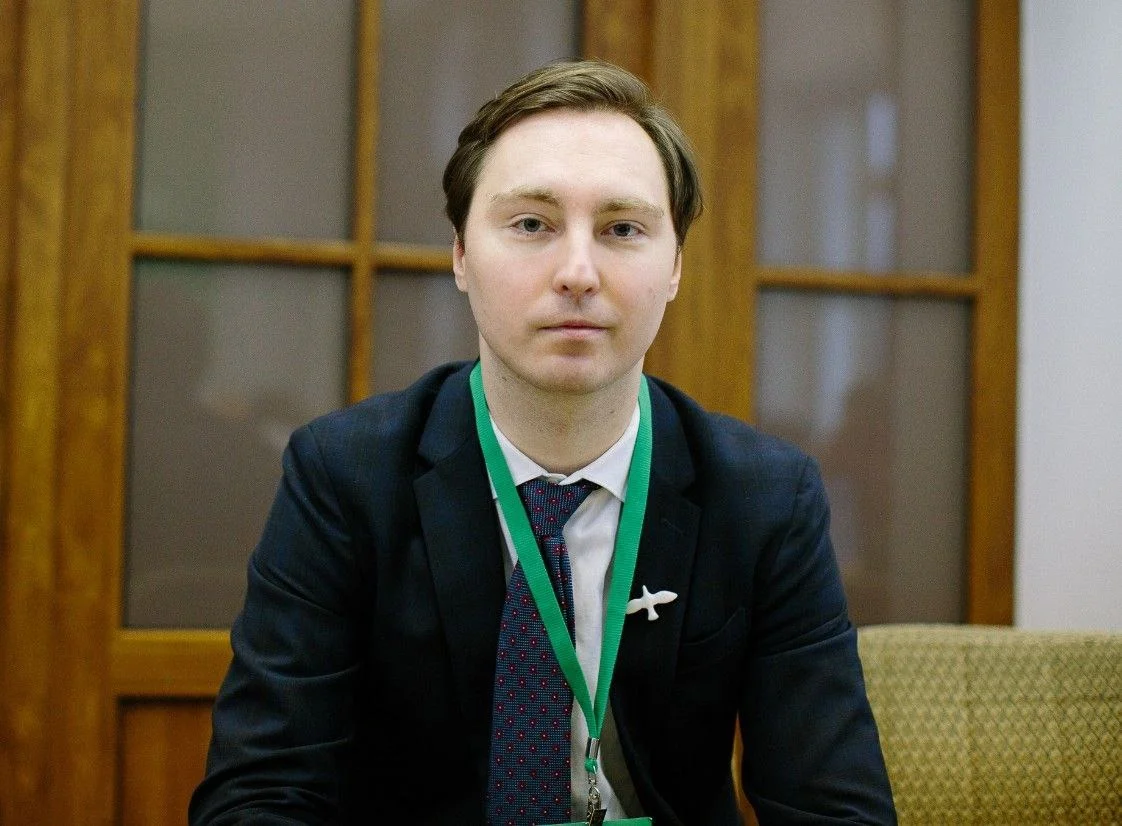
“I can only assume that the Moscow authorities felt political comfort during Covid, when they were no longer bothered by protests, and decided to prolong this state forever. Firstly, the reports to the Kremlin become much more beautiful, since there are no protests, and secondly, there is no fuss in their work. Sit and do nothing - no one will come out with a poster to denounce you. And now it’s easier to remove candidates from elections, and raise prices, and grab people from the streets to military registration and enlistment offices,” Kirill Goncharov comments on the ban on opposition rallies in Moscow.
Yabloko is not going to carry out uncoordinated activities - although if you do not touch on military issues, then you only face a fine, and in the worst case, 15 days of arrest, explaining this by “the unpredictability of law in the era of the Central Military District.”
— For any action you can get a criminal article or some kind of status, and often both. Therefore, I don’t want to risk not so much myself as my environment and supporters,” explains Goncharov.
In July 2025, former Russian presidential candidate Boris Nadezhdin and his former chief of staff Dmitry Kisiev contacted the mayor's office with a request to clarify the current procedure for holding public events and to lift restrictions on holding public events. They did not report the answer, but in August a trial was held on Nadezhdin’s claim against the mayor’s office and the deputy prefect of the Central Administrative District Larisa Petrova, who twice did not agree on the action’s policy due to anti-Covid restrictions. Nadezhdin insisted in court that restrictions due to Covid in Russia were more than two years ago, and with opposition rallies, the mayor’s office acts on the principle “we can, you can’t.” The representative of the defendant did not go into the discussion, but simply stated that the mayor’s decree fully complies with 68-FZ “On the protection of the population and territories from natural and man-made emergencies.” It is clear what decision the court made.
In St. Petersburg, the court also refused to lift the coronavirus restrictions, and the governor’s press service explained that lifting the restrictions requires an order from the chief sanitary doctor Natalia Bashketova, and stabilizing the situation with the coronavirus alone is not enough. But in June, more than 200 people came to the Trinity Bridge early in the morning in St. Petersburg just to shout from it. This action was organized by blogger Artem Khadunkin, who previously came to shout at the bridge alone in order to “overcome the embarrassment.”
The blogger claimed that the authorities approved the event, and the police did not interfere with the mass shouting, although after 10 minutes the blogger asked everyone to disperse: “Otherwise they will take us all away now.”
In the neighboring Leningrad region, they found a more original justification for refusing to hold a rally. A rally of the Communist Party of the Russian Federation in support of Legislative Assembly deputy Ivan Apostolevsky, who was arrested for 7 days for an old post criticizing Navalny (there was also a photo of the deceased politician, and this is now “extremist symbols”), was banned due to the potential threat of a drone attack.
They will make noise and disperse
In general, residents of the European part of Russia lag far behind Siberia in their protest activity. Something, of course, happens here too - but mostly on very local topics. For example, on March 30, residents of the Yaroslavl region protested against industrial emissions from a steaming plant for railway tanks. In the village of Dedovichi, Pskov region, an action was held against the merger of Porkhovskaya, Loknyanskaya, Dnovskaya, Dedovichiskaya and Bezhanitskaya district hospitals. In the Arkhangelsk region, a rally was held against the waste sorting plant in Koryazhma. Not Siberian or Far Eastern scale.
Obviously, there are many more rallies in Russia in 2025 than in the previous four years. Citizens are tired of sitting at home and watching as the authorities deprive them of all rights, freedoms and money.
This, however, does not change much. Even if we are talking about a spontaneous, uncoordinated rally, like the one that took place in Kursk on December 8 to protest against the cancellation of payments to victims of the actions of the Armed Forces of Ukraine. A very pressing problem forced women to take extreme measures. “We are choked by debt. We are forced to pay mortgages and loans for houses that actually do not exist, and at the same time give the last of our money for renting other people's apartments. Canceling the payment of 65 thousand [rubles] will finish us off completely. We will become homeless with debts,” their appeal says. Typically, they turn, of course, to Vladimir Putin.
“Well, 200 women out of 150,000 thousand, deprived of housing, work and their usual way of life in the Kursk region, came out and demanded 65,000 rubles. Well, they’ll make some noise and leave. They do not pose any threat, and their protest only matters for “foreign agency” resources, and in Russia they will not talk about it,” says Oreshkin.
Even if the rally turns out to be massive and resonant, these same organizers will not be allowed to consolidate its success. At the same time, an event on the same topic may be agreed upon in another region. In this sense, there is complete chaos with the rallies. For example, in Yekaterinburg, as OVD-Info wrote*, they did not agree on a picket against the demolition of street kiosks (the mayor’s office plans to demolish more than a thousand kiosks), citing a “basic readiness regime,” although applicants from the “Union of Non-Stationary Retail Facilities” specifically noted that among the dissatisfied there are members of the SVO, and the organization itself “more than once sent humanitarian aid to soldiers fighting on the front line.” In Krasnoyarsk, even a rally against the ban on rallies was banned. The response from a LDPR deputy to a picket was: “Holding public events during a special military operation is unacceptable.”
Political scientist Oreshkin does not see prospects for mass unrest. “People have no common claims against this government; everyone solves their own problem by turning directly to the first person. The idea that the person who started *** instead of economic growth is to blame does not exist in public opinion. Plus the complete absence of federal structures that could unite this process, provide common requirements and present it as a political protest of the entire country. There is no such party, no trade unions, no leaders,” he believes.
Ilya Azar*, project “Punctuation Marks”