
Translated material
Taxi drivers against Yandex
The strike took place in several post-Soviet countries at once. Drivers fight for working conditions

Photo: Natalya Kolesnikova / AFP / Scanpix / LETA
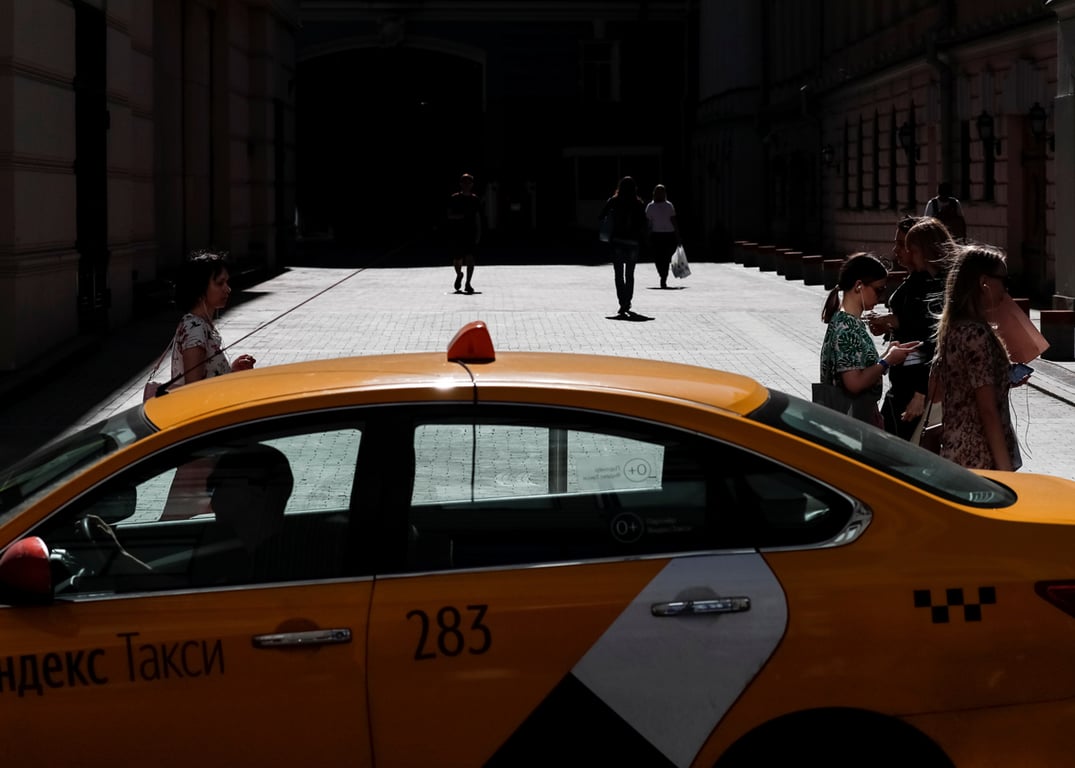
On Monday, for the first time, a protest took place simultaneously in several CIS countries: taxi drivers are trying to get better working conditions from Yandex in Russia, Belarus, Kazakhstan, Armenia and Uzbekistan. It is impossible to say exactly the number of participants in the “silent strike,” but it received a great response in the media and attracted the attention of St. Petersburg deputies.
Actual monopolist
— It has become difficult to work with Yandex due to very low prices and high commissions. Refusal of an order means minus four points in the rating, and only one point for a completed order. Up to five kilometers of delivery of the car is at the driver’s expense. At the same time, we do not see the final address where the passenger must be taken: if you want to receive this information, this is a new tariff, plus 6% of the order. And very low prices. I work only during peak hours, since during the day our orders start from 80 rubles, it’s a shame to transport people for this money, minus gasoline and the commission of the aggregator and the fleet, less than half remains,” Dmitry, a taxi driver from Kazan, tells Novaya Gazeta Europe.
On December 15, Dmitry, like other protest participants, did not go to work.
According to the Kontur.Focus database, the net profit of Yandex.Taxi LLC at the end of 2024 amounted to more than 51 billion rubles. Yandex launched its taxi calling service in 2011, two years later than the pioneers from Uber. Over the next 14 years in Russia and, to a large extent, in post-Soviet countries, Yandex.Taxi defeated its competitors, and also taught Russians and residents of neighboring countries not to order a car by phone or raise their hand at the side of the road, but to use the application.
The Federal Antimonopoly Service has long considered Yandex.Taxi as a monopolist in Russia: estimates vary, but the Internet service occupies the bulk of this market.
Those who want to taxi have virtually no other options to find clients somewhere else on a regular basis.
Yandex.Taxi takes advantage of this: it keeps prices low enough so that competitors do not appear again, while paying drivers very little even from the small amounts paid by passengers. The so-called “platform employment” scheme is practiced: drivers are not employed by the aggregator itself, but cooperate with it as self-employed, individual entrepreneurs or employees of affiliated taxi companies.
Thus, Yandex.Taxi uses the labor of taxi drivers in many cases much more than the standard 40 hours a week, but at the same time does not bear any social obligations to them.
Taxi drivers have protested against such conditions more than once: for example, in 2016 and 2018 in Moscow, in 2019 in Belarus, in 2021 there was an all-Russian protest, in 2024 Yandex drivers held a rally in Kyrgyzstan.
Disloyalty Program
Since November, Yandex has introduced a new loyalty program for its drivers: many taxi drivers perceived it as an additional tightening of their working conditions.
— The problem is really old, there is a lot of accumulated discontent. Now another increase in the aggregator’s margin has passed, and people are outraged about this. The changes are actually minor, but they became a trigger,” says Evgeny Stupin , a former Moscow City Duma deputy who covers the protest of taxi drivers on his social networks.
Stupin noted in a conversation with Novaya Gazeta Europe that he does not remember the protests that previously took place simultaneously in different CIS countries: Russia, Belarus, Kazakhstan, Armenia and Uzbekistan. From all these countries there were reports about the participation of taxi drivers in the action on December 15.
The organizers of the protest could not be found during the preparation of the text. The media mentions the Yandexgostop telegram channel, but it appeared on December 8, already as a mouthpiece for disgruntled taxi drivers who had organized themselves on some other platform. A Yandexgostop representative did not respond to Novaya Gazeta Europe’s request for an interview.
In different posts on social networks, the protesters’ demands are formulated differently, but usually boil down to increasing the cost of the trip, reducing the Yandex commission, and also to oblige the aggregator to indicate at the stage of ordering a taxi the final address where the passenger is going to go. So that the driver understands whether the trip is profitable for him.
The protesters called their action a “silent strike”: they called on drivers not to work on December 15. And sympathizers of the protest influenced taxi drivers who did not join the protest on December 15:
they took orders, then dropped them halfway, when the driver had already covered part of the route, and wrote to the drivers: there is a strike today, go home.
— According to Rosstat, there are virtually no strikes in Russia now. Because in the standard format they are extremely complicated. They require approval, they must be carried out officially with notification to the employer, with a preliminary meeting of trade union members, etc. In fact, strikes are carried out, they are just not called strikes. Those who are dissatisfied either stop work completely or for some time. Or - this is called an Italian strike - they work strictly according to the rules. This happens everywhere and sometimes gives very good results,” says Andrey Savelyev, administrator of the portal about labor conflicts Antijob.net.
In the case of taxi drivers, everything is even simpler: in order not to bear social obligations, Yandex does not recognize drivers as its employees. But drivers do not owe anything to the aggregator: they can stop working at any time and without notice.
Riot Blizzard
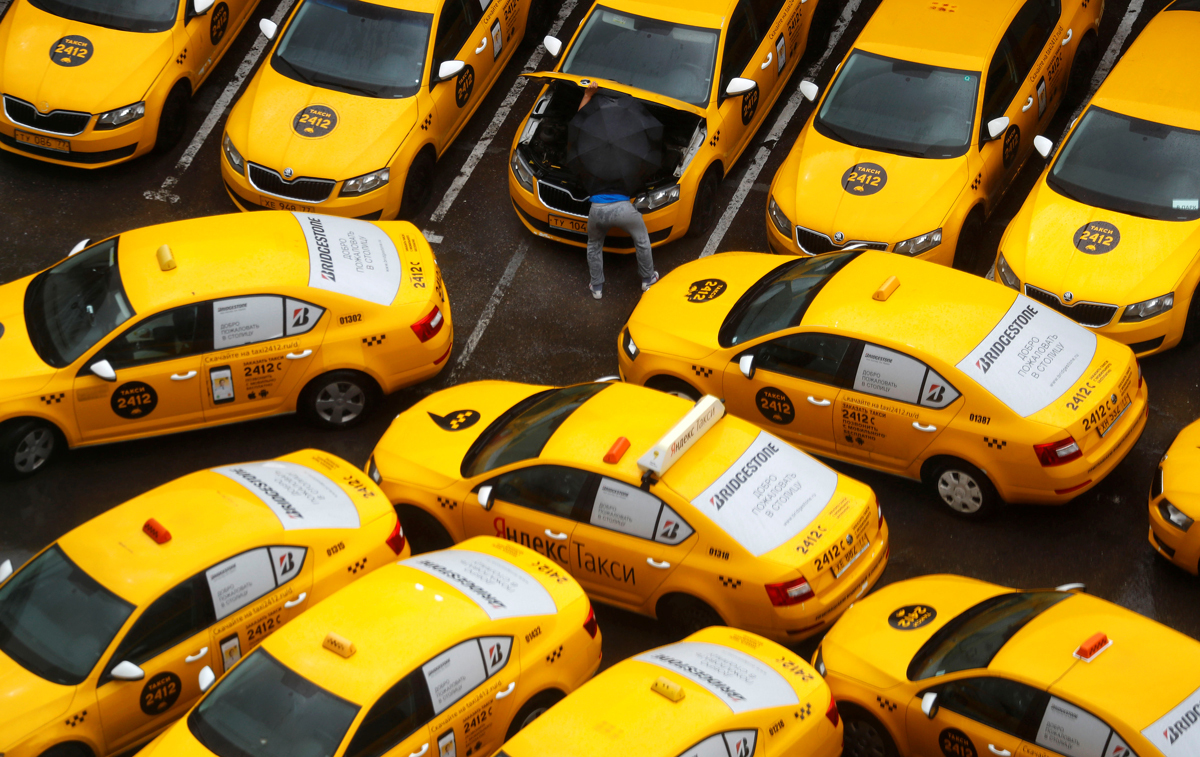
Taxi drivers note that Yandex has been able to keep prices down for many years by paying drivers.
— In 2015, prices were 65–90 rubles per trip, now, ten years later, they are 75–100 rubles. Despite the fact that prices for many goods and services have doubled and tripled over the same years. It’s generally very difficult for those who rent cars: they have to work 12–14 hours to earn something, and this greatly affects the safety of passengers, as well as other road users,” says Evgeniy, a protester from Khakassia .
Taxi drivers may have complaints not only about Yandex.
— Large aggregator commissions and low base tariffs, ridiculous “service rules”, “support service” that does not help drivers. There are also many questions about the new taxi legislation and methods for monitoring its compliance.
Instead of annoying drivers with roadside checks, it would be easier for the authorities to actually force Yandex not to work with illegal migrants. The same goes for “localization”: the requirement to exchange your normal car for a Russian one by March 1, 2026 without special need is very expensive for the self-employed, given the price and high cost of operating Russian cars. And the very status of self-employed means no sick leave or vacation pay, but there is a tax even on the aggregator’s commission,” says Alexey, a protest participant from the Leningrad region .
The protest of taxi drivers was covered in the media in almost all Russian regions: for example, in Ulyanovsk , Novosibirsk , Vladivostok , Samara , Orenburg , Saratov , Naberezhnye Chelny , Tyumen , etc. In many cities they wrote that on December 15, taxi prices were higher than usual, and the waiting time was longer. But at the same time, snowfalls occurred in many Russian regions. So how much of this was influenced by the “silent strike” and how much by the weather is impossible to determine.
According to estimates by Doxa, taxi drivers refused to work in at least 25 Russian cities. In the Legislative Assembly of St. Petersburg, deputies from the transport commission decided to contact the antimonopoly service in order to check Yandex’s policies.
— We cannot influence Yandex yet. But the protest can be beneficial if the media and authorities hear us, says Alexey.
— So far this is the first call for Yandex. That this cannot continue, we need to change the rules of working with taxi drivers,” adds Evgeniy.