
Translated material
I'm a foreigner everywhere
What is an identity crisis in emigration and why is it especially strong in the third or fourth year? Psychologist tells
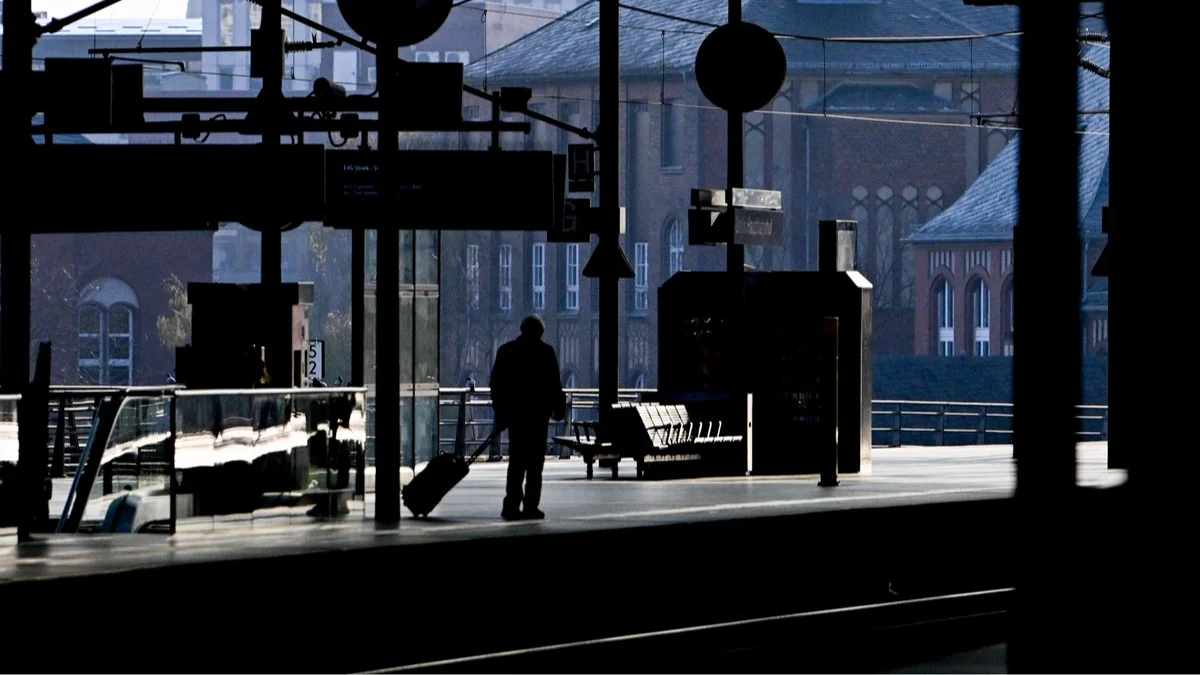
Photo: Filip Singer/EPA
The fourth year of life in exile is a strange point. The documents are in order, the lease has been extended, you already know your neighbors, you are not lost because of unfamiliar products in the supermarket, perhaps you already have a favorite bar or coffee shop. The Russian bank card has long been gone, the Russian gym membership has expired, and the company of colleagues or friends who seemed so close just a couple of years ago has broken up. Adaptation seems to be behind us, but many continue to feel stuck between two worlds.
In migration studies, this state is sometimes described through the old anthropological term “ liminality ,” that is, borderliness. Back in the 1960s and 70s, anthropologist Victor Turner wrote about the intermediate phase of transition: a person has already left his previous social role, but has not yet entered a new one, that is, he exists “between” worlds. Contemporary work on migration and refugees has brought this idea to the lives of people whose statuses and identities remain uncertain for long periods of time, from Ukrainian refugees to holders of temporary residence permits in Europe.
For many Russians who left after 2022, this liminality is reinforced by politics and moral choices.
Studies of new Russian migrations show : a significant part of the “relocants” do not plan to return, see the country of origin as dangerous and alien, but at the same time live in legal and social uncertainty.
The result is a paradox: the “old home” with which it was once easy to associate oneself is now felt as a source of threat, shame or powerlessness. But the “new home”, both legally and symbolically, is still not fully accepted: sometimes because of status and documents, sometimes because of internal barriers. Formally, you are already in another country, but psychologically you continue to live in a suspended corridor between the “former home” and the “not yet home.”
How psychologists describe the adaptation of migrants
One of the most famous theories in migration psychology is John Berry's acculturation model . It comes from two simple questions: do I want to preserve my original culture and do I want to become part of the culture of the country in which I now live.
Depending on how a person answers these two questions, there are four possible adaptation strategies:
- Integration - I preserve my culture, but at the same time actively master a new one.
- Assimilation - I actually give up the “old” and try to become a “local” completely.
- Separation - I hold on to my own and have little interaction with the culture of the host country.
- Marginalization - I don’t feel connected to either the old culture or the new one.
A large review of studies from different countries shows: people with an integration strategy, on average, feel better psychologically, they have lower rates of depression and anxiety, and higher life satisfaction. The least successful, on average, are those who find themselves in a state of marginalization, that is, without a sense of belonging to any environment.
It is important that “integration” itself does not mean: “I love both countries equally and I like everything.” Rather, it is about an internal agreement: I have several cultural codes, and I consciously connect them.
Those who left Russia after the outbreak of war often cannot integrate according to the classical scheme: maintaining “Russianness” is difficult due to association with the war and isolation from Russia, and assimilation is difficult due to the language barrier, legal uncertainty, hidden or overt Russophobia, lack of interest, psychological difficulties and limited access to political participation in the country of residence.
As a result, many get stuck in that very field of marginalization: “I don’t want to be Russian in the political sense, I’m losing my identity due to isolation from the country, but I don’t have the tools, the time, or the internal readiness to become a “real Georgian/German/Israeli.”
Bicultural identity: why some live comfortably “in between” while others do not
Contemporary work asks: How exactly do different cultural parts of personality coexist within one person? To do this, they use the concept of bicultural identity integration (BII) - “the level of integration of bicultural identity.”
Research shows that when people experience their cultures as compatible and complementary (high BII), they, on average, feel more internal integrity, move more flexibly between contexts, and demonstrate higher rates of subjective well-being. That is, a stable “I can be both this and that” is associated with better emotional self-regulation and lower levels of stress.
At low BII the picture is the opposite. A person perceives his cultural parts as conflicting: “if I take on a new identity, it’s as if I’m betraying my Russian family.”
It is this internal conflict that research has linked to higher levels of internal tension, self-criticism, and the feeling of “I’m a little fake everywhere.”
When BII is low, the risk of anxiety, depression, feelings of internal conflict and isolation increases.
A specific case of “new Russian migrants”
What we now call “relocants” often appear in academic texts as a new politicized minority: people who left Russia after the full-scale invasion of Ukraine, who are simultaneously separating from the “aggressor country” and trying to integrate into new societies.
Research shows several important features of this group.
The motive for leaving is often described as an ethical and political break with the state. Scientists view post-2022 emigration from Russia as a way to “regain sovereignty over one’s own body,” that is, to escape the logic of mobilization and coercion. Many are forming a new diaspora identity, which is built around an anti-war position and distance from official Russian rhetoric. Because of this, after moving, people are drawn to “their own” - those who share their political views and elections.
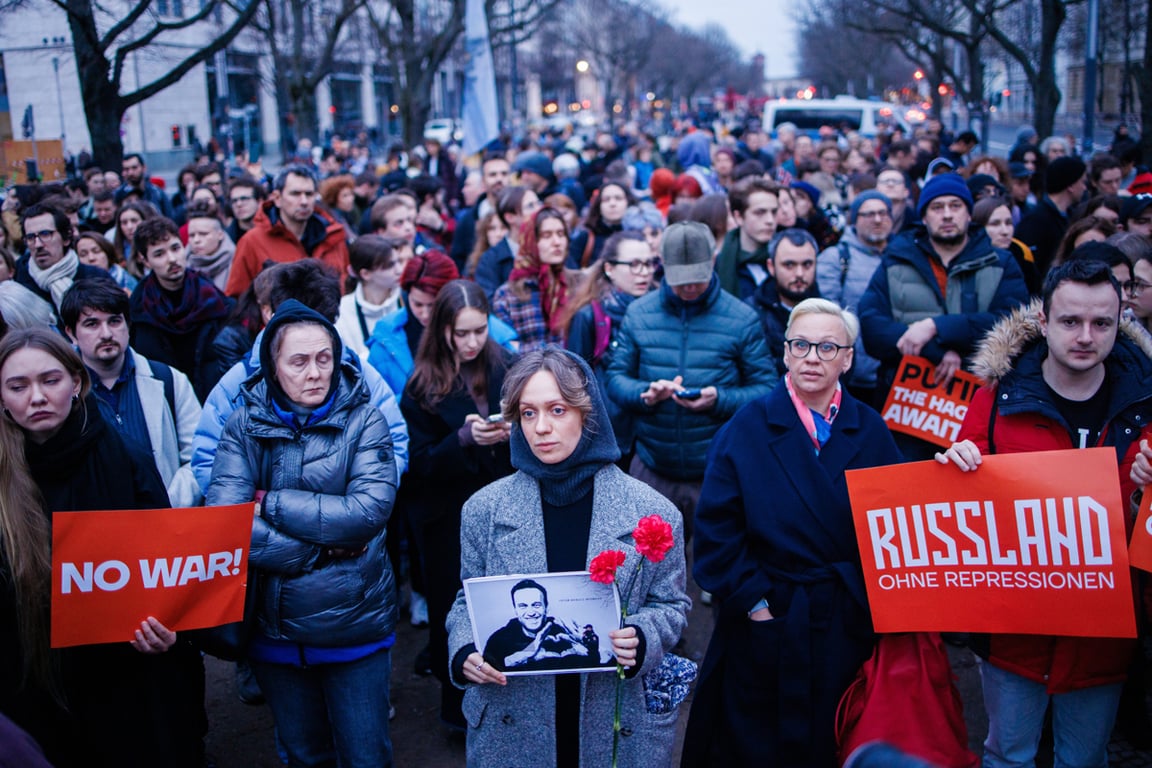
Some of the work records strong emotions of shame, guilt and anger among those who identify themselves with the “aggressor group” and do not share its actions.
Varvara Mukhina's article shows how among Russian migrants who oppose the war, these feelings become a driver of activism, but also a heavy burden that affects their mental state.
Why is the “fourth year” so acutely felt?
The sequence of phases of adaptation of migrants is well described in scientific texts. Studies of culture shock and acculturation show that the first months and years are occupied by everyday tasks - language, work, housing. When this level is relatively stabilized, a deeper phase begins - a reassessment of identity and meaning, questions: “Who am I now?” and “Where is my place?” This corresponds to classical models of adaptation, where after a period of shock and active struggle with circumstances, a phase of reflection and restructuring of self-image begins.
For those who left after 2022, this point often falls precisely in the third or fourth year: documents have been received, there is security, life has been established, and internal contradictions are revealed. The “old house” is now perceived as morally or politically alien, and the new one has not yet become one’s own due to language, status or lack of strong social ties.
Thus, the “fourth year” for many is the moment when everyday adaptation is completed, but psychological adaptation is just beginning, and all latent issues of identity come to the surface.
What does all this lead to on the level of everyday life?
People who find themselves in a situation of actual marginalization (they do not feel either part of the country of origin or part of the adopted society) are more likely to experience symptoms of depression, anxiety, feelings of meaninglessness, and a general decrease in life satisfaction. This is a natural result of the lack of stable psychological support in the form of an understandable belonging.
At the level of behavior, this is expressed in typical scenarios: the inability to make long-term plans (because it is not clear “where I will live at all”), a block in a career (fear of investing in language and qualifications if you suddenly have to move again), difficulties in relationships (how to build a family where you yourself do not fully believe that you will stay).
Is there a way out of this?
Scientific texts do not offer magic recipes, but they do show fairly confidently what conditions are associated with better adaptation.
The first is a way out of the purely diasporic bubble.
Research shows that those who feel best psychologically are those whose connections are not limited only to “their own”: they have a Russian-speaking circle and real contacts with “locals” through work, study, neighbors, and volunteering.
Such mixed networks reduce the feeling of marginality and provide more footholds in the new country.
The second is conscious work with that very BII: recognize that you now really have more than one cultural affiliation, and try not to throw out any of them, but look for forms in which they can coexist.
And finally, a separate layer is psychotherapy and support, where migration and war are not devalued, but are recognized as central themes.
The right to be “in transition”
You shouldn’t perceive an identity crisis over living abroad as a whim or “ungratefulness.” This is the natural result of several factors: a break with home, lack of inclusion in the life of the new country, and internal conflict between different parts of one's own cultural identity.
Realizing your new identity is a long process, and the most important step here is to recognize your “borderline” state as normal, allow yourself to be “in between” for some time, without considering it a failure.
Research shows that over time, many people develop a new, more integral diasporic or bicultural identity - with its own connections, habits and rituals. It may take years, but when a person stops demanding immediate self-determination and begins to piece his life together gradually, it ceases to be a crisis and becomes the basis for a new resilience.