
Translated material
Gas that burst
How does the unrecognized Transnistrian Republic live without Ukrainian transit of Russian gas?
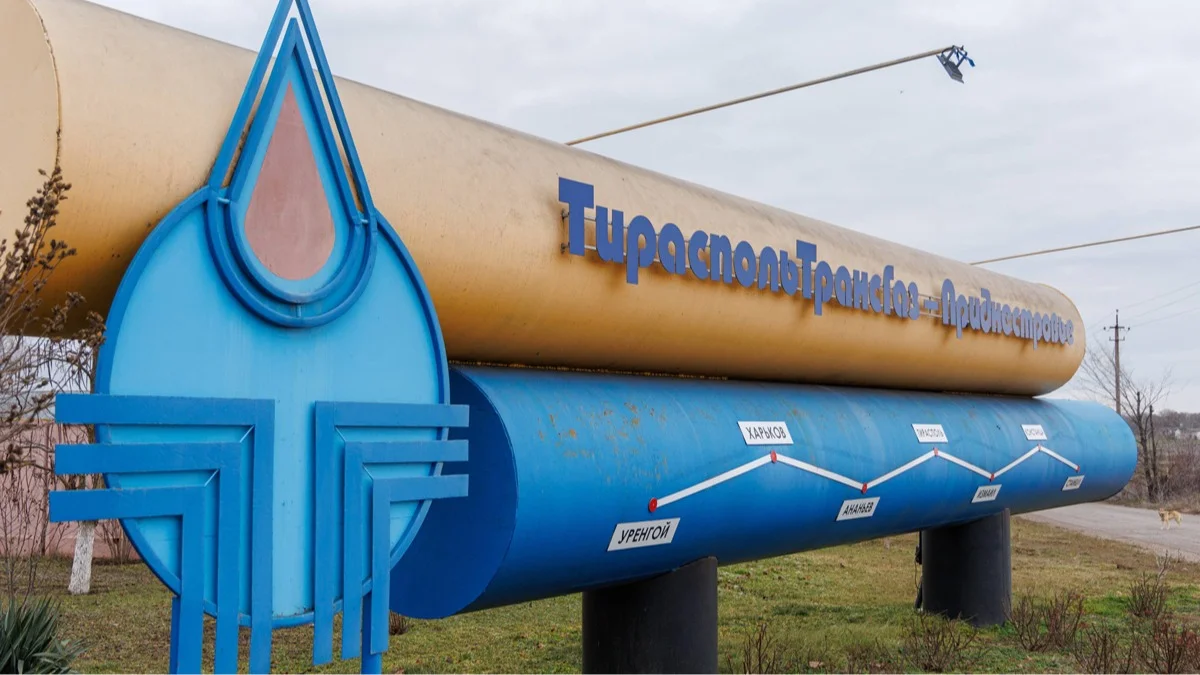
Gas distribution station "Tiraspoltransgaz" in Transnistria, Moldova, February 4, 2025. Photo: Artem Kulekin / Sputnik / Imago Images / Scanpix / LETA
The unrecognized Transnistrian Moldavian Republic (PMR) has been living in a regime of energy crisis and austerity for almost a year. This happened after Ukraine stopped the transit of Russian gas through its territory, which had been supplied to the region “free” for 30 years and was the basis of survival for both the local economy and the pro-Russian political regime. NM talks about what is now known about the state of energy and the economy in the Transnistrian region and whether Moldova has come closer to reintegrating the country this year.
Where does the gas come from?
Transnistria, the unrecognized pro-Russian region of Moldova on the left bank of the Dniester, is entering another winter season with an unstable and unpredictable gas supply pattern. The region, which for three decades lived off virtually free Russian gas, faced virtually no interruptions and did not save energy resources, now receives about 3 million cubic meters of gas per day. That's far less than he needed in past winters, especially given the region's concentrated industry.
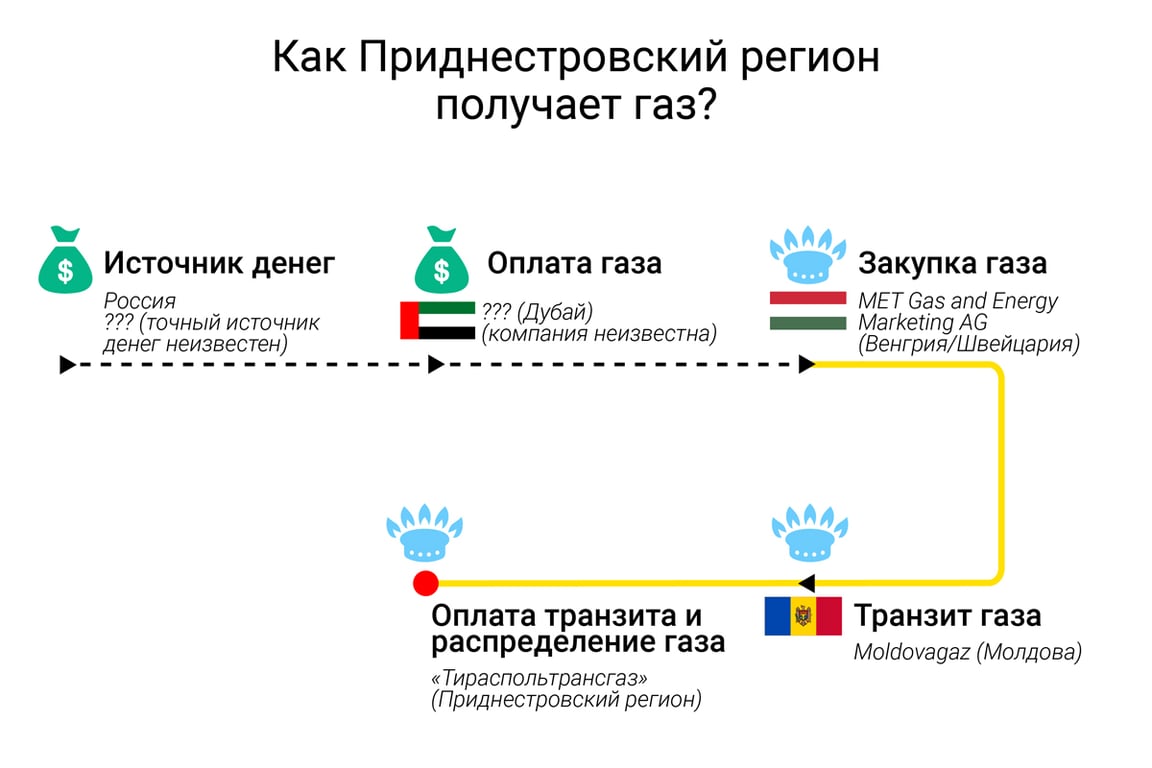
Gas in Transnistria no longer comes directly from Gazprom. Formally, this is no longer Russian, but European gas, which is purchased on the EU market and supplied according to a complex multi-pass scheme through the Moldovan company Moldovagaz (the national operator, where the controlling stake belongs to Gazprom), the Transnistrian operator Tiraspoltransgaz and the Hungarian company MET Gas and Energy Marketing AG . At the same time, Russia pays for it, and Transnistria formally receives it on credit.
The situation remains precarious. As the acting head of Moldovagaz, Vadim Cheban, explained at the beginning of the week, instability is associated with several factors: fragmented purchases - up to three batches of gas per month - and checks by European banks of those companies through which Russia pays for this gas.
“The gas supplied to the left bank of the Dniester is not Russian - it is purchased on the EU market. Obviously, supplies are unstable as they are largely dependent on payments made through a paying agent
(a company appointed by Russia - Ed. ), on the basis of agreements signed between Tiraspoltransgaz, Moldovagaz, the paying agent and, accordingly, MET Gas and Energy Marketing AG,” said Vadim Cheban.
According to him, gas is now purchased in short “segments” - 10-15 days in advance.
“There are three supply periods during the month. And a lot depends on these transfers and the cost of natural gas, as well as on the ongoing process of verification of these payments by correspondent banks, which are mainly located either in Switzerland or in the EU. I cannot say that supplies are stable, because certain delays constantly arise, primarily due to payments,” said the acting head of Moldovagaz.
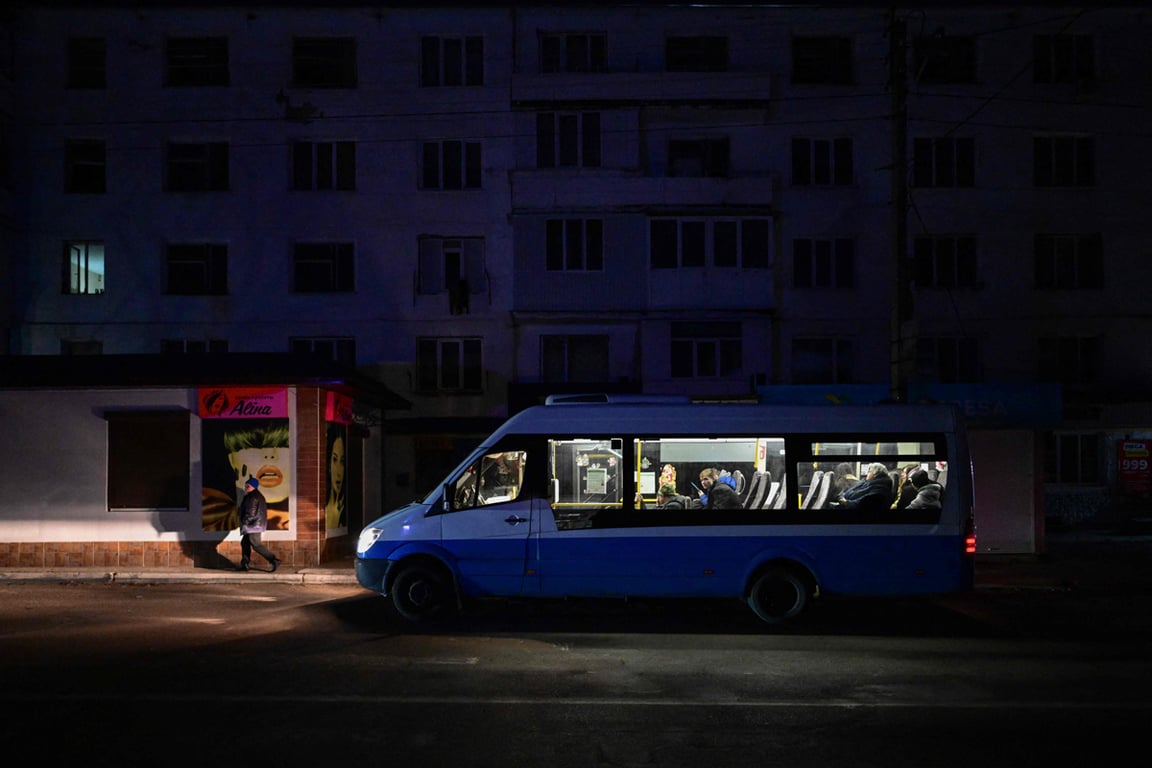
How the “gas fairy tale” of Transnistria burst
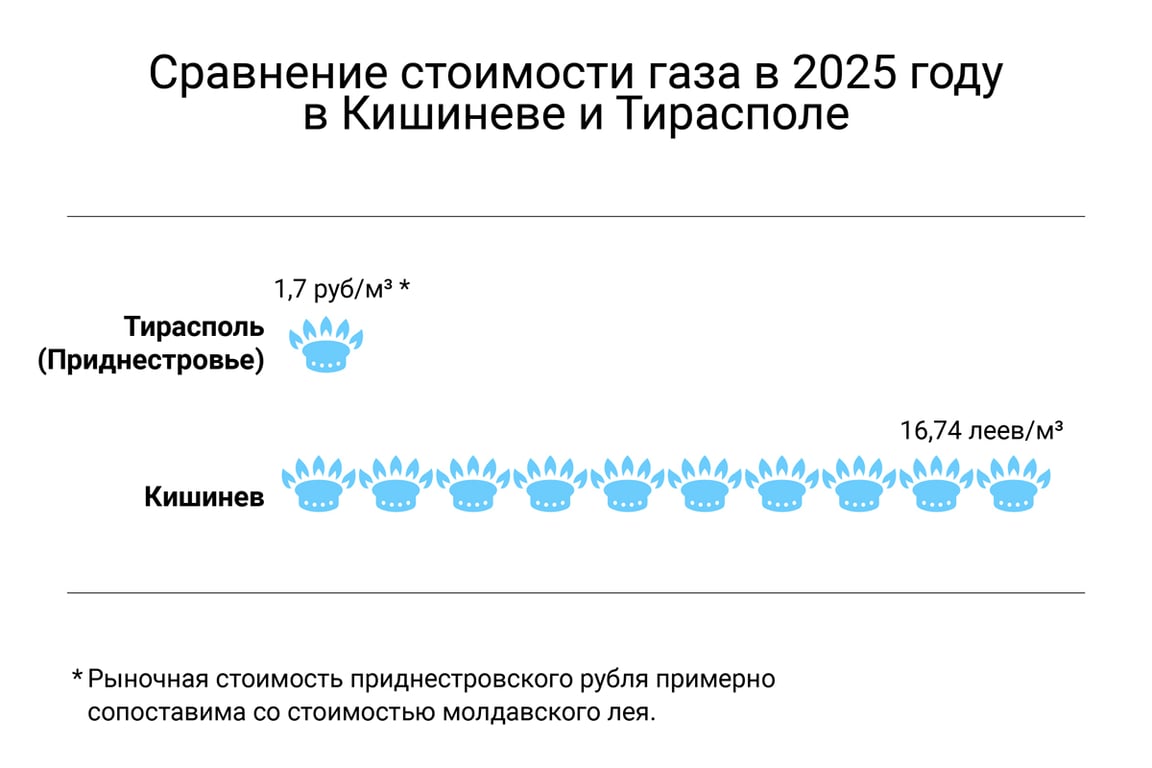
The crisis began in 2025, after Gazprom stopped gas supplies to Moldova. Before the war in Ukraine, Transnistria almost never experienced problems with gas: the region received as much as it needed, residents and businesses paid a symbolic price - about 1 lei per cubic meter, and the collected money remained with local authorities and was spent within the region.
Following Russia's invasion of Ukraine, Gazprom reduced supplies to Moldova from approximately 8 million to 5.7 million cubic meters of gas per day in 2022. According to the contract, the Right Bank was to receive about 1.2 billion cubic meters per year, and the left bank - about 2 billion.
Chisinau decided to send all Russian gas to Transnistria. Some were used within the region, some went to the Moldavian State District Power Plant, which provided electricity to both banks of the Dniester.
In 2024, the agreement on gas transit through Ukraine expired. Moscow and Kyiv did not extend it, and supplies stopped. Although it was known in advance that the transit would end, neither Chisinau nor Tiraspol prepared for this in time. As a result, the Transnistrian authorities hastily accumulated about 13 million cubic meters of gas and equipped some medical institutions with diesel boilers.
Due to the availability of gas, the region was almost completely gasified; alternative types of heating were almost not used. On January 1, gas was completely turned off in rural areas; in cities it was left only for operating stoves and cooking. All industrial enterprises running on gas have stopped. The energy-intensive Moldavian State District Power Plant switched to coal.
But here, too, a problem arose: the state district power station can only operate on anthracite, the main deposits of which are in the Donbass, where the fighting is taking place. Coal reserves imported before 2014 were almost exhausted.
Social networks and the media reported that this year the state district power plant was switched to coal power several times, but there is no independent confirmation of this.
After the cessation of gas supplies, Chisinau offered to purchase fuel for the region on the European market, but the actual authorities of Transnistria refused. On January 10, Transnistrian leader Vadim Krasnoselsky traveled to Moscow, where he announced that Russia would provide gas to the region as “humanitarian aid.”
It soon became known that the Moldovan company Natural Gaz DC had signed a contract with Tiraspoltransgaz. Co-owner of Natural Gaz DC Arkady Vicol argued that the company plans to purchase 2-3 million cubic meters of gas per day on European exchanges, and the Moldovan budget will receive about 3 million lei in taxes per day.
But Chisinau reminded that only Moldovagaz can legally supply gas to the region. As a result, a complex scheme was agreed upon: gas is supplied by Moldovagaz, received from the Hungarian MET, and paid for by the Dubai company. First - JNX General Trading LLC, later the names of the companies changed several times. Transnistria claims that purchases are being made using a Russian loan, but its terms are unknown.
It is noteworthy that it was the Moldovan authorities who were the first to resume gas supplies: at the end of January, thanks to EU assistance of €20 million, Chisinau began purchasing gas and sending it to the left bank. The scheme with MET and Dubai intermediaries only started working on February 14.
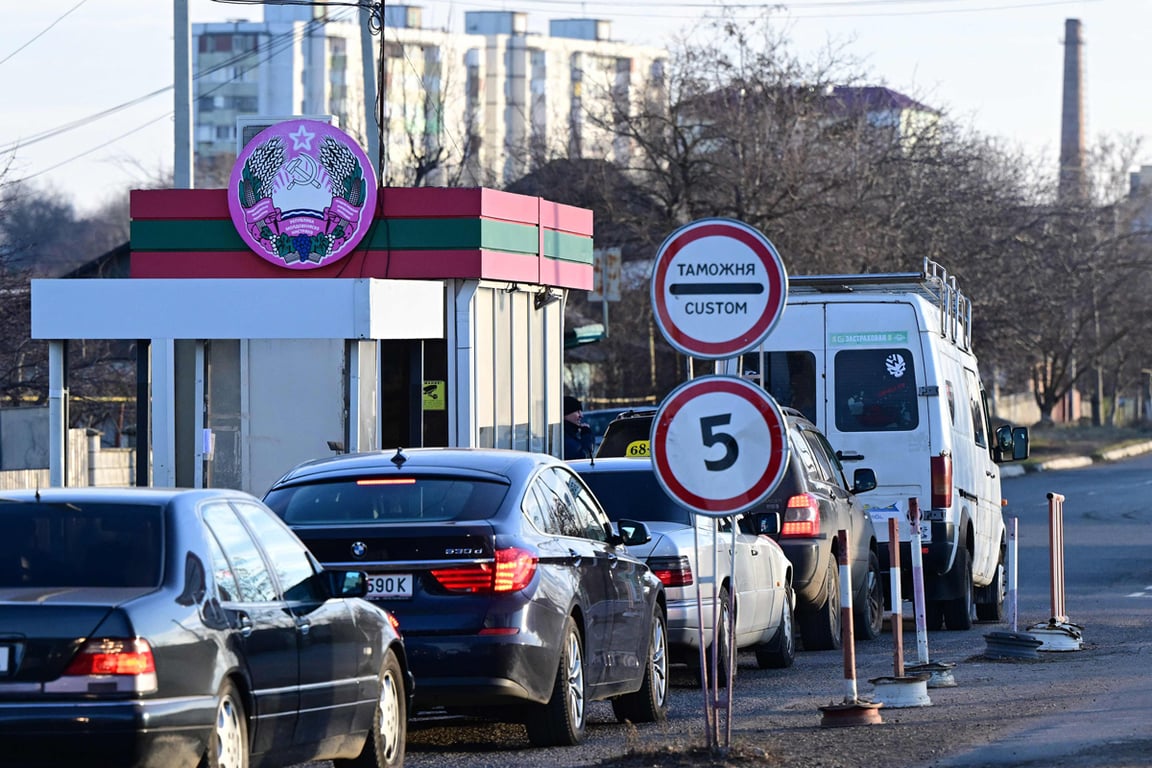
Gas supplies were also accompanied by political conditions in Chisinau: the release of several political prisoners, the resumption of work of the Moldova 1 television channel in the region, the solution to the problem of the lyceum in Ribnita and the dismantling of roadblocks installed in 2022.
In parallel, the EU proposed an aid package of €60 million, but with additional conditions: democratization, improvement of the human rights situation and a gradual increase in tariffs for the population and industry (in recent years, gas in the region has been several times cheaper - sometimes tens of times).
In Tiraspol, there was almost no comment on the topic of EU assistance. But in November, Krasnoselsky spoke sharply at a meeting with Dutch Ambassador Fred Duijn:
“Do you think this help is for good or for harm? “I initially stated that under such oppressive conditions, “help” cannot be accepted,”
- said the leader of the region.
He proposed using this money for the construction of treatment facilities in Chisinau and other cities - “because wastewater flows into the Dniester.”
3 million cubic meters of gas per day is significantly less than the previous volume: according to calculations, in winter the region needed about 3.7 million cubic meters only for internal needs.
In the spring, during the warming period, cities began to sharply reduce the temperature in heating systems - this had not happened in the region before.
What is happening to the region's economy?
After the resumption of gas supplies, Moldova refused to purchase electricity from Transnistria. Prime Minister Dorin Recean spoke about this back in January, and Energy Minister Dorin Junguiettu confirmed this in November.
Although the Moldavian State District Power Plant was included in the prequalification list for the supply of electricity to compensate for the technological losses of the state enterprise Moldelectrica (about 2–2.5% of Moldova’s consumption - NM), it almost immediately became clear that it could not participate in the tender.
Electricity generation is the most important export item of Transnistria. In the first 10 months, “exports of fuel and energy goods” to the right bank amounted to $173.6 million—28% of the region’s total exports.
Gas restrictions also affected other industries. At the beginning of the year, the entire industry in the region was not working. After the resumption of gas supplies, local media repeatedly reported that the enterprises were operating partially due to periodic failures in gas payments by Dubai companies.
Due to the energy crisis, the region introduced austerity regime several times:
Exports from the region fell by 42% over 10 months, to $359.8 million.
According to the local State Statistics Service:
The authorities are already cutting funds and expenditure items. In October, they proposed reducing the revenues of the “republican, local and consolidated” budgets by almost 290 million rubles. The programs for health care, social policy, the road fund, and the capital investment fund were cut.
Savings on street lighting have even been discussed recently.
What's next?
There are no optimistic forecasts. The budget indicators for next year are almost identical to the current ones:
• income - 3.8 billion rubles,
The head of the local Ministry of Finance, Alena Ruskevich, warned that funding for a number of programs would be reduced.
• The capital investment fund will be reduced to 74.81 million rubles.
The new speaker of the local parliament, Tatyana Zalevskaya, said that the main goal is to preserve “socially protected articles”:
“Of course, all our efforts will be aimed at preserving socially protected items for the population. That is, payments, benefits, wages and pensions.”
Energy expert Sergei Tofilat believes that the actual authorities of the region will have to cut costs primarily on roads, infrastructure, and support for business and agriculture.
“How long can you survive on infrastructure that doesn’t exist? […] There may be a scenario similar to that in Cuba: the population is getting poorer, people are leaving, there is less and less finance. And it may be that at any moment the free gas will stop - and then there will be a humanitarian crisis,”
- he told NM.
According to him, until Tiraspol is ready to give up support from Moscow, Chisinau can do little. “It is best to prepare a reintegration plan, agree on a budget and partner support. And wait for the moment when Moscow refuses,” says Tofilat.
IDIS Viitorul economist Veaceslav Ionita notes that the region’s energy sector affects three areas at once: the budget, the economy and social sustainability.
“Almost two-thirds of industry is the production of electricity and metal. This was their main part of production and their main export. Energy, gas, and metals rely on gas. Therefore, the lack of gas, firstly, affects the budget, and secondly, the economy. No production - no wages, no jobs. People are forced to leave,” he explains.
Ionita recalls that cheap energy resources smoothed out low wages and inflation. But this factor disappears.
“Even when businesses paid very little taxes compared to the right bank, when they had access to very cheap energy resources, when they were given access to the right bank and to exports, despite all this, their economy is untenable,” the expert concluded.
With the support of Medianet