
Translated material
Crystal Empire of German Gref
The country's main bank has become stronger than ever. What's the catch?
The head of Sberbank, German Gref, has spent years building the image of an innovator and Western-style visionary who thinks about the future. The war between Russia and Ukraine has not changed his behavior: in public he behaves as if nothing had happened, and artificial intelligence has taken the main place in his speeches. Nevertheless, the war brought huge amounts of money to the bank, allowing it to ignore the growing losses of non-bank assets and try to occupy any attractive niche, and also hit its competitors. For almost four years, Sber has become one of the main beneficiaries of the conflict and looks unprecedentedly strong against the backdrop of growing problems among other companies. However, the deterioration of the general situation in the country could seriously affect him. Innovation with a hint of war - in the material of “Cold”.
This is the second text of a special project called “National Treasure” - stories about the state of the main companies in Russia. In the first part, “Cold” talked about the largest crisis in the history of Gazprom.
The Russian banking industry turned out to be more prepared for the unprecedented Western sanctions imposed in response to the full-scale invasion of Ukraine. Despite the gloomy forecasts of analysts, the Central Bank was able to maintain financial stability, maintain the ruble exchange rate, not lose public confidence in banks and prevent mass bankruptcies of market participants. On the contrary, most Russian financial institutions are doing very well.
In 2022, banks achieved a total profit of 342 billion rubles. A year later, it reached a record 3.3 trillion rubles, and in 2024 it grew by another 15%, which is higher than official inflation, to 3.8 trillion.
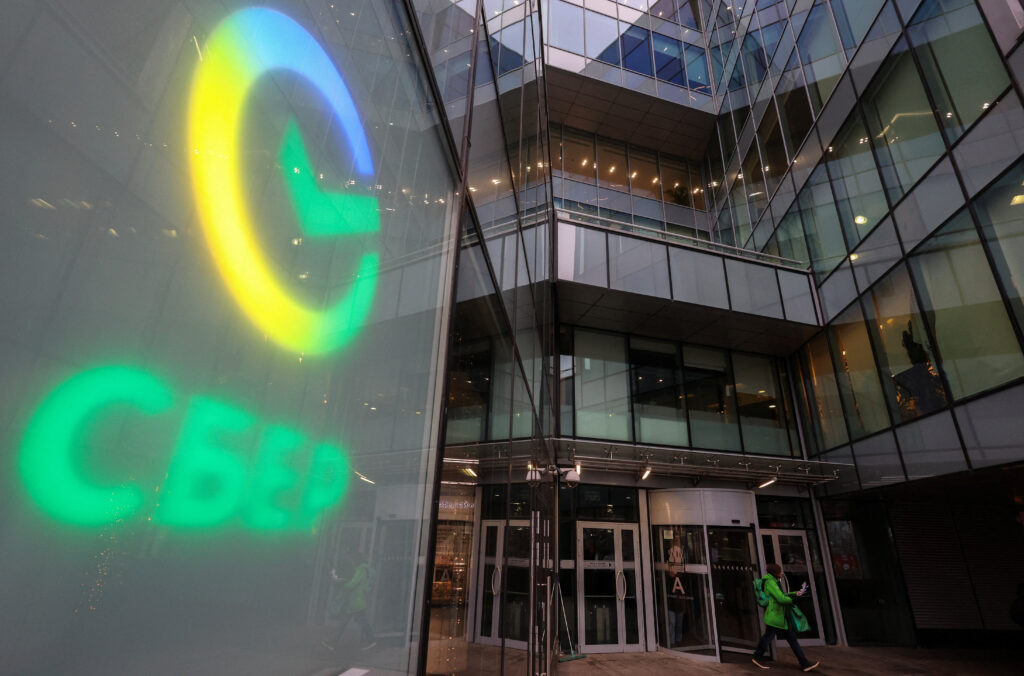
Photo: Ramil Sitdikov / Reuters
Sberbank historically occupies a special place in the Russian banking system. As of the end of the second quarter of 2025, its assets exceeded 62 trillion rubles. VTB Bank, Gazprombank and Alfa Bank, which follow it, have almost the same amount in total (all others have less than 10 trillion rubles), and in general, Sber accounts for almost a third of the entire banking sector in Russia.
Russian banks earned 3.8 trillion rubles in 2024. If you look only at profits in the last three years, the primacy of German Gref’s empire is becoming more and more significant. In 2022, the bank showed net profit according to IFRS (international financial reporting standard) in the amount of 270.5 billion rubles, and according to RAS (Russian accounting standard) - over 300 billion rubles . In 2023, the corresponding results amounted to 1.51 trillion rubles and 1.49 trillion , and in 2024 - 1.58 trillion and 1.56 trillion rubles . Thus, in the first war year, Sber was responsible for the overwhelming majority of the profits of the entire banking sector, and in the following years it accounted for 45% and 41% of the total profits, which is noticeably more than the share of its assets.
How does IFRS differ from RAS? IFRS is used by investors and creditors to make decisions; it provides information for the entire group, taking into account subsidiaries, and also allows you to assess the real value of assets, liabilities and the company itself.
RAS is needed by regulatory and tax authorities; it is more formal, strictly regulates reporting sections and does not allow the inclusion of assets and liabilities at the discretion of the company, even if it sees economic sense in this.
In 2025, the bank again sets a record . Based on the results of the first nine months of the year, in the IFRS report, he reported an increase in net profit by 6.5%, to 1.31 trillion rubles. Since January, total customer funds excluding currency revaluation have grown by 9.4%, to 47.9 trillion rubles, and the total loan portfolio - by 6.9%, to 48.4 trillion. By October 2025, the number of retail clients of Sberbank increased to 110.5 million people, and corporate clients - to 3.4 million. At the beginning of 2022, there were 103.8 and 2.9 million, respectively.
1.58 trillion rubles was the profit of Sberbank in 2024. At first glance, the situation with capitalization (the total value of the company’s shares in accordance with their quotations on the Moscow Exchange) is worse for the bank. But if we take into account the disappearance of foreign investors from the Russian stock market in 2022, then Sberbank manages to maintain a high bar.
On the last trading day of 2021 (December 30), the company's market value reached 6.629 trillion rubles. A year later, the estimate fell by more than half, to 3.188 trillion rubles, but then growth began. By the end of 2023, capitalization rose to 6.117 trillion rubles, and in 2024 - to 6.311 trillion. As of mid-December 2025, Sber's capitalization is estimated at 6.85 trillion rubles.
Main government sponsor
The financial results of Sberbank cannot be considered in isolation from who is its owner. Since 2020, 50% plus one share of the country's main bank has passed to the National Welfare Fund of Russia (NWF), which, in turn, is managed by the Ministry of Finance. The share of non-residents among shareholders as of the summer of 2025 was reduced to a quarter, and the remaining shares belong to residents of Russia, including individuals.
The value of Sberbank increased to 6.85 trillion rubles by mid-2025. In 2022, the bank’s capitalization was estimated at only 3.18 trillion rubles. Half of Sber’s dividends go directly to the government, about 25% of them are accumulated in type “C” accounts (special accounts introduced in 2022 to prevent the withdrawal of money from the country; they allow you to retain the right to own funds and securities, but do not allow you to sell them). And throughout the three years of the war, the main bank of Russia was very generous with its shareholders.
Even at the end of 2022, it paid out a record 565 billion rubles, which is twice as much profit, so 282.5 billion rubles went to the National Welfare Fund. For 2023, total payments amounted to 752.1 billion rubles (half of net profit), and the next year a little more - 786.9 billion . If you do not take into account Gazprom’s gigantic dividend payment in 2022 in the amount of 463.6 billion rubles (in the following years the company had to refuse payments due to financial difficulties and gigantic losses ), then the government receives more from Sber through dividends than from all other state-owned companies combined.
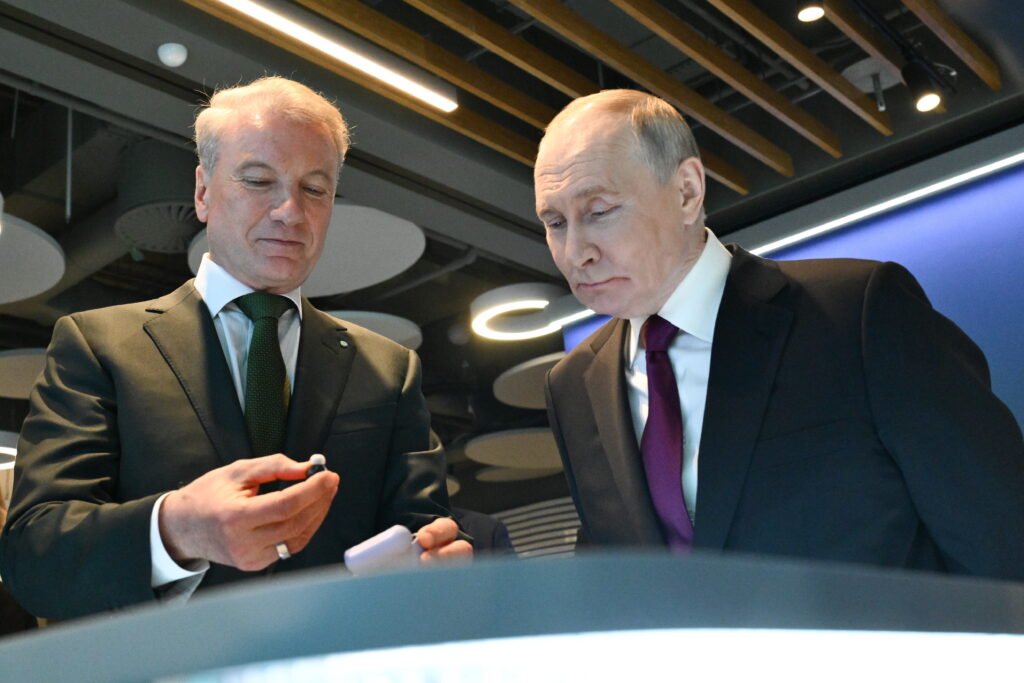
Photo: Kristina Kormilitsyna / TASS / ZUMA / Scanpix
For 2024, the federal budget received 307 billion rubles in dividends from the Federal Property Management Agency, and the National Welfare Fund received 394 billion rubles from Sberbank. The difference in the recipients of the funds transfer does not matter - we are talking about different formats for administering expenses. In particular, funds from the National Welfare Fund can be sent directly to the budget to cover its deficit. In May, Finance Minister Anton Siluanov suggested that 447 billion rubles would be spent on this goal in 2025.
In addition, along with other Russian banks, Sber buys federal loan bonds (OFZ) with money received from the Central Bank. In fact, we are talking about one of the forms of switching on the printing press, and the scheme was used until 2022. As part of a repo auction (involves the sale of securities with an obligation to repurchase), the regulator gives a short-term loan to a financial organization, accepting OFZ or regional bonds as collateral.
In other words, banks must either buy government debt or return the funds, and they choose the first option to the extent that the Ministry of Finance needs to compensate for the budget deficit. There are no other buyers for OFZs in such a volume on the Russian market, so we are talking about new liquidity.
Thus, since the beginning of the full-scale war, Sber has noticeably strengthened its position in the national banking industry, demonstrated superior results and, at least formally, did not experience problems with either income or the growth of its client base, while at the same time remaining extremely profitable for the government.
Appetite comes during war
The key word for Gref in the last 10 years has been “ecosystem”. Having put Sberbank's core business in order, he enthusiastically became involved in the acquisition and development of non-core assets. The state banker wanted to compete both with the country’s main technological giant at that time, Yandex, and with the leader in innovation among Russian credit institutions, Tinkoff Bank.
Gref and Nabiullina distanced themselves as much as possible from the war in Ukraine. Shortly before the Russian invasion of Ukraine, Gref finally began to consider himself the main Russian visionary, gave presentations in the spirit of former Apple head Steve Jobs and talked about breakthrough products and services. True, Sber's innovations for the most part turned out to be an attempt to keep up with competitors, but the income of the banking business made it possible to ignore the weak results of non-core assets.
Russia's full-scale invasion of Ukraine had no effect on Gref's activities. Like the head of the Central Bank, Elvira Nabiullina, he completely distanced himself from the topic of war, did not try to play the patriot and focused on technology, realizing that the departure of foreign companies and the problems of Russian competitors give Sber new opportunities. However, the development of the ecosystem, unlike the banking business, is progressing with varying degrees of success.
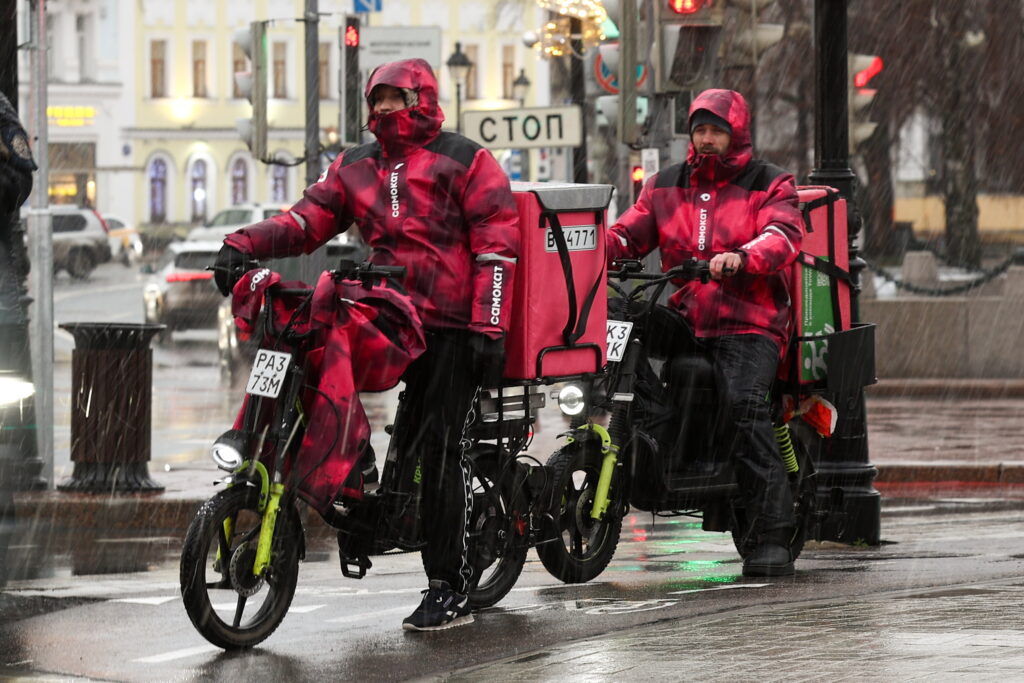
Photo: Sofya Sandurskaya / TASS / ZUMA / Scanpix
The most difficult situation is with Megamarket, a project with the help of which Sber plans to displace the marketplaces Wildberries, Ozon and Yandex Market. At the beginning of 2025, the service, ten times inferior to the market leaders, decided on a radical experiment. All order delivery points and parcel terminals were closed and were replaced by express delivery. In March, another company from the Sber ecosystem, Samokat, was connected to it, but the results continued to deteriorate .
Delivery services in Russia are unprofitable, and their work is supported by other income. In the first four months of 2025, the service’s audience fell by more than half, and partners began to complain about a collapse in sales. The abandonment of pick-up points led to a significant reduction in assortment, which could have affected the results. However, the general director of Infoline-analytics, Mikhail Burmistrov, does not rule out that the model will become popular when customers try out fast delivery. But right now, the service is very far from Sber’s competitors that have moved away.
When it comes to the delivery of food and household goods, Sber is a leader here. Back in the summer of 2022, as part of a big deal involving Yandex and VK, the bank received full control over O2O Holding LLC, which manages the Samokat service. Taking into account the fact that the Cooper service (formerly SberMarket) also belongs to Sber, in general the bank’s ecosystem is in first place in this segment.
According to Infoline for January-March 2025, sales of Samokat amounted to 69.1 billion rubles (plus 9.9%), and Cooper - 41.6 billion (minus 26.4%), which in total amounts to 110.7 billion rubles. It was followed by X5 Group (78.2 billion, plus 55.6% for the year), and Yandex closed the top three - 76.9 billion (plus 55.2%). In the second quarter, Samokat’s results deteriorated slightly compared to the first, to 66.8 billion rubles, which increased the gap from the X5 Group, which gained 80 billion.
A complete assessment of market shares is hampered by the lack of information on the financial side of the issue. The companies do not disclose how much delivery costs them. However, at the end of December 2024, Nikita Kuznetsov, director of the department for the development of domestic trade of the Ministry of Industry and Trade, emphasized that delivery services in Russia are unprofitable, and their work is supported by other resources, that is, subsidized.
Sber was doing better in the pharmaceutical market, although here the situation was getting worse. His “Eapteka”, according to DSM Group, in the first half of 2025 took fourth place among remote ordering services. Over the year, it lost 10% of its turnover, which dropped to 15.6 billion rubles, and was behind two competitors - Uteka and Zdravcity, which showed growth of 78% and 38%, respectively. Apteka.ru, the leader with a turnover of 55.5 billion rubles, increased its turnover by 26%. And in September it became known about the sale of a stake in Eapteka to structures associated with the head of the Business Russia association, Alexey Repik. Sources in the bank claim that the company managed to sell the asset at a profit.
Sber entered the car sharing market through the YouDrive service, later renamed CityDrive and owned by the same O2O Holding. At the end of 2024, its turnover increased by 40%, exceeding 18 billion rubles. The company operates in Moscow, St. Petersburg, Sochi, Yekaterinburg and Nizhny Novgorod. Over the course of the year, Citydrive managed to displace Yandex Drive from second place in the number of cars - 19 thousand versus 18 thousand, but it is still far from the leading Delimobil (32 thousand).
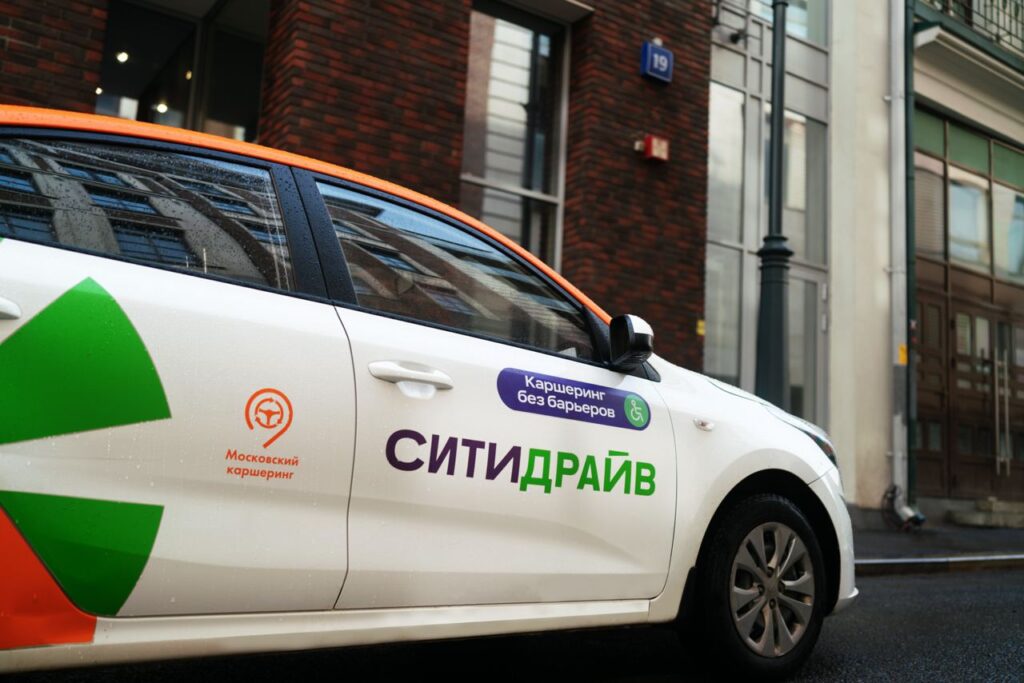
Photo: @citydriveru / Telegram
In 2024, Citydrive for the first time received a net profit of 1.9 billion rubles with a turnover of 18 billion rubles. This is more than other market participants. The net profit of Delimobil amounted to eight million rubles, while BelkaCar and Yandex Drive ended the year with losses of 579 million and 2.8 billion rubles, respectively.
However, Yandex called these estimates incorrect due to the complex ownership structure, but refused to provide other information. The editor-in-chief of the PRO Sharing portal, Denis Kungurov, noted that on average, Citydrive is cheaper than Yandex Drive, but selects new users more carefully than Delimobil, which allowed it to improve its financial results.
Closer to body and mind
In pursuit of ecosystem competitors, Sber brought its devices to the market. In 2022, it released TVs under the Sber brand, and already in the first half of 2024 it surpassed Yandex with a result of 5.2% of the market in volume terms and 3% in monetary terms. As explained in the IT holding Fplus, the result was influenced by the cost - devices from Sber are on average more than two times cheaper than from Yandex. By mid-2025, the share of Sber TVs on the market in volume terms reached 8%, and in monetary terms - 6%. SberDevices emphasized that from January to July the brand was in the top 4 in terms of TV sales in units in Russia.
Meanwhile, in smart speakers, despite regular updating of the model range, the bank is unable to squeeze out its competitors. According to Marvel Distribution, in 2024, devices with the Salyut voice assistant from Sber accounted for only 5% of the market, while Alice from Yandex occupied 80%. Between them, with a share of 7%, is a column from VK with “Marusya”.
The development of the mobile operator SberMobile is also difficult for the bank. In May, the service reported that it had gained 3.5 million subscribers, but it still could not turn a profit, despite a noticeable increase in revenue - from 2.54 billion rubles in 2022 to 4.26 billion in 2024.
For comparison, T-Mobile (launched in December 2017, nine months earlier than SberMobile) has almost twice as many subscribers , revenue for 2024 is 16.6 billion rubles, and profit is more than two billion rubles.
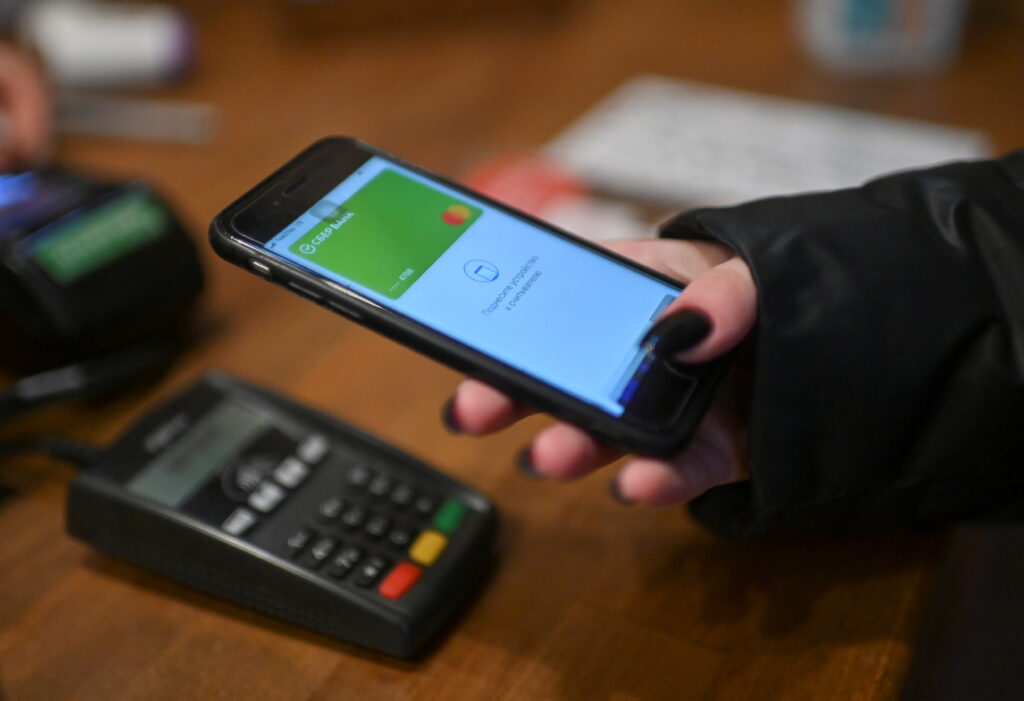
Photo: Alexey Malgavko / Reuters
Sber has become truly successful in the field of POS terminals. Thanks in part to the departure of foreign manufacturers, the bank managed to increase its share in this market to 50%, which in absolute figures amounts to more than two million devices. But the bank has not yet been able to fulfill its desire to occupy the niche of banking terminals, empty after the departure of foreign manufacturers, as quickly as possible. Already in 2023, he admitted that he would install Chinese devices.
In 2020, Sberbank bought the Rambler Group, gaining full control over the publications Lenta.ru, Gazeta.Ru, Chempionat.ru, Afisha and a number of others, as well as the Okko online cinema. A subsidiary structure, SberIntervention, was chosen to manage them. In May 2022, due to sanctions, the bank withdrew from the capital of Okko, the music streaming service “Zvuk” and related companies, as well as from “Cloud Technologies” (SberCloud) and the “Center for Speech Technologies” (CDT).
JSC New Opportunities became the new owner, but the division took place demonstratively formally. Okko and Zvuk are still included in the SberPrime subscription as part of the ecosystem, Citydrive cars advertise Zvuk, the internal Rambler&Co portal publishes Okko news, and employees can simultaneously hold positions in both companies. For example, former editor-in-chief of Lenta.ru Vladimir Todorov, before his departure in July, simultaneously worked as a producer of documentary content at Okko.
In the first half of 2025, Okko accounts for 17% of the video services market; revenue growth to 13 billion rublesallowed it to take second place, so that the service is now second only to Kinopoisk (owned by Yandex), which has 32% of the market. “Sound” has a more serious gap from the leaders. According to J'son & Partners Consulting, in terms of revenue, the service occupies 10% of the market, while Yandex Music has 50.9%, and VK Music has 26.5%.
Gigachads
Passionately in love with fashionable technologies, German Gref simply could not ignore the revolution in the field of artificial intelligence. Therefore, just a few months after the launch of ChatGPT and the rapid growth of its popularity, in April 2023, Sber opened access to its GigaChat chatbot in closed testing mode by invitation. In September of the same year, the service became available to everyone.
Users noted the inability of the developers to remove inconvenient topics from the answers, for example, Navalny. The Sber press service regularly reports on the success and popularity of both GigaChat and the Kandinsky image generator. For example, in March 2024 it was said that since the release, their total number of users had reached 18 million people (of which Kandinsky had at least 12 million users).
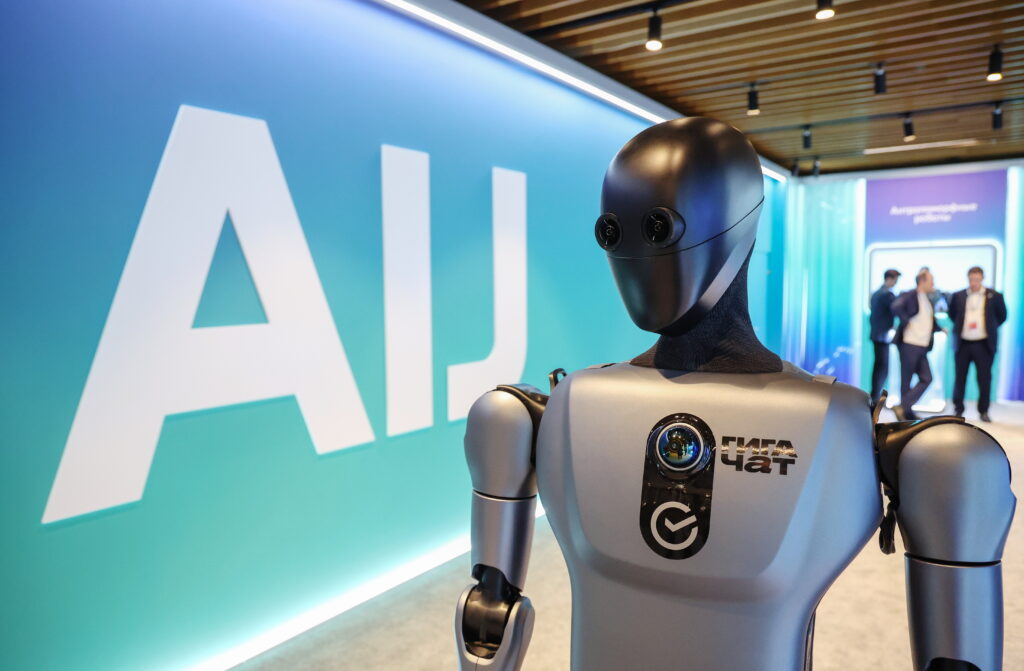
Photo: Vyacheslav Prokofyev / Sputnik / EPA / Scanpix
There are no independent comparisons of the Sber chatbot with popular global solutions. The only point that users noted was the inability of the developers to remove inconvenient topics from the answers. For example, after integration into the Max messenger, a chat bot from Sber called Alexei Navalny “a symbol of the fight against corruption and authoritarianism” and a person with a “tragic fate.” After the screenshots went viral, GigaChat's replies were manually corrected.
In other words, Sber began to cut costs. Nevertheless, Gref constantly advertises the chatbot and talks about its wonderful abilities. If you believe his words, Sber's development has long been separated from its competitors. In June 2025, he claimed that GigaChat could, in a matter of seconds, use a photograph of any part to program a “numerical direction machine” capable of producing it. Thus, Gref argues, the model solves the problem of reverse engineering (development of technology for creating a device based on an existing model, which is often a complex or unsolvable problem). He also assured that GigaChat answers questions on medical topics in a much more detailed and complete manner than its foreign counterparts.
The desire to take everything from life
The Sberbank Group's report under IFRS for 2024 shows that negative results from non-core activities in 2024 increased by 25.7%, to 284.1 billion rubles, with revenue growing by 36%, to 505.5 billion. The negative value of cost and other expenses reached 789.6 billion rubles, which is almost a third more than a year earlier. Investments in associated companies and joint ventures fell by 18.9%, to 57.9 billion rubles; in other words, in the second half of the year Sber began cutting costs.
Sber may fire up to 10 thousand IT workers. At a conference call at the end of February, Gref admitted that the bank decided to “significantly review the management system of its subsidiaries” and changed many managers. He also pointed out that not all companies in the group will achieve self-sufficiency in 2025, and there were mistakes among the investments. The head of Sber explained the growing amount of loss by purchasing customer loyalty.
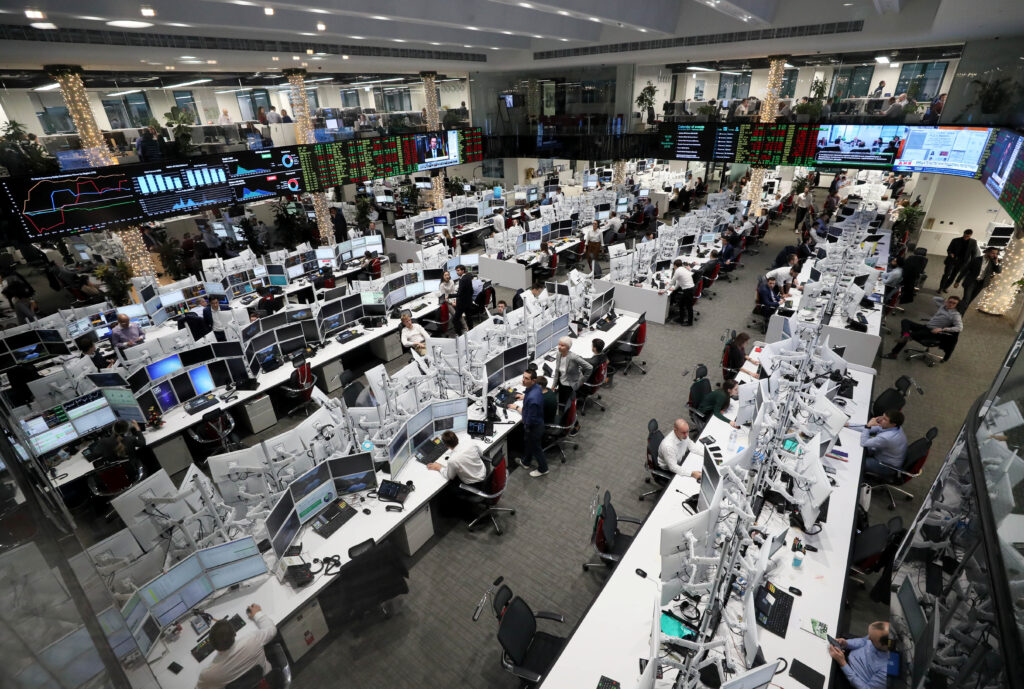
Photo: Sputnik / Ekaterina Shtukina / Reuters
Six months later, it became known that Sber was carrying out massive layoffs of IT specialists. Entire departments are going under the knife; anywhere from five to ten thousand people can be fired, with a total number of 40 thousand IT employees. The company calls the process “optimization” through artificial intelligence. However, sources refute this version, claiming that there is no positive effect from AI, “only a race against obstacles to report on the introduction of artificial intelligence into processes.” In their opinion, the bank is simply trying to reduce costs in this way.
In general, the situation around Sber, if we take into account only public information, looks mysterious. On the one hand, the bank does not have any advantages in terms of sanctions; on the contrary, all possible restrictive measures have been introduced against it. On the other hand, due to the stability of the national banking system and the trust of depositors in it, he was unlikely to receive an influx of clients due to their fear that smaller banks would not be able to withstand it and collapse.
During the war, Sber's position strengthened even more, and yet, compared to the indicators before 2022, Sber significantly increased its weight in the market. Moreover, the bank receives almost half of the profit of the entire banking sector even with gigantic losses from non-core assets. Thus, in 2024 they turned out to be greater than the profit of Gazprombank, the third largest asset in the country, or the largest private Alfa Bank .
It is difficult to explain such a breakthrough. This is either truly ingenious management, thanks to which the bank, without changing management, adapted to the new reality much faster than its competitors, or a special status that allows it to receive preferences in the redistribution of budget funds.
Shadow Opportunities
Sber is partially helped by mortgages, which exist in Russia largely due to benefits. At the end of last year, the bank’s mortgage portfolio reached 11.2 trillion rubles, which is 56% of the country’s total . Another point that cannot be found in open sources could be the financing of enterprises of the military-industrial complex (DIC) at preferential rates with receipt of budget subsidies and the issuance of commercial loans with the expectation that the borrower will definitely be financed from the budget.
The corporate loan portfolio of Russian banks suddenly grew by 36 trillion rubles. According to a report published in early 2025 by Craig Kennedy, a fellow at the Davis Center for Russian and Eurasian Studies at Harvard University, the corporate loan portfolio in Russia has shown unprecedented growth since the summer of 2022. Over 2.5 years, its size grew by more than 36 trillion rubles and at that time approached 150 trillion. It was not possible to stop the process even with the help of high rates, which became a big problem for the Central Bank. The analyst is confident that this phenomenon can only be explained by bank financing of the military machine, and he estimated its volume at more than 20 trillion rubles.
Carrying out such operations through Sberbank, taking into account the dividends that are returned to the government, would be logical. The second largest state bank, VTB, is entrusted with the most important function of foreign trade settlements, and Gazprombank has long remained the recipient of payments for energy resources, and there was no point in provoking the West to tighten sanctions against it. All other state banks are too small to be used for loans to defense companies.
For example, the assets of PSB (Promsvyazbank), the official supporting bank of the Russian military-industrial complex (DIC), from 2022 to mid-2025 grew from 4.04 trillion rubles to 8.36 trillion (at the same time, for Sber - from 38.2 to 59.5 trillion rubles). Obviously, with such a modest increase (it is also less than that of VTB, Alfa Bank and Gazprombank), PSB could not become the only source of the gigantic flow of credit funds pouring into the military industry.
Russian banks invested 20 trillion rubles in military production. This financing, among other things, ensured an increase in the income of employees of enterprises related to state defense orders. Industries used borrowed funds to attract specialists from the civilian sector with the help of high salaries. The head of Rostec, Sergei Chemezov, also spoke about the fact that loans were used. Back in October last year, he warned that with a high key rate, most enterprises of the state corporation, which is responsible for half of the state defense order, would face bankruptcy. In July 2025, he published a policy article in which he called the Central Bank's key rate the main problem for the entire Russian industry, explaining that production simply does not have the money to make loan payments.
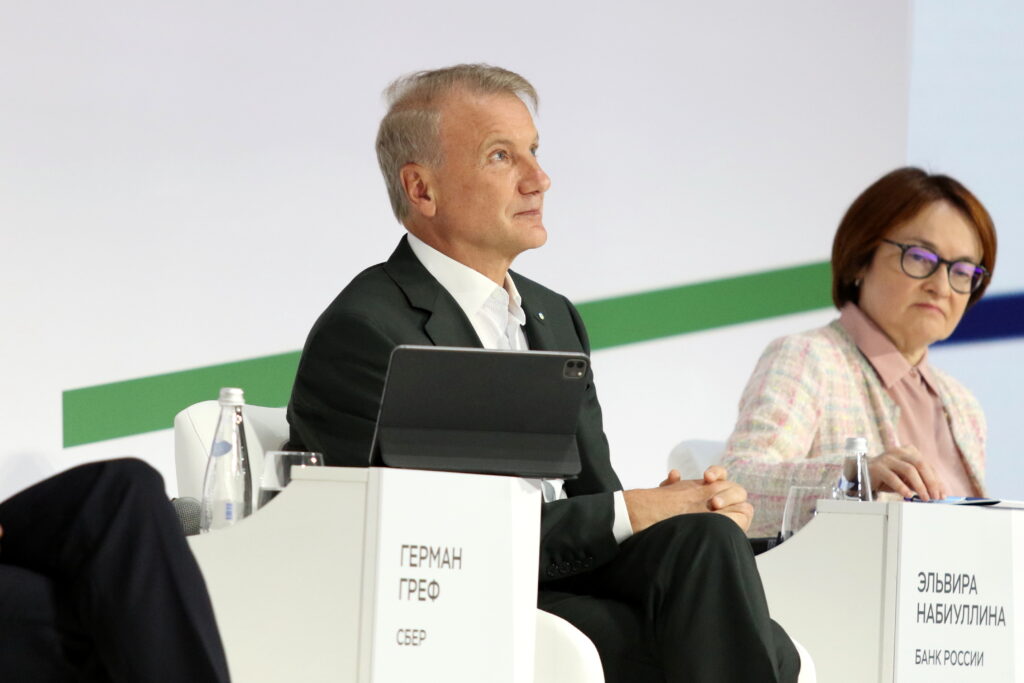
Photo: Maksim Konstantinov / SOPA Images / Reuters
In September, Gref suddenly joined him, having previously reservedly commented on the decisions of Nabiullina’s department. He said that the economy will not return to growth even with a rate of 14% - at least 12% is needed, and also called for the active use of NWF funds for investment, even if there are not many of them left . At the same time, VTB head Andrei Kostin said that he fully trusts the Central Bank, believes that the process is going in the right direction and does not see problems with the solvency of corporate clients even at a rate of 18%.
The heads of Sberbank and VTB completely disagree on how things are going with corporate lending in the country. It turns out that the heads of the largest banks in Russia, who have the opportunity to assess the situation in the economy through their portfolios, completely disagree on how things are going with corporate lending in the country. The simplest explanation for this fact is a significant difference in the character of the borrowers themselves.
In June 2025, Bloomberg, citing sources in the Russian banking industry, reported that many credit institutions began to fear a systemic crisis in the banking industry in the next 12 months. They associated it with the poor quality of loans that borrowers cannot repay on time. And back in February, the head of the Central Bank, Elvira Nabiullina, warned banks that they were underestimating the risks of lending to state-linked companies, counting on help from the authorities. She emphasized that credit institutions “perceive the very fact of state participation as a factor that automatically reduces risks,” however, “the state is not always ready <...> to accept risks entirely and be responsible for all obligations.”
Thus, the problem that Chemezov is worried about also applies to banks that issued funds for government needs. This means that structures that are actively lending to the defense industry, the state of which depends on state defense orders, should be wary of non-payments. At the same time, it was these structures that received the maximum profit from the redistribution of the budget towards war.
There is no direct evidence that military spending is carried out through Sber; these processes are hidden as deeply as possible in order to circumvent sanctions. However, the bank began to demonstrate inexplicably good (especially against the background of unprofitable non-core assets) financial results at a time when the military industry became the main driver of economic growth in the country.
If these two processes are connected, then Sberbank will be among the first to face the consequences of a sharp increase in war costs, that is, with a sharp increase in the share of bad loans and the need for additional capitalization. And the latter inevitably means turning on the printing press and a poorly controlled rise in inflation.
But for now, Gref explains Sber’s results by the technological level of Russian banks, advances in artificial intelligence, which allegedly brought the bank 440 billion rubles in profit in 2024, and “the newest, most modern technologies.” None of these statements are disclosed in detail, so all that remains is to take the word of the head of Russia's largest bank - or not to believe it.
Author: Timofey Astakhov
Photo: Olesya Astakhova / Reuters