
Translated material
The trial of "ghosts"
A play-report for a trial in absentia in three acts

Photo: Ilya Moskovets / URA.RU / TASS
Boris Akunin*, Dmitry Glukhovsky*, Yuri Dud*, Anna Mongait*, Dmitry Kolezev*, Ilya Krasilshchik, Yana Troyanova*, Tatyana Lazareva*, Mark Feigin*, Maxim Kats*, Leonid Gozman*, Ilya Yashin*, Sergey Davidis - these are just a few names of Russian citizens - journalists, writers, artists, public figures who in recent years have been sentenced to real terms of punishment in absentia.
Criminal cases in absentia for various offenses have been initiated against eight journalists from the Dozhd TV channel**. In 2026, trials of those arrested in absentia will begin in 2025.
Trials in absentia, that is, trials without defendants, existed in the Soviet Union, and from the Soviet Code of Criminal Procedure the possibility of conducting trials in the absence of a defendant for crimes of minor and medium gravity (if he applies for consideration of this criminal case in his absence) migrated to the Russian Code of Criminal Procedure.
Without an accused
In July 2006, under the banner of the fight against terrorism, the State Duma adopted amendments to Article 247 of the Code of Criminal Procedure of the Russian Federation “Participation of the defendant”, and a fifth part appeared in it. Now “in exceptional cases of serious and especially grave crimes, a criminal case may be considered without the defendant if he is located outside the territory of the Russian Federation and (or) avoids appearing in court and if this person has not been brought to justice in the territory of another state in this criminal case.”
Until April 2025, about 500 processes per year were considered in absentia in Russian courts. High-profile criminal cases mainly concerned accusations of fraud, but, as a rule, had political overtones. Similar cases were brought against businessmen, entrepreneurs and politicians. The most famous of them are the cases against Boris Berezovsky, Vladimir Gusinsky, Mikhail Khodorkovsky* (the third criminal case), Leonid Nevzlin, Ilya Ponomarev*, Igor Kolomoisky, William Browder, Sergei Pugachev.
On April 8, 2025, the State Duma adopted a law on trials in absentia for persons who have committed crimes against Russia and are abroad, for 20 types of crimes: “non-compliance with the law on foreign agents,” “justification of terrorism,” “rehabilitation of Nazism,” and others.
Human rights activists report that
Over the eight months of this year, the number of trials in absentia has increased significantly. Magistrates' courts began to consider criminal cases against "foreign agents" almost in a "conveyor belt" mode.
Lawyer Galina Arapova* says that “criminal cases this year concern every fourth “foreign agent”, plus for many they add another 207.3 (“fakes about the Russian army”).”
The number of cases so far is dozens, and will soon amount to hundreds of cases per year.
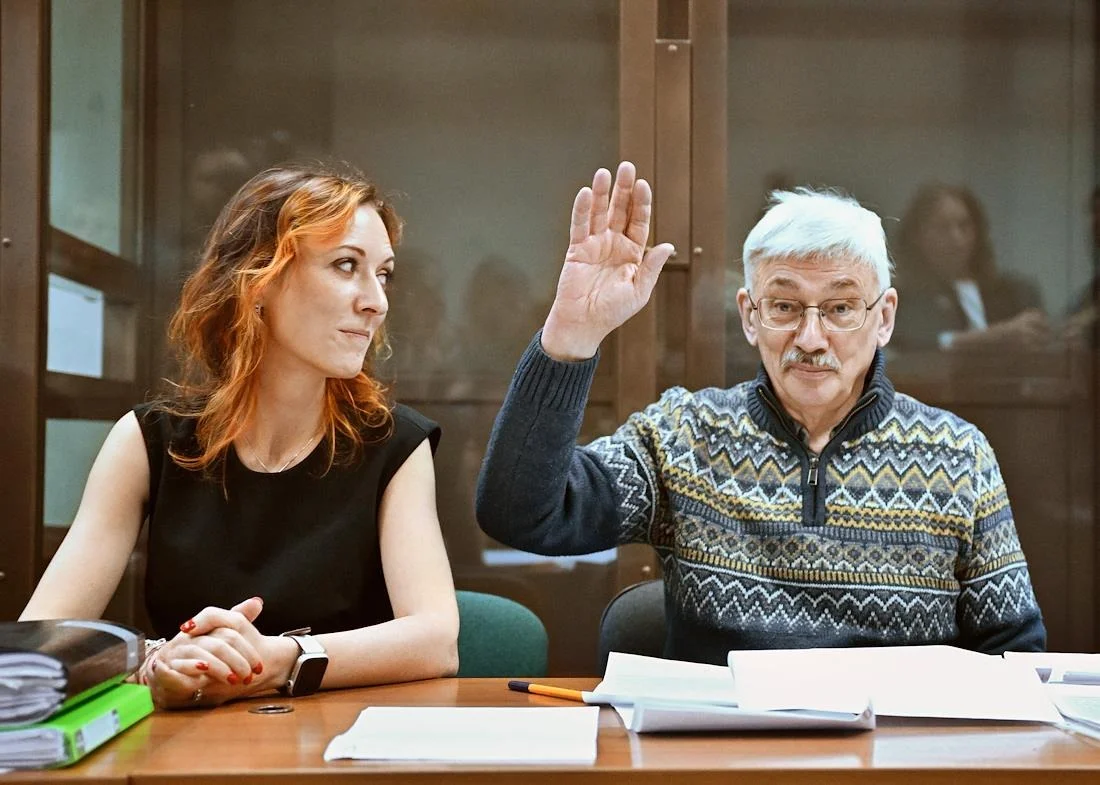
They come to the accused with searches at their place of registration and in the apartments of their relatives. They learn about the initiation of criminal cases from press reports, when they are first put on the federal and then international wanted list.
“In such cases, the investigation and the court attach great importance to procedural guarantees,” explains lawyer Katerina Tertukhina. - There must be a defender. Therefore, investigators are very happy when we contact them. Otherwise, they have to call assigned lawyers. Investigators issue us a resolution to initiate a criminal case, invite us to a court hearing to select a preventive measure and to trials on the merits.”
At these trials, the cages for the defendants are empty (as a rule, such hearings are held in small halls where there are no “aquariums”).
Journalists almost never go to such trials; there are no relatives of the defendants in absentia, or simply sympathizers. Usually citizens go to trials to personally support those involved in the case, but this is not the case. In addition, in recent years, Russian justice has completely lost its intrigue and has become too predictable. If earlier it was interesting to watch the competition between the state prosecutor and the defense attorney in court, and one could hope that the judges would adhere to the law, and it was not always immediately clear how the case would end, now the only thing one can be surprised at is the ever-increasing sentences, almost to the maximum.
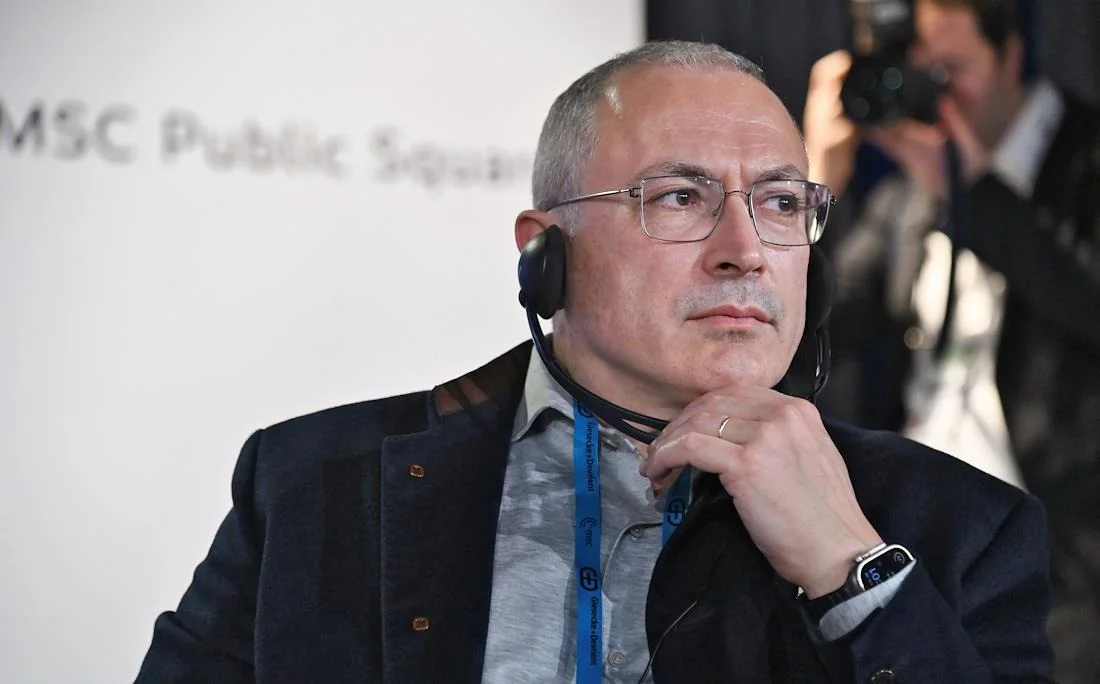
Accusatory bias raised to absolute
Meanwhile, trial in absentia is a court in which the accusatory bias is brought almost to the absolute. True, lawyer Sergei Kupreichenko, author of the monograph “Criminal Trials in Absentia,” managed to find two acquittals, both of which were based on jury verdicts. In one of them we are talking about a group trial on banditry, where the jury acquitted all participants in the crime, including one of the absentees.
Of course, without a defendant, the trial seems like a formality. When you listen attentively to the indictment read out by the prosecutor, see the witnesses (as a rule, these are attesting witnesses or citizens vigilantly dissatisfied with the activities of the invisible defendants) invited to the trial, listen to the short, often too formal speeches of the lawyers, you understand how much a trial without an accused is, in fact, a parody of justice itself.
If at the very beginning of political trials in absentia in 2023–2024, defendants handed over their speeches in the debate or “last words” to be read out to lawyers, wanting to use the court as a tribune, then over time there are fewer and fewer people willing to “speak out” in court remotely. A parody is a parody, but the sentences are real: five, eight, eleven years in prison.
The growing statistics of trials in absentia for political offenses speaks about the state of justice in Russia, about its final degeneration.
We are dealing with a judicial institution in which acquittals are a priori impossible, because its goal is not the search for the truth in the case, not the search for a fair solution, but punishment and, to some extent, revenge for disagreement, revenge for a different opinion, revenge for dissent.
“Of course, for prosecutors and judges, these processes are much easier, because there is no seriously objecting opponent in the form of a defendant who complains, stamps his feet and makes motions, gets sick, and because of this it is necessary to postpone the hearings. They are judging a phantom, but all external things are respected,” lawyer Konstantin Rivkin notes the peculiarities of this legal proceeding.
Why do defendants in absentia enter into agreements with lawyers? Does the defender replace his client in such a process?
“I am not replacing the accused. I defend his interests, I can also file petitions, and I can also attach documents. When I have my client’s position regarding the accusation, I fully defend it in court,” says lawyer Katerina Tertukhina.
I went to the Moscow courts to look at these Kafkaesque sessions and try to understand: what is all this for?
“My client is not hiding from the investigation”
November 24, 2025. Cheryomushkinsky District Court of Moscow
Meeting on the arrest in absentia of Luchenko* Ksenia Valerievna
Judge: Artem Veretennikov
At the beginning of the meeting, investigator Nasirov read out a petition asking to take into custody journalist Ksenia Luchenko*, whose whereabouts have not been established; she has been put on the federal and international wanted list. It is only known that on April 7, 2022, Lucenko left the territory of the Russian Federation.
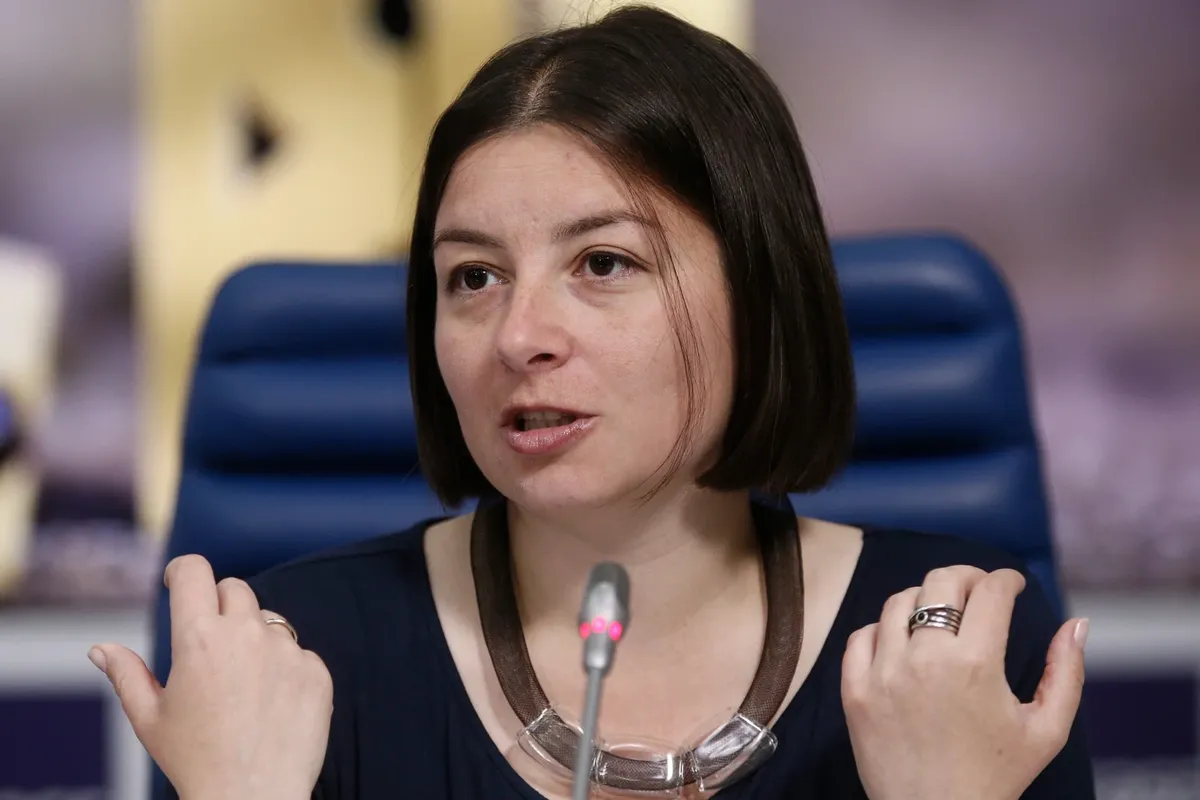
From the investigator’s petition: “On September 29, 2025, a criminal case was initiated under Article Part 2 of Art. 207. 3 of the Criminal Code of the Russian Federation about “military fakes” in relation to journalist Ksenia Luchenko. Her post was published on July 8, 2024 in the telegram channel “Orthodoxy and Zombies” and on the website “Echo of Moscow”**. According to the indictment, Luchenko, not agreeing with the foreign and domestic policies pursued by the Russian Federation and the current government, knowing reliably about the SVO carried out in the Russian Federation since February 24, 2022 in order to protect the interests of the Russian Federation on the territory of the Donetsk and Lugansk People's Republics, being in an unknown place outside the Russian Federation, guided by the motive of political hatred, posted using unidentified means on the Internet, realizing the public danger and illegality of her actions, material about the involvement of the armed forces of the Russian Federation (...).”
The investigation obtained a linguistic conclusion, which found information in the journalist’s post where “the actions of the RF Armed Forces were characterized as violent, associated with the death of people, including minors, as well as with the destruction of civilian infrastructure.” According to the official position of the Ministry of Foreign Affairs of the Russian Federation, the above information posted on the Internet and reported by Luchenko does not correspond to reality.”
The investigator’s petition emphasizes that it is not possible to establish Luchenko’s whereabouts. “Since a serious crime has been committed,” the investigator continues, “with a public danger, for which the criminal law provides for a punishment of over three years, and Luchenko* hid from the investigation, which means she can destroy evidence and influence witnesses, the investigation asks the court to choose a preventive measure for the accused Luchenko* in the form of detention.”
The state prosecutor agrees with the investigation’s request “in full,” and the judge gives the floor to Luchenko’s lawyer, Katerina Tertukhina.
Lawyer Tertukhina: “I consider the investigator’s petition not to be satisfied for the following reasons: it contains unfounded statements that my client Ksenia Luchenko can hide from the investigation and destroy evidence in the case. Based on the case materials, it is clear that my client left the Russian Federation on April 7, 2022, long before the publication of the material that she is accused of, long before she was put on the wanted list and before the initiation of a criminal case. Therefore, at a minimum, she definitely cannot purposefully hide from the preliminary investigation authorities - this thesis does not correspond to the circumstances. Moreover, the case materials do not contain any documents indicating that she will continue to hide and in any way interfere with the investigation of the criminal case. There are no witnesses in the case who would state threats on her part, there are no documents confirming the concealment of evidence from the preliminary investigation authorities... I ask that the petition to select a preventive measure in the form of arrest be denied.”
The meeting lasted no more than an hour. Judge Veretennikov ordered the arrest of journalist Ksenia Luchenko for two months.
Ksenia Luchenko, who a few days before her arrest in absentia became a laureate of the Enlightenment Prize for her book “With Good Intentions. The Russian Church and power from Gorbachev to Putin,” she wrote on the social network Facebook***: “First there were celebrations planned, then arrests, then they decided to combine them - briefly about my life.”
“There are free listeners in the hall...”
December 3, 2025. World section of the Tagansky District Court No. 371
Judge: Anna Mazharovna Logua
Prosecutor: Oleg Amelchakov
Debate of the parties in the “case of Grigory Chkhartishvili*” on “violation of the law on foreign agents”
Criminal cases against “foreign agents” who “evad the performance of duties provided for by the law on “foreign agents” are considered in magistrates’ courts.
The peace district of the Tagansky District Court No. 371 seemed to me a real “kingdom of women.” Looks like only the fairer sex works here. The security guard checking your passport at the entrance is a nice woman of near-retirement age, the bailiff is her age in a spotted uniform and a blue beret. The judge, Anna Mazharovna Logua, with a slight accent, gently pronounces the name Chkhartishvili and respects the participants in the process. I wonder if she knows that she is judging a world-famous writer who publishes his books and “seditious” posts under the pseudonym Boris Akunin?
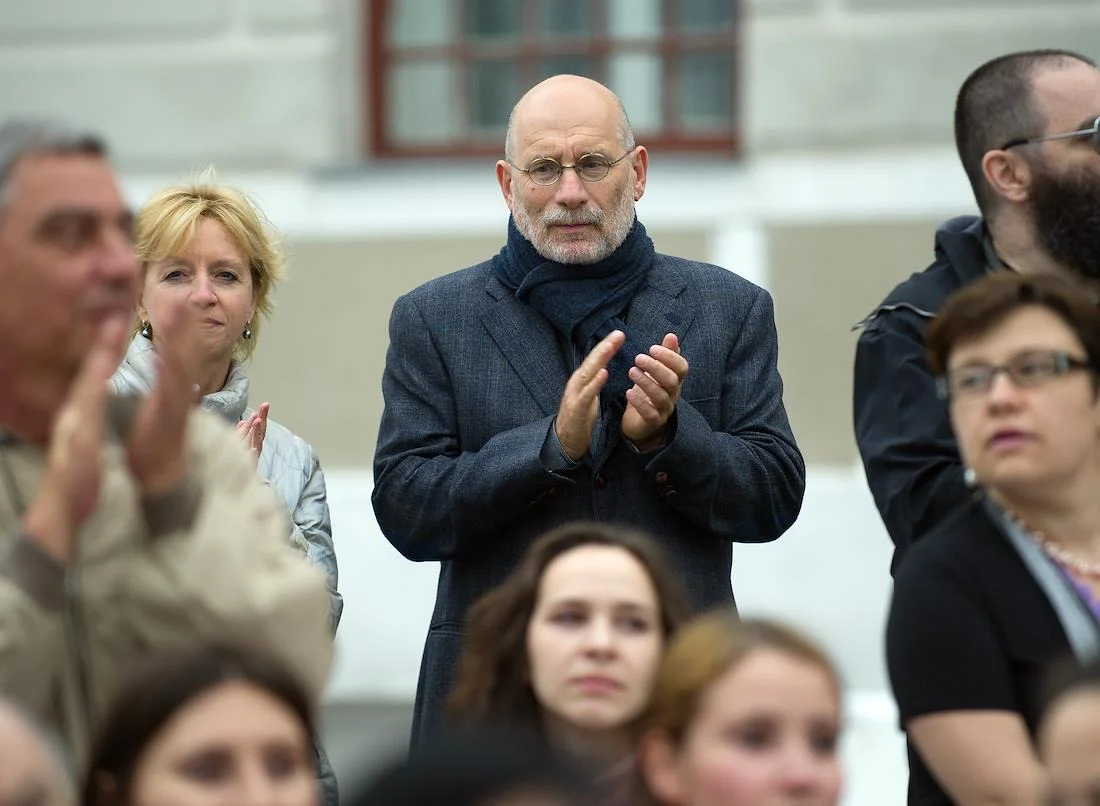
The appointed lawyer, a slightly frightened middle-aged woman, refused to give her last name. She admitted that she is not a public figure and does not want journalists to mention her. The only man in this court was the young prosecutor Oleg Amelchakov, deputy Tagansky interdistrict prosecutor of Moscow, who was sent to this “kingdom of women” to conduct a completely routine case, but still against a prominent figure. Therefore, three journalists from state news agencies came to the meeting.
In the only, very small hall of the world court, everything is like in a real court. Judge Anna Logua sits on a dais—a kind of judicial throne. There are two flags above her head - the flag of Russia and the flag of Moscow. When the judge declares the meeting open, the secretary reads out the names of the participants in the process and solemnly announces: “There are free listeners in the hall.” This is how she interprets the presence of five journalists in the room.
Opposite each other, as it should be: a prosecutor and a lawyer.
There are large pots of flowers on the benches for the listeners. It is not entirely clear, if Grigory Chkhartishvili suddenly “did not hide from the investigation,” where would a place be prepared for him? Probably next to a lawyer...
The prosecutor stated that Chkhartishvili, being in an unspecified place outside the Russian Federation, guided by political and ideological hatred of the Russian Federation, from February 14, 2025 to August 16, 2025, posted 76 texts and materials without the label of “foreign agent” in the telegram channel “I, Boris Akunin” controlled by him. His telegram channel has more than 56 thousand subscribers. This information was confirmed by a witness, an employee of Roskomnadzor. The state prosecution believes that there are no grounds for passing a sentence without serving the sentence. Next, prosecutor Amelchakov recalled that Chkhartishvili was sentenced by the Second Western District Military Court to 14 years in prison and a fine of 200 thousand rubles. The total punishment, according to the prosecutor, is 15 years in prison and a 200 thousand fine.
Akhmetchin’s lawyer asked the court “to acquit Grigory Shalvovich Chkhartishvili, since the preliminary investigation was carried out with gross violations of procedural law. “The investigation did not take measures to establish the whereabouts of my client,” the lawyer said. “I believe that the investigative actions were carried out in violation of the Code of Criminal Procedure of the Russian Federation and cannot be used to prove guilt, cannot be used as the basis for charges. They are unacceptable and untenable. Chkhartishvili’s guilt has not been proven.”
The meeting lasted about half an hour, Judge Logua retired to the deliberation room and four hours later read out a verdict that completely repeated the state prosecutor’s request: 15 years in prison, the first four years in prison, and the rest of the term in a maximum security colony. In the verdict, the judge did not mention that the first term to which the military court sentenced the writer - 14 years in a maximum security colony - had not yet entered into force, and there was no appeal.
Grigory Chkhartishvili, aka Boris Akunin, reacted on social networks, first to the first verdict in the military court, and then to the decision of Judge Logua: “Recently, a military court sentenced me to 14 years in prison for terrorism and something else. In absentia. Strange of course, but okay. When it’s in absentia, it’s not scary. It's even nice. I’m thinking about setting up a colony-settlement somewhere in Europe for the same people imprisoned in absentia, a very good contingent is being selected: writers, journalists, cultural figures.../... While I’m wandering around London, in my homeland they added a sentence to me. It was fourteen years in prison and maximum security, now it’s fifteen. Now I have to serve until I’m eighty-four, because with my behavior I definitely won’t earn them a parole. Nothing. I will accept everything - exile, hard labor, prison. But preferably in Europe and, of course, at home..."
“The witness on duty...”
November 14, 2025. “The case of justification of terrorism” against Leonid Gozman
Second Western District Military Court
Judge: Vladimir Krasnov
Lawyer: Irina Guseva
Prosecutors: Svetlana Tarasova, Olga Alaeva
The trial in the “case of justification of terrorism” against politician Leonid Gozman was supposed to begin on November 11 in the Second Western District Military Court, the same one where last year the play “Finist Yasnyi Sokol” and its creators were tried: director Zhenya Berkovich and playwright Svetlana Petriychuk. For two hours they could not find a free room for the trial in absentia. And when the hall was found, it turned out that the prosecutor representing the state prosecution did not appear in court. Late in the evening, when the hearing began, no witnesses appeared.
As a result, the trial was postponed to November 14, and as Judge Vladimir Krasnov announced at the very beginning, “the state prosecutors were replaced.” Instead of one prosecutor, the state prosecution began to be represented by two prosecutors.
The judge asked whether the witnesses had arrived; the indictment listed as many as five prosecution witnesses and, of course, not a single defense witness. The secretary reported that only one witness had arrived at the court, two were outside the Moscow region, and one of the witnesses had just called a doctor and promised to call him back and send him a sick note.
The only witness who arrived was called to testify - Alexei Kulakov, a security officer of the Moscow metro. He told the court an amazing story about how one day, while walking near 38 Petrovka, he was stopped by a police officer who invited him to become a witness. And now Alexey Kulakov is already in the investigator’s office and examines the video and screenshots of Leonid Gozman’s interview with Bild. Witness Kulakov remembered that in the interview they talked about attacks by Ukrainian drones and the explosion of the Crimean bridge. Answering questions from prosecutors, the witness stated that he did not like the position of Leonid Yakovlevich Gozman, who approved “this terrorist attack.”
The lawyer asked Kulakov whether he took part in the first case against Gozman, when in the Gagarinsky court he was accused under the article about “fakes regarding the Russian armed forces.” Before the witness could answer, Judge Vladimir Krasnov dismissed the defense lawyer’s question, saying that it had nothing to do with the case at hand.
After questioning the witness, the prosecutors stated that there was enough evidence and they saw no point in calling the remaining witnesses.
The court smoothly moved on to the debate. First, state prosecutors spoke, they recalled the essence of Gozman’s interview with Bild and the fact that he had previously been sentenced by the Gagarin court to eight and a half years for “fakes.” “The only mitigating circumstance is Gozman’s advanced age (75 years old), said prosecutor Svetlana Tarasova and asked the court to sentence the politician to 6 years in prison for justifying terrorism, and to sentence him to 11 years in prison based on the totality of the two sentences.
The judge gave the floor to the lawyer.
Lawyer Irina Guseva: “Every accused is considered innocent until his guilt is proven. I believe that no admissible evidence was presented at the trial indicating my client’s guilt. Gozman’s guilt in “committing justification of terrorism” has not been properly proven. From the content of the evidence examined in court, it is impossible to establish either the time, place, or motive of the crime. The testimony of witness Kulakov does not prove the guilt of the accused. He already took part as a witness in Gozman’s first case. His testimony is biased. The very fact of his invitation as a witness in this case indicates that he is interested in accusing Gozman.
The examination was carried out by two experts - a linguist and a psychologist on the basis of a resolution to conduct a forensic psychological and linguistic examination. It is unclear which part of the examination was signed by which expert. The examination was compiled in violation of the law. The verdict cannot be based on assumptions. The event of the crime has not been established. No acceptable evidence was examined. The defense asks that Gozman be acquitted.”
Judge Krasnov sentenced Leonid Gozman to ten years in a general regime colony.
In cases of “fakes regarding the Russian army” and “justification of terrorism”, the “queen of evidence” is always forensic science. It is on this that the courts base the verdict. As can be seen from the listed examples, prosecution witnesses in such trials are purely “technical”. These are, as a rule, witnesses moving from one court to another, or “active users of social networks” who find “criminal posts” on the Internet, report them to the police or the Investigative Committee, and based on these statements or on the basis of Internet monitoring, criminal cases are initiated.
Trial in absentia as “exemplary flogging”
Due to the fact that there are no defendants in absentia trials, their voices are not heard, the absurdity and essence of these truly Kafkaesque trials is exposed. In all political articles, people are judged for their words, for their opinions. Both words and expression of opinion are given real prison sentences. It is clear that those involved in trials in absentia have virtually no risk of ending up behind bars. These people will find out that they have been sentenced while being safe. They can only be taken into custody if they cross the border of the Russian Federation or if they are extradited to Russia from another country. This is a kind of “exemplary flogging” to make their life as difficult as possible.
Before initiating a case in absentia, the accused is put on the federal and international wanted list, and a request is sent to Interpol. Experts say that
Regarding the so-called “political articles” for which Russian activists and journalists are now being persecuted, Interpol has decided not to help Russia in their search and further extradition, because Interpol considers these articles to be politically motivated.
According to international agreements, an accused Russian can be extradited from another country only if the article charged to him in his homeland is written in the criminal code of the country where he is currently located. However, in addition to the federal and international search, there is also an interstate search, which operates on the basis of the Treaty of the CIS Member States. Extradition issues between Russia, Azerbaijan, Armenia, Belarus, Kazakhstan, Kyrgyzstan, Tajikistan, Moldova, Turkmenistan and Uzbekistan are regulated by the Legal Assistance Conventions signed in Chisinau in 2002. It also says that political activists cannot be extradited, but in practice this does not always work that way. Therefore, experts do not advise those accused and convicted in absentia to end up in these countries.
It is also better not to visit countries that are not included in the list of so-called “unfriendly countries”. These include, for example, Türkiye, Indonesia, Thailand, possibly Serbia, Hungary and Georgia.
The ever-increasing prevalence of absentee proceedings in Russia raises questions among lawyers who do not understand why, after the accused fails to appear and is not found, his case is transferred to court. After all, it was quite possible to “suspend the case due to the failure to find the accused...”
“Previously, the logic of law enforcement officers was this: while a person is running, he seems to be innocent, and it is unclear what his status is,” explains lawyer Konstantin Rivkin. - So they came up with such a “cartoon” so that you could say: “In Russia, this person was convicted by a court.” But in the West, the authority of the court is great, and if they say that a person has been convicted, this is a completely different matter than if the case against him has been suspended. After all, in a full-fledged trial, in the presence of a lawyer, a guilty verdict was pronounced. It turns out to be a completely different matter; this person is recognized as a criminal.”
Lawyer Evgeny Smirnov is confident that the authorities are deliberately making life difficult for Russians who have gone abroad: “Conviction in absentia is convenient for the authorities, it complicates the life of those being persecuted.
Often, the prosecution requests a fine in the form of punishment or confiscation of property, and a court verdict that has entered into legal force makes it possible to turn this property into state income. A criminal record certificate may complicate legalization in other countries. The court verdict that has entered into force increases the risks of extradition.”
More and more bans that deputies come up with for those who left Russia raise suspicions that the “mad printer” will not stop until he finally deprives these new “enemies of the people” of everything they have left in their homeland.
Before leaving for the winter holidays, the State Duma is going to introduce a whole package of bills that are designed to prohibit Russians convicted in absentia from applying for consular services to issue powers of attorney, revoke driver's licenses, suspend the registration of real estate rights and introduce other similar restrictions on their rights.
The Constitutional Court calls home
Before going to trials in absentia, I got acquainted with the opinion of experts about this type of legal proceedings, and it turned out that in the absolute majority of cases, both the investigation and the court deny both lawyers and the accused their right to participate in these processes via conference call, as is often practiced with accused or witnesses from a pre-trial detention center. Both the investigation and the court refuse to include in the case interviews with the accused made by their lawyers outside Russia, and the investigators themselves are in no hurry to interrogate the accused abroad. On July 17, 2025, the Constitutional Court of Russia put an end to the dispute over whether such refusals constitute a violation of the letter and spirit of legal proceedings.
The judges did not accept for consideration the complaint of a citizen who was accused of fraud and organizing a criminal community, was put on the wanted list and taken into custody in absentia. He left Russia long before the initiation of a criminal case and did not hide from the investigation. He asked to be allowed to testify through the VKKS and to attach to the case a survey made by his defense lawyer in Israel. The Constitutional Court invited him to participate in the trial in person, that is, to return to Russia.
And there is nothing more to add... What is called a curtain...
When I decided to write about the trial in absentia, I thought it would be a very personal text, because my son, journalist Tikhon Dzyadko*, and his wife, my daughter-in-law, journalist Ekaterina Kotrikadze*, were to be tried in one of the Moscow district courts.
I already imagined how I would come to court hearings, look at the empty cages for defendants, listen to judges, prosecutors, and this would become some very important experience for me. I remember how almost fifty years ago, in another country called the Soviet Union, my parents were tried in the Moscow City Court for anti-Soviet views. Each of them then spent a year in prison and they were sentenced to five years of exile in the Altai Mountains. They were released ahead of schedule thanks to Gorbachev's pardon. In Russian legislation there is no such punishment as exile. And the sentences for anti-Russian views and statements are many times more severe than those given to dissidents then.
One consolation: although my son and my daughter-in-law will most likely be convicted in absentia, I hope that I will not see them in the court cage.
But the institution of trial in absentia itself is not a court, but a trial court, where the accusatory bias is elevated to the absolute. And by definition there can be no exceptions...