
Translated material
And again in the rhythm of the waltz. "Lawyer"
The behavior of judges, prosecutors and investigators was programmed, and the authorities took care of this program

Illustration: Petr Sarukhanov / Novaya Gazeta
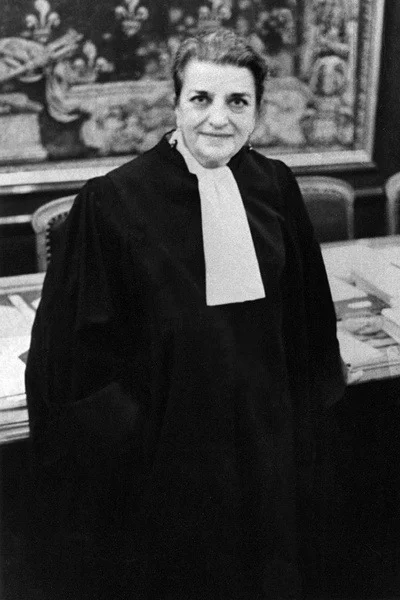
Half a century ago—in 1968, the year the Thaw ended—Yuliy Kim wrote “Lawyer’s Waltz,” dedicated to two famous lawyers and human rights activists, Sofya Kallistratova and Dina Kaminskaya.
With these words, in particular:
Of course, efforts are in vain
And nothing can be drilled into them:
*Objects are meaningless for them,
And white is just black.*
*The judge is at the same time as the prosecutor
I don’t care about the detailed analysis -
They just want to cover it up with conversation
The verdict is already ready.*
*After all, my truth is obvious,
After all, you can see white threads!
After all, people should be ashamed,
You can't understand people like that!*
Wrote after the cases of Joseph Brodsky, Andrei Sinyavsky and Yuliy Daniel, Alexander Ginzburg and Yuri Galanskov, after the arrest and conviction of the “Prague Eight”, who came to Red Square in August 1968.
When, despite the dedicated work of the lawyers, it was clear that the verdicts were written before the trial began.
Twenty years later, when perestroika begins, this waltz will no longer seem relevant - and Yuliy Chersanovich will almost stop performing it at his concerts.
And then it starts again.
And every time a “political” case is considered in the courts in recent years, this waltz will be remembered.
Remember along with the question (possibly rhetorical): why are so many people ready, without the slightest moral doubt or hesitation, to demand and give gigantic prison terms for something that just a few years ago was not considered criminal in principle?
For posts on the Internet, for public speeches with disagreement with what is happening, for opinions that differ from official messages, for meager money transfers to organizations included in the lists of prohibited...
What happens in the souls of those who, with the words “everything is “legal and justified,” appeal against the release from punishment of a person who has lethal liver cancer (a disease that is legally incompatible with imprisonment), without seeing the “unconditional need for release from punishment,” and among those who satisfy this complaint.
Those who demand that a blind person be returned to prison - and those who sanction this demand by a court decision.
Who demands to continue to keep in a pre-trial detention center an opposition politician who was “offended” only by posting on the Internet, with whom no investigative actions have been carried out for two months on the grounds that he has a foreign passport and a Schengen visa (and the passport is in the possession of the investigator).
Who demands that another opposition politician and journalist be kept there, who is accused of allegedly “extorting” those he criticized, and who has been in jail since January of this year. There are also no investigative actions being taken against him, and the investigation has not presented any evidence of his guilt. But it asks over and over again to extend the arrest, because “that’s the way it should be”...
There are many examples of this kind.
But, alas, no other examples have been noticed.
There have been no examples of anyone resigning because they did not want to implement obviously unfair guidelines. Declared disagreement with repressive practices. Not to mention such unscientific-fiction options as dismissal of a trumped-up charge in court or acquittal due to the complete absence of a “case”.
In “political” administrative cases there are rare exceptions when they are terminated or the decisions of lower courts are overturned, but in criminal cases this cannot be remembered: everything proceeds as if the court does not establish guilt (it is postulated in advance when the object of prosecution is appointed guilty), but only determines the punishment.
There are no examples of someone being punished for cruelty: for example, because he demanded to be imprisoned for several years for what amounts to petty hooliganism at most, or demanded to send a person to a pre-trial detention center, although house arrest or restrictions on certain actions would be more than enough.
But there are - and many - examples when those who demanded this, or made court decisions on these demands, were subsequently encouraged and promoted.
Of course, observations of such practices give a completely clear signal to those working in the system and striving for career growth.
But it is not only observations that give it.
From the few who left this system, I heard that young people (and not only) are brought up in it in the belief that they are tasked with the most important task: to protect the state from enemies.
That this is their, young people’s, “front line” where it is unacceptable to show mercy.
That in the conditions in which the country finds itself, any internal disagreement is almost tantamount to joining the external enemy.
And therefore, those who need to be punished, including with the harshest terms of imprisonment, are not people who accidentally stumbled, but entirely “enemies” and “traitors” for whom there can and should be no mercy.
This is the logic of a totalitarian system, where there are no opponents with whom one must argue, proving to society through political means that one is right - there are only enemies who must be destroyed by repressive means justified by a high goal.
A common plot of a detective novel in the West is that an honest prosecutor or investigator categorically refuses to follow the “subtle hints” of his superiors that it is necessary to pursue the innocent, but unwanted. Or, on the contrary, not to prosecute the guilty person, but who occupies a high position. And he, despite the pressure and troubles, stands his ground.
In Russia of the last two decades, such a plot is somehow not remembered.
In October 1991, when the Russian Federation Law “On the Rehabilitation of Victims of Political Repression” was adopted, at the very end of it a norm was written that could change a lot in the law enforcement system.
That “employees of the Cheka, GPU-OGPU, NKVD-NKVD, MGB, prosecutors’ offices, judges, members of commissions, “special meetings”, “twos”, “troikas”, employees of other bodies exercising judicial powers, persons participating in the investigation and consideration of cases of political repressions, bear criminal liability on the basis of the current criminal legislation”, and “information about persons found guilty in accordance with the established procedure of falsifying cases, using illegal methods of investigation, crimes against justice, are periodically published by the press.”
But after the adoption of the law, none of those involved in political repressions in any “established order” suffered any responsibility.
Articles of the Criminal Code on crimes against justice: on bringing a knowingly innocent person to criminal responsibility, falsifying evidence, issuing a knowingly unjust judicial act, and others - in relation to “political” cases of the Soviet era, remained “dead”.
Just like after the 20th Congress of the CPSU and the condemnation of Stalin’s repressions, their perpetrators - with the rarest exceptions of several show trials (such as in the case of Boris Rhodes, about which Nikita Khrushchev angrily spoke in his famous report) did not suffer any punishment. Or how, for example, investigator Alexander Khvat, who personally tortured academician Nikolai Vavilov, died as honored veterans in their beds.
In both cases, those who were involved in political repression, having survived the first fright and realizing that nothing would happen to them, began to follow new instructions.
And educate the shift in the confidence that even if the wind changes, there will be nothing to fear.
I would really like to believe that this is not forever.
That the vicious circle will be broken - and the law enforcement and judicial systems will become the same as in democratic countries.
Where, despite all the individual defects, in general these systems are configured to protect the Law, and not the current government. And they do not consider themselves obligated to defend the “state interests” formulated by the current authorities, which sometimes coincide confusingly with personal ones.

There are many problems and questions along this path: where can we get new personnel for the courts and law enforcement agencies? How to change psychology? Where are the guarantees that these new personnel will not begin to behave in the same way as the old ones?
It is unlikely that anyone can now give an exhaustive answer to these questions and come up with universal recipes.
However, one recipe, dictated by the experience of those who have been defending people in “political” matters in recent years, can be proposed: “from above” must be given “signals” that are fundamentally different from what they are now.
So, regarding the judicial system: it is enough for there to be honest people at the upper judicial level. And there followed several dozen repeals of the most egregious judicial acts, followed by the initiation of cases under an article of the Criminal Code of the Russian Federation on the issuance of a deliberately unjust verdict or other judicial act.
After which many people themselves, as they say, will run to cancel their own acts, so that the Supreme Court does not cancel them and does not send their “creativity” to the preliminary investigation authorities.
And there will be hope that the court will become what it should be: a place where justice can be found and the illegal decision of the authorities can be reversed (the confidence that “enemies” will not be able to do this is the most important basis of the repressive system).
Although the matter is not only in court - that legendary Soviet plumber was right, who, without meaning to, formulated the principle of successful changes: “The whole system needs to be changed.”
It is the fact that this did not happen in the 90s that created the preconditions for what we see today.
Vladimir Maksimov