
Translated material
“What nonsense!”
Every year in Russia turns into the Year of the Groundhog - the same problems, the same “questions”, the same answers
(18+) THIS MATERIAL (INFORMATION) IS PRODUCED, DISTRIBUTED AND (OR) SENT BY FOREIGN AGENT ANDREY VLADIMIROVICH KOLESNIKOV OR CONCERNES THE ACTIVITIES OF FOREIGN AGENT ANDREY VLADIMIROVICH KOLESNIKOV.
“Harun al-Rashid from time to time, in disguise, wandered around Baghdad: he wanted to know what the people thought about him and his rule.”
"The Book of One Thousand and One Nights"
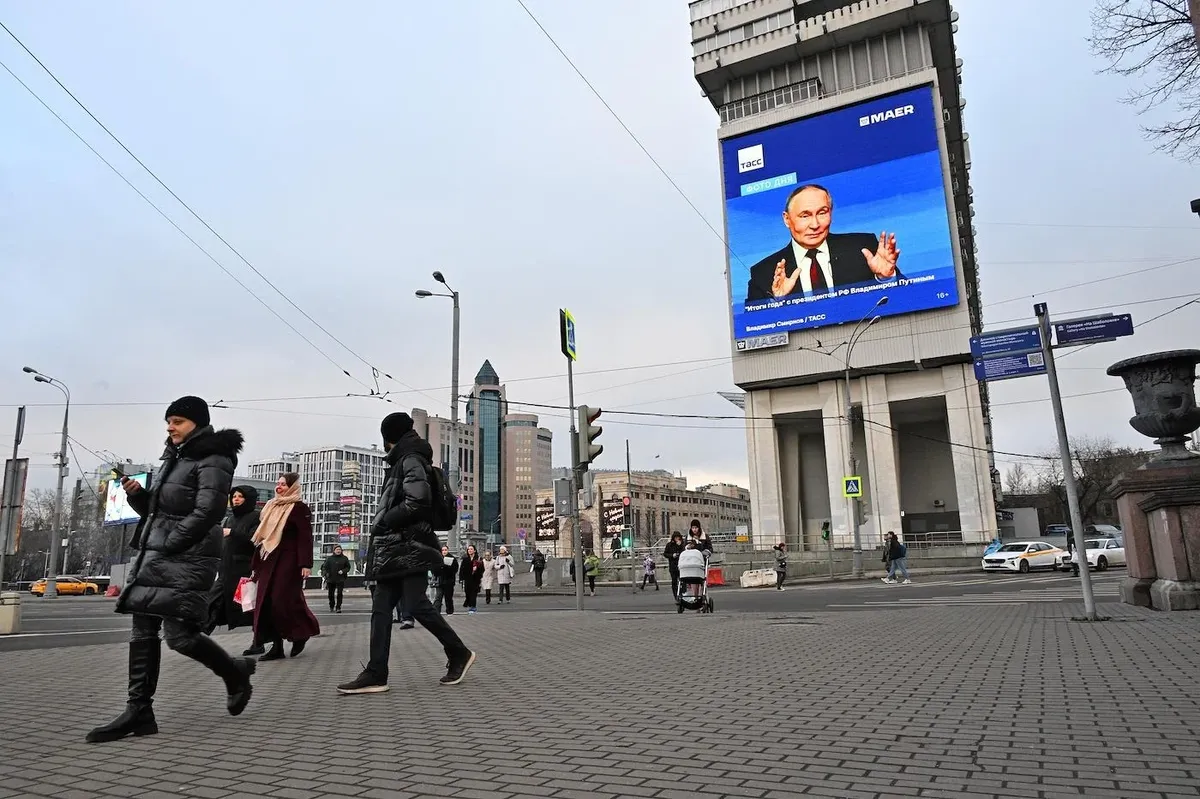
A girl from a Siberian media resource asked a question about the nature of the space object 3I/ATLAS - is it a comet or something of “silver metal” of artificial origin. It’s just some kind of fantasy - just like the withdrawal of Ursula Le Guin’s classic science fiction novel “The Left Hand of Darkness” from bookstores. Putin, taking on the role of “flight engineer of a flying saucer,” joked: this is “Russia’s secret weapon.” And he added, addressing the journalist: “This should remain exclusively between us.”
Which reminded me of an old Soviet joke: a girl journalist asks Brezhnev at a press conference why he does not allow residents of East Germany to move freely to West Germany. “Oh, little devil,” Leonid Ilyich shakes his finger at her, “you want us to be left alone.”
It is impossible for the Russian president to remain alone during a direct line combined with a press conference. Although the activity of “journalists” cannot be called raising questions in the proper sense of the word. Therefore, as in all recent years, it turned out that Putin had a free monologue, summarizing what has been said a thousand and one times already - about who is to blame for the Ukrainian conflict, and that “we are not fighting with you, but you are fighting with us with the hands of Ukrainian nationalists,” and that our negative growth is the “conscious actions” of the government, and plans to attack Europe - “what nonsense!”, and the law on foreign agents was invented in the USA, and you just need to show foreign funding, and that childbearing should become fashionable, and Ukraine can hold presidential elections during military operations, which Russia did.
However, it was important to once again understand that:
there will be no negotiations - at least not productive and with compromises - in the near future;
Putin is committed to a military solution to the problem, despite the difficulties in the economy, which he does not acknowledge, although he justifies raising taxes;
restrictions on the rights to information and communications for ordinary citizens will continue, as well as political repressions against unusual citizens—that is, those who do not agree with the Kremlin’s policies.
If the head of state evaluates the decline in some industries, stagnation in others, and acute investment insufficiency in almost all sectors as a controlled decline in economic activity for the sake of low inflation (which, in his view, will be less than 6% per annum), there should be no illusions about the socio-economic restrictions of the North.
The question “Why is everything so expensive?” worried citizens should redirect to themselves - everything depends, Putin noted, on the individual consumer basket.
This is a kind of addition to the famous poem by Yuri Levitansky: only here “everyone chooses for himself” not only “a woman, a religion, a road,” but also a food basket.
And most importantly, what faith (or “pernicious arrogance,” as Friedrich von Hayek would say, but he is a liberal) in the ability of the government to manage the economy like a drone. It seems that the market economy (or its remnants) is structured somewhat differently and does not always respond to party and government management. This is clearly illustrated by the deafening collapse of the planned Soviet economy. But people and the market will react to such an action by the country’s leadership as increasing VAT and other exemptions by stopping businesses and leaving for the shadow sector. Putin understands this, which is why he said that the struggle to whitewash the shadow will continue. This is no longer a battle with Russian society, expressed in the closure of the political rights and freedoms of man and citizen and the communication capabilities of Russians, but a battle with their own economy: in the government and administration there are people who taught economic theory in its modern version, and they should know the Laffer curve - when taxes increase, collections first grow and then fall, because the large fiscal burden is unbearable for economic agents acting according to the rules of the market.
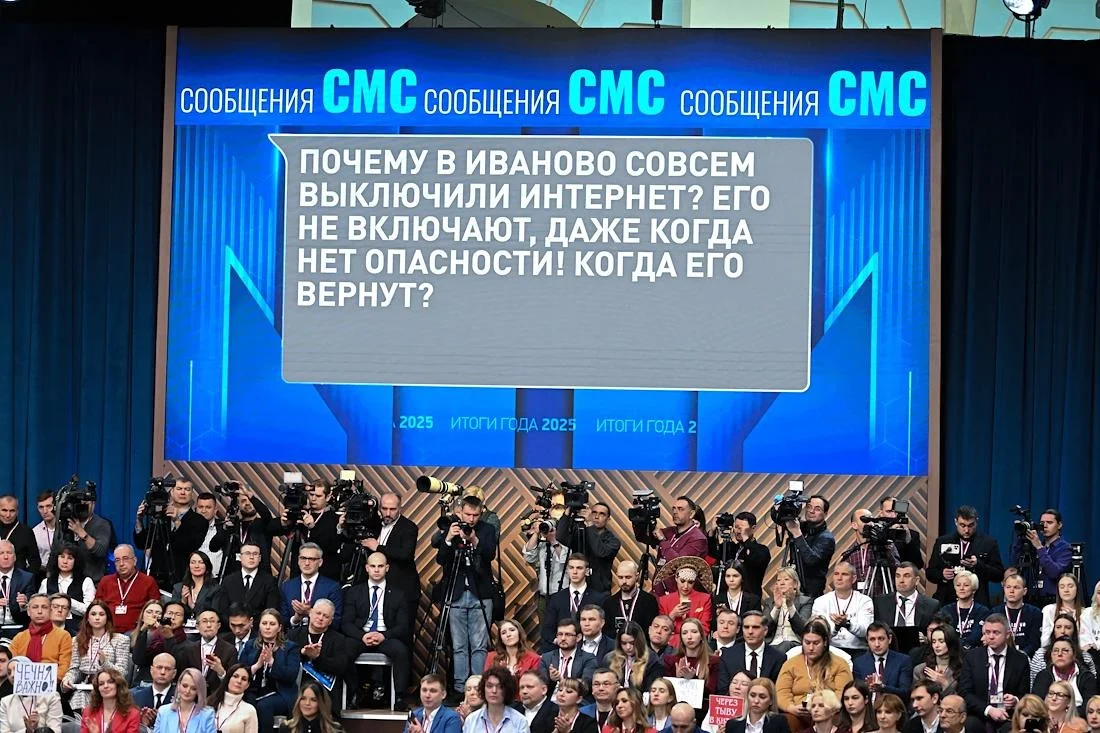
For the second time in recent years, there has been a hint that Putin is getting behind the wheel and driving around the streets of Moscow without a motorcade. And such trips are “useless.” That is, in the manner of Harun al-Rashid, dressed in the dress of a commoner, the ruler gets acquainted with the real problems of the population. Economic assessments from Putin, however, do not indicate immersion in the thick of people's life. But Moscow, as we know, is not Russia.
There are some things that Putin has never even heard of. For example, about the case of Laurent Vinatier, a Franco-Swiss peacekeeper who did not report himself as a “foreign agent.” This is about the asymmetry of information reaching the first person (as, indeed, about “foreign agents” in general, although it seems that the president is signing all the tightening of legislation that deprives this category of citizens of the latter’s civil rights).
The same asymmetry in working with information was characteristic of Soviet leaders. Once, in a conversation with Andrei Gromyko, Jimmy Carter raised the issue of the case of Natan Sharansky, a human rights activist and conscientious objector. Gromyko asked: “Who is Sharansky?” Carter was even taken aback and couldn’t find what to say. The legendary USSR Ambassador to the USA Anatoly Dobrynin, who was present during the conversation, admired Gromyko - he had to dodge the question so cleverly. However, when Gromyko and Dobrynin got into the car to leave the White House for the Soviet embassy, the foreign minister leaned toward the ambassador and asked: “Who is Sharansky?”
Putin also touched upon the topic of restrictions and prohibitions in the communication environment. They are and will be. Foreign messengers will have problems because their foreign leaders do not comply with Russian laws. Mobile Internet will be switched off because it is necessary to “minimize the danger from drone strikes.” This was a response to a request to whitelist services for processing data from glucose sensors in insulin-dependent children. In this case, the child’s tear comes into conflict with combat missions and suspicion of everything foreign: “If a component of this service is located abroad, then it is easier for the enemy to choose targets to strike. We need to switch to domestic services and hardware.” Or transfer foreign ones here. Necessary. But there is no doubt that it will not work. The children will wait. These are all trifles compared to the thousand-year history, according to Medinsky, and spiritual values, according to Kharichev.
If the word of the year, according to some sources, is “victory,” and according to others, “anxiety,” then the word of the last decades can be recognized as “nonsense.” Officials called everything that was later implemented “nonsense,” from Crimea to Donbass.
Now “nonsense” is a war with Europe. However, it can be avoided, according to Putin, on one condition: “If you don’t deceive us, like you deceived us with the expansion of NATO.”
And in general, it’s time to finish. Just not SVO, but too many TV programs about Ukraine.
“Olenka,” who was asked to marry during a direct line - this line was so long - answered with consent.
The year of the groundhog was ending and flowing into the next one.