Date
Author
Вячеслав Половинко, Сабина Шолахова
Source

Preserved copy
Translated material
“Russia does not understand Central Asia, which means it is afraid”
Shameful questions about the nearest “friendly” neighbors. Political scientist Arkady Dubnov answers

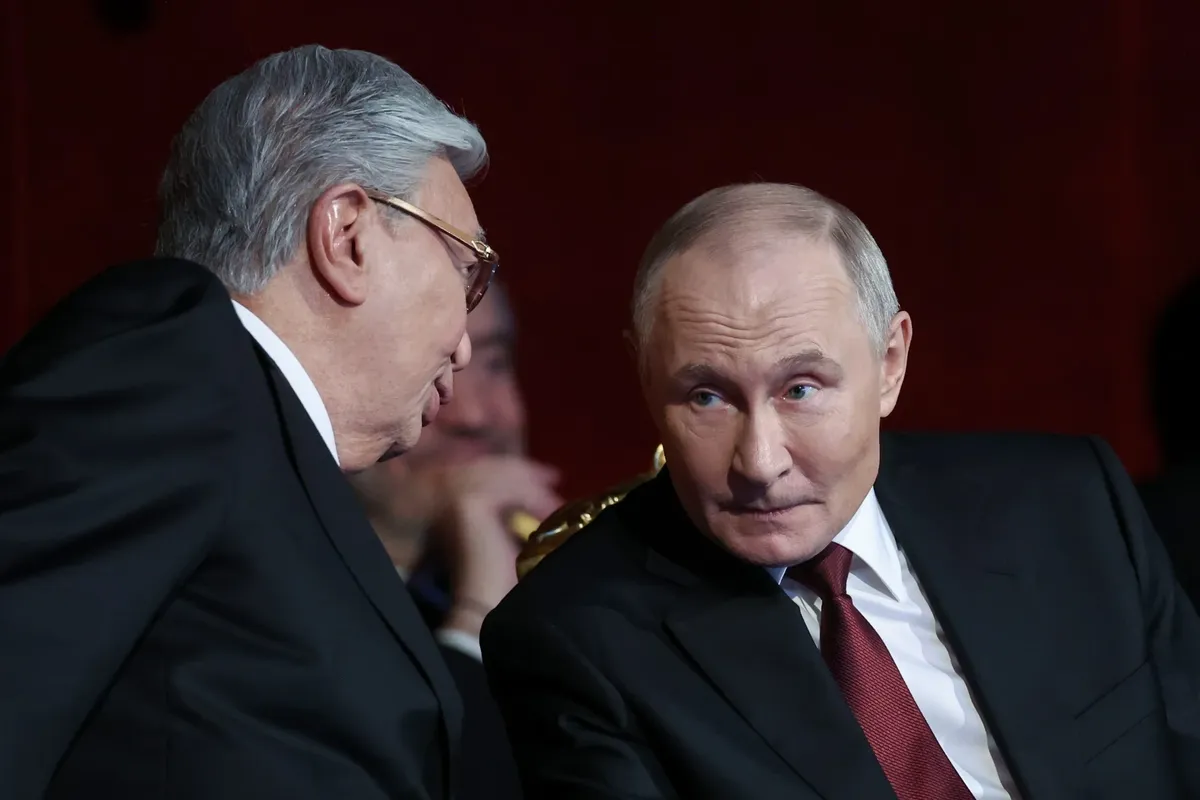
State visit of the President of Kazakhstan Tokayev to Russia. Photo: Vyacheslav Prokofiev / press service of the President of the Russian Federation / TASS
In conditions when looking at the West should be disgusting and unsafe, not only Kremlin denizens, but also ordinary Russians are turning their attention to the East. And there are not only the forgiven Taliban, China and Kim Jong-un sending sappers. The closest friendly region is Central Asia. Five former Soviet republics, which have been living their own lives for almost 35 years and during this time have turned not only into full-fledged political players, but also into a serious united structure, where, however, one is very similar to the other. At the same time, in Russia Central Asia is perceived mainly through the prism of stereotypes. Migrants, “The East is a delicate matter,” “we taught them everything”—perhaps the basic set. And then about each country separately: some have a funny dictator at their head (he hasn’t for several years), some have constant revolutions (he hasn’t for several years now - and probably won’t for a long time).
This approach is not only wrong and offensive. He is also politically short-sighted - since other countries look at the region very closely and try to find space there for their own economic and political interests. China’s influence in the region is obvious, but Europe is also actively moving there, Turkey is finding many common ground, and the United States is courting all of Central Asia and each country individually in every possible way - right up to the huge C5+1 summits in Washington.
Therefore, it is time to rediscover Central Asia. Novaya asked Arkady Dubnov, a long-time expert on Central Asia, to explain some basic things that you can then build on in your knowledge of the region. These are the so-called shameful questions: everyone seems to understand everything about this, but no one has ever been interested in the correct answer.
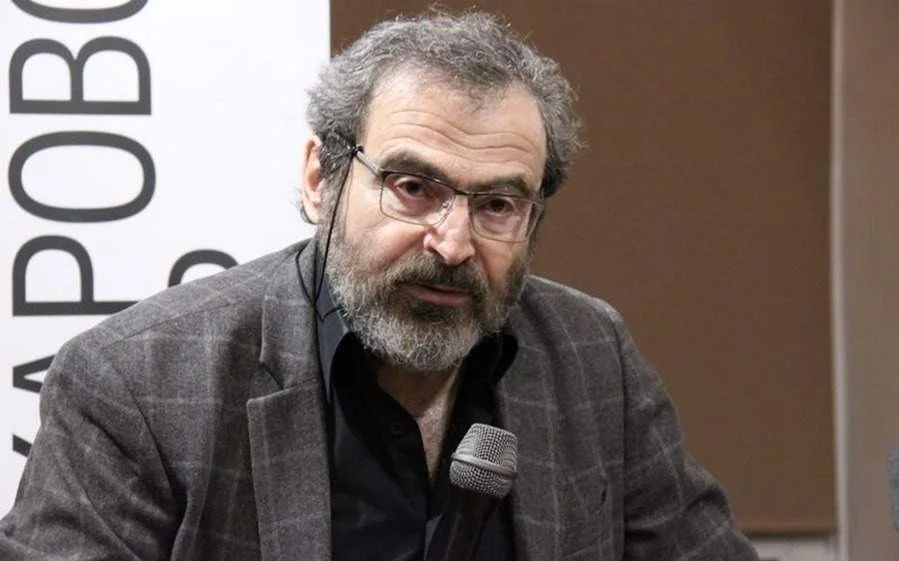
“Kazakhstan is not quite Central Asia”
— Political commentators in Russia often say that all Central Asian countries are similar to each other and almost the same. But in reality, how?
“This is an incredibly superficial, amateurish view that has nothing to do with reality. Nothing.
They are different, first of all, in the mentality of the residents inhabiting this region. There are nomadic and sedentary peoples. Nomads are those for whom their habitat, their idea of themselves in the world, is determined by the fact that they are free to move after their livestock, which needs to look for pasture. Therefore they know no boundaries. We are always ready to move and set up a yurt anywhere. These traditionally include Kazakhs and Kyrgyz. Maybe these are people from part of the mountainous regions of Tajikistan, but in general this is not very typical for the country.
Others - the Uzbeks and Turkmens - are sedentary peoples who traditionally live in the same place, generation after generation. Their habitats are determined by the history of the tribal formations to which they belong. And they are limited to this habitat. Mentality also depends on this. Relatively speaking: khans, emirs, leaders change - but people remain in their places. They looked out the window outside their “square” of residence: “Ah, the rais has changed. Well, we will live with this rais, we will now adapt to it.” And this determines certain properties that reveal the degree of readiness for a democratic order of things.
— It’s as if politically in the last 15–20 years, again excluding the Kyrgyz, the attitude towards the same conditional “rais” has become more unified. Everywhere in Central Asia, in every country, they tolerate the quirks of their “rais”, and some of his desires, perhaps, are not always adequate. All other things being equal, no one tries to change “raisa” for his actions. Neither in Kazakhstan, nor in Uzbekistan - if we are talking about the two largest countries in the region.
- I cannot agree here. If we are talking about Kyrgyzstan, then we are already witnessing the sixth president.
— Yes, but we put the Kyrgyz out of brackets.
— Yes, Kazakhstan is calmer, but this is due, I would say, to some connection to an already modern tradition. Kazakhstan, to a certain extent, is the brainchild of Nazarbayev. We must call things by their proper names. Therefore, when, for example, there was a transition of power - at the behest of Nazarbayev, we must always remember this! — Nazarbayev left his successor a certain order of things, determined by the supreme authority, the will of the First. He reserved the right to remain first and only. You remember the period from 2019 to 2022. There were two centers of power. And at some point it had to burst, like a punctured bubble, and it did.
But the intention in any case is that there is one center of power that must govern. And this center - such a collective rais with the main rais at the head - was quite deservedly authoritative due to the fact that Nazarbayev inherited a rich country. And the rent of this wealth was distributed among all regions, so he could manipulate them, personally distribute this rent [and thereby suppress discontent]. This is the difference from Kyrgyzstan, which was virtually left out of natural resources, except for water and high-mountain glaciers. At one time, it generally seemed that in Kyrgyzstan the only source of capitalized resources was the Kumtor gold mine, around which all the fights for power and property took place, and crimes were committed. There was nothing more.
— Who is the most obvious leader in Central Asia now? It seems that Kazakhstan and Uzbekistan are at least on equal terms.
— Let’s make a reservation right away: from my early school days, I remember very well that in the USSR there was a clear division: Central Asia and Kazakhstan. I still have a wonderful big red album in Moscow - a geographical atlas of the world. There are several pages dedicated to the region, and Kazakhstan separately from Central Asia. Of course, the current competition, when it is a united region, between Kazakhstan and Uzbekistan is obvious. But for me, Kazakhstan is not quite Central Asia, not quite an Asian region. The legacy and presence of the Russian Empire in it is extremely large - in culture, in mentality, not to mention geography. We can say that there is some kind of competition going on, but we must remember that we are talking about different geo-economic, geopolitical and even philosophical foundations of these two countries. I would not talk about competition, but rather about a certain jealousy of leaders that has historically developed since the times of the Soviet Union.
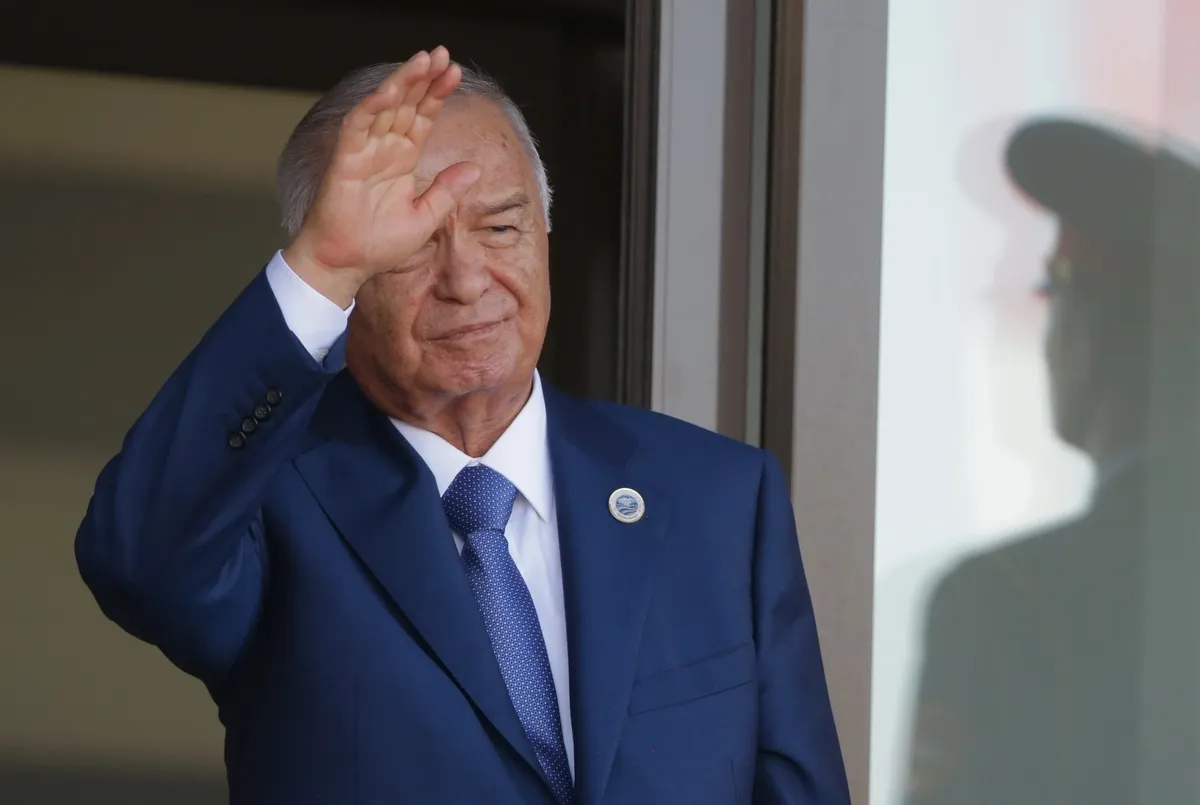
- Who is more jealous of whom?
— It so happened that I was quite familiar with the first president of Uzbekistan Islam Karimov, I spent quite a lot of time communicating with him, unlike Nursultan Nazarbayev. I can’t talk about the delicate moments of conversations with Karimov, but I will let you understand that Karimov was quite jealous not so much of Nazarbayev, but of the fact that the Kazakh leaders enjoyed more influence in Moscow than the leaders of Uzbekistan. The history of these relations dates back to Soviet times, when the status of the party leader of Kazakhstan Dinmukhamed Kunaev, a long-time member of the Politburo of the CPSU Central Committee, the highest Areopagus of the USSR leadership, was higher than the status of the party leader of Uzbekistan Sharaf Rashidov, who was only a candidate member of the Politburo of the Central Committee. This shadow of Kunayev passed on to Nazarbayev. It is no secret that Nazarbayev enjoyed very serious influence in the Kremlin in the last Soviet years. So much so that Gorbachev appointed him to the Presidency of the Union. And this also caused jealous feelings in Tashkent. Well, personally, Karimov did not have a very good attitude towards Nazarbayev. He did not consider him a good economist, did not consider him a person who knows what and how to do.
I will say more (I described this here and there). The reason for Karimov’s death was also related to his jealous attitude towards Kazakhstan. At the end of August 2016, the results of the Olympic Games in Brazil were summed up, in which the Kazakh team lost to the Uzbek team in the overall standings. Islam Karimov was very jealous and sympathetic to this. And he celebrated the victory of the Uzbek team, which was ahead of the Kazakh team.
What happened then - you know. So traces of this “competition” remained in history and in life.
“At this historical stage there is no way without leadership”
— Can Central Asia live without a cult of personality?
— The simplest answer, of course, is negative. For comparison, let's look, so to speak, at the “metropolis”. A people experiencing frustration and phantom pains over the loss of imperial greatness needs a leader who consolidates resentment to try to recreate something. To do this, there must be a personality that people mostly associate with themselves. They want to regain the feeling of belonging to something big, great. And such a personality gives them these sensations.
In Central Asia it is a little different. A new state is being built, national traditions are being revived, and where they do not exist, they are being created in a new way. The basis for state sovereignty and national dignity is being built up. The labels, markers of this dignity, first of all, are language, the national language. Further on is the territory traditionally considered the area where this language is used. Symbols of such dignity are, among other things, the flag, the anthem, and the person. Not an institution, as is commonly believed in democracies, not institutions - parliament, separation of powers, political parties, an independent court - which in itself determines state sovereignty. And the person who embodies this national, revived and built dignity.
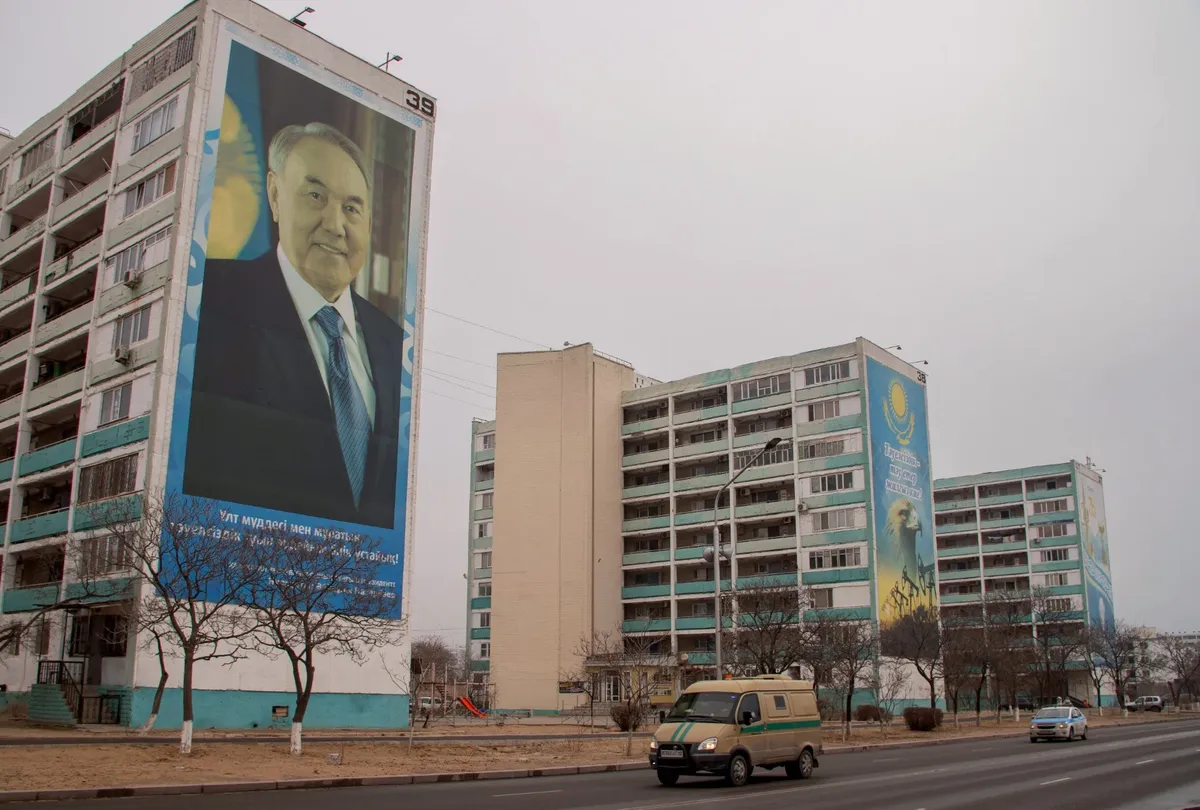
I will never forget a funny demonstration of this phenomenon that I happened to witness, I think, in 1998 in New York. I found myself at a meeting between the first president of Turkmenistan, Saparmurat Niyazov (a couple of years later, he proclaimed himself Turkmenbashi) with the leadership of the largest Jewish charitable organization, Joint. At some point, the conversation began to inevitably move towards a discussion of Turkmenistan’s foreign policy, where Ashgabat’s close relations with Tehran occupied a special place. Niyazov immediately picked up on this and preempted unpleasant questions by suddenly changing the topic. “I know that you want to ask about some kind of cult of personality that I am creating, about the monuments to me that stand all over the country, about my portraits that are printed on Turkmen money and hang in all squares,” he suddenly announced. “And I’ll tell you what: the time will come when I won’t be around, and then these monuments will be demolished, the portraits will be removed from the money, they will be removed from the squares.” But now people in my country need this, they should be proud of our independence, that’s why these symbols are needed - monuments, portraits.” In response there was applause, the trick was a success, no one asked about Iran anymore. By the way, this is what happened, Niyazov has long been gone from Turkmen manats, the monuments have been changed, but the cult remains to Turkmenbashi’s successors, the Berdymukhamedov family, father and son.
Therefore, at a fairly long historical stage, there is no way without this leadership. Education, culture, understanding of the world order around, understanding of one’s nation, one’s state, the world around - everything is concentrated around one person. And this man bears a very large burden of responsibility, which he took upon himself, also trying to be an expression of national character. In other countries - the same democratic ones, as we call them - this is not the case. No one would call Keir Starmer the personification of British tradition. And not even to mention Macron, at whom it has become common place to smirk today. Everyone knows that these people will change very soon. Unlike our regions.
I have another story related to the worldview of people who live even in free Kyrgyzstan. One day I was traveling with a work colleague from Bishkek to Torugart on the Kyrgyz-Chinese border. We were accompanied by a border guard major. We were talking in the UAZ about this and that, and suddenly he said to me: “Tell me, do you know Islam Karimov personally?” “Well, yes,” I answer, “I had to see each other.” - “Yes? How do you like him?” - “A difficult person, but a powerful politician.” And the border guard unexpectedly: “We wish we had something like this in Kyrgyzstan! Here we need a strong hand - so that he holds us all in his fist.” It was for me such an obvious voice of the deep - literally from Naryn - people. Moreover, this major was educated and had an understanding of the world. And I also wanted a strong leader at the head. This is about the question of how long the cult of personality will continue.
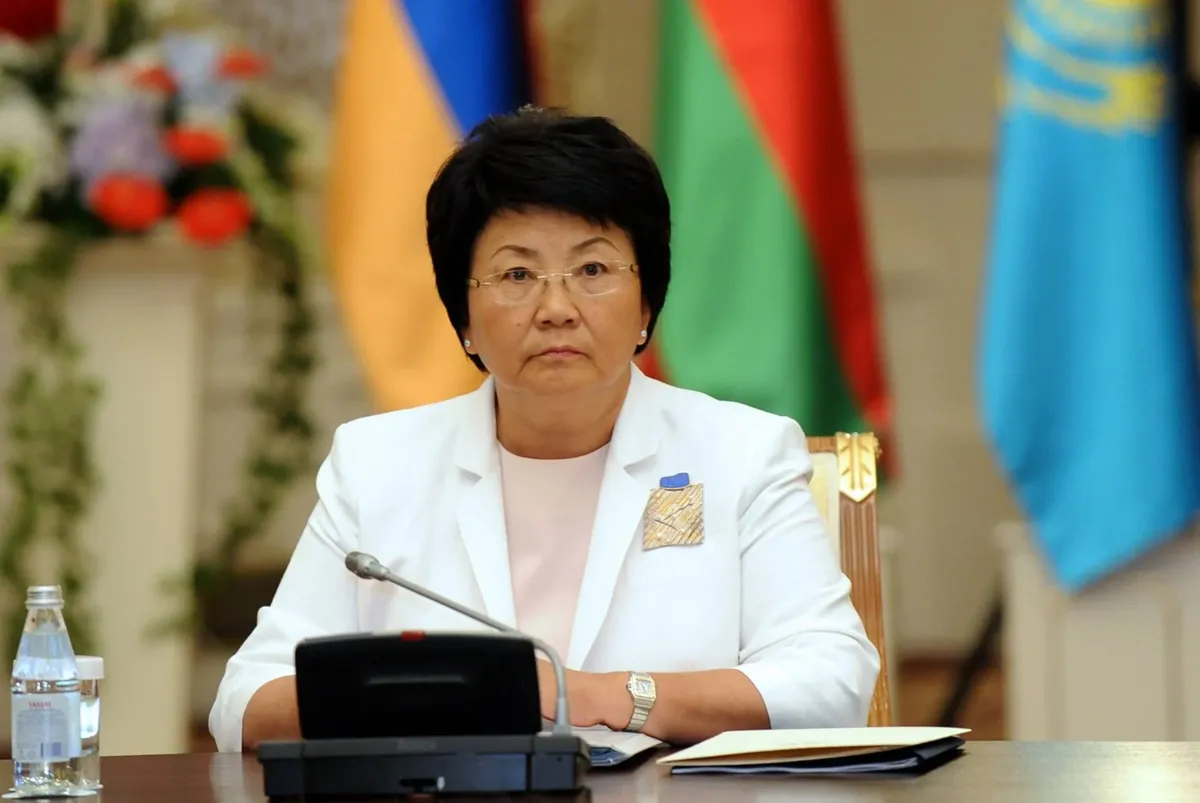
— In this case, can a woman be president in Central Asia?
— A very good question. And, of course, the first possible answer is yes. First of all, in Kyrgyzstan. The traditions of matriarchy in Kyrgyzstan are the strongest. I'm not sure how obvious this is today in a political sense. But earlier this was especially noticeable in families, because women dominated, as a rule, by virtue of character, by virtue of tradition and, most often, by virtue of education.
Then it all began to somehow dissipate. Then, in 2010–2011, Roza Otunbaeva came into power. She turned out to be very appropriate because she managed to curb the men who, after the overthrow of Askar Akayev in 2005, began to fight among themselves, but then admitted that the best way not to lead to a nightmare and war is to give a woman the opportunity to at least formally command them. And she did this very well, but she was also “eaten.” And then the next president, who received power from the palm of Otunbayeva, behaved very unmanly towards her.
Let's talk about other women right away too. It is impossible to say that in other republics this is categorically impossible, unlike Kyrgyzstan, which had its own experience in the person of Otunbayeva. Look what happened in Kazakhstan. Dariga Nazarbayeva persistently walked to the pinnacle of power. Her father would have been very willing to allow her to do this, because all the financial and economic clans of the oligarchy were almost in her pocket. But how can I put it: she overdid it. She overdid it largely “thanks” to her first husband Rakhat Aliyev, who, as they say, pulled the blanket over himself.
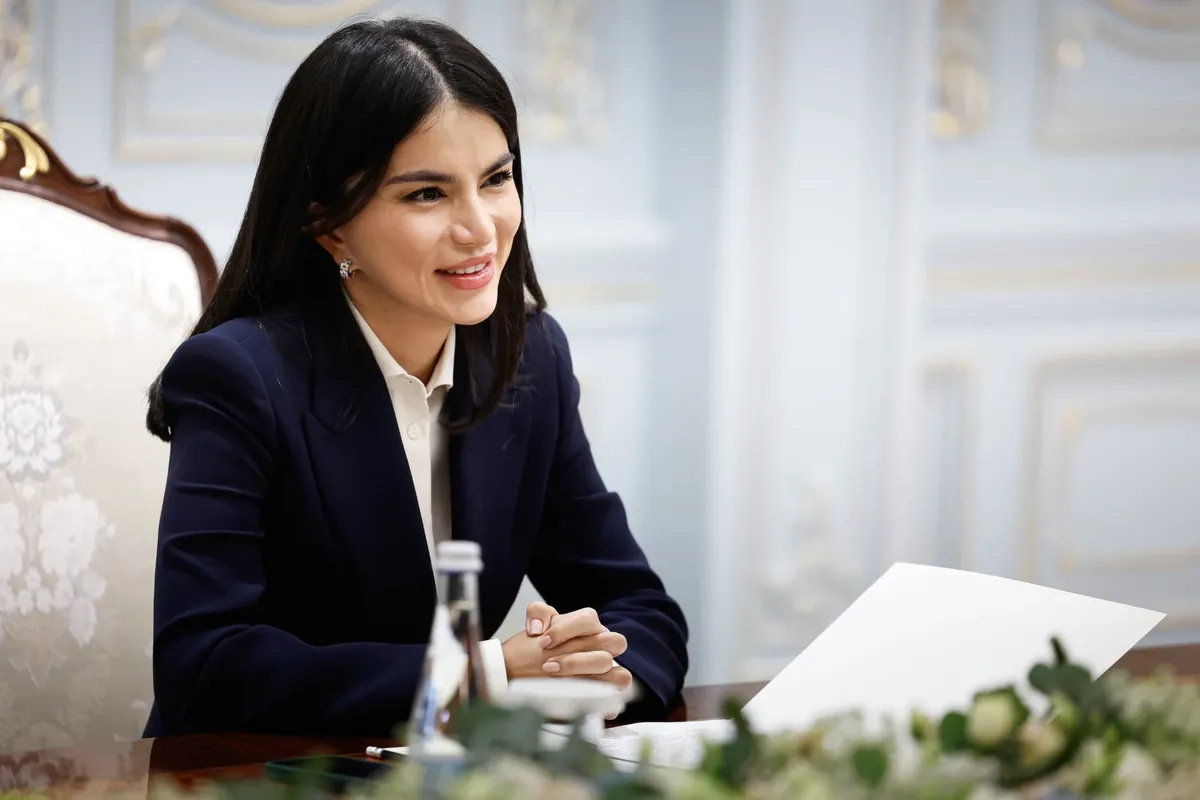
A different story happened in Uzbekistan. The first princess, Gulnara Karimova, the eldest daughter of the previous president, is still in prison. Her ambitions also pointed to the presidency, but she also behaved inappropriately, to put it mildly. And my father, who was a pure statesman, for whom the interests of the state at that moment turned out to be more important than succession to the throne, did not allow this nepotism in its pure form. But today, in a sense, the same model is being reproduced. The daughter of Shavkat Mirziyoyev, the beautiful Saida, has significant influence in the country. I don’t dare to say that she is the heir to the throne. But the fact that it is she who is entrusted by her father with essential functions and the opportunity to represent Uzbekistan in the outside world is obvious. Well, this is spiced up by the fact that Mirziyoyeva behaves, I would say, wisely in many other aspects of her state activities, which casts a significant positive aura on her daughter.
— Can a woman be president in Tajikistan or Turkmenistan?
— As for Tajikistan and specifically Emomali Rahmon, he’s poor, I sympathize with him. It's just Shakespearean drama, of course. Transfer of paternal authority to whom? Obviously within the family, but to whom? It seems that everyone thinks that the son Rustam, but in fact, if we talk about the nature of the non-potential, family power, then in general, of course, Ozod’s eldest daughter, who in fact is probably the second most influential person in the leadership, would be worthy of this, she is the head of the presidential staff. But a woman president in Tajikistan is unacceptable. This means that you need to believe in Rustam, and in many respects Rustam today looks bad as a possible leader of the state, so this is almost an international expectation of the transit of power in Tajikistan - it looks very dramatically clouded in terms of prospects.
And in Turkmenistan there can be no talk of a female president at all.
“Here is the Horde, and there is Holy Rus'. We spread to the sides"
— To what extent is the union of Central Asian states sincere and not dictated by political expediency?
— Let's forget the word “sincerity” in politics. The most sincere politician today is Mr. Trump.
I strongly welcomed this process of consolidation of states and said that this foreshadows the transformation of the region as a single subject of world politics. The process of this consolidation began with Putin's return to the presidency in 2012. All consultative meetings and forums are all a reaction to Moscow’s attempt to “tame” each of these countries separately. The idea received unexpected support as a result of the recent C5+1 summit in Washington. Americans perceive the Central Asian five as a kind of counterbalance to Russia. Therefore, there are attempts to establish the five as a real geopolitical factor.
Does this have a chance of development in the future? No one will give guarantees, the process is important. It comes with a creak, but it goes. For example. In 2022, during the summit of the Five in Kyrgyzstan, an agreement on friendship, good neighborliness and cooperation between the five countries was signed. But only three have ratified: Kazakhstan, Kyrgyzstan and Uzbekistan. And this year Tajikistan seems to have confirmed that it is joining. The Turkmens are not, they continue to play their trick of permanent neutrality. This process of consolidation will constantly be subject to serious stress and testing from a variety of angles. But as a single subject of world politics, Central Asia continues to attract attention. Again: the C5 + Japan summit is scheduled to take place on December 20 in Tokyo.
— Just a question about the complexity of unification. Suppose there is a military conflict in which one of these five countries gets involved. What will the other four do except express their deepest concern and commitment to peace?
— This question has a right to exist, but I think that, first of all, much will depend on the national and ethnic nature of the clash (God forbid). If Uzbeks suffer in Tajikistan, and there is a large Uzbek community there, then Tashkent may, in principle, have grounds to help its own. There were events in Karakalpakstan: internal in origin, but they contained traces of some “infiltrators” from the outside. However, Mirziyoyev resisted the temptation to react to this explicitly and specifically, to his credit and praise, because this almost always foreshadows a fire.
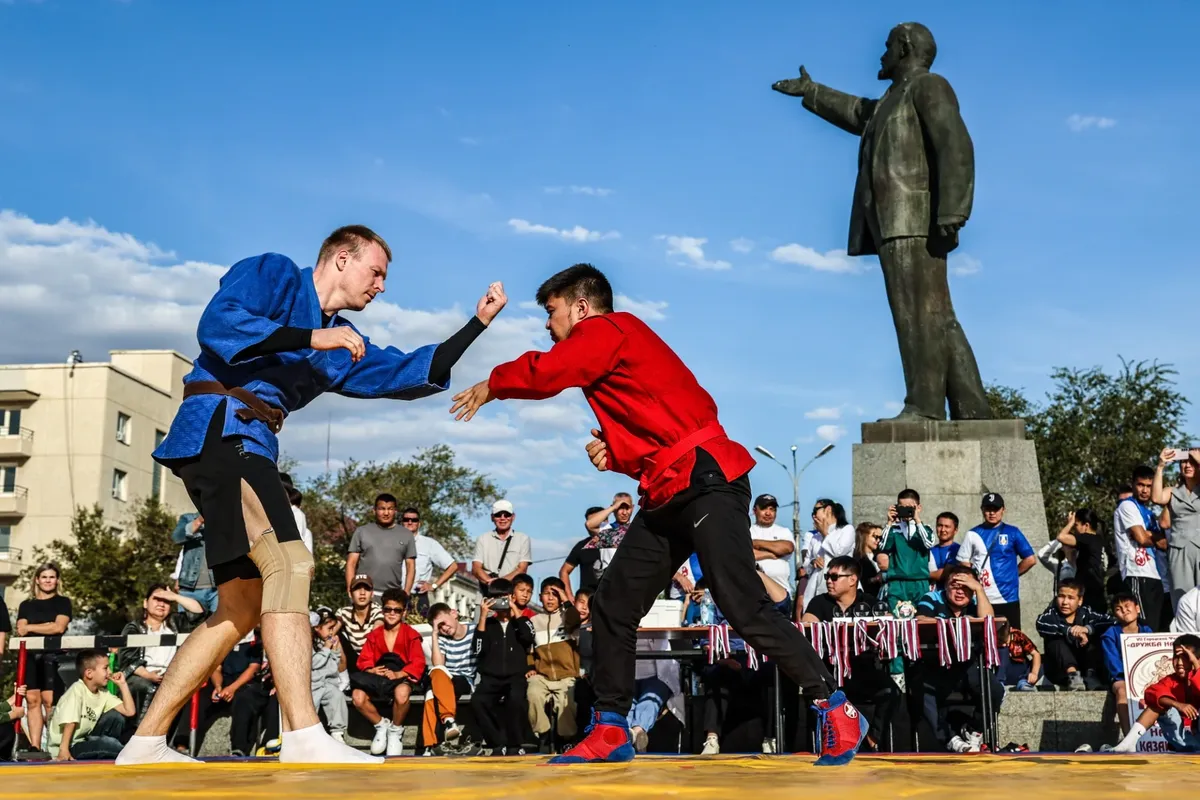
The most multi-ethnic country, of course, is Kazakhstan. But what kind of tension could there be related to ethnicity?
— Let’s just say one thing: Northern Kazakhstan.
- Yes, of course, of course, this is a danger, it hangs like a sword of Damocles. But it can only be considered prospectively from the point of view of possible actions associated with the Kremlin. I exclude the influence of some kind of local “passionate” behavior or “patriotic Russian movement”. There are no resources for this, no “leaders” and no crazy people with a “razor in their hand”. Although government policies that could lead to an attempt to play this card again cannot be ruled out, it seems that these days are passing.
I actually like one thesis that may, politically and historically, be the basis for ending this danger. I’m talking about the last declaration that Tokayev and Putin signed in Moscow during the state visit of the Kazakh president - the one with 42 points. Find the 34th point there. It postulates an indication of “stimulating dialogue on the basis of the civilizational unity of the Slavs and Turks, the brotherhood of “Ancient Rus' and the Great Steppe,” the union of Orthodoxy and traditional Islam.” Maybe I'm wrong, but doesn't this look like some kind of mutual recognition of two historical, ethnic, geographical spaces that should respect each other as an independent, state-territorial existence, entity? This is mine, don’t touch it, but this is yours, yes! The Horde was there, it has the right to a new statehood, but there is Holy Rus'. We separate and consolidate the absence of claims of one part to another.
I recently met with one of the Kazakh politicians close to Akorda and asked whose formulation this was. And they didn’t give me a clear answer.
— The declaration is wonderful. But if some incident happened in this geographical part, can Kazakhstan count on help from Central Asia?
- No. Let’s say there was a conflict between Kyrgyzstan and Tajikistan. The Kazakhs or Uzbeks, as influential older neighbors, could help resolve it, but they didn’t get involved either. Because interference from neighbors in the region is always fraught. Such are the morals in the region, such a stock of emotional likes and dislikes, that it is better not to do anything openly, but to somehow push opponents towards each other individually.
At one time there was such a CSTO Secretary General Nikolai Bordyuzha. We once talked with him about the Osh conflict of 2010. Bordyuzha said that he then advised Putin not to involve the Russian military in this conflict. Because if Russians appear in that region, retaliatory shooting will begin at them from both sides: the Russians have returned. Bordyuzha was absolutely right.
— Is Russian influence in the region increasing or not?
- It is decreasing, of course. Due to objective historical and demographic reasons. There is no need for deep analysis here.
“But Russia itself, apparently, does not think so and does not want to think so.
- All sorts of Solovyovs and others of the same kind constantly arise about this. They always had an attitude towards Kazakhstan as not quite having the right to those same northern territories - and this is a clear reference to Putin’s long-standing philippic, who inadvertently said that the Kazakhs supposedly did not have statehood. After some time, Nazarbayev corrected him. And now - Tokayev’s visit to Moscow and the signing of this declaration, some kind of internal agreement, apparently. Solovyov apparently receives a new manual from the Kremlin, the meaning of which boils down to the phrase “we will respect.” This, as they say, is absolutely no guarantee that such an attitude turned out to be unambiguous and irrevocable. But now it is.
An entire generation has grown up in Kazakhstan, born after the collapse of the Union and growing up confident that they live in a sovereign country. Yes, the neighbors have some kind of imperial complexes. You just have to get over it. There's no escape from this; you can't choose your neighbors.
Seven and a half thousand kilometers of common border cannot be buried in the ground. In this sense, of course, it is easier for Uzbekistan. And these same borders, by the way, also determine a lot of other things, if we talk about all sorts of structures in which the Uzbeks are not included, and the Kazakhs cannot but be included.
— Does Russia love Central Asia or not?
“Russia doesn’t know or understand Central Asia, which means it’s afraid of it.” We are afraid of those we don't know. We are afraid of them. In recent years, this has also, as they say, become larger, worsened, and expanded due to the large flow of migration from Central Asia. Terrorist attacks in which radicals of Central Asian ethnic origin were involved (for example, Crocus) also added to the fears. And conflicts among migrants in Russia are also multiplying. Their importance increases.
This all transfers generally to the idea of Central Asia. And ask an ordinary graduate of the current Russian school: what does he know about Avicenna, for example, or about the level of culture, about the development of medieval Asian civilizations in relation to what happened somewhere in Rus' under the boyars and under Ivan the Terrible? They will not say anything, because they have no idea that knowledge, mathematics, philosophy and other sciences flourished in Asia even when there was nothing really in Russia.
“Characteristic of extremes of national superiority”
— Which of the five countries in the region would you first advise a person not from Central Asia to visit?
— Young people love Kyrgyzstan very much. Beautiful mountains. Absolutely charming beautiful southern coast of Issyk-Kul. In general, from the very beginning of my interests in the region, I really fell in love with Kyrgyzstan. Back in Akaev’s time it was pretty cool there. It was just a lot of fun, lively. In contrast to Uzbekistan, where, in general, they tried to hold everything in place so that it would not spread apart, due to the proximity of Afghanistan.
I don’t mention Kazakhstan at all simply because in Astana, for example, there is no specific Asian exotica. Astana is a city that should be compared with some cold Dubai. Almaty, by the way, is a different matter - a very nice city. The charm of one of the old blooming oases of Asia still remains there. The same famous apple orchards, although now you need to go somewhere into the gorge to see them. One problem: smog, since the city is low-lying. It was there before, but now it’s even worse. However, compared to what I saw in my time in Beijing, this is still nothing.
I would also, of course, be happy to advise people to travel to Turkmenistan. See how the nation of five tribes, closed in on itself and its famous Alabai, lives, paying no attention to anyone, as long as no one bothers it.
— Is there anything that still seems incomprehensible to you in the politics of the region?
— If there are moments, they are connected with a very long, long transition period of the very formation of national-state identity in relation to the outside world. This period is characterized by certain extremes - such national superiority. This is, by the way, what distinguishes modern Kazakhstan to a greater extent. The same current generation of Kazakh politicians was formed during the years of the growing wealth of the state. And he is trying to defend his position, his pride as representatives of a powerful, strong state - a middle power, as they now say. Kazakhs have reason to be proud of their history. Even at the family level, people know the history of their family almost to the fifth generation. And I can only admire this depth of the Kazakhs in their history.
But this partly has the other side of the coin in the form of a feeling of one’s superiority, the superiority of a historical, national character, which is not just being formed today, but has always been so. Sometimes among this generation of politicians, such a feeling seems a little excessive.
— Maybe this is also a consequence of the presence of common borders and the fact that the Kazakhs have to behave this way now?
- Yes, sure. There is a lot of interesting things in this comparative, so to speak, historiography, ethnography and geography of the region, therefore - returning to the beginning of the conversation - only fools say that all countries in the region are the same.
— Is Western-style democracy possible in Central Asia?
- No.
- Is she needed here?
- This is the answer. If you can still answer this way about Russia, then this does not work in Central Asia. However, here we need to make an important clarification: I would not have said it the way I say it now, even 20–25 years ago.