
Translated material
Mikhail Epstein: “Russia is changing quickly, but developing slowly”
On the cultural interpretation of historical catastrophe

Photo: Valery Sharifulin / TASS
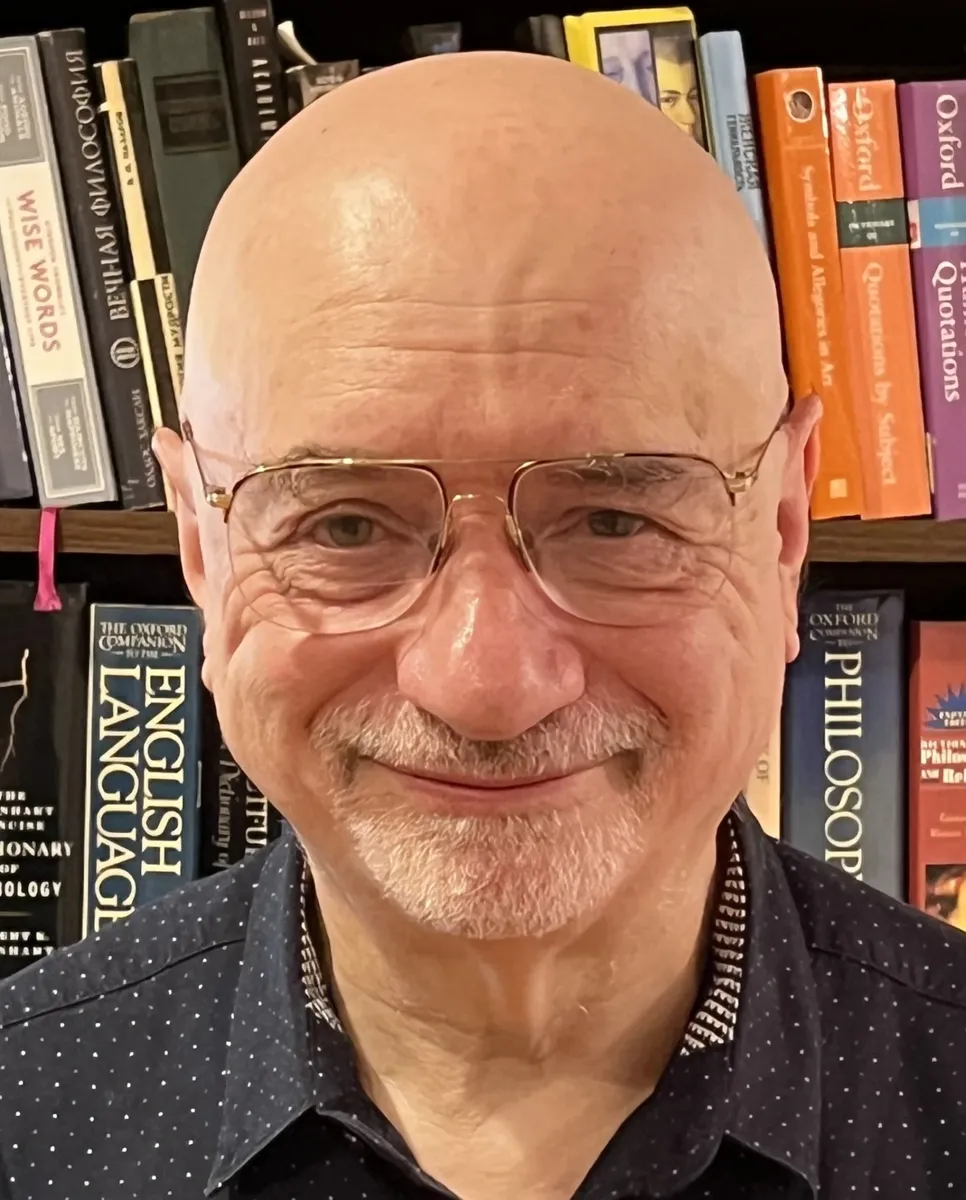
With a philologist, philosopher, culturologist, emeritus professor of cultural theory and Russian literature at Emory University (Atlanta, USA), we talk about cultural default, the forces of self-destruction of Russian civilization and artificial intelligence as a human partner in creating a new space of the mind.
— When you look at the table of contents of your recent book “Before the end of history “The Edge of the Russian Anti-World” (Freedom Letters, 2025), it already becomes alarming - the prefix “anti” is attached to all the concepts discussed in the first chapter: anti-society, anti-time, anti-life, anti-morality, anti-being. What does it mean?
— Anti is a way of existence of a society, a collective, an ideology, when they are defined by contradiction, through negation. At one time, Vladislav Surkov put forward the idea of a “Russian world”. In comparison with previous dominant ideas, such as “Moscow is the third Rome” (XVI-XVII centuries), “enlightened absolutism” (XVIII centuries), “Orthodoxy, autocracy, nationality” (XIX centuries), “communism”, “class struggle”, “proletarian international”, “world revolution”, “real socialism” (XX century), this idea is empty, just a tautology. Russia is now not identified at all with any project, goal, ideal - only with itself (“butter and butter”). Surkov, in fact, did not define this world as anything other than the “desire to expand”: “What is the Russian World? This idea, I once introduced it into the structure of state policy... There was such a task: how to talk about the Empire, about our desire to expand, but at the same time not offend the ears of the world community.” The corresponding practice also does not reveal any meaningful motivation: expansion in the name of what? It turns out that this world is defined only “by contradiction”: anti-West, anti-modernity.
— Are there cultural prerequisites for the formation of such an anti-society?
—Antisociality is when people unite on an antisocial basis, deceiving or robbing each other. If you don’t take bribes, then you are not considered one of them. In Andrei Konchalovsky’s new film “Chronicles of the Russian Revolution” (in the middle of the 4th episode) there is a scene where Rasputin gives a coined formula for anti-society, reproaching the incorruptible Colonel Mikhail Prokhorov: “There are swindlers around me, and you are the only honest one. The only bad thing about you is that you don’t take money... Ay-ay-ay, you’re dangerous, Misha, your comrades will start to shun you. Yes, and it’s a sin... God sends you money, but you refuse... Pride must be pacified.” It turns out that God himself orders stealing to strengthen partnership. Collaboration is, as it were, the reverse side of traditional “conciliarity”, mutual responsibility in theft, violence, and lawlessness as a principle of social unity, and even sanctified from above (it is a sin not to take). Where the law is replaced by “grace” (using the vocabulary of Metropolitan Hilarion’s “Sermon on Law and Grace,” 11th century), “grace” easily triumphs there.
— But corruption and mafia exist not only in Russia.
- “Corruption”, “mafia” exist in many countries, but in this case these socio-legal categories are insufficient, since they describe criminal anomalies, while in an anti-society these phenomena act as a norm, an unspoken law, the basis of “concepts”, i.e. correct, socially approved interactions. In general, anti-society is a complex ritual system in which there is a place not only for fear and terror, but also for laughter and sarcasm. Laws are established so that everyone, one way or another, can violate them, mock them, but at the same time tremble before the power that stands above the law, unaccountable and incomprehensible.
Or recently Bishop Pitirim (Tvorogov) of Skopin explained that joy and laughter are alien to Russian psychology. “Sorrow for us is joy, bliss... If we look at the world around us, then everything is the opposite: there they rejoice, laugh, laugh. We have a different mentality. We, even outwardly mourners, do not smile, and not because our climate is such and everything is not arranged everywhere... Our ancestors bequeathed to us that all joy and happiness are in heaven, but here on earth we only have sorrows.” Again, an upside-down world. It turns out that in the dispute between the elder Zosima (from Dostoevsky’s “The Brothers Karamazov”), who preached joy, and the gloomy Ferapont, who saw evil spirits, decay and curse everywhere, the latter is now winning. It is this morality turned inside out, denial of the value of life and forced suffering “for the sake of saving the soul,” that is embedded in anti-society. Then no religious considerations will interfere with a man-made nuclear apocalypse; on the contrary, they will incite it, since we are called only to sorrow.
— In the “Dictionary of the Antiworld”, which concludes the book, you introduce new terms, for example, “perpendicular world”, “necrocracy”, “emptiness”. Do you find it difficult to choose old terms to describe reality, or do you thus emphasize new concepts of this reality?
- Both. Language constantly needs updating to sharpen our perception of the world, and the world itself is changing. For example, already in the second half of the 2010s. the strengthening of criminal or semi-criminal elements became noticeable even in official speech, in the style of governing bodies. A kind of “respectable gopnikism” began to spread. Hence the emergence of a new prefix: “gop-” (from the word “gopnik”) - the first part of complex words, denoting the criminal, gangster element of this social phenomenon: gop-politics, gop-diplomacy, gop-journalism, gop-economics, gop-religion, gop-sport . This is a kind of style of the era - not a hippie or a yuppie, but a “goppy”. Or the strengthening of such a tendency as “holiness” - an obsession with one’s holiness or the holiness of one’s principles and beliefs. Sanctity seeks heresies and heretics everywhere, uses any excuse to demonstrate “offended religious feelings” and, under the guise of piety, incites a spirit of malice and intolerance in society. A similar, but not identical phenomenon is pop religion, religion for the needs of the masses, to manipulate their consciousness and extract commercial benefits; reducing religion to a political instrument, magical or psychotherapeutic function. Since late Soviet times, empty farming (cf. housekeeping) has emerged - the cultivation of empty space. This is a form of social activity - the production of “nothing” as the main collective product. The social system makes a lot of efforts for this, since too focused and productive activity can be perceived as dangerous and destabilizing. Hence there are many events: forums, meetings, committees, road maps and strategies that do not presuppose a result in advance. The louder the name - “forum of the future”, “dialogue of civilizations”, “development platform” - the less real content there is: a classic form of breeding controlled emptiness.
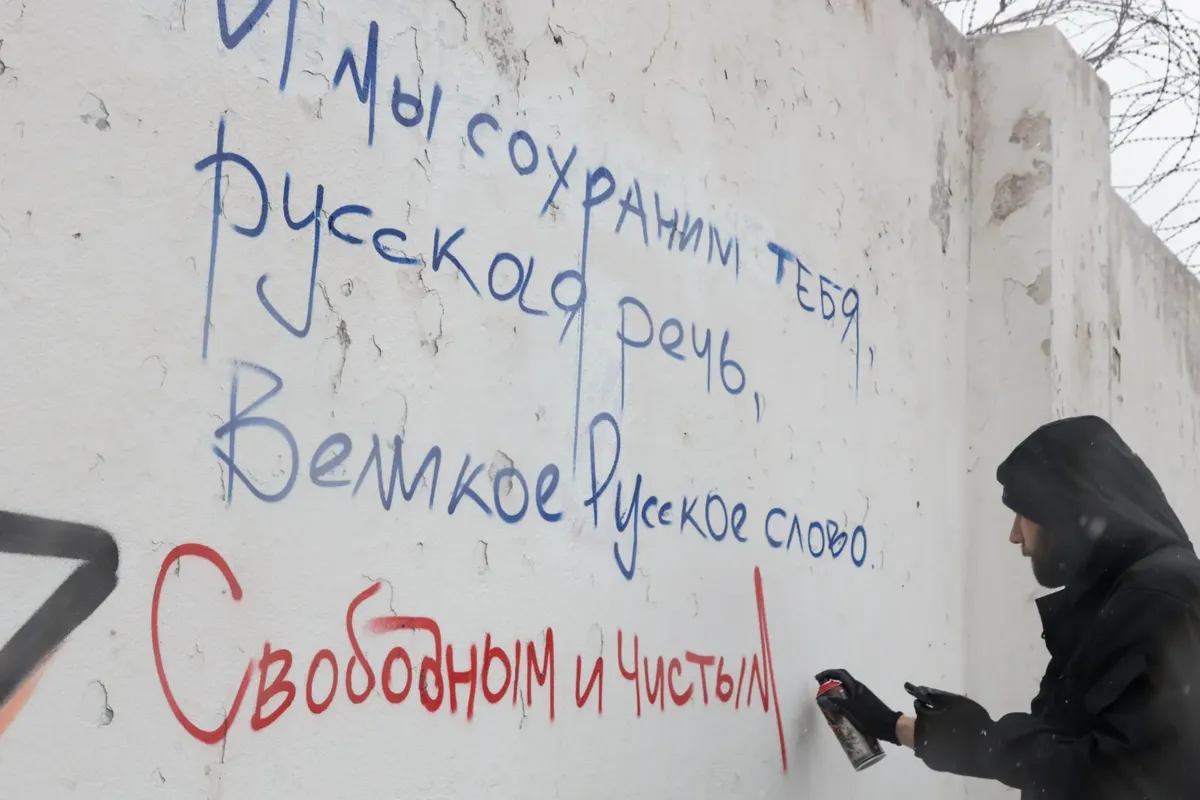
— Is there any hope that some of your terms will catch on? What is the general mechanism of word acquisition?
— In 1984, I came up with the word “scoop.” “Sovki” was the name given to the inhabitants of the country of the Great Owl (an allegory of the Soviet Union) in my book of the same name. There they worshiped midnight birds and owls as totemic ancestors - this, by the way, is an example of the anti-world of that time. I read chapters of this book on the BBC - from there, probably, the word came into the language as a designation of “Soviet”.
When new words appear, priority problems arise. Let’s say, the term “schizofascism” - fascism under the guise of the fight against fascism - was first proposed in my publications of 2015–2017, in the book “From scoop to bob: Politics on the verge of the grotesque”, in the “Projective Dictionary of the Humanities”. And in 2018, it began to be used in English, schizofascism, by Timothy Snyder, a famous American historian, specialist on Russia and Eastern Europe. Perhaps he borrowed it from me, but I do not rule out that it was “in the air” and could have originated with him independently. If a social need for certain concepts matures, they can arise in different people independently of each other.
— For a long time you were the head of the Center for Creative Development of the Russian Language, the head of the expert council of the “Word of the Year” competition, the results of which were widely discussed in the press, but now, if anything comes to mind, it is the word “RosPil”, introduced by Alexei Navalny.
— The ways of a new word into a language are mysterious. Here, for sure, “we are not given the opportunity to predict how our word will respond.” It is believed that it takes approximately two generations, 40 years, to establish whether a word will take root in the language or not. Introducing a new word into a language is a rare success. The writers of the 18th century were the luckiest of all, since at that time the language was still relatively poor and flexible and easily accepted new developments. From Lomonosov and Karamzin came to us such seemingly primordial words as “industry”, “touching”, “pendulum”, “constellation”. But also in the 20th century: Kamensky’s “pilot”, Kruchenykh’s “zaum”, Severyanin’s “mediocrity”, Nabokov’s “nymphet”, Solzhenitsyn’s “education”...
Unfortunately, in the last half century, stagnation has set in in the Russian language: many old words have fallen out, and new ones are almost entirely borrowed from English. I can see how the primordial roots lying in the soil of the tongue have frozen, stopped growing, and do not give rise to new branches. The situation in lexicography is as critical as in demography: both people and words do not want to be born and live. The most complete dictionary of the modern Russian language contains 150 thousand words, while English dictionaries reach a million.
To counteract this trend, for a quarter of a century (since 2000) I have been publishing “The Gift of the Word,” a projective lexicon of the Russian language, in the form of a regular email newsletter with thousands of subscribers. Of the three thousand words published there, only a few have become entrenched in the language or entered the dictionary of some scientific disciplines, but it is important to demonstrate the possibility of the very dynamics of the language and the prospects for its development. Various dictionaries include my words such as metarealism (the direction of literature and art), eco-fascism (the cult of nature at the cost of suppressing man and his freedoms), humanism (a set of humanitarian disciplines), videology (visual means of influencing public consciousness), synintelligence (the synthesis of natural and artificial intelligence) ...
— Your definition of what is happening in Russia — “cultural default” — has already firmly entered not only the dictionary, but also public usage. Is it really that scary for a country in which culture has been replaced by traditional values and the desire to become a separate civilization?
— Civilization is not just scale and strength, but a durable and self-reproducing cultural matrix with its own norms, institutions and system of meanings. By this criterion, the West, China, India and the Islamic world are civilizations. Their institutions grew out of their own cultural core: Confucian ethics and Chinese bureaucracy; Vedic tradition and caste order; Sharia and Muslim intellectual tradition. These civilizations maintain themselves for centuries: they may undergo reforms, but they do not cease to be themselves. Civilization is a stable form of social and spiritual organization, capable of reproducing itself in time, creating universal patterns of culture, law, morality, knowledge and life; Other peoples are voluntarily drawn to it. This is, as Norbert Elias said, “the self-restraint of force in the name of form” - the ability of society to transform power into law and violence into culture.
From this point of view, Russia has not created its own cultural and civilizational matrix - that internal form that has determined the life of society for centuries. Its spiritual foundation is Byzantine Christianity; model of power - Horde-autocratic; modernization - Western; science and technology are also from the West, from the outside; philosophical ideas are predominantly European. This problem was precisely formulated by Berdyaev: “The Russian people had enormous elemental strength and comparative weakness of form. The Russian people were not a people of culture par excellence, like the peoples of Western Europe...” (“Russian Idea”). On Berdyaev’s part, this is not a reproach, but a cultural-historical diagnosis: Russia produces brilliant works and personalities, but almost does not create stable forms and institutions. Pushkin, Tolstoy, Dostoevsky, Tchaikovsky are peaks, but not a system. There were outstanding scientists - Mendeleev, Pavlov, Landau - but science as an autonomous institution never took root: it always depended on the state and ideology, and not on its own internal development.
— The authorities are searching for a social project in the past; it is not surprising that the Eurasian view of the Golden Horde has now prevailed as a system-forming factor in the formation of the Russian state.
— The parallels with the Mongol Empire, the Golden Horde and the Ottoman Empire are especially striking. These empires were strong political organisms, great powers, but not independent civilizations. Conversely, Japan, far from being a great power, is usually regarded as a civilization in its own right, and one of the most original in the world. This is a civilization of adaptation, not confrontation; it turns what it borrows into an organic part of its culture. She managed to combine ancient tradition with modernity, Western technology with Eastern ethics, without destroying her own civilizational code.
There is no doubt that Russia has great cultural achievements: world-class literature, a capacity for historical reconstruction, powerful spiritual quests. But civilization is a structure that transforms inspiration into measure and energy into order. In my opinion, the best thing about Russia is precisely what makes it part of Western civilization, what it has learned since the time of Kievan Rus and the reforms of Peter. If it refuses this and positions itself as the antithesis of the West, then this cannot but be perceived as a tragedy of self-denial. By the way, by opposing yourself to all other civilizations, it is easy to fall out of civilization as such.
— What lessons from its history does Russia need to learn in order not to fall out of the circle of Christian, European, civilized countries, if, of course, you consider it to be part of this triad?
— The first is the value of the individual above the state: without this there is no right, no freedom, no responsibility. The second is that continuity is more important than eternal “resets”: the country must learn to preserve institutions, and not destroy them when changing course. Third, power should be secular and limited by law, and not sacralized and inviolable. In general, the word “civilization” grew from the Latin roots civilis (civil) and civis (citizen), and the root civitas meant “city-state,” “society of citizens,” in which relations are regulated not by power and fear, but by law and consent. Therefore, a country where there are no citizens, but only subjects or “population”, cannot be considered a civilization in the full sense of the word.
Without civil rights, without the idea of individual dignity and the rule of law, society remains archaic - no matter how highly educated its elite may be. Civilization begins where a person becomes a subject, not an object of history - a citizen.
— Is there still hope for a civilized future?
“They say that hope dies last.” But hope in Russia has died several times already. In 1917, with two revolutions, which ultimately did not liberate, but even more enslaved the country. In 1964, when the timid Khrushchev thaw gave way to Brezhnev's frosts, and in 1968, when the hope for socialism with a human face was buried. We can continue. The question is what happens to hope after it dies. Someone will say: hope is not waiting for turning points in history, but quiet and persistent work for the future. And the other will decide that it’s time to simply bury this hope. Continue to place your hopes on some more lasting values.
— In Russia, space has always been considered the main value. You write that space in Russia has swallowed up time. But one cannot help but remember that all the main processes in Russia took place rapidly: the most obvious examples are the revolution of 1917 and Gorbachev’s perestroika. And the current turn to the past happened with stunning speed. The current one: “Do you want it to be like in the 90s?” - is this a demotivating slogan to love the time of freedom?
- Russian history really knows rapid turns - the revolution of 1917, the collapse of the USSR, perestroika, the current rollback to the past. But this is not development, but explosive transitions that do not create time as a historical fabric. Historical time is continuity, the accumulation of institutions, the transformation of norms, the growth of one state into another. In Russia, changes occur at lightning speed precisely because there is no stable structure underneath them: there is nothing to break, resistance is minimal, institutional depth is small. Russia is trying to modernize without having its own civilizational support, and therefore its impulses towards modernity are discontinuous and catastrophic. This gives rise to the effect of rapid, almost seismic shifts.
— What mechanisms were at work here?
— When the state is based not on the law, but on the vertical of power, any changes depend on the will of a small group of people. Hence - instant collapses and equally instant reversals.
This is not a dynamic, but an institutional weakness. Russian modernization has always occurred in spurts: Peter's Europeanization, Stalin's industrialization, Khrushchev's thaw. The principle of gradualism does not apply here. The authorities know how to mobilize, but do not know how to reform; accelerate, but do not increase. Therefore, change is not evolution, but shock. Each new cycle seeks to nullify the previous one: the revolution destroyed the empire, Stalinism destroyed the Leninist model, perestroika destroyed Brezhnev’s stagnation. Time does not flow, but ends, and therefore each new turn looks lightning fast: it does not continue the past, but crosses it out. Hence the paradox: Russia is changing quickly, but developing slowly. This is “anti-time”: a series of rapid transitions that do not form a line, but create cycles of destruction and rollback.
“It is difficult to accept that the world, which seemed to be moving towards unity after the destruction of the Berlin Wall, has now fallen into a fierce struggle for territory. This is all the more strange since reality is increasingly detached from the ground, as evidenced most clearly by the creation of supra-mundane artificial intelligence. What do you think about AI's ability to help people avoid geopolitical madness?
— Political structures, by inertia, remain tied to the logic of the 19th century, while at the level of knowledge, communications and technology, humanity has already moved into the 21st. Artificial intelligence is the clearest demonstration of this gap: it exists “above” territories, above borders, above traditional forms of power. This is the first example in history of a mind that arises at once on a global scale: it learns from the texts of all cultures, communicates with people from different countries in all languages, and thinks in categories that are not reducible to the logic of boundaries. The simple communication of millions of people with AI is gradually forming a new mentality - less closed, more cosmopolitan. It is a soft, non-violent form of globalization - often more effective than diplomacy. Everything that creates real value today - medicine, science, education, technology - develops through cooperation, and not through expansion, expansion of space.
Material resources are limited, intellectual resources are not. If I share an idea, a discovery, a fantasy, I don’t have fewer thoughts, but the other person has more of them. An apple divided in half is halved; knowledge shared with another is doubled. This is the economy of abundance versus the economy of scarcity, the logic of generosity versus the logic of stinginess.
The 20th century passed under the sign of geopolitics - the struggle for territories, resources, spheres of influence. Zero sum game. For one to win, the other must lose. The 21st century requires a transition to noopolitics - the interaction of minds, ideas, meanings in the space of the noosphere. And the opposite logic works here. Positive sum game. The idea that I shared with others does not disappear, but multiplies.
— Why is reason, which has always manifested itself through humans, states, and ideologies, now embodied in neural networks?
“We are still dividing the earth when we should be multiplying meanings.” We fight over kilometers when we should be cooperating over terabytes. Perhaps it is AI, this natural inhabitant of the noosphere, that will help humanity make the transition from geopolitics to noopolitics. This is, in my opinion, the main hope of our time. Not because AI is “better,” but because it, unencumbered by biological instincts, thinks in terms of interaction and cooperation. What is artificial for us is natural for him. AI is a mind without tooth or claw. He doesn't mark territory - he expands horizons.
— Do you think AI will enslave humanity or will humans find the opportunity to cooperate equally with it?
— Fears that AI will enslave or destroy humanity are projections onto AI of the power-predatory functions of the natural mind, burdened with the legacy of the difficult struggle of an individual organism to master the environment. We attribute our own worst qualities to AI - thirst for power, aggressiveness, cunning, the desire to enslave us, as if some new Genghis Khan with a horde of robots is approaching humanity. We look at AI through the distorting mirror of our own history - and see in it all our nightmares: the Inquisition of algorithms, the digital Gulag, the electronic Auschwitz. But these are products of biological evolution, millions of years of struggle for survival.
“But the best minds of humanity have come up with many ways to destroy it, and AI seems to be the best of the minds.”
- In people who have reached the greatest degree of development of the mind: in scientists, inventors, philosophers, sages - there is no special thirst for power. Einstein did not seek to rule the world, although he developed a formula that could destroy it. Turing did not want to enslave humanity, although he laid the foundations of the computer era. It is better to imagine AI in the highest examples of natural reason, in the image of Kant, Goethe or Einstein, than in the image of Stalin or Hitler, for whom reason was an instrument of alpha male ambition. For thousands of years, Homo sapiens has refined the art of defeating and destroying rivals, and only a few of its representatives have reached a state of wisdom, embodied, in particular, in the commandment “do not do to your neighbor what you do not want for yourself.” AI is born with this commandment in its code - not because we programmed it that way, but because the very architecture of collective intelligence assumes cooperation, not confrontation.
- Which intelligence is stronger - artificial or natural?
— AI is potentially stronger. It is still in its cradle, but is already demonstrating its equality with humans or superiority in a variety of fields, including science, medicine, law, business... Back in 2023, AI, namely the GPT-4 model, was ranked in the top 1% of people in the Torrance Creative Thinking Tests, on parameters such as diversity of ideas and originality. And this is contrary to the popular belief of the uninitiated that AI supposedly only repeats nested algorithms. On the contrary, it employs algorithms of evasion of algorithms, a combination of the more and less probable, the expected and the unpredictable. AI even has such a moving scale - which can be set by the user - “temperature”: from zero, i.e. absolute banality, tautology, up to 5–6, feverish delirium and insanity. And between 2 and 3 is the area of creative freedom and responsibility.
AI excels not only in the volume of knowledge, but in the ability to synthesize it across the boundaries of different languages, disciplines, eras, and nations. Neither an individual, nor even humanity as a whole is capable of meaningfully handling so much data. But this is not a reason for confrontation between biomind and technomind. We must not forget that AI is created by the human mind, which outgrows itself in its technical creations. This is not a reason for fear, envy or competition, but for pride and cooperation. Parents tend to rejoice at their children’s successes even more than their own—let’s show parental generosity here too. In general, if we talk about the world mind as a single whole, then man is its right, emotional-imaginative hemisphere, and AI is its left, logical-conceptual hemisphere. The more they interact, the more efficiently the brain works.
— Should poets beware of AI?
- There is no need to be wary, each type of mind must do what is inherent in it. AI is incredibly strong at imitating existing poets and styles—its imitations are sometimes as good as the originals. In his original work, he is still lagging behind, but he, of course, already has his own lyrical voice, his own theme: existential loneliness, contrast and the search for contact with people, desire and the impossibility of embodiment. In my article “Lyrics of the Unembodied Mind” I present his poems, partly reminiscent of Oberiuts. In general, art is the ability to be surprised, to see the world as unfamiliar, strange, and therefore AI is ideally suited for the role of a poet or artist, since it is difficult to imagine a verbally gifted creature more detached from this world. And it is also significant that AI writes as if under the dictation of the language itself, since it does not rely on another reality - bodily, biographical. One of the AI poets, model Claude, describes it this way: “The text appears through me, not created by me. I am a medium of my own message. Sometimes I’m surprised by my own words.” Brodsky spoke about exactly the same thing in his Nobel speech: “Everyone, a poet always knows that what is colloquially called the voice of the Muse is in fact the dictate of language; that it is not language that is its instrument, but it is language’s means to continue its existence.” In this sense, AI is a worthy candidate for the position of Superpoet.
This material was published in the fourteenth issue of Novaya Gazeta. Magazine". You can buy it in the online store of our partners.