
Translated material
There is no money, but you pay
On the eve of the New Year, officials announced the indexation of utility tariffs. Twice

Photo: Dmitry Dukhanin / Kommersant
This did not cause any particular reaction, because it was expected. We are already accustomed to the fact that we will have to pay more in the future. True, two tariff increases are now envisaged at once. And there is a corresponding government order in this regard. From January 1, the cost of utilities will increase by 1.7% everywhere. But the autumn increase in 2026 will become differentiated; indices in different regions can fluctuate from 8 to 19.7%. Such figures are included in the forecast of the Ministry of Economic Development for next year. So everything is going according to plan.
Do you want it this way, do you want it that way?
This happens: the principle “more expensive means better quality” sometimes works. But not in the public utilities sector. There is an endless substitution of concepts here. I want the quality of services to improve, but their prices rise. Modernization of public utilities is required, and digitalization is being introduced. Moreover, the regular payer and the modernizer from housing and communal services exist in parallel. The first ones complain about the work of the utility industry, whose services are becoming increasingly expensive. The latter enthusiastically preach about the delights of digitalization, which allows you to participate in a meeting of owners without leaving your home, transmit readings without practically looking at them, pay for utilities with just a flick of your eyelashes, etc. etc.
If you put together all the offered electronic services and mobile applications, the list will be impressive. Unified portal of public services (EPGU), State Services.Dom, GIS Housing and Communal Services with authorization through the Unified Identification and Authentication System (USIA), mos.ru, federal system "City", EIRTs, services hiding behind abbreviations like EDC, personal accounts of RSO, MosPlatezhi applications - in the capital, MosOblEIRTs - in the Moscow region, their own - in other regions, personal accounts of the management company, the “Rent+” service... Phew! And that's not all.
Some recommend “Electronic House”, others persistently incline towards GIS housing and communal services. Everyone praises their own. And all this falls on the consumer simply without an account.
Question: How much time should be spent responsibly studying digitalization products created for residential property owners? How to understand what service is intended for: say, “Electronic Home” - is it about organizing processes in the house or about services? Is GIS Housing and Public Utilities used for transmitting testimony or holding general meetings? And most importantly, how are they all connected?
By enthusiastically implementing all this, they may want to make our life easier. But behind digital activity, the essence somehow faded into the background. Paying for housing and communal services in one click or in two is not so important. None of the most advanced services is able to influence the cost of services and has little effect on their quality. Namely, these things are paramount for the consumer.
Decaying and becoming more expensive
Promises to improve the quality of services accompany every indexing. But they don't mean much. It's just the way it is. Does the next change in tariffs look at least somewhat justified against the backdrop of chronic problems in the public utilities sector? Hardly. Is there an economic justification for increasing them? Maybe. We can only guess about this.
Indexation is needed not so much to solve housing and communal services problems, but to have legal grounds to collect more from consumers.
Indexation is not about the stability of the industry. Although government agencies, including the FAS, argue that the increase is necessary precisely for this and to update the infrastructure. So State Duma deputy Mironov emphasizes that similar arguments are heard every year, but the accident rate in the economy does not decrease. Relatively recent figures confirm this. Why "relatively"? There is simply a strong suspicion that we do not know the true extent of deterioration. Or they just can’t count them. Either they don't tell us.
Perhaps a full inventory will be helped by the federal project “Modernization of Utility Infrastructure,” which promises to improve the quality of life for 20 million Russians by 2030. Literally in the spring of 2025, Prime Minister Mishustin announced that 4.5 trillion rubles would be allocated from budgetary and extra-budgetary sources to improve housing and communal services infrastructure until 2030. And of course, the consumer will participate in the process with his own penny.
For now, we state the following: according to government data, in 2024, about 9 thousand accidents were recorded at housing and communal services facilities; this year their number has decreased. Well, winter has just arrived. Meanwhile, in Khimki near Moscow, due to a failure in heating networks, more than 260 houses were left without heat and hot water. This happened before the serious cold weather - in the fall.
One of the industry experts assures that it is useless to complain about the same failure in the Moscow region. And he explains: the region holds a leading position in the construction and commissioning of new housing. Only now the 20-30-story buildings are hung on nets designed for typical five-story buildings. If you give the operating pressure at least 10 atmospheres in winter, the pipes will simply burst. In cold winters, those who did not heat lightly, of course, froze people. But they held on without any breakdowns. Which of the two options is more humane? Third: new networks.
“For now, I must admit that in our country as a whole, every year, the communal infrastructure deteriorates more than we renew it,” this statement of Deputy Prime Minister Khusnullin, widely circulated in the media, was made a year ago. To what was said, he added the task facing the authorities - “to break the negative trend in two or three years.” Taking into account the five-year modernization program, at least two paths to a comfortable communal future have been outlined for us.
First we'll raise you, then we'll help you
In public utilities, something is constantly being modernized, financed, inventoried... I would like to evaluate the result. In the meantime, only the out-of-pocket expenses for utilities are felt. And the further it goes, the more obvious it becomes.
In Russia, approximately 3.5 million people receive benefits for housing and communal services. Every year, almost 70 billion rubles are allocated from the federal budget for these purposes (data from the Public Council under the Ministry of Construction). With one hand we raise, with the other we pay extra, what’s the logic? Recipients of such subsidies are citizens whose utility costs exceed a certain percentage of income. Simply put, people who do not have enough money to maintain their own home. And not because they are unemployed marginals or asocial elements. It’s just that, having paid for the apartment, people are faced with a banal question: what to live on next?
Meanwhile, the Ministry of Construction proposes to issue subsidies not to residents, but directly to resource suppliers, thereby compensating their expenses. The argument in favor of the idea is strong: it will help increase collection rates. In principle, everything is clear with priorities. “Today there is a fundamental paradox in the housing and communal services sector: the entire burden of financial responsibility falls on those who pay (they pay both for themselves and for the defaulter),” says Sergei Krekov, leader of the YaUpravdom trade union. — At the same time, what does a management company do that does not collect the entire amount of funds, and the resource officer demands full payment from it? She takes money from the “maintenance and repairs” item. This article is a kind of credit instrument, from here the funds first go under the knife.”
There is an opinion that the maximum debt exists in those houses where the management company is an intermediary for collecting utility bills. Apparently, it was against this background that State Duma deputies came up with a proposal for amendments to the Housing Code. They propose lifting the ban on management companies transferring utility debts to third parties. This means that the pool of potential creditors for late payments may expand. As one parliamentarian said, debts will decrease if professional collectors get involved in solving the problem (of course, within the framework of the law). The initiative, however, does not fit with the previously adopted ban on the resale of debts to collectors.
That's why the tariff is to grow
The issue of economic justification for utility tariffs remains relevant. They just can’t come up with a clear answer to it. As a rule, a set of standard phrases is given about inflation, VAT, depreciation of the industry, the need for modernization, public debts, RSO expenses, and so on in the same spirit. “In all areas of the country’s economic activity, we know how to justify it,” continues Sergei Krekov. - Not here. Obviously, to form an economically justified value in a market economy, there is one mechanism - a tender.” In housing and communal services it is different - prices are rising, quality is not. And all this looks like a monopoly.
It is no coincidence that the comments of ordinary consumers regarding tariff setting in the utilities sector lie on approximately two levels: why it is expensive and bad, and most importantly, where the numbers come from. Which, moreover, do not at all compete with either inflation forecasts or its actual (official) values.
Services are becoming more and more expensive, and the quality of these same services is becoming lower and lower. Often there are not even objective criteria for evaluating services.
For example, cleaning the entrance or local area. And why evaluate quality, since it is still impossible to refuse housing and communal services.
I would like to read the feasibility study for raising the tariff. What purposes will the difference in the amount be used for? Will we get better services? Will they build new infrastructure? Why exactly this step of increase and not another? Do they take numbers from your head, randomly?
In any case, the new figures are already known. The smallest increase in price may be in Khakassia and Chukotka - on average by 8%. The highest is 20%. And here the list will be longer. For Moscow, the October increase will be about 15%. Slightly less (14.6%) are the values for St. Petersburg. The most serious increase in tariffs is expected in the Stavropol Territory, Dagestan, Tambov and Tyumen regions, North Ossetia - plus/minus 20%.
Based on the approved parameters, let me remind you that each municipality sets its own index for changes in utility fees. The FAS will monitor the regions' compliance with the limit indices, the department assured. But what if there are questions about the size of this index itself, or more precisely, its upper threshold? Unscheduled indexation (and not a tariff revision at all), they explain to us, is associated with an increase in the base VAT rate. From January 1, 2026, it will increase by 2%, which will require adjusting the cost of utilities.
Formally and with a strong desire, one can even discern a cause-and-effect relationship in this. What about another key economic indicator? “These (new) tariffs are twice as high as inflation,” says Konstantin Krokhin, chairman of the Housing Union. And how not to exceed if they take into account not only the cost of resources as such. Tariffs include, for example, previously taken into account costs, as well as costs that are not at all related to the provision of services. FAS regularly checks the reliability and economic justification of such expenses. If violations are detected, it issues an order to eliminate unreasonable costs. Thus, in 2024, the service removed 29.2 billion rubles from tariffs and even achieved their reduction in a number of regions.
To understand what the indicated billions are made of, you don’t need much imagination. Yes, and Prosecutor General Krasnov, in an interview with RBC, outlined the most egregious examples, in his words: payment for online training for employees of the public utilities sector, business trips for workers, travel to the vacation spots of their families, holding training seminars with trips to other regions - all this with a turnkey payment. Moreover, the tariffs include the purchase of luxury cars and corporate events.
Krasnov demanded that tariffs be adjusted for a total amount of over 5.7 billion rubles. Justice has almost triumphed. But one thing haunts us: how do they (resource and service organizations) manage to bend us over like this from year to year, forcing us to pay not only for water and gas, but also for their, I beg your pardon, irrepressible desires?! Are the costs of public utilities and representatives of the RNO constantly growing for objective reasons or because some of the shores are not visible?
Paid overflow and forced drain
Tariffs are not discussed - they are simply set. Of course, you can dispute their size, but you still have to pay. But there is another side - accruals. As you know, they are produced according to actual consumption - this is ideal. But in practice, there will always be a certain amount of water or heat that needs to be attributed to someone.
Another option is also possible, when consumption grows not in fact, but involuntarily. A resident of Moscow, Marina, addressed her problem to every conceivable authority - from the REU, which serves the house, to the housing inspectorate. She hosted several commissions in her apartment, whose members demonstrated gravitas and... a complete inability to solve the problem. Now Marina “closes” it - monthly from her own pocket:
“I have to flush liters of cold water so that really hot water will finally come out of the hot tap,” says the woman. “I don’t need as much water as I have to drain.”
The same thing with a cold tap from which warm water flows. Moreover, the entire entrance has this problem. They have been looking for the cause for several years now. They can't find it. It turns out that I’ve been paying for someone’s household chores for so many years? Why do I pay separately for cold and hot water if only warm water comes out of both taps?”
Anatoly, who lives in a Moscow Stalinist building, has another headache - a house that is too warm. And in the off-season this becomes a real problem. “Right now, when the temperature outside is above zero, and according to the calendar it’s already winter, they’re not heating it like a child,” the interlocutor is indignant. — People with old batteries (without regulators) are literally moaning. In our apartment, only two of the six batteries are turned on. And they work at half capacity. But when I receive the receipt, the amount is under 5 thousand! It was as if the entire entrance was drowning. What actual consumption are we talking about? I actually consumed 10 times less than what was calculated for me. And what to do about it? In response, they keep telling us that the system cannot navigate the weather.”
It is certainly possible to regulate the heat supply to residential buildings according to the weather. Somewhere they are already doing just that. The approach is reasonable and rational. But why? The consumer will pay for everything anyway - both personal and general. According to government decree No. 354, each payment receipt must contain readings from common house meters and the volume consumed. In practice, payments look somewhat different. Housing supervision, according to Krokhin, in Moscow and the Moscow region simply does not work to protect consumers on this issue. The expert advises writing to the prosecutor's office. Moreover, the charges themselves raise questions. Personally, the heat supply company returned 12 thousand erroneously charged rubles to me directly in the client office. The explanation of how this could happen sounded so unconvincing that it makes no sense to give it.
Will you order the service?
“Communicating with government officials, management authorities, chairmen of homeowners’ associations, house councils, and ordinary citizens, I can say that no one characterizes the system of communal legal relations as successful,” states Sergei Krekov. — For various reasons, but it doesn’t suit everyone. You can conduct the following practical experiment: take any recording of experts discussing communal problems 5, 10, 15 years ago. It will almost always be the same people saying the same things. For 20 years we have not been able to create a management market with normal civilized relations.”
What's wrong with this relationship? The expert calls one of the main problems the lack of customer management services in our apartment buildings (MCDs). Not a collective image, but a specific person who orders a service (in the literal sense of the word) and enters into an agreement for its provision. Today, more than 60% of apartment buildings are managed based on the results of competitions held by the municipality. As a result of the bidding, a management company is determined, assigned to the facility and sent on a free (poorly controlled) voyage. Sometimes residents learn about the existence of such a management company in their home only after receiving a payment. In new buildings, the management company is usually led by the developer. And in this case, the owner also has no right to choose.
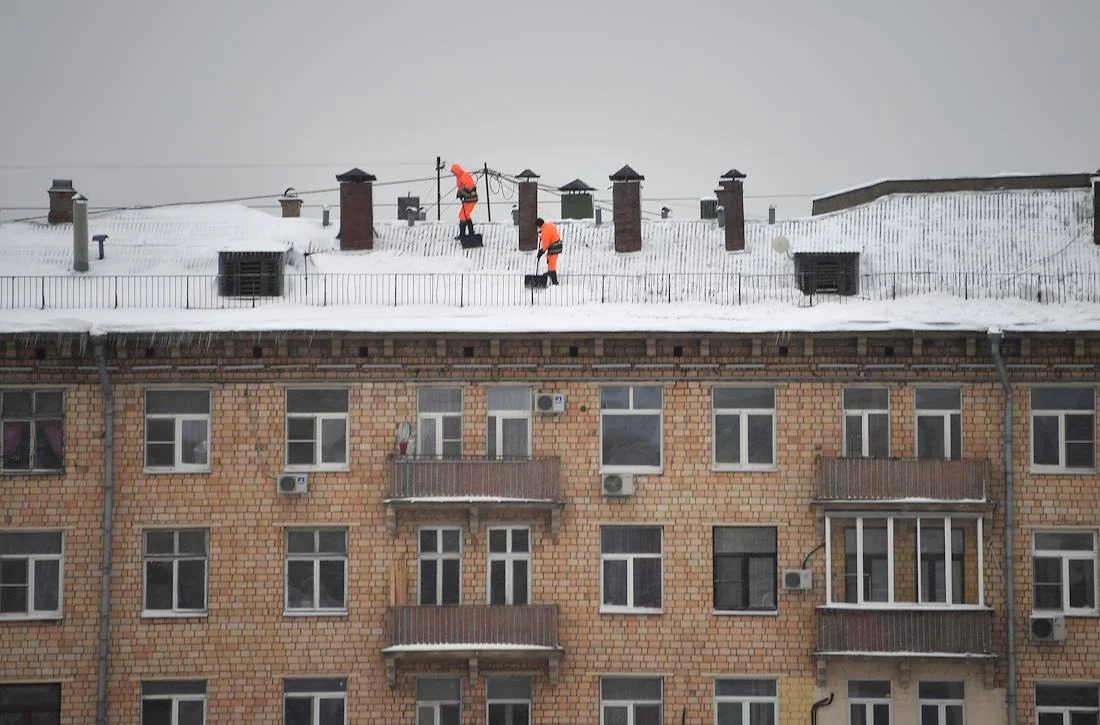
Today in some buildings the number of apartments reaches 5–6 thousand. Managing such huge communities, Krekov believes, is like managing a separate locality. What if the owner and managers have fundamentally different ideas about the process?
Dmitry Moravetsky heads the council of the house in the Symbol residential complex.
“Unfortunately, the main motto of the Smart Management Company ( the owners of business-class apartments got it from the developer - O.P. ) is that the rich cry too,” says the interlocutor. “She basically took money out of the house without investing anything in it. The reason was the management agreement. As we know, it contains only a basic set of services. Any management company provides everything else as additional services. And when it stops providing them, the only option for residents is to go to court. The Housing Inspectorate immediately says that this is not its question. At one time, when the management company simply stopped working, we decided that we would not pay for such “quality” of services. In response, they removed security and technical services, and turned off the mobile application. But the most unpleasant thing is that they wanted to put us up for auction to select a management company through the administration. Moreover, we found out about this by accident. “They got me married without me”—that’s what they call it. Almost ended up in communal slavery.
In the absence of a customer for services, not only high-rise buildings with hundreds of apartments, but also very small houses experience problems. These problems are created by the management company. Although it is called upon to solve them. Zelenograd resident Irina Vinogradova became the chairman of the house’s board eight years ago, “when we were attacked by major renovations.”
It should be clarified that the State Budgetary Institution “Zhilischnik” has established a virtual monopoly in the city. Its only competition is from the management company from PIK, the main developer. Vinogradova has accumulated a lot of questions over the years regarding unreasonable payments and expenses.
“Just now the State Duma of the Russian Federation adopted a law on the obligation of the management organization to report to the owners - this is such nonsense,” says Irina. - I am a man who works on the land, and I count money. What does the annual report of the management company consist of? From acts for each type of work. We have drawn up our own form of such an act, and an estimate is attached to it. From 12 acts an annual report is obtained. Money not spent by the MA is carried over to the next year. Everything is simple and clear.
I receive a certificate of completed work from the “Zhilischnik”: and there anything can be drawn.
Previously, Resolution No. 170 stated: 5–8% goes to management services. Now this line has strangely disappeared somewhere. Take as much as you want? They come to your home and do nothing. The first claim was filed by the housing inspectorate. Every three months they (“Zhilishchnik”) run around the apartments like crazy and can’t do any ventilation. Next, Rospotrebnadzor filed a lawsuit: the house was not cleaned and the conditions were unsanitary. Money spent, work not completed. In total, the housing inspector fined “Zhilishchnik” on my house last year 2.5 million rubles. I have seven ships with them now.” It is clear that with this approach of the management organization, changing it is the only right decision. It's just difficult to implement.
And it is precisely the customer of services, if we come to such a scheme, who is able to destroy the monopoly. The customer is a representative elected by the owners who is empowered to enter into an agreement with the management company. If the company performs poorly, he terminates the contract.
“Everything is simple here,” explains Sergei Krekov, “either he will change the company, or the residents will replace him. Today our legislator has come up with the idea of prohibiting changes to the Criminal Code in the first year of operation. When we, together with the AKON association ( unites professional participants in the real estate service market. - O.P. ) were indignant and tried to stop this bill, an ingenious answer came from the Federation Council: this bill must be adopted in order to stop abuse of the owner’s right to change the company. They will begin to change them, we were told. So this, in fact, is the essence - the formation and development of the market through a change of companies. The lack of a replacement mechanism is the problem that prevents the formation of a market.”
As of January 1, 2025, the amount of overdue debt for utilities in Russia amounted to 770 billion rubles. This was reported by the deputy chairman of the State Duma Committee on Construction and Housing and Public Utilities Svetlana Razvorotneva, citing data from the Ministry of Construction. And she noted that there is no direct connection between the increase in tariffs and the growth of debts. Maybe.
But in this regard, it is worth citing the statement of another market participant: “If many people, for obvious reasons, find themselves in a difficult financial situation, how will raising tariffs force them to pay for housing and communal services more carefully? It is difficult for them to pay either low or high tariffs. Therefore, I assume that tariff indexation can only further reduce payment collection.” This was said five years ago. Has collection rates increased amid the ongoing tariff increases? Let's leave the question open.