
Translated material
Credit pounding!
Europe has decided not to send frozen Russian assets to finance Ukraine, but it is not going to give them to the Kremlin either.

December 18, 2025. President of the European Council Antonio Costa and Ukrainian President Vladimir Zelensky at the EU summit in Brussels. Photo: AP / TASS
At almost three o'clock in the morning Brussels time on December 19, after a 16-hour negotiation marathon, which began with the participation of Vladimir Zelensky, the leaders of the European Union countries agreed on a plan to finance Ukraine using the joint EU debt.
This was not the plan advocated by the European Commission and most members of the union, which involved using frozen Russian assets to secure a loan to Kyiv.
...The signed agreement provides for borrowing 90 billion euros from financial markets to support Ukraine over the next two years. The question of whether Russia will be able to return its money frozen in the EU (and if so, on what conditions) is left for the future, and European taxpayers will write down the financing of Ukraine in the near future as their debt. Three of the 27 countries - Hungary, Slovakia and the Czech Republic - are not participating in the loan.
The idea of using Russian money immobilized (immobilized, frozen) on deposits in European financial institutions has been looming in Brussels and the capitals of the European Union since the introduction of sanctions against Russia in 2022. At first it was assumed that not for military needs, but only for the post-war restoration of Ukraine, when peace was established. Then it turned out that Europe itself could not cope with paying for military supplies.
In total, Western countries froze, according to various estimates, about 260 billion euros of foreign exchange reserves of the Central Bank of the Russian Federation, including part of the funds of the National Welfare Fund (NWF). Approximately 183 billion euros are held in the accounts of the international depositary Euroclear in Belgium, and another approximately 25 billion euros are held in private French, Belgian, Swedish, Cypriot and German banks. The balances of the foreign exchange reserves of the Central Bank of the Russian Federation are frozen in Luxembourg, Switzerland, Great Britain, the USA and Canada.
For quite a long time, the use of these funds to support Ukraine remained an idea in the EU without any practical steps for implementation.
Firstly, any decision would be an encroachment on the foundations of the established world capitalist economy, built on rules, the violation of which threatens with unpredictable economic, political and legal consequences, and inevitable reputational risks. Even during World War II, countries at war did not touch frozen deposits.
Secondly, no matter how strong the shock was for the EU countries from the outbreak of the largest military operations in Europe in eight decades, the inertia of peacetime still determined consciousness and maintained the hope that all this would soon end and life would return to normal.
But the protracted “*** attrition” broke the usual ideas and established rules, and drained the reserves that Europe could count on when it promised to support Ukraine “as long as it takes.”
The matter was complicated by the fact that the previous decade and a half was far from the best for the EU in terms of economics and finances.
During discussions in the EU Council in 2024, a decision was born to use not Russian deposits themselves, but “windfall income”, that is, interest accruing annually for their storage, to finance Ukraine. This scheme still works today. Although the amount of income generated by Russian assets and transferred to Kyiv amounts to several (6–7) billion euros per year, this is clearly not enough.
The geopolitical turn of Trump's America has exposed the long-obvious limitations of the military and financial capabilities of the Old World in the face of piled-up tasks.
In the summer of 2025, the situation changed dramatically. The United States stopped transferring weapons to Ukraine for free and began selling them through NATO countries. Hopes for the success of negotiations with Russia and an early cessation of hostilities on the terms of a compromise did not materialize. The costs of European countries for the purchase of weapons for Kyiv have increased sharply, and many have limited budgetary options.
The Europeans have once again turned to Russian assets frozen in their vaults. When EU sanctions envoy David O'Sullivan flew to Washington, the Americans told him that they wanted to return these assets to Russia after a peace agreement brokered by Trump himself.
He envisioned the future peace treaty as a money-making business plan, and the initial 28-point draft drawn up by American and Russian negotiators, according to press leaks, included the use of Russian assets for a joint project to restore Ukraine, from which the United States would receive half the profits. There are no reserved seats for Europe on this train.
This scheme, of course, caused outrage in European capitals, and the European Commission, in search of its own option, intensified negotiations with the new Prime Minister of Belgium, Bart De Wever. He had long felt that he might be extreme in solving a delicate problem, and quietly probed in the EU offices possible scenarios in which Euroclear - the goose that lays the golden eggs for his country - would remain completely out of business. Or, at worst, reliable insurance options.
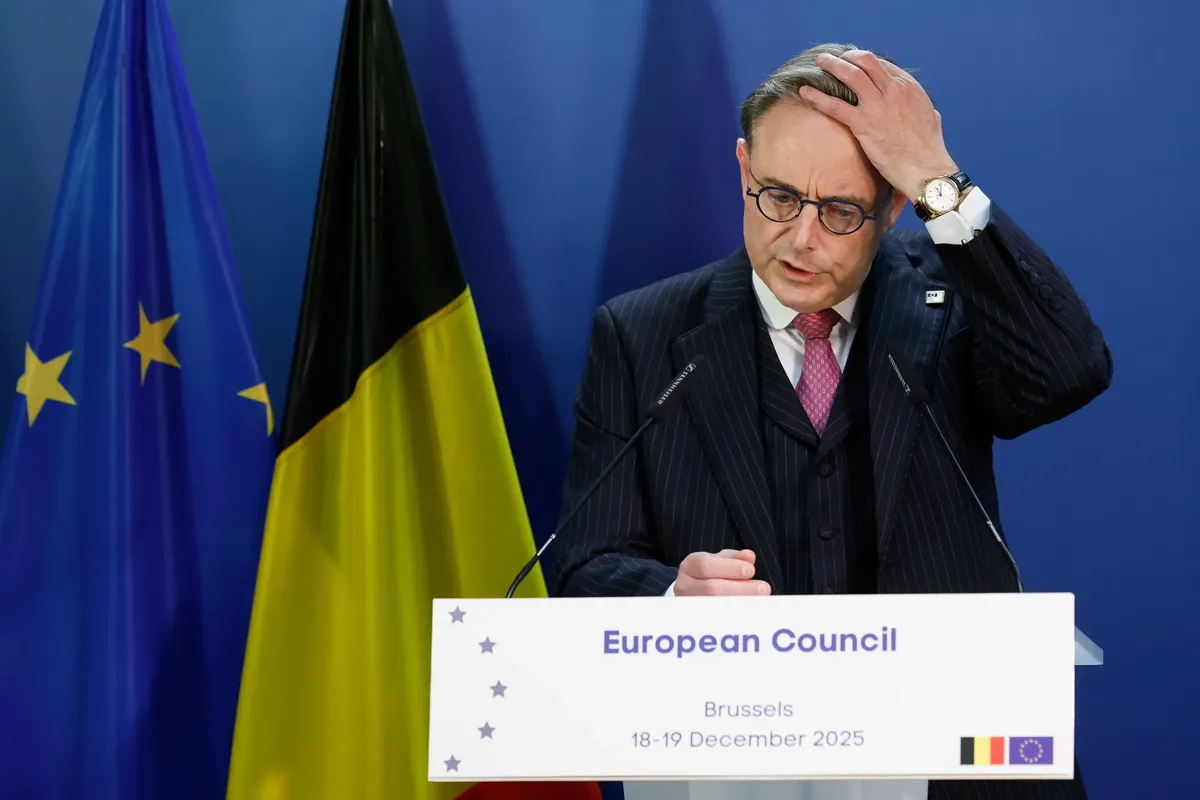
At the beginning of the 2000s, a young historian and writer declared himself in Belgian politics as the leader of the nationalist party “New Flemish Alliance” (N-VA), which was then considered marginal, too right-wing in the general European context and advocated the independence of Flanders, the northern half of the Belgian kingdom. In February 2025, already as one of the winners of the parliamentary elections, after eight months of difficult negotiations with other parties, he became the head of the coalition government of Belgium.
In such governments it is usually difficult to make delicate decisions, since the constituent parties often have different interests, but are necessarily bound by a coalition agreement.
German Chancellor Friedrich Merz, who took office in May, has in common with De Wever at least the fact that he, too, is the head of a coalition government, forced to coordinate actions with his junior partners, the Social Democrats (SPD), and even in a difficult domestic political situation, when the far-right populists from the Alternative for Germany (AfD) are hot on his heels.
Initially a convinced Atlanticist, he, however, already on the night of his election victory called on Europe to strengthen its independence as a subject of world politics, strive for complete “independence” from the United States and warned that NATO as a guarantee of European security could soon become a thing of the past.
As the head of Europe's largest economy, Merz's seniority was particularly infuriating at Trump's contempt for European allies.
But it is clear that his goal was to take the initiative to put things in their place: to do everything to avoid a strategic break between Europe and America, to restore Europe's voice in solving Ukraine's problems, to minimize the cost burden that would fall on German taxpayers as a result of the current crisis.
In September, he said it was time for Europe to open its bank vaults to use frozen Russian assets to help Ukraine. But a proposal for a “reparation loan”, already conceived within the bowels of the European Commission, began to run into problems when tensions began to rise between De Wever and Merz. The debate became lively in political circles and in the press.
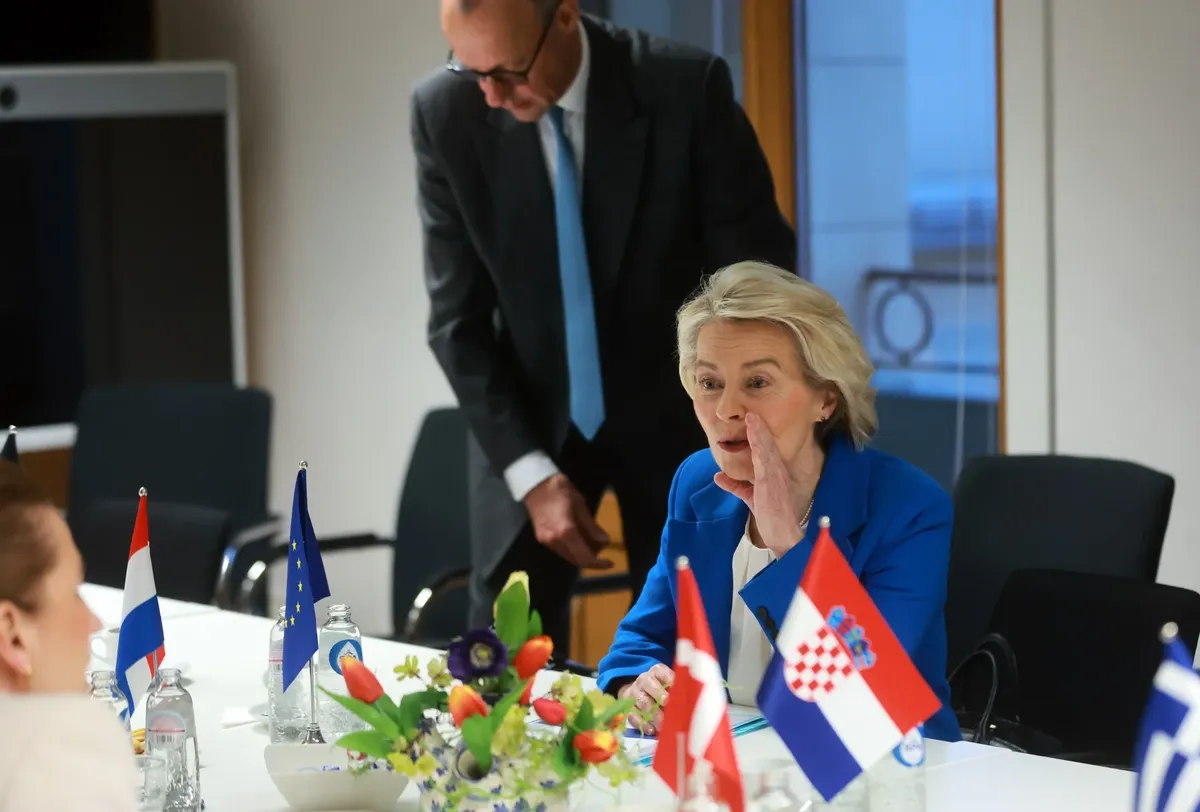
The President of the European Commission, the EU's executive body, Ursula von der Leyen, was quick to clarify the issue, trying to reassure those who might have doubts: “This is not about asset confiscation.” Instead, she said, the securities and cash would serve as Moscow's down payment on the reparations that der Leyen believes Russia will inevitably have to pay for the destruction in its neighboring country.
The Russian assets themselves will remain “technically intact” and will be returned to Russia in the (unlikely, according to many observers) event that the Kremlin agrees to compensate Kyiv for the damage caused to Ukraine.
The idea quickly gained momentum. “It is important to move forward with this process because it is about securing funding to meet Ukraine's budgetary and military needs, and also about the moral issue of making Russia pay for the damage done... In this sense, using frozen Russian assets is a logical and moral choice,” Swedish EU Affairs Minister Jessika Rosenkrantz told Politico.
The European Parliament, at its plenary session on October 21 in Strasbourg, showed rare unanimity in supporting the European Commission's proposal. Only the extreme right was against it.
Members of the European Parliament expected that on October 23–24, at a summit in Brussels, the leaders of EU member states would give the green light to the preparation of a bill that would create a mechanism for a “reparation loan” for Kyiv, secured by assets of the Russian Federation.
During the preparations for the October EU summit, interference was expected from the inveterate frontiers - Hungarians and Slovaks, but there were no serious public signals of concern from the “protagonist” of the topic under discussion - Belgium. Until on October 23, as Prime Minister De Wever walked along the red carpet into the conference room, he stopped by a group of journalists and began to answer their questions.
He admitted that until now he had been completely absorbed in negotiations with his compatriots, trying to agree on the Belgian state budget. “I have been negotiating for several weeks to find 10 billion euros,” the Belgian said. And he added that a scenario in which his small country would have to pay Russia 10 times the amount would be unthinkable.
He demanded “full sharing of risk” between all EU countries and guarantees from colleagues in case he had to return the money. Each state of the union must make its contribution. And so that not only Belgium, but also other holders of Russian deposits would also allow their banks to stir up, to show “European solidarity.” Only if these three “quite reasonable” demands are met will it be possible to move forward.
Because of the stubborn Belgian “it’s not that simple,” the October EU summit adopted only a vague statement of intent. The question of “where to get the money” remained unresolved.
De Wever did not believe any reassuring arguments and continued to oppose this initiative, since the lion's share of the assets is managed by the Brussels financial depository Euroclear. The Prime Minister, not unreasonably, feared that Russia would take retaliatory measures against Belgium both within the country and abroad, and demanded strict financial guarantees and legal justifications from the EU countries, which the European Commission was slow to disclose.

There were problems with constructing an impeccable legal scheme, since there are rules in modern international law and practice that contradict each other. The disputes in the discussions essentially boiled down to which argument was more powerful in the legal and moral sense. During a discussion on this topic in the German Bundestag, Green representative Robin Wagener, emotionally responding to her opponents, suggested that “Russian deposits in Europe are better protected than people in Ukraine.”
Only on December 3, European Commission President Ursula von der Leyen revealed all her cards at a press conference. Stressing the urgency of financial support for Ukraine, she announced that
Brussels proposes to cover two-thirds of the country's financial needs for the next two years. This is 90 billion euros. The rest must be filled by “international partners”.
According to IMF estimates, Ukraine will need 135 billion euros over the next two years - 2026 and 2027. This is necessary to maintain the functioning of the state and essential services, that is, the civilian sector, as well as the military.
In any case, Ukraine will not be left without money, but EU members are offered two solutions. The first is raising capital on the markets under the guarantee of the EU budget and providing it as a loan to Ukraine. It is less problematic from a legal point of view, but more difficult for EU countries financially.
The second solution, in the form of a legal document, is a “reparation loan” using the remaining funds from immobilized Russian assets. These balances are given to Ukraine in the form of a loan, which must return it “if and when Russia pays reparations.” In legal terms, this is not confiscation. In theory, European financial institutions such as Euroclear would be able to fulfill their obligations to Russia once it ceases hostilities and pays reparations.
This decision by Brussels was interpreted as preferable and could be adopted by a qualified majority vote of the country's leaders. Among the guarantees for Belgium and the maximum reduction of risks, von der Leyen named a ban on “enforcement in the EU of illegal decisions taken outside its borders.” That is, the Moscow and even, say, Washington courts will be ignored.
In early December, German Chancellor Merz called on EU countries to support a “reparation loan” for Ukraine and legally share all potential risks among themselves. He made it clear that Germany would agree to become the largest financial guarantor to secure the loan.
But all these arguments still did not convince De Wever, who until the last argued that such a step would undermine confidence in Euroclear and the European financial market. They say, it doesn’t matter what legal framework the EU chooses - investors will still perceive it as a confiscation of assets entrusted to the depositary.
In addition, Russian assets are frozen as part of EU sanctions against Russia, of which 19 packages have already been adopted since 2022. And every six months, this entire package of packages requires renewal by the EU Council, representatives of all 27 member countries unanimously. And every time there is a considerable probability that Hungary or, say, Slovakia will veto. Then the packages of sanctions will immediately lose force, and Russia will be able to take money from depositories.
On December 11, a week before the decisive EU summit, the government of Denmark, which chairs the EU Council, announced that the council had agreed on a legal framework for the use of Russian state assets in the interests of Ukraine.
The first step will be an indefinite ban on their return to Russia.
Thus, the topic of immobilized assets is removed from the sanctions package and becomes the subject of a separate law, which should not be renewed every six months under the threat of a veto by one country.
To freeze Russian assets indefinitely, the initiators of this decision, primarily Germany, relied on Article 122 of the Treaty on the Functioning of the EU. It provides for the adoption of emergency measures in the event of a serious threat to the economic position of the EU. The fact is that, according to the fundamental treaties of the EU, foreign policy and security fall within the competence of member countries and decision-making on these issues requires consensus. But the economy is within the Union’s competence, and many decisions are made by a qualified majority.
“Maintaining frozen assets “is a measure that is appropriate to prevent further unprecedented consequences for the economic situation in the Union caused by Russia’s actions,” the European Commission wrote in the legal text.
EU leaders, including German Chancellor Merz, who in the week ahead of the last EU summit of the year has stepped up diplomatic efforts to rally the European core in support of Ukraine, continued to insist that using frozen Russian assets is the only reliable way for Europe to ensure Ukraine's financial stability from next year. But even Merz at the last moment estimated the probability of making the desired decision as 50/50.
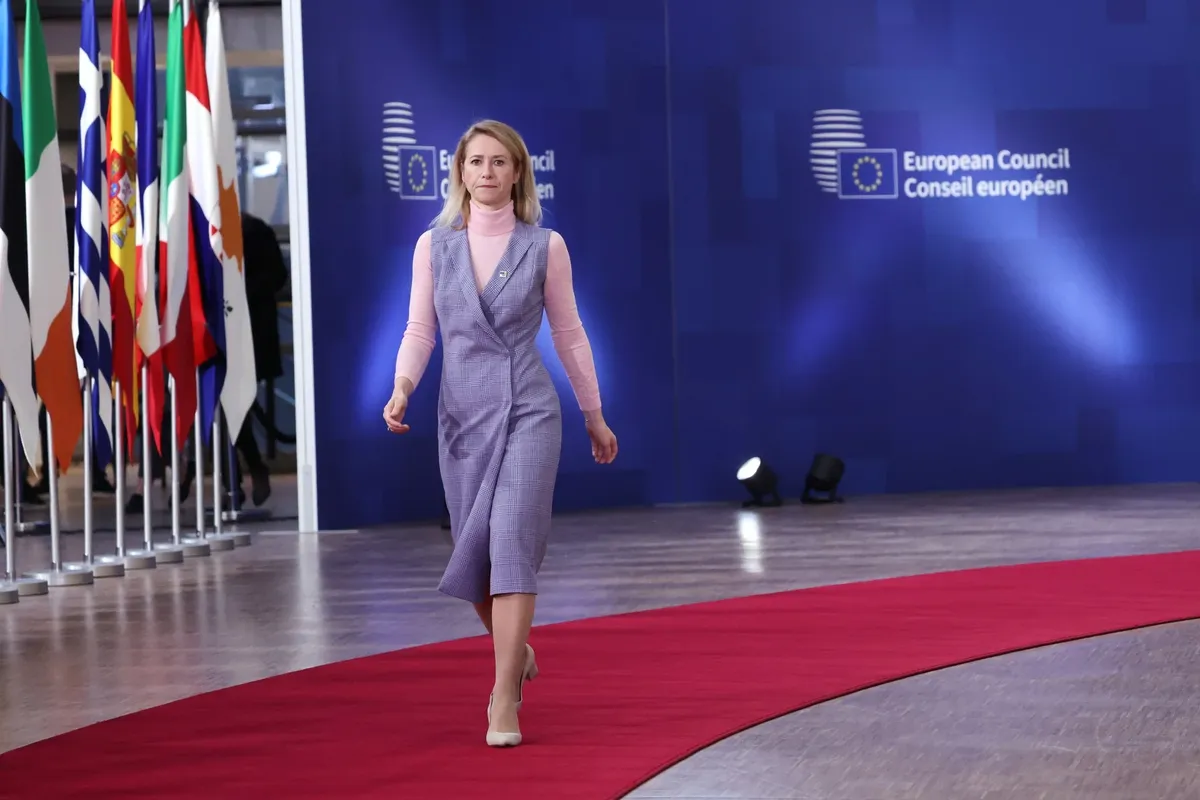
EU chief diplomat Kaja Kallas said on December 15 after the EU Foreign Ministerial Council that financing Ukraine with a loan secured by frozen Russian assets was looking “increasingly difficult.”
De Wever was not completely convinced by the assurances of the European Commission and most leaders, and he has broad support in the Belgian government and parliament. In recent days, Italy, Bulgaria and Malta have also spoken out against the scheme, while Hungary and Slovakia have previously expressed opposition. The newly appointed Prime Minister of the Czech Republic, Andrej Babis, expectedly opposed the loan, saying that Prague would not provide any financial guarantees to Belgium.
With a qualified majority vote, a decision could be made even if all seven named countries opposed it. A blocking minority could be a group of countries with a population of at least 35% of the EU population. But without Belgium, European officials and most national leaders considered it unacceptable to pass a law that concerns money immobilized on its territory.
Therefore, before the December 18-19 summit, Chancellor Merz and other supporters of the initiative made every effort to persuade Prime Minister De Wever to join the plan to use Russian assets to lend to Ukraine. And De Wever stubbornly insisted on adopting an alternative, albeit more costly option for the entire EU, such as shared debt.
The discussion on the most difficult issue of the summit was interrupted, the leaders of the countries gathered in groups, talked one-on-one, returned to the hall and discussed other issues, while their Sherpas and technical assistants rewrote rejected texts and prepared new ones. Anonymous officials leaked leaks from the hall and delegations to journalists. At first, the prevailing version involved the use of frozen Russian assets as collateral for a “reparation loan,” although the idea of collective borrowing was not abandoned.
Ultimately, although the summit decision was a compromise between the two main options, it was Belgian caution rather than German decisiveness that actually won out.
“Either money today or blood tomorrow. And I'm not just talking about Ukraine. I’m talking about Europe,” Polish Prime Minister Donald Tusk said gloomily as he left the summit. But he, like other supporters of the first version, does not close the case.
“The European Parliament will continue to work on the technical and legal aspects of instruments establishing a reparation loan based on cash balances associated with Russia’s immobilized assets,” the final document says.
“In the meantime, in order to provide the necessary financial support to Ukraine starting from the second quarter of 2026, including its military needs,
The European Council agrees to provide Ukraine with a loan of €90 billion for 2026–2027, based on EU capital market borrowings backed by EU fiscal reserves,” it notes. And further: “Ukraine will repay this loan only after receiving reparations.
Until then, these assets will remain unclaimed and the union reserves the right to use them to repay the loan, in full compliance with EU and international law."