
Translated material
Sword to the left
Sokurov told Putin about “foreign agents.” Putin responded by showing ignorance of the subject. And he repeated it on “Direct Line”

Directed by Alexander Sokurov. Photo: Petr Kovalev / TASS
Alexander Sokurov’s speech at the Human Rights Council under the President of the Russian Federation received enormous publicity. But mostly - due to the fact that he spoke about the problems of education and culture, about censorship and pressure on the creative intelligentsia, about rising tariffs and the situation of young people. Meanwhile, part (albeit a small one) of Sokurov’s speech concerned the situation of those whom the state declared “foreign agents.”
The famous film director asked to speak after those who, apparently, had been planned in advance in this capacity, had spoken, and President Vladimir Putin (who spoke with those gathered via video link) gave him the floor, and conducted a dialogue with him extremely respectfully. Although Sokurov said something that none of his colleagues in the HRC (especially its current composition) would say.
And this is what he said on the “foreign agency” issue (we quote a transcript from the presidential website):
A. Sokurov: “Every week we look with alarm at who is again a “foreign agent.” These definitions are terrifying, my compatriots who are suddenly “foreign agents” are terrifying. I understand that there is such a political category. Well, they just named it, somehow indicated the amount of some claims against the person, and that’s it: and it went on and on, and then - fate. And it’s not clear what to do next with this. In my opinion, this is a wrong decision, this is a decision that humiliates a person, a citizen, and does not allow him to develop and continue to exist. It’s just absolutely obvious to me.”
The president responded:
V. Putin: “I know your position on this law on “foreign agents,” but we didn’t come up with it, it was done in the USA in the 40s of the last century. We didn’t come up with this idea; there, violating this law can lead to imprisonment, but we don’t have that. In fact, we have one most important thing - show your sources of funding. Well, what's so scary here? It seems to me that there is nothing particularly scary here. Although we have addressed this topic many times. Nobody should go crazy either, this is completely obvious. Here you are also right, there is no need to swing this “sword” left and right, everything should be very balanced, neat and without any violations.”
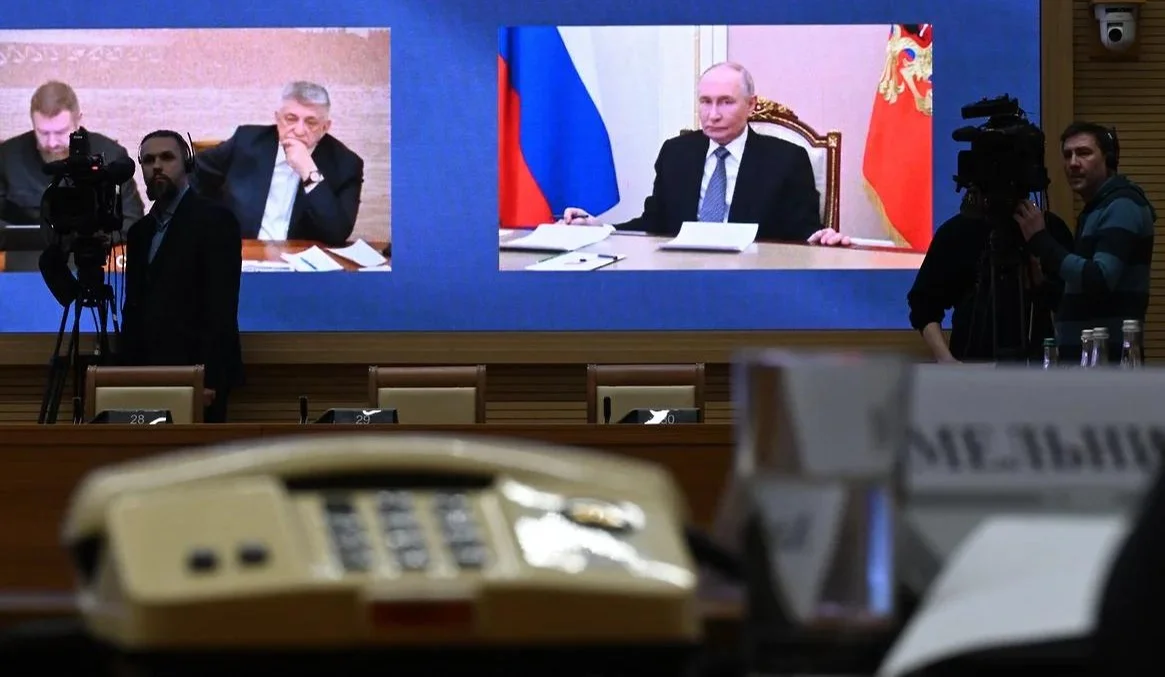
References to the American FARA law are traditional among the Russian authorities - they have been used for almost 13 years, since the appearance of the first version of the Russian law on the then NGO “foreign agents”. But those who inform the president on this matter and prepare him answers to various questions, in this case - how to put it mildly - demonstrate obvious incompetence.
Because the Russian Criminal Code contains Article 330.1 on “failure to fulfill the duties of a foreign agent,” under which you can be sent to prison for up to two years.
Quite recently, Ilya Yashin* received a sentence (albeit in absentia) under this article for not putting “foreign agent” marks in his materials, and before that Boris Akunin* and Dmitry Bykov* were sentenced to the same sentences in absentia.
And also - and this has been talked about throughout the years of the existence of “foreign agent” legislation - the FARA law differs from the Russian one in that it does not deprive “foreign agents” of any constitutional rights.
In Russia, those whom the Ministry of Justice enters into the appropriate register without any trial are deprived of one and a half dozen rights guaranteed to citizens of the country by the Constitution.
The right to be elected, the right to campaign in elections, the right to dispose of property, the right to freedom of peaceful assembly, the right to free expression of opinions and beliefs, the right to a state guarantee of equality from the law and the court, the right to protect personal dignity, the right to privacy, the right to participate in the management of state affairs, to equal access to public service, to the free use of one’s abilities and property for entrepreneurial and other economic activities not prohibited by law, the right to freely dispose of one’s own ability to work, choose the type of activity and profession and others.
Among these rights are those that cannot be limited under any circumstances (Part 3 of Article 56 of the Constitution). Moreover, for this loss of rights it is not necessary to commit any act. The reason for this is only the discretion of the Ministry of Justice official.
This violates the general legal requirement - not to prosecute in the absence of a specific act, without guilt and without evidence.
Those who have committed a criminal offense after serving their sentence are considered unconvicted after a certain time and are restored to all rights.
And a person finds himself in the status of a “foreign agent”—at least under current practice—for an indefinite period: it is almost impossible to challenge this status in court.
Moreover, we are talking about a person who has not committed any crime, but has only brought upon himself (for unknown reasons, since the procedure for getting into the register of “foreign agents” is non-public) the disfavor of the Ministry of Justice. Or the disfavor of those who asked the Ministry of Justice about this...
Finally, regarding “show sources of funding”: again, I want to understand who informs the president “adequately”?
Starting in 2023, the vast majority of those included in the register of “foreign agents” do not receive any “foreign funding” that would have to be “disclosed”, and are not even accused of it.
The Ministry of Justice does not indicate this as a basis for inclusion in the register. It includes it for “being under foreign influence,” which in many cases means communicating with foreign media: “speaking on foreign platforms” is interpreted by the Ministry of Justice as “receiving assistance in distributing content.” Communication is declared “help”, assistance is declared “influence”, and “influence” serves as the basis for the Ministry of Justice to add to the register of “foreign agents”.
As you know, many Russian politicians, starting with the president and the minister of foreign affairs, give interviews to foreign media. But no one accuses them of receiving “help” in this regard and does not put them on the list of “foreign agents.”
When those included in the register go to court, the Ministry of Justice refuses (this follows from real practice) to explain who influenced whom, whether the influence was real and not illusory, and whether anything changed in the citizen’s behavior as a result of this influence. But the courts do not require this from him: they interpret the legislation on “foreign agents” in such a way that officials are not obliged to explain this, and decisions to include “foreign agents” in the register are lawful simply because the Ministry of Justice has the right to make these decisions...
The president, regardless of his last name, has the right not to know about all these details. But those who tell him how the legislation on “foreign agents” is structured and works cannot help but know. But they tell.
In any case, thanks to Alexander Sokurov for openly raising this topic within the framework of the HRC, and it began to be discussed publicly in the presence of the president.
But whether any changes will follow after Vladimir Putin’s words that there is no need to swing the “sword” left and right” and that “everything should be very balanced, neat and without any violations” is unknown.
So far, two days after the HRC, new discriminatory initiatives against “foreign agents” appeared in the State Duma, and three days later, another Friday update of the register.
Mikhail Akhmatsky
PS
“Our law requires only one thing - if you are engaged in political activities, declare your sources of funding. We have no repression or criminal prosecution,” Vladimir Putinsaid on December 19 on Direct Line.
And he said that if “foreign agents” stop engaging in either political activities or refuse external sources of financing their political activities, they are removed from these lists.
But this is absolutely not true. Let us repeat again and again: “foreign agents” are included without any “external sources of financing” that could be “refused.”
When those who were included in “foreign agents” only for interviews with foreign media contact the Ministry of Justice, saying that they have stopped giving them, they are still denied “removal from the lists,” and without explanation.
You can find out about these reasons only by going to court, where the Ministry of Justice states that since these interviews are available on the websites of the relevant media (despite the fact that they have been removed from the resources of the “foreign agents” themselves), it means that “foreign influence” allegedly continues.
And the court easily agrees with this absurd logic.
Perhaps the journalist who asked Putin the question did not know about this.
But even if he had known, he obviously would not have been allowed to continue the question.