
Translated material
Walkthrough Walkthrough
About Dmitry Bykov*’s book “The Quarter”, about why culture is needed after February, and in general about the meaning of life
(18+) THIS MATERIAL (INFORMATION) WAS PRODUCED, DISTRIBUTED AND (OR) SENT BY A FOREIGN AGENT DMITRY LVOVICH BYKOV OR CONCERNES THE ACTIVITIES OF A FOREIGN AGENT DMITRY LVOVICH BYKOV.
This is not a review, not a review, not a biographical sketch, not a eulogy, not a letter or a confession. This text is an indirect and perhaps not very convincing statement on the topic that has been popular in the last four years about what is the use of a culture that does not know how to stop wars. This is also a memory of the novel “The Quarter. Walkthrough”, published a long time ago, but still useful for re-reading. And this is also a happy birthday greeting to a personality so large in all respects that over the past four years no one has managed to either cover or occupy its empty place on the Russian book market.
In short, it's a passing through, whatever that means.
Prologue
The main character of this text is you, the reader. Yes, you, you, because who is interested in reading another near-Hollywood story about the path of the hero-student to the heights, from which the hero-teacher looks at him with calm malice (and, moreover, about a path that has not yet been completed to the middle)? And if you're interested, go watch something like "Obsession" - only the one about the drummer with JK Simmons, and not some other one. Otherwise there are many different ones, don’t confuse them, others are not about that at all.
But everyone is interested in reading about themselves. And also about how culture - the same one that, together with all its Goethes and Pushkins, is not capable of saving countries falling into savagery - how this very culture, which turns out to be useless and helpless in practice, is in fact very useful and is capable of changing destinies, like river beds. Just words in the right order. If you know how to find and arrange this order, you can therefore save someone, that’s what’s interesting.
Therefore, the main character of this text is you, the reader: you probably once had, or are just getting a navigator, by which you have overcome or will soon overcome part of your life’s journey. It doesn’t have to be a writer - you can substitute anyone into the text: even a musician, even the owner of a chain of bakeries. I am writing this about Bykov*, because, as the main lesson of writing, which he teaches by personal example, says, “you always have to talk about yourself - and only then do you have a chance to say something about all of humanity.” And if you can arrange everything correctly, if you have a good enough memory to remember your entire “hero’s journey” in detail, or just a good imagination that allows you to vividly imagine something that has never happened to you, then the text will be good. And if not, well, read it as a review of good books by one great writer. Or solely as a reflection on the practical benefits of culture. Or don’t read at all - you’ve lived the wrong life anyway. And if you yourself are the author of these good books, then happy birthday to you, Dmitry Lvovich!
Any date of any year (for starters)
Today you are 16 years old. Not in the sense of a birthday - you were sixteen yesterday, it’s just today, when you are once again skipping school in the hope that your mother will again agree to write a note “due to poor health”, you are scrolling through the feed with lectures on literature on YouTube (or whatever is not blocked for you today) and stumble upon the one that will change your life. But you still don’t know about this if you haven’t looked at the end of the text, and even if you have looked, you still have nothing to do there, at the end, because now you won’t understand anything from there. Click and listen.
In my case, it was a lecture on “Moscow - Cockerels” - let’s assume that you (what a coincidence) also got it: the one where a large-scale, well-known writer in all respects, whom you have never heard of, says that another writer Erofeev borrowed a lot from Gogol, also a writer, and at the same time from the blind poet Homer. Naturally, you don’t know any writer Erofeev - it’s good if you at least know the blind Homer. In general, your knowledge of literature is very limited (actually, Gogol), although for some reason in class you are considered well-read - it’s amazing how you even manage to maintain the image of a smart guy when you spend all day reading Harry Potter and nothing else. So what, what's in the original.
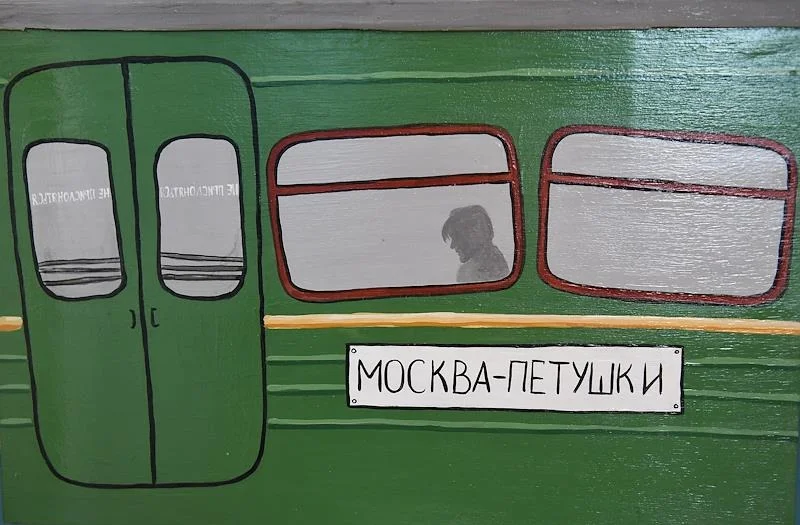
So, you are listening about “Moscow - Petushki”. You don’t understand anything - naturally, you haven’t read any “Petushki” and you don’t know Erofeev. But the very fact that you can take and connect the unknown Venichka with Gogol, and that with some ancient Greek grandfather, is simply well!
Urgently run to read “Cockerels”. What? The Vladimir Diocese of the Russian Orthodox Church stated that this poem “distorts national identity, reducing it to a primitive, wretched state; cultivates despondency, despair and mockery of the institutions of society and the state, and also gives a blasphemous idea of God"? And I told you not to look at the end of the text! But if you don't want to, don't read it. Then you won't understand anything at all.
To those who did read it: continue to admire the lecturer. Go to Wikipedia (if it’s not already blocked), read all the long biography there. Entirely, yes. But our story doesn’t care whether you know what the protests on Bolotnaya and the opposition coordinating council are or not!
And there is no need to make excuses that you study at a school in which marching in formation parades and singing the song “Russia, we are your children” at all concerts was the norm, even before it became mainstream throughout the country. And there is no need to say that all members of your family have the TV on from morning to evening, where the shooting is interrupted by shouting in some regular studio and where the battles in the Donbass smoothly flow into reports from Syria, and you are forced to spend your entire childhood against the backdrop of some endless alien war, which for some reason you are obliged to consider yours. There is no need for these excuses here - go, I say, to Wikipedia and read the biography of a large-scale personality. It turns out he is an oppositionist. Remember, it will come in handy later on.
September 1
The first more or less conscious day of your life. If you wish, you can ask yourself where you have been for the last eighteen years. The question is rhetorical, you can think about the answer in the most dull and dark hours of the dark dorm nights. First day at the faculty. You also chose the faculty semi-consciously: without the slightest idea of what you want from life and what life wants from you, you went to the same Wikipedia and looked up where that most outstanding lecturer in all respects studied. It turns out, at the Faculty of Journalism of Moscow State University. So you brought documents to the Faculty of Journalism of Moscow State University.
By that time, you already know a lot about this large-scale personality - after all, there was always something journalistic in you. It turned out, for example, that the person is also a poet, and you were not lazy, went to the same YouTube (or whatever is not blocked there) and listened to several creative evenings. We didn’t understand anything - naturally, with your outlook. But the very fact that you can take words like this and arrange them this way is just, well, well! You conclude that a large-scale personality is a genius.
Then it turns out that he is also a journalist.
You started reading all the publications where it was published, but you didn’t understand anything. But you liked one newspaper - and you decided that someday I’ll grow up big, and in it my texts will stand next to his. We thought about it, remembered it, and will come in handy in the future.
Then it turns out that he is also a writer. You went and found some of his novels. Now this, of course, is problematic, we need to know the places, but that’s why we play the game: have you ever seen good games anywhere without difficult tasks? So go find a novel, we'll wait.
...Found it? Great, you have the “bypass censorship” achievement - it will be very useful in the future.
We opened the novel and read it. In my case it was “ZhD” - let’s assume it’s the same for you. You understood there even less than in all previous texts of a large-scale personality. But still, you are not mentally retarded, and therefore the story of how a big cold country, a cold good country, is conquered from within, explained something to you about why they shoot on TV all the time.
In addition, by the first of September, you had already scoured the entire available Internet and listened to all open and free recordings of lectures by a large-scale personality. They realized the insignificance of their cultural background and were ashamed. Let's go read all the texts mentioned in the lectures. We mastered one ten-thousandth of a percent - but at least something. We won the first “all-Russian” - the All-Russian Literature Olympiad, which allows you to enter any university without exams (more precisely, it used to allow it, but now all the places are occupied by the children of SVO participants. But are there any good games without difficult tasks?)
Yes, like this: all sorts of Muscovites have been trained there for years, in teams, but no one has trained you, and, apart from a large-scale personality with his lectures and texts, you have no one. But a large-scale personality - she can’t do that. In short, you win. And a year later (to consolidate the effect) - again. But a year later, you have already re-read almost all the texts of a large-scale personality, you are already constructing phrases in the same way - you still would not have won. The person spent so much virtual time on you - in vain, or something. In general, you come to the faculty where the person studied. And to the same department - but this is already the result of free choice. And it turns out that you have only one teacher, he is also the head - Nikolai Alekseevich Bogomolov. But this is completely an accident.

September 7
Today is a great day in your journalism career - you were sent to report from a book fair for the first time. Bogomolov sent it. Then it turns out that he sent all generations of students there, it was something like a baptism of fire for a freshman. And even later it turns out that after this you spend most of your professional life hanging around these fairs like hell and writing reports from them all; you specialize in books. But that’s all later, and today is the first real task and for the first time you see a large-scale personality alive.
But first you have a continuous Bogomolov lecture. It would be if Nikolai Alekseevich were alive. But he is not there, and there is no one to replace him, so just imagine how the powerful figure of the pillar of Russian literary criticism rises above the little ones sitting in the front row and talks about “Moscow - Petushki”, in the tone of a biblical prophet asking the whole amphitheater: “Do you know what a ruff is?!” After the lecture, you leave for the fair presentation of the novel “June” with a feeling of the deep regularity of what is happening.
The author is very late, and when he arrives, he immediately suggests starting with questions on the topic. There is half a pavilion of admirers around him, there is no crowd, and you don’t stay for the autograph session. Autographs are, you know, for snotty fans, and you are a proud and self-sufficient follower. And in general: never ask for anything. They will offer it themselves. But don’t take it even then.
September 7 next year
Today you are sitting on the pedestal of the Lomonosov monument. Everyone was there, the entire journalism department sits at every break, and the dark-skinned youth was probably sitting, and so you are sitting. Bask in the sun, listen to a matured youth reading his own audiobook. In the foreseeable and recent past, both a printed re-edition and an audio version of the novel have been published, which, as you will later find out, is your favorite with the classic - the re-edition of “Kvartal”. And as you begin to be a more or less conscious reader and citizen, you finally understand some of what the author wanted to say. And therefore you can already start reviewing his texts.
(Retype the following text on your computer.)
In fiction, throughout its development, one author’s desire is clearly visible - I don’t know whether it’s conscious or unconscious: to make the reader the main character of the text. “The Quarter” by Dmitry Bykov begins right from the realization of this desire: “The main character of this book is you, the reader,” says the author, and he’s not lying. Firstly, because we don’t even know who the author is. At least, they shouldn’t know: according to the text, this is an unknown, reclusive writer, translated a hundred times from the tenth language, who never meets with the press. And whose name is on the cover is irrelevant. Secondly, the book is really structured in such a way that its entire development is determined by the reader - not just by playing the game, making choices, etc., but literally living in it from July 15 to October 15. Every day he must perform a certain task: sometimes - manipulation with things, sometimes - with routes, sometimes - with his own memory, sometimes - with the book itself. There is, for example, this:
"July 21
Today we are quarreling with our beloved/beloved. There is an option that you do not have any beloved at the moment, but have, say, a wife. In this case, my wife and I quarrel. There is an option that there is no wife. In this case, we quarrel with the buppies.
You will need Buppy several times throughout the Quarter, so it's best to make it now. We buy a balloon, not too big, not too expensive. Fill it with cold water. Let's tie it up. We got a buppie.”
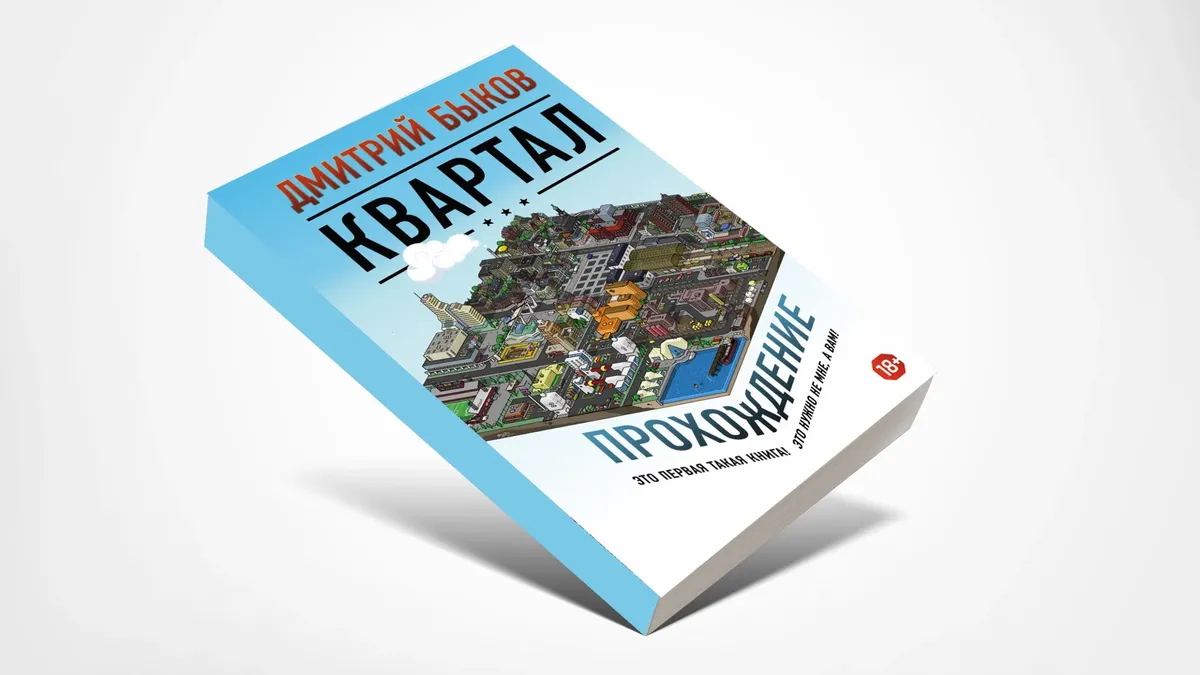
It is difficult to imagine that the reader will seriously go through the “Quarter”, although the narrator promises him enrichment, fame and generally wonderful prospects at the end. Most likely, the reader will still grin with self-esteem and will sarcastically turn the pages with the expression “yeah, right now.” But the main feature of the book - the feature that makes it the standard of the interactive fiction genre (interactive literature, that is, that in which the development of the plot depends on the choice of the reader) - is that it is impossible not to pass the “Quarter”. “The Quarter” is an autobiography in the genre of passage, which in itself is an infinitely beautiful move: go live my life, the author says, and then you will understand what it’s like. But at the same time, he erases this individuality of an individual life, and it turns out that the passage of any fate, even if it is the fate of one of the most famous writers in Russia, is more or less the same: everyone in the world has a useless thing that is dear to you; a useful thing that you don't need; a thing that reminds you of childhood; thing related to your error, etc. Each person's hometown can be described as it is in the novel. Everyone quarreled with their loved one, admired the June evening, went for bread. In general, “Kvartal” is impossible not to pass, even if you pick it up with the expression “yeah, right now.” Only it may take not three months, but a lifetime.
“The Quarter” is an impressive book from the point of view of interactive fiction. It is impressive precisely because, unlike other books in this genre, the reader does not simply play this text, does not influence it through his choice, as in online literature, does not become a co-author through a free interpretation of the text, as in any literature, especially postmodernist literature. He doesn’t even wander through the text, trying to understand different types of narration, hyperlinks and fonts, as, for example, in Danilevsky’s “House of Leaves,” although there is something like that in “Kvartal” (in one of his lectures, Dmitry Bykov honestly said that he borrowed many techniques from “House of Leaves,” which was translated into Russian and published, again thanks to Dmitry Lvovich. Then he, however, added that “Kvartal” invented earlier.) The reader of “Kvartal” does not interact with the text, but lives in it, whether he wants it or not. And in this sense, the novel is most likely the best book in the genre of interactive literature. At least the most interactive one.
February 24
Well, this date is the only one in the calendar of modern Russian history. And if you were doing something completely different on February 24, 2022, then there’s nothing you can do: you’ll have to imagine that you were doing exactly what will be described below.
In the morning you are woken up by a message from your mother: “*** has begun. I'm going to work." You start reading the news non-stop - around ten o’clock the sky closes over the country, and your first thought is: planes from the States no longer fly here. You write (and you can just go ahead and write):
“You can’t go back, can you?” Someday, he answers, I’ll be back.
By that time, a large-scale personality in all respects manages to become a direct, and not a virtual teacher and friend. When, six months before defending your thesis, your general supervisor dies of Covid, you lonely crawl to one of the open lectures in a small cozy lecture hall, intending to humbly ask for scientific mentoring.
Even earlier, a large-scale personality manages to survive an equally large-scale attempt on his own life. And while she’s going through it, you’ve been nervously biting your nails for a week, scrolling the news feed with the same intensity with which a few years later the entire February country will scroll it. The personality comes to its senses. Your religious consciousness, if you have one, notes, not without satisfaction, that this happens on Lazarus Saturday. The personality comes to his senses, and you firmly decide to come to work in the newspaper where the personality is published, which you soon do.
After that incident, the person becomes cautious and has long looked with suspicion at the silent creature who trails behind her at all book presentations and sometimes flashes in the crowd at rallies.
At one of these gatherings near the court, you generally stand side by side: you, and behind you there are already two large-scale personalities in all respects, one of whom will be a teacher and friend, and the second - an editor. But both personalities don’t know about this yet, and therefore, when you, crawling into a cozy lecture hall, timidly yelp “hello,” you immediately have to yelp “I’m from the journalism department,” which immediately causes a sigh of poorly hidden relief from the large-scale personality, and then communication is built absolutely smoothly.
Then the person, who has realized your unselfish love for knowledge, allows you to attend all her lectures, seminars, concerts for free - and for the first time you find yourself in the Central House of Writers, where the same auditorium is located behind the Soviet canning restaurant. At every concert, this hall is packed, and in order not to take someone else's place, you sit on a wobbly chair backstage. From there you can perfectly hear the chords of the musical “Cinderella” played by Ivashchenko on the guitar, and you, already a completely conscious journalist, reader and citizen, think: well, this is just, well! And you come to the conclusion that the author of the musical is a genius.
Then the first collection comes out, where a writer of great scale in all respects invited you to write an essay, and your text stands there next to his. Having lost the remnants of your limited gift of oral speech, you stutter and ask for an autograph. The large-scale personality squints slyly and writes: “To the author from the author.” In response, you sigh gloomily and write: “May there always be an opportunity to return.” In about five days he flies away to catch the start of the semester at the American university where he teaches classes. In two weeks, endless February begins.
December 16 a few years later
It's still February in the country. Over the past four years (in my case - so far four, in yours - count for yourself), a person who is large-scale in all respects has managed to be recognized as a “foreign agent”, “terrorist” and “extremist”. In other words, all state awards and titles were awarded - what are they rich in? Books (even translations) were confiscated, and those where only his prefaces or blurbs were printed were wrapped in kraft or film with a stamp across the entire cover. But you can still buy books, and if you want to improve your skills, you can complete the quest “get the books of foreign agents” in your free time as much as time and energy allow.
For all four years, the creative intelligentsia has been arguing only about whether culture saves us from something or not, and in general, what is the use of the next published book or the next printed words in a column.
About whether it is possible and whether it makes sense to write after Auschwitz, and all that kind of stuff. And even a large-scale personality in all respects begins to doubt and asks you if they still remember her in Moscow. She is in demand abroad, but in her homeland, which previously was not particularly able to assess the scale of their personalities, now it seems that the standards are very bad. You think about the answer and realize that you will have to write a multi-page walkthrough.
You can no longer get your favorite “Kvartal” anywhere, but you, as a student, are in a privileged position, and you always have the book at hand. Sit down and re-read. Attentively, not as usual. Finally you realize that you understand everything. Well, or almost everything. Do you understand exactly? Now you can review.
(Retype the following text on your computer.)
The novel “The Quarter” is a book about the meaning of life. And the content of this novel is concentrated in a single phrase from it: in the question that the author asks the reader after a long story about how the hero built a long, confusing and, in general, useless system of relations between himself, neighbors and places located in his native quarter. The author asks: “Why can’t you just go buy bread, but you have to show off like this?” And this, in general, can be used as an epigraph to any life and any activity, especially writing. Indeed: why show off like that if you can just get from point A to point B? You can live your life in peace: school with all its raising of flags and conversations about important things, any university, the army (if you’re unlucky), office work, two cats in old age, the finale - “you’ve arrived.” But no: someone always needs to write something, look for some meanings, stand in front of the doors of courts where innocent people are illegally tried, speak out against *** Crimea, create coordination councils of the opposition, quarrel, leave the councils and create new ones, end up as a poet in exile, continue to speak out against. Show off, in general. For what?
Yes, because only we ourselves - you, the reader - are capable of making ourselves the main character of our own lives. Only you, the reader, are able to fill your life with meaning and make a text out of it. For some it is more or less readable, for others it is exciting, for others it is one that will become a classic. And only by making a good text from your own life can you fill the life of someone else with meaning. Life only becomes meaningful when the person living it begins to show off - that’s what’s interesting. “The meaning of our life is so that God does not get bored; there is no other way and nothing else is known,” says Kvartal. Otherwise: the meaning of life is so that the author does not get bored writing it.
And this despite the fact that all lives, by and large, really go the same way. And I, the reader of “The Quarter,” and you, the reader of “Passing the Passage,” both of us in the quiet July sunset are sure to see sails in the sky. It seems to both of us that behind the houses of our block, where Moscow used to end, there is a port, a harbor, cranes, the arrival and departure of the heavenly fleet, and even now, when behind our houses there are endless new streets and no collective farm fields, we see these ships there. This is how the passage works - everyone has the same one, and its main catch is that you have to go through it to the end, otherwise the Author will become uninteresting.
And here’s another catch: you have to go through this “Quarter” even when everything around you seems like a lottery ticket, from which some platypus looks at you and says: “Well, you sucker? I'm a sucker too. I’m not a duck or a beaver, I’m a transitional species, an idiotic egg-laying mammal.” Or even worse - you need to continue the passage even when life looks like a lottery ticket with a lynx:
“And so we buy a lynx, and five seconds later she’s already looking at us, as if saying: well, sucker? I'm a sucker too. Such a story happened to me once. In one zoo, the employee who cleaned our enclosures, a fellow sucker, didn’t lock the door properly between me and the tiger. Well, that's all - blood, guts, tufts of fur. Our sucker janitor returns with his mop, looks at this matter, puts a huge pile in his pants and runs to the director. Failures, scandal, dismissal - that’s what he’s thinking while he’s running, and painfully trying to come up with an excuse as he runs. Well, he flies to the director - and the time is early, gray. “T-t-there, t-t-there... There w-we... There a TIGER EATED A LYNX!” The director is sitting at the table, sleepy, tortured, the firemen ran into him, there is no money, they got everything, there are not people all around, but animals. He looks at the janitor with red eyes, takes out a thick accounting book from the drawer and marks it, muttering: “Minus lynx.”
This is what “Kvartal” is about, this is what it’s all about, forgive the pathos, Russian culture – if not world culture. About the fact that it is necessary to continue the passage in the most unsuitable conditions for this. And even more: you need to complete this passage not only to the end, but in such a way that not a single sucker at this end can say about you simply “minus a lynx” or “minus a wombat.” And the author, ambitious in all respects, succeeds in such a passage perfectly.