
Translated material
Promised gas
Israel became a “gas country” not only because it found deposits, but because it decided to extract it
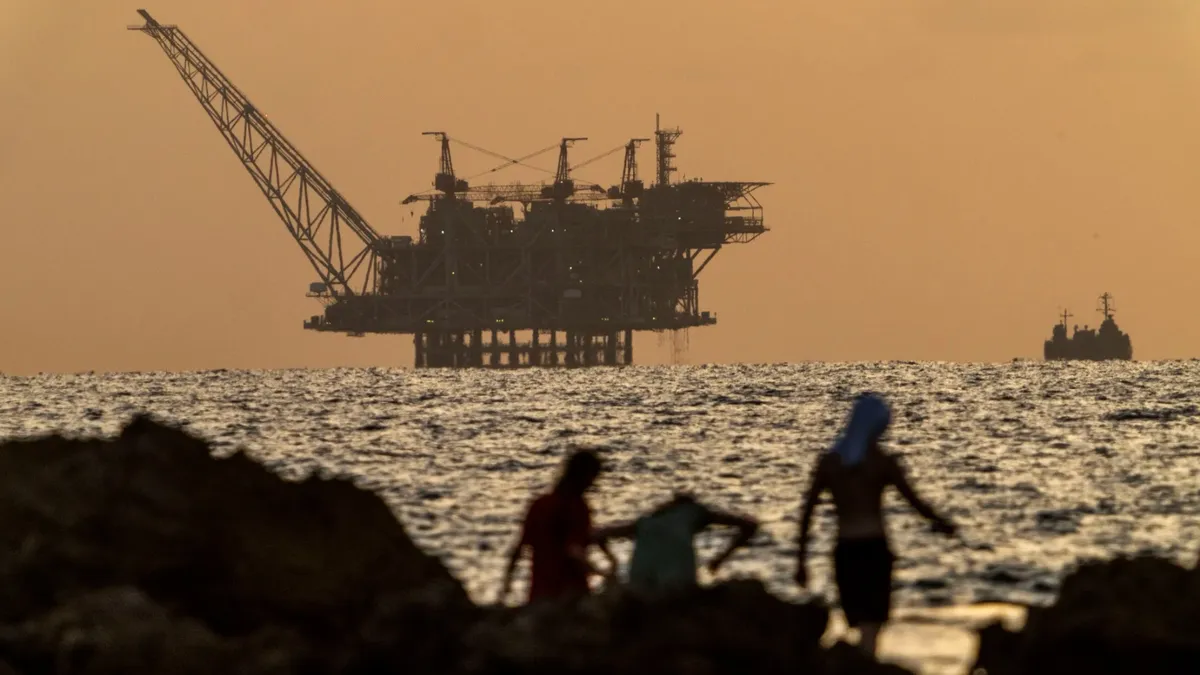
Photo: AP / TASS
There are two types of “gas history”.
The first is geology: lucky, we found it.
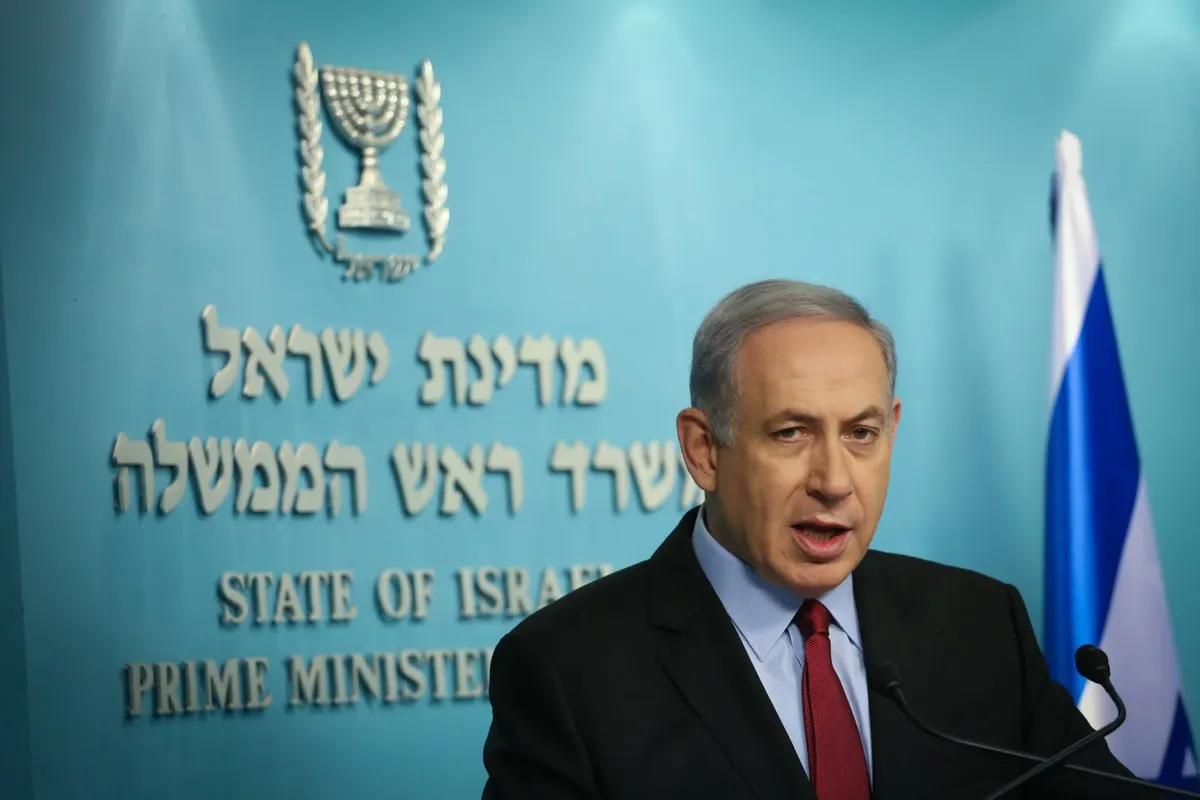
The second is politics. More precisely, there is a lot of politics... The topic of gas production in Israel has previously caused heated debate, although it has not reached the point of an obvious split in society. The Netanyahu government was accused in 2010 of exaggerating the importance of gas fields and their potential valuation, that the oligarchs in power were plundering the country, and that the government was giving production licenses to foreign monopoly companies, leaving no gas for its own needs.
In 2010, the goal of the opposition and liberal elites was to prove that the gas project is a fiction and that the government is deceiving citizens. Numerous demonstrations and protests (this skill was used by the opposition and liberal elites 13 years later, during the period of judicial reform) preceded the era of the country's gas independence.
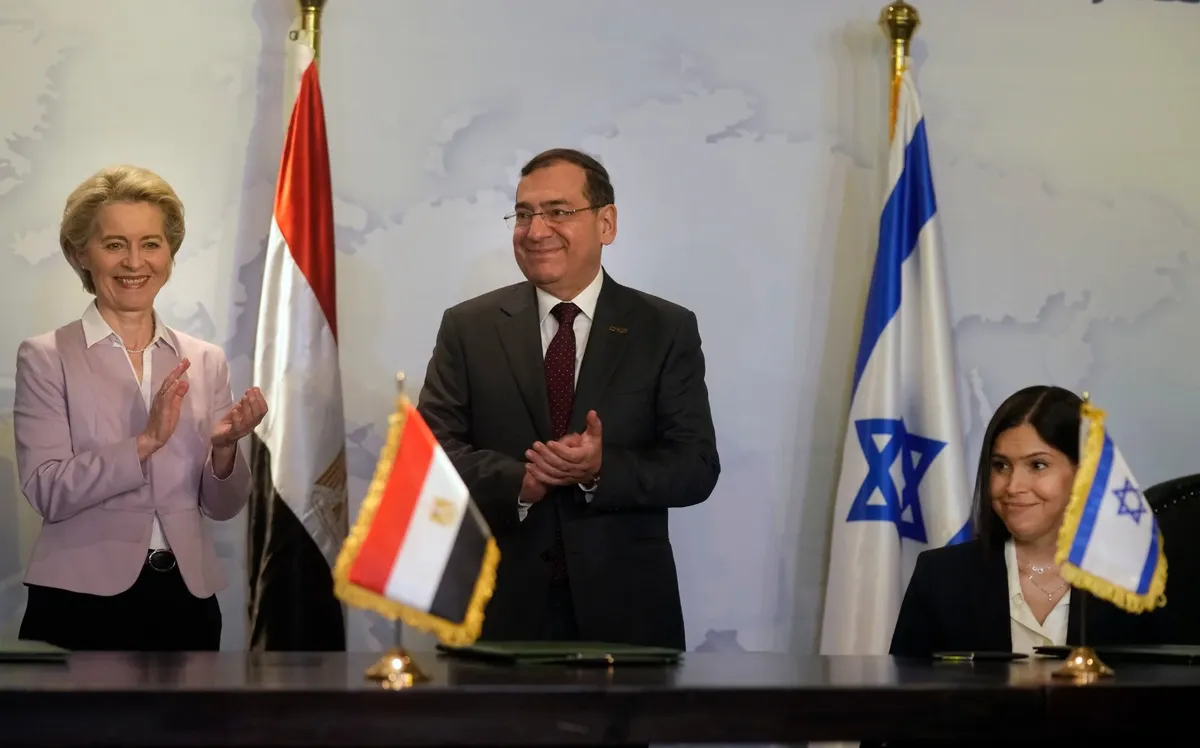
The State of Israel took a risk, defended, built and turned the gas resource into an instrument of influence. 16 years have passed, and here is the December news about the largest export contract with Egypt, which is not only about cubic meters, but about the new architecture of the region, where infrastructure and investments become something more than just solving commercial and economic problems.
Prepared foundation
The discovery of the Tamar and Leviathan fields in 2009–2010 (today’s estimate is 300–400 and 600–650 billion m³, respectively) is a kind of discovery of a chest under one’s own house. The public debate was not about the question “is there gold there?”, but about “do we have the right to spend it now?” The dispute was about three main things:
“export vs save and keep for yourself”: what volume to reserve for future generations;
“monopolies vs competition”: how to limit the power of consortia and protect the Israeli consumer;
“security vs benefits”: how risky is it to export to neighbors (Egypt and Jordan), where the political and military landscape is unstable and the economic potential is unclear (at that time Egypt did not show interest, and Jordan received gas from Qatar).
The internal political conflict, the struggle with regulation, export permits and infrastructure construction have created the conditions under which today it has become possible to scale up export supplies by 130 billion m³ until 2040 (the volumes specified in the gas deal between Egypt and Israel). Israel prepared the regulatory and infrastructure foundation in advance, even before the Russia-Ukraine conflict turned gas into a scarce geopolitical currency.
Triple independence
The growth of gas production gave Israel independence on three levels.
Money
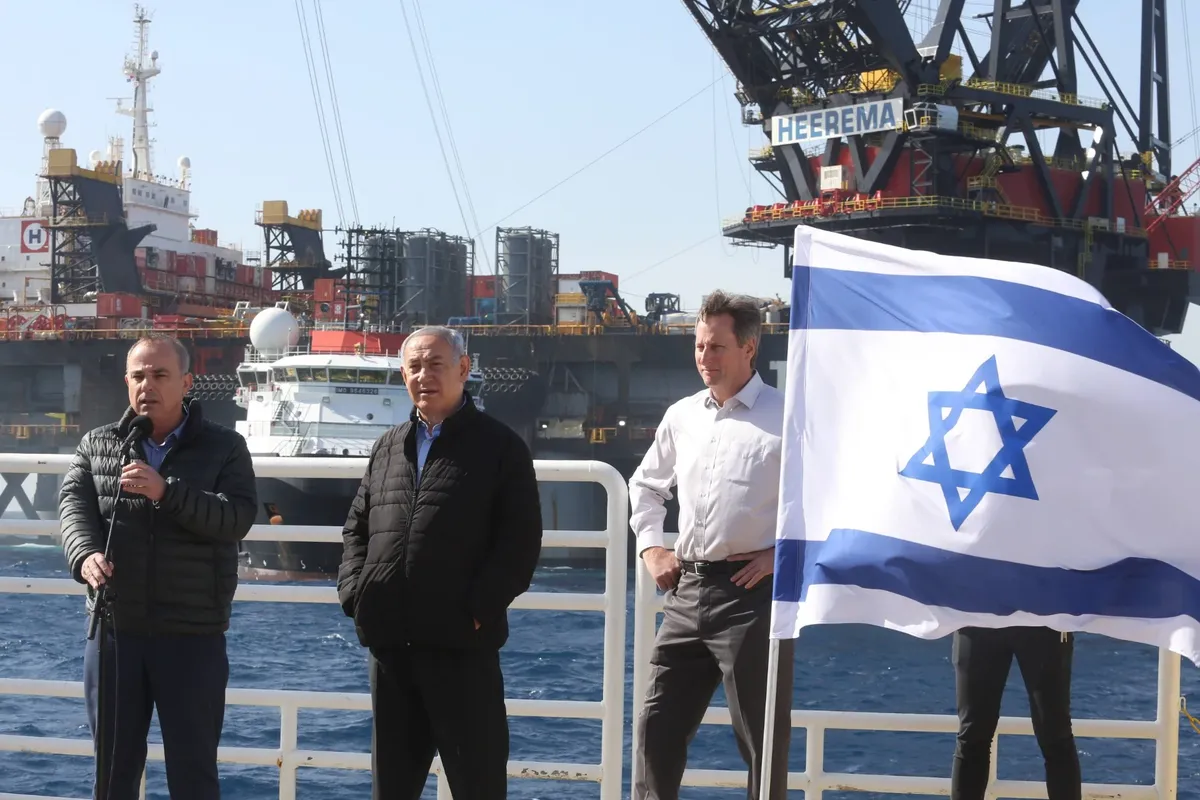
The contract with Egypt is a long-term cash flow: public estimates of the deal are about $35 billion for the entire volume, a significant part of which is transformed into tax revenues, royalties and contributions to the national Citizens of Israel Fund (at the end of 2024, its assets reached about $2.08 billion, and revenues for the year amounted to about $417 million). The Leviathan consortium is already planning multi-billion dollar investments to expand production and infrastructure for this contract, including a new gas pipeline and drilling additional wells.
Energy sustainability
Own gas allowed Israel to gradually switch to gas generation and sharply reduce dependence on imports of coal and fuel oil, as well as from external shocks in the oil market. The cost of energy on the domestic market is noticeably lower than the cost in Europe. In 2024-2025, due to surges and instability, Israel limited exports and resumed them gradually, based on the priority of the domestic market (practical implementation of the principle “Israel is a priority, then partners”), while Israel’s annual energy need is about 14 billion m³, which is approximately 1.5% of proven reserves.
Strategy
Gas becomes the “anchor” of relationships: when your resource is built into your neighbor’s energy balance, talking to you ceases to be an option and becomes a necessity. Israeli gas is now part of the “nervous system” of the Egyptian economy, and Egypt is the main corridor for Israeli gas in the form of LNG to reach foreign markets, including Europe: 1/3 of Israeli gas exported to Egypt goes to Europe (thus, Europe is also partially affected by this deal).
If previously Israel lived like a “villa in the jungle” on a rented generator, dependent on external fuel, now it operates its own mini-power plant and at the same time sells part of the power to its neighbors (though only to those who are also concerned about furnishing their homes).
Forced dependence of Egypt
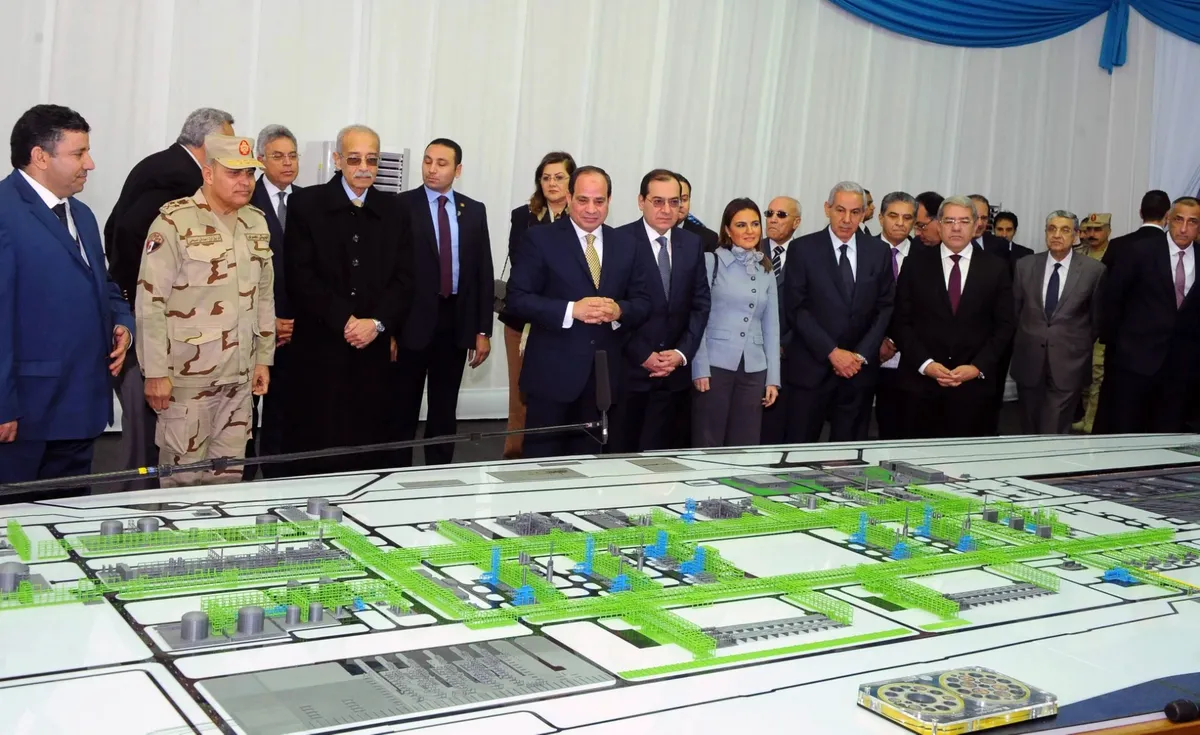
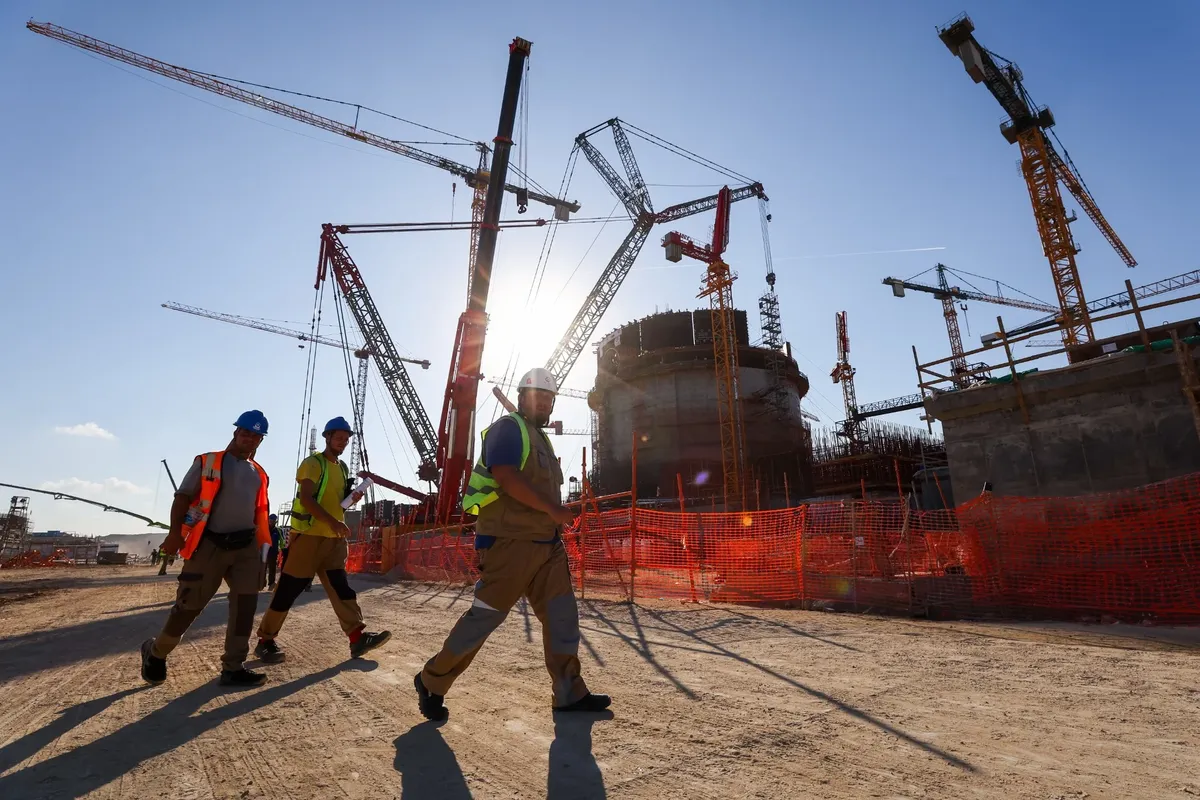
Egypt has long been a gas hub in its own right and has treated Israeli gas, like any commercial and economic agreement with Israel, as a politically toxic option. In addition, in 2027, Egypt will launch the El-Dabaa nuclear power plant project (the first Egyptian nuclear power plant with a capacity of 4.8 GW), which should further strengthen its energy sovereignty. But a combination of geology, demand, operational errors and infrastructure constraints has turned Israeli gas from an undesirable option into a necessity.
How did the deficit arise?
At the Zohr field, which was the basis of Egypt's economy, gas production deteriorated sharply due to a water breakthrough. Thus, by 2024, daily production fell by half compared to 2019–2021 production, and potential reserves were revised and decreased by almost 35%.
According to the latest estimates, Egypt's production has fallen from about 70+ billion m³ in 2021 to about 50 billion m³ in 2024, while domestic consumption is at about 70 billion m³ per year and continues to grow.
The volume gap was closed by pipeline imports and LNG purchases mainly from Qatar, with LNG imports in 2024 reaching a seven-year high in both volume and price.
Underutilization of its own LNG terminals: without additional gas (from Israel and potentially from Cyprus), Egypt is losing its role as a regional export hub and foreign exchange earnings.
The El-Dabaa nuclear power plant project is being launched gradually: in 2027–2030 it will cover Egypt’s energy needs by 10–15%.
As a result, supply disruptions directly impact industry and the energy sector. Without Israeli gas, Egypt increasingly faces rolling blackouts, rising social tensions and a loss of status and reputation as an LNG exporter.
A win-win deal, but not without its pitfalls
At the level of economic interests, the deal looks like a classic win-win.
What Israel gets:
a contract of historic scale: approximately 130 billion m³ until 2040, worth about $35 billion;
a sustainable export market that relieves excess production and attracts investment in infrastructure and further exploration;
strengthening the status of a regional energy hub and an indirect supplier of gas to Europe through Egyptian LNG terminals.
What does Egypt get:
fast and scalable resource for the power industry and industry;
the ability to maintain and expand the role of a gas hub, and therefore the ability to maintain foreign exchange earnings from LNG exports;
reducing dependence on expensive spot LNG during periods of crisis.
But there are mines under this “bridge of mutual benefit”:
To implement the deal, it is necessary not only to “sign a contract”, but also to expand the infrastructure: increase production at Leviathan, expand the throughput of the gas pipeline, and build the Nitzana onshore gas pipeline.
Any serious escalation in the region, attacks on infrastructure at sea or in the Sinai, or a stop in production immediately affects supplies and, above all, Egypt as a dependent importer.
The Egyptian authorities publicly emphasize that the deal is “strictly commercial” and “not political,” which in itself signals that the topic is sensitive and easily becomes an object of criticism and gives leverage to the Islamic opposition.
The contract is structured strictly: the take-or-pay principle, the obligations of the buyer (the Blue Ocean company associated with Egyptian state interests) are de facto guaranteed by the state, and it is Egypt that bears the main risk in case of payment failures. For Israel, this means a relatively protected cash flow, and for Egypt, a debt hoop that locks it in as a long-term buyer of Israeli gas.
Work on mistakes
After Camp David (1979), energy already became part of the “security package”: then Israel returned the Sinai and key oil facilities to Egypt, and Egypt promised to provide Israel with access to oil. But the oil deal was short-lived:
Israel was able to switch to alternative suppliers relatively painlessly, while Egypt found other buyers;
the assassination of Sadat and the rise of anti-Israeli sentiment made the special energy schemes toxic for the new Egyptian leadership;
the economic cost of failure was manageable: the infrastructure was easily reconfigured, and Israel's security was ensured by external guarantees and diversification of supplies.
Later, already during the era of the “Arab Spring,” this logic was repeated: the Egyptian gas contract with Israel through the Sinai pipeline was interrupted after a series of sabotage and political pressure from the “Muslim Brotherhood” that came to power, which became a symbol of “cold peace” in every sense.
However, the current configuration is fundamentally different:
then Israel depended on Egyptian oil and gas, now Egypt depends on Israeli gas;
oil was easily replaced on the world market, gas infrastructure (pipelines, Egyptian LNG plants) is specific and difficult to reproduce;
the refusal of supplies today primarily affects Egypt's energy system and solvency, and not Israel's security of supply.
If the former oil project was a tow rope that could not withstand political opposition, but did not cause significant damage, then the current gas link looks like an implant implanted in the body of the Egyptian economy: it can be removed, but it is a very expensive operation with a health threat.
Military-political effect
Gas interdependence will not guarantee peace between countries, but will sharply increase the cost of escalation. In official rhetoric, Israel portrays the deal as a factor of regional stability, emphasizing that long-term energy cooperation with Egypt strengthens the peace treaty and creates incentives for restraint. Despite these statements during the gas deal negotiations, Israel failed to achieve even a partial withdrawal of Egyptian troops from the Sinai Peninsula, whose presence on the other side of the Suez Canal is a direct violation of the 1979 peace treaty.
For Egypt, gas dependence on Israel coincides with its role as one of the key mediators in Gaza and its acute domestic need for energy:
any prolonged interruption of supplies threatens blackouts, social protests, a blow to industry and, ultimately, a threat to the regime;
Cairo has an additional incentive to keep conflicts (including the Palestinian one) within manageable limits and avoid scenarios in which infrastructure or imports are threatened. Among other things, there is a motivation to ensure control of the border with Gaza.
For Israel, Egypt's dependence on its gas is an additional lever of influence, limiting the likelihood of a radical deterioration in relations or Cairo's withdrawal from the peace treaty, even with continued violations of the peace treaty on the status of Sinai as a demilitarized zone.
Regionally, the deal partially displaces Qatar as a potential gas supplier to Egypt and reduces the political influence of Qatar, which supports the Egyptian opposition, the Muslim Brotherhood, while strengthening the Israel-Egypt-Europe axis through Egyptian LNG plants, which increases Israel's status as an energy power.
But the wider and more important the infrastructure, the more vulnerable it is: offshore platforms, gas pipelines through the Sinai and key nodes become potential targets - from sabotage to missile threats. In the long term, the deal increases the likelihood of a major war between Egypt and Israel, but does not eliminate local conflicts around Gaza and in the region. It is rather an additional layer of concrete under a containment architecture that has not become stronger.
Formation of a new energy axis
The deal fits into a broader redrawing of the regional energy map.
Cyprus. Cyprus has been producing gas on its shelf for many years, but is turning it into capital much more slowly: commercialization has been delayed, partly due to the failure of the EastMed project. Strengthening the Israel-Egypt-LNG-Europe route makes the Cyprus-Egypt-LNG option more realistic and politically supported. Cyprus is already signing agreements and framework agreements to export gas to Egypt, and Chevron and partners are preparing offshore studies of the pipeline route.
Qatar. Qatar remains the global “King of LNG” and a key supplier to Europe and Asia, but in the narrow Egyptian context its role as a “fire brigade” is diminishing: the more Egypt fills the gap with pipeline gas from Israel, the less it is forced to turn to expensive spot. Qatar remains an investor and partner in exploration, including through participation in Cypriot projects, but its influence on Egyptian politics is decreasing.
Türkiye and Greece. The EastMed project (Israel/Cyprus - Greece - Europe) has long been not only a pipe, but also a symbol of an alternative route bypassing Turkey. On paper, its technical feasibility was confirmed, but economics and geopolitics (including events after the Seventh of October) prevented its launch. Against this background, the strengthening of Egypt as a hub makes betting on its LNG capacity more rational than the construction of an expensive and politically controversial gas pipeline.
This strengthens the Egypt-Cyprus-Greece bloc as an “Eastern Mediterranean axis”, in which Israel is embedded, and at the same time irritates Turkey, for which projects “bypassing” its transit role are perceived as a challenge. Greece receives additional arguments in favor of its role as the “gateway” of Eastern Mediterranean gas to the EU by linking Greek terminals and interconnectors with flows from Egypt and Israel.
Does Israel need its own LNG and direct access to Europe?
Against the backdrop of the protracted Russia-Ukraine conflict and the European strategy of abandoning Russian gas, Israel logically faces the question: should it build its own LNG terminals and enter directly into the EU markets, competing, among other things, with Egypt?
Arguments for:
direct access to the markets of Europe and Asia without the transit risk of Egyptian infrastructure;
capturing most of the value chain - from reservoir to regasification;
consolidating Israel's status as an independent energy partner of the EU, and not just a supplier of raw materials for Egyptian LNG;
expanding the range of potential buyers, and therefore the opportunity to increase their income and political influence.
Arguments against and limitations:
colossal CAPEX and multi-year construction cycle, vulnerability of coastal and marine infrastructure in the face of regional threats;
for a large LNG project to pay off, either significantly expanded proven reserves are needed, or a redistribution of gas to the detriment of supplies to Egypt;
potential weakening of the current axis with Egypt: the more Israel diverts gas into its own LNG and direct exports to the EU, the less raw material will be left to load Egyptian capacity and the more sensitive Cairo will become to this redistribution.
Possible step-by-step strategy for Israel:
expand production of Leviathan and other fields to bring export infrastructure to sustainable levels;
in parallel, diversify the portfolio of purchasing partners and possible routes (consider new long-term contracts) in order to avoid dependence on one “hub”;
consider modular LNG solutions and possibly larger projects if the resource base and political configuration make commercial and political sense.
As of 2024, Israel and its partners have discovered and are developing the Karish and Tanin fields with a total estimate of about 70 billion m³, and exploration of other fields continues. USGS estimates for the Levant Basin Province (the field as a whole, including the territorial and economic waters of not only Israel, but also Cyprus and Lebanon), the average estimate of undiscovered recoverable gas is about 122 TCF, or 3.5 trillion m³ .
The main lesson from “oil after Sinai” to the gas turnaround of 2012 remains the same: energy does not save you from politics. But it makes politics more rational and predictable if both sides understand the cost of breaking up. In this sense, gas today is truly becoming a new currency of sovereignty - both for Israel and, paradoxically, for Egypt, which is forced to buy this sovereignty in cubic meters.
Ariel Bass