
Translated material
“They believed that they gave me a task in America, that I was a spy”
Where does the Motherland begin for those who were deported to Russia from the USA?

Photo: Zuma/TASS
18+. THIS MATERIAL (INFORMATION) WAS PRODUCED, DISTRIBUTED AND (OR) SENT BY FOREIGN AGENT AZAR ILYA VILYAMOVICH OR CONCERNES THE ACTIVITIES OF FOREIGN AGENT AZAR ILYA VILYAMOVICH.
Over the past six months, four charter flights carrying dozens of Russians deported from the United States have landed in Moscow. The men from the last of them - he arrived in the early morning of December 9 - were given summonses, all were interrogated, but were released to go home.
Journalist Ilya Azar * (project “Punctuation Marks”) spoke with the husband of one of the Russian women deported to their homeland and with Evgeny Mashinin, who was deported to Russia and fined for discrediting the Russian army, but managed to escape to Europe. Human rights activist Dmitry Valuev explained how the situation with obtaining asylum has changed under Trump and whether Russians should now even try to leave for the States.
"There may be serious danger"
Russians deported from the United States after being interrogated by FSB officers fear arrest and are reluctant to make contact with the media.
I managed to talk with the husband of one of the Russian women deported on December 9. Andrei Nikonov and his wife Lyudmila (the names of the characters have been changed at their request), while in Russia, were volunteers at Navalny’s Headquarters**, speaking out “against the endless rule of Putin, “United Russia” and corruption.” Until 2022, Andrei still hoped that the opposition would be able to change the country for the better, but then he realized that “it won’t work.” In September he left [partial] mobilization for Belarus. While Nikonov was there, a neighbor called him and said that the police were looking for him because of a criminal case filed against him.

Then Andrei began to think about where to go next, and accidentally found out about CBP One (a simplified procedure for applying for asylum in the United States, which was in effect under Biden). “This was done for convenience, because the flow of emigrants was large, and the Biden administration decided in this way to slightly improve the logistics of these requests for asylum of those who crossed the border without a visa,” says Dmitry Valuev , president of the organization Russian America for Democracy in Russia***, which helps Russians in the United States.
Andrey went to Mexico and crossed the border in April 2023. After that, he decided to take his wife out of Russia, but the process dragged on. In January, Lyudmila arrived in Mexico, and “caught a date with CBP One” (every day you need to send an application and hope that this time you’ll be lucky) only in September. After crossing the border, the woman ended up first in border (prison at the border) and then in detention (immigration prison) in Louisiana, from where she was never released.
— It was impossible to combine our cases, since she is in juvenile detention, and I am free. In the end, she lost the trial because the judge was not interested in the case at all. He ridiculed her, made sarcastic jokes and did not believe that the police could be against citizens, since he himself used to be a policeman, explains Andrei.
Lyudmila also lost her first appeal, and they didn’t even have time to consider the second, the federal appeal, because under Trump the authorities can deport a refugee even before the decision finally comes into force.
“The court refused to call witnesses, including me, and then referred to insufficient evidence,” says Andrei.
It is impossible to avoid deportation to Russia, he explains.
“In the middle of the night, they lift me up, put on handcuffs and chains and put me on a bus that goes to the airport. There they put you in detention at the airport, where there are no beds, no tablets, no proper shower. There are telephones, but they don’t give you PIN codes to make calls. You need to sleep on the floor, but they can give you a mattress,”
says Andrey.
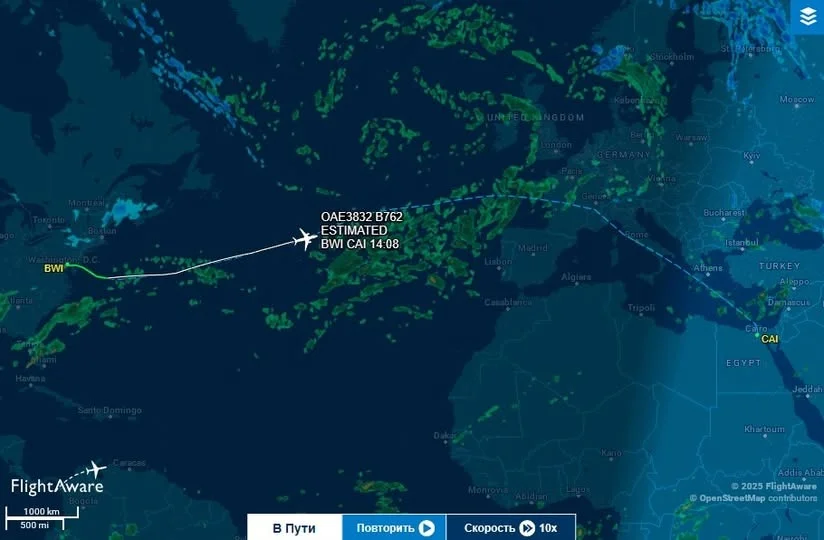
Then his wife was put on a plane to Washington, and from there she was sent to Cairo. The handcuffs were not removed all this time. In Egypt, Lyudmila was given the phone, but it was still impossible to refuse a transfer to Moscow.
— We even contacted the UNHCR of Egypt, but they could not help. They don’t give you your documents, they don’t let you go anywhere, but in Moscow the FSB immediately meets you,” Andrey explains. “The fact that deportees are not allowed to transfer to another plane is a nightmare and inhumanity.
FSB officers, says Lyudmila’s husband, immediately took his wife’s phone, connected it to their computer and downloaded all the data, including deleted correspondence.
— Was there anything dangerous there?
— I support Ukraine. Therefore, the wife may also be in serious danger,” Andrey replies.
Some of the deported Russians, he said, were released after 15 minutes (but all the men, including the elderly, were given summonses), and Lyudmila was interrogated for about two hours.
“The FSB was very interested in her and my affairs. We interrogated her about what we were doing in the USA and why we decided to leave Russia. They released her for now, but they said that they were really waiting for me,” says Andrey. He hopes to transport his wife to a safe country, but Lyudmila “first needs to gain strength,” because she spent almost a year and a half in the cub “in terrible, inhuman conditions.”
Andrey remains in the United States for now and is awaiting trial in his case, the hearing is scheduled for 2027. The man is not going to go to Russia: “This will not help his wife in any way.”
Nikonov criticizes Trump's migration policy. “Even though my wife was detained and not released under Biden, Trump’s immigration policies are terrible. He is fighting not against illegal migrants, but against legal and semi-legal ones. This will not reduce the number of criminals, since most of the detainees themselves came to the authorities,” says Andrei.
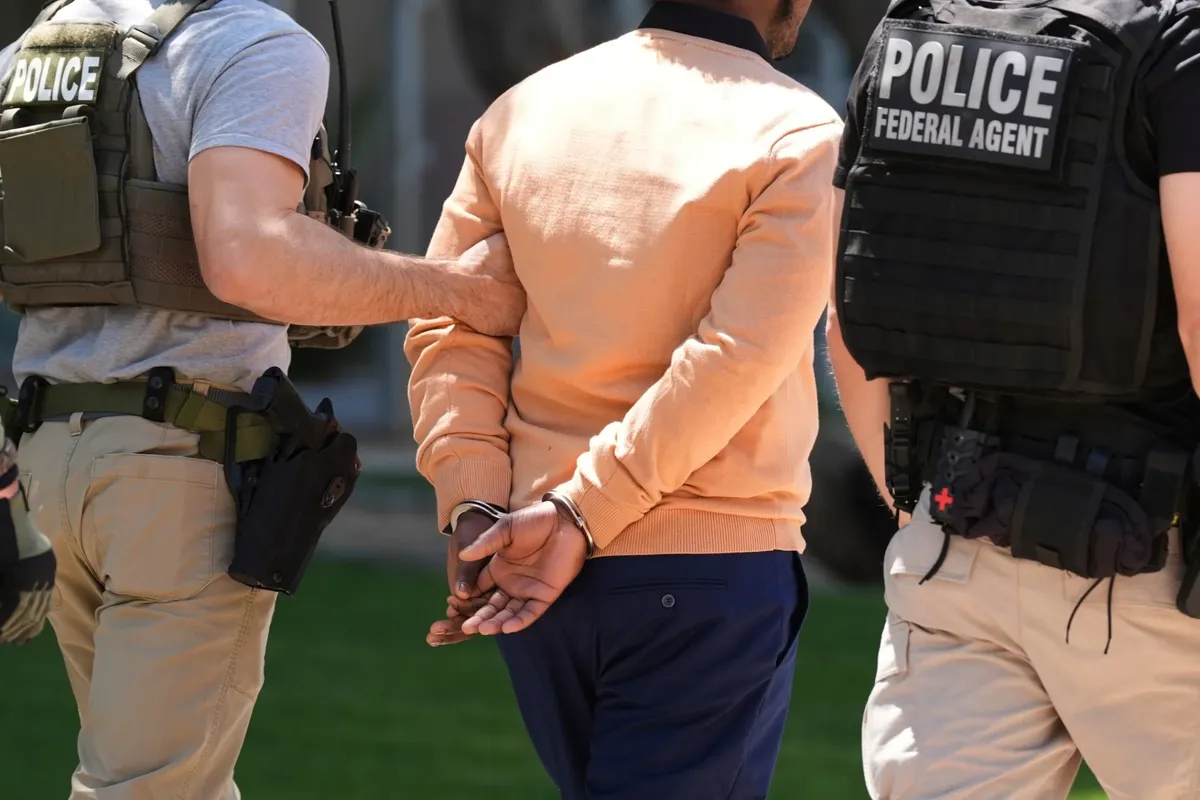
My interlocutor gives an example of his colleagues who received a request to come to the migration service office, where they were safely detained (one was given a bracelet on his ankle, and the other was sent to detention).
— After Trump came to power, the feeling of anxiety that I constantly experienced in Russia returned. Understanding that you can be imprisoned at any moment and you won’t be able to do anything,” says Andrey.
— Do you regret that you went to the States?
— No, but I regret that I didn’t move my wife earlier. We should have jumped the fence in January 2024 instead of waiting six months for CBP One. It’s even easier for those who crossed the border completely illegally, and the policy was softer then.
Three arrests
Before Donald Trump came to power in the United States, deportations were targeted—people (mostly for breaking the law) were put on commercial flights. Now this also happens, but an “innovation” has appeared - charter flights. And only through Egypt.
Unlike the European Union, from where people are now deported to third countries, American courts issue an order to deport a person to the country of which he is a citizen. “They omit the humanitarian aspect,” comments Valuev.
“I assume that an agreement has been reached with Egypt, because the deportees are taken under escort and accompanied by Egyptian special services on a flight to Moscow,” says Valuev. He believes the Egyptians are serious about the agreement with the US, whose authorities insist the men are criminals. Perhaps Moscow is convincing Egypt of the same thing, but there is no confirmation of this version yet.
According to Valuev, on commercial flights, escorts often agree to issue documents and allow you to buy a ticket to a third country. “I wouldn’t say that in all cases, but in a large number of them it works. Migration officers, in principle, are not specifically inclined to deport people to Russia,” says Valuev. — But on charter flights this is not possible. People who resisted were forcibly sent to Russia.”
In particular, this happened with Artem Vovchenko, against whom a criminal case was opened in Russia for unauthorized abandonment of a unit during hostilities (Part 5 of Article 337 of the Criminal Code of the Russian Federation). According to one of the deportees to the publication “That’s So”* , Vovchenko resisted to the last and tried to lock himself in the toilet, but he was forced onto the plane and tied to a seat.
Vovchenko served at the 102nd Russian military base in the Armenian Gyumri, in October 2022 he escaped from the unit, fearing that he would end up in *** in Ukraine.
Over the next few years, he traveled to different countries, and in July 2024, he crossed the border into the United States from Mexico and asked for asylum. He was sent to immigration detention and, despite an open criminal case, deported.
The first person to be arrested (in July 2025) in Russia after deportation from the United States was Leonid Melekhin. He left Russia at the end of 2023, and according to Mediazona*, before crossing the border with the United States, he asked his friend to publish a photo of an anti-Putin poster taken by Melekhin before leaving Russia. Apparently, Melekhin wanted to increase his chances of obtaining asylum.
This poster, as the appointed lawyer told Mediazona, became the reason for initiating a criminal case against Melekhin. Since June 2024, Leonid has been wanted in the Russian Federation on charges of “justifying terrorism” (under Article 205.2 Part 1 of the Criminal Code he faces up to five years in prison), and in October of the same year the man was added to the Rosfinmonitoring list of extremists and terrorists. But in the States, this photograph did not help Melekhin at all.
He was sent to an immigration prison in California, and then to the San Luis prison in Arizona. On December 19, 2024, the court denied Melekhin asylum. “I believe what you provided, but it’s not enough,” Melekhin’s friend Yuri Bobrov quoted the judge as saying. On June 11, 2025, Leonid’s appeal was denied and he was deported a month later.
lucky chance
There was also a third person detained in Russia after the deportation - 28-year-old activist Evgeny Mashinin. He came to his first rally when he was 20 years old. It was “He’s Not Your Dimon” in 2017, and Mashinin was detained there. Although, according to him, he went to all the rallies in Moscow, he was detained three more times. The last time was on March 6, 2022, at protests against military action.
— Why did you even go to rallies?
- Well, this position is simple, I like it, I always went. “I’ve now left for France, because rallies are constantly held here,” Mashinin answers, looking ahead a little.
- This is a bit too short an answer.
“I’m expressing my political position,” says the activist, from whom every extra word has to be pulled out.
— There was probably hope to change something?
— In 2017, yes. And after Putin was reset, all hope was gone.
Mashinin studied to become a lawyer at the Russian State University of Justice. This gave him the opportunity to do without a lawyer in administrative courts in Russia.
When the fighting began, Mashinin decided to move to America rather than Europe. Back then, you didn’t need a visa to enter the States; you just had to use the CBP One app. In September 2023, he flew to Mexico.
— Why didn’t you leave in September ’22? Weren't you afraid of [partial] mobilization?
- Well, why weren’t you afraid? I wanted to leave. But at that time I simply did not have the money for a ticket. Then I finally decided, and the money appeared. But, of course, we should have left earlier, yes,” Mashinin admits.
At first everything went well, and in November Evgeniy crossed the border. That's where the luck ended.
“They immediately put me in the monkey barn, and then transported me to the detention center. I spent the first month in a good prison, and for the remaining 12 months I was assigned to a terrible detention facility, where there were 100 people in a cell,” says my interlocutor.
According to him, it is almost impossible to get out of there. “My cellmate was released on $15,000 bail, but he had an expensive lawyer. Although it happened that the lawyer did not help,” says Mashinin.
According to him, the prison population was 90% Latino, who were usually released after two months. “By the end, I was already sitting in our cell the longest. Since people there are constantly changing, there are no special prison rules. But there was no discipline, so they constantly shouted, even at night, and it was very difficult to sleep,” the activist complains.
Evgeniy says that they took him outside once a week for about an hour, the shower was with cold water, and the food was poor. He got a job working in the kitchen for extra rations and $3 a day.
He spent them on calls to Russia ($5 for 10 minutes), on additional food and films that could be bought for a local tablet (they gave out about 10 pieces for the entire camera). “There were always fights in the cell, but I didn’t fight because I was working, and for fighting you are sent alone and fired from work,” he says.
At the trial, Evgeniy did without a lawyer, but he believes that he would not have helped him, because both judges who received cases from his detention in Texas were “terrible.”
— All good judges are mainly in California and New York. Even my cellmate, who has a criminal case in Russia and a lawyer for 10 thousand dollars, lost in court. The judge told him: “Well, they’ll put you in Russia, but they won’t kill you,” says Mashinin.
Evgeniy, with his several administrative orders and the decision to pay compensation from the ECHR, had no chance. “My judge Kevin Terill had to prove that they would kill in Russia, and this is very difficult,” says Evgeniy. “He told me: “You’ve never even been tortured.” According to him, if they were tortured, he could still give [asylum].
- What if you said that you tortured?
“Then it would have to be proven.” There was a Chechen in the next cell, and he was approved because he was tortured in Chechnya.
Evgeniy specifically highlighted for the judge in a large HRW*** report the most important thing about the situation in Russia, but he did not read it: they say that he is only interested in what happened to a specific person.
But if this judge, according to Evgeniy, allowed at least someone else into the States, then the second judge had a 100% refusal rate. Over the course of a year, about 10 Russians passed through his cell, and everyone who went to trial was denied asylum.
“Many even asked for self-deportation because they saw that there was no point in waiting for trial. In the States, it all depends on the individual judge. There is no government for them,” says my interlocutor.
- You didn’t ask?
-No, I still thought that I had a small chance that they would leave me in America.
Evgeniy did not file an appeal because he was not ready to sit in prison for several more months. One of his cellmates, however, won his appeal, but before that he served a total of one year and nine months. “It happened that they sent me to the same judge, and the same judge refused for the second time. But most often in an appeal they agree with the decision of the first judge,” says Mashinin.
Evgeny was denied asylum in June 2024, and he was deported only in December - on a regular commercial flight through Qatar.
— The flight attendant knew that I would be deported because she had my passport. I asked her to give me the passport, but she refused,” says Evgeniy. During the layover in Qatar, Mashinin was observed by the special services, although formally he was free.
However, it seems that Evgeniy was not very actively trying to avoid returning to Russia: “I thought it would be okay, and I didn’t have the money for a new ticket, and it seems to me that it’s definitely not worth asking for asylum in Qatar.”

In Moscow he was met by FSB officers. They demanded to unlock the phone and found a photo with the Ukrainian flag and a pacifist poster. “And this,” says Evgeniy, “I also removed everything for which they could get a criminal offense.”
— During the interrogation, they asked why I went to rallies, what I did in America. I told it like it is: that I spent a year in a terrible prison. They asked how I felt about the SVO, I said negatively,” recalls Mashinin. The FSB recorded his details and released him.
He went with his registration to Kovrov to visit his parents, where two weeks later five FSB officers came to see him from Vladimir.
“They’ve been interrogating me here all day.” They believed that I was given a task in America, that I had to do something here, that I was a spy. They said: “Let’s confess.” They asked why I went to rallies and how I felt about ***. They tried to persuade me to go to *** myself ,” recalls Evgeniy.
According to him, the FSB at first threatened to open a criminal case against him, but when he said that he wanted to leave Russia for France, “they seemed to change their minds and limited themselves to two administrative cases.”
- It sounds a little strange, you will agree. You read the news about what is happening. Criminal cases are being opened against everyone.
- Yes, and they torture me, I read. But I just came across normal FSB officers,” Mashinin replies. - They were not ideological. They themselves told me that they were simply ordered to interrogate me.
“Normal” FSB officers, he suggests, could themselves post a photo with the Ukrainian flag and a telegram picture from Mashinin’s account. “They took screenshots for the judge that supposedly I posted it myself,” says Mashinin without a hint of indignation in his voice.
In court, he was given a 35 thousand ruble fine for “discrediting the army,” and another two days for “petty hooliganism.”
“As soon as I came out, I immediately left so that they wouldn’t come to me again and post another picture,” explains Evgeniy.
He flew to Morocco without any problems, and from there, with a friend’s money, he bought a ticket to Istanbul with a transfer in Paris, where he asked for asylum. “I spent three days in juvenile detention and was released. There will be an interview soon,” says Mashinin. He expects to “get positive” and stay to live in France - “somewhere” to work or study.
The activist does not regret that he ended up in France and not in the United States, because here he is provided with housing and food and paid benefits, while his friends who received asylum in the States do not have all this.
***
Of the approximately 200 people recently deported from the United States (there were approximately 40–60 people on each of the four charter flights), only three got into trouble with the law in Russia.
“Those who, as I assume, are in some bases, who were detained at rallies, are invited to conversations at local FSB offices and asked questions,” says Valuev, who tries to keep in touch with the deportees.
“But it seems, given the situation in Russia, there could have been more arrests,” I note.
“We heard from the deportees themselves and their relatives that the FSB knows about the activities of some people, that is, they could have been brought in for opposition activities. But they are told: “As long as you go for a walk, we will keep a strict eye on you,” says Valuev.
According to him, one of the deportees on the last flight had an asylum application found on his computer, which he had been preparing while still in Mexico.
“He fought back, saying that he simply couldn’t stay in Mexico, he had to go to the USA and that’s all he could submit. I think that the FSB could well concoct something out of this, but for some reason they don’t do that. Maybe they are simply postponing [deportations] until the moment when they have absolutely no one left,” Valuev suggests.
Andrei, the husband of the deported Lyudmila, is sure that his wife was not arrested immediately because of an agreement between Trump and Putin that no one should be detained immediately, because it has a bad effect on the reputation.
Trump came and brought order
Problems with obtaining asylum in the United States did not arise immediately: for a long time it was the most reliable option for those who were ready to start living from scratch. Immediately after February 22, Biden completely suspended deportations to Russia. Until mid-2024, people crossed the border, requested asylum, were released with a requirement to appear in court upon first request, after which they lived quietly in the United States. This is exactly what happened to many of my friends - and the courts subsequently granted them asylum.
In May-June 2024, says Valuev, everything began to change dramatically. “Russians began to be placed in immigration prisons en masse and indiscriminately. Children were separated from their parents and sent to shelters and foster families,” says the human rights activist. According to him, it later turned out that this happened “for reasons of national security,” because at the border they identified “people with Russian passports associated either with the Russian special services or with terrorist organizations like ISIS ****.” Deportations during this period took place only on a targeted basis - on commercial flights, as in the case of Mashinin.
With the advent of Trump, several restrictive measures were introduced at once - not only for Russians, for everyone. First, the Trump administration closed the CBP One application and basically the border.
According to Valuev, instead of 10,000 people a day, several dozen people a month cross the border. “The second measure is an accelerated deportation procedure. Those who do cross the border must also undergo a “fear interview” with a border guard. He may decide that there is no threat to the person in his country of birth and immediately deport him, even without trial,” says Valuev. According to the human rights activist, many Russians after Trump’s inauguration were arrested at the border and very, very quickly deported.
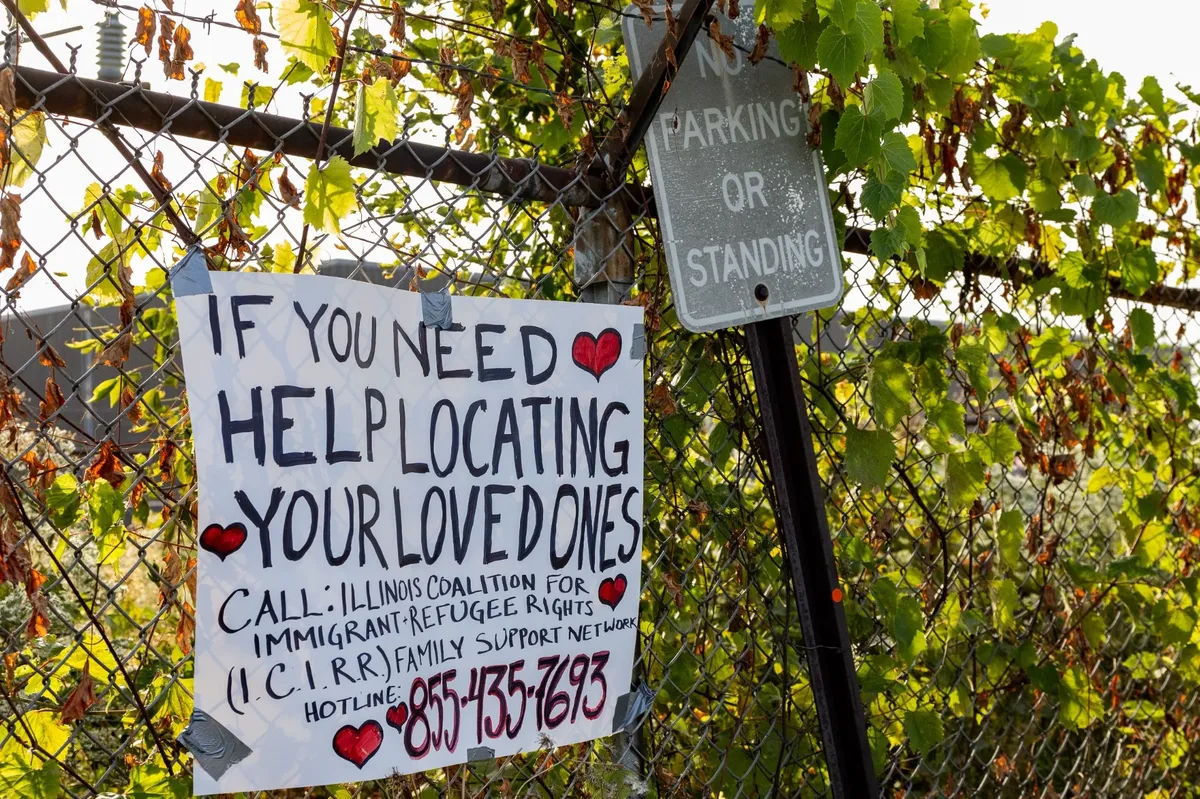
A little later, under Trump, they began to arrest immigrants who were freely awaiting the consideration of their cases by the court. “Such people began to be arrested all over the country and put them in immigration prisons. A lot of people like this came to us, especially wives whose husbands are truck drivers. This is an easy target for immigration authorities.
In the courts, many Russians, as Mashinin’s example shows, have no luck. But it’s not just the judges (Valuev gave examples of their strange decisions: “You supported Navalny, but Navalny has already died, which means you are not in any danger” or “Yes, you conducted opposition activities online, but you did it for the sake of PR, and therefore I am depriving you of the opportunity for asylum”).
“The need to prepare for immigration trials from prison also plays a role. If earlier Russians prepared for them while they were free, that is, they could earn money, find a better lawyer, send some documents, collect certificates, but now people go to the courts as they are: this is the kind of person I am, accept me,” says Valuev.
The third factor is the lawyer. “We know that sometimes, seeing that cases are filed incorrectly or carelessly, lawyers immediately begin to get annoyed. They often act completely unprofessionally towards refugees - they abandon them in the middle, miss deadlines, or file a case according to a template,” says Valuev.
Despite all the problems listed above, Russians continue to rush to America, because the chances of asylum here are higher than in Europe.
According to TRAC at Syracuse University, in 2024 the United States approved 85% of asylum applications from Russians. In EU countries, the average level of approval of applications from Russians, according to Eurostat for 2022, was about 33%.
Valuev’s organization, according to him, provides targeted support to people in migration prisons and tries to conduct diplomatic work with Congress and executive authorities. “We see that there is no closed-door regime on the part of the American authorities. They listen to us, perceive us, and try to find a solution. This is a difficult situation for the Americans themselves - how to begin to separate democratic Russians who are at risk from potential spies and agents. This is our main big task - to convince people to share,” he says.
But so far nothing helps. Even the New York Times wrote about Vovchenko, for example, but this did not stop the mass expulsion of Russians to their homeland. Nevertheless, Valuev does not believe that the situation is critical.
“We don’t see a fundamental paradigm shift. It is clear that the institution of asylum in the United States does not work as it used to, it is seriously limited, but it still works. Previously, this was a very clear path: some time before receiving asylum, a year later - a green card ( their lottery was just suspended - I.A. ), four years later - a passport. A person crossed the border - and five years later he is already an American citizen,” says Valuev.
Nowadays everything has become more difficult, especially if you do not prepare in advance.
“People have little understanding of what will happen to them, and immigration authorities are just prepared what questions to ask, how to do so as to prevent a person from even going to trial. There is no chance without a lawyer, so those who decide to choose this path need to consult in advance and have a lawyer easily accessible on their phone, the human rights activist advises.
But, according to Valuev, there is no longer any need to be afraid of spending several years in prison. “Immigration authorities are now not in the mood to keep people for long. Under Trump, they want to quickly resolve something with everyone and, ideally, deport them,” Valuev concludes. “But lawyers say that if the case is strong, then with proper preparation and proper support from immigration lawyers, there is still a chance.”