
Translated material
"Kursk". Afterword
A quarter of a century has passed since the terrible tragedy that opened the era of Vladimir Putin’s reign. What meanings can we discern now when we look at it from afar?

July 30, 2000. The crew of the Kursk submarine in Severomorsk during a military parade. Photo: archive
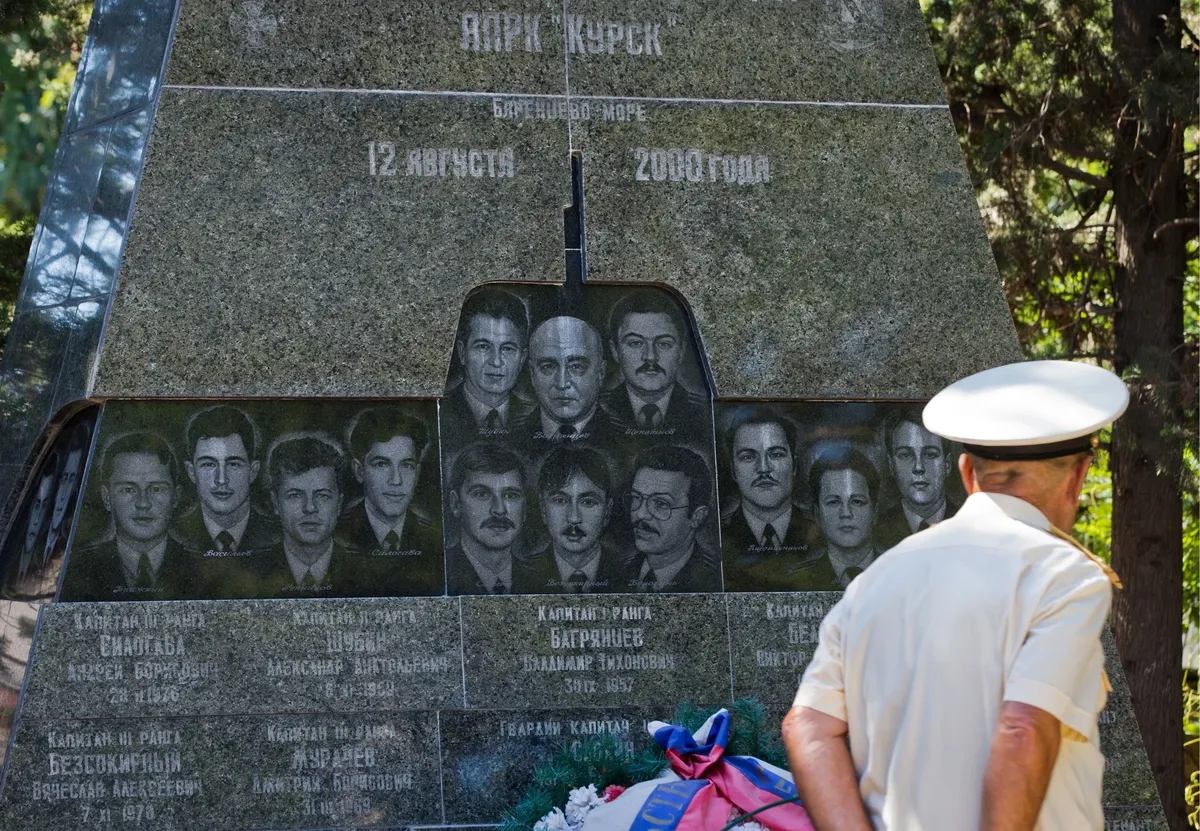
The Kursk submarine sank on August 12, 2000, during exercises in the Barents Sea.
The root cause of the tragedy was the mistakes of the Kursk torpedo operators, which led to an explosion of hydrogen peroxide in the engine of the training torpedo 65–76 KIT. The first explosion provoked a massive fire in the torpedo compartment and the subsequent detonation of 18 combat torpedoes. This second explosion was of terrifying force and destroyed the entire bow of the boat. Most of the 118 Kursk crew members died in the first minutes of the disaster. 23 submariners, who were in three aft compartments, survived and lived for more than two days. The fact that an emergency had occurred with the boat was realized in the fleet on the afternoon of August 12 - at the very moment when the Kursk did not carry out the torpedo firing planned according to the exercise plan, and hydroacoustics recorded a powerful explosion in the area where the boat was located. However, in violation of all regulatory documents, the fleet leadership did not take any action to search for her. The military hid information about the emergency situation from President Putin for almost a day, and from the country for two days. This was precisely what became the critical factor for the 23 submariners who survived the explosions and moved to the 9th compartment of the boat. They had only one chance of salvation: if the search and rescue operation had begun immediately, and not with a delay of 36 hours. And if the country’s leadership had requested foreign assistance on the very first day, and not when there was no one to save.
Pendulum of false hope
On August 14, the press service of the Navy General Staff finally released a message about the tragedy. Every word in it was untrue:
“There is no danger to the lives of the crew members of the nuclear submarine Kursk, which suffered an accident in the Barents Sea. Communication with the boat has been restored, <...> fuel and oxygen are being supplied and the submarine cruiser’s systems are being purged.”
On this day, as was later established by the materials of the criminal case, the hydroacoustic services of the ships taking part in the search operation recorded the last SOS knocks on the Kursk. Back on August 13, submariners gave distress signals according to Morse code (three short signals, a pause, three long pauses, three short ones). On August 14, they were already desperately, without any pause, knocking on the intercompartment bulkhead. No one supplied them with any communication, any electricity, much less oxygen, to the 9th compartment. They didn’t even know if they were being searched for or if their SOS signals were heard above.
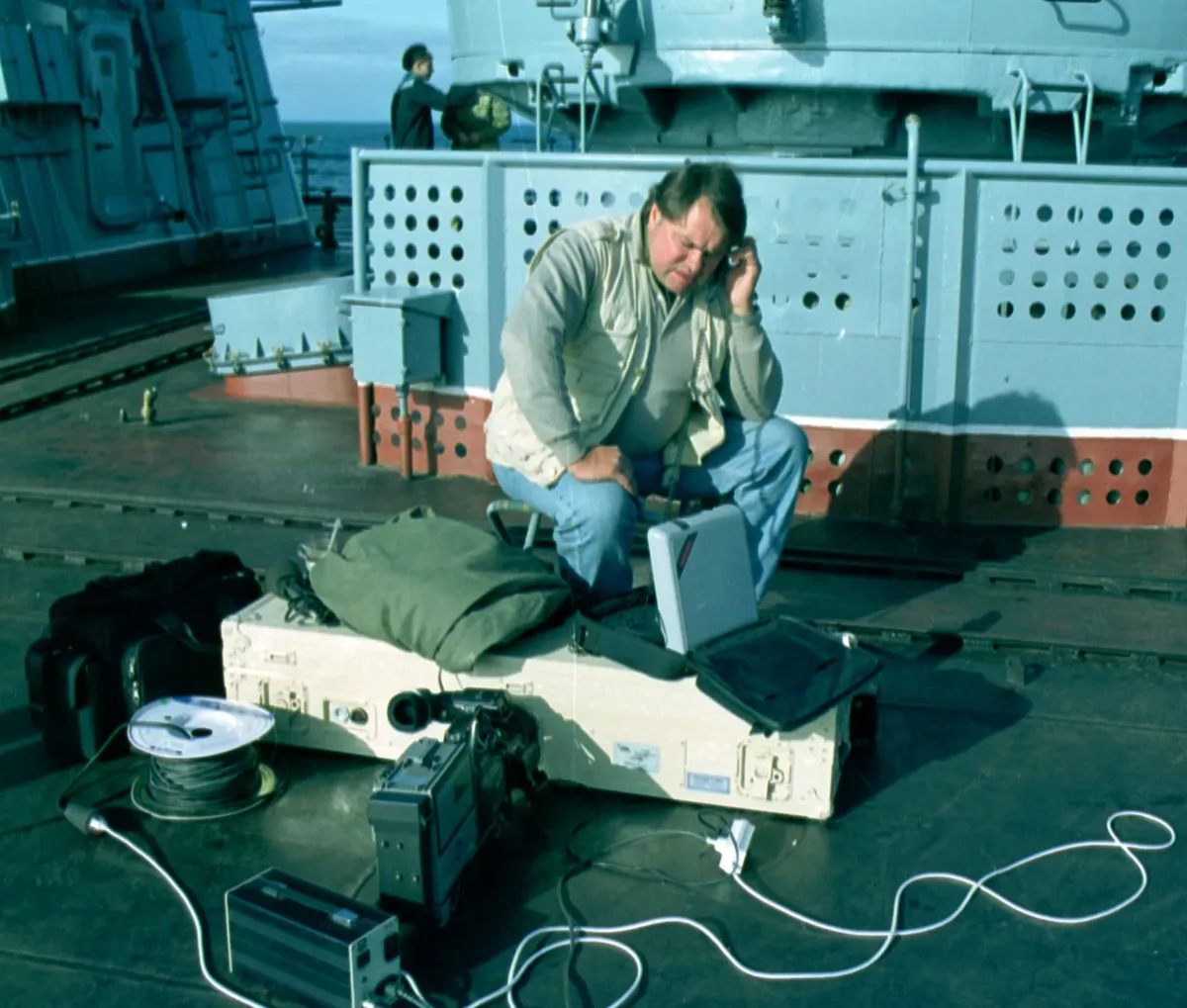
The “rescue operation,” the progress of which was covered live on the state channel RTR, was watched by the whole world. Other media's access to the military and the village of Vidyaevo, where Kursk was based, was blocked. In his live broadcasts from the nuclear cruiser Peter the Great, RTR special correspondent Arkady Mamontov glorified the “heroism” of the fleet leadership. Meanwhile, it sent two rescue underwater vehicles that were absolutely useless in that situation and were clearly in disrepair to the sunken Kursk.
The whole country froze with hope when these devices went under water. And she exhaled in despair when the next attempt was unsuccessful.
“What they did,” Mamontov said enthusiastically, “could not be called work, it was like a battle to save the Kursk.”
Thus the pendulum of false hope swung. And those who rocked it knew perfectly well: this was not a “fight”, but a performance. Because the Northern Fleet did not have technical means of rescuing submariners from a sunken submarine. The search and rescue service collapsed back in the mid-90s, and rescue ships were the first to be written off and sold for scrap. A couple of months before the August exercise, the head of the Search and Rescue Operations Directorate of the Northern Fleet, Alexander Teslenko, reported the deplorable state of the rescue forces to the Main Headquarters of the Russian Navy. Fleet instructions strictly prohibit conducting exercises without the escort of rescue forces. But the Main Headquarters of the Russian Navy did not cancel the exercise. And when the emergency happened, the fleet leadership hid the fact of the absence of sea rescue means from everyone, including President Putin and the head of the government commission to investigate the causes of the incident with the Kursk APRK, Ilya Klebanov. On the evening of August 14, Ilya Klebanov, clearly repeating the words of the military, said: “Russia does not need help from other countries, and the technical capabilities of the fleet are no worse than the American ones.”
To save the submariners or to save themselves—that was the choice the Russian admirals had in those August days, and they made their choice.
In this sense, RTR special correspondent Mamontov, who did not ask awkward questions, was simply a godsend. It was through Mamontov that the commander of the Northern Fleet, Vyacheslav Popov, launched a fake about a foreign killer boat that either torpedoed or rammed the Kursk. This version, which many still believe in, was very convenient because it removed responsibility from the military themselves. Later, the investigation will debunk it and prove that the cause of the tragedy was the negligence of the Northern Fleet command. Including Vyacheslav Popov personally. And he knew it very well. That is why, already in the first hours after the sinking of the Kursk, in order to be in time before military investigators arrived, the Northern Fleet headquarters began to eliminate evidence. To hide the fact that the crew of the Kursk had lost its linearity (that is, not ready for combat service and not trained to operate the liquid fuel torpedo 65–76 “KIT”), the Kursk crew entered the exercises, the signatures of the boat commander Gennady Lyachin were forged on the relevant documents. If this trick had worked, then it would be Lyachin who would become the last one posthumously. But the investigation nevertheless established the fact of forgery of signatures. But who exactly signed for the Kursk commander and who gave the order to clean up the documents - the investigators did not find out.
President Putin made the Kursk criminal case political.
Lies and their victims
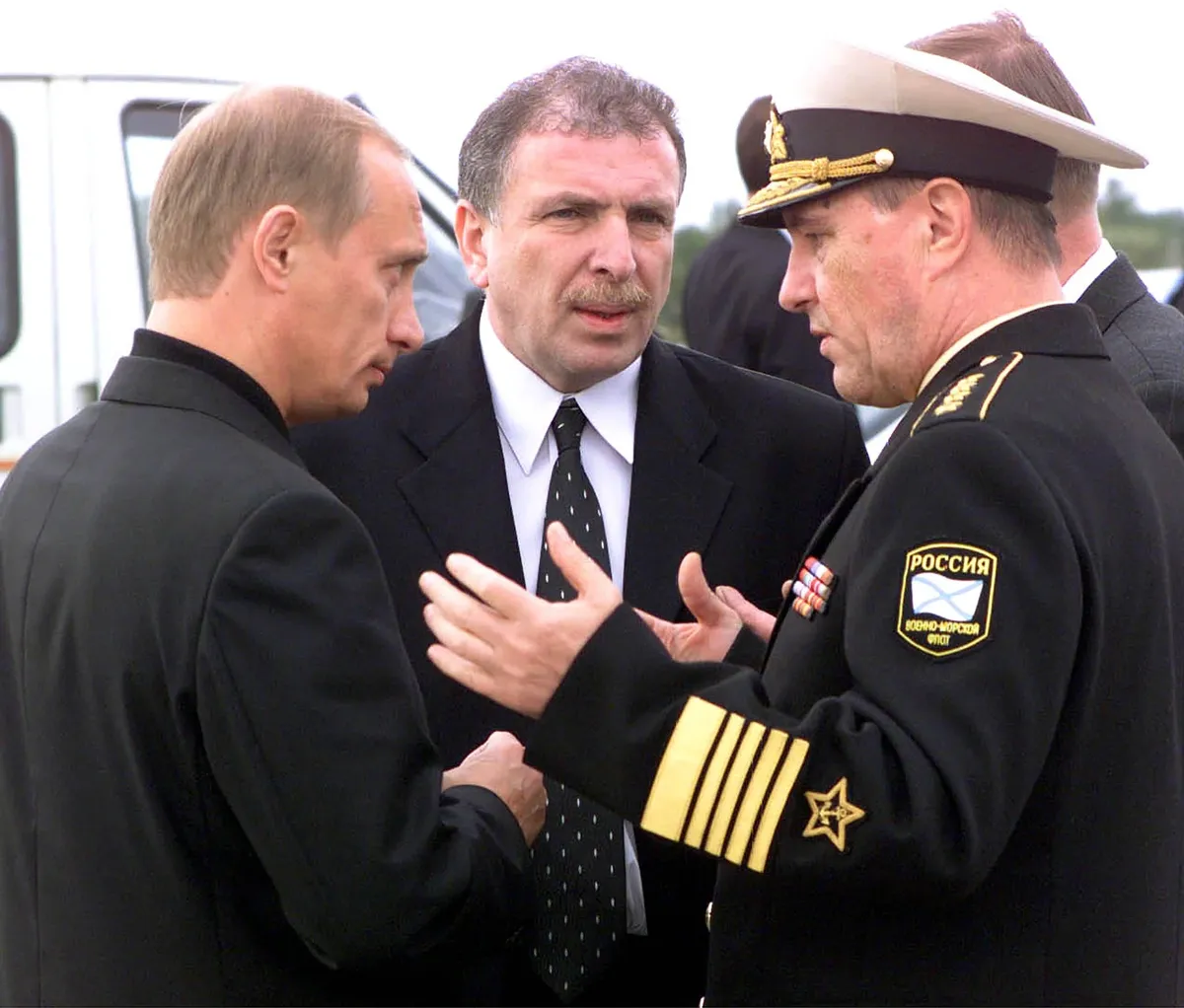
At the time of the boat’s death, Putin was on vacation, which he spent in Sochi at his residence. At seven in the morning on August 13, Defense Minister Igor Sergeev called him and, according to Putin, reported: “We lost the boat, but we have already found it, now we are starting work.”
“It was not clear that something tragic was happening...” Putin said later, justifying his decision not to interrupt his vacation.
Kommersant correspondent and, in fact, Putin’s biographer Andrei Kolesnikov believes that Putin later greatly regretted his decision. There is no reason not to believe Kolesnikov. But Kolesnikov does not explain why Putin regretted this. And the answer to this question is important.
The summer of 2000 is the first summer of Putin’s first presidential term. We remember him mainly for the series of tragic events that occurred in August. Terrorist attack in the underground passage on Pushkinskaya in Moscow, the death of the Kursk, a fire in Ostankino. But that summer, or rather Putin’s reign, began with the arrest of oligarch and media tycoon Vladimir Gusinsky. This arrest and subsequent blackmail (closing a fictitious criminal case in exchange for media assets) became revenge on Gusinsky for the way his media (primarily NTV) covered the election campaign, the war in Chechnya and the decisions of Putin himself. This was not just revenge, but a completely new way for the Russian elite to deal with the enemy. But then even the very smart people didn’t understand this. Well, or, more precisely, the richest and yesterday still the most influential people in the country. For example, soon after Gusinsky’s arrest, another oligarch, Boris Berezovsky, began to conflict with Putin. Berezovsky was also a media mogul, he owned the newspaper Kommersant, in which he published open letters to Putin, full of criticism. But most importantly, Berezovsky was a shareholder of the country's first button - ORT (as Channel One was then called).
Perhaps the most popular journalist in Russia at that time, Sergei Dorenko, worked on this channel.
For his damning reports on Putin's political rivals, Dorenko earned the nickname "telekiller." He himself denied that it was largely thanks to his talent as a “telekiller” that Putin became the president of Russia. But he denied it, let’s say, with a great deal of coquetry.
Together, Gusinsky and Berezovsky owned almost the entire Russian information space. And the Kursk tragedy became an excellent reason for numerous media outlets of these oligarchs to criticize the president, who did not interrupt his vacation in Sochi and relayed the lies of the military.
On September 2, 2000, Sergei Dorenko, returning from a vacation he spent in Foros at Leonid Kuchma’s dacha, released his final program. It was dedicated to the death of the Kursk, and this time the target of the “telekiller” was Russian President Putin. Dorenko accused him of indifference, lying, bribing relatives of dead submariners and disrespect for Russian society.
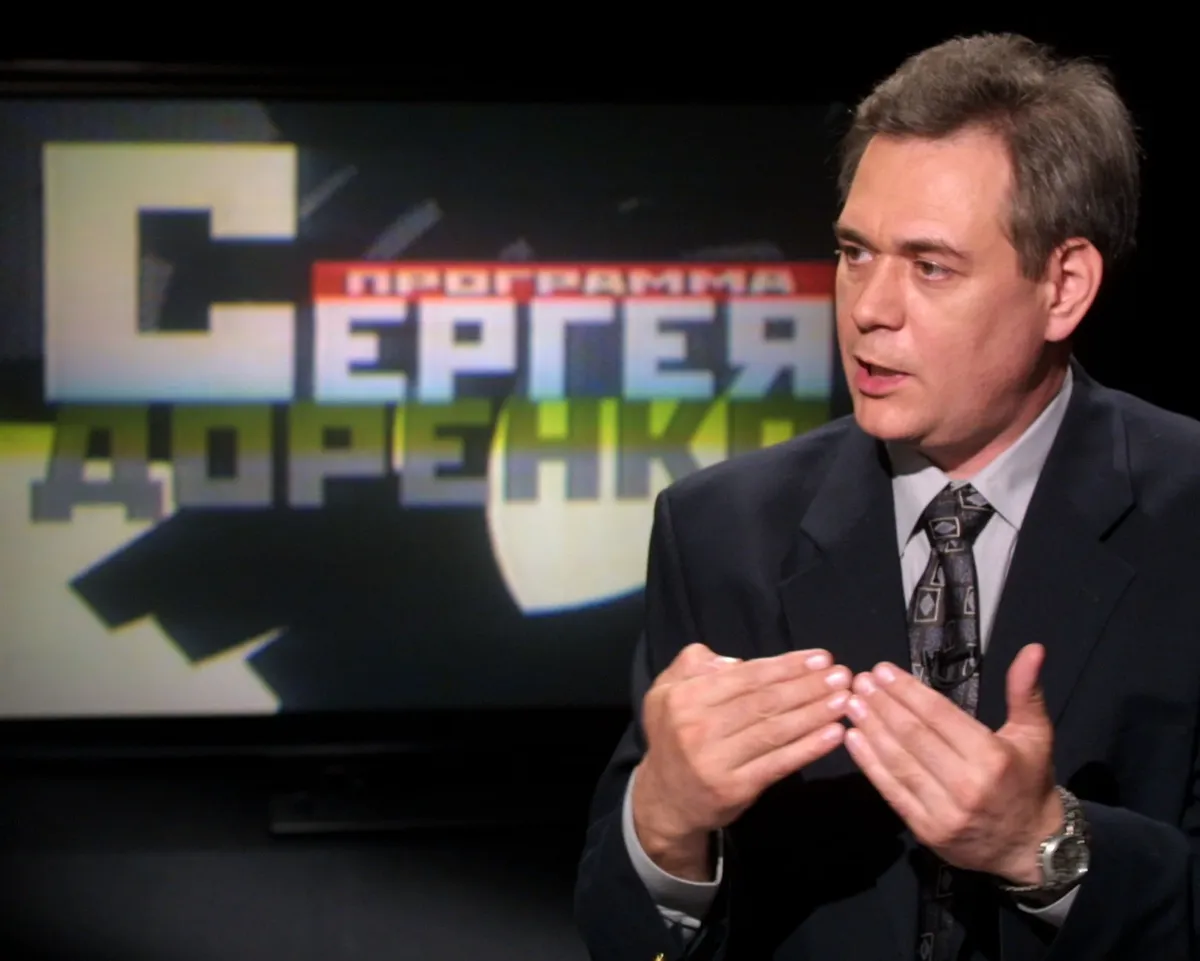
This program by Dorenko is considered legendary, it is still remembered in Vidyayevo, and modern journalists call it “cool work.” But, in fact, all of Dorenko’s arguments were based on distortion of facts and emotional speculation. The lies not of Putin, but of completely different people, led to the failure to rescue 23 submariners in the 9th compartment. Putin, who was deceived by the military just like the whole country, could and probably should have dissociated himself from them, but he did not do this.
The reason for the accusations of buying grief was Putin’s promise to pay, bypassing existing laws from extra-budgetary funds, the 10-year salary of a first-rank commander to the families of all those killed on the Kursk. But the idea of compensation, as follows from Dorenko’s program itself, did not arise from the authorities, but was a consequence of the initiative of the relatives of the victims themselves. Here is an excerpt from an interview that Dorenko took from Galina Belogun, the widow of second-rank captain Viktor Belogun who died on the Kursk:
“When I talked with [Russian Navy Commander-in-Chief] Kuroyedov, I said that my husband was promoted. That is, he would be a captain of the first rank. And we were going to serve for another 10 years, because my husband is 40 years old, and he really loved the service and wanted to serve. And so I [commander-in-chief Kuroyedov] said: give me my husband’s salary for ten years! And [Kuroedov] directly conveyed this information to Putin. And Putin gave me this salary. And he gave the entire [Kursk] crew my husband’s salary.
“Don’t you think,” asks Dorenko, “that such an interpretation is possible, that the government, which did not do everything in the first days, is, as it were, paying off?”
“No,” Galina Belogun answers. - I don’t think so. Because I asked. I asked, and they gave me what I asked for.”
As if to counterbalance all the lies of the authorities, at the end of his program Dorenko showed another interview - with the deputy commander of the 7th division (to which Kursk belonged) Viktor Bursuk. Dorenko introduced this Northern Fleet officer as follows: “Viktor Bursuk has a special reputation here [in Vidyayevo]. When the women were completely confused by the lies, they demanded that the command send a person they personally trusted to the rescue site. So that he tells them the truth. They sent Bursuk...
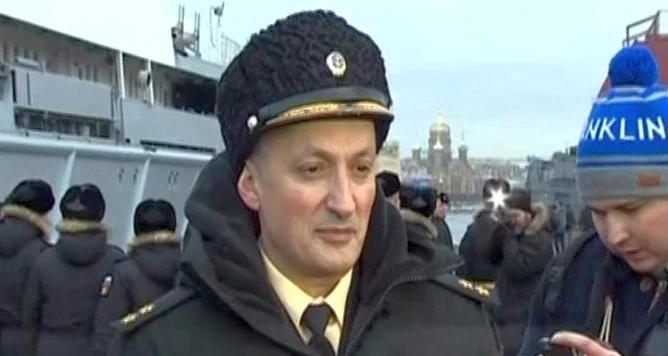
“After we examined the bow of the hull and finally opened the ninth compartment,” says Bursuk about what he learned at the “rescue site,” “it was only then that the full scope of the disaster became clear. And now I personally assume that everything happened so quickly that the only consolation can be that no one suffered.
— Do you think that all [the submariners] died quickly? - asks Dorenko.
“Yes,” answers Viktor Bursuk, turning his eyes to the side. “I believe that everyone died in just a few minutes.” The bow compartments instantly, and the aft compartments almost immediately after hitting the ground...
“I believe in Viktor Bursuk,” concludes Dorenko. “Because he was delegated to tell the truth by the wives of the Kursk crew members...”
In a month and a half, Russian deep-sea divers, together with Norwegian specialists, will descend to the sunken Kursk, enter the 9th compartment and lift 12 bodies of dead submariners from it.
Notes will be found on the bodies, which will become the second proof that the 23 people in the 9th compartment did not die “literally in a few minutes,” but were alive for several days. They fought for their lives. We hoped for salvation.
And those who were “at the rescue site” and heard the SOS knocks from the Kursk, output through the speakers on all the ships taking part in the search and rescue operations, were well aware of this. Viktor Bursuk could not have known about this. But this did not stop him from misleading Dorenko, who, it turns out, demonstrated by his own example how easy it is to become a victim of lies in such a situation.
Between bad and worse
Sergei Dorenko’s original program dedicated to the death of the Kursk became his last broadcast on ORT. After this episode, the program was closed, Dorenko himself was removed from the air and a few months later, after the expiration of the contract, he was fired. But both the program itself and Dorenko’s dismissal were preceded by three meetings in the Kremlin, which the journalist knew about and was even a direct participant in one of them. True, he said nothing about this on the air of his program. Although these events were at that moment more important than even the death of the Kursk.
We are talking about a meeting between Boris Berezovsky and Alexander Voloshin, then the head of the presidential administration of the Russian Federation; the subsequent meeting between Berezovsky and Putin. And Dorenko himself met with Voloshin and Putin. All of them took place at the end of August. Berezovsky was given an ultimatum - either he gives control over ORT to the state, or he goes to prison (luckily there was a reason for it).
On September 5, the Kommersant newspaper published an open letter from oligarch Berezovsky to President Putin. 25 years later, we can say that this letter was prophetic. It is worth quoting.
“Last week, a high official of your administration presented me with an ultimatum: to transfer the block of shares in ORT controlled by me to the state within two weeks, or to follow Gusinsky - apparently, they were talking about Butyrka prison. The reason for this proposal is your dissatisfaction with the way ORT covered the events related to the accident of the Kursk submarine. “The President himself wants to manage ORT,” your representative told me.
<…>
By presenting me with an ultimatum, you essentially posed an important question to society: do non-state media have the right to exist in Russia? Obviously, you answered this question for yourself by explaining to the relatives of the sailors of the lost submarine: “Television? So he’s lying... There are people on television who scream the most today and who for ten years destroyed that same army and navy... Today they are in the forefront of defenders... Also with the goal of discrediting and the final collapse of the army and navy! Over the course of several years, they stole money and now they are buying everyone and everything! They made such laws!”
<…>
After the actual expulsion of Gusinsky from the country and the transfer of NTV to the control of Gazprom (read, the “state”), ORT is the only national channel that is not completely dependent on the authorities. If I accept the ultimatum, television information will stop in Russia and will be replaced by television propaganda controlled by your advisors.
It will become easier for you to rule, the people will live more calmly, and there will be much fewer people willing to ask unpleasant questions - after all, they will not have the powerful protection that mass television publicity provides. You will not have to interrupt your vacation and urgently find money to help the families of the victims. And one fine day people will wake up and find out that they unanimously approved the entry of the Russian army into some distant country to provide fraternal assistance to someone..."
Dorenko spoke about his meeting with Putin only seven years later in an article published in Evgenia Albats* magazine The New Times*. According to his own testimony, then, in August 2000, Putin, who had already made a decision regarding the oligarch Berezovsky, invited the journalist to change sides and “become a member of his team.” Dorenko responded to this generous offer with a program that was murderous for Putin about the death of the Kursk.
Concluding his article for The New Times, Dorenko wrote:
“So why was Putin in a panic after Kursk, why didn’t he even try to hide his confusion?.. Or [then] was he really sure that television could film him? And the widows and dead sailors interested him only from this point of view: will they lower his rating or not, will they leave him or not?..”
There is no reason not to believe Dorenko, who says that Putin was very scared in August 2000. Actually, he himself confirmed this in a conversation with American President Bill Clinton (this became known from declassified White House documents).
“I didn’t have a good choice. I found myself trapped between bad and worse options... Oddly enough, subsequent surveys showed that this incident ( Putin was referring to the Kursk disaster - Ed. ) did not affect my situation. But I’m very afraid that something like this could happen again...”
And so that “something like this” would not happen again, Putin started with what he considered right, first depriving Russian television of its “killer” potential - when surgery on the hip joint or the death of submariners becomes a “silver bullet” fired into the forehead of a political rival.
But Putin did not stop there. He went further and further, directly following the prophecy of Boris Berezovsky. And in this sense, the Kursk tragedy can certainly be considered the starting point of this historical path.
This material was published in the fifteenth issue of Novaya Gazeta. Magazine". You can buy it in the online store of our partners.