
Translated material
Passion of Fortinbras
According to the laws of European enterprise, the performance was shown 10 times in a row - and hello. Bite your elbows who didn't have time

Scene from Kirill Serebrennikov's play "Hamlet". Photo: Theater Du Chatelet social networks
Thus, Kirill Serebrennikov’s cosmopolitan project “Hamlet” dispersed the clouds over autumn Paris for 10 days, so that the coming apocalypse could be seen by the frivolous French and smart music lovers. Otherwise it doesn’t work.
Voila.
Hamlet (attention to screen) is dead from the very beginning. But it doesn't matter. Now the pathologist has enough time to dissect the familiar plot before your eyes, grammatically, logically, geographically and biologically - whatever that means.
And this meant so much that when you go to the ticket purchase site, it’s time to take a test to see if you’re a human being. If yes, then you should be scared. If not, find yourself another picture.
So, clowning, gutta-percha nudity, gender mystification - everything wanders and tumbles in search of the only reprise on which the world has played. Whether with relatives, with rituals, with love... I started playing too much - and everything started to fall apart. And no amount of tape—and that’s what they’re trying to do on stage—can hold back the attractive shell of Homo sapiens.
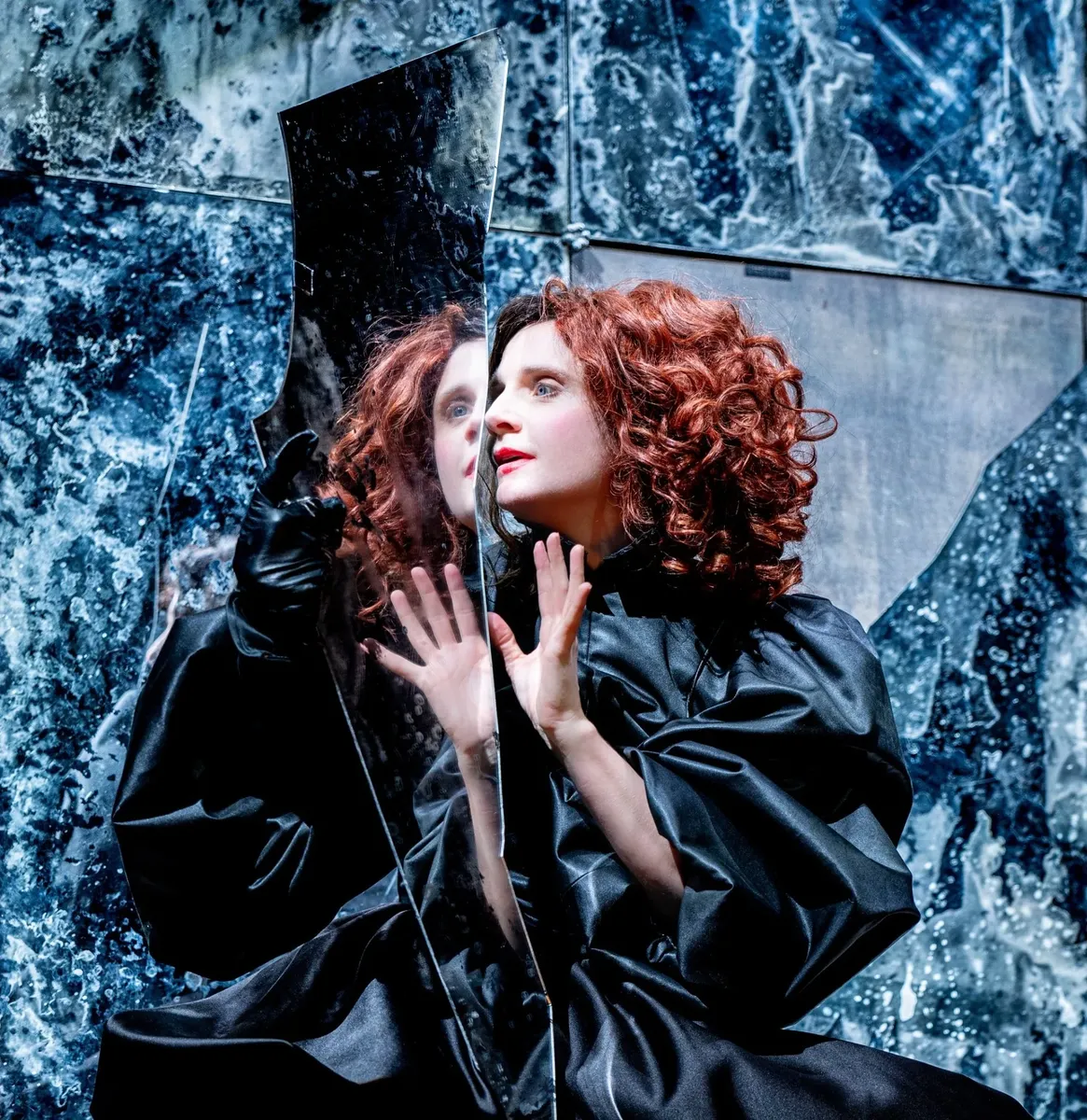
The skin cracked - the harmony was lost - the connection between times was interrupted (but then, unfortunately, restored). The crack/seam ran from Nijinsky to the Gaza Strip. The witnesses include Shostakovich, who did not expect to survive, the murdered Meyerhold, Sarah Bernhardt, who tried on the role of Hamlet (now she has a prosthesis instead of a leg for this), Artaud with his bleeding throat, Vereshchagin’s skull fit only for football - and I haven’t recognized all of this yet! In the second act, cardboard figures stand one after another in an untitled composition by Kandinsky. Until, in the spirit of the Taganka farce, they are enlivened by the corps de ballet in black turtlenecks. Here Kandinsky inexorably turns into Guernica.
The performance is performed in four languages. Russian artists play in Russian, German artists play in German, French artists play in French, all in chorus play in English, French and a few others, and each language in the unblinking brain includes its own navigation. Pandemonium of Babel - wai not.
To be or not to be is no longer a question, but a line running in all dialects of a station board, knocked down by vandals and dragging through the entire performance behind the heroes.
The public doesn't really care about the naked characters, since the shadow of Hamlet's father signals with all the subtitles that in the body we, in the words of another poet, are like in extreme exile.
Ophelia - so as not to get up twice - is prudently immediately deprived of signs of life, and at the same time of sex.
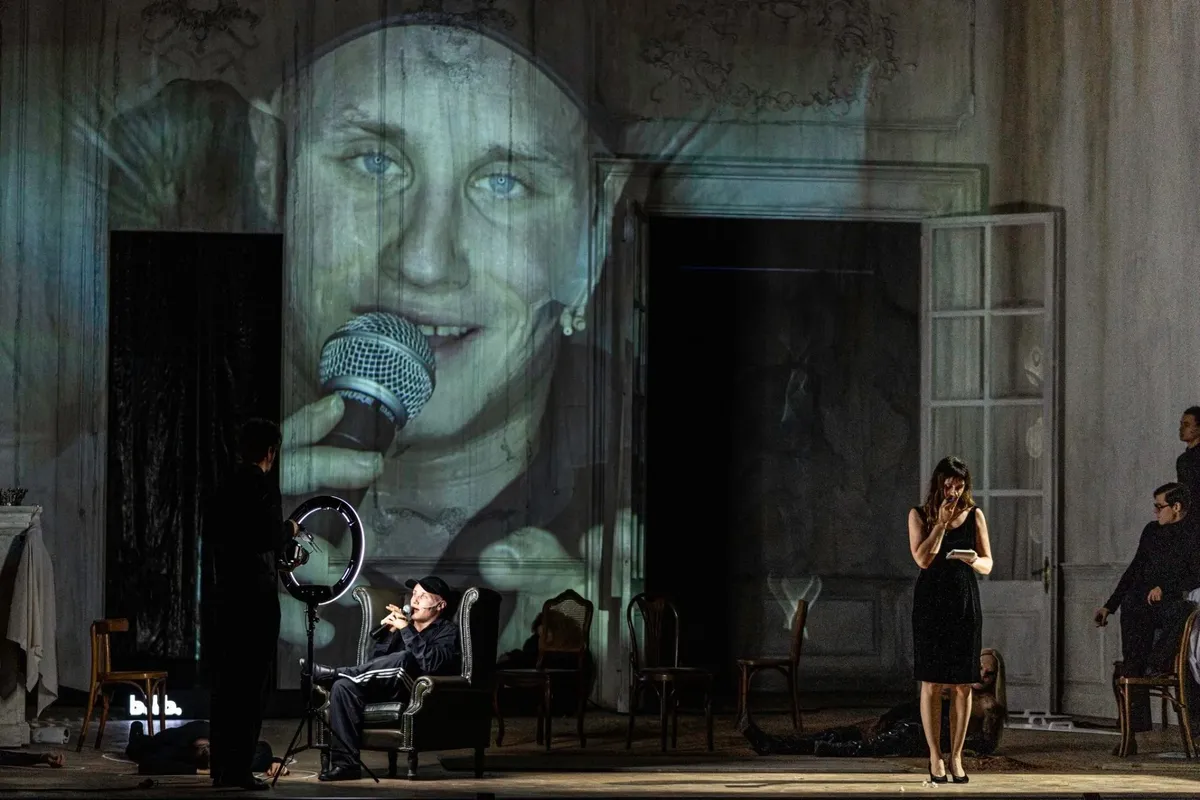
And towards the end, when the viewer has already come to terms with the breakup and is ready to mentally cooperate with it, if only it would end quickly, Nikita Kukushkin appears. The ideal trickster, described in three strokes by Fortinbras.
Here he is, wearing Adidas, habitually tracing bodies at the crime scene with a chalk. Then he records a murderous podcast live, where he denounces cancel culture with particular cynicism, and finally substitutes a skull, as if specially varnished for this purpose, under a fake crown. Of course, you have to adapt to it if you are as tall as Kukushkin: stand on your tiptoes, pull yourself up. But it works! And you, baby, will succeed.
And then, barely pleased with the Russian speech, the stalls suddenly burst out: horror - here it is, only here it begins.
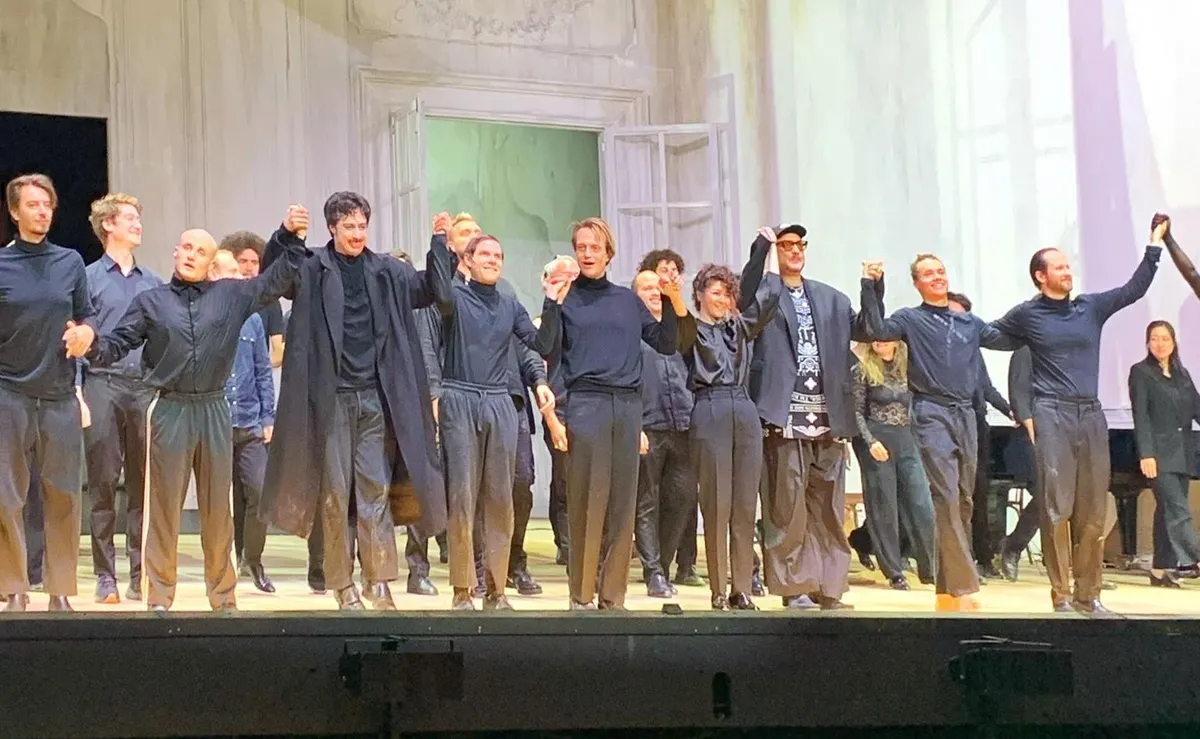
It’s not for nothing that the ceiling, pierced (by a shell? by time?) and the grave rumbling with sand, excavated under the parquet boards, keep the entire diagonal of the performance in suspense. This is how a luminous “EXIT” sign in a dark hall keeps in touch with reality.
It’s not for nothing that the traveling orchestra, ignoring the disaster, is trying to stay on deck.
And it’s not for nothing that there is no more Shakespeare here than there is a car in “Beware of the Car.”
After all, while the Rubik’s cube is clicking in the viewer’s head, the golden (truly!) basket of the Chatelet Theater is snatching away the celluloid doll of unreasonable humanity. A barrel floats on the sea...
Anna Arkatova
This material was published in the fifteenth issue of Novaya Gazeta. Magazine". You can buy it in the online store of our partners.