
Translated material
Only Goris can be better than the mountains
Essay by Evgenia Yengibaryan from a city born from caves

Photo: Evgenia Yengibaryan
The November colors of the Armenian autumn decorate any populated area, and if the latter is beautiful in itself, then the effect is double. Goris. A city with its own face and character, remarkable form and content, with a unique nature, history and a bold look into the future.
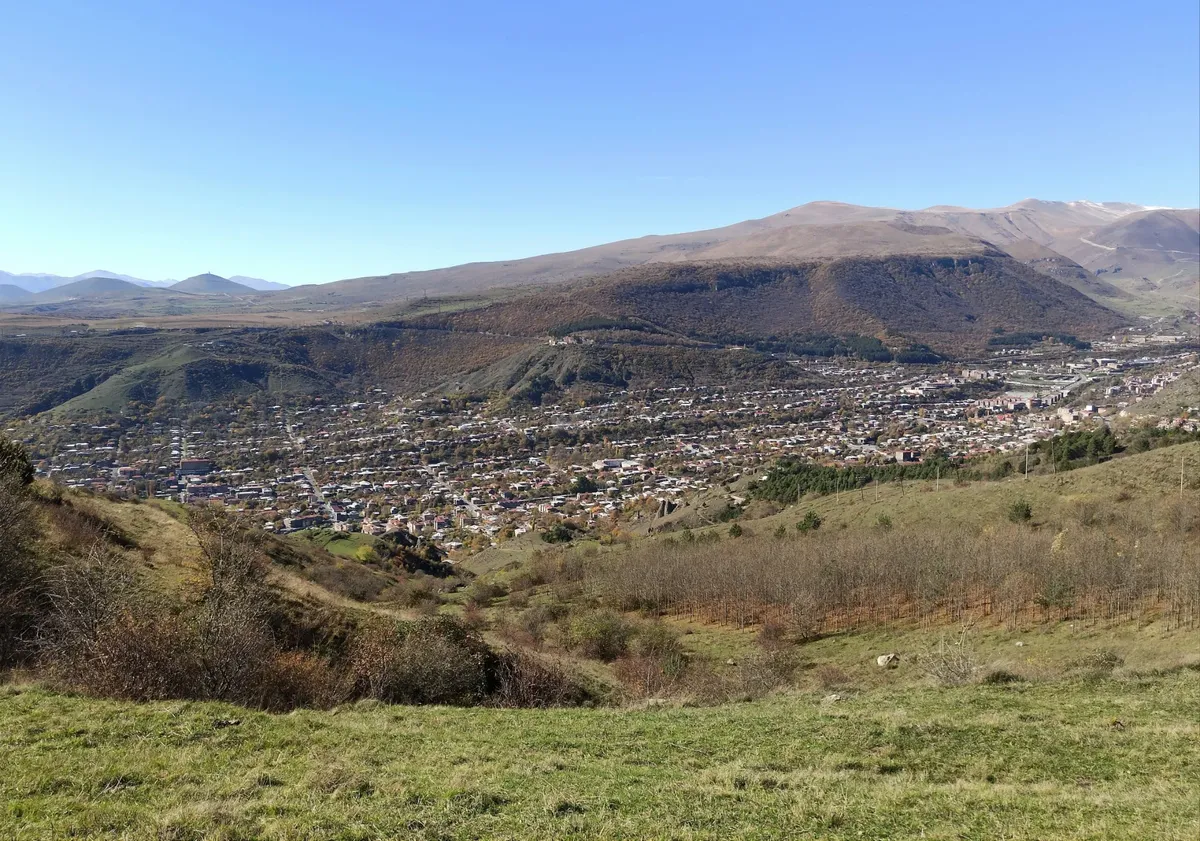
Goris is located in the Syunik region of Armenia, 240 km from Yerevan, in a mountain basin at an altitude of about 1400 meters, in the valley of the Vararakn River. The population is approximately 20 thousand people. This summer, Goris residents celebrated the 155th anniversary of their city. It would seem that by Armenian standards the city is quite young, but we are only talking about the new Goris, which emerged from the old one - the cave settlement of Keres.
There are many cave cities known in the world, but the surroundings of Goris are reminiscent only of Cappadocia, although the landscapes and the appearance of remarkable stone pyramids differ: Goris geological exoticism is not so large-scale, but against the backdrop of forested mountains and the color scheme of natural formations it looks much more picturesque. Millions of years ago, volcanoes raged here. The tuff that appeared as a result of eruptions became the material for long games of the creator of nature: wind, water, erosion, temperature changes created bizarre sculptures - remnants, which are sometimes called stone mushrooms, sometimes pyramids, sometimes pillars, but most often - a stone forest.
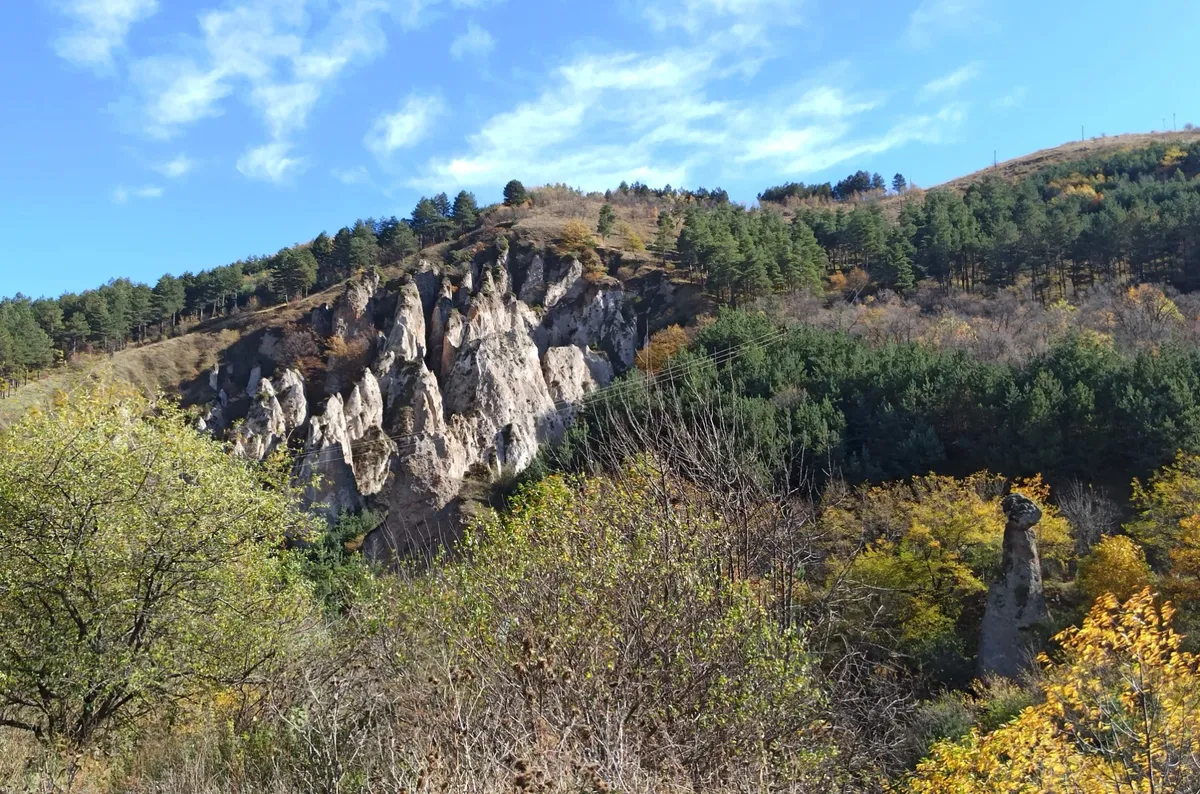
It is estimated that there are about 10 thousand such caves in the area of Goris and nearby villages, and it has been archaeologically proven that people mastered them even before our era.
“Armenians have lived here for thousands of years, continuously,” says Vardan Sargsyan, a researcher at the Goris Museum of Local Lore and director of the Axel Bakunts House-Museum. — Even when forced migrations occurred, for example at the beginning of the 17th century, which was associated with the forced resettlement of Armenians by Shah Abbas deep into the Persian Empire, this did not apply to Syunik. On the contrary, Armenians from other regions found refuge here, settled and took root.”
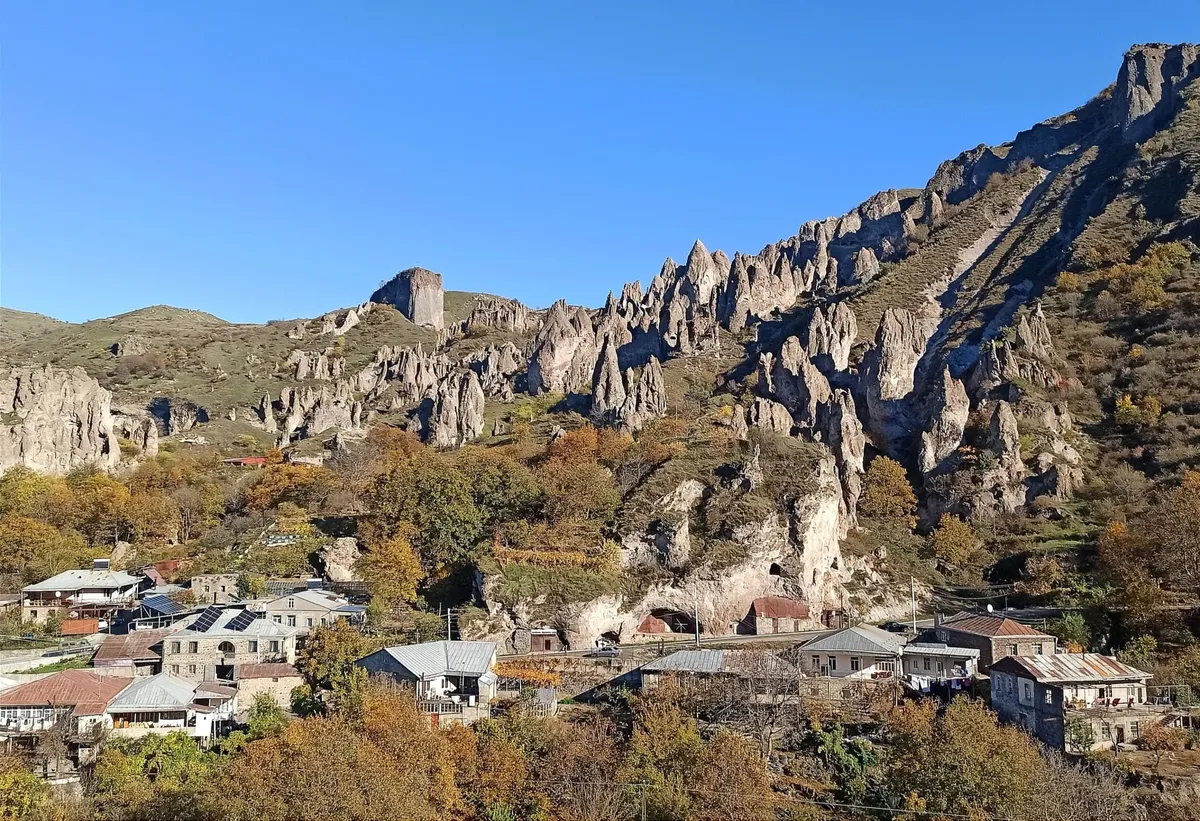
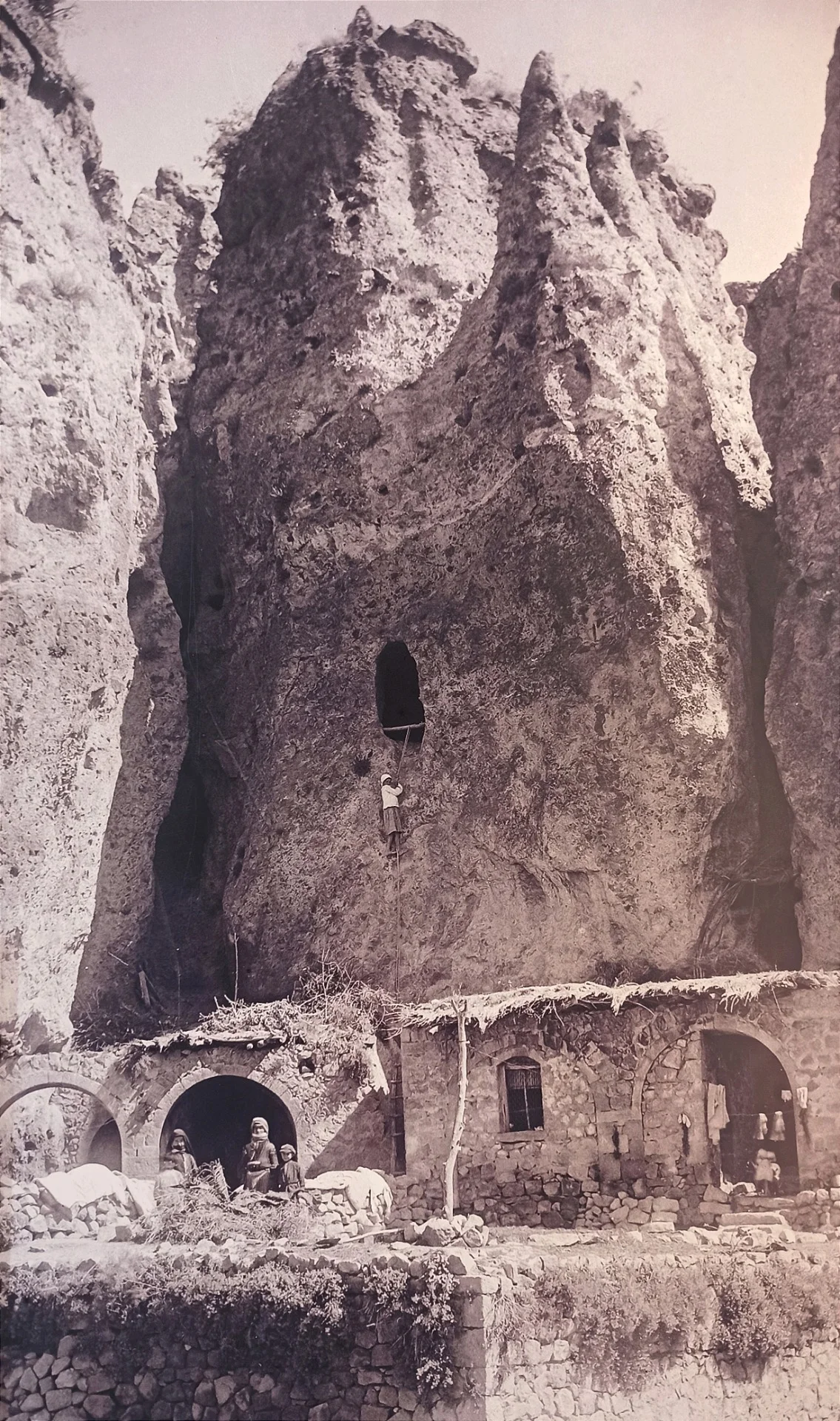
Nature provided people with the conditions for building safe, impregnable dwellings on steep rocky slopes, and their inhabitants cut through, deepened, strengthened them, built on fortress walls, hollowed out “rooms” and all kinds of premises inside their “stone mushrooms”, and for the enemy the capture of a cave settlement was almost hopeless. Each house had a door, a window and a porch. Many windows were 4–5 meters above the ground. People used rope ladders to get into their homes. Over time, from the 18th century, cave dwellers began to “expand” - they built one- or two-story houses with stone walls and wooden ceilings on the adjacent territory in a terraced manner. The ruins of several chapels, dilapidated oil mills, and water mills are still preserved here. This is how the Armenians lived for centuries under Mount Lasti-Khut and the rocks hanging from the east over today’s Goris. And in the river valley - where the city is now located - they grazed cattle, planted crops, used the land, but they lived precisely in Keres. The old settlement had its own artisans, workshops, and inns—a busy trade route ran through these places.
For modern visitors to the Goris cave settlement, its history can be visualized in the surviving tombstones: one of them is from the 11th century, the second is the stone over the grave of Melik Ogan, installed in 1779. Three years before his death, the melik built the Church of St. Hripsime here - a classic example of medieval Armenian architecture. In 2014, the church was restored, while, alas, only ruins remained of the Melik palace. On the walls of the church hall are beautifully executed copies of works by medieval Armenian miniaturists. Their author is a Goris artist, known not only throughout the country, but also beyond its borders. Zhirayr Martirosyan is a member of the Union of Artists of Armenia, an honorary foreign member of the Russian Academy of Arts, director of the Goris Art Gallery. He is also known as a “cave artist.” Not far from the church, he equipped one of the caves as a workshop. During the warm season, when there is no heavy rain and condensation accumulates in the cave, he paints there on a homemade easel.
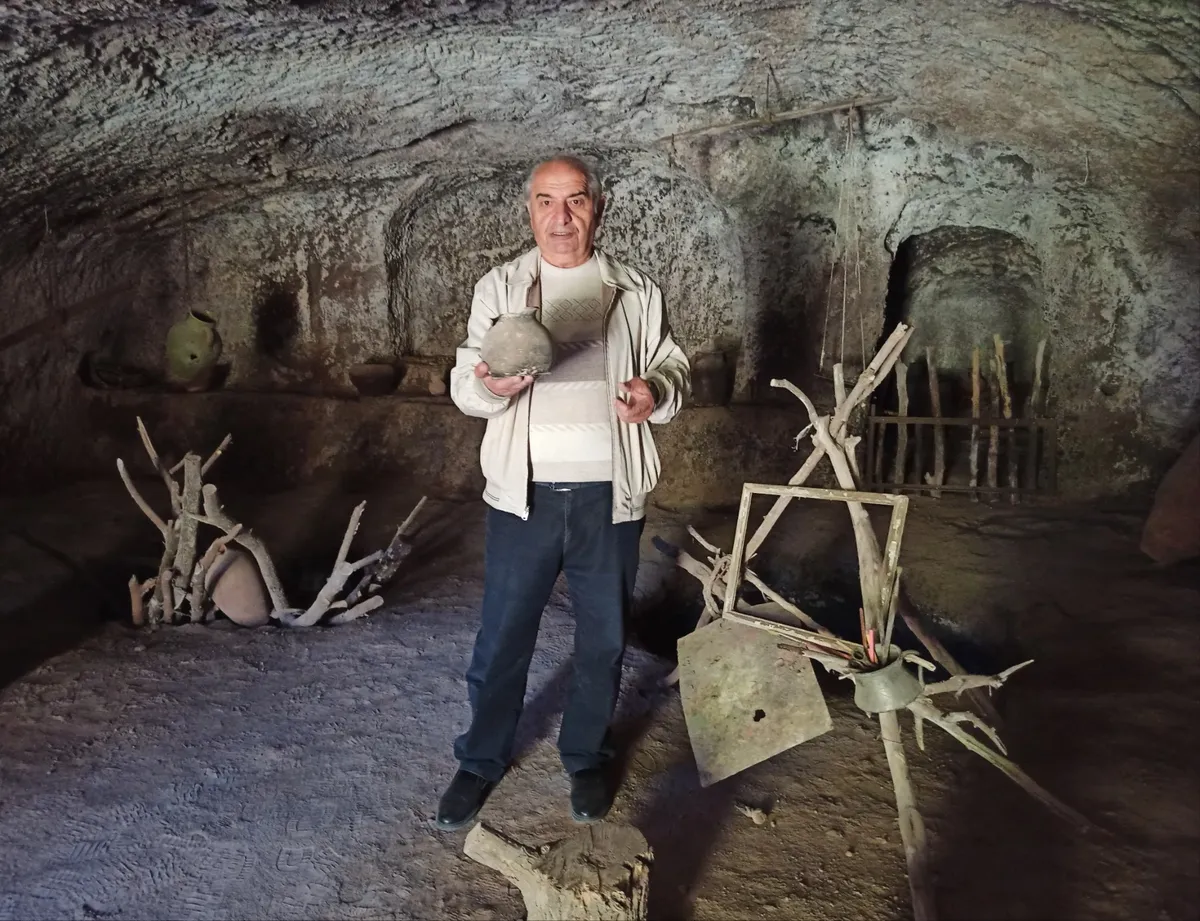
“Of course, I could have brought a real easel here, but I thought: let everything meet the conditions, and I made the easel myself,” says Zhirayr Aramovich. “Look, here is a niche carved into the wall, here is a deep hole in the floor, a former basement, now filled with stones, and here is a small room.” People “modified” the cave, equipped it, and made their home comfortable and functional. The last inhabitant left this cave about a hundred years ago, and after that cattle were kept here for a long time. I put it in order and decided to make it not just a workshop, but a cultural corner - a museum of ancient things that our ancestors used. I myself was born in Goris, and my parents were from a cave village, but not from Keres, but from neighboring Khndzoresk. I collected exhibits for my museum not only in Goris, but throughout the region: I bought something, donated something. This thing is at least 500 years old,” the owner shows a clay vessel. — Pieces of furniture, jugs, karas, musical instruments—once upon a time these things were in every home. Let guests and tourists come and get acquainted with our traditions and way of life.”
A lot of guests come here. Martirosyan’s paintings are often bought directly from the cave.
Of course, during the working season of the workshop-museum, when finished paintings are hung on the walls, candles are burning in niches hollowed out centuries ago, and the owner is working at an easel, all this looks even more impressive. “I spend time in this cave with pleasure and find inspiration here. In winter and the rainy season, I have to paint in the city, but I’m always in a hurry to get here,” said the artist and showed on the uneven ceiling a pair of white cave spiders that either fell asleep from the cold or had already reached the end of their lives.
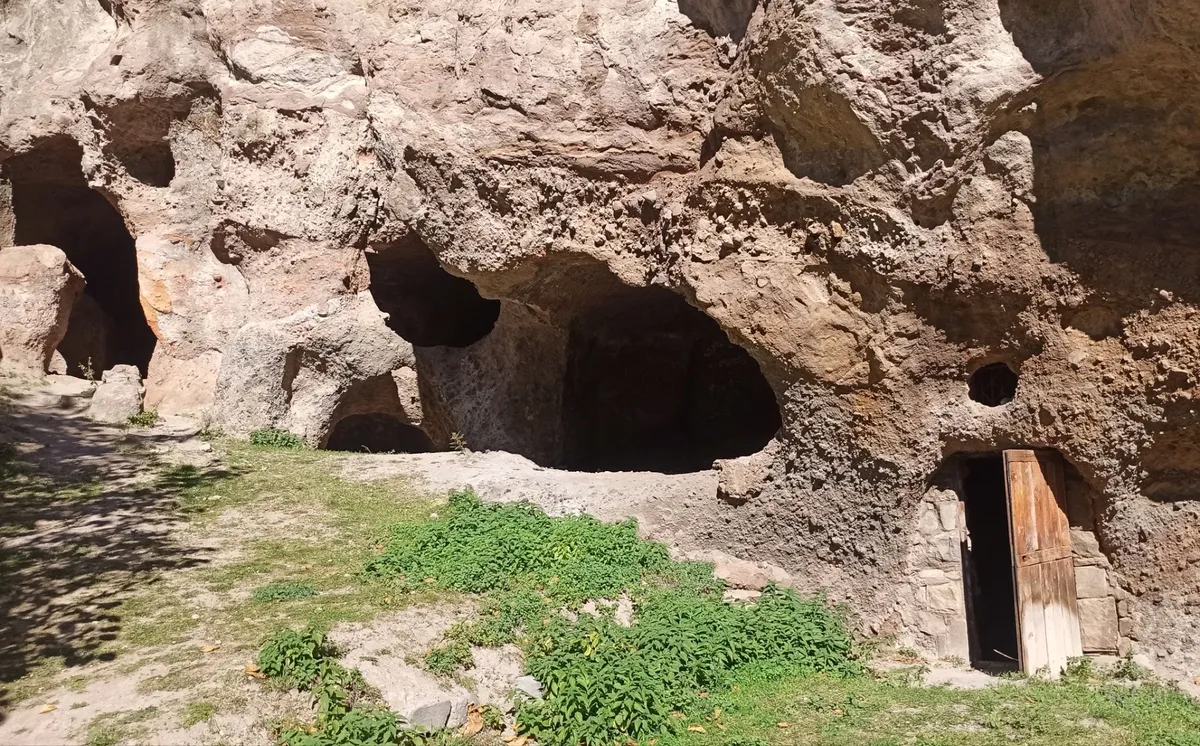
20 meters from the existing cultural corner of Zhirayr Martirosyan is also a center of culture, only more ancient and no longer active. Few people know, but the inhabitants of the cave Köres had their own theater, which, of course, was also located in the cave. Under the far wall of a small two-tier room, several rows of even steps-seats are carved. According to Jirair, the stage was higher than the floor, but it collapsed long ago. As it turned out, the caves quite actively change their appearance, crumble, collapse, reacting to tremors and other natural phenomena.
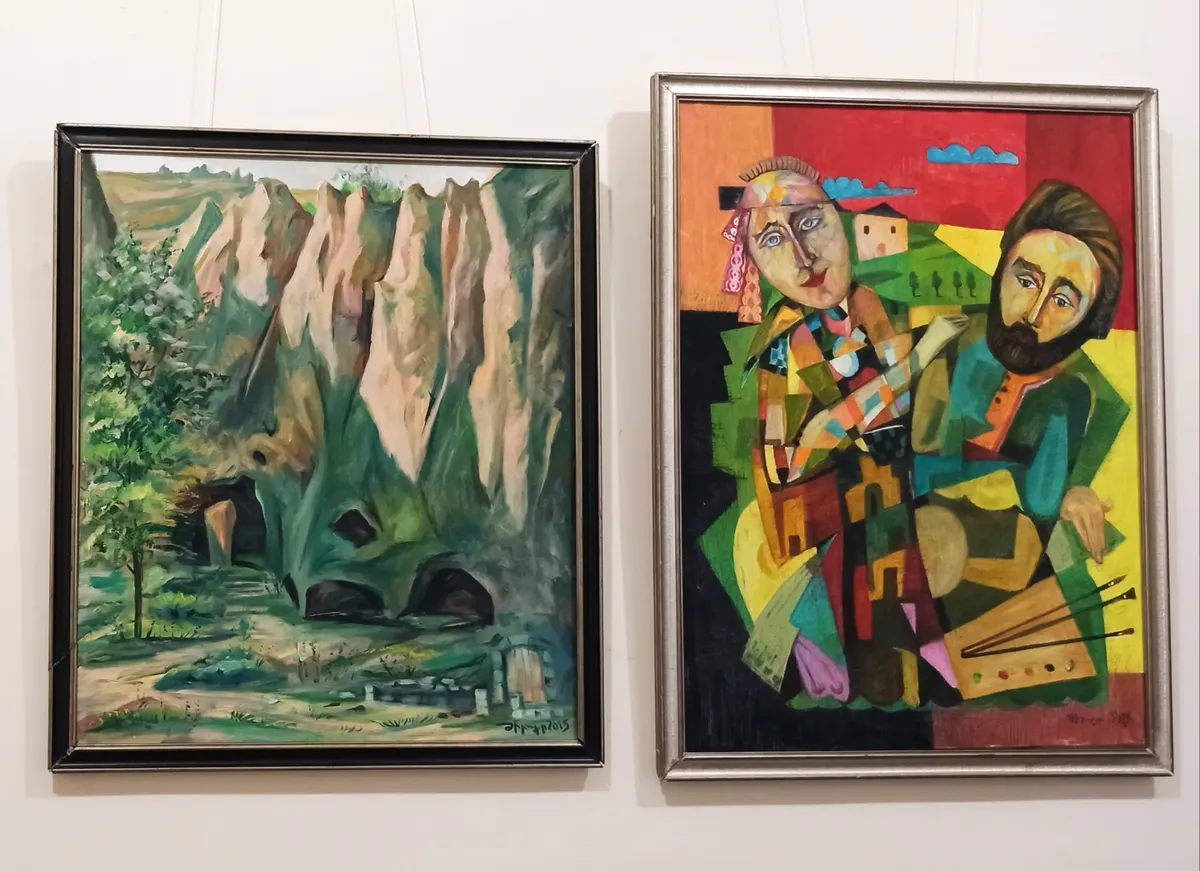
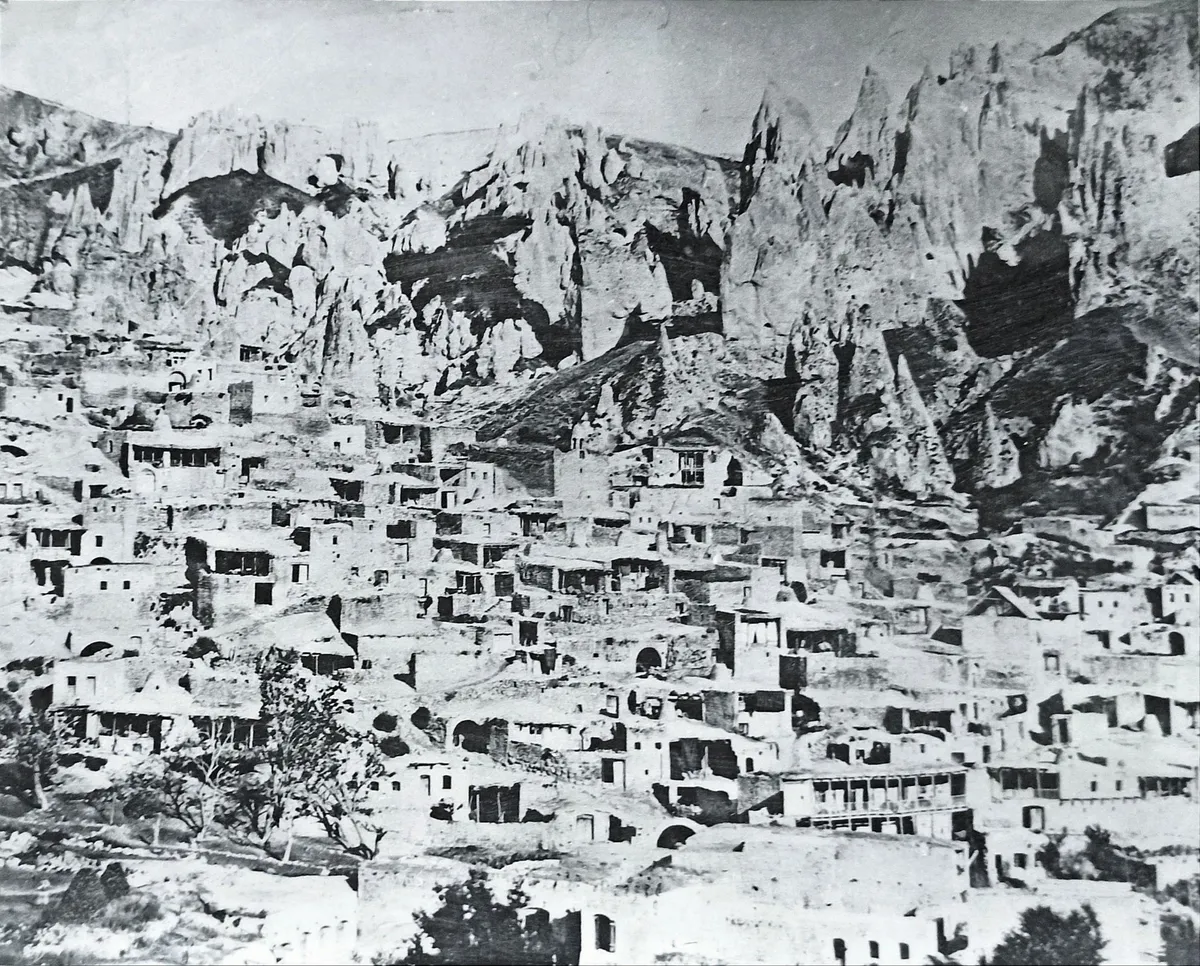
The Goris Art Gallery is located a stone's throw from the main city square and in the off-season it becomes the only place where Zhirayr Aramovich creates in a small room, the walls of which are hung with canvases. This fall, in the hall of the first floor of the gallery, there was an exhibition of photographs taken in the 1920s by Goris photographer Guros - Gurgen Paronyan (1905–1981). The footage shows how the last people of Keres lived under the rocks and at the foot of Mount Lasti-hut, how a new city appears below, by the river - in a word, how Keres is emptying and Goris is filling up.
What caused this turning point in the fate of the old settlement? The answer is the Russian-Persian War, as a result of which, according to the Treaty of Gulistan in 1813, the territory of the modern Goris region became part of the Russian Empire. After 15 years, the southern territories of Syunik will also be included in the empire. Russia needed to gain a foothold in the conquered lands, and the new administration liked the area of Kores and the Goris basin, which looked like a punt boat. “This area, beautiful and original, is extremely convenient for defense,” wrote the Tsar’s general, historian V.A. Potto.
By the 1830s, the role of the Keres village began to increase - it had long been known as a craft center and a crossroads of trade routes, where trade was brisk. Despite the continued rule of local meliks, their functions became limited. It must be said that the new rules hardly penetrated into mountainous areas. The emerging laws on conscription and church decrees concerning the spiritual life of the Armenians of Syunik caused a wave of discontent among the local population, which forced the tsarist authorities to reconsider some laws. Nevertheless, the usual way of life was steadily changing. Meliks, while retaining their titles and having estates, began to resemble Russian nobles. Merchants began to play a more significant role in public life. Armenian life gradually began to acquire new features.
The Russian state was preparing a radical administrative reform in Transcaucasia. The toponym Zangezur - a distorted pronunciation of the name of the region Dzagedzor, the center of which was the Goris valley with its surroundings - came into official use as an administrative unit. From 1849, for 18 years, Zangezur was part of the Yerevan province, but in 1868, by decree of Emperor Alexander II, the Elisavetpol province was formed, one of the five counties of which was Zangezur, and in the valley of the Vararakn River, where the gardens of the Keres people and pastures of their livestock were located, it was decided to found a city and make it a county center. This is how Goris has been counting his life since 1870.
The first thing that appeared in the valley was a Russian army barracks and a prison, but a full-fledged city needed a project. There is still a dispute among Armenians about the author of the “master plan” of Goris - after all, the city was built according to a clearly thought-out layout, atypical for that time and area: a linear development formed by 36 streets that intersect at right angles, forming neighborhoods, and, of course, a square with trading houses and public buildings. Similar projects, innovative for the region, had long been adopted in Europe and Russia, and the pedantry and severity of the plan, coupled with the German surname of one of the first district commanders - Pfeller - gave rise to a persistent rumor to this day that Goris was built by the Germans. In fact, this rumor has no basis, while researchers name three names: engineers Dzhanushyan, Kozlov and Kharchenko (Dzhanushyan was in charge of the construction work). And the founders of the city of Goris are considered to be the local melik Manuchar Useinyan and the first Zangezur governor named Staratsky. Thus began the inevitable decline of Kores and the dawn of Goris.
The process of transforming the old settlement into a new one was painful for the Keres people. The writer Aksel Bakunts (1899–1937) brilliantly spoke about this in the story “Kores” - the pride of not only Goris and Syunik, but also of all Armenian literature. New settlers moving en masse to the new city were hardly accepted by the residents of the old city.
The traditional society of Shen (Armenian - village) was irritated by the habits of the newcomers. They were disparagingly called “paltonavors” (people who wear coats) and “bun eaters.” Yes, in the new city many things were unusual - like, for example, the mayor of Matevos suddenly became Matvey Matveevich, and the younger generation spoke in a strange colorful language, liberally diluting their native Armenian with Russian words.
“There was Goris, and there was Kores,” writes Bakunts. “They were different in everything, and especially Shen, the stronghold of Kores. They lived next to each other, and the argument between them did not stop - an old argument, just as old were the gorge and the river in the gorge. But even the river in the gorge eroded the side of Kores. ...And although the old dispute continued, it was the desperate resistance of the besieged, and not a war between equals. ...And no one would say that once Köres, its citadel of Shen with its quarters resembled a noisy beehive, and where the Katrini spring gurgles lonely, there was a huge village in caves, under the rocks. ...Köres nevertheless died. On one side, the river washed away the coastal gardens, sometimes rocks collapsed, covering small fields on the slopes, the land left the hands of the farmer - and this was inevitable, like death, like the sunset... But most of all it was undermined by Goris - the city of merchants and officials, near which Köres was like a handful of snow near a fire..."
Aksel Bakunts is called the singer of the Armenian village. The director of the writer’s house-museum, Vardan Sargsyan, is confident that if Bakunts had not fallen into the millstones of Stalin’s repressions, had not been shot on charges of nationalism and anti-Soviet activity (posthumously acquitted in 1955) and lived for more than 38 years, he would have become a world-famous writer.
* * *
Köres was melting: its inhabitants, accepting the inevitability, dismantled their houses into stones and built houses from them in Goris, and continued to keep cattle in the caves. Although they left their native monastery slowly and reluctantly, today in Goris you can meet many elderly people born in Kores.
And Goris, in turn, developed. Many wealthy Syunik villagers moved to the promising city, they began to build houses for themselves, open shops and workshops. In 1904, with the help of local bourgeois and other townspeople, the Armenian Church of St. Gregory the Illuminator was built near the central square. By that time, the city already had one church - a Russian one, built by the Russian state, but in the late 1920s the Bolsheviks demolished it. At the same time, they did not touch the Armenian church - due to the atypical shape of the dome, which more closely resembled an ordinary roof, in their opinion, it did not look like a church. So the strange dome saved the church, which during the Soviet years “traditionally” served as a warehouse, and then as a local history museum. A new, classic dome was erected already in the 1990s. Now it is a cathedral, the center of the Syunik diocese.
During tsarist times, a lemonade and brick factory were built in Goris, as well as a small hydroelectric power station in 1890 - one of the first in the empire. During the Soviet years, the city expanded - in the north, for example, to the neighboring village of Verishen. There are also many caves behind this village, and people settled in them even earlier than in Kores. Verishen is notable for the early medieval church of St. Hripsime, which has the shape of an ark. It was built in the 4th–5th centuries and is unique for its outer semicircular altar. Certainly,
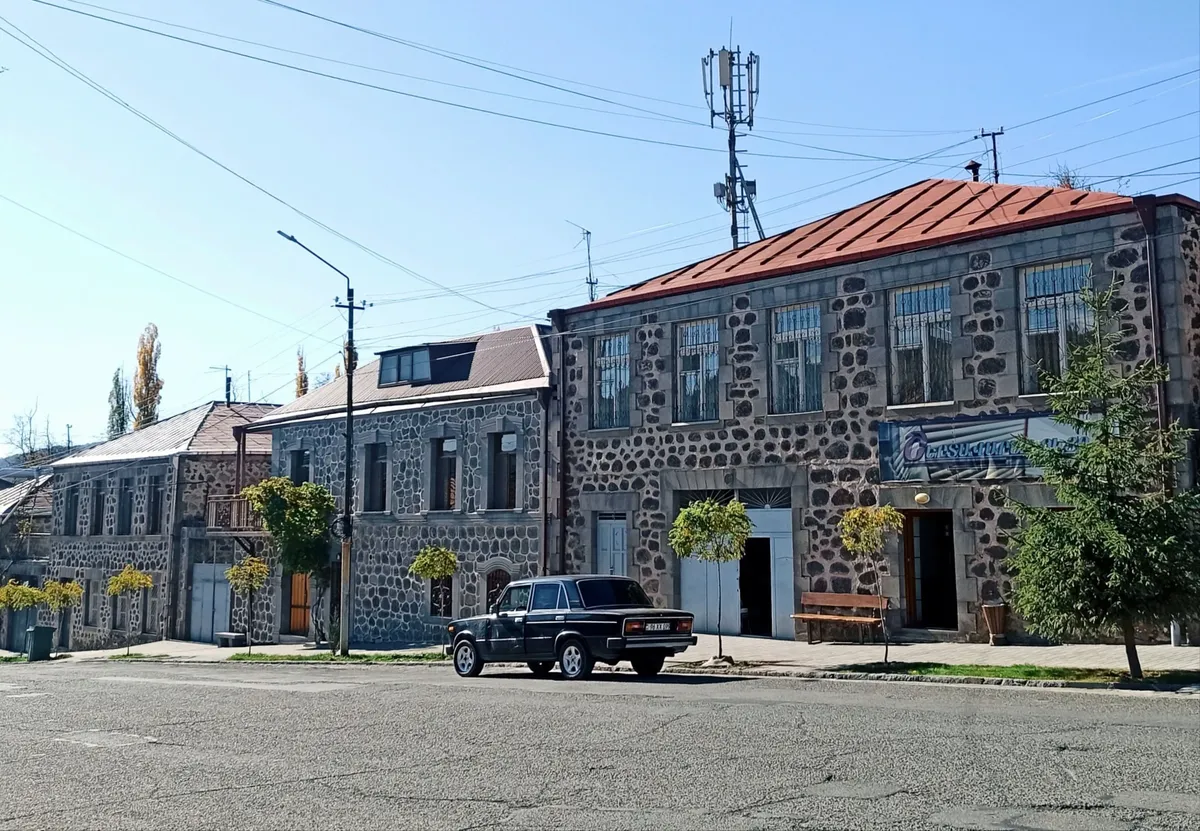
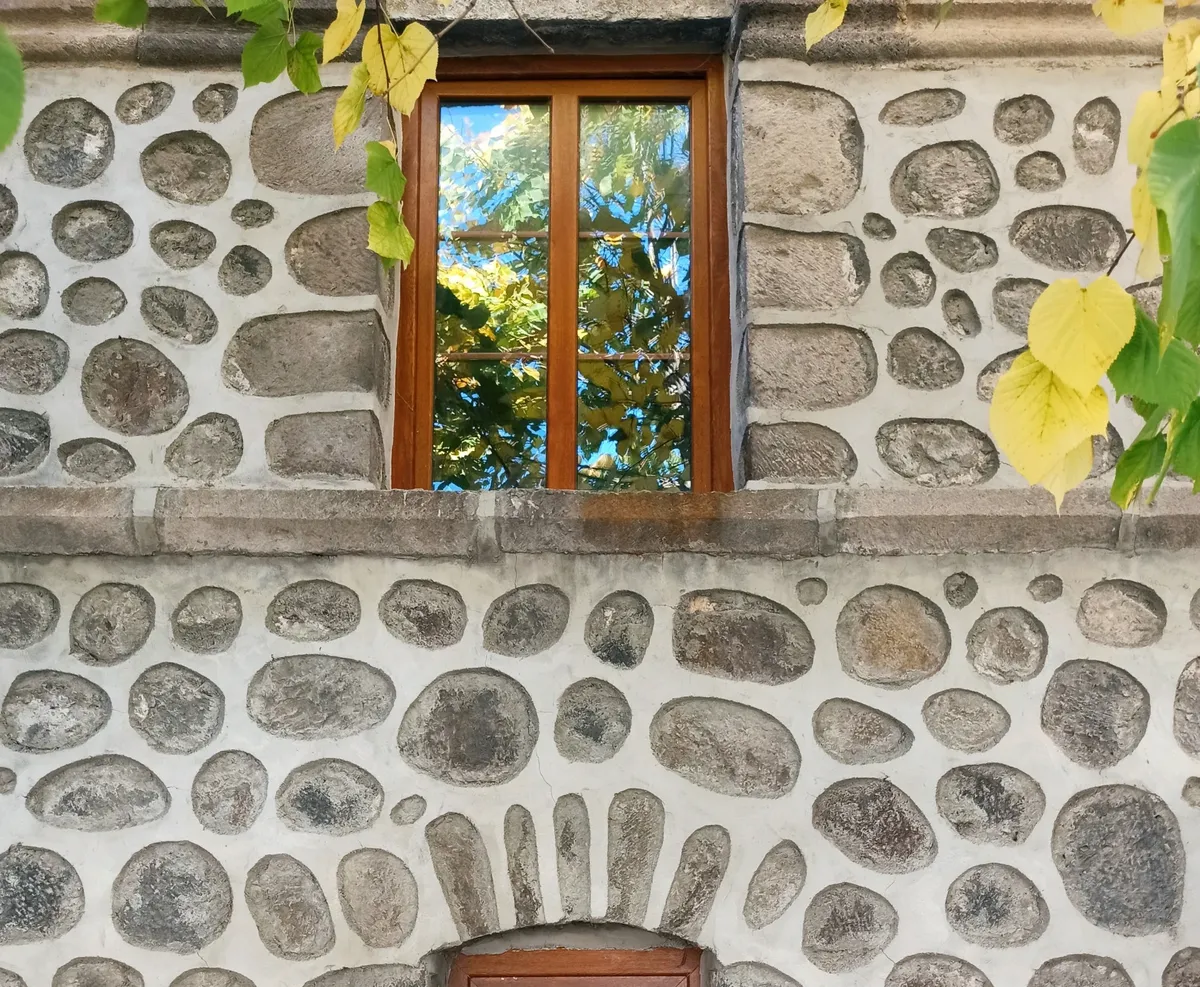
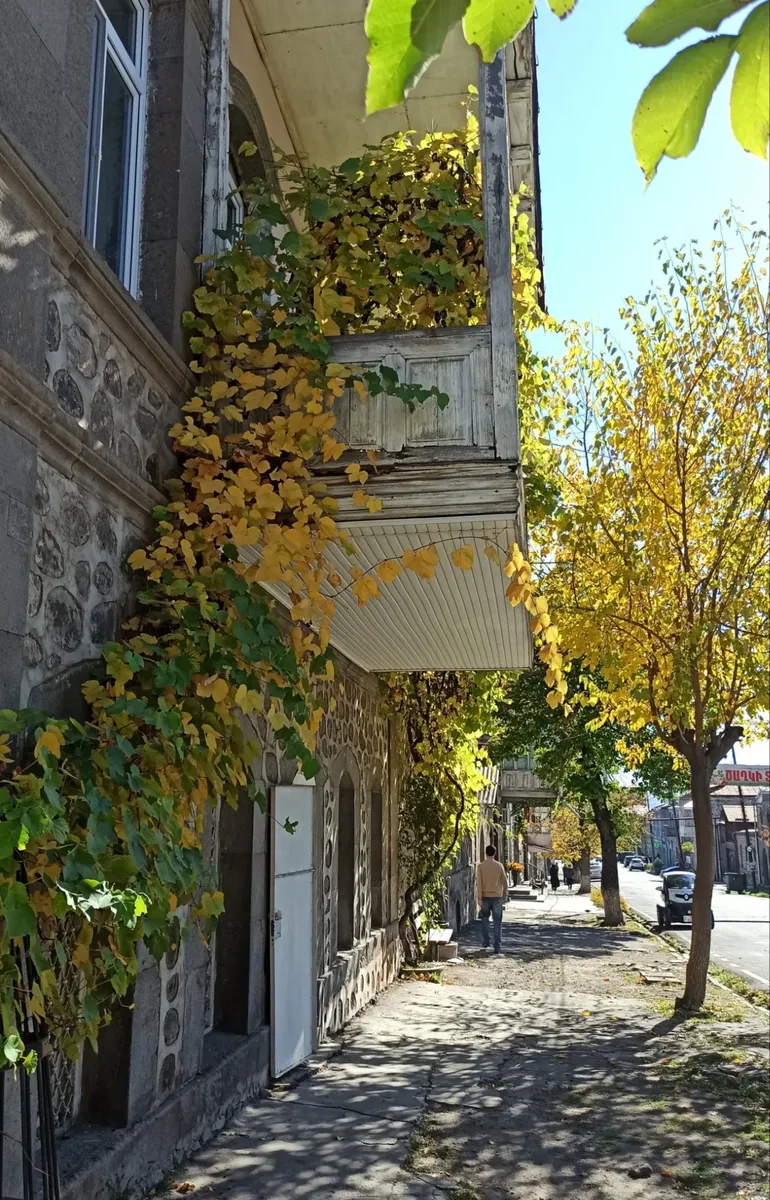
The chessboard-like linear development with square blocks gives Goris a special charm. But its main charm, calling card and architectural highlight are houses with walls in the “barkash” style, which cannot be confused with any other.
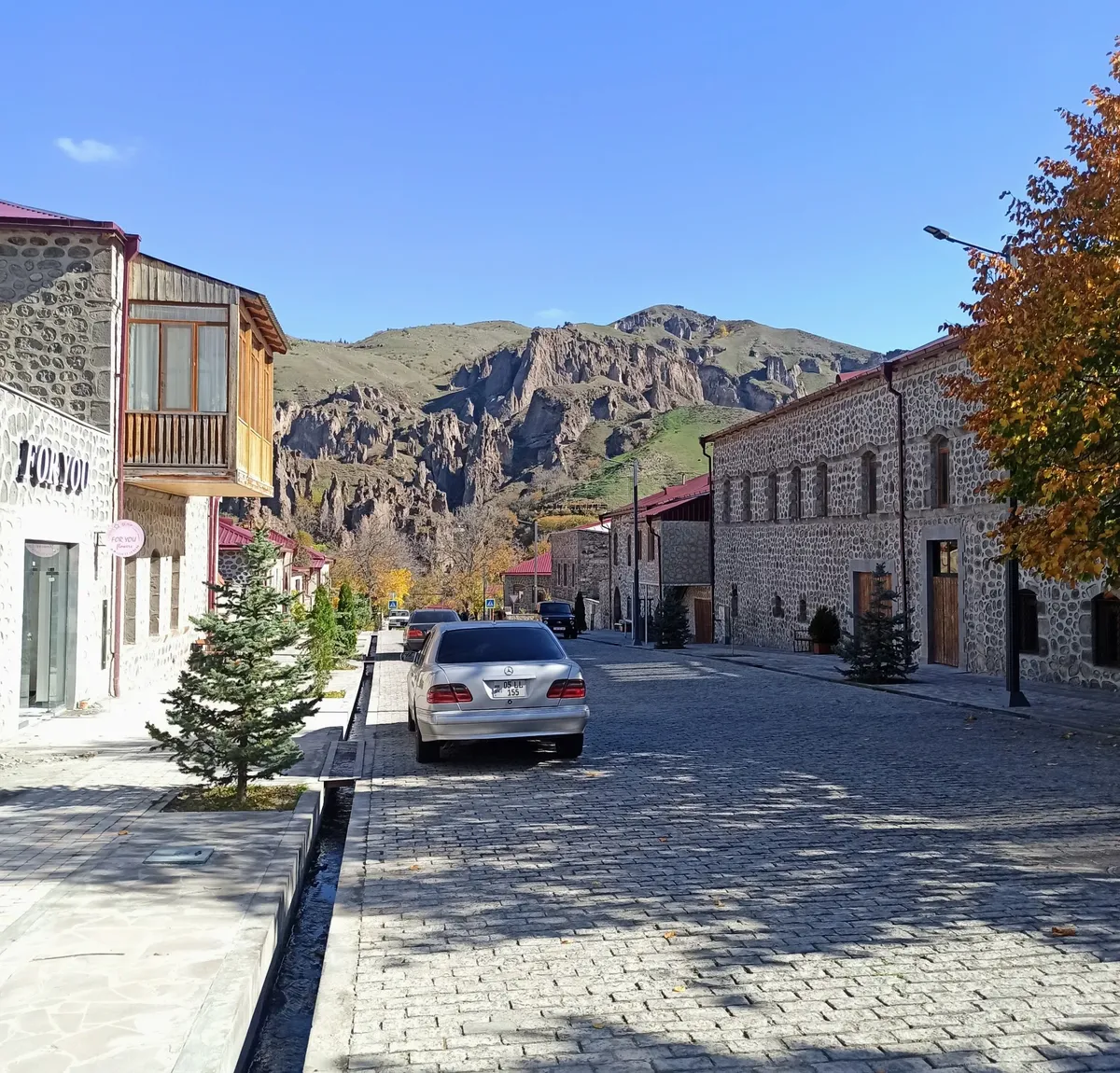
“Barkash” is the local name for traditional basalt stone masonry, which translates as “to close the cracks”: when the builders placed the stones, they covered the cracks with a mixture of cement and sand, and after the mixture hardened, they made indentations with a trowel, resulting in the effect of artistic plaster. Besides the fact that it is beautiful, it is also practical - the method protects the walls from moisture and makes them durable, because the climate of Goris is quite humid. Goris houses immediately attract people's attention. This distinctive architectural style, along with carved balconies, red roofs and ancient wooden gates, makes Goris recognizable and memorable.
Walking around Goris is a great pleasure. Especially when you see that the city is carefully maintained. Every time you come to Goris, you notice positive changes: the city is getting prettier, the number of renovated buildings is growing, roofs, doors and windows are being replaced, the historical appearance of facades, balconies and wooden gates is being restored. On many streets, reconstruction of above-ground drainage systems has already been carried out, the canals have been cleared and become open, because open canals, which were thoughtlessly closed in Soviet times, are also a feature of the Goris flavor. There are mosaic stone sidewalks everywhere, not just in the city center. Not to mention the asphalt renewal work. And the road to the Old Town was not just asphalted, but paved with stone.
“Have you noticed how our city is changing?” - ask friendly locals. And they themselves answer: “And he changes in order to survive, remaining himself! It's impossible not to notice, right? Thanks to our mayor Arush, he is a man of action and sincerely tries for Goris.” It is worth noting here that the mayor, or rather, the head of the Goris extended community (the city plus several nearby villages), has a serious conflict with the republican authorities on political grounds. Arush Arushanyan was even arrested and convicted allegedly for violations during the elections, but nevertheless he holds his post and, apparently, works really effectively for the benefit of the city and community. Despite the contradictions, the local leader can be seen in the company of the country's top officials who come to Goris and cooperate with him.
* * *
What else is Goris famous for, besides its unique urban cultural and historical environment? With your cheese, beans and mulberry vodka. “Our cows graze in the mountains on alpine meadows - that’s why this cheese is made from their milk. And for lobi (beans), the climatic conditions here are especially suitable,” says Vardan Sargsyan, not without pride. And this is not unfounded boasting, but the pure truth: Goris cheese and lobi are always in demand among Yerevan housewives, and of course, not only among Yerevan ones. “We also have chakhttu - a purely Goris dish: pickled young beet tops,” the Goris resident smiles.
A few years ago, Goris was a transport hub on the road to Artsakh and towards Kapan, Iran, but due to changes in borders, the city lost this function. Of course, this affected the lives of Goris residents. “The situation is being smoothed out by the active development of tourism,” explains Vardan. — We have more and more tourists. And over the past two years, domestic tourism has also sharply intensified - people come by bus from all over Armenia and visit our museums. Have you heard that in terms of the number of guest beds our Goris is now in second place in the country, surpassing even Gyumri? In general, we have all the conditions for life - clean air, good ecology. We have our own state university and the technology sector is developing. Young people, of course, are leaving, but fewer are leaving; many have begun to return. For example, some IT specialists have returned and successfully work here, earn money and, by the way, build new houses for themselves.”
Construction in the city is really going on everywhere. New private houses, residential complexes, service and tourism facilities, and a large modern school are being built. “I won’t say that everything is fine with work, but it has gotten better lately,” shared one of the Goris residents.
Feedback from tourists seems to confirm the optimism of local residents in investing in the hospitality industry. “In September, we stopped in Goris for a couple of hours, walked around, and we liked it so much that we decided to come back, stay here longer and get to know the city more thoroughly,” the young couple, Russian relocants from Yerevan, began talking in one of the cafes. “We can say that Goris hooked us and called us back.” And a couple from the Czech Republic admitted that they chose Goris based on photographs and were glad that they were not mistaken in their choice. Everything, from nature, cuisine to service in a private guest house, according to Prague guests, delights them.
Goris has its own unique appearance. Hereditary builders and masons from the Keres dynasties live and work here, who are in great demand in their craft throughout the country.
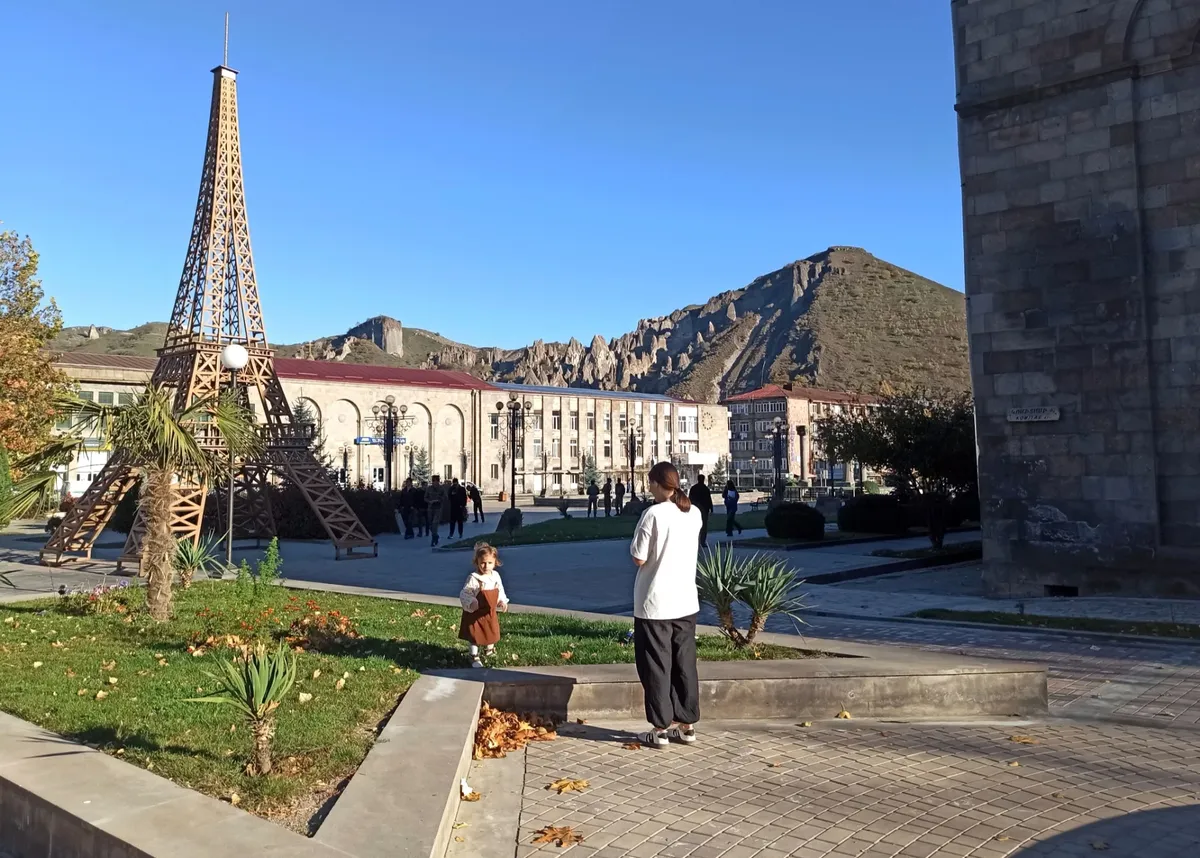
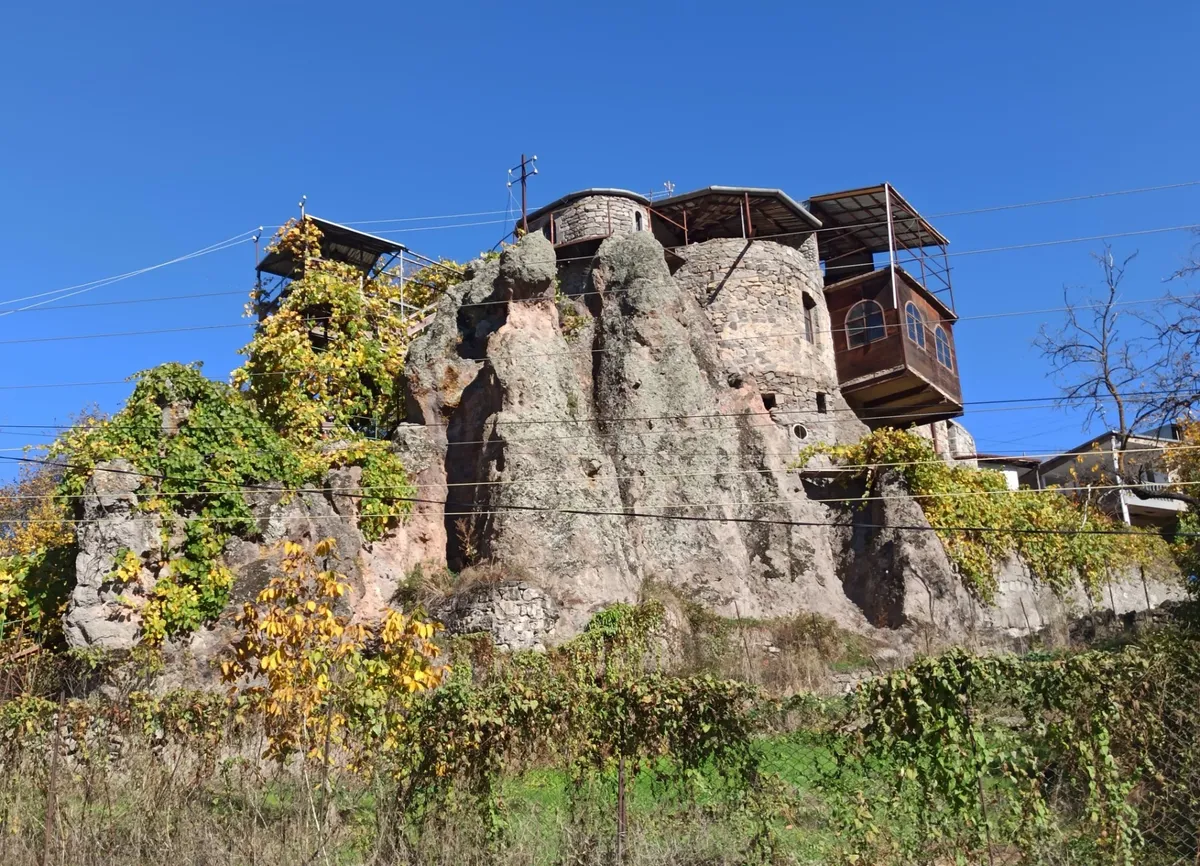
By the way, people today do not want to break ties with Köres and use the caves according to their needs: in some you can see cowsheds, chicken coops, but there is also a human dwelling - modernly equipped, with electricity installed, a stove, a washing machine, a refrigerator, with linoleum on the earthen floor. Some houses are built end to end with the entrance to a once inhabited cave, where the cave room is used as a closet for storing food for the winter. And there is also a completely cave house, with superstructures on the upper level of “stone mushrooms”: it was rumored that there was either a restaurant or a hotel there - it is not known for certain, but it looks like a residential one. There is also an old water mill in Goris, which works the same way it did centuries ago. They say that she can grind up to 600 kg of flour from grain per day. Many wonders can be found in this amazing town, even the Eiffel Tower, although that is another story.
Evgenia Yengibaryan