
Translated material
If you leave only love on the negotiating table
Why the philosophical doctrine of the kingdom of values today can become the basis for intercultural dialogue

Photo: Alexey Dushutin / Novaya Gazeta
Modernity and the doctrine of the pyramid of values
The 21st century is rocked by wars, and intercultural and religious conflicts are still not becoming a relic of the past. The focus on globalization has had the opposite effect: we are seeing a rollback to traditionalism and reliance on national identities, in some cases, nationalism.
Fear of an uncertain future forces us to hold on to what has become obsolete, and the situation looks as if humanity has lost its understanding of the importance of universal human values for its own survival. Civilization is developing unevenly, and a split within it seems inevitable.
However, accepting this fact as some kind of final reality means that humanity is heading into a dead end. It is therefore not surprising that in different contexts and in connection with different social problems there are calls for establishing dialogue between ideological opponents.
The search for a “common denominator,” of course, may not mean focusing on the “universal.” And this, in turn, makes it necessary to search for an answer to the question: are there theoretical tools, humanitarian ideas that can become the basis for the formation of effective intercultural communication and the development of dialogue as a civilizational necessity?
Endless turns
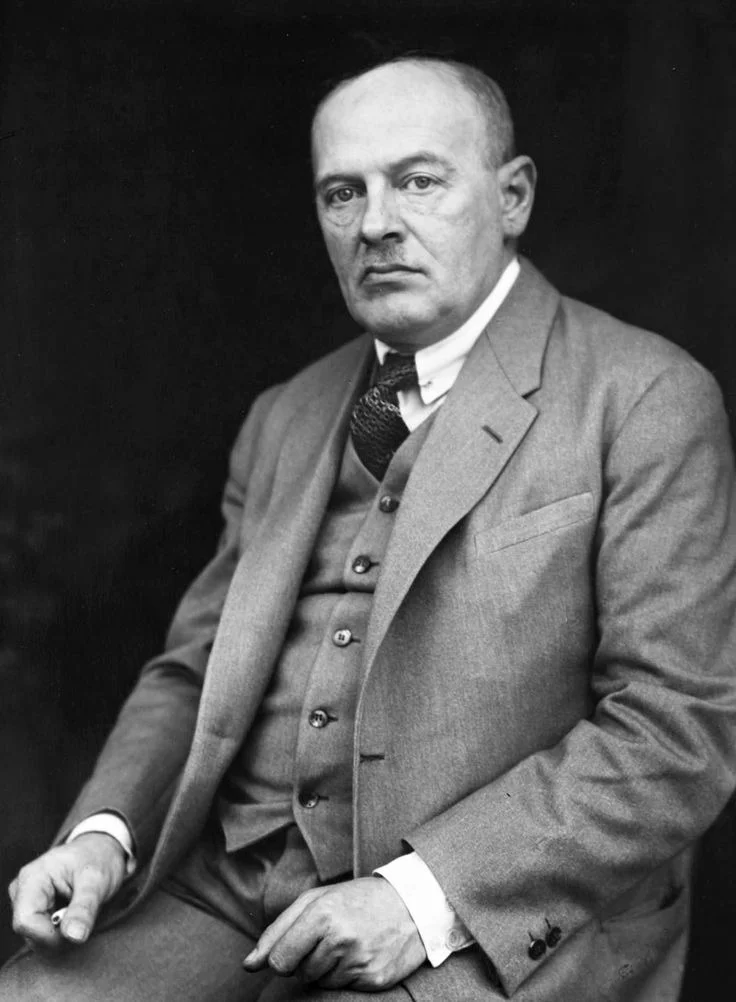
The doctrine of the pyramid of values, formulated in classical axiology by E. von Hartmann, M. Scheler and N. Hartmann, perfectly explains the source of ideological contradictions that have divided humanity for many centuries. Understanding this source will not in itself cancel the contradictions that have manifested themselves in the present. But it can become an impetus for building bridges and finding common ground.
It is no coincidence that the “axiological boom”* in philosophy coincides with the critical first decades of the twentieth century for Europe. Every cultural crisis inevitably precedes a “value turn.” It has already taken place in the Russian history of recent decades, and it is no coincidence that it coincided with the “dashing nineties.” At that time, humanitarian knowledge was actively mastering the concepts of axiologists, since thinking itself in terms of value is perfectly suitable for justifying a pluralistic picture of the world.
In today's conditions, a new “value turn” becomes a natural attempt to fix the cultural compass in conditions where relying on the ideology of postmodernism looks like using a non-working tool.
The devaluation of humanistic achievements naturally requires the affirmation of value as a tool of culture creation - not the restoration of what postmodernists were able to demolish in the cultural consciousness, but the establishment of a new ability to value. And it seems like it’s time to talk about justifying the value of the person himself.
What is value
In a number of publications from this cycle, the theoretical foundations of value were touched upon more than once. To avoid repetition, it makes sense to once again note only the most significant for the formulated problem.
Let's remember. Modern axiology sees value as the significance that a subject gives to an object. Value has a dual nature of existence; as significance it exists ideally, like all objects of thought. However, having opened up to consciousness, it merges with the personality and begins to control actions.
By its close connection with the emotional-volitional structures of the personality, value differs from abstract ideas. Each value is substantial, that is, irreducible to another, which does not exclude subordinate connections between classes of values - utilitarian, ethical, aesthetic, truth...
The substantiality of values presupposes their clash in the sphere of practice. But this same property of values makes thinking in terms of values a prerequisite for a pluralistic worldview, on the basis of which a holistic, but multidimensional picture of the world is built. At the same time, it is value conflicts that give impetus to the discovery of new values, that is, cultural creativity.**

Kingdom of values
This pattern of existence of values is reflected in the doctrine of the “kingdom of values,” which represents the hypothetically cognizable completeness of the value attitude towards the world. The kingdom of values is hierarchical. Developed unevenly.
In historical empiricism, the cognizing subject (an individual or a collective, including entire nations) is determined by the relative conditions of its existence. Conditions change - prerequisites are created for the development of new values in the ranks of the pyramid (hierarchy) of values, which exists (we note again) phenomenologically objectively - as a conceivable object.
The unevenness of value knowledge naturally brings value conflicts into life, because in the global information space intercultural interaction becomes inevitable and, as our historical reality shows, often becomes a problem.
The historical process is correlated with the kingdom of values by Max Scheler in his essay Ordo amoris (“Order of Love”). In a short treatise devoted to the idea of universal love, the philosopher, in fact, outlines an interesting concept in the field of philosophy of history. All peoples and individual representatives of humanity are involved in the knowledge of the kingdom of values, mastering individual fragments of the value universe.
It is impossible to influence the historical experience of specific peoples - or rather, to cancel it: values such as humanism, freedom, the unconditional value of human life, personality, freedom of conscience may remain something unknown. However, promoting value exchange and mutual efforts to master the realm of values in its entirety is a task that cannot be ignored as soon as we recognize the ideal of universal humanity and, accordingly, think in terms of “universal human values.”
Scheler defines this task in his treatise “The Order of Love,” in which the essence of value is considered as a relationship (value) close to love, as the general historical task of a single humanity.
Here's what he writes:
“<...> The essence of the very real (Sachlich) kingdom of values also includes the fact that the kingdom worthy of love can be reflected in the spirit (and thereby things and events can also be known and conditioned as bearers of the worthy of love) only in the boundless fullness of heterogeneous spiritual individuals (Individuen von Geistern), and within the human spirit (Menschengeister) - only by different and even unequal individuals (separate individuals and unions), families, peoples, nations and cultural circles. Equally related to this essence is the form of the flow of this reflection in time in the unique history of the ethos itself. And besides, of course, only an addition to it in the form of synchronous (in community) and consistent (historically) joint love for spheres of values, ordered according to ordo amoris, is capable of fulfilling the unique collective purpose of the individual, called “humanity.”***
Antinomy of love: can love be the basis for universal ethics?
Meanwhile, today social life is increasingly moving to the virtual, creating the effect of maximum freedom. Moreover, an action in the virtual, if it is in no way connected with real life, is not equivalent to an action that implies taking responsibility. The modern subject is thus able to freely cruise between different self-identifications, each of which becomes purely nominal.
Stable communities and self-identifications, as a rule, arise as a result of targeted information influences. Consumers of low-quality content are especially susceptible to them, which quite naturally correlates with the underdevelopment of critical thinking. Its absence gives rise to inertia of consciousness and moral rigidity.
Operating with the idea of “humanity,” which, as shown above, Scheler uses when building his understanding of value, in the age of the Internet is complicated by this obvious fact. Modern “humanity” is fragmented in accordance with the quality and breadth of information consumed, and this fact, alas, refutes the humanitarian hypothesis of universal equality.
Having immeasurably greater opportunities for personal development than, say, a medieval peasant, modern people en masse choose the personal state of being a consumer of vulgar reels.
From inside living this cultural situation, the criminality of an unreasonably optimistic view of the meaning of interaction with the world in the matrix “I” - “other” becomes obvious. Her awareness can also turn into the discovery of the tragic truth: “I am not him.” In turn, it entails living with disgust for the “other” and at the same time prohibits—this is the maxim of moral hygiene—to take root in a sense of one’s own superiority. On the basis of this feeling, any type of power that uses violence as the main instrument of control builds its attitude towards the “other”.
However, feelings of superiority do not necessarily equate to narcissism. It is impossible if one who is aware of his superiority turns on himself the moral demand “love.” This is how God rules—by love—and how the commandment turns it to man. This is the situation of upbringing: the adult is aware of his superiority, but does not transfer the child to the status of an object necessary to achieve his egoistic goals. A child remains an end in itself for a loving adult.
At the same time, love is an extremely multidimensional state, the most valuable of which can be considered when it turns into a manifestation of pity-compassion-understanding. In some cases, they are quite enough for a modern person, focused primarily on self-love.
And of course, operating with the idea of “universal humanity” also presupposes the construction of a universal ethics, the basis of which will be love, since it is the main saving spiritual intention.
Is such ethics possible as an instrument that effectively regulates social relations at all levels of public life? Let us recall that ethics is a system of norms - in other words, it is based on the principle of obligation.
Thus, the question can be refined: can we consider love not as a spiritual guide, but as a duty?

Ethics of duty
In the history of European philosophy, the most famous ethics of duty was the ethics of the German Enlightenment philosopher Immanuel Kant. The categorical imperative, the central concept of his teaching, is widely known, although in itself it was not the goal of Kantian thinking.
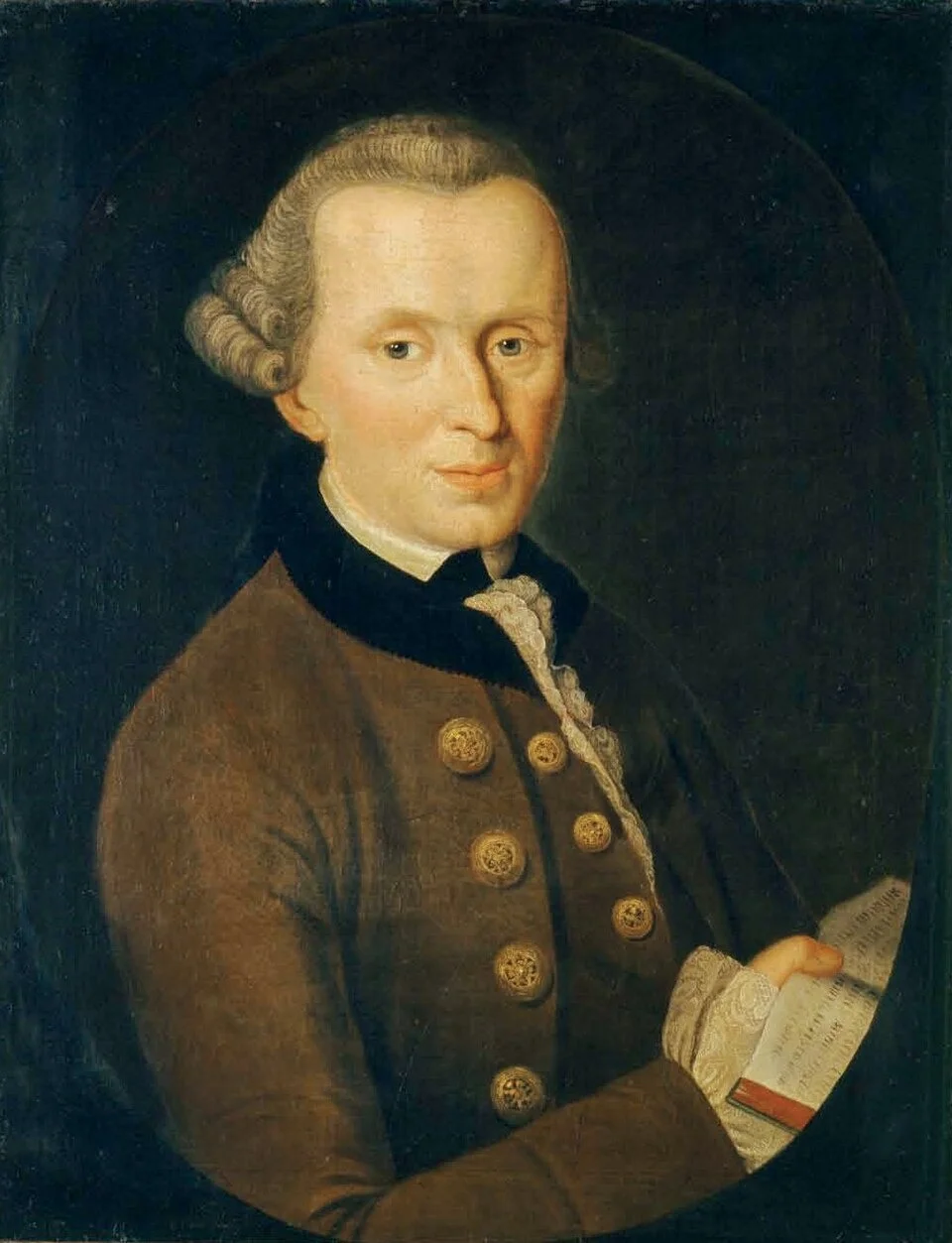
The origins of Kant's ethics, as we know, are connected with his negative reaction to the atheism of the French materialists, who placed the principle of rational egoism at the center of their ethics: you can be an animal just to the extent that an animal in another does not bother you. Kant was a very religious person, and such an argument could not inspire him, although from the standpoint of common sense, “reasonable egoism” is a principle that works quite well in social realities. It is, of course, insufficient for the improvement of human nature, because it comes from the denial of free will, breaking with natural necessity, which Kant could not come to terms with. Which is logical. Without free will, it is impossible to choose between good and evil.
However, the same can be said about the categorical imperative. As a tool for regulating social life, it may be good, but it is also insufficient for cultivating spirituality. Spiritual life implies moral creativity in situations of uncertainty, when existing rules of behavior cease to be a basis for choice: you make a choice at your own peril and risk. This spiritual reality is the discovery of existentialism, and primarily of its forerunner Søren Kierkegaard.
In addition, as researchers note, while remaining in his philosophy within the framework of the Enlightenment, and therefore within the framework of rationalism, Kant cared not for the value of man in any of his states, but for man as a product of culture.
This subtle difference is very important, and it, in turn, gives rise to the question: should humanism as the main universal value be extended to those who will never join cultural humanity and will not become worthy of the name of man?
Should we treat people like murderers? To zoosadists? To those who take pleasure in causing pain and suffering to living beings?
This question is rhetorical. In some cases, it is enough not to feel hatred towards such a contingent.
The antinomy of love is thus insoluble. The Christian ethic of love and forgiveness is not applicable at the political level, but in general has the meaning of an unattainable ideal.
And at the same time, we should not forget that philosophy is thinking about what is fundamentally possible, including the implementation of ideals that seem unattainable.

Mechanics of rejection and ideal opportunity
Thinking about this question (is it possible to love another as oneself and forgive a sadist), it is impossible not to imagine hordes of those expelled from human unity, who, separating from it, begin to confront it as a host of rejected monsters. An acceptable hypothesis is that it was a certain close understanding, an image that excited the imagination, that prompted Dostoevsky to write his famous passage about a child’s tear in “The Brothers Karamazov” and that a reality is possible in which a mother and a sadist who hunted her little son before her eyes would embrace.
We reject what we are not able to make similar to ourselves or suitable for cooperation. Such a situation, on the one hand, is a test of personal moral strength. On the other hand, to the same extent it requires an objective assessment of its capabilities: their overestimation sometimes threatens the death of all humanity.
Thus, in political conflicts, on one side of the scale lies state security and the well-being of entire nations, on the other - the value of humanism, love, the ideal of a united humanity, which a cynic perceives as an empty phrase.
But is this true? Are these concepts really empty words?
The relevance of the “discourse of love” from a theoretical point of view can be justified as follows. If we remain on the basis of philosophy, then, in principle, as was said, we are not talking about what exists, but are creating an ideal - social or metaphysical - project. Philosophical thinking is basically projective. This is why most philosophers were optimists: they believed that if they created a project for a better world, it would someday be realized. Panlogists of the period of classical philosophy believed in the rational structure of the world, associating positive meaning with reason. The only exceptions were two pessimists, who described the world as a “bad place” and its development as a development for the worse. These were Heraclitus and Arthur Schopenhauer.
And finally,
love cannot be a categorical imperative due to its essence: it carries within itself a call and does not oblige anyone to anything. That is why it needs to be talked about as an ideal opportunity. Its highest manifestation is altruism.
If these value tags are removed from public discourse, society will rapidly degrade.
Practice love
Therefore, the problem of the appropriateness of the ethics of love and forgiveness can also be looked at from a practical point of view. If we remember that language is one of the most important shells of culture, the conclusion is inevitable: what is not named disappears from the information field, first loses its cultural existence, and then its historical one.
It is especially important to remember this “magic of words”, about verbal information as a weapon during periods of social and political crises. From dislike, people easily move precisely to hatred, and not at all to a state of Buddhist equanimity.
It is no coincidence that, exploring the problem of choice in his treatise “The Order of Love,” as was said, Max Scheler connects love with the concept of value. To love means to choose what is valuable to you in a person, and although this idea was not formulated by Scheler himself, we can continue. By making such a choice, we simultaneously endow the “other” with value and thereby create him with our attitude as something valuable.
The connection between love and action would be a simple truism if it were not for the inclusion of this meaning. This, in other words, is not just about specific actions that are called actions in the everyday dimension. Love is transformed into an action by the fact that, as a stable state of transmission, an effort towards community, communication and affirmation of the “other”, it thereby recreates him in his best image. Such an act is possible for the “I”, turned to the ideal and capable of thinking in terms of value.
The continuity and inversibility of the connection between “I” and “other” is manifested in the symmetry of influence: by forming the “other” as a bearer of certain values, a person creates himself in accordance with these values.
Joint cultivation of a value-based attitude towards the world can, if not neutralize inevitable value conflicts, then at least create the ground for love-pity, which helps to see value in the widest possible range - instead of disgust and rejection, because very close to them is the temptation of spiritual pride and the illusion of personal infallibility.