
Translated material
“The longer the struggle, the more reliable the result”
How Thomas Mann Predicted a Post-War "One World"

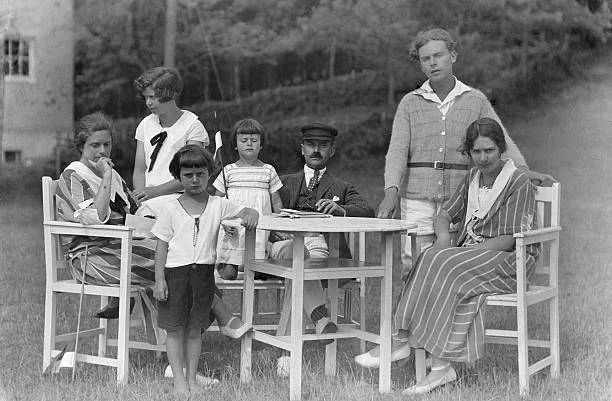
Thomas Mann and his family on vacation in Nida on the Curonian Spit. Photo: FRITZ KRAUSKOPF / PICTURE ALLIANCE / DPA
In November 1940, in an era of despair, when the darkness seemed to be deepening and the dawn was far away, the German classic called for immediate peace and, moreover, honestly said the main thing: “The struggle will be long... But the longer it lasts, the more reliable the result.”
Since the beginning of 2015, Novaya Gazeta has repeatedly turned to the legacy of Thomas Mann as a commentator on the events of the Second World War: we rediscovered his radio addresses to German listeners to his contemporaries, our first publication, Mann’s speech in March 1941, went to the people and was reprinted on many pages on social networks. And last year, the publishing house of Ivan Limbach published a book of radio speeches by the German classic “Listen, Germany,” translated and edited by Igor Ebanoidze.
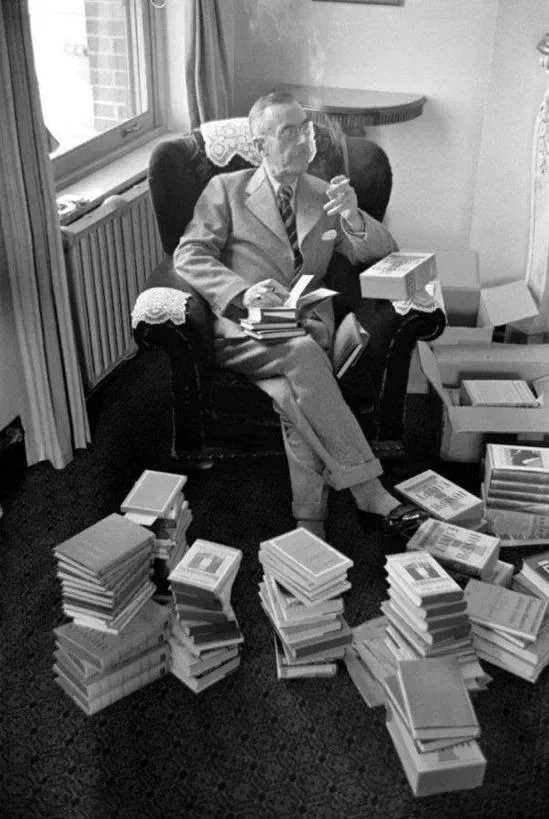
From October 1940 to May 1945, Mann appeared on the BBC in front of his compatriots more than fifty times, on average every month. He read speeches at the NBC studios in Los Angeles, in the vicinity of which he lived in exile; the recordings were flown to New York, where they were played in front of the telephone for London, which remained connected, for 5–10 minutes. This is how long the lapidary speech of the master of huge epics, the author of the family saga “Buddenbrooks: The Story of the Death of a Family”, the 1200-page novel-symphony “The Magic Mountain”, a magnificently bold and intelligent contemplation of biblical antiquity through the eyes of a man of the first half of the 20th century - the tetralogy “Joseph and His Brothers” (of which Mann published the first three volumes by the beginning of the war) lasted. Yes,
Delivering “audio content” of the most famous German anti-fascist to his homeland in the war year of 1940 was an entire enterprise.
But it turned out to be even more difficult and risky to accept his message. The so-called folk radios operating in Germany were technically able to pick up foreign stations on long waves, but there was a price for news from the outside world in the Reich. In the first case - a fine, then it was about freedom and life.
And yet they listened to Mann.
He denounced National Socialism from the early 1920s, when it was just beginning to emerge as a project. Mann gave his speech “On the German Republic” in 1922 - this is a farewell to the conservative views of youth and early adulthood, a manifestation of a sharp turn to other values - to democracy, to the defense of real, not stilted social equality. Mann saw in democracy a form in which humanism, humanity - the beginning and end of Mann's values - had a better chance of surviving the cold wind of the 20th century.
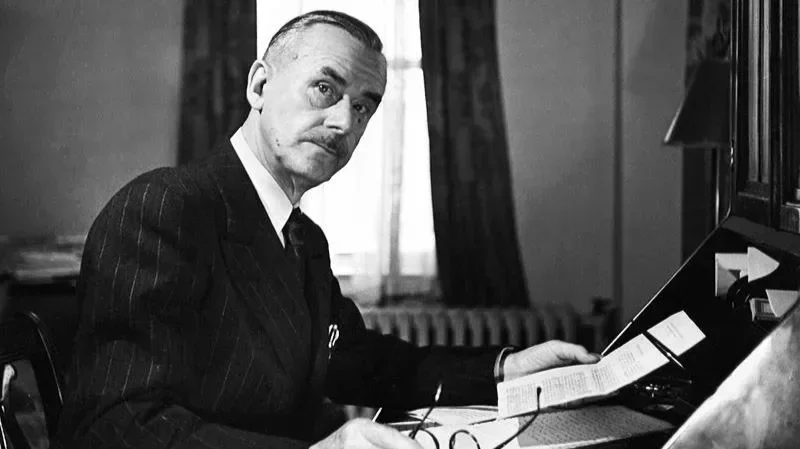
In 1930, Mann gave his "Call to Reason" speech - an exhortation to the youth of Berlin, in essence; an exhortation to liberals and socialists to unite and resist reaction with a united anti-fascist front. But German youth en masse have already followed Rehm and Hitler;
Mann spoke through the stomping and noise, at the end of the speech he was taken through an emergency exit from the aggressive crowd, and later asked to leave evidence of the audience's reaction in the printed transcript.
He was not afraid to speak into the wind, into the future, into the void. In the face of an indignant audience, barely restrained by the format of the classic’s public performance.
And in the cotton anti-resonance of the era.
He changed something with his speech, even if the Germans did not overthrow Hitler, which he called on them to do, time after time, time after time, time after time.
***
November 1940 is one of the nadirs of history, when the light was barely breaking. It’s awkward to recall the ABC, but if the news in 2025 dies after a day, who can easily remember the timecode of the war of November 85 years ago?
This timecode was, in general, a list of disasters for the forces of good. From the prequel. The Reich has been occupying Poland for more than a year, with the attack on which the war began. In May 1940, Belgium, Luxembourg and the Netherlands capitulated. Denmark and Norway suffered defeat, on different and different terms, even earlier.
The Third Republic capitulated on June 22. Paris, in order to avoid destruction, was surrendered; it is an “open city.” Under German occupation is the entire northern half of France, along with the Atlantic coast and ports facing the English Channel, from Brest in the west to Dunkirk in the east. These acquisitions were conceived by the Reich General Staff as a frontier for the attack on Albion.
But although the Luftwaffe bombed England with varying intensity for a year, it was unable to defeat the British Air Force in the air, disable industrial enterprises, arsenals, infrastructure and coastal defenses; and most importantly, the spirit of the subjects of King George VI remained high.
That autumn of 1940, it became clear that Hitler, like Napoleon earlier, would not dare to cross the English Channel. Unpredictable currents, strong winds, a water barrier insurmountable for a large-scale landing.
The British won the Battle of Britain, but the bombing of the country did not stop. On the contrary: on the night of November 14-15, 1940, 437 German aircraft bombed the city of English aircraft manufacturers, Coventry, in non-stop waves for half a day. This was the first all-out air raid in history, which would later be called “carpet bombing.”
The skeleton of the Gothic Cathedral of St. Michael in Coventry - like the ruins of the Spanish city of Guernica in Picasso's 1937 canvas and the Stalingrad fountain "Children's Round Dance" in the photo of Tassovka Emmanuel Evzerikhin in 1942 - became a symbol of the inhumanity of war, the totality of fascism. His latest conclusions and fruits.
Since the end of September 1940, Italy has been part of the Rome-Berlin-Tokyo axis, one of the countries of the Tripartite Pact; in October she invaded Greece, but fought there, as it turned out by that November, unsuccessfully.
That November, the Kingdom of Hungary and the First Slovak Republic joined the Axis powers.
In October 1940, a ghetto appeared on the streets of Warsaw, and in November it was “closed” and sealed.
Western, Central, Eastern Europe in those days was a continent of horror. All.
In the USSR, not even half of the “catastrophic eight years” had passed, as one memoirist who survived it, Lyubov Vasilievna Shaporina, the wife of the famous composer Shaporin, called the years 1937–1945. The inevitability of a big war is clear to everyone inside the perimeter, the internal war died down for a minute, the local Soviet-Finnish Winter War, which lasted from November 1939 to early March 1940, froze on the new border line.
In America - wary observation. On November 5, 1940, US President Franklin Roosevelt was re-elected to a third - and not the last, because there will be a fourth - term. He is the only one who stayed in the Oval Office for more than two terms: in the conditions of a world war, he violated the norm established by George Washington in the 18th century.
More than a year passed before the attack of Japanese planes on Pearl Harbor on December 7, 1941 and the US entry into the war on the side of the anti-Hitler coalition.
By the way: when we now hear America First from Trump thinking about a third term, it is important to remember what that looks like. When the United States did enter the war, to the great joy of the fighting USSR and Britain and all people of good will (politicians and citizens of these countries called their union the “Combat Commonwealth” in Russian, Allied Forces in English), the military-political strategy of the United States was Europe First (“Europe First”). That is, first and foremost - to help Europe fight Germany, and only then to fight the Land of the Rising Sun ourselves.
But the war “showed a plan,” and not at all the one that Roosevelt had: already in the very first years of the war, in 1942-1943, American soldiers fought with Japan in the Pacific Ocean.
But before all this, before a truly global conflict - colossal combined-arms operations in the Volga steppes near Stalingrad and partisan attacks in the fjords of Norway, military operations in the Solomon Islands and battles in the deserts of North Africa - in November 1940 it was far away.
To the world “after the war” - and even further.
But the lyric poet, as Thomas Mann defined himself from his youth, formally a prose writer, sensed the volumes and outlines of what was to come. Thinking about the future, always interested, intrigued, drawn, drawn by the invisible novelty.
It would be worth saying “obsessed with the future” if we were not talking about a man and a poet who so successfully, so early - and to the extent - curbed his demons. Captured by the future as a vision, as a dream.
“Joseph and His Brothers” is an elegant interpretation of the biblical story as a dialogue between a person, a people and humanity with its future. With God, ultimately, because who is more interested in the future, including the human one? It was not without reason that this magnum opus about subtle human foresight of ways occupied the Nobel laureate for almost all the interwar and partly war years, from the second half of the 1920s to 1943.
After all, Mann himself guessed the future back in the days of the First World War. He called the conflict that began in 1914 the New Thirty Years' War.
***
In the finale of the journalistic book “Discourses of an Apolitical,” this confessional non-fiction, Mann wrote, quoting a verse by the Austrian playwright Franz Grillparzer: “The war will continue, because it is not a war at all. This is a historical period that will last like the one that lasted from 1789 to 1815 or like the one that lasted from 1618 to 1648, “but not before,” as the poem about the fraternal feud in the Habsburg family says:
*“But not before the men go to the grave
And the children will become men,
This fermentation in the blood will subside.”*
The Napoleonic Wars (1789–1815) and the Thirty Years' War (1618–1648) ended differently and were fought for very different things, only they lasted about the same, absorbing two generations, redrawing the map of Europe, giving rise to new legal norms and ideas, and changing social worlds.
In 1648, the Treaty of Westphalia was concluded, and in 1815, the Final General Act of the Congress of Vienna was signed, this template example of a pan-European conference. There, the cunning Alexander the Blessed, together with great diplomats of average reputation - the conservative puppeteer Metternich and the emblematic intriguer Talleyrand - erased Bonaparte's political (but not legal) legacy from the slate and, using tricks, subterfuge, and mutual concessions, decided the fate of peoples and kingdoms.
As many suddenly remembered and began to repeat, we still live in the world of the Westphalian and Vienna systems of international relations. The legacy of international multilateral meetings and conferences of the 17th and 19th centuries is imprinted in modern times; it is a fragment of the lens through which modern man sees the world.
After the Thirty Years' War in 1648, in the middle of a deserted, devastated, epidemic-thin Central Europe, in a society gripped by total devastation, the elites came to such ideas as sovereignty and equality of rights of states, the principle of the balance of power in Europe, compliance with signed treaties, and finally; approved new principles of religious freedom. The war, excuse the reminder of elementary truths, began as a religious one, as an uprising of Protestants who threw three Catholic controllers out of the window in 1618. Defenestration is a word from there. The Prague excess resulted in the affirmation of the equality of these Christian denominations.
And after the Napoleonic wars, a naturally new world was born - strangely tragic, despite the wave of geniuses “after 1815” - the world. Geniuses were born before Vienna and its conservative ideas of restoring monarchies and nurturing the Holy Alliance. And all kinds of legitimism, support for current governments and sovereigns in power. This was the verdict of the continent's strongest players.
From 1815 - the formation of the Vienna system of international relations, the concept of “great powers”, the theory and practice of multilateral diplomacy, the neutrality of Switzerland as a place beyond any storm, the idea of diplomatic immunity and diplomatic hierarchy, simply staffing tables of embassies. And most importantly, from there, from Vienna, from a stuffy and anecdotally cynical environment, came the concept of collective security, paid for by the suffering and military labor of peoples.
The then universal favorite France proved by personal example that not even a great nation can ensure its peace through any unilateral effort: a system of alliances, treaties, connections is needed, a certain entanglement in the most complex conditions and agreements. This was the opposite of the strong-willed impulse of a man whom many considered a superman, but nevertheless, together, in two steps, across the Elbe, they pushed him out of Europe - and just during the work of the congress.
Napoleon withered away in melancholy on the island of St. Helena, and the mediocre masters of the continent after him coined the logic of the “balance of power.” They developed the Westphalian system at a new stage in history.
A European concert of “big”, “great” countries, no matter whether they are winners or losers - Austria, Great Britain, Prussia, France. The latter, guilty and loser, became the most persistent, consistent advocate of “balance in Europe”, “consent”, Entente in French, Entente in Russian.
The doom of any solo has proven itself.
In the 21st century, we somehow again “live in the world of the Treaty of Westphalia and the Final Act of Vienna,” but Mann and his contemporaries during the First World War saw—literally felt—that the past had passed. So many ideas, empires, institutions, dynasties burned in the fire of the First World War.
The vast, wild Russian revolution literally tried to burn its Romanovs posthumously. By the forces of sailors and security officers of the Ural Regional Council.
Thirty years of enmity incinerated the continent, now openly burning, now silently smoldering. And all this was hopeless.
And when Mann says in November 1940 that at the end of this war, “in three years, in five years” or sometime in the future, a new world awaits Europe, this is not good-naturedness. This is not a phrase that ruined Turgenev's hero Dmitry Rudin. The archetypal Russian intellectual. No, it's not even her.
This is not despair in the spirit: when will there be light?!
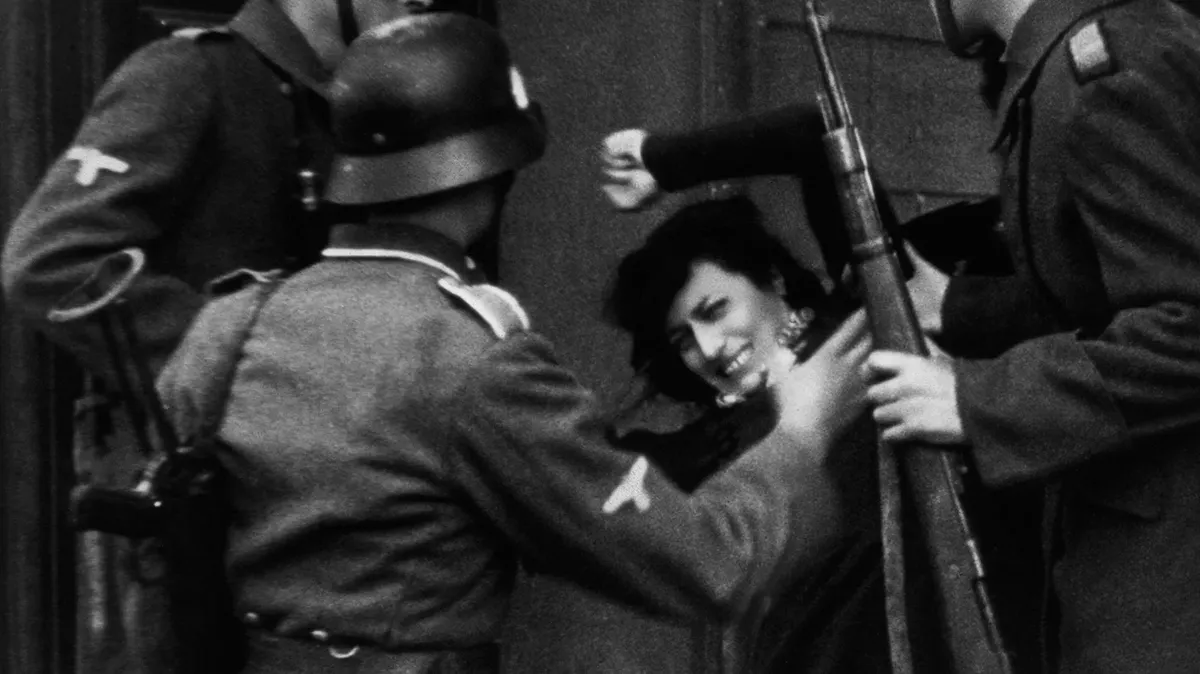
The heroine of Anna Magnani in the film “Rome - an Open City” experiences an attack of such questioning and despair: “When will the war end?”
Mann has persistent, unshakable knowledge and confidence. Dreaming about the future.
Behind this “mess of blood and tears” of the war, started by “a handful of stupid criminals”, still awaits – through the labors of mankind and the forces of humanity – unity and a “place in the sun” for all peoples. Potentially for all people. Those who live and those who will live.
Mann had six children, he knew something about the future, how it grows, from what and in whom the sprout of novelty matures. He had, das Zukunft, a complex interest in the future. Spiritual, moral, blood.
We can say: well, yes, some of his lofty predictions came true.
The United Nations really came into being.
Here is a more humane, socially oriented world, where democracy and socialism (he was not afraid of this word), a real revolution (he contrasted it with the false revolution of the Nazis), the “rejuvenation” of society took place. Welfare state in Germany. Free National Health Service in the UK since 1948, plus unprecedented access to education for all classes. An unprecedentedly prosperous society with a large amount of guarantees is in France. This is the answer that Europe ultimately gave to the horror of the Thirty Years' War of the 20th century, to the madness and to the crooked uprising of the dispossessed mass man.
About the 20th century. Yalta, Potsdam, partly Helsinki - these Westphalia and Vienna of modern times - now have a bad press, and in all countries.
It is noteworthy that the Yalta-Potsdam system arose (and they say that it has already died) without loud and cumbersome written agreements; even the Final Act of Helsinki-1975 (greetings from the Final General Act of Vienna-1815), with its inviolability of borders, was 30 years away from the last shots of World War II.
There is, after all, a Thirty-Year Peace. Or - “peace”, because that’s what it was - the most natural, only cold war.
Mann foresaw a lot, but his wonderful “Peace! Peace and freedom! sparkled only in art, in some sparks - like Picasso’s white dove.
And yet something grows in a person and in humanity. A feeling of one's own fragility, perhaps. The feeling that nothing is guaranteed - and, moreover, the indestructibility of the main thing.
In the 20th century, the globe went through hell, ran like Picasso’s ball under the feet of a girl, and strangely survived. Rolled out into the light.
But not on the path of compromise, no. He simply shook off the evil, overcame his weakness, and survived “November 1940”—and more than one.
In some way, using the words of the British novelist Helen Simpson, “Tuesday of the year.”
I didn’t get stuck in the everyday viscosity of what would later be called great days.
No time is like ours. History has no “literal quotations”—the spirit of history is too inventive and inexhaustible for that. Too full of game.
But it seems that we, too, under the surface of “Tuesday of the Year”, have a great time and days of upheaval.
Here is a message from the era, a code word that can help.
“Suffering from Germany,” Thomas Mann once said about himself. Yes, he was sick of his country. And he was possessed and healed by the future.
It, a strange time, carried us through radio interference, carried it out, hit us with a very long wave - this voice came to us.
“The nation does not find a place in the sun, enveloping the whole world in horror”
Radio address by Thomas Mann to the Germans on the BBC
November 1940
"German listeners,
The re-election of Franklin D. Roosevelt to the office of President of the United States is an event of the highest importance, an event perhaps decisive for the future of the whole world, as those in Europe who pretend to regard the election and its outcome as purely internal affairs of America have undoubtedly realized. The destroyers of Europe and the destroyers of all people's rights see in Roosevelt - and with good reason - their most powerful opponent. He is a representative of a fighting democracy, a true bearer of a new social idea of freedom, a statesman who has always distinguished between peace and pacification most clearly. In this age of the masses, from which the idea of a leader is inseparable, it has fallen to America to produce the happy phenomenon of the modern leader of the masses - one who strives for decency and righteousness, who is truly progressive, who wants peace and freedom; and the heroic resistance which England gave to the most disgraceful tyranny that ever menaced the world—a resistance which is increasingly being admired here in America—gives him time to mobilize the vast latent forces of his country for a future struggle.
The struggle will be long: no one is deceived about this. But the longer it lasts, the more reliable the result. The hapless adventurers who try to enslave the world somehow feel that they have already lost - feel it just like their enchanted peoples, terrorized by paltry false successes. No one in the world believes that the German people are comfortable in the face of history, this concoction of its tyrants, this wretched mess of blood and tears. Of course, they feign confidence. In the beer hall of his Munich putsch, Hitler gave a particularly pathologically deceitful speech in which he assured you that the highest ranking German military had no doubt about victory. But isn’t he Caesar, Frederick the Great and Napoleon, “three in one,” and Charlemagne to boot? After all, this is what the vulgar historians of National Socialism repeat in black and white about this pathetic fraudster of history. How could he so forget his role as to refer to the judgment of his generals who carried out his inspired suggestions? But not all generals are just aging cadets and narrow-minded military technicians. I was told a story about a German senior officer in Paris; He said to several Frenchmen: “Pauvre France is maintenant. Pauvre Allemagne - plus tard! (see footnote 1) He knew French poorly, but enough to express this; and I am convinced that so much—enough—is understood in many circles of the German people.
What will happen to the European continent, to Germany itself, if the war lasts another three years, another five years? This is the question we are asking ourselves here, and about which the German people are undoubtedly thinking with horror. Today's troubles are but a faint sign of what is to come. Why should it? Because of a handful of stupid criminals who are exploiting what our world is going through - the process of economic and social transformation - for the sake of a meaningless, long-ago campaign for world domination? Yes, precisely for this reason. What is to come and what will happen at the end of this war is clear. This will be the beginning of a single world; creating a new balance between freedom and equality; storing individual values in the midst of the demands of collective life; the abdication of the sovereignty of nation-states and the construction of an unification, a society of peoples with equal rights and equal responsibilities - free, but responsible to the whole. The peoples are ready for such a new world order. If they were not ready for it twenty-two years ago, the experience of the past decades has prepared them. However, today they are more ready for it than they will be in the future - after all the destruction and the poisonous, devastating results of the many years of war. If the war ended today and joint work began, every nation would have a better chance for a happy future.
In the world that comes, the German people must and will have their “place in the sun.” But if he - passively and actively, through fire and water - continues to follow his seducers, then he will realize too late: the nation does not find a place in the sun, enveloping the whole world in darkness and horror. Down with the criminals! Down with the National Socialist torturers and tormentors of Europe! I know that I express the deepest desire of the German people themselves when I cry to them: peace! Peace and freedom!
Translation by Elena Berdnikova
footnote
- “Poor France now. Poor Germany - later! (French)