
Translated material
Lilivanna in the area
The story of a nurse who gave half a century to her patients and remained faithful - to herself and her profession

Lilia Kornilina. Photo by the author
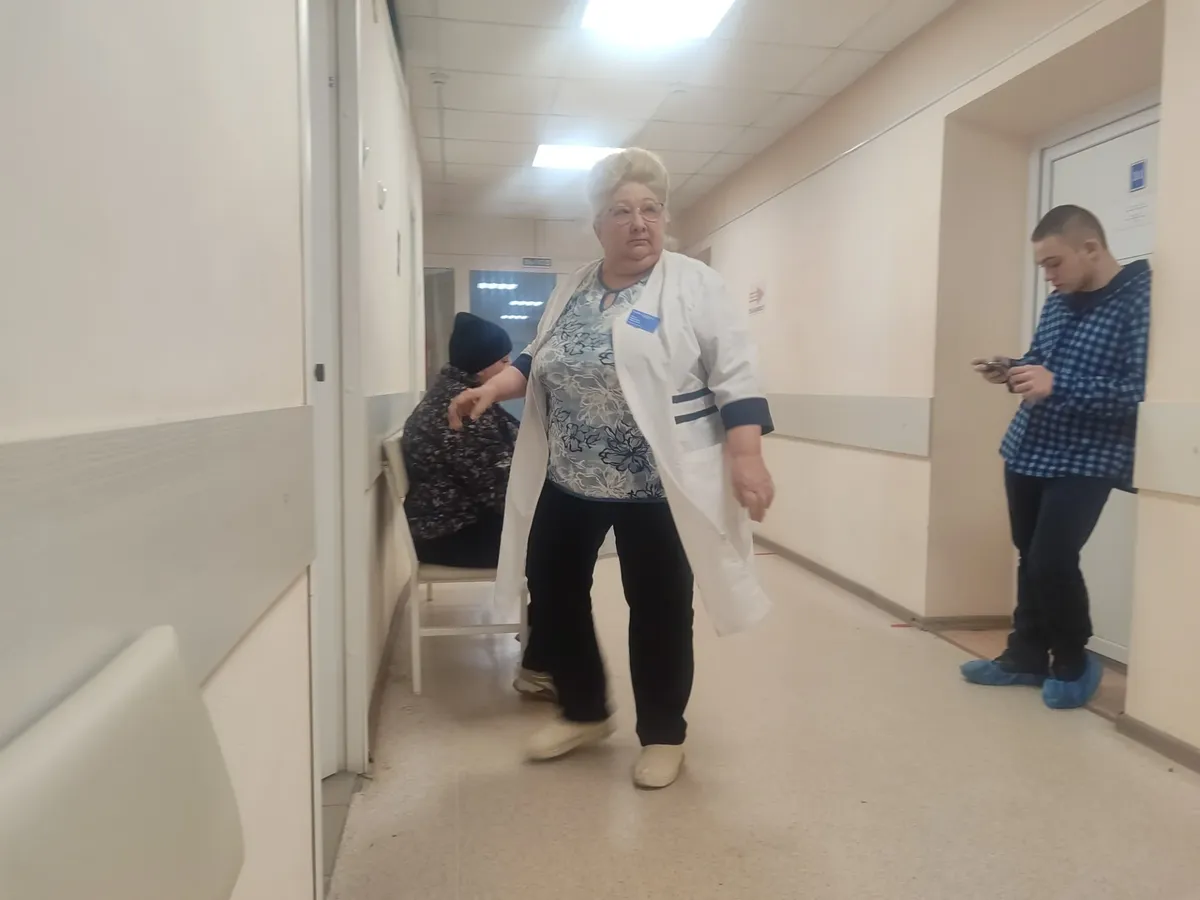
Liliya Ivanovna Kornilina is a nurse at the district hospital. She worked for almost half a century in the village of Maina, 80 kilometers from Ulyanovsk.
She has the only entry in her work book and the only photograph from her youth, in which she remembers herself very happy. At work, everyone calls her “Lilivanna” and cannot imagine how they will manage without her: at 66, she still knows something that her colleagues do not. December 25 was her last day of work.
She quits because her own health no longer allows her to care for the health of others.
***
Early December morning, half past eight in the morning.
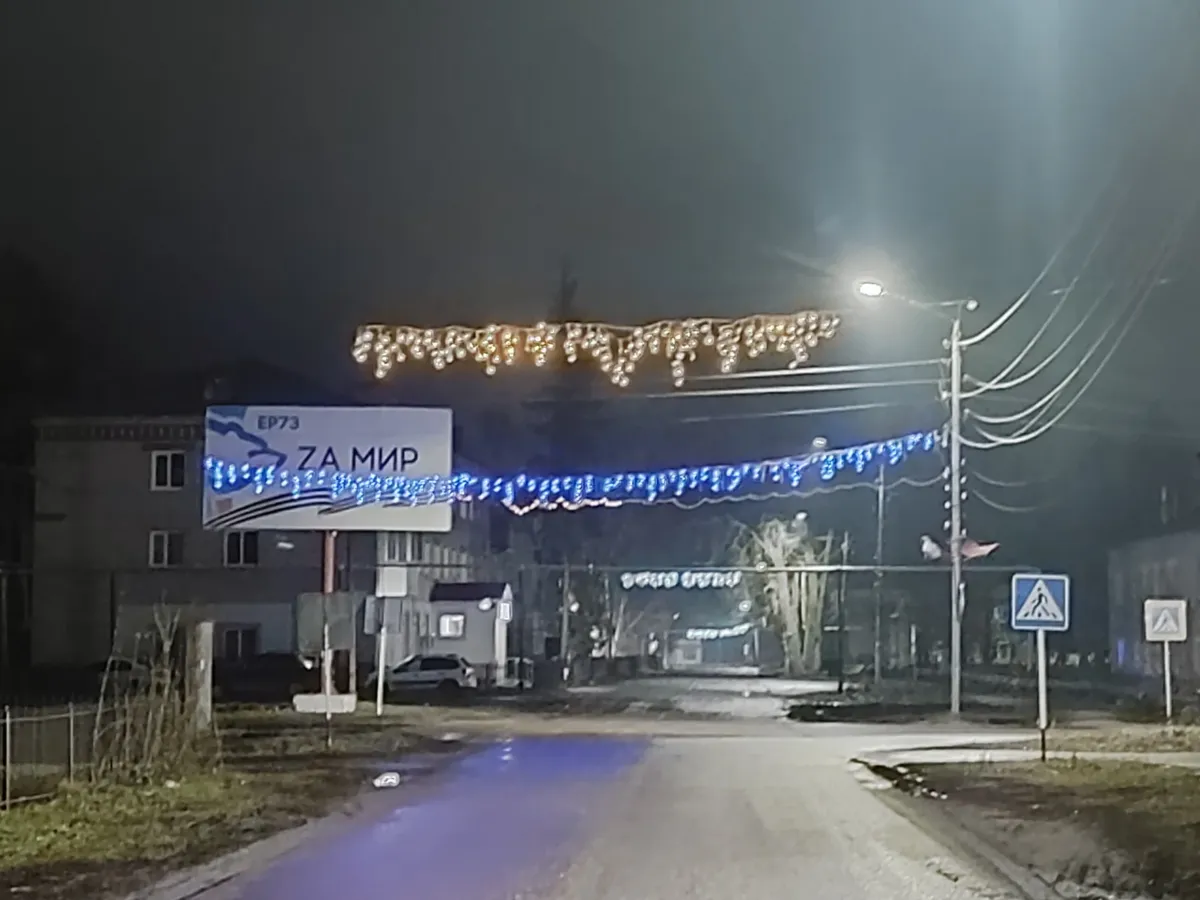
In Maina, a regional center with approximately six thousand inhabitants, it is atypically warm for this time of year.
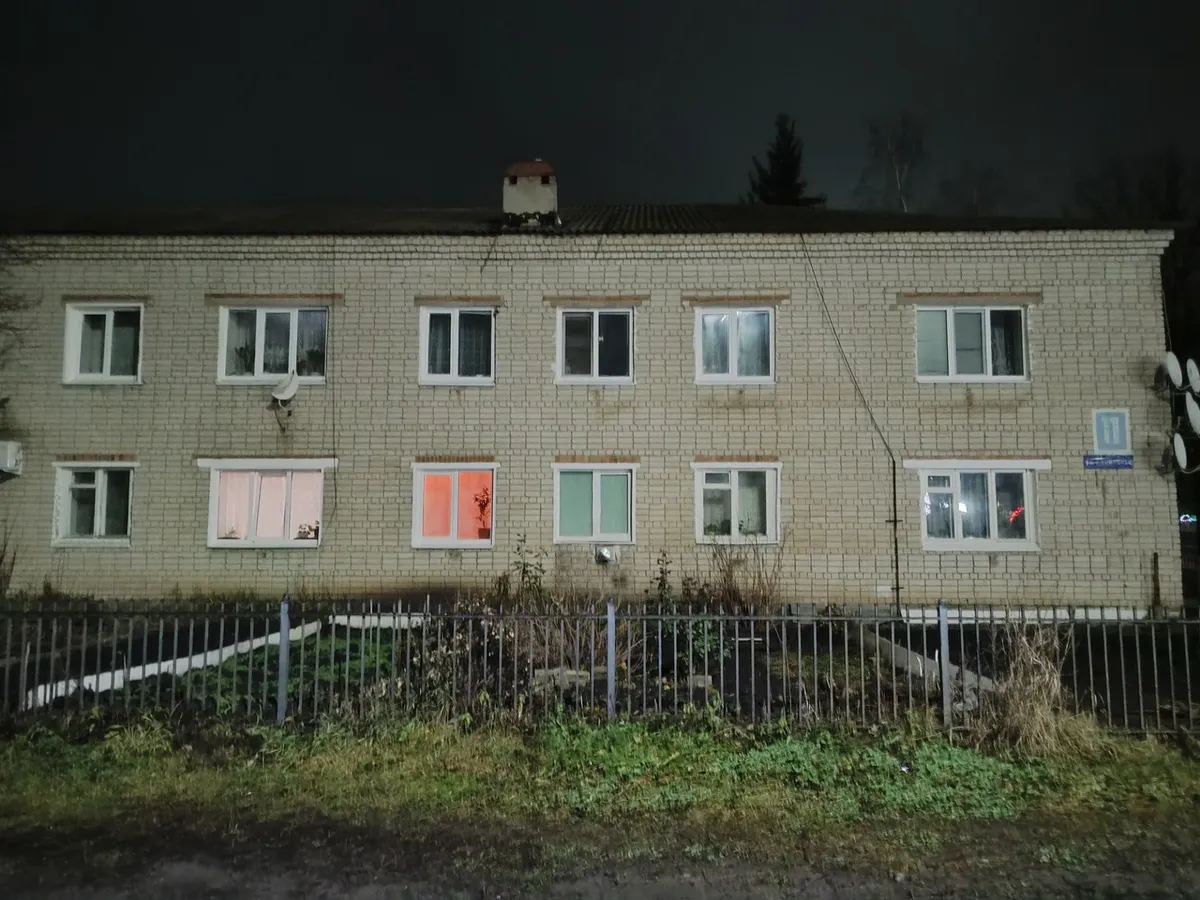
The temperature outside is above zero, there are puddles and pitch darkness. But in the central district hospital several windows are on fire and life is already in full swing.
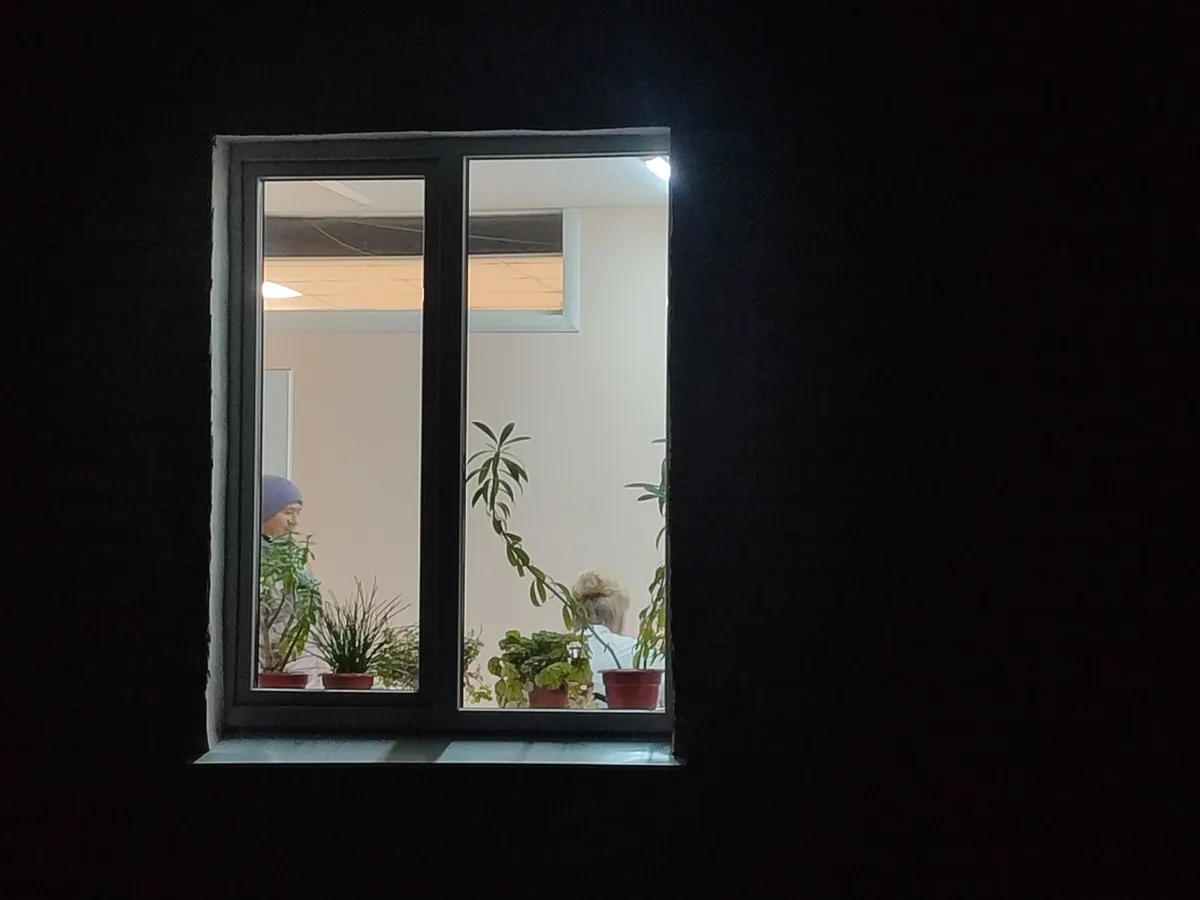
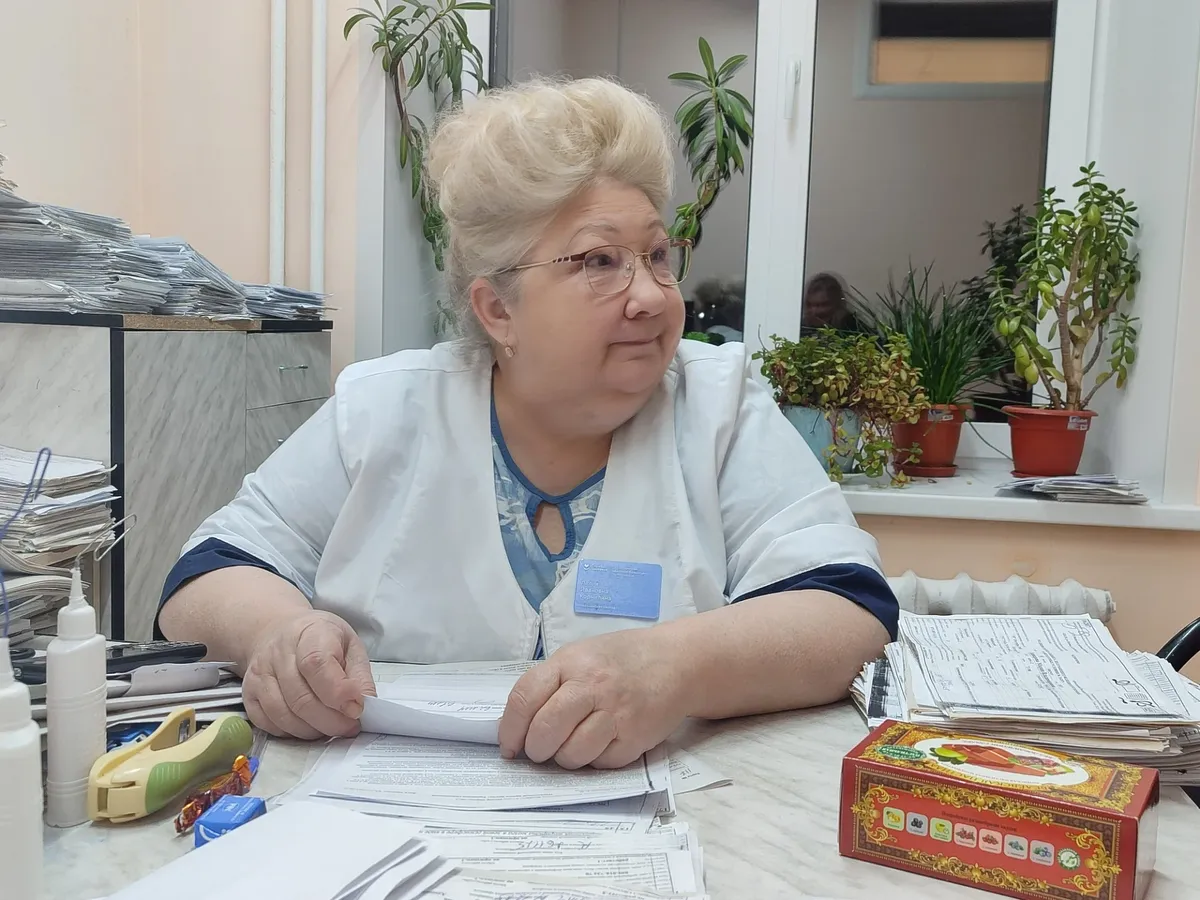
The top of Lilivanna's head with a tuft of blond hair pinned high on her head is already sticking out in the office window above the pots of indoor flowers. She is one of the first to arrive at work: she lives 500 meters from the hospital, but gets there only by taxi. Since she buried her husband, her diabetes has worsened so much that it has become difficult to walk - she walks five meters and has to sit down. One hundred rubles is inexpensive, she reasons; It’s only unfamiliar taxi drivers who charge 150.
From the street, where it is dark and dank, the hospital seems homely.
— There is no snow, it doesn’t even smell like winter. “My head hurts,” Lilivanna says to her therapist, young Zhenya, who moved to Maina a couple of years ago from Ulyanovsk under the Zemsky Doctor program.
The clock shows a couple of minutes to eight, and they begin the reception.
Lilivanna is wearing a hospital gown and wide, soft white leather clogs. On her nose are brand new “chameleon” glasses, which she is very proud of.
“I’ll sit on the bench at home, wearing good glasses,” she says.
All the talk these days has revolved around her farewell. Almost every colleague who comes in tries to dissuade her and asks if she has changed her mind about “writing herself off.”
Each time Lilivanna patiently explains that her medical certificate has expired ( issued for five years, since 2021 replaced by accreditation; both documents confirm the doctor’s right to work. - Ed. ). There is no point in extending further:
“I have no strength anymore, just some kind of powerlessness has set in.” How much is possible? They don't work that much.
Joy in white coats
Lilivanna was born in the neighboring village of Repyevka, 15 kilometers from Maina. Mother was a collective farmer, father was a tractor driver.
Until now, her speech is an iridescent Volga dialect, simple, rustic, although since childhood she was well-read and re-read everything that was in the local library. “I was often sick when I was little,” Lilyvanna recalls. — A paramedic came to us - to us, of course, she introduced herself as a doctor - I loved her to death. She was so smart, she always wore a hat and a crisp, snow-white, starched robe. I guess I went into medicine looking at her. Lilivanna’s other vivid childhood memories include going to the first aid station to play: there was a “sea of flowers” and some “specific hospital smell.”
In 1978, she graduated from the Ulyanovsk Medical School (now college) with honors.
“My friend was a crammer, and I wrote this outline, “tink-tink-tink-tink,” and that’s it, the next morning I got up: the whole text was in front of me,” recalls Lilyvanna. “My memory was phenomenal, I was afraid how smart I was.” A shaaas!
While I was studying, I had to wander around the corners of friends. Either sleeping in a tiny room with an old grandmother and bedbugs, or plugging holes under the door with rags so as not to smell the smoke from the neighbors. But the joy from the white coats overshadowed everything.
“In the first year [of study], the school was very close to where we lived - just cross the road and walk a little,” she continues. “We, morons, put on hats, put on these white coats, so as not to wrinkle them, and so that on the street everyone would look at us and spank us. Now if I saw it, I would collapse! They didn’t miss classes - they even ran when they were sick: not like the city people who “didn’t resist.”
“I knew all the percentages of medications - no one knew doctors like that,” Lilyvanna is inspired.
Even today, trainees who come to apply for a job at a hospital do not pass its “exams.” The young nurse sat in the office for hours and watched Lilyvanna work.
“There was a rumor that she graduated with honors,” she smiles, squinting. - And I started asking her: by percentage, and what is the name of the saline solution - but she doesn’t know! This is how we taught pharmacology and how we passed it.
And then Lilyvanna suddenly takes on a serious look and commands at the door: “Come in!”
“It would be better if I didn’t come to you”
One of the hospital employees comes into the office and brings her mother, an 87-year-old grandmother. She has a low pulse and arrhythmia: the doctor immediately sends them to the city to “hang up a monitor” - to do a 24-hour Holter study.
Grandmother resists.
- Well, I’m still alive. And if I die, it will be right away. Do they die right away?
“Not right away,” the doctor answers.
“You will suffer,” Lilivanna responds, laughing. - Yes, go! They'll set you some tea and you'll live happily ever after.
“It would be better if I didn’t come to you,” she sighs. - I would live and live.
“I don’t love all these [doctors] to death either...” Lilyvanna agrees. And when the grandmother leaves, she adds. - He’ll go, he’ll go, he won’t go anywhere. Patients are admitted by appointment, that is, by appointment. But when they “climb in without an appointment,” they still don’t turn anyone away. It’s nine o’clock in the morning, and outside the window it’s still dark—as if it’s never been light. “We’ll be there until tomorrow, my dear,” Lilyvanna instructs the next patient. When she leaves, she reminds after: - In the seventh office - take a form, ECG - on the second floor, FGS - sign up at the registration desk! A 65-year-old woman complains to the doctor about a cough (she prescribes her treatment) and shoulder pain.
“And this is osteochondrosis, my dear, and defarthrosis,” Lilivanna interjects. - The time has come.
“Verochka”, “Olenka” and “Svetochka” go to her as if they were home - they know that she will tell her and will regret it.
“I don’t like the patients at the center [at the hospital site],” Lilivanna admits. - And on my site there is a lumber mill, RTS, Kartsovka - some others. I love them.
- Lilyvanna? — the man who was already at the reception returns.
- Ainki?
— Don’t you need to put a stamp?
— There’s no need, Kohl, it’s electronic [sick leave]. It’s just like that, we give you pieces of paper.
Lilivanna doesn't have a computer - only the doctor does. She fills out cards, pastes tests into them, writes prescriptions and directions by hand.
- We write and write, but why do we need a computer then? Previously, everything was simpler, there were fewer hassles and writing - Lilivanna admits that she loves working with patients more than with papers. - And Shas have driven us down. They demand that there be lists for medical examination, lists for mammography, third, fifth, tenth. Well, is this really work?
But the treatment, Lilivanna agrees, has become more progressive.
“The same medical examination,” she continues. “We drag men in by force!” Their PSA ( prostate specific antigen, tumor marker. - Ed. ) is included in the clinical examination, but by age, and I write to everyone. We have identified so many cancers! There are a lot of intestinal diseases: you can’t just test feces for occult blood. Our population needs to be educated, I don’t know how to educate it - I myself don’t want to go anywhere either.
- How’s the sugar now? - one of the nurses asks her, looking into the office for documents.
“It depends: if you crack a chocolate bar, of course it’s both 7 and 9,” answers Lilyvanna. In addition to diabetes, she has problems with her spine, which also makes it difficult to walk. She tore it off back in the mid-2000s, when, after the death of her mother, she moved her to Maina and carried her paralyzed father around hospitals for several years.
“Do you think I’ve always been like this?”
Lilivanna could work all her life in her village - in the Repyevsky boarding house for the elderly and disabled. In any case, that’s what I intended. But…
“Those with honors had a free placement after college,” continues Lilivanna. “I didn’t like the city, but I had a fiancé in the village.” I came to the district chief physician and said that I would go there. And he forbade me: “What? With honors, she will go to a nursing home to work! You’ll go to therapy!”
48 years later, Lilivanna is grateful to the head physician for “not huddling in the village.” And she almost didn’t wait for that groom to return from the army - she met her future husband.
Before maternity leave, she worked for two years “on shift” as a nurse in the therapeutic department. I tinkered with my favorite solutions and made injections. In the early 1980s, she returned from maternity leave to the clinic—night shifts were no longer suitable for the 21-year-old young mother.
It’s impossible to count how many doctors Lilyvanna saw during her work. She worked with the first one the longest, almost 20 years. We went through “fire and water” together.
- She was a candidate for deputy - I am her confidant. She is in the trade union committee - and I am with her in the trade union committee. Now I'm surprised at the girls nurses who don't get along with doctors. The only one I didn’t like was a doctor who treated patients poorly. She came for a million (rubles, according to the Zemsky Doctor program - Ed.), worked for a year and ran away, they were looking for her to return the money. And I taught all my doctors: treat patients the way you want them to treat you. And that’s how I was taught at one time.
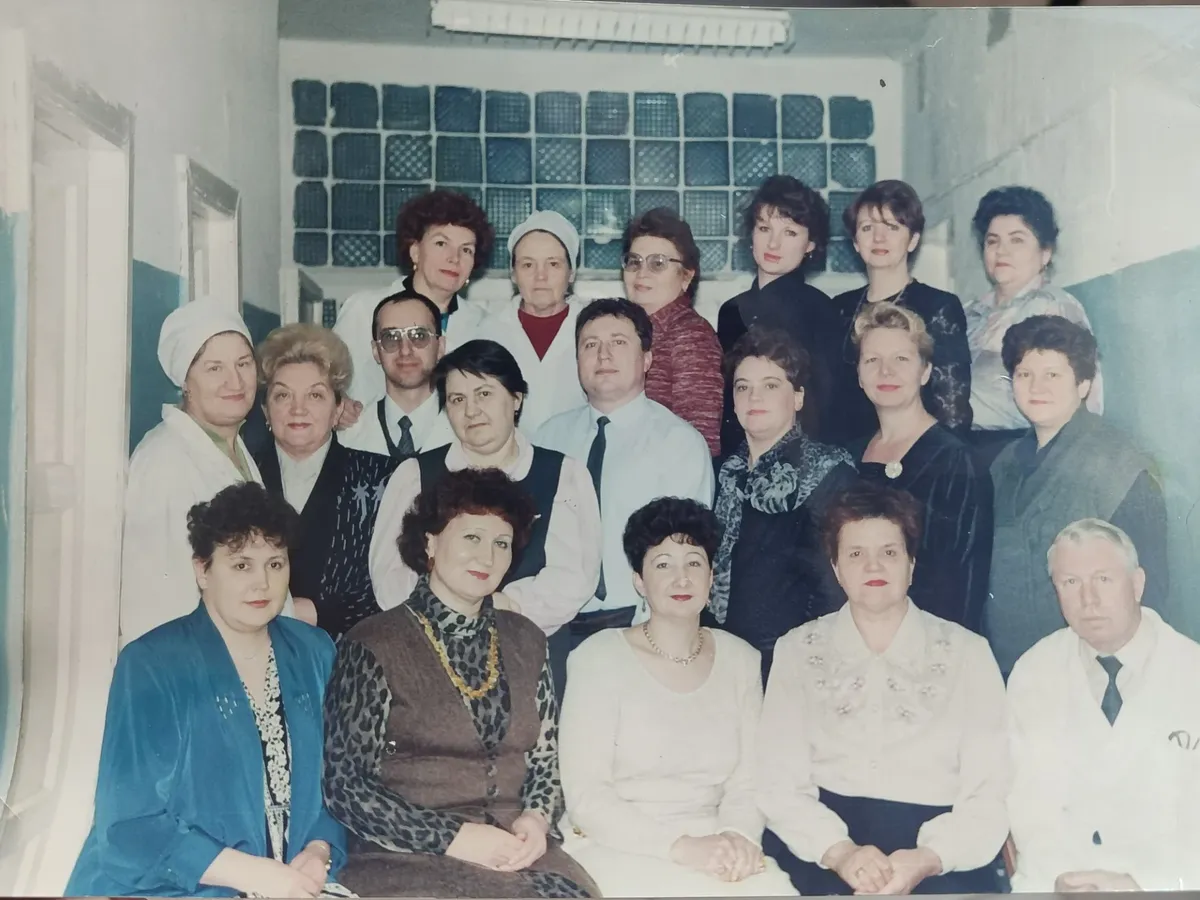
Lilyvanna takes out a color photograph - 1997.
- What do you think, I’ve always been like this? — she is transformed before our eyes. - I was beautiful. It was after 50 years that I gained weight and began to hate myself.
She lists everyone in the photograph - 20 people - by first and last name: her memory at this moment is in perfect order. She divides the people depicted first according to the criterion “living/deceased”, then position is added to this:
- This is the deceased. This is from the footage. And this is the midwife...
Lilivanna herself is 38 years old in this photo. Graceful figure, short dark hair styled in an updo, light dress with shoulder pads.
— I got this dress for free! - she laughs. — Belarusians arrived and sold knitwear. While I was running [home], measuring, while I was looking for money, I came and it was gone. And it lay with me for so many years. The money has not been given - how will I wear it? Ashamed. And then everyone says to me: “So what now? You didn’t do it on purpose.” And I started wearing it.
Lilivanna was taught to dress nicely for work by the head of the hospital department. “She will never come to work, as they do now, in a tracksuit.” She always has outfits: skirts, a dress, shoes, a starched robe. She won't wear anything. No matter how many years we worked, she was always an example for me. “We still talk to her on the phone,” she is proud.
Lilivanna has the best memories of life in the nineties: “poor, but interesting.” They worked easily and harmoniously, and the chief doctors went out on all holidays together with doctors and nurses. One day “even the first secretary” came.
“We used to laugh all together.” “And now everything is forbidden,” Lilyvanna says with an affected seriousness.
“I wasn’t afraid of death. I just overstrained myself"
Lilivanna had only one fatal case with a patient. Even before maternity leave. Night duty, she is a 20-year-old medical school graduate.
“I remember my last name now: Stefanov, he had a heart attack and died in front of me,” continues Lilivanna. - Brought, abandoned - save. And he is such a big guy! The doctor on duty and I both weighed 50 kilograms. Let’s lift him from the bed onto the floor and perform artificial respiration, but they brought him in late. There were no intensive care units [reanimation vehicles] back then. Therefore, we were not to blame for anything. I wasn’t even scared in any way, I was just sore—all my bones hurt afterwards. Lilivanna’s own husband (she calls him only by his last name, Cornilin) was also unable to be saved two years ago.
“There were five heart attacks, and on the sixth they died,” she recalls. - He had a terrible attack. The paramedic did not want to carry him on a stretcher! Then she told me that he couldn’t have walked, but she drove him. I sat in the car and watched - as I understood, as soon as he entered [the building of the regional vascular center], he immediately fell to his death. His T-shirt was torn, and they apparently immediately began performing resuscitation on him. Lilyvanna herself was at work at that time.
- I think I’m of some use - to take you back? Who knew the paramedic was such a bitch? It's all just thinking now. Maybe this could be the case? Or maybe not, she says.
When asked what life has been like for her since then, Lilivanna, after thinking, replies: “Better. And it’s easier.”
“The dead man was a terrible mischief maker.”
Lilivanna used to have a lot of photos of her young and beautiful.
“As I remember now: it was March 8, and I was standing against a blue background, so slender and beautiful,” suddenly she blossoms again, plunging into memories of better days. — I had a white jacket with short sleeves, and there was a rose on it, and a pleated skirt. I was like a doll. The doctor and I are still standing there, and mine, Kornilin, was extremely jealous of him. He took and tore up or destroyed all my photographs - they are nowhere at home. After his funeral I decided to take a look: I searched and searched and checked everything. No.
For some reason, she especially remembered that day, March 8th. Since the New Year, there was lamb lying on the balcony - there was no freezer. And Lilyvanna decided to give the whole team a treat, “not to throw it away.”
— They made it in pots and poured in spices. Those potatoes [with lamb] were very tasty. And I was beautiful,” she sighs. - And my husband got drunk, he had quirks. The dead man was a terrible mischief-maker.
Lilyvannin’s husband worked at the school as a “trudovik” - the only men on the team were the physical education teacher and the military instructor.
— They drank until the shit out of us, we could reach a box of vodka. And for several days at a time: I crossed out days on the calendar,” Lilivanna recalls. - And when he didn’t drink, he was a golden man. I lived like a goldfish - whatever I ordered, he did everything. But when he got drunk, maybe he was not happy with himself that he was so efficient, and he began to take revenge on me. Over the years, he began to show aggression: he could open his hands and hit. I had to run away from home.
Lilivanna contacted the police, but all the statements “turned against” her - her husband had friends there. He was immediately released, and then everything only got worse.
“And they coded it and patched it up.” We got divorced, but he told me: “Let’s have a common budget: I’ll give you all the money, you’ll cook for me.” During another drinking session, her husband erased the recording of her 50th birthday from the videotape. Lilivanna felt especially sorry for this memory: in it, her three-year-old grandson Danilka sang the song “They call me ugly.”
And when Danilka was in second grade, Lilyvanna took him in with her.
“My daughter graduated from the agricultural academy, but she’s of no use—it’s not the same way of life.” “Genes,” she explains briefly. “But [his grandson’s] father never helped, and now he’s passing him by.”
When Danilka grew up, he began to stand up for his grandmother before his grandfather.
Now he is 22. He graduated with honors from law college - his grandmother taught him in Ulyanovsk.
This spring he returned from the army and passed his university exams. He entered the paid department, but was not accepted for study: they did not have time to pay the first year’s payment on time. Lilivanna saved for a year, and then cried for two days.
So while Danilka works in the local “social security”, the salary is small. Friends call to Elektroseti, but grandma is against it.
- Why, I say, don’t you sit warm? You have to be crazy to exchange work in the heat for poles,” she explains.
“I didn’t miss a single pneumonia”
But the work of a district nurse is far from hothouse. After lunch, doctors and nurses make house calls. A company car delivers them, and if he’s busy, he delivers them to friends and acquaintances.
The second Covid winter turned out to be especially difficult in Maine - at the height of the epidemic.
- The snow outside the houses is not cleared, the doctor and I are climbing up to our waists! - Lilyvanna recalls. - He listens, I take a smear. One woman was literally “raped” and taken away with severe pneumonia and diabetes. She's over 80 and still alive. Another one had a heart attack: no matter how many times they broke into his house, they finally persuaded him to admit him. The man is still alive, too, and even, it seems to me, he’s going on crazy adventures again.
Covid in Maina was generally difficult to cope with. The workload was heavy, the doctors were also sick.
“I myself became very seriously ill in February, just before this covid,” Lilivanna recalls. — My doctor was going on maternity leave, we had to finish all the work with her. And I got to the point where I was already falling straight down. When I returned from sick leave, we already had a separate office open [for receiving Covid patients]. We took turns getting there, once or twice a week. We received 60 people a day, that was something!
In 2024, when several doctors left the hospital at the same time, Lilivanna saw patients alone on the site for three months.
— I was surprised at myself. “I haven’t missed a single pneumonia,” she rejoices.
I asked a doctor from another department to enter data into the computer and close sick leave. Lilivanna has been promised to get her own computer for many years, but now there is so much documentation and reports that she no longer insists: “it’s not in her mind.”
Final chapter
After work, Lilyvanna takes her car to a new grocery store with a colleague. He doesn’t spare money on food: he buys for future use and fills the freezer (which he’s had for a long time) with salmon and beef.
Her pension is 17.5 thousand rubles.
The salary is three to four times more, about 60: various bonuses are added to the salary, including “Putin” (for zemstvo doctors) and “veteran” (for the title of veteran of labor).
Under Putin, according to Lilivanna, life is generally better: an abundance of food and “two cars in each yard.” She goes to all elections and votes for Putin and United Russia.
- For some reason, for them. I don’t know why, I can’t explain to you,” she reasons. - Well, I hate this Zyuganov from the communists, and it seems to me that they are all like that there.
***
- Well, is the newspaper there? - the woman asks, looking into the office.
“Ah, Svetochka, as I said, the newspaper appeared the next day!” - Lilyvanna responds. And when she leaves, she explains: “My postwoman.” I have a regional newspaper *** [taken out] from the box: they read it and put it back. Now she will twist it for me, twist it, and put it in the corner [of the mailbox]. I know where it is, but the neighbors don’t know. I know who is doing this, they are the only dishonest ones among us. There is no one else. Cars change every now and then. Fear God, you have a sick child. Would normal people behave like this?
A subscription to the regional newspaper “Leninets” costs 600 rubles for six months. This is the only reading that is now available to Lilyvanna - after work, over tea. Previously, she devoured all the books that were at home and in libraries - as a child she loved to read about Lenin, then about the war, and then romance novels.
“I’m actually a home person, I like to sit at home, read books and newspapers and cook,” she admits.
Lilivanna rarely left Maina. I’ve only been to Moscow once – when I was still a student, we went “with Lyudka to buy clothes.”
“I didn’t like the gas pollution in Moscow, this haze,” she recalls.
— She went out onto the balcony: “Bah! Where is our fresh air?
Then I was once in Kazan - also for clothes - and in Samara, with my husband, visiting relatives. She ran away from the Radon sanatorium near Ulyanovsk, where she was given a leave from work: she lasted only ten days.
- Well, what is there, in the sanatorium? Lie and lie all day. Go out for a walk - there’s some kind of ravine, a mosque, and the smell of sheep nearby, forest all around,” she continues. - And then we only bought a new “ninety-nine”. I say to Kornilin: “So, come quickly with me.” And I was happy to sit at home.
Lilivanna has never seen the sea and doesn’t want to: she says, “all this is not for me.”
“One grandmother knew me, she said: “No, dear, it’s not laziness, it’s old age,” she explains. “The years began to come, I moved away from all my life. There is only work left, and that needs to be cleaned up. I already want to just relax at home, burnout is happening. What is a pension given for?
Lilivanna dreams of baking pies and making dumplings at home again.
“Danilka ordered me a planetary mixer, a new iron, an ironing board, a small pressure cooker for four,” she boasts. — And I always make homemade dumplings — Danilka doesn’t like them with big “ears.” I cook jellied meat, I make shawarma myself - Danilka, when he served in the army in the south, got used to it.
Despite the fact that she put her grandson on his feet, gave him an education and a job, his soul still hurts for him.
“At first I thought he would go to the police, as an assistant to our duty officer,” Lilyvanna estimates. “And he categorically doesn’t want to go anywhere: not to the FSB, not to the police, not to the Russian Guard. A peaceful person, apparently. They encouraged him to go there [to the Northern Military District], but he refused.
My heart also hurts for the sick people who will have to be left behind after Lilyvanna pays off her job. The day before it became known that a new nurse was leaving the hospital - the same one who had interned with her.
I feel so sorry for my patients - who will get them? - says Lilyvanna. “I would like to hand it over to someone in good hands, but there is no one.” Neither good nor bad - there are none.
Rina Alexandrova