
Translated material
Two churches - two faces and two faiths
The first book about the Russian Orthodox Church of modern times has been published

18+. THIS MATERIAL (INFORMATION) WAS PRODUCED, DISTRIBUTED AND (OR) SENT BY FOREIGN AGENT KSENIA VALERIEVNA LUCHENKO OR CONCERNES THE ACTIVITIES OF FOREIGN AGENT KSENIA VALERIEVNA LUCHENKO
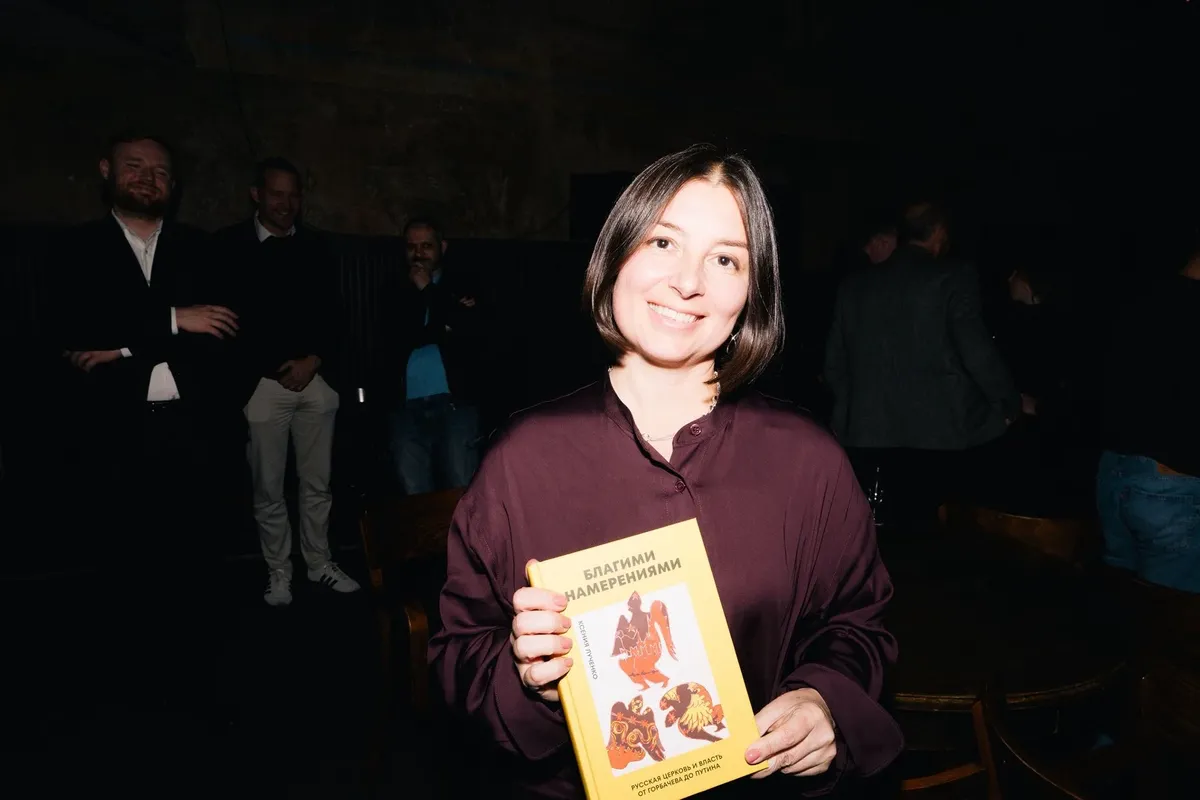
“With good intentions. The Russian Church and Power from Gorbachev to Putin” is the title of the published book by Ksenia Luchenko*. There have always been very few authors who wrote about religion in Russia, and there are even fewer journalists writing on this topic today. Ksenia Luchenko is one of them.
In the 2000s, she worked in the publishing department of the Moscow Patriarchate, so her book contains many previously unknown details regarding key events in Russian political history, closely connected with the hierarchs of the Russian Orthodox Church. Luchenko is personally acquainted with the heroes of her book; she interviewed many of them at different times, closely following their destinies and changes in life, starting from Gorbachev’s perestroika to the present day.
The book “With Good Intentions” is undoubtedly the first attempt to comprehend the modern history of the Russian Orthodox Church, an attempt to answer the question of what happened to the first persons of the church, to its clergy after the church received the desired freedom in the 90s and instead of becoming independent from the state, doing missionary work, converting non-believers, attracting them to the church, it became increasingly closer to the state, continuing the line of Patriarch Sergius (Stargorodsky), who Stalin's time, wanting to save the remnants of the church destroyed and humiliated by the Bolsheviks, declared to the Soviet authorities: “Your joys are our joys.” Modern hierarchs, like Patriarch Sergius, explain the desire for closeness to power by the fact that they preserve the church.
From Alexander Me to Patriarch Kirill
For Ksenia Luchenko, this book is not only a professional study of the state of the Russian Orthodox Church, but also a very personal statement: she was baptized in her youth and, together with the people of the church, experienced everything that happened during these years. Luchenko shows the authoritarian nature of governance in the Russian Orthodox Church, the way it deals with dissident clerics. And the “Pussy Riot case”** is completely disgusting with its harshness, legitimization of judicial arbitrariness and refusal of “mercy for the fallen.” But the girls who sang in the choir drew the attention of society and the whole world precisely to the connection of the Russian Orthodox Church with the authorities, and this could not but outrage Patriarch Kirill and people close to him,
after all, in essence, the activists behaved like the boy from the play by Evgeniy Schwartz, who announced publicly that “the king has no clothes!”
The texture presented in the book is amazing; Taken together, it essentially delivers a disappointing verdict on the church institution that has been formed by 2025.
The book begins with the story of Father Alexander Men, he would have turned 100 years old this year. He was hacked to death with an ax on September 9, 1990, near his home in Zagorsk, near Moscow. Alexander Men was a missionary, preacher and an unusually popular priest among the Soviet and Russian intelligentsia. Thanks to him, thousands of people came to Orthodoxy. He spoke about Christianity in simple language, his faith was a religion of love, joy and mercy. Thirty-five years have passed since his murder, but it is still unknown who was the “customer” of this crime. Luchenko sets out all the versions in the book, writes that Alexander Men’s close friends believed that the KGB was involved in his death, but there is still no direct evidence of this.
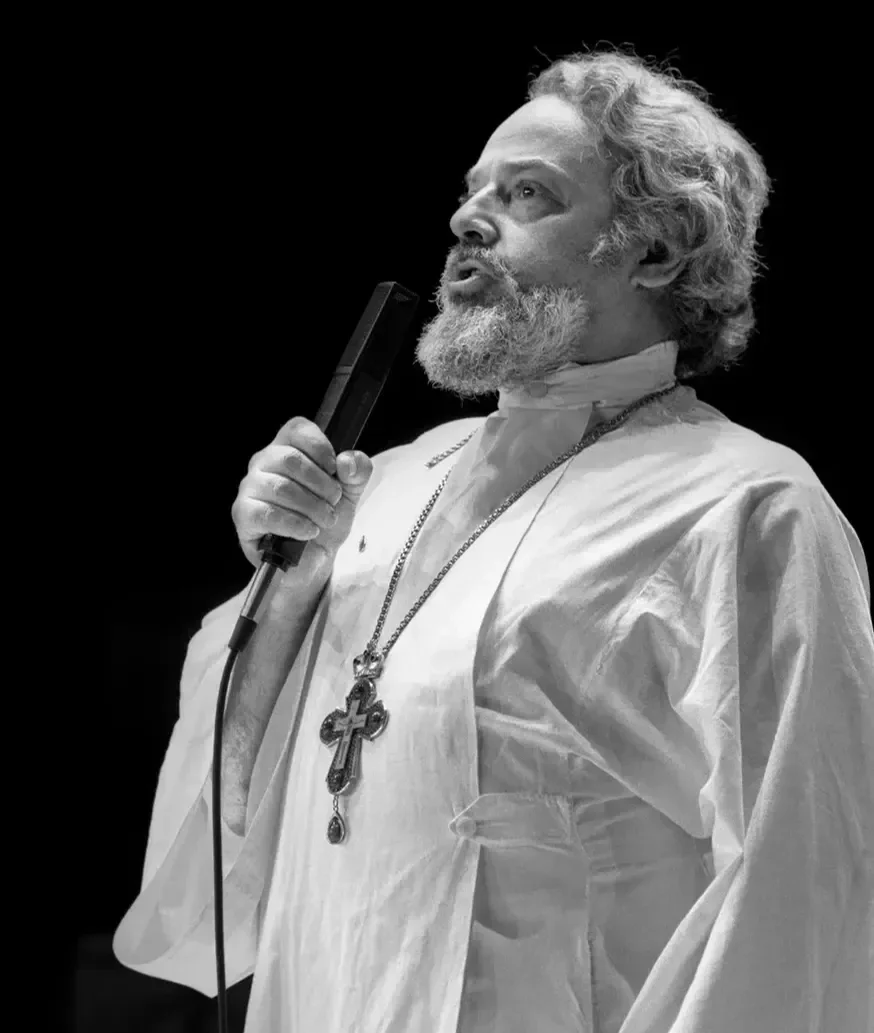
The story of Father Alexander Men is important for the author not only because he was our great contemporary. Remembering how Father Men became a priest, what and how he preached, Luchenko manages to talk about the relations between the Soviet state and the Russian Orthodox Church, the KGB and the Russian Orthodox Church, about religious dissidents who advocated freedom of conscience and ended up behind bars.
Each chapter of the book describes some important event in the life of the Russian Orthodox Church or its representatives. We will learn how Patriarch Alexei II tried to stop the bloodshed during the 1993 coup and how he failed to reconcile the warring parties. Lucenko believes that
“It was then that Patriarch Alexei II and Metropolitan Kirill had to accept reality: the Russian Orthodox Church cannot become an independent political force; its moral authority and influence on society are not enough to be a source of power.”
Since then, the church has made the final choice in favor of “symphony with the state.”
In subsequent chapters we meet the future Patriarch Kirill. Ksenia Luchenko shows in detail the path he took, initially hoping to create a strong church, actively participating in commercial projects, talks about money, which, in her words, “he needed not in itself, but as a means of achieving power and influence.”
Luchenko cites the opinion of his former subordinate from the Department of External Church Relations (DECR) about Kirill. “He was amazed how the Metropolitan, participating in three meetings in a row, could give different people different versions of the same story, sometimes with the opposite meaning, depending on what effect needed to be achieved from the interlocutor: “He was not at all embarrassed that we - some kind of servants - were present at the same time and could not help but notice it. And I wouldn’t say that he was arrogant or that he had any contempt for us, no, he was just very cold, a complete lack of empathy.”
Sounds pretty scary, doesn't it? Let me remind you that we are talking about the Orthodox Metropolitan, today’s Patriarch of All Rus'.
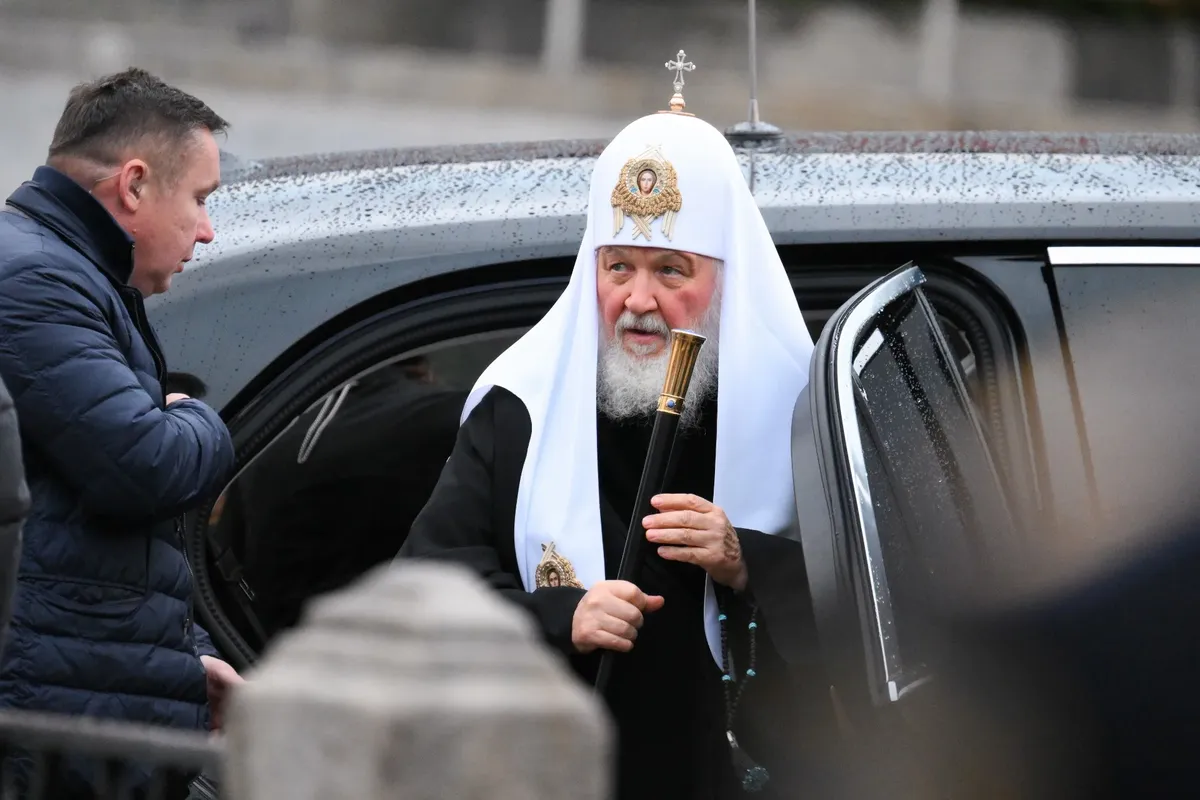
A separate chapter in the book is devoted to the election of the patriarch, and this is a real “anatomy of the Russian Orthodox Church”, with all sorts of intrigues, bargaining, and betrayals. “Fully Soviet Patriarch” is the title of this chapter; the author refers the reader to the words of journalist Andrei Zolotov, who, together with his colleagues, followed the elections of the patriarch and after the end of the meeting said: “It’s a paradox, but 20 years after the end of Soviet power, we now have the first, completely Soviet patriarch.” With all the consequences...
Patriarch Kirill was chosen as the new primate of the Russian Orthodox Church a month and a half after the death of Patriarch Alexy II, who, according to the official version, died due to an awkward fall in the bathroom. Ksenia Luchenko draws attention to the fact that the medical report on the causes of Alexy’s death was never published, his diaries, which he kept for all 18 years of his ministry, disappeared...
The myth of Russian history and the Temple of the Armed Forces
The funeral of the remains of the royal family, disputes about their canonization, the unification of the Russian Orthodox Church with the Russian Church Abroad - a project of Patriarch Alexy II, which was carried out by Bishop Tikhon Shevkunov, mainly in the interests of President Putin, who dreamed of building a “new great Russia in which all the previous ones will be reborn,” and other important milestones in the general history of the Russian Orthodox Church and the Russian government: the severance of relations between the Russian Orthodox Church and the Patriarchate of Constantinople, the informal “Diveevo Brotherhood”, a kind of VIP club of representatives of the Orthodox elite, consisting of Sergei Kiriyenko, Prime Minister Mikhail Mishustin, the Kovalchuk brothers and others, the construction of the main temple of the Armed Forces of the Russian Federation, a kind of prelude to the North Military District - all this is also in the book.
These stories are described colorfully, with vivid details, and each time the author unobtrusively but clearly expresses his personal attitude to specific events. The portraits of the main figures of Russian Orthodoxy are interesting and recognizable. This is Metropolitan Hilarion Alfeev, and, of course, Bishop Tikhon Shevkunov. Ksenia Luchenko calls him a “statist” and, from the words of people who knew Vladyka closely, claims that Shevkunov “believes in the state more than he believes in the church.”
For “twenty-five years he has been creating a myth of continuous, consistent and triumphant Russian history.” And, of course, this myth is accepted and welcomed by President Putin.
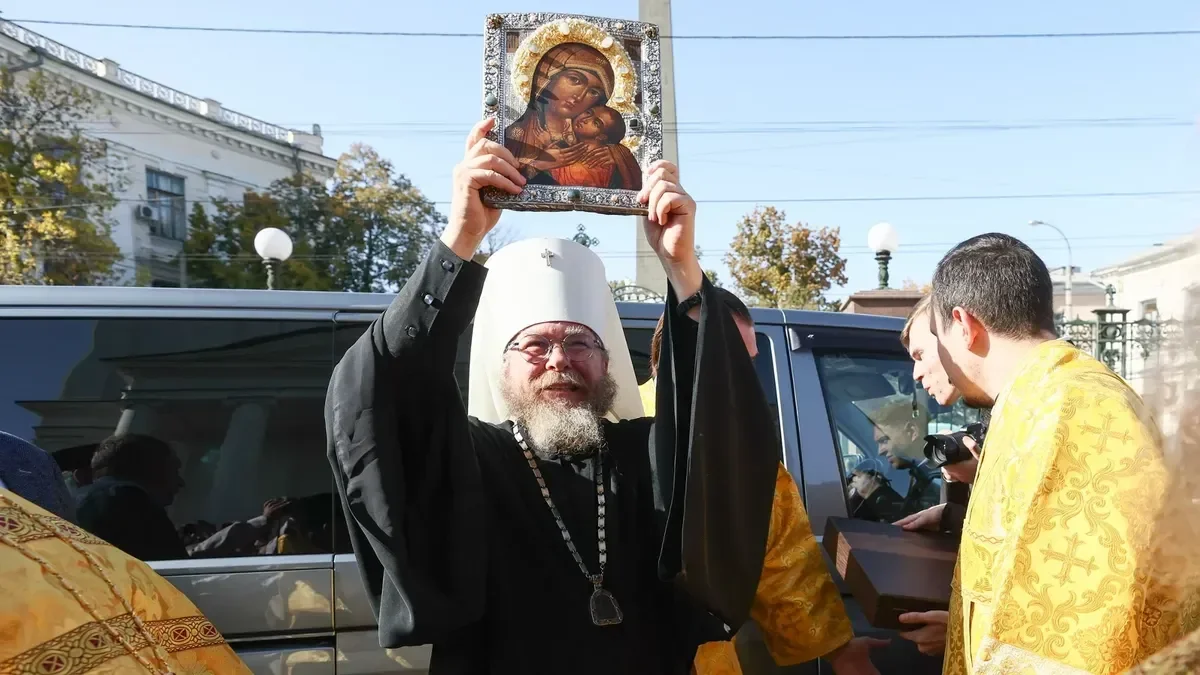
The beginning of the SVO presented the clergy of the Russian Orthodox Church with a serious choice, but it seems that people like Patriarch Kirill and Archimandrite Tikhon Shevkunov had no doubts: they unconditionally and passionately supported the special operation. Luchenko tells the stories of priests who went to the front to baptize and give communion. She cites official statistics according to which “every twentieth priest of the Russian Orthodox Church visited directly in the war zone.” And some even took up weapons, although, as Lucenko reminds, “according to the canons, a priest who used a weapon should be defrocked.”
Priests saving the church
Of course, such a story about what the institution of the Russian Orthodox Church represents today, how its hierarchs and clergy live, is bitter and disappointing reading, especially for a believer.
But Ksenia Luchenko shows us two churches: in one of them there are church officials - the patriarch, metropolitans, priests who unconditionally support the government and its policies, forgetting about true Orthodox service, and the other church is a living church, in which there are clergy who decided to publicly and not so publicly speak out against the SVO. They do not read the so-called patriarchal prayer for victory during the liturgy; they, together with a small number of faithful parishioners, pray for peace.
These are the priests who signed a letter for peace immediately after February 24, 2022, those who previously signed letters in defense of activists persecuted by the authorities, people who do not agree with Russian politics, who visited political prisoners in prisons. These are the priests who are not afraid to serve requiem services at the grave of Alexei Navalny, for which they are banned from serving, church punishments are imposed on them, and they are sent as readers to other churches. All these clerics are at great risk not only of losing their rank, but also of ending up behind bars, in particular.
If the first chapter of the book “With Good Intentions” is dedicated to Father Alexander Menu, then the last one tells about the fate of the former rector of the Moscow Trinity Church in Khokhly, Father Alexei Uminsky, who two years ago was first banned from serving and then deprived of his rank. At a meeting of the disciplinary commission of the Moscow diocese, Uminsky was asked why he did not read the patriarchal prayer.
“He replied that he saw neither meaning nor truth in this prayer: no “foreign” people took up arms against anyone, and “Holy Rus'” is not a theological or liturgical concept,”
quotes the words of priest Ksenia Luchenko.
He had to leave Russia, he received threats, and several knowledgeable people warned that he could be arrested. Now Uminsky serves in Paris, in the temple of the Patriarchate of Constantinople.
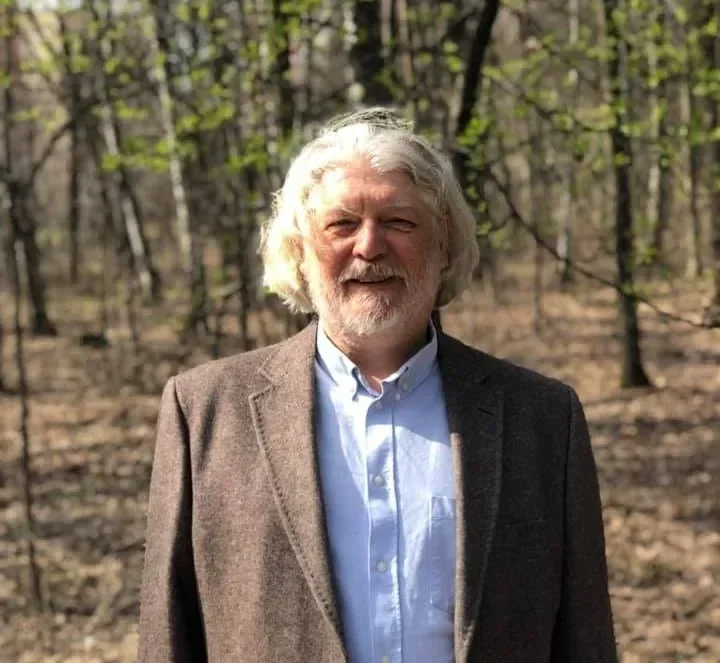
However, the last chapter - “Christ is near” - is not only about Father Alexei Uminsky, it is also about those priests who are in solidarity with him, but the author, for obvious reasons, cannot name them.
This chapter certainly gives hope that true Russian Orthodoxy is alive, and the church institution of the Russian Orthodox Church, which chose the state, does not represent all Orthodox Christians in Russia. By the way, sociological surveys indicate that people in our country have begun to trust the institution of the church much less than they did in the late 90s and in the 2000s, and, despite the construction of new churches, the number of church people is not increasing. This sociology is not surprising, especially after reading Lucenko’s book, which shows in detail how the church lives today, how its proximity to power can, on the contrary, scare and disappoint.
And yet, could the church, having received freedom in the 90s, abandon the “symphony with the state”, become independent and not pretend to be the “main anchor”? History, as we know, does not know the subjunctive mood, but perhaps if then the people in power in the church had listened to the voices of religious dissidents who spoke and wrote that church hierarchs should repent for collaborating with the atheistic authorities during the Union, history would have gone differently. But, as you know, in those years the trial of the CPSU did not take place, there was no lustration. And it turns out that the people who found themselves in power in the church, in fact, differed little from those politicians who then represented the authorities...