Translated material
The strategic significance of the commissioning of the tanker "Alexei Kosygin"
And the transformation of Arctic logistics
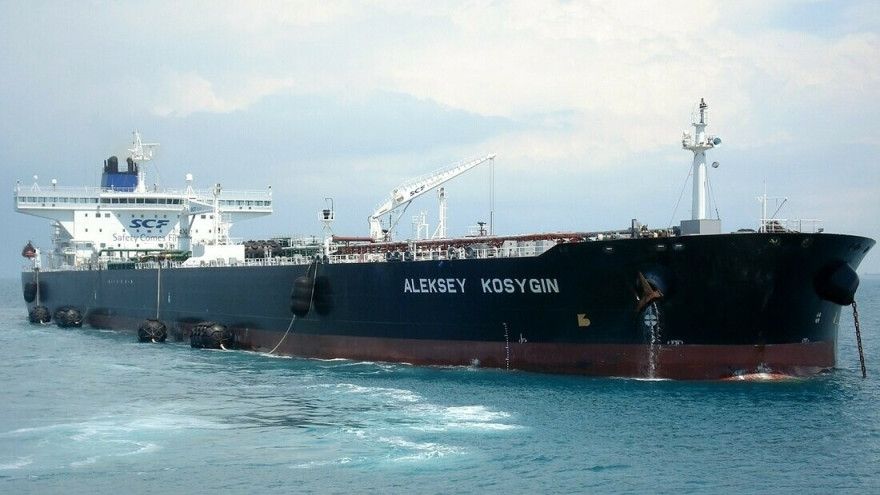
This Arc7 class vessel is designed for year-round navigation in the extreme conditions of the eastern sector of the Arctic. The key difference between this gas carrier and standard ships is its ability to independently overcome ice fields up to 2.1 meters thick. This parameter is critical for working in the waters of the Kara Sea and the Gulf of Ob during the winter period, lasting from December to May, when the thickness of first-year ice often exceeds one and a half meters, and hummocky formations block the movement of ships of lower classes.
The uniqueness of the engineering solutions of the series to which “Alexei Kosygin” belongs lies in the use of a propulsion system with three Azipod-type steering columns. This technology allows the vessel to implement the Double Acting Ship principle, moving stern first through ice and milling the ice surface with screws, which significantly increases maneuverability. The tanks have a cargo capacity of more than 172,000 cubic meters of liquefied natural gas, which is equivalent to approximately 100 million cubic meters of natural gas in gaseous form.
Initially, the construction of the series was planned in cooperation with South Korean partner Samsung Heavy Industries. After the introduction of sanctions and the departure of a foreign partner, as well as problems with licensing membrane storage systems of the French GTT, it was necessary to turn to Russian developments, such as the use of “tanker plywood” produced by Segezha Group for insulating panels.
The role of the new fleet in stabilizing the Arctic LNG-2 project
For the project operator, Novatek, the appearance of Alexey Kosygin changes the paradigm of winter logistics. Until this moment, the project was in a difficult situation, when the plant produced products, but their export during the winter months was physically impossible due to the lack of ships capable of operating in the freezing Ob Bay.
The new tanker becomes a legitimate export instrument during this period.
Its operation allows for two to three shipments per month even in the most severe frosts, ensuring the export of up to 250,000 tons of LNG per month.
This is crucial to prevent so-called “overstocking”. The technological cycle of gas liquefaction is continuous, and if storage tanks are filled and there is no tanker for loading, production must be stopped. The procedure of completely stopping and then restarting liquefaction lines in Arctic conditions is a technically risky and expensive operation. Having an Arc7 class vessel eliminates this risk, ensuring the minimum required shipping rhythm and maintaining the continuity of the production cycle.
Shadow Fleet Ice Protection Crisis and Confirmation of Vulnerability
The fleet available for the project before the appearance of Alexey Kosygin has a serious technical vulnerability. The so-called “shadow fleet” does not correspond to the conditions of the Arctic.
Research by the Center for Research on Energy and Clean Air (CREA) found that a significant portion of this fleet—five of the nine vessels identified—has no ice reinforcement at all . Their hull structures are not designed for contact with ice, which limits their use to short summer-autumn periods in free water. The remaining four vessels are of Arc4 class, which, according to the classification of the Russian Maritime Register of Shipping, allows navigation only in thin ice up to 0.8 meters thick.
This is absolutely not enough for winter navigation in the Gulf of Ob, where ice conditions are much more severe.
Practical proof of this vulnerability was the incident with the gas carrier Buran, which occurred in December 2025, shortly before the delivery of the Alexey Kosygin. A vessel from the “shadow fleet”, which is under sanctions, attempted to make its way to the Utrenny terminal in conditions of ice formation. Despite support from Rosatom, which allocated two nuclear icebreakers for the escort: 50 Let Pobeda and Arktika, as well as two Arc7 class gas carriers from the Yamal LNG project, the operation ended in failure. Buran made four attempts to overcome the ice mass, but was physically unable to follow the icebreaker due to the risk of damage to the hull by the closing ice. This case demonstrated that without Arc7-level ice qualities, even powerful icebreaker assistance does not guarantee success, which led to a forced reduction in production at the project.
Vessels of the “shadow fleet” without ice class cannot pass along the Northern Sea Route to the east in winter, so the only route for delivering Russian LNG to Asia remains around Europe through the Suez Canal or around Africa. Using the tanker "Aleksey Kosygin" along the entire length of this route would be economically ineffective, since most of the time the ship would be in clear water, where its heavy hull is inferior in speed and fuel consumption to conventional ships. Instead, a shuttle strategy can be used. "Alexei Kosygin" performs the function of an ice shuttle: it is loaded at the Utrenny terminal and overcomes the difficult ice shoulder of the Kara Sea to Murmansk.
In Ura Guba near Murmansk there is a floating gas storage facility “Saam” (Saam FSU), where LNG is reloaded. The operation takes from 12 to 24 hours, after which the icebreaking tanker returns for a new shipment. From the other side, a conventional gas carrier of a lower ice class approaches the storage facility, which picks up the cargo in an ice-free port and delivers it to buyers in Asia. A similar scheme using the Koryak FSU in Kamchatka makes it possible to double the efficiency of using expensive ice-class vessels, reducing their mileage and ensuring the continuity of the supply chain, which without the Alexey Kosygin would be broken at the very beginning of the route.
Despite the logistics breakthrough provided by Alexey Kosygin, export volumes remain limited relative to the design capacity of the first line of Arctic LNG-2. Real winter exports will amount to no more than 20–30% of the plant’s capacity. China is becoming a key buyer of sanctioned gas, where the first shipments from Arctic LNG 2 have already been delivered.
The further fate of the project depends on the pace of work of the Zvezda shipbuilding complex. For full operation, a flotilla of at least 15 Arc7 class vessels is required. Following the Alexey Kosygin, the delivery of the tankers Pyotr Stolypin and Sergey Witte, as well as the ships Viktor Chernomyrdin and Konstantin Posyet, is expected . Considering the difficulty of completion without Western components and the cancellation of orders at South Korean shipyards, the formation of the necessary fleet may take from 5 to 7 years.
However, the current commissioning of the vessel solves the main tactical problem: it ensures the physical possibility of winter export of hydrocarbons and maintains the functionality of the strategic project.
Cover photo: paluba.media