
Translated material
Fugitive. Russian dream
Alexander Minkin* made a discovery when he saw an empty space in Pushkin’s textbook line
18+ THIS MATERIAL (INFORMATION) WAS PRODUCED, DISTRIBUTED AND (OR) SENT BY FOREIGN AGENT ALEXANDER VIKTOROVICH MINKIN OR CONCERNES THE ACTIVITIES OF FOREIGN AGENT ALEXANDER VIKTOROVICH MINKIN
*Under him is a stream of lighter azure,
Above him is a golden ray of sun.
And he...*
*The fugitive runner, the fugitive, did not reach
Didn’t make it, didn’t make it…*
School anthology, Pushkin... generations memorized:
**It's time, my friend, it's time! the heart asks for peace -
Days fly by, and every hour carries away
A piece of existence, and you and I together
We assume to live, and lo and behold, we will die.**
People's artists, school teachers, all of us, reading these lines, are full of sympathy and understanding: a person is tired, it's time to rest. So they say “it’s time, old man, it’s time to retire.”
Words have long been torn away from the author, entered the language, into everyday speech; in the children's "Smeshariki" old Kar-Karych and Sovunya, suffering from rheumatism, arthritis, bursitis and gout, groan: “And every hour takes away a piece of existence” - the characters wink at their well-read parents.
Rest in peace, dead man, rest in peace; “Above Eternal Peace” is Levitan’s mournful, funeral landscape.
Let's not prolong the intrigue; we intend to refute this fossilized erroneous interpretation. There is nothing in these verses about old man's peace. And in general, the devil knows where the peace came from here. Pushkin never wrote such a word in the first line of this poem (you will see the drafts below).
Peace appears in the fifth line of the famous program eight-line, but the meaning of peace there is completely different.
(“Programmatic” here means a life attitude, a real, deliberate plan, and a dream... And in general, you can truly understand these poems to some extent if you know what the author has already written and what he will write next.
Anachronism? nonsense? - not at all; all future poems already exist, they just have not yet been transferred to paper. You don't have to agree.)
***
Stop! Where does “peace” come from in the first line? We don't know. But if you open academic collections. cit., you will see: the first line looks like this:
It's time, my friend, it's time! [peace] the heart asks -
Yes, yes, not simple brackets, but square brackets. Someone wrote it in. Who? — we couldn’t find it.
Canonical text in the third volume on page 330. Here it is in its entirety:
It's time, my friend, it's time! [ peace ] the heart asks -
Days fly by, and every hour carries away
A piece of existence, and you and I together
We assume to live, and lo and behold, we will die.
There is no happiness in the world, but there is peace and will.
I have long dreamed of an enviable share -
Long ago, a tired slave, I planned to escape
To a distant monastery of labors and pure bliss.
1834
For some reason it was not published during Pushkin’s lifetime. And for some reason Zhukovsky “It’s time, my friend, it’s time!” was not included in the posthumous edition. First published half a century later - in 1886.
On the 940th academic page:
Draft autograph options
( you can skip them without reading )
Number - line number; letter is an option.
2 a. Life goes by quickly, and every day takes away
2 b. Days run after days, and every day takes away
2nd century Days run after days, and every hour carries away
3 a. Hope or dream - and you and I together
3 b. Peaceful hope - and you and I together
3rd century Old hope - and you and I together
3 g. A faded dream - and you and I together
4 a. We assume to live - and then we die
4 b. We assume to live - and soon - lo and behold - we will die
6 a. For a long time I have been dreaming of the promised share -
6 b. For a long time I have been dreaming of my beloved share
- For a long time <…> a slave, I planned to escape
8 a. To the distant monastery of labors and pure bliss -
8 b. To the monastery of peaceful labors and pure bliss -
8th century To the humble monastery of labors and pure bliss -
There are no options for the first and fifth lines. The first one remained forever with a hole, and the fifth (“There is no happiness in the world, but there is peace and will”), apparently, the author immediately liked it so much that he did not look for any replacements.
So:
Line No. 1. It's time, my friend, it's time! [peace] the heart asks...
Line No. 5. There is no happiness in the world, but there is peace and will.
If you accept such an [“academic”] proposal, it turns out that the heart is asking for something that already exists (in a certain sense).
Carelessness of a genius? But it’s not impromptu; You can see from the drafts how carefully he worked, how he searched for the most accurate expressive word. In general, the crossed lines (their density) show how important this poem is for the author.
Well, what's the right way? Yes like this:
It's time, my friend, it's time! The heart asks for freedom !
**End.
You don’t have to read everything that follows.**
But if you still decide to continue reading, here is how our essay on free topics is organized (if, of course, it can be called organized, which I personally highly doubt).
First the Opening . You've already read it.
Then - Dive into details. It will begin now.
And in the end - Excesses, associations and allusions .
Dive
“We suppose to live” —that’s what’s important. There is no doubt: in 1834 Pushkin intended to live - his plans were enormous; new plans appeared faster than he could implement the previous ones. Alas, I didn’t manage to do everything; We don’t even know how much time he missed. And how much you burned! - bitter grief. (There is no point in refuting the cynical devilish mockery “manuscripts don’t burn.”)
For Pushkin, “to live” means to create. This is his direct and accurate sense of self, self-determination. In the summer of 1825, he wrote to Raevsky Jr.: “Je sens que mon âme s'est tout-à-fait dévelopée, je puis créer.” Literal translation: “I feel that my soul has fully developed, I can create.” He was convinced of this by his own masterpiece: “Boris Godunov.”
And “lo and behold, we’ll just die” is the fatalism of a duelist characteristic of Pushkin from his youth (we all walk under God) and extraordinary superstition (pah-pah, so as not to jinx it)…
Why is he tired? From life? No. Fatigue is not old age. It is written “Long ago, a tired slave , I planned to escape” - he was tired of slavery!
What does a slave dream about? - about freedom. Pushkin needs peace and will - that is, peace of mind for free work (here, it seems, we can sense a sidelong glance towards censorship).
“ Long ago , tired slave, I planned to escape.” This “long ago” is not a figure of speech, not a metaphor, not a hyperbole, not a catchphrase.
Look at the draft: in addition to the threefold “long ago,” there is also “old hope” and “faded dream” - they also mean “long ago.”
All my life - one dream. Okay, maybe not all of it; but by that time at least eleven years.
Will the hour of my freedom come?
It's time, it's time! - I appeal to her;
I'm wandering over the sea, waiting for the weather,
Manyu sailed the ships.
Under the robe of storms, arguing with the waves,
Along the free crossroads of the sea
When will I start free running?
It's time to leave the boring beach
Elements that are hostile to me,
And among the midday swells,
Under my African sky,
Sigh about gloomy Russia,
Where I suffered, where I loved,
Where I buried my heart.
***Eugene Onegin.
Chapter one, stanza 50.
1823***
In 1823, the same thoughts that later in 1834; literally the same words, right down to the double “it’s time, it’s time.” Here, in Onegin, it is also clear: this is not a fleeting mood, but a constant dream, a painful thirst. Should I say: obsession?
What does “the boring shore of an element that is hostile to me” mean? Cheerful Odessa embankment? bad weather? No, brothers, this, unfortunately, is politics. He doesn’t want to sunbathe or flirt; the very first line of the 50th stanza is a longing for freedom.
For all its light beauty (to the delight of the reciters), this is, in fact, a letter from prison, a dangerous confession; Today, such an exile would be marked “Prone to escape” on the form.
Unpatriotic? traitor? - no way. “Sigh” here means: continue to love, yearn; certainly not to betray. It’s not to sigh for Masha, not for Katya... His heart will remain in Russia (he “buried his heart there” - understand it as you wish).
In exile, at 23? No, much earlier freedom and peace were already disturbing the imagination:
And learn today, O kings:
No punishment, no reward,
Neither the shelter of dungeons, nor altars -
The fences are not right for you.
Bow your heads first
Under the safe canopy of the Law,
And they will become eternal guardians of the throne
Peoples freedom and peace .
Liberty. Ode. 181 7
Youthful social temperament, fever? Well, many people get political fever at the age of 17, even now, in a cooled-down country . Pushkin, in addition to his fever, has amazing thoughts for a boy. He advises kings on how to maintain their power: he lists their usual “natural” methods of self-preservation: a) rewards for the obedient, b) prisons for Protestants, c) the church for everyone; but they will not save if the king himself does not obey the law, if arbitrariness reigns.
“...and peace”? Since we are clearly not talking about the personal, but the national (national), then, in school language: “a world without confiscations, collectivizations, deportations, mobilizations and proscriptions.”
Liberty is not arbitrariness, but legal rights. An important difference from “disastrous freedom”; see "Memory":
I see in idleness, in frantic feasts,
In the madness of disastrous freedom ,
In captivity, poverty, exile, on the steppes
My lost years.
1828
It is worth explaining what a “cooled country” is. 1817 - just three years ago we pranced around Paris; only two years since Napoleon was finally defeated at Waterloo; ladies' caps - to Chatsky's chagrin - are still fluttering in the air, hearts are burning, hopes are boiling. And now it’s 2025... cold, damp; hopelessness at the end of the tunnel; further, please, do it yourself.
“The people’s freedom and peace”—the “peace” here is certainly not pensioner idleness and slumber. Here “freedom” is legal (guaranteed) freedom; “peace” - confidence in the future, the primacy of law (no arrogant rich man Troekurov with a pack of corrupt judges will take your home from you).
These are political demands - that is, a social contract.
The author, or rather, the herald of such a policy, is 17 years old, but it is important: these words “freedom” (freedom) and “peace” are always, all my life, nearby.
***
Even earlier, at the age of 15, he wrote and published (!) in the Russian Museum magazine a powerful satire on society and the state, “To Licinius” (at the same time a cruel prophecy). Rebel? Make no mistake. He rushes not to the barricades, but into silence. In addition to public satire, there is a personal dream:
Where? I don't know myself. I'm looking for deserts.
I no longer want to live among depravity;
The children of Iapetus have vices, I see malice,
I will leave Rome forever: I hate humanity.
“People” are people . (There is an equal crowd on both sides of the barricade.) In a slightly later version:
- I don’t know where; I have been silent for a long time and I see;
I will leave Rome forever: I hate slavery .
We will not reproduce it in its entirety, in any collection. op. you can easily find it if you want. Let's just quote the ending.
Rome will disappear; deep darkness will cover him;
And the traveler, turning his eye to the piles of stones,
He speaks, deep in thought, deep in his dreams:
“Rome grew by freedom, but was destroyed by slavery.”
Rome? Looks like Rome. But the Third Rome is much closer - Moscow. A lyceum student boy attached a sign “ From Latin ” under the heading “To Licinius” and signed it in code. In the journal of 1815, the signature is mysterious: “1...17‒14” (for the decoding, see the novel “Mute Onegin”).
The main thing is unchanged: escape into the desert, into silence, escape from slavery to freedom. There we are languishing with spiritual thirst; there - into the desert, where the six-winged surgeon awaits.

***
Liberty and peace... 14 years after the ode “Liberty”, this couple suddenly appears in Onegin’s letter to Tatyana:
I didn’t give in to my dear habit;
Your hateful freedom
I didn't want to lose...
Stranger to everyone, not bound by anything,
I thought: freedom and peace
Substitute for happiness. My God!
How wrong I was, how I was punished!
October 1831
Of course, he was mistaken, he is punished, but we will also be mistaken if we do not notice that Onegin is talking about something else .
Externally - exactly the same words. But, by God, the difference is diabolical (an ideal example of the insidiousness of the Russian language for overseas Slavic students).
An almost irrelevant example: a loose shirt doesn’t give you any freedom (except to wave your arms), it’s just one size larger. A straitjacket is torture. You put the free one on yourself, but they force you into the straitjacket. And there is one word - shirt.
Onegin's freedom is freedom from marriage bonds (“ties” are shackles). Onegin's peace is selfishness; no need to care about anyone; no one and nothing embarrasses you, and you don’t have to be ashamed of yourself. The thought of the grateful memory of descendants? - this doesn’t even occur to me, I don’t even dream about it. How much does someone think about ideological descendants who doesn’t even plan to have protein ones?
Onegin's faithful companions: laziness, boredom and blues. His hateful freedom in the same company.
Pushkin dreams of freedom, but Onegin is sick and tired of it. It is clear: what they are talking about is accidentally called the same; like the bow of Eros - for love and the bow of Odysseus - for killing (including sometimes because of love).
In Onegin’s mouth, freedom and peace are other subjects.
Will this convince those who have believed for 200 years that Onegin is Pushkin’s self-portrait, his double? For some reason he called such people distributors of “intricate slander,” although it is primitive.
Onegin and Pushkin are opposites. Theatres, restaurants, girls, brushes of thirty kinds, the beauty of nails - yes, this is “general”, but it does not count (and dantes brush their teeth, and our cannibals, when devouring people, use a fork and knife).
The main thing is different. We don't need to speculate, it's written.
Perhaps (a flattering hope!)
The future ignorant will point out
To my illustrious portrait
And he says: he was a poet!
***Eugene Onegin.
Chapter two. 1823***
Celebrated portrait? He is worried about the opinions of his descendants! Such thoughts are not just alien to Onegin, they are unknown to him. But in Pushkin they are constant. Thirteen years later he would repeat them for the last time in “Monument.”
Fugitive
When will I start free running?..
The letter from the link is too well known (due to its Russophobia), but we have informed you: you can skip all this, because the main thing has already been said.
Pushkin to Vyazemsky
May 27, 1826 Mikhailovskoye
...You, who are not on a leash, how can you stay in Russia? If the king gives me freedom , then I won’t stay for a month. We live in a sad century, but when I imagine London, cast-iron roads, steam ships, English magazines or Parisian theaters and brothels, then my deaf Mikhailovsky makes me sad and furious. In the 4th song of “Onegin” I depicted my life; someday you will read it and ask with a sweet smile: where is my poet? His talent is noticeable - you will hear, dear, in response: he fled to Paris and will never return to damned Rus' - what a clever girl.
During Mikhailov's indefinite exile, Pushkin persuaded a friend (Wulf) to take him out of Russia under the guise of a servant. This is not even a free run, but a direct escape, which Nicholas I would hardly ever forgive.
Then the poet, being suddenly forgiven, tried to behave very well, but in vain asked to go anywhere.
Let's go, I'm ready; Where would you go, friends?
Wherever you want, I’m ready for you
Follow everywhere, arrogantly running away:
To the foot of the wall of distant China,
Is it boiling Paris...
He was ready, but it wasn’t to be.
Benckendorff to Pushkin
April 20, 1828 St. Petersburg
**Dear sir, Alexander Sergeevich!
I reported to the Sovereign Emperor about your desire to participate in the military operations that were beginning against the Turks; His Imperial Majesty, having accepted very favorably your readiness to be useful in His service, deigned to order me most Highly to notify you that he cannot assign you to the army, since all the places in it are occupied.**
In April 1828, Pushkin asked to go to war. They weren't even allowed to go to war. (Apparently, no one was killed there, therefore no vacancies opened; Skalozub’s chimera.) Pushkin asked to go to Paris (for a short time!) - a refusal.
Pushkin traveled to the Caucasus without permission. He received a harsh reprimand and an open threat.
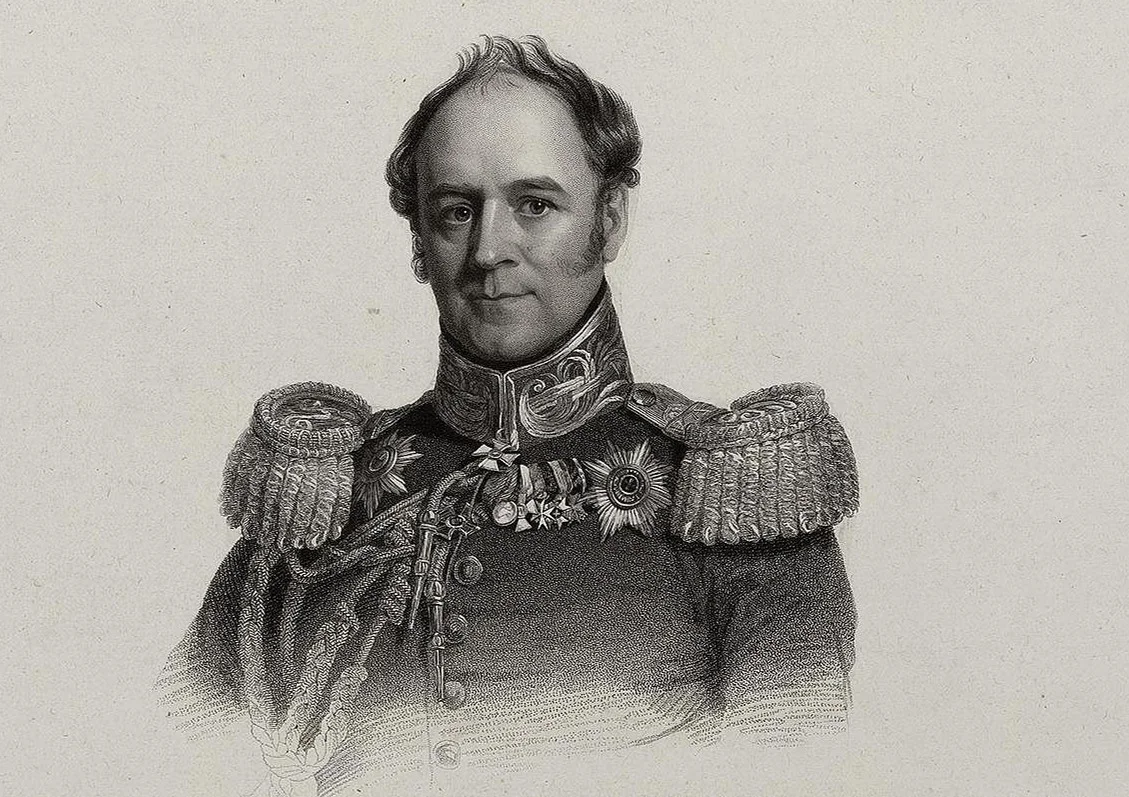
Benckendorff to Pushkin
October 14, 1829 St. Petersburg
**Dear sir, Alexander Sergeevich!
Sovereign Emperor, having learned from public news that you, dear sir, traveled beyond the Caucasus and visited Arzerum, He deigned to order me to ask you, by whose permission you undertook this journey. I, for my part, humbly ask you to notify me for what reasons you did not deign to keep your word to me and went to the Transcaucasian countries...**
Excuse me, these “countries” are not foreign countries at all, they are our native empire, the Motherland. But even in the Motherland - a step to the left, a step to the right...
Pushkin - Benckendorff
November 10, 1829 (Almost a month later!)
**General,
It is with deepest regret that I have just learned that His Majesty is dissatisfied with my journey to Arzrum. I now understand how false my position was and how reckless my behavior was. I would prefer to be subjected to the most severe disfavor than to be considered ungrateful in the eyes of the One to whom I owe everything, to whom I am ready to sacrifice my life, and these are not empty words.**
This is written on my knees (after running on the ceiling for two or three days, swearing obscenely). If a letter of similar content and style, addressed to the director of the FSB and expressing readiness to die for the president, were to appear on the Internet today, the author, if he were three times the sun of Russian poetry, would be joyfully, instantly and forever turned into a black hole. By whom? Well, no, we won’t litter this text with the names of today’s successful business-like moral authorities. More important to us is the example of Bulgakov through the mouth of Moliere (or Moliere through the pen of Bulgakov?).
MOLIERE. All my life I licked his spurs and thought only one thing: don’t crush him.
Pushkin - Benckendorff
January 7, 1830
**General, while I am not yet married, I would like to take a trip to France or Italy. If it is not allowed to me, I would ask permission to visit China with the embassy going there...
Relying entirely on your benevolence, I remain,
General, Your Excellency
my humblest and most humble servant,
Alexander Pushkin.**
Benckendorff to Pushkin
January 17, 1830
His Imperial Majesty did not deign to satisfy your request for permission to travel to foreign lands, believing that this would upset your financial affairs too much, and in addition, would distract you from your studies. Your desire to accompany our embassy to China also cannot be fulfilled...
That is, the emperor refused Pushkin, caring about his family budget and leisure for creativity. Well, just my own father.
The irony of fate, or better said, the evil mockery of the authorities: these mocking refusals (even with an embassy to China are not allowed!) were received by a collegiate assessor of the Ministry of Foreign Affairs.
After all this (and much more), what the hell peace does the heart ask for? It asks for freedom, screams: Freedom!
CLAUDIUS ( to Hamlet, caringly ) .
As for hopes of returning to Wittenberg, these plans
We definitely don't like it. Think and stay
Before us, here, under the caress of our eyes.
1600
We know these narrowed eyes - their caress, surveillance, anger...
What is it like for a proud creator: to bow for years, to humiliately ask for years, to receive humiliating refusals for years... (The author of these lines heard for years at the OVIR: “Your trip has been declared inexpedient.” It was a fucking riddle: inexpedient for what purpose? Who decides my expediency? (sorry for the clumsy expression). Who-what-and-what contradicted my desire to go to brotherly Hungary?)
Gogol to Pletnev
March 17, 1842
I can only write about Russia in Rome. Only there is it all before me, in all its enormity.
Pushkin dreamed, but they didn’t let him in. A century later, Bulgakov was not allowed in; trying to hide behind Gogol did not help.
Bulgakov to Stalin
May 30, 1931
**Dear Joseph Vissarionovich!
“It always seemed to me that in my life I would have to make some kind of great self-sacrifice, and that it was precisely in order to serve my fatherland that I would have to be raised somewhere far from it... I only knew that I was not going at all to enjoy foreign lands, but rather to endure, as if I had a presentiment that I would learn the value of Russia only outside of Russia and would gain love for it far from it.”**
N. Gogol**I warmly ask you to intercede on my behalf with the Government of the USSR to send me on vacation abroad for the period from July 1 to October 1, 1931.
I inform you that after a year and a half of my silence, new creative ideas have kindled within me with uncontrollable force, that these plans are broad and strong, and I ask the Government to give me the opportunity to fulfill them. Since the end of 1930 I have been suffering from a severe form of neurosthenia with attacks of fear and pre-cardiac melancholy, and at present I am finished. I have ideas, but I don’t have the physical strength, there are no conditions necessary to do the work...**
It is risky to begin an official letter with a long (we have radically shortened it) quotation from a text that was 100 years old. It's crazy impudence to start a letter to Pharaoh like that. After all, if the pharaoh does not recognize Gogol from the very first words, then he will very likely become irritated: a candidate for camp dust dares to test my erudition? pokes my nose at my ignorance?
Also there, right after the quote, is black humor (which is again impudence): “Comrade Stalin, ask Comrade Stalin...” For clarity: this is like writing now “Mr. President, petition the presidential administration...”.
**End.
If you've read this far,
then you definitely don’t have to read everything that follows.**
For his letter to Stalin, Bulgakov took Gogol’s words from “The Author’s Confession” (written in 1847, published posthumously in 1855; and yes, after the death of the emperor). I opened it, and there it was:
**...it always seemed to me that in my life I would have to make some kind of great self-sacrifice and that it was precisely in order to serve my fatherland that I would have to be raised somewhere far from it. I didn’t even think about it, but I saw myself so vividly in some foreign land, yearning for my homeland, this picture haunted me so often that I felt sadness from it. Maybe it was just that incomprehensible poetic attraction that sometimes worried Pushkin too, to go to foreign lands, solely so that, as he put it,
Under my African sky
Sigh about gloomy Russia.**
I gasped. Gogol seemed to be waiting for me around the corner, sent Bulgakov... And the day before (believe it or not), October 19, the day of the Lyceum anniversary, I listened to Rosenbaum’s concert at the Army Theater; in my bag there were sheets of paper with unfinished text, which you are now reading if you did not listen to the advice to abandon it on the third page. And then the blatant song “101st Kilometer” sounded from the stage:
Since childhood I believed the poet,
whose poems were taught at school -
he said that there is no happiness,
in life there is peace and will.
I gasped. It feels like - as soon as you start to delve into something - someone is slipping you gifts that you didn’t even think about.

Excess
Russian poets are enchanted by the words of Pushkin, instilled with these concepts from childhood. The forest drops its crimson headdress, and 200 years later our contemporary:
Autumn has come. It became cold.
And according to this foliage
my heart skipped a beat, my heart was tired.
There is no freedom - but here it is, peace!
Kibirov. 1990s
Pushkin spoke about his rebellious pleasure with a bacchante (what’s her name? - it doesn’t matter), and 200 years later:
And someone will inevitably share the flame.
But no, it will do. What is there to talk about?..
There is happiness in the world. But peace with will
I haven't seen anything. Where the hell should we go?
Kibirov
Combine three poems in four lines! “No, I don’t value rebellious pleasure”, “It’s time, my friend, it’s time” and “Autumn”; and insert “to hell” into the last broken line of “Autumn” - brilliant!
That's it, let's return from postmodern to classic. (However, in order to return, you must first leave, and - you see for yourself - this is impossible. With all the irony.)
...Here is the old school, textbook “Sail”.
The lonely sail turns white
In the blue sea fog!..
What is he looking for in a distant country?
What did he throw in his native land?..
The waves are playing, the wind is whistling,
And the mast bends and creaks...
Alas! he is not looking for happiness
And he’s not running out of happiness!
Below him is a stream of lighter azure,
Above him is a golden ray of sun...
And he, the rebellious one, asks for a storm,
As if there is peace in the storms!
1832
How is it possible that he neither seeks happiness nor runs from happiness? That is: neither to well-being, nor from well-being (in redneck language: without interest, without margin). Where? Give me the answer! Doesn't give an answer.
Ubi bene ibi patria? “Where it’s good is homeland”? No, this murder is not for him.
There is no doubt: 17-year-old Lermontov knew “Onegin” by heart and could have added Pushkin’s words as an epigraph to his “Sail”:
*Under the robe of storms, arguing with the waves,
Along the free crossroads of the sea...*
Alas! he is not looking for happiness. "Alas"? - What does this regret mean here? Is it about a hero? Or - the consciousness of the impossibility of explaining your mental torment to vulgarities and rednecks? This is crazy. Just think: he asks not for wealth, not for ranks, but for some kind of storm...
And, alas, nothing like the inspiring “while we burn with hope.”
Alas! He’s not looking for happiness , which means he can’t be tempted by anything. This means there is nothing you can do to stop it. Similar to Tao or Bushido, the way of the samurai.
The duty of a samurai is to think about death. A month before his death, Lermontov wrote the brilliant “I Go Out Alone on the Road.”
I go out alone onto the road;
Through the fog the flinty path shines;
The night is quiet. The desert listens to God,
And star speaks to star.
I don't expect anything from life,
And I don’t regret the past at all;
I'm looking for freedom and peace!
I would like to forget myself and fall asleep!
Literary critics (with whom it is not our intention to argue) see here a echo (homage?) of “It’s time, my friend, it’s time” - and how could one not see it? There is “peace and freedom”, here “freedom and peace”. Just twins.
No. Quite the opposite. Here is a desire to “forget yourself and fall asleep” - there is a thirst for “work.” No less important: here “I am alone” - there “you and I are together.”
Remember the draft: “works” there three times; “And you and I together” - four times; That’s how it remained in Belovik. (Together - this is with Natalie.)
Pushkin longs to live and work, Lermontov - if not to die, then to fall asleep in a lethargic sleep, literally to fall asleep forever.
I would like to sleep like this forever ,
So that the strength of life sleeps in the chest...
This is a departure from the world - into seclusion, into complete loneliness forever. Fall asleep and dream? - here is the answer: what dreams will you have in that mortal sleep?..
***
Being determines consciousness, no doubt. Thinking about Pushkin’s poems and (unwittingly) mentally sliding into the Gulag - this is our existence that takes my consciousness away from iambs and trochees, from the poetics of Russian versification - to the physics and practice of Russian penal servitude.
Pushkin could not have written anything similar to “Kolyma Tales”, because neither in his life nor in his fantasies were there any pictures of the Gulag.
Although there were already Mamai, Ivan the Terrible, who punished Veliky Novgorod so that the Volkhov was filled with corpses (the width of the river in that century and in that place was about 500 meters).
Deep in Siberian ores
Keep your proud patience...
Unluckily faithful sister,
Hope in a dark dungeon ...
Love and friendship up to you
They will reach through the dark gates,
Like in your convict holes
My free voice comes through.
The dungeons will collapse and there will be freedom
You will be greeted joyfully at the entrance...
The depth of Siberian ores, a gloomy dungeon, convict holes - yes, his friends and buddies are not in a taiga hut near the stove, but in a mine (the picture is accurate).
But not a single Decembrist was driven by hunger to scurvy, to licking someone else’s bowl, much less to cannibalism.
Here, however, there is something else very important for us, which is not always realized. A man writes about his “free voice”, not for a moment forgetting that he lives in the iron claws of censorship, and whose freedom hangs by a thread of chance.
Pushkin - Benckendorff
March 24, 1830
General, deign to enter into my position for just a minute and appreciate how difficult it is. It is so unstable that every minute I feel like I am on the eve of a misfortune that I can neither foresee nor avoid. But if you are no longer a minister tomorrow, the day after tomorrow they will put me away.
An absolutely accurate formula: “every minute I feel like I’m on the eve of a misfortune that I can neither foresee nor avoid.”
But spiritually free; immeasurably freer than all the Benckendorffs, Guildensterns, and Rosencrants.
HAMLET. Put me in a nutshell - even there I will feel like the lord of infinity.
To the critics
One phrase is enough to express an idea. Why an article, especially a book? Why unnecessary details?
Phrase V.I. Lenin in 1913 stated the idea completely: “Marx’s teaching is omnipotent because it is true.” Did Lenin, who lost the remnants of his reason over the next 10 years, manage to understand that it is not omnipotent? - the devil knows. But then, already under Stalin - and then under Khrushchev, Brezhnev, etc. right up to Gorbachev - it was clear: no evidence was required. It's simple: in a white cloak...
That is: the dashing phrase has become dogma. And dogma is absolute truth. It is not subject to criticism, doubt, and does not need proof. If, out of stupidity, you begin to prove, you will inevitably get lost in your own verbiage ; absurdities and logical failures will appear; and will end up exactly like the loser who wrote all over the board, abbreviating similar terms, and received the famous “0 = 0.”
...but how cleverly, the bastard, slapped the regime in the face! - “In a white cloak with bloody lining”! - not with red, not with crimson, not with purple - master!
***
"Extra details"? How did you define this “extra”? To your taste? So he is yours, not everyone’s. Have you heard “Dubinushka”? Chaliapin himself loved to sing it. Why is the chorus (word for word) repeated 10 times? Literally ten (I counted).
Extra details? I don't argue. There is an incredible amount of unnecessary detail in the works of Bosch and Durer. Bosch has a hundred devils in his painting, but why? One devil is enough to express an idea.
A silhouette, one line is enough for the public to see a recognizable figure, a recognizable face, a recognizable structure (Pyramid of Cheops, Parthenon, Leaning Tower of Pisa). One line is enough - why does Durer spend ten thousand strokes? Why this extra work?
I can't explain. More precisely, I don’t want to. It’s easier to tell everyone who thinks there are too many devils on Bosch’s canvas, or too many dashes in Dürer’s drawing, to hell.
Well, it's almost over now. It’s so close that it’s easier to finish reading than to hesitate: is it worth it?
*But, as is the case in Holy Rus',
no matter how much you praise the poet
Him up "like in heaven"
well, the body is in the ground.*
...Duelist, player, woman lover - yes. But the main passion - from adolescence to the end - is Freedom. In “Monument” (published four years after the poet’s death with Zhukovsky’s undignified servile editing), Pushkin even wrote Freedom with a capital letter.
And for a long time I will be so kind to the people,
That I awakened good feelings with my lyre,
That in my cruel age I glorified Freedom
And he called for mercy for the fallen.
21 August 1836
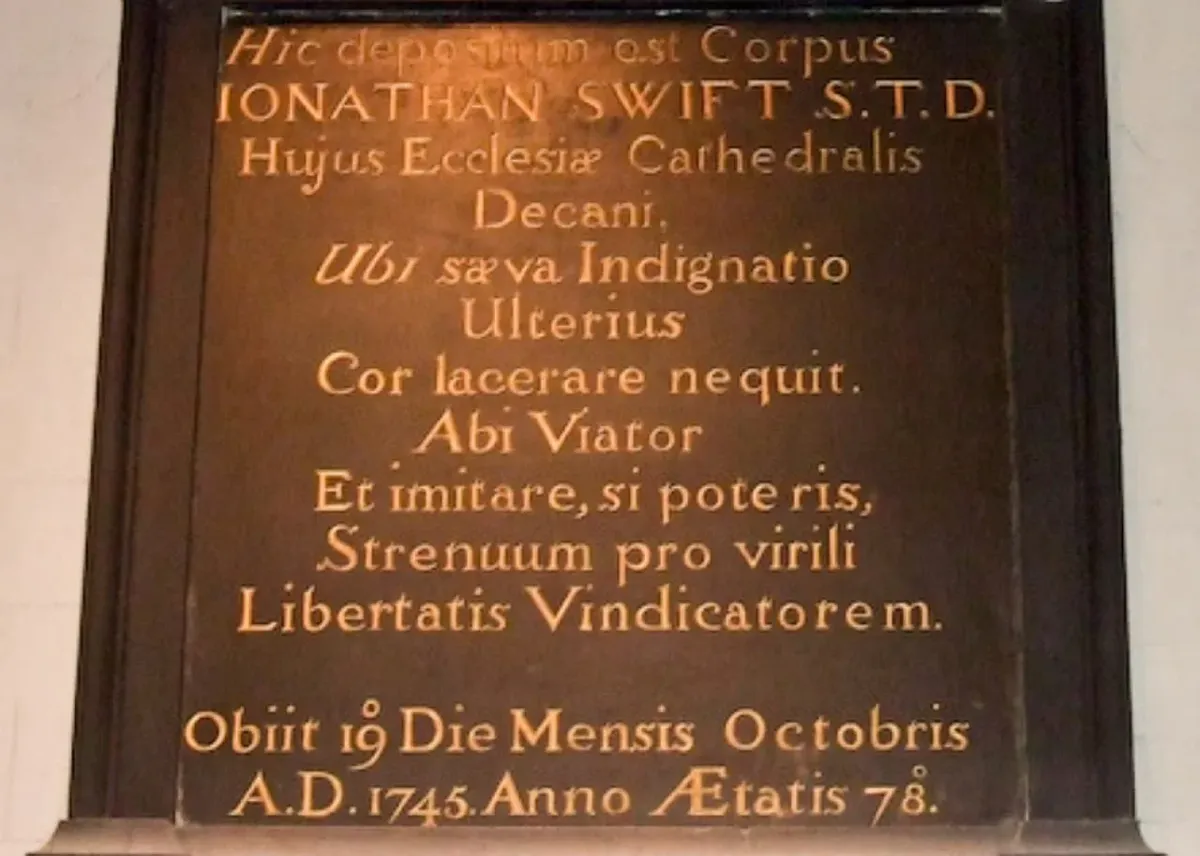
He wrote this epitaph for himself. Although “he ascended higher by the head of the rebellious pillar of Alexandria,” but, of course, this is the inscription on the tombstone - a text that a wise person does not trust to compose either with family or friends - does not want to sleep eternally under inaccurate clumsy “warm” words. Perhaps Swift served as an example to Pushkin, who in this sense took care of himself by writing:
“Here lies the body of Jonathan Swift, and stern indignation no longer tears his heart. Pass on, traveler, and imitate, if you can, the zealous champion of powerful freedom.”
Freedom...
“Monument” is, of course, an epitaph. About myself - in the past tense: “awakened, called...”. About his writings, about his influence in the future:
The people's path to it will not be overgrown ...
And I will be glorious as long as I am in the sublunary world
At least one piit will be alive.
Rumors about me will spread throughout Great Russia,
And every tongue that is in it will call me ,
And the proud grandson of the Slavs, and the Finn, and now wild
Tungus, and friend of the steppes Kalmyk.
And for a long time I will be so kind to the people...
This is not three generations ahead, like the pockmarked devil, and not even five or six. This is for centuries. When will the “wild Tungus” mature to such ideas and feelings?
Freedom is an everlasting dream. And at the age of 15, and at 23, and at 37. A few days before the Monument, he composed:
From Pindemonti
I don’t value loud rights dearly,
Which makes more than one head spin.
I don't complain that the gods refused
My sweet fate is to challenge taxes
Or prevent kings from fighting each other;
And it’s not enough for me to worry if the press is free
Fooling idiots, or sensitive censorship
In magazine plans, the joker is embarrassed.
All this, you see, is words, words, words
Other, better rights are dear to me;
I need a different, better freedom:
**Depend on the king, depend on the people -
Do we care?** God bless them.
Nobody
Don’t give a report, only to yourself
To serve and please; for power, for livery
Don’t bend your conscience, your thoughts, your neck;
To wander here and there at will ,
Marveling at the divine beauty of nature,
And before the creations of art and inspiration
Trembling joyfully in the raptures of tenderness.
What happiness! that's right...
5 August 1836
At your whim! - and not by order or whim of the authorities. Someone decides: where to live, what to read, what to print, whose names you dare not mention (even initials) - isn’t this slavery? And if my cruel XXI is so similar to his cruel XIX - is it my fault?
To depend on the king - to depend on someone else's irresistible force - is at least understandable. But what does it mean to “depend on the people”? From peasants, from miners? From the coachman, the cook, the floor guard?.. Should I please them?
In such a Pindemonti, the people are the readers . They demand that you please them, that you write something for which you will be imprisoned, and if something goes wrong, they spit in your face (it’s public, like a street trash can).
"From Pindemonti"? from Italian? translation? No, it is at 37 years old that a tired slave applies the same formal method of escaping the claws of censorship, the same technique as in “Licinia,” which is supposedly from Latin.
It didn't help. The censorship didn't let it through. Published 20 years after the author's death. (And somehow it coincided: immediately after the death of the emperor.)
***
You see: all his life he dreamed of freedom. And here, at the end of his life (six months before his death), he precisely defined and described his dream: independence from the tsar (from gendarmes and censorship); independence from the tastes and desires of the crowd (from humanity); travel at your own whim... And a gendarmerie officer will not suddenly break into your village house and present an order: “Deliver immediately, not as a prisoner” (that is, by force, but not in shackles), and will not start rummaging through the papers. This means there is no need to burn diaries and the Tenth Canto...
If the dream had come true, the line in the 1834 poems would have looked different:
There is happiness in the world if there is peace and will!
But that doesn't happen. And, of course, there was no “Pindemonti” in the world. So what?
But the genius there quoted Hamlet, that is, Shakespeare, that is, a genius. And only a fool will say that repeating the word “words” three times is excessive.
Notification. In the last phrase, in the first word “words” (without quotes) the emphasis is on “o”, and in the second word “words” (in quotes) the emphasis is on “a”.
I hope this is as clear to everyone as a simple scale.
***Moscow.
October 19—December 14, 2025***
This material was published in the fifteenth issue of Novaya Gazeta. Magazine". You can buy it in the online store of our partners.