
Translated material
Censorship without rules
What repressions against scribes and books will the past year be remembered for?

Censorship in Pasolini's book. Photo: Alexey Dushutin / Novaya Gazeta
The past year for the Russian book world has become a time of transition from targeted persecution to strict censorship and repression.
In fact, there is nothing new in them: bans and arrests, arrests and bans. In form, power began to rely on a combination of punitive measures and self-censorship. The main technique has become the principle of uncertainty, when the legal framework is so blurred that any person and any publication/publishing house/shop can fall under administrative or criminal prosecution. The combination of repression and a complete lack of understanding of what is and is not allowed has led to a situation where no one feels safe.
This reads like a particularly sophisticated mockery: the authorities seem to be saying - you yourself, with your own hands, will do everything like nice little ones. She has created such a tense atmosphere in the book world that, more often than not, there is no longer any need to force anyone to make restrictions. Many restrict themselves, often even before new bans come into force, preventively.
Expectations for 2025 were not rosy. All the ugly phenomena observed this year existed before: non-admission or cancellation of performances by objectionable writers and publishing houses at book fairs, denunciation, pressure on dissidents. Bookstores were searched, books were removed from sale, and pages were painted over. And such laws, which greatly influenced literary life, as the ban on “LGBT* propaganda”, were adopted a long time ago, back in 2022.
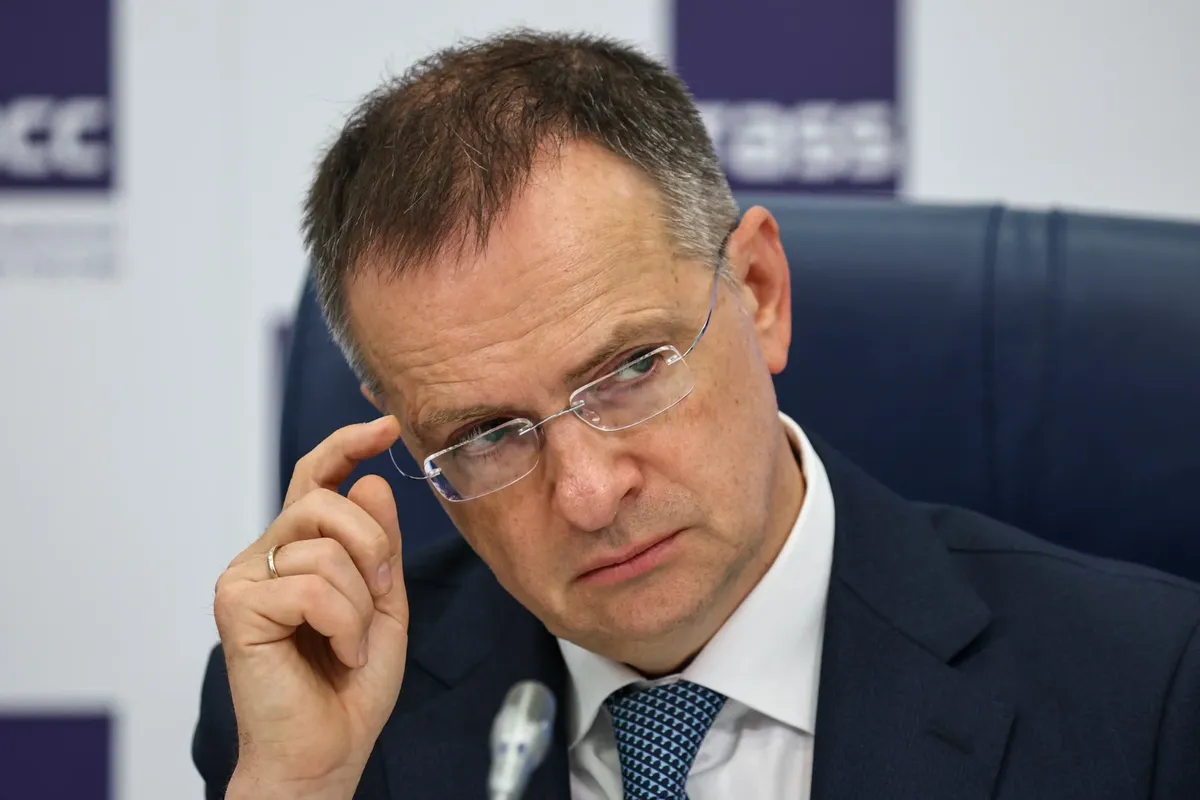
At the beginning of the outgoing year, an extraordinary congress of the Union of Writers of Russia was held, at which this hitherto inconspicuous structure was headed by presidential assistant Vladimir Medinsky. It was immediately clear that with the advent of such a figure, changes were inevitable - and changes for the worse. This was perceived as a sharp increase in state control over the literary community.
However, many still harbored illusions. Repressions and censorship seemed targeted and concerned more with politics than with literature as such: they were persecuted mainly not for creativity, but for public position and public statements. Censorship of books was perceived as something out of the ordinary and caused quite a stir. This could even be taken with humor:
Let's remember how AST played with the censorship of the book about Pasolini - the result was a performance that has its own artistic value.
The possible apotheosis of trouble was non-participation in any fair or a ban on a book (which is also, of course, outrageous), or in the most extreme case, a fine. And it seemed that it was still possible to resist the most odious attacks: in the fall of 2024, they managed to repel an attack on children’s literature from a certain head of the council of a certain SWP on children’s books, Nikolai Nilov.
The passing year has dispelled all remaining illusions. In principle, this is logical: if institutions such as independent journalism have been liquidated in a country, then there is no reason to assume that the authorities will allow independent literature to exist. But people tend to hope, and no one has canceled the Russian “maybe”. Alas, hopes were in vain, and “maybe” didn’t work either.
Already on January 10, immediately after the New Year holidays, Eksmo announced the withdrawal from sales of the book “Irena’s Children” by Canadian writer Tilar Mazzeo. Almost immediately after, American writer Anthony Doerr came under attack with his Pulitzer Prize-winning novel All the Light We Cannot See. Both of these books, telling about the events of the Second World War, angered “patriots” who saw in them “a libel against the Russian soldier.” After their denunciations, the publishing house hastened to remove the books from sales, thereby identifying one of the key trends of the outgoing year.
The SPR Congress and the subsequent summit meetings of the Union representatives seemed to confirm fears about control, but the Union this year focused on more mundane things - primarily property. The second important area of work for the updated SPR is consolidation, which looks rather like a bureaucratic process. The “patriotic” agenda looks artificial, archaic and superficial.
However, in addition to the SPR, other structures are also occupied with literature. Thus, presidential adviser Elena Yampolskaya is in charge of children's literature and specialized textbooks, and the RKS has an expert center directly involved in censorship activities; individual deputies also periodically put forward their initiatives. The RKN is working on endless blockages, and security forces monitor compliance with the law.
However, inspections in independent bookstores, primarily in Phalanster and Subscription Editions, became much more painful for the industry. They were carried out before, but less frequently, and the security forces were often only interested in whether the “foreign agency” publications were packaged correctly.
The list of items seized during the spring searches showed a radical change in the state’s approaches to the literary sphere. This list, of course, also included books by “foreign agents,” but the main attention of the security forces was attracted by such classics as Hannah Arendt, Susan Sontag, and Walter Benjamin. Thematically, the emphasis was on “LGBT propaganda” and feminism. It all ended with painful fines for the scribes.
In the fall, publishers also came under the radar of the security forces. Then the publishing houses “New Literary Review” and Ad Marginem were fined large sums. The reason for the fines was the books by Olivia Lang “Everyone’s Body” (withdrawn from sale) and “Infernal Feminism” by Per Faxneld, a historian of religion from Stockholm University.
...In connection with Per Faxneld's book, one very bad trend should be noted. RKS President Sergei Stepashin argued that books are not destroyed in Russia. “Moreover, few people know about this that those books that were already in stores, those of those writers who were recognized as “foreign agents,” no one destroyed them. You don't even know about it. They were simply sold. They were bought and sold. There simply won’t be any more of them on the shelves yet,” he said in an interview with OTR.
But reports of the fine to the UFO publishing house say that after verification, Faxneld’s book was “immediately” withdrawn from public sale and destroyed. And this is not the only case: in September it became known that a court in Krasnoyarsk decided to destroy 360 books by politician Maxim Katz**. The founder of the independent publishing house Freedom Letters, Georgiy Urushadze**, also reported that
More than 3 thousand books were destroyed in Russia - the novel “Springfield” by Sergei Davydov and the bestseller about the zombie apocalypse “Mouse” by Ivan Filippov** (the Russian authorities have been fighting both books for several years).
It turns out that books are being destroyed after all.
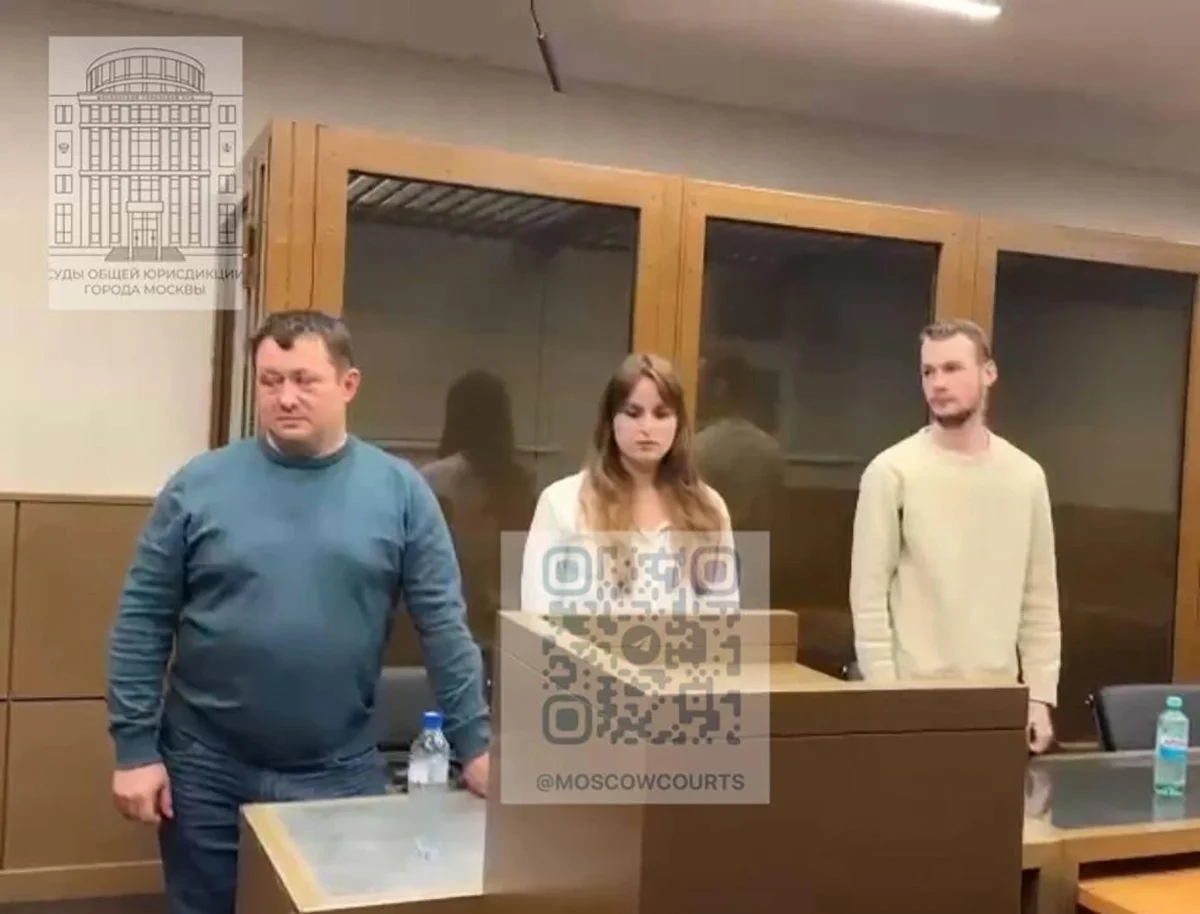
...One of the most crushing blows to the book industry was dealt in May: the “publishers’ case” began. Then searches were carried out at Eksmo, Popcorn Books and Individuum, which are part of the same publishing group. The court placed three people under house arrest: one of the leaders of the Individuum publishing house Dmitry Protopopov, sales director Pavel Ivanov and warehouse manager Artem Vakhlyaev. According to investigators, the accused “for selfish reasons” published and sold books allegedly promoting the activities of the “LGBT movement” banned in the Russian Federation. The Investigative Committee then reported the seizure of “more than 1,000 copies of prohibited literature” in this case.
These events showed two extremely important things. First, people are now jailed for books. Second: censorship has gone far beyond the exclusively political context, and persecution for “non-political”, but rather ideological, articles is becoming systemic.
...From that moment on, the era of global self-censorship began. One of the side effects of the “publishers’ case” was the appearance in the media of unofficial, but numerous and very colorful lists of books withdrawn from sale, which publishers began urgently sending to stores.
Ban lists are generally growing exponentially. This year, the hands of confiscators have already reached cult items - for example, in the fall, Stephen King’s novel “It” was removed from sales. One of the latest news is complaints about Ursula Le Guin's classic novel The Left Hand of Darkness, published in 1969 and awarded the highest Nebula and Hugo awards in the genre of fiction. Just the other day, sales of Fredrik Backman's trilogy "Bear's Corner" were suspended.
...In parallel with the security forces, legislators also worked tirelessly: this year prohibitive laws were adopted that put the industry in an extremely difficult situation. First of all, this is an endless series of laws aimed at infringing on the rights of “foreign agents” and other dissidents.
One of the milestones was the law that came into force on September 1: “foreign agents” were banned from any educational and educational activities in Russia. Like other initiatives of this kind, it is drafted so vaguely that it is still unclear whether it concerns books.
Most publishers and booksellers did not take risks, and in August we witnessed an unprecedented phenomenon: mega-sales of “foreign agency” literature throughout the country. It was a grandiose action that caused a double sensation. On the one hand, we saw the noble desire of both booksellers and buyers to save a whole layer of literature - the shops were packed; I haven’t stood in such queues for a long time. On the other hand, it was clear that, at least at this stage, censorship had won and from September access to this layer would become, if not impossible, then extremely difficult.
In general, this is what happened, although there are exceptions to the rule. Many publications are now impossible to buy or only possible from abroad (for now!), which makes the book very expensive. Not everyone can afford such a purchase (in general, what is happening with the book market in terms of the economy is a separate issue).
...Then the pressure on the “foreign agents” continued to tighten. The register of “foreign agents” and the lists of “terrorists and extremists” now include more and more writing and creative people. In the fall alone, Polina Barskova**, Eduard Topol**, Anna Karetnikova**, Irina Novik**, Vasilina Orlova** and many others got there. Even the independent literary award “Dar”** was not ignored by the Ministry of Justice. In addition to limiting rights, the “foreign agency” breaks the connection between these authors and the audience, which is the main task of the authorities.
...Putin twice in December repeated the idea that “foreign agents” in the Russian Federation do not face criminal prosecution. However, the writer Boris Akunin** was sentenced in absentia to 15 years in prison, including under the “foreign agent” article. Dmitry Bykov** was sentenced in absentia to seven years in prison, including under the “foreign agent” article. One of the last “writer’s” sentences – to Sasha Kazantseva**, nine years in absentia – also concerns the “foreign agent” article.
At the same time, three defendants in the “publishers case,” let me remind you, are under house arrest because of “LGBT propaganda.” Zhenya Berkovich, Svetlana Petriychuk, Daria Kozyreva, convicted for quoting Taras Shevchenko, defendants in the Mayakovsky case, young poets Artem Kamardin, Yegor Shtovba and Nikolai Daineko and many, many others continue to serve their sentences in the colony.
...Censorship in the Russian Federation takes on an absurd, sometimes anecdotal, character. Thus, the Bombora publishing house censored Ozzy Osbourne’s autobiography “Ozzy. Autobiography without censorship." The second part of the title was removed from the new version, obviously out of honesty.
In a regime of fear of censorship, even financial considerations no longer play a special role. Thus, in August, Eksmo suspended sales of the book “The Blessing of the Celestials” by the Chinese writer Mosian Tunisia, although in the first half of 2024 this series of novels became the best bestseller in Russia.
...Censorship became so severe that even officials started talking about it. Back in the summer, special presidential envoy Mikhail Shvydkoy spoke out for the revival of the Soviet-style censorship department in the Russian Federation, since it is absolutely impossible to do without it. According to him,
censorship should be carried out by professionals, and not by officials of various departments, “who themselves do not fully understand what they need to be afraid of.”
And Sergei Stepashin, summing up the results of the year, noted that “a special problem is posed by “censorship” laws that limit the sale of books on certain topics or content” (quote from the RKS website). According to Stepashin, “these laws are often of a framework nature, lack clear explanations and rules of application, and are not adapted to the specifics of book content.”
General Director of the Liters Group of Companies Sergei Anuriev, in an interview with Kommersant, speaking about the law banning drug propaganda, provides the following data: “We removed about 4.5 thousand books from sale, since publishing houses have doubts in terms of what is mentioned there and how and how this content should be labeled. And so we now have about 400 books marked.” “However, the law in its current version is so strict that, in my opinion, no labeling will be used, just all books that are suspected by publishing houses and sites will be removed,” Anuriev sadly predicts. And this is only one law and only one “Litres”!
That is, everyone understands everything, but no one is able to change the situation for one simple reason: the authorities benefit from what is happening now. The state does not need smart, independent, profound literature. The authorities generally don’t care about literature, as always, and now. From literature, as from the entire culture as a whole, it requires three things: unconditional, one hundred percent loyalty, propaganda of militarism and “traditional values” and entertainment functions so that people do not get bored.
Therefore, all exhortations and talk about clear boundaries are simply meaningless. It is the absence of rules that is the essence of the government’s policy towards culture, which is considered only as an instrument of influence.