
Translated material
Just business
Saudi Arabia has entered into open conflict with the Emirates in Yemen. What does this mean for the world?
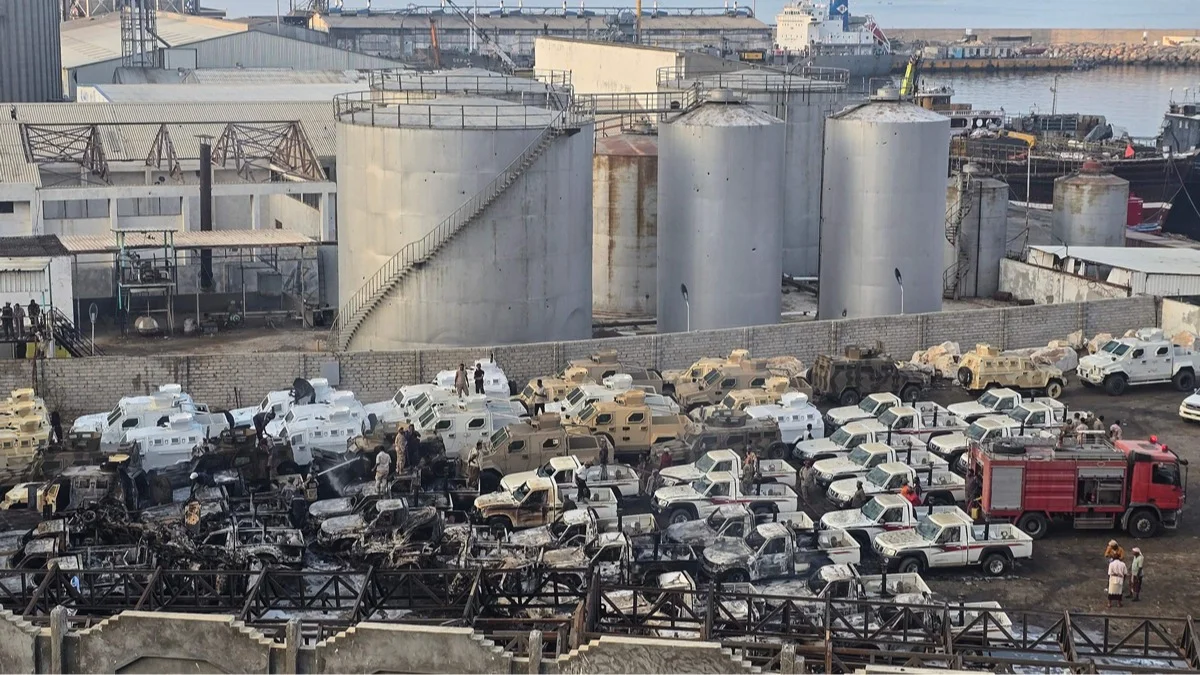
Damaged military equipment in the port of Mukalla after a Saudi-led coalition airstrike, Yemen, December 30, 2025. Photo: AFP / Scanpix / LETA
In a dramatic escalation of the long-simmering Yemeni conflict, Saudi Arabia launched airstrikes against the port of Mukalla in Yemen's Hadhramaut province. The target of the strike was declared to be weapons and military equipment supplied to Yemen by the United Arab Emirates. The Saudi strikes mark the beginning of an open confrontation with the UAE, a former coalition ally against Yemen's Houthi rebels, and herald wider geopolitical shifts in the Middle East.
The incident occurred on December 26, but it became known only on the 30th. Two ships leaving the port of Fujairah in the UAE turned off their navigation equipment and entered Mukalla without the authorization of the internationally recognized Yemeni government and the anti-Houthi coalition. Saudi state media said the ships were carrying "large quantities of weapons and infantry fighting vehicles" destined for the Southern Transitional Council (STC), a pro-independence separatist group in South Yemen.
Soon after the ships were unloaded, the port's warehouses were struck.
No deaths were reported, but a significant portion of the military cargo was destroyed. Yemen's airspace was temporarily closed amid heightened tensions.
Shortly after the strike, the chairman of Yemen's presidential leadership council, Rashad al-Alimi, declared the mutual defense agreement with the UAE against the Houthis void and demanded that UAE armed units leave Yemen within 24 hours. A state of emergency has also been declared in the country for 90 days.
The Saudi Ministry of Foreign Affairs expressed its full support to the official Yemeni government. STC commanders, for their part, condemned the strikes as an “act of aggression” against Southern forces.
The STC militia, formed in 2017, is one of the most visible political forces operating in Yemen. The other two are, in fact, government forces, as well as the Houthis, who annoy not only their neighbors, but the entire region. The STC played an important role not only in the fight against the Houthis, but also in the confrontation with al-Qaeda and other extremist groups in the Arabian Peninsula. Today, the militia controls a significant part of the country, including the strategically important port city of Aden. However, its leaders' desire for autonomy, bolstered by military and financial support from the UAE, has put it at odds with Yemen's central government and its Saudi backers.
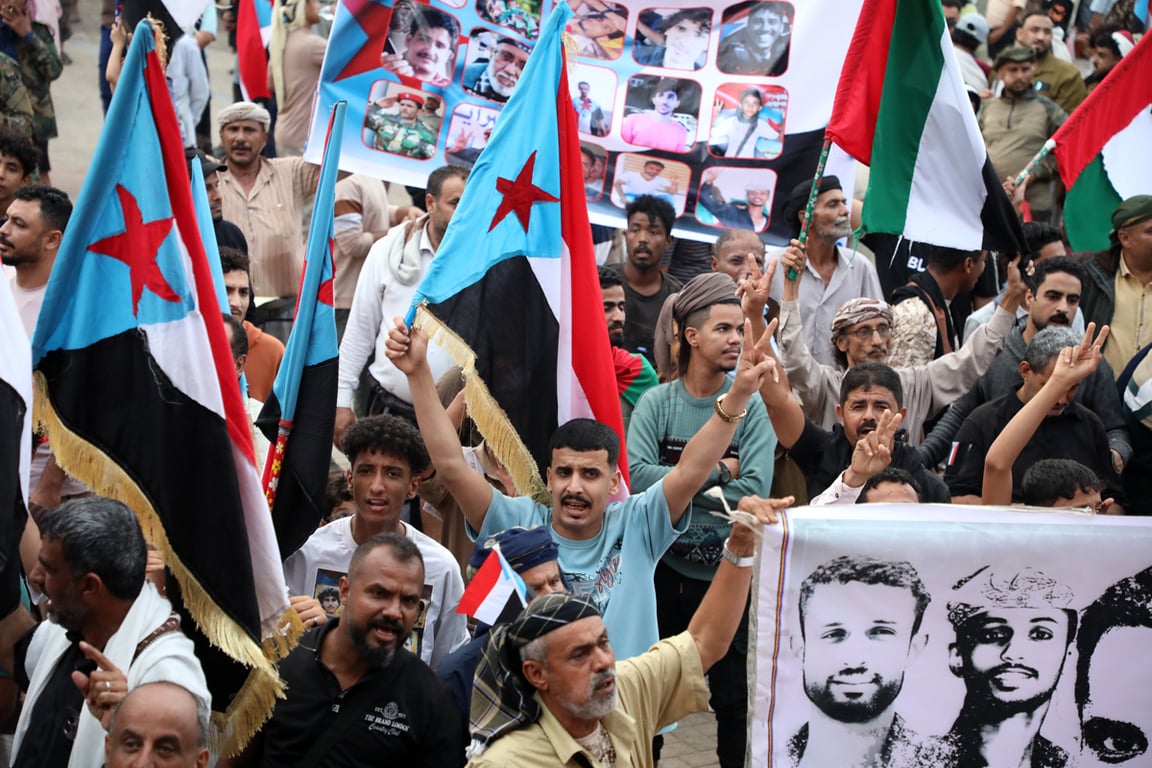
Middle Eastern analysts suggest that the current arms supply was just one operation in a chain of ongoing efforts by the UAE to strengthen the military capabilities of the STC separatists. The ultimate goal of the Emirates is to secure its own foothold next to Saudi Arabia - in the southern regions of Yemen, which are rich in oil and gas resources and overlook vital sea routes such as the Bab el-Mandeb Strait.
Throughout its presence in Yemen - and the Emirates has been part of the anti-Houthi coalition led by Saudi Arabia since 2015 - it has invested heavily in training and arming local forces. In 2019, the UAE officially withdrew most of its ground forces, but in fact they continue their presence in Yemen through armed groups like the same STC.
The Dec. 26 strike is the first time Saudi forces have openly attacked UAE-linked targets. This marks the breakdown of a cohesive alliance and the intensification of regional rivalry between Riyadh and Abu Dhabi. Although both countries initially united against the Iran-backed Houthis, their views on Yemen's future diverge sharply. Saudi Arabia seeks a unified Yemen under a formal government, while the UAE prefers a fragmented state that would give it economic and strategic dominance in the south.
Following the recent launch of STC offensives in Hadhramaut and other areas, Saudi officials have accused the UAE of undermining peace talks between the recognized government and the STC. All this goes against the rhetoric of Abu Dhabi: the Emirates has publicly positioned itself as a key player in counter-terrorism operations in Yemen.
They are actively conquering territory from the local al-Qaeda and creating a network of bases and ports along the coast. However, this noble participation in the victory over evil is marred by accusations of human rights violations.
Reports from human rights organizations have detailed how UAE-backed forces are involved in numerous enforced disappearances in the region and also maintain secret prisons where detainees are tortured. Other investigations show that the UAE financed targeted killings of political figures and activists in Yemen. In particular, the Air Force reported that since 2015, the UAE hired American retired military personnel, including former US special forces personnel, to eliminate a number of individuals, many of whom were not associated with terrorism, but opposed the strengthening of the UAE in the country.
Air Force sources reported that American trainers weren't just acting on their own—they were training Yemeni combatants. Mixing foreign experience with local bloody practices made it possible to cleverly camouflage foreign participation in all these executions.
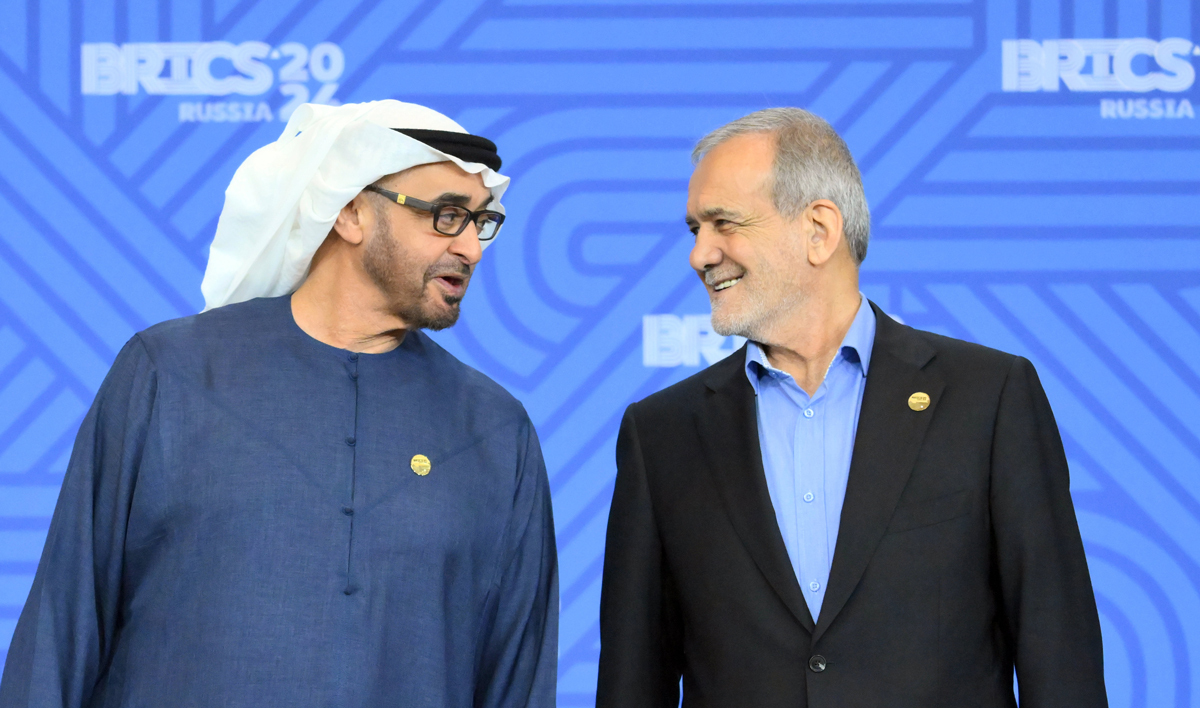
The conflict between the recent allies, which presented itself to the world in such an acute form these days, has in fact been smoldering for a long time. And Russia was also involved in it, even if it got a supporting role.
At the beginning of 2025, Saudi Arabia suspended its application to join the BRICS bloc (Brazil, Russia, India, China, South Africa), citing US tariff threats and changing dynamics in the Middle East. However, observers draw attention to the fact that Saudi Arabia changed its mind about joining BRICS shortly after the Emirates were admitted to the bloc. Iran's invitation to BRICS made membership in the organization even less desirable for Saudi Arabia.
Membership in the dubious bloc did not promise any serious geopolitical advantages for it, but it could add problems.
Things looked different for the UAE.
Joining BRICS is a win-win situation for Russia and the Emirates. This is in no small part a consequence of the feverish efforts of the UAE ambassador to Moscow, Mohammad Ahmad Al Jaber, who is the brother of Sultan Ahmad Al Jaber, the 52-year-old head of ADNOC, the Emirati oil giant. Membership in BRICS, on the one hand, has strengthened the UAE’s status as a major regional player that can afford not to look back even at the powerful Saudi Arabia. On the other hand, it provided the Al-Jaber brothers with political and financial bonuses. After all, ADNOC, in conditions where Russian oil is subject to all possible sanctions, provides Russia with services that are difficult to overestimate.
As in the case of the civil war in Yemen, geopolitical considerations here fade into the background for the UAE, giving way to purely pragmatic ones.