
Translated material
Christmas tree made of barbed wire
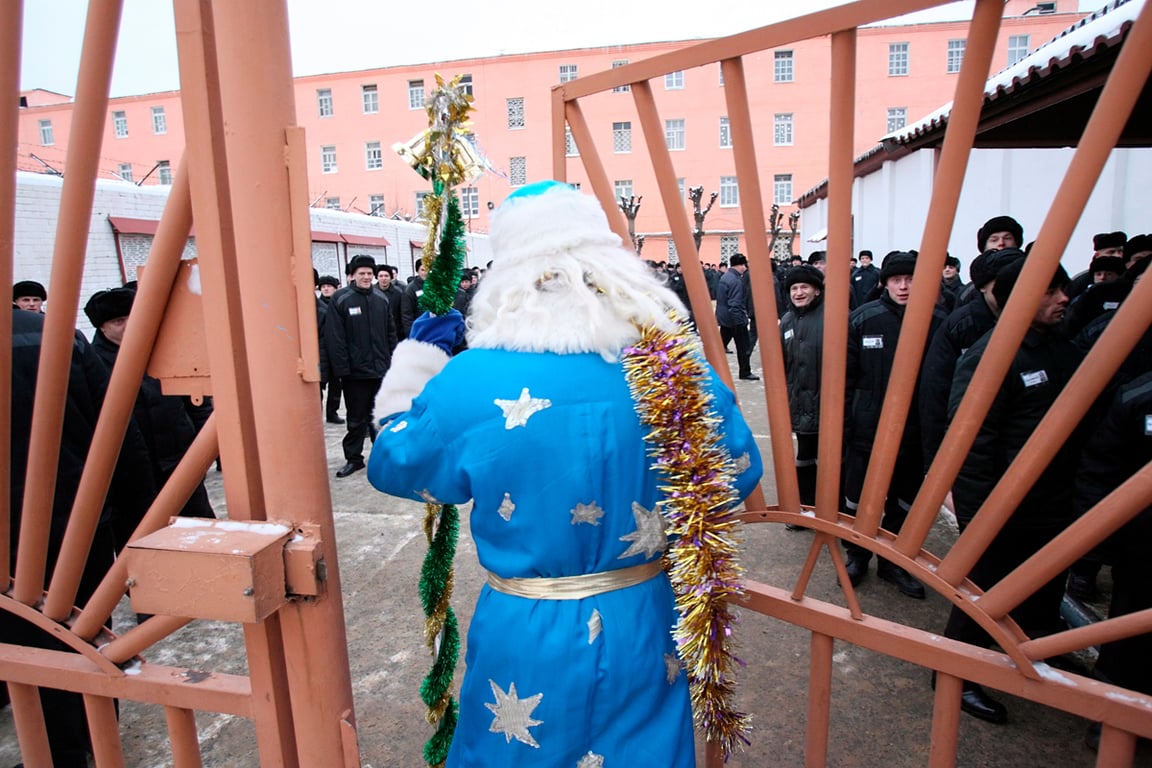
On New Year's Day, the colonies also have champagne, Olivier and Snow Maidens

Collage: Rystic / “Novaya Gazeta Europe”
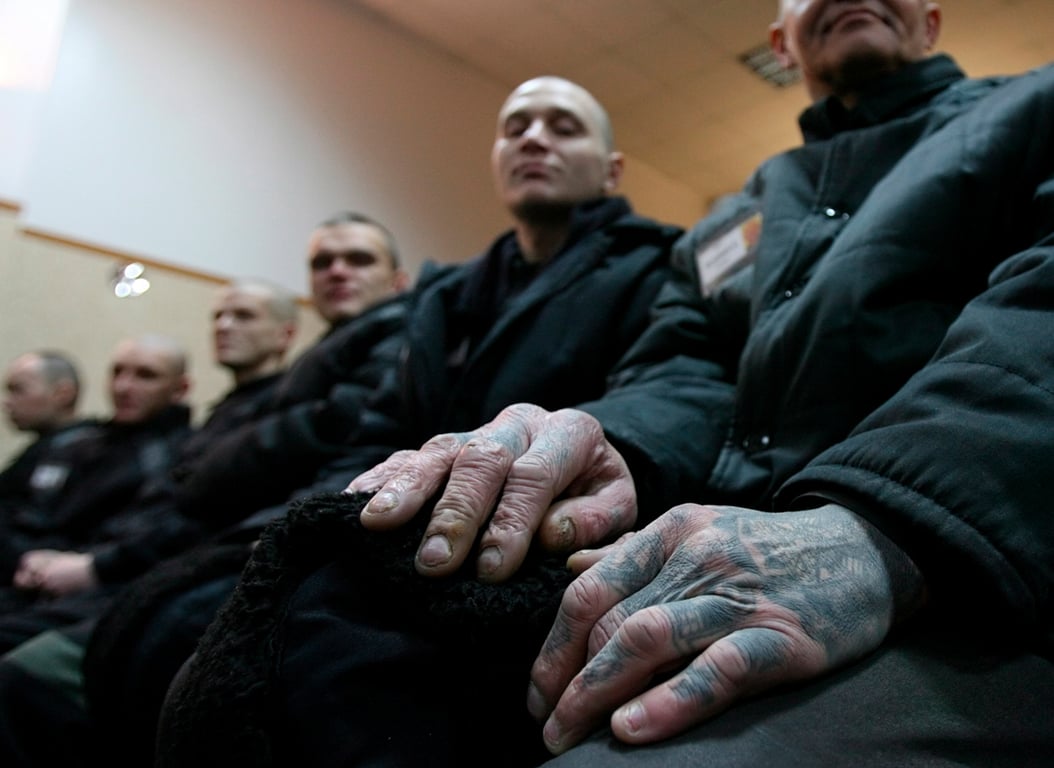
Prisoners in places of deprivation of liberty have their rights violated, but they also want to celebrate the New Year. In colonies and isolation wards, this happened in different ways at different times. Novaya Gazeta Europe collected prison stories about the New Year, some of which have become legends.
"The Last Supper"
New Year is the main holiday in Russia, and in the colonies it is no exception. It's a holiday, which means there will be champagne, Olivier salad, tangerines and a Christmas tree. Behind barred windows and with guards on towers, it is much more difficult to obtain all this than in the wild. That’s why they organize a holiday there, based on the modest opportunities that exist.
“For prisoners, preparation for the New Year begins in November,” Alexander S., a former employee of the Federal Penitentiary Service, told Novaya Gazeta Europe. — The first indicator of the beginning of this preparation is that in the programs there are various jams, compotes and homemade juices with an abundance of sugar. We understand perfectly well that all these are preparations for mash: I added yeast to such a compote, and in three to four weeks the alcohol was ready, approximately 10-11 degrees of strength. That is, almost champagne. Usually security turns a blind eye to this. Although anything can happen.
As Alexander said, in order not to spoil each other’s lives and holidays, those in charge of the zones agree with the leadership of the colonies that the prisoners will observe decency and the law. Well, the authorities of the zones turn a blind eye to many programs. Because if you tighten the nuts too much, the spring may suddenly break, which will lead to negative consequences such as riots and hunger strikes. And this way the prisoners will relax, the tension will ease at least for a couple of days, and then it will be easier with them.
Moreover, in many colonies, the leadership even encourages events dedicated to the New Year: concerts, theatrical performances, and entertainment programs.
“After the collapse of the Soviet Union, various artists began to often come to the zones and pre-trial detention centers,” says Igor B., a former prisoner who served more than 25 years in prison. — In Soviet times, this was not the case; there, concerts and performances were prepared by the prisoners themselves, with the participation of the administration. At the end of the 80s, when perestroika and glasnost were announced, priests began to appear in the colonies, and in some places even churches were opened. And then, around 1990, someone in one of the Vorkuta zones came up with the idea of preparing a theatrical production on a biblical theme. The performance was called “The Story of Christ.” A sort of free interpretation from birth to execution. The central scene in this production was to be “The Last Supper”. Well, kind of like in a painting by Leonardo da Vinci. The procurator of Judea was played by the “godfather” himself (the head of the operational part of the colony), and the guards were played by guards. Well, Christ and the apostles are prisoners. So, at the “Last Supper,” the tramps managed to sneak real vodka, slightly flavored with raspberry syrup. Well, like wine. And just imagine: almost the entire leadership of the colonies in Komi gathered for the premiere, some party officials came. And on stage, right in front of their eyes, the prisoners drink vodka. By the end, “Christ” was barely able to move his tongue. Of course, the guards guessed it, but they released the brakes.

An offer you can't refuse
It is difficult to say exactly where fiction became reality. The thief in law, who introduced himself as Ivan Ivanov, whose main experience of imprisonment occurred during the “era of stagnation,” claims that this could very well have happened. Moreover, there were even worse stories.
“In Soviet times, everything was somehow better, although maybe this is the old man’s skepticism speaking in me,” Ivanov admits. - When you are older, it seems to you that in those days when you were young, the world was brighter, the grass was greener, the women were more beautiful. You understand with your mind that this is not so, but your feelings tell you something else. Well, for example, even the Azerbaijani authorities admitted that thief Lotu Guli ( thief in law Nadir Salifov, killed in Turkey in 2020, Novaya Gazeta Europe spoke in detail about his life. - Ed. ) was delivering the finalists of the Azerbaijani beauty contest directly to the cell. And he set it up right in the casino cell. Of course, this did not happen in Soviet times. However, there have been worse cases.
The story of how in the 30s, in one of the Magadan zones, a thief in law built a real underground palace for himself, where his personal chef prepared food for him and brought girls from the outside, has already become a textbook, continues Ivanov. “Many people say that this really happened, but that thief lasted in this situation for no more than a couple of years. After which both he and the entire leadership of the zone where this happened were shot. But there were cases when tramps got away with clearly exceeding all the norms and rules of imprisonment. Here is one such story that was told to me by someone who was a participant.
The Kolyma River, stretching across all of Yakutia to Magadan, was discovered back in the 17th century. But the fact that gold veins are found almost along its entire length became known only in the 20s of the last century. In those days, the Soviet government needed a lot of gold for an industrial breakthrough. However, the extraction of Kolyma gold was problematic due to the difficult accessibility of those places. Navigation in Kolyma lasted no more than 4–5 months a year. The rest of the time it was simply impossible to get to many places. It was unprofitable to send mining teams there to work autonomously. Hundreds of workers were needed for normal gold mining. And in Moscow they decided to set up camps near the explored gold deposits, the “clients” of which were supposed to mine gold.
“In those days, a kind of balance was maintained in the zones,” said Ivanov. — The administrations of the colonies preferred to negotiate with the supervisors, who actually maintained order in the zones. In return, the tramps were allowed to live according to their own laws. I don’t know how, but someone looking at one of the zones somehow found out that near the place where the zone was located, there was an as yet undeveloped, but very rich deposit. So he decided to make an offer to his boss, which he could not refuse.
As Ivanov said, the thief came to the “owner” of the zone and said that he could achieve a tenfold increase in the gold produced. In return, he demanded that the next New Year in the colony be celebrated in such a way that even those outside would be envious. He took upon himself the delivery of alcohol and food.
The administration was only required not to interfere in the process. The boss took virtually no risks. It was possible to check the thief’s words only in the summer. If he had deceived, then the boss had the right to shoot the deceiver, and even the community of thieves could not have any claims against him. But if the words of the beholder are true, then this could result in extraordinary titles and orders for all guards.
And then, at the end of December 1939, a whole column of sledges pulled by reindeer appeared at the gates of the colony. The zone's leadership and representatives of the thieves' community came out to meet her. Imagine the boss’s surprise when several girls climbed out of the sledge along with boxes of vodka and champagne and a whole host of other edibles.
“The boss almost choked on his mitten when he saw this,” Ivanov says with a smile. — Turns to the beholder and asks: “Have you completely lost your mind? There are one and a half thousand men here, and you brought women to the zone! Can you imagine what will happen here if everyone finds out about this?! Do you want me to start a riot here?!” To which the beholder calmly replied: “There will be no riot, I guarantee.” “Do they know why they are here?” - the “owner” did not let up. “They are here voluntarily. After the holiday they will come for them and take them away. Well, judge for yourself, we have one and a half thousand Santa Clauses here, but there are no Snow Maidens. It's a mess!
Well, indeed, in that zone, the New Year was celebrated in such a way that many in the wild would be envious. Rumors about that holiday did not appear for a long time. The thieves strictly forbade talking about what was there.
An old prisoner told me this story in the late 50s,” Ivanov continued. “I didn’t believe him, thinking it was ordinary prison folklore. But in the 60s I had to live in a “raspberry” ( a “hotel” for wanted criminals, in which they could live for some time without fear of arrest. - Ed. ) in Irkutsk. The holder of the “raspberry” was Maria, who by that time was already over 50. Even very distinguished thieves in law treated her with great respect. I began to find out what was going on, and it turned out that she was one of those Snow Maidens who went to the zone in 1939.
According to Ivanov, he was shocked by the confirmation of the long-standing epic and did everything possible to get Maria to talk. She denied it for a long time, but then said that they spent a week in the zone, sleeping five hours a day. But, according to Maria, it was worth it. All the girls were returned to freedom without harm, and they were all adequately rewarded. Each was assigned to some kind of business that allowed them to live comfortably until old age. Well, plus respect from the world of thieves, which in those days meant a lot.
“We drink and “dive””
Nowadays, everything has become different, as Konstantin G. put it (he was imprisoned three times, did not adhere to the thieves’ law, was an ordinary “peasant”), “in a capitalist way.” If you have money, you will be in a special position in the zone. Well, if not, get out as you want.
Today, the main alcoholic drink in colonies for New Year's Eve for prisoners is mash. But if in the colonies there are enough places where you can hide containers for several weeks, then in pre-trial detention centers it is problematic to hide even a three-liter jar.
“Celebrating the New Year in a pre-trial detention center depends on which cell you had to hang out in,” says Konstantin. “Particularly important people usually sit in cells for 2–4 people; on their New Year’s table they usually have cognac or Finnish vodka rather than liquor and alcohol. The rest of the simpler prisoners usually sit in cells for 8–12 people. And they always have a senior person: either appointed by the administration, or an authoritative vagabond. And it depends on the authority of this beholder how the camera will celebrate the holiday.
According to Konstantin, before the New Year, a secret rating of cells is compiled in the pre-trial detention center. Transfers to “thieves” cells are accepted without a thorough search, and meetings with lawyers or relatives (who can bring in prohibited items) are allowed more often. But the main “suppliers” of prohibited products (it doesn’t matter if it’s yeast, alcohol or drugs) are security guards. Some cells are even delivered “special cargo” which is not inspected at all.
“In 2004, I had the opportunity to sit in a cell with a very unusual defendant,” recalls Konstantin. “He was transferred to us a week before the New Year. He was convicted of selling drugs on an especially large scale. He behaved correctly, did not make mistakes, had no debts, and always shared his “dachas.” And so, before the New Year, they bring to our cell a sealed box with his last name written on it. Most of us were shocked by the very fact that the box was not gutted. And the prisoner calmly accepts the box and says: “This is for the New Year, we won’t open it yet!” There will be a surprise." And on the evening of December 31st, we are all on the verge of betrayal, waiting for him to open the box.
The table is already set, it’s almost 10 p.m., and now he takes out the box. We print it out, and there is: red caviar, Finnish cervelat, tangerines, two half-liter bottles of alcohol and even a bottle of champagne. All of our jaws almost hit the floor. Later I found out that this guy voluntarily took on the blame of the son of some high-ranking official. This was the attitude towards him. And he himself refused to sit in a “thieves’ cell.” Yes, and it would be very suspicious: a huckster in a luxury cell.
Currently, almost all colonies in Russia are “red”, where the security forces are in charge, and thieves in law and other adherents of the thieves’ way of life have almost no power. And although particularly authoritative tramps live well there (because they have money in freedom that they can “bring” to the leadership of the zone), the rest of the prisoners are left to their own devices. Previously, in the zones there was a “common fund”, to which all prisoners gave part of what they earned or sent, but any prisoner had the opportunity to receive something from the “common fund”. For example, a sip of alcohol or a marijuana cigarette for a holiday. This is not the case in the “red zones”.
“As I was told, back in Soviet times, prisoners often lived as “family members,” says Kirill S. “Several people, usually fellow countrymen, unite into a small team in which everything is divided equally. Now such “families” have acquired greater significance. Three years ago I served time in a colony where the “master” was a colonel who couldn’t stand alcohol. And therefore, even on New Year’s Day, I completely forbade its use. The guards understood that they could not prevent the smuggling of alcohol or the production of mash. Yes, this is not profitable for them: additional income is lost. But you also have to curry favor with your superiors. So they warned that if someone with the smell of alcohol is caught on New Year’s Day, then there will be no parole, no visits, or other concessions. But how can you not have a sip on New Year’s Day?! So we had to act like in that old advertisement: the baby drank and peed, only we drank and “snapped.” It helped that those who had nothing left before parole preferred not to take risks and did not drink. Otherwise, if the whole barrack smelled, nothing would help.
Everyone with whom Novaya Gazeta Europe managed to talk and who was unlucky enough to celebrate the New Year in prison admits that celebrating the holiday “correctly” is becoming more and more difficult every year. Almost all colonies and detention centers are equipped with video surveillance, and guards have video recorders. But at the same time, all respondents have no doubt that any control can be bypassed one way or another.