
Translated material
Ten percent to the world
The first morning of 2026 and the past year through the eyes of our staff correspondent in Kyiv Olga Musafirova
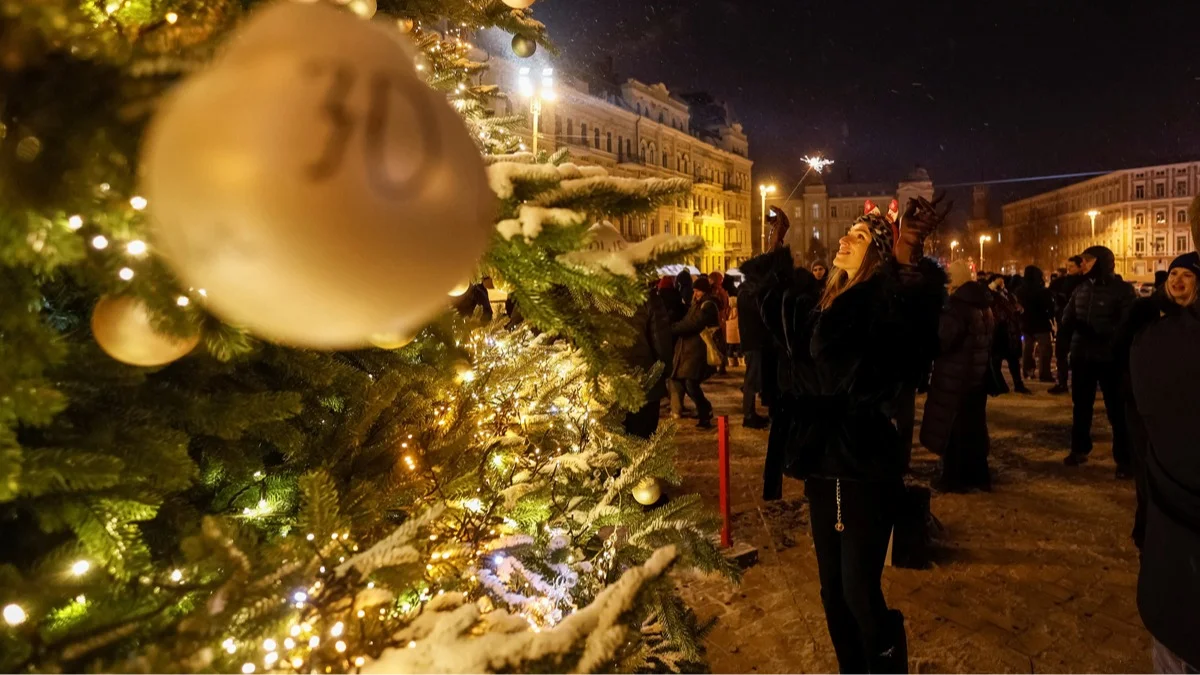
People gather near the New Year tree to celebrate the New Year before a curfew is imposed on Sofiyskaya Square in Kyiv, Ukraine, December 31, 2025. Photo: Gleb Garanich / Reuters / Scanpix / LETA
The fact that Russia would “congratulate” Ukraine on New Year’s Eve was clear even without Lavrov’s threats. Both last year and the year before it were all the same.
True, in the capital the air raid alert that sounded at 10:41 p.m. turned out to be short-lived and did not bring any trouble: the drones were shot down. The second pleasant surprise, and in fact a feat of power engineers who managed to restore the damage after previous attacks, was the availability of light until the morning, without blackouts. Watching with a glass of prosecco how the garlands twinkle on the tree and in the windows opposite, and the snow swirls around the lanterns below is a special pleasure. But the “Shaheds” flew in waves to Odessa and Zaporozhye, and one of the western regions of the country, Volyn, was generally tormented without respite. On the first day of 2026, the attacks, bloody and senseless, continued. The airstrike hit an eco-park near Kharkov. A female volunteer and lions were injured. Tigers are under a lot of stress. Almost all of the birds - parrots and pheasants - died: a shell hit their enclosure.
Gallery on your smartphone
The war on the home front has become routine. Therefore, for example, I am not able to remember when exactly in 2025 the heaviest shelling of Kyiv occurred.
Memory does not erase events, including dramatic ones, but moves them to some kind of internal storage, where the pictures are mixed. Here is the “unexpected” night rapid ballistics from Belgorod - about half an hour after the end of the drone attack - and half-naked women, again running through a dark courtyard with children in their arms to the parking lot of a neighboring new building - is this late spring, summer? Because very small children are dragged naked, covered only with fluffy towels: they bathed them after shelter, before going to bed in a normal bed. But it could well have been in the fall: what is a childhood cold compared to death...
Or the Iskander flyby, which I watched in amazement, also near my own house, on the street. The rocket passed low, just above the roof. Under my feet it felt like during an earthquake. Then the Iskander took off, disappeared from view - and then, almost at a right angle, vertically, went down towards the target. A roar, black clouds in the dawn, creamy pink sky, flocks of birds flying out of the smoke, a shock wave that causes window glass to fall onto the asphalt. It would take a long time to describe, but in reality it all took less than a minute.
Of course, if you take pictures of what you see nearby, on nearby streets, then the gallery in your smartphone will tell you both the month and the date. I open it at random. Well, for example: in the early morning of November 29, the Russian “Shahed” made a hole in a three-story brick, post-war factory building with a front garden and benches at the entrances. Mostly pensioners lived in the house. Some of them came to the parking lot with their stools, but over time they stopped. It’s hard, tired, tired, come what may. The owner of the apartment, which had burned to the ground, was rescued from the rubble, and she died immediately in the ambulance—the car didn’t even have time to move. The deceased’s neighbor brought out a plush blanket or rug, covered the stretcher, and crossed herself.
Another “Shahed” hit the fourth floor of a fashionable residential complex near the metro, finally dispelling the myth that “it only flies into the upper apartments.”
Perhaps the reaction is individual, but after the attacks I began to return to my usual rhythm much faster. Melancholy sets in only at dusk: Kyiv, unlike, for example, the round-the-clock bombing of Kharkov, is shot mostly at night. A tracksuit, a backpack with documents, a first aid kit, a jacket, a sleeping bag, a sun lounger, and a flashlight are waiting in the hallway so that you don’t have to fuss with getting ready when you’re sleepy, if you do manage to doze off.
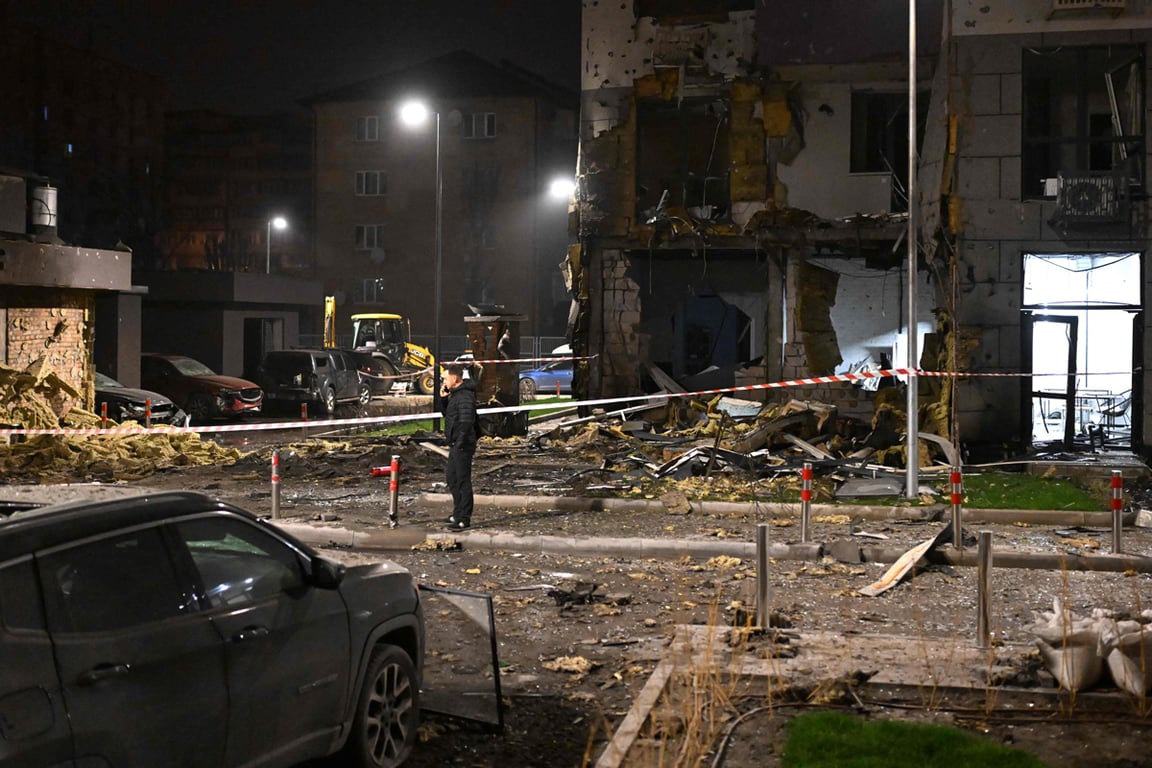
In 2025, I started going to the shelter more often than trusting my own bathroom and hallway. The nature of Russian shelling has changed: two walls do not protect against jet drones, and targeted missile hits on high-rise buildings have become more frequent. Several times I witnessed fresh rubble being cleared away and bodies or fragments of bodies being taken out. Employees of the state emergency service draw from sad experience when they notice: brick “Khrushchev” houses immediately turn into a pile of construction rubbish, which buries people underneath them; panel houses fold up, but leave a chance to breathe in the space sandwiched by the slabs. And so on and so forth. In general, I don’t want to add more work to “emergency workers” and doctors. I repeat: having a parking lot and a metro station nearby, to choose from, is my infrastructural luck. Not all city residents can boast of this.
But the psyche tries to compensate for exhaustion. Joyful events are also felt more keenly.
How life triumphs
Kyiv celebrated Christmas last year with an unprecedented procession. Not only folk groups in the “stage-spectator” format responded to the call of the staff of the Ivan Gonchar Museum (a cult folk artist). At noon, ordinary Kiev residents in national clothes poured into Mikhailovskaya Square, defying the frost, from all the adjacent streets like colorful streams. Kersets, keptariki, zhupans, plakhtas, generously gathered skirts with a velvet border at the bottom, Carpathian shaggy fur coats, hoods, fancifully tied scarves, ochipki, and simply woven edge belts, cinched at the waist over down jackets. And what kind of jewelry women and girls wear - words are not enough to describe!
At twelve, of course, the air raid alarm sounded. Sending drones or a missile to a place where there is a mass gathering of Ukrainians, or attempting to kill on Christmas Day is routine for the Russian army. The square was empty, fortunately it was not far from the metro. After the all clear, people returned.
Christmas stars, an obligatory attribute of the festive nativity scene, were ringing and spinning overhead. In the column that moved along Vladimirskaya, and then along Khmelnitsky Street, descending onto Khreshchatyk all the way to the Maidan, the most attentive look would not have found two identical stars. This year, chain supermarkets felt the demand for everything related to nativity scenes. But the number of images created with my own hands was amazing. The polyphonic carol “New Joy Has Become” flowed into the anthem and a minute of silence at the Independence Stele, next to the flags in memory of the fallen soldiers - a spontaneous memorial right in the heart of the capital. The soldier is on a prosthetic leg, with bells and colorful ribbons attached to a metal base, and his brothers-in-arms also joined the Christmas procession.
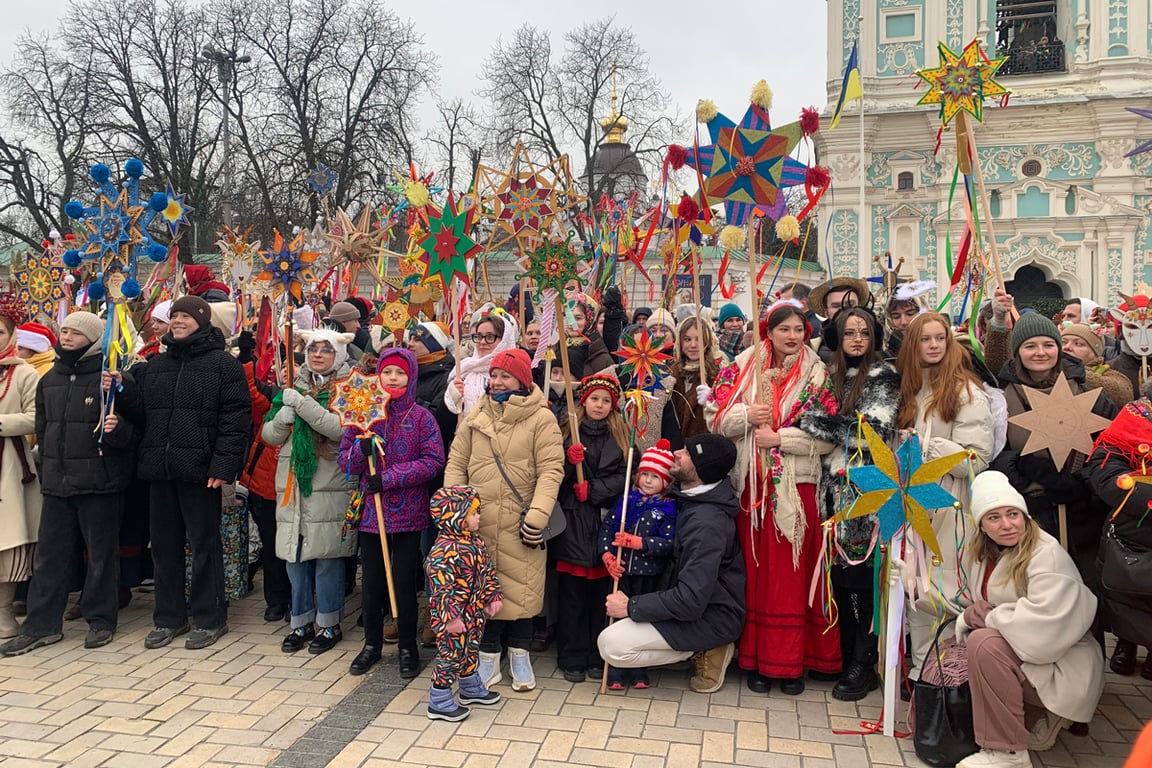
Along with Kiev that day, the residents of Bucha walked along their streets, transformed through the efforts of the Russian occupiers into a terrible symbol of torture and mass executions. We walked in Odessa and Lvov, Vinnitsa and Poltava, and dozens of other places. Of course, “confirmation of sovereignty,” the strange first point of the so-called peace plan, has nothing to do with it. But on an emotional level, everyone who stood in the columns consciously or subconsciously emphasized their connection with Ukraine, that is, with the Ukrainian state.
After captivity
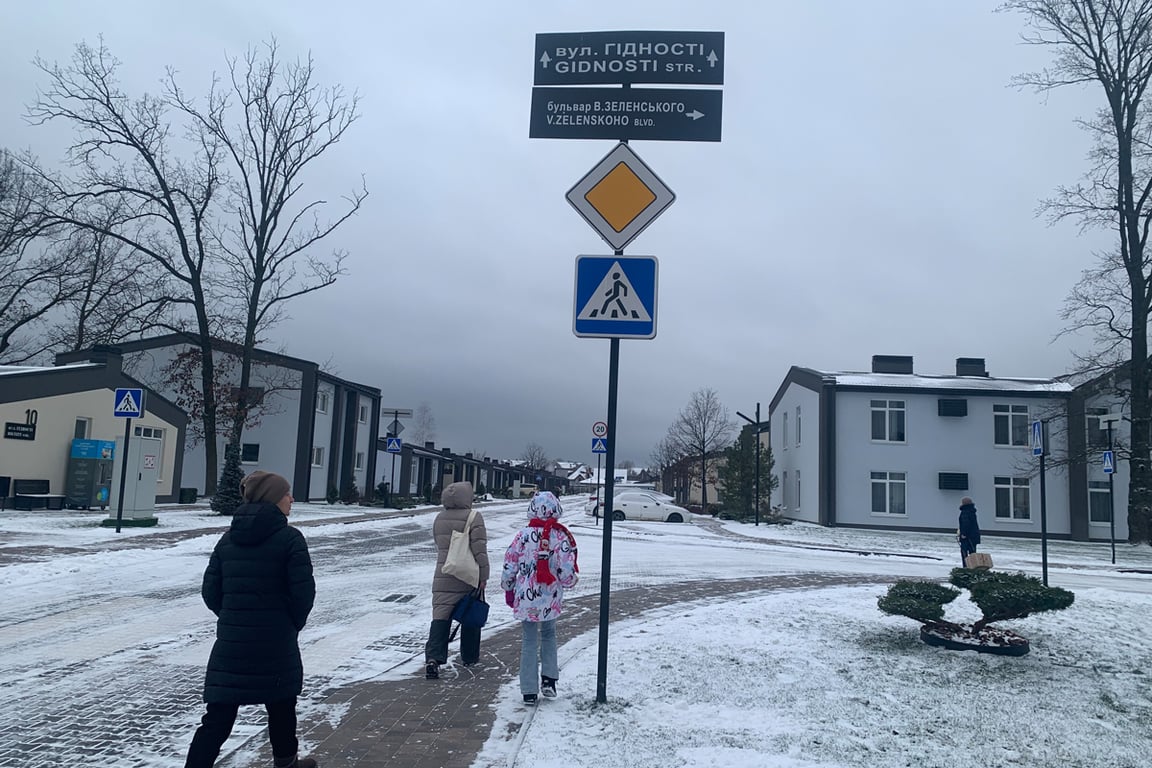
One day between Christmas and New Year, I went to the village of Tarasovka, near Kiev. When the rural scenery ended, the car turned left, towards the “town of Hansen”, which looked like a postcard from, for example, Denmark. Behind the fence stretched streets with bright one- and two-story cottages in courtyards, surrounded by evergreen bushes, trees, gazebos, alpine slides, barbecue areas, and paved paths. For the first time, Dell Loy Hansen, an American millionaire, philanthropist and, they say, a fan of President Zelensky, visited the Kyiv region in the spring of 2023. At the same time, his charitable foundation began building housing for those evacuated from the front-line territories of Donetsk, Kherson, Lugansk, Zaporozhye, Kherson, and Sumy regions, who, due to the evil will of the war, became homeless. The settlers were not offered the notorious “only roofs” over their heads.
In December 2025, the fifth stage of new buildings was opened in Tarasovka: an apartment building for sixteen families, a hostel for the elderly and those requiring care, and a shelter for women returning from Russian captivity. The project was scaled. Now the town has more than 900 houses of various types for 4,000 people, a school, a kindergarten, a hospital, a sports complex, and an IT academy. And, of course, twelve shelters on the territory, simultaneously playing the role of public spaces. Gouge out from the air “American” houses with heated floors, air conditioning, built-in appliances and high-quality furniture, kitchen utensils, dishes under the well-known “Who allowed you to live so well?!” - New Year's dream of the occupiers.
At Hansen's Town, I was allowed to join Lyudmila, Elena, and Ekaterina, psychologists at the Rescue Center, a government organization that provides free, comprehensive, confidential support to anyone affected by war, including temporarily displaced persons, veterans, former prisoners, and survivors of sexual violence. Just on the eve of the holidays, the Center’s employees met with former Kremlin prisoners; they recently added Ukrainian women exchanged from prisons in Belarus.
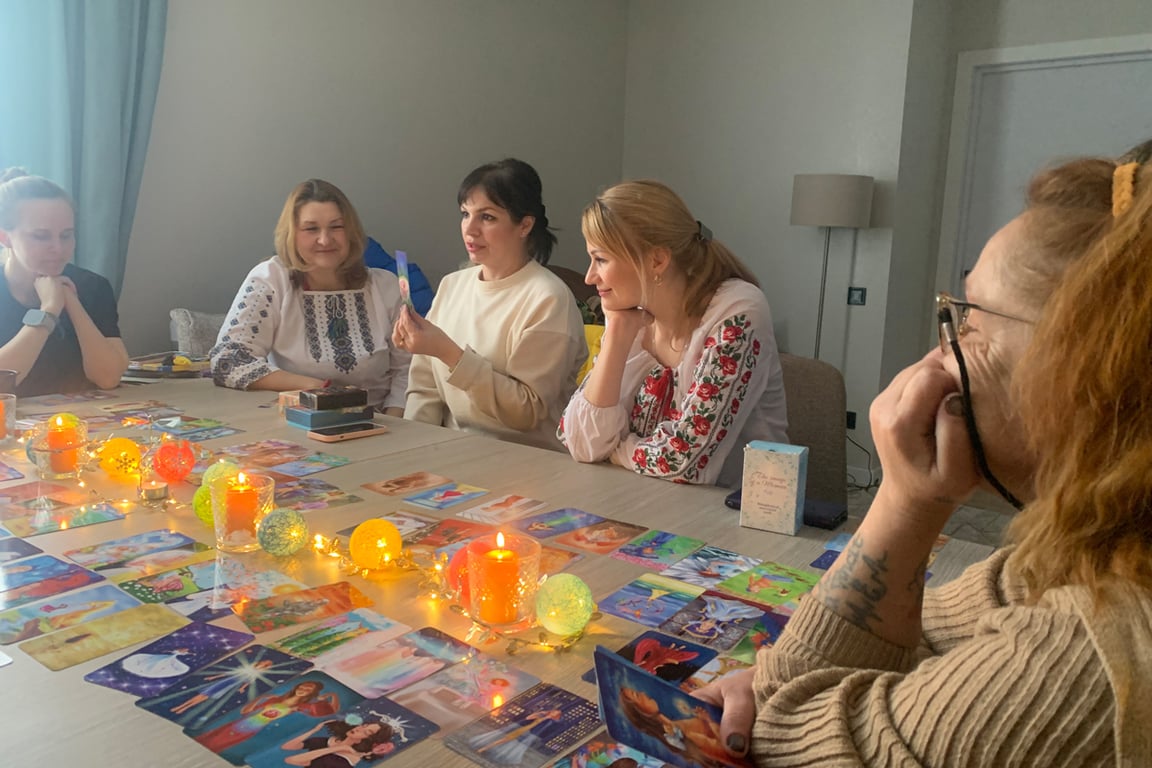
...The snow is falling spectacularly outside the window. Guests try to create a festive atmosphere in the shelter. They lay out a garland with balls on the dining table, light candles, and take out bags of sweets for a tea party. Then they take out something similar to decks of cards, paper, and markers. “Shall we tell fortunes about the grooms?” - someone jokes.
The housewives watch the preparations rather indifferently. When everything in the room, including the artificial Christmas tree and the toys on it, is from the Hansen Charitable Foundation, and your own is only a cat picked up on the street and still afraid of people, and thoughts that haunt you day and night, it’s more common to silently stick to your phone. Nevertheless, psychologists ask everyone to choose pictures “about themselves”, just to suit their mood, without thinking: an Amazon, a traveler, a beauty with wings, a fairy of the hearth... Well, you have to be grateful for the attention, people at work, write a report to them.
“My name is Lena,” says my fifty-year-old neighbor with tattoos on her wrists, sighing. — I chose a card with a woman with a lantern and birds. It’s as if I’m showing him the way, how to get out. But so far nothing is working. And there are crows circling around, which I’m trying to fight off. I understand what kind of condition he has now. Such a period...
There is silence. Only the New Year's candles are crackling.
Storekeeper of the carriage depot Elena Zaitseva, a native of the village of Verkhnetoretskoye, Donetsk region, was captured in 2019. DPR militants accused her eleventh-grader son of attempting to blow up a bridge; Elena was called “guilty of failing to report a crime.” Zaitseva went through all the circles of hell in the Izolyatsia prison, became very ill, and was released in October 2022. “I will not leave while my child remains captive!” - Elena repeated to her friends, who convinced her that in freedom there would be more opportunities to fight for her son. Now Vladislav Zaitsev has been transferred to Rostov, there is practically no connection with him, but it is known that the court sentenced the guy to eighteen years in prison. At the same court hearing, Elena was given ten years in absentia.
- Stop, I didn’t give permission for filming! I have a loved one and parents left in Belarus, this could harm them! - Marina (name changed), jumps up and almost shouts to the psychologists, looking like a hot-tempered teenager. Actually, that's true. Marina was arrested while still a schoolgirl. During the two and a half years spent in prison (“We swore an oath to each other that we were ready to die!”), she saw a lot that her peers never dreamed of, inserts prison jargon into her speech and, as a “political”, does not want any sympathy or advice at all.
- Stop, I didn’t give permission for filming! I have a loved one and parents left in Belarus, this could harm them! - Marina (name changed), jumps up and almost shouts to the psychologists, looking like a hot-tempered teenager. Actually, that's true. Marina was arrested while still a schoolgirl. During the two and a half years spent in prison (“We swore an oath to each other that we were ready to die!”), she saw a lot that her peers never dreamed of, inserts prison jargon into her speech and, as a “political”, does not want any sympathy or advice at all.
Marina did not find the picture that she associates with herself on the layout. That’s why he draws a comic book with a black felt-tip pen: a girl’s face behind rows of barbed wire, a round mustachioed face, either a fire, or a flame from an explosion, a ghost in a robe that flies away through the parted bars of the grill with the call “Remember!” (“Remember!”). He thinks for a minute and adds on top, for complete clarity, two stripes of the Belarusian flag, red and green.
The girl says that she is thinking of studying further: as an artist or as a designer. You just need to restore your documents and finish school as an external student. About two hours later, when we take a break, and the cat, having become accustomed, appears at her bowls with the intention of refreshing herself, it is Marina who notices, as if by chance:
- It’s okay, we’re sitting normally. I thought that women would come in embroidered shirts, with silicone smiles, and start asking questions... I was tired of interrogations in the prison. You can also study to become a psychologist.
Elena Zaitseva smiles for the first time that day.
The addressee is known
President Zelensky’s New Year’s greeting (the next morning, the wakeful Ukrainian segment of Facebook had already dismantled the text piece by piece) consisted of ninety percent explanations of what kind of guarantees of peace Ukraine expects after 1,407 days of full-scale war. Not the “Budapest piece of paper”, not the “Minsk jeweled trap”, not a weak agreement. “Russia does not end its wars on its own. There was no war in history that they would have ended at will. Only pressure from the others, only coercion from the others, which they themselves call a “gesture of good will,” President Zelensky listed what was necessary.
After Putin’s shortest speech since the beginning of the invasion, full of hopes for continued aggression and victory over Ukraine, and a publication in The Wall Street Journal that the US National Security Agency and the CIA came to the conclusion that Kiev did not attack the residence in Valdai, that is, the Kremlin lied, Zelensky, to use Trump’s vocabulary, again had strong cards in his hands. Zelensky recalled his seven meetings in 2025 with the leader of the United States, not forgetting to thank and remind: only ten percent of the much-needed unity and wisdom left for the world - Ukrainian, American, European.
It seems that this New Year's address was addressed not so much to the Ukrainian people as to Trump directly.
Kyiv